Roof Beam Reader
Adam Burgess
Guest Post: Jazz and the Beat Generation (#BeatsOfSummer)

Jazz and the Beat Generation: Jack Kerouac and David Amram
Contributed by Stephanie Nikolopoulos
Before Jack Kerouac stuck his thumb out and criss-crossed his way across the lush landscape of America, he moved from his hometown of Lowell, Massachusetts, to attend prep school at Horace Mann and then Columbia University in New York City. Still just a teenager, he began frequenting the jazz clubs of Harlem and writing up music reviews for his school newspaper.
Starting off as a journalist, Kerouac honed his craft. He soaked in the music and learned to listen well. The jazz he was listening to had a whole different attitude than the jazz that infused the spirit of the Lost Generation writers like F. Scott Fitzgerald. Jazz had gotten its starts in the early 1910s in New Orleans, but following the Second World War it had morphed into a faster style known as bebop—or simply bop. It wasn’t predictable like swing; rather, its melody was more complex, its structure asymmetrical, its spacing dissonant. Bebop prided itself on improvisation and instrumental prowess. Kerouac absorbed the genius talent of musicians like Charlie “Bird” Parker, Miles Davis, and Dizzy Gillespie.
Jazz found its way into the content of Kerouac’s iconic road-trip novel On the Road, which he began writing in the 1940s and was published, by Viking Press, in 1957. His characters constantly fiddle with the dial on the radio or are engrossed in a live concert, but that’s not what makes Kerouac’s writing stand out. After all, his fellow Massachusetts-born friend John Clellon Holmes—the writer with whom Kerouac was talking when he came up with the label the Beat Generation—also wrote about jazz. In his 1952 novel Go, Holmes’ description of friends listening to jazz records in crowded tenements is palpable. Critics even consider Holmes’ 1958 novel The Horn the Beat Generation’s ultimate jazz novel. The distinction between Holmes’ Go and Kerouac’s On the Road, however, is that Holmes’ prose is more traditional while Kerouac’s styling embraced the more avant-garde methods of the bebop musicians.
What bebop musicians were doing with musical notes, Kerouac wanted to do with words. Just as they improvised their music, he freestyled his verse in his efforts to create prose that was as immediate as a live concert. In his “Essentials of Spontaneous Prose,” written in 1958, Kerouac explained his writing method in terms related to jazz:
PROCEDURE Time being of the essence in the purity of speech, sketching language is undisturbed flow from the mind of personal secret idea-words, blowing (as per jazz musician) on subject of image.
METHOD No periods separating sentence-structures already arbitrarily riddled by false colons and timid usually needless commas-but the vigorous space dash separating rhetorical breathing (as jazz musician drawing breath between outblown phrases)–“measured pauses which are the essentials of our speech”–“divisions of the sounds we hear”-“time and how to note it down.” (William Carlos Williams)
Consequently, Kerouac’s prose is a pure rush of thoughts and feelings. He heaps on themes, demonstrating his virtuosity. His story is not easy or comfortable; it’s complex, jagged, and—at times—jarring. It’s also captivating and beautiful.

Truman Capote famously derided Jack Kerouac’s ability to sit down at a typewriter and pour out a novel in a span of weeks, saying, “That isn’t writing; that’s typing.” Much of the literary criticism surrounding Kerouac posits just that: that he was undisciplined and prone to rambling. Scores of articles and books suggest, however, that the wild syntax and spurred-on prose mirror his bebop-related content and riff on the greater experimental culture of the time period.
Not long after On the Road came out, Kerouac began collaborating with a young musician. David Amram is considered the pioneer of the jazz French horn and can play pretty much any instrument you throw at him. He used to go into a world music store in Greenwich Village and pick up folk instruments many Americans have never heard of and learn how to play them. When he was playing at the Five Spot, a Bowery jazz club frequented abstract-expressionist painters and poets, he used to see Kerouac there. Amram wrote for the lit mag Evergreen Review in 1969:
I knew he was a writer, and all musicians knew that he loved music. You could tell by the way he sat and listened. He never tried to seem hip. He was too interested in life around him to ever think of how he appeared. Musicians understood this and were always glad to see him, because we knew that meant at least one person would be I listening. Jack was on the same wave-length as we were, so it was never necessary to talk.
By the end of 1957, Amram and Kerouac began performing the first-ever jazz-poetry readings in New York City. Amram created music on the spot; Kerouac read and improvised, his voice an instrument. They listened to each other’s intonation and rhythm, playing off each other’s talents.
At last, the spontaneous visions of words and music fused together.
Suggested reading and listening:
Offbeat: Collaborating with Kerouac by David Amram
The Horn by John Clellon Holmes
Stephanie Nikolopoulos (http://stephanienikolopoulos.com) has read with David Amram at the Cornelia Street Café. She is the author, with biographer Paul Maher Jr., of Burning Furiously Beautiful: The True Story of Jack Kerouac’s “On the Road.”
Thoughts: Don Quixote, Part Two by Miguel Cervantes
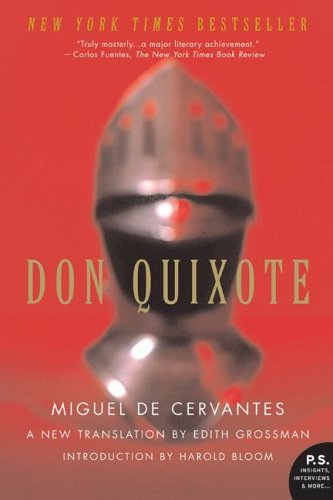
The Ingenious Gentleman Don Quixote of La Mancha, Part Two
by Miguel de Cervantes Saavedra
Final Verdict: 3.75 out of 4.0
YTD: 40
The Second Part of Don Quixote was published in 1615, exactly ten years after the first. According to Cervantes’s dedication, it was written, “in order to purge the disgust and nausea caused by another Don Quixote who has been running about the world masquerading as the second part.” Indeed, ironically, after his first part in some ways posed the question of “honesty in fiction,” another writer (pseudonym Alonso Fernández de Avellaneda), without consent or collaboration, took it upon himself to write the sequel which was foreshadowed at the end of the original Part One.
Part Two begins again in La Mancha, where Don Quixote has been for some time. His friends and niece have tried to cure him of his obsession for knight errantry, but to no avail. Once again, he and Sancho Panza (who seems much wiser in this second part) leave La Mancha to wander Spain and seek adventures. Unlike the first part, though, which was primarily concerned either with the misadventures which Don Quixote brought upon himself or with the adventures of minor characters, relayed to Don Quixote and Sancho Panza at various times throughout (to bring in historical context and to add depth to the overall narrative), this second part adds two new antagonists, the Duke and Duchess, who are hell-bent on causing Don Quixote and Sancho Panza as much grief as possible, for their own amusement. Also, Don Quixote’s motivation changes somewhat, after Sancho Panza convinces him that his great love, Dulcinea del Toboso, has been transformed from the most beautiful flower of Spain into a poor, peasant girl, by an evil enchanter. Instead of scouring the globe trying to prove his love to the lady Dulcinea, Don Quixote is instead on a mission to disenchant her (which, thanks to the Duke and Duchess, will result in great grief and pain for poor Sancho). Sancho will eventually earn his governorship, though it turns out to be more trouble than it is worth, the great knight Don Quixote will be challenged, twice, and ultimately vanquished by the Knight of the White Moon, and Cervantes, in all his wisdom, will ensure that Don Quixote’s story will end on his terms (via the historian Cide Hamete Benengeli) this time.
As it turns out, the continuing adventures of Don Quixote (or Part Two) is a bit of meta-fiction, constantly interrupting itself to talk about its own story, mostly about Part One and the imposter who wrote the false sequel. Many of the characters in Part Two have read Part One and the unauthorized Part Two, so they have preconceived notions (some accurate, others not) about Don Quixote and his squire, Sancho. In addition to writing about his own writing and acknowledging the story as a story within this story, Cervantes also mentions a variety of other literary works, including plays and poetry, which help to place this particular text into a literary timeline (especially important, here, as Spain and Europe are in the midst of great intellectual changes, as mentioned in my discussion of Part One). While this allows for a conversation about literature itself, Part Two is also, in general, a deeper, more fully realized work. Unlike Part One, wherein the characters were primarily flat, Part Two sees a variety of characters with varied motivations – they engage one another in more realistic ways, although their motives are still generally suspect.
Cervantes further builds on some of the concerns he laid out in Part One, including religious and social commentary. He is critical of Spain’s caste system and makes clear that is not one’s property or title that speaks to one’s worth, but one’s actions and beliefs. This point is elaborated on through the foul deeds of the Duke and Duchess, who, though members of the nobility, are downright nasty people. Furthermore, Cervantes makes a concerted effort to raise the wisdom of Sancho Panza (and also of his wife, Teresa) – education, goodness, and common sense are, for Cervantes, the markers of true character, wisdom and self-worth; obsessions over money, land, and practicality lead to pettiness and cruelty.
Although Don Quixote is generally published as one large work, it is clear that Part One and Part Two are indeed separate books, and not just because they were published a decade apart. Cervantes’s motivations and styles are strikingly different in the two books. Part One is largely parody, with plenty of social and historical commentary as well, but with much to be desired in terms of construction and complexity. Part Two adds, in my opinion, what Part One was missing. Although there is still a great deal of humor, it is not as slapstick or farcical as Part One (at least, not the majority of it). The work is more serious, more intentional, and well-realized. It certainly works as meta-fiction (though Cervantes’s anger at Avellaneda can sometimes overshadow the story) but also as a pioneering piece of literature caught in a time of great change and transition. It aptly pays tribute to the bygone era of romantic chivalry (the Renaissance) and meaningfully presages, perhaps unknowingly, the Enlightenment to come. The depth and complexity, and especially the character development, make Part Two quite superior to Part One. For more, see my thoughts on Part One.
Suggested Reading for:
Age Level: High School+
Interest: Spanish Literature, Classics, Parody, Comedy, Romance, Morality Novel, Meta-fiction, Sequels.
Notable Quotes:
 “I know very well what the temptations of the Devil are, and that one of his greatest is to put it into a man’s head that he can write and print a book, and gain both money and fame by it” (Prologue to Part Two, p. 468).
“It is not pleasant to go about with scruples on your conscience” (478).
“To have companions in your troubles generally helps to relieve them” (547).
“If the blind lead the blind, both will be in danger of falling into the ditch” (548).
“So, let’s consider now which is the madder, the man who’s mad because he can’t help it, or the man who’s mad by choice” (561).
“He who reads much and travels much, sees much and learns much” (635).
“The Devil must certainly be an honest fellow and a good Christian. For if he weren’t he wouldn’t swear by God and his conscience. So I suppose that there must be some good people even in Hell” (697).
“For the maddest thing a man can do in this life is to let himself die just like that, without anybody killing him, but just finished off by his own melancholy” (937).
Don Quixote is Book #12 completed for my Classics Club Challenge
Don Quixote is Book #3 completed for my Back to the Classics Challenge 2013
Don Quixote is Book #124 completed for my 1,001 Books to Read Before You Die Challenge
Thoughts: Don Quixote, Part One by Miguel Cervantes
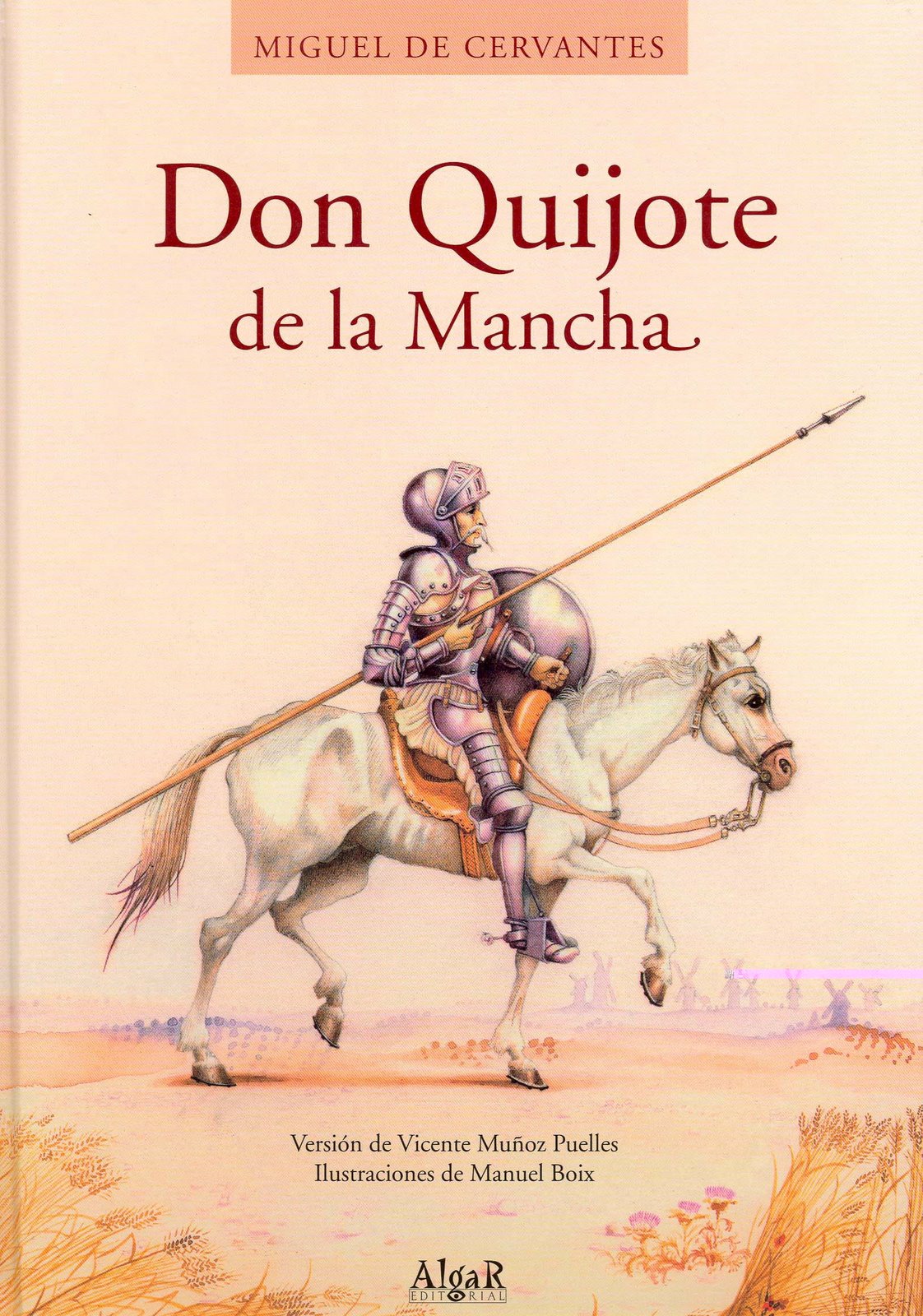
The Ingenious Gentleman Don Quixote of La Mancha, Part One
by Miguel de Cervantes Saavedra
Final Verdict: 3.5 out of 4.0
YTD: 40
Don Quixote is considered by many to be the first example of the contemporary novel-as-we-know-it, though I believe this is much more applicable to “Part Two” than it is to “Part One.” The story is set in the year 1614, shortly after publication of Part One (1605) and just before the publication of Part Two (1615). In this hilarious adventure tale, Don Quixote, a self-proclaimed Knight Errant, with his faithful squire Sancho Panza, set out on a journey to restore chivalry to the world, with a goal of defending the helpless and destroying the wicked. The two foolish men wander throughout Spain and encounter all sorts of bizarre adventures, from giants mistaken as windmills to village taverns mistaken for castles.
Sancho Panza joins Don Quixote in these adventures because he believes that his squireship will bring him riches, or at least the governorship of an isle, as that is what Don Quixote tells him has happened in all the books of chivalry (which must mean it is true!). As for Don Quixote, he claims to be on a quest to make himself worthy of the love of his lady, Dulcinea del Toboso, and he demands that all who would challenge him must proclaim to the world that Dulcinea del Toboso is the most beautiful, most wonderful woman in all of Spain. Of course, Dulcinea del Toboso, like Sancho’s riches and Don Quixote’s texts, is just a fiction.
After numerous adventures, wherein Don Quixote repeatedly proves just how foolish (and dangerous) he is, he and Sancho eventually meet a woman who quickly comes to understand Don Quixote’s “affliction” and uses it to her advantage, pretending to be a royal woman in distress who needs the assistance of a noble knight. What is fascinating is how very sane and, indeed, brilliant Don Quixote can be when speaking about anything other than knighthood and romances. It is only when he is invested in his chivalric adventures (which is most of the time) that he becomes, essentially, a madman. In the end, a priest and barber from La Mancha, who had disguised themselves in order to get in with Don Quixote’s company without raising suspicion, capture Don Quixote and convince him that he has been enchanted; in this way, they manage to bring him home, where they hope to cure his insanity and obsession with fictional tales of knight errantry.

Don Quixote is a parody of the romances of the time. The Renaissance (15th-16th centuries) which, in Spain, had immediately preceded Cervantes’ life and the creation of this novel, gave rise to new discussions about and interpretations of art, morality, identity, and humanism; however, the popular literature of Cervantes’s era continued to be rife with books of chivalry – melodramatic fantasies about the adventures of wandering knights who slay giants, rescue damsels in distress, and battle evil wizards and enchanters. These were highly stylized tales with shallow characters who were playing out the rules of tired, dusty old dramas. In those dramas, the main theme was chivalry: protecting the weak, lauding women, and celebrating brave knights who traveled the world in search of good deeds to be done.
The character Don Quixote is obsessed with these romances and these knights. He truly believes himself to be one of the greatest of knights errant, who must live and die by the code set down in these fictional texts. Through him, Cervantes is commenting on the ridiculousness (and tiredness) of these old ideas. He desperately wanted to bring Spanish Literature into the new age (which, though Cervantes wouldn’t know it, yet, was anticipating the Enlightenment). All is not a joke, however. Cervantes was a soldier and he was deeply devoted to Spain. The country was making great advances in technology and social enterprises, and it was earning a great deal of wealth from its American colonies. Amidst all this change, Cervantes did believe that a code of values (like the ancient codes of chivalry) could be useful for a nation confused by war with England, militarily, and also with the Muslim religion.
One of the most ground-breaking elements of Don Quixote is its narration. The book is narrated by the author, who is commenting on a “true history” as written by a fictive historian called Cide Hamete Benengeli, a Moor who originally chronicled the adventures of Don Quixote. Cervantes as narrator charges himself with translating the original text; thus, he narrates most of the book in the third-person, but does sometimes enter into the thoughts of the characters or into first person, such as when he is commenting on the novel itself or the original manuscript (written by Benengeli). There are three sections to Don Quixote, the first two being in “Part One” and the third being all of “Part Two.” The first section is largely a parody of the contemporary romance tales and is likely what most people think of when they think about Don Quixote. The second part, however, takes a narrative shift toward historical fiction. It proceeds episodically, is not as comedic, and is pulled much more from Cervantes’s life experiences, via third-party tales (not just the narrator telling us what is happening with Don Quixote and Sancho Panza, but other characters talking to our main heroes about their own histories and adventures). In these first two sections (or “Part One”) it is Cervantes as narrator who is reporting the entire story, in direct narrative style, but this is something which will change for “Part Two.”

In addition to the interesting narrative choices (which become much more interesting and complex in “Part Two”) there are other major themes and motifs, such as: Morality (old ideas versus new ones); a comparison between Class and Worth (Cervantes’s claim being that one’s class does not necessarily speak to their personal worth – an extremely radical idea for the time); Romance (romantic love being of highest value); Honor (the idea of being personally honorable is lauded, whereas the idea of living up to a lofty, ancient code of honor seems to be mocked and leads to sometimes disastrous consequences); and Literature (there is a raging debate about the need for truthfulness and historical accuracy in fiction, and about how much of literature can/should be expected to be honest and how much of it pure imagination).
Some of the most interesting elements of Don Quixote, are those which are drawn from Cervantes’s own life. His fears, his biases, and his own experiences very much contributed to the themes in the book, even giving him inspiration for the creation of it. Mistrust for foreigners, for example, is a prevalent theme, as is the tension between the Moors and the Catholics. Cervantes and his brother were captured by pirates and sold to the Moors (Muslims), after which they ended up in Algiers. Cervantes tried to escape –three times- but could not get away until he was ransomed in 1580, after which he was able to return to Spain. This experience, in addition to the defeat of the impenetrable Spanish Armada in 1588, by the English, are the backbone of the tale, and make up some of its intermediary tales, such as the tale of the captive (Chapter 34). Many of the battles Cervantes engaged in when he was in the Spanish Army are recounted somewhat in this book, through other characters’ tales, which adds depth and autobiographical history to this fantasy tale.
Ultimately, Part One of Don Quixote is historical fiction disguised as literary parody. It is great fun, for a while, but is, in my opinion, longer than necessary; one could get the point in half the time, though what Cervantes starts to work on in the second section of Part One is definitely a shift away from the pure farce and fantasy of the first section. Cervantes does explore some interesting notions, such as cross-dressing, self-worth, female independence, and the nature of love, all of which are looked at it relatively new ways. For its autobiographical exploration, its historical significance, and its narrative uniqueness, Don Quixote (Part One) is a valuable read, but it is Part Two, in my opinion, which really stands out and, perhaps, keeps Don Quixote in the canon of important classics. Continue to my thoughts on Part Two.
Suggested Reading for:
Age Level: High School+
Interest: Spanish Literature, Classics, Parody, Comedy, Romance, Morality Novel, Historical Novel.
Notable Quotes:
 “I am too spiritless and lazy by nature to go about looking for authors to say for me what I can say myself without them” (17).
“And so from little sleep and much reading, his brain dried up and he lost his wits. He filled his mind with all that he read in them, with enchantments, quarrels, battles, challenges, wounds, wooing, loves, torments and other impossible nonsense; and so deeply did he steep his imagination in the belief that all the fanciful stuff he read was true, that to his mind no history in the world was more authentic” (32).
“I do not understand why, merely because she inspires love, a woman who is loved for her beauty is obliged to love the man who loves her” (108).
“I do swear, I tell you, that I will keep silent to the very last days of your honour’s life. And please God I may be free to speak to-morrow” (125).
“A knight errant who turns mad for a reason deserves neither merit nor thanks. The thing is to do it without cause” (203).
“They say we ought to love our Lord for Himself alone, without being moved to it by hope of glory or fear of punishment. Though, as for me, I’m inclined to love and serve Him for what He can do for me” (273).
“Love, I have heard it said, sometimes flies and sometimes walks. With one person it runs, with another creeps; some it cools and some it burns; some it wounds and others it kills; in a single instant it starts on the race of passion, and in the same instant concludes and ends it; in the morning it will besiege a fortress, and by evening it has subdued it, for there is no force that can resist it” (304).
“Women have naturally a readier wit for good or for evil than men, although it fails them when they set about deliberate reasoning” (308).
Don Quixote is Book #12 completed for my Classics Club Challenge
Don Quixote is Book #3 completed for my Back to the Classics Challenge 2013
Don Quixote is Book #124 completed for my 1,001 Books to Read Before You Die Challenge
Review: Aristotle and Dante Discover the Secrets of the Universe

Aristotle and Dante Discover the Secrets of the Universe
By Benjamin Alire Sáenz
Final Verdict: 3.75 out of 4.0
YTD: 39
Plot/Story:
4 – Plot/Story is interesting/believable and impactful.
I was introduced to Aristotle and Dante Discover the Secrets of the Universe by Laura of Owl Tell You About It, who had nothing but glowing things to say about this book. A quick Goodreads and Amazon scan brought up a lot of other positive reviews, some of them outstanding, and from bloggers I’ve been connected with for a while. How did I miss this one?
The story is about two teenage boys, Aristotle and Dante, whose lives and personalities seem worlds apart, but who are connected by something stronger than circumstances. Although they and their families are very different, the two boys soon become friends (not without plenty of tense moments) and stumble upon a universe all their own – two planets, as different as Earth and Mars, but orbiting each other in the most natural way.
Through painful accidents and dangerous situations, through tragedy and loss, through long-distances and secret family histories rediscovered, what Aristotle, especially, learns is that it is okay to be vulnerable – to need someone. And what Dante learns is how to be needed, and how to be patient. This is a story about two boys, Ari and Dante, one who is sure about who he is and the other who is on a difficult path to discovery. Their worlds collide and the friendship they create in the process might be enough to destroy them, or to save their lives.
Characterization:
4 – Characters very well-developed.
Aristotle, Dante, and their parents. These are the primary and secondary characters in a book that is rather light on characters, which is fine because the real story is Dante & Aristotle. Some others make their appearances, in brief or in memory. Aristotle’s brother and sisters, for instance, and Dante’s boyfriend. But the story is, start-to-finish, in-and-out, all about Dante and Aristotle. Dante can swim. Ari can’t. Dante is well-read, artistic, and self-confident. Ari prefers solitude and quiet – he harbors a darkness, an anger, and has a hard time communicating. Dante loves poetry and loves to draw. Ari spends most of his time thinking about his older brother (who is incarcerated), and about why his parents refuse to talk about it. Dante is fair-skinned and beautiful, but longs to feel closer to his Mexican heritage; Ari is darker, plain, and wouldn’t mind being less obviously Mexican.
Somehow, these two very different boys find each other, balance each other, and develop a friendship that fits them both like nothing ever has. Dante manages to penetrate Aristotle’s defences, and Aristotle helps keep Dante grounded, giving him the strength and courage he will need to confront his biggest fear. Through it all, they share words and dreams, poetry and laughter, books, games, and even artwork. Together, they realize that the universe doesn’t just surround them – it is what they create for themselves.
Prose/Style:
4 – Extraordinary Prose/Style, enhancing the Story.
If the story itself isn’t wonderful enough (it is), the way it is delivered cannot be ignored. This is the first book I’ve read by Sáenz, but numerous people told me, while reading this, how much they enjoyed his prose and storytelling abilities. I’m jumping on the bandwagon. His prose is sparse but romantic. The complexities of language – of finding the right word for the right moment – are part of Aristotle’s journey, so the prose itself becomes a part of the story. Vivid imagery, beautiful language, emotional knuckle-punches, and a great sense of humor all pack themselves into a carefully crafted style that is accompanied by natural dialogue and a unique narrative perspective.
Additional Elements: Setting, Symbols/Motifs, Resolution, etc.
3 – Additional elements improve and advance the story.
If I am being honest, I must admit that I was disappointed by this book in two ways; first, by the final reveal (or revelation?) and second by the way that reveal came about. I was incredibly excited to possibly have discovered a genuine, touching, “boy’s boy” book about two guy friends, one of whom just happens to be gay. But it doesn’t turn out exactly as it appears, and even if the ending isn’t too deftly veiled, one (me, at least) still hoped it would go a certain way. I realize I’m being ambiguous, but it’s hard to talk about what happens without giving away the whole ball game – and since this is such a beautiful story told in such a wonderful way, I definitely do not want to spoil it for anyone. Others might be perfectly pleased with the way it turns out, though, again, I’m not sure that anyone could be thrilled with its mode of delivery. Maybe I’m wrong. Prove me wrong!
Ultimately, this is a sweet, sweet book filled with emotion, passion, love, pain, and reality. It’s a coming of age story that is believable and remarkable at the same time. Even though I would have taken the ending in a different direction, I’m still thrilled with the experience of reading this book – it has won countless awards, and it’s not hard to understand why. We’re looking at a new standard for honest, contemporary YA with realistic male characters and topical issues, delivered in a believable and magical way. Right on.
Suggested Reading for:
Age Level: High School+
Interest: Friendship, Family, Mexican-American, Gay, Coming of Age, First Love, YA.
Notable Quotes:
“The problem with my life was that it was someone else’s idea.”
“I got to thinking that poems were like people. Some people you got right off the bat. Some people you just didn’t get – and never would get.”
“That afternoon, I learned two new words. ‘Inscrutable’ ‘friend.’ Words were different when they lived inside of you.”
“And it seemed to me that Dante’s face was a map of the world. A world without any darkness.”
“You can’t make anyone be an adult. Especially an adult.”
“The summer sun was not meant for boys like me. Boys like me belonged to the rain.”
Read-along: To Kill a Mockingbird (July 15 – Aug 1)
 So, dear readers, I have this a nasty habit of obsessing over “best of” lists, when it comes to books. Best of a certain genre; best of a certain country; best of a certain time period; best for a certain type of reader. Whatever. If it’s on a “Best Of” reading list, odds are I’m going to download that list, save it somewhere, and become determined to read off of it (though I never really do).
That being said, I’ve also been thinking about the many books of classic literature which I did not like when I first read it, but which I really enjoyed/loved upon re-reading. This includes Old Man and the Sea, Pride and Prejudice, and The Great Gatsby, among others.
One book that appears on almost every “Best of” or “Must read” list, but which I did not particularly enjoy when I first read it, is Harper Lee’s To Kill a Mockingbird. Now, because it is such an important work, and because I’ve recognized this pattern in myself, I have decided to give it a second chance. But I’m hoping I’ll have some company!
This will be a simple read-along. If you want to join me in reading (or re-reading) this very important piece of American literature, I’ll be glad to have you! I’m planning to read it from July 15th – August 1st. Nothing insanely special planned (it’s jammed between my Beats of Summer and Austen in August events); I think conversing with others about the book will be eventful and interesting enough, but if anyone does want to provide a guest post, giveaway, or what not, please feel free to get in touch!
The master post will go up on July 15th, which will have the scheduled posting dates (approximately 10 chapters per check-in). You’re free to post your thoughts at each check-in, or just plan to do a final review/thoughts post on August 1st, which is when I plan to have mine up.
If you’re in, simply fill out the Mister Linky below, and I’ll see you on July 15th!
About the Book:
“The unforgettable novel of a childhood in a sleepy Southern town and the crisis of conscience that rocked it, To Kill A Mockingbird became both an instant bestseller and a critical success when it was first published in 1960. It went on to win the Pulitzer Prize in 1961 and was later made into an Academy Award-winning film, also a classic.
Compassionate, dramatic, and deeply moving, To Kill A Mockingbird takes readers to the roots of human behavior – to innocence and experience, kindness and cruelty, love and hatred, humor and pathos. Now with over 18 million copies in print and translated into forty languages, this regional story by a young Alabama woman claims universal appeal. Harper Lee always considered her book to be a simple love story. Today it is regarded as a masterpiece of American literature.”
-indiebound.org
To discuss this read-along on Twitter/Facebook, let’s use #MockingbirdReads
 Roof Beam Reader