Roof Beam Reader
Adam Burgess
TBR Pile Checkpoint #2: February Progress!

Congratulations to our February Winner: Alyssa from The Reader’s Refuge!
Hello, TBR Pile Challengers!
It is February 15th and we are now at Checkpoint #2 for the 2013 TBR Pile Challenge! I know many of you have been making fantastic progress through your challenge lists already – so congratulations to you!
I have currently read 5 of my required 12 books. I can’t believe that I’m off to such a good start this year. I will likely finish a few more before the end of May, as some of these books actually fit in with my coursework reading assignments this semester, too (bonus!). Here’s what I’ve read, so far:
Book #1: O Pioneers! by Willa Cather
Book #2: The Alchemyst by Michael Scott
Book #3: Orlando by Virginia Woolf
Book #4: The Gunslinger by Stephen King
Book #5: The End of the Affair by Graham Greene
How are YOU doing? How many books have you completed? We’re only in the 2nd month of the challenge, so don’t feel discouraged if you haven’t started or are only a book or two in (actually – 2 books would be right on track, so go you!).
Are there any books you’ve read that you’ve been surprised by (in a good or bad way)? Any books coming up soon that you’re really looking forward to (or dreading)?
Below, you’re going to find the infamous Mr. Linky widget. IF you have completed any reviews for books on your challenge list, please feel free to link them up here so that we can easily find your posts, encourage one another, see what progress is being made on all these piles, etc. Also, feel free to link-up to your own checkpoint post, should you decide to write one (not required – but feel free to do so, if you want!)
Also – this month’s check-point comes with a giveaway! YAY! As I mentioned in January, any books that you have read and reviewed for this challenge, since January 20th, and which you link-up to the Mr. Linky below will count as entries toward the giveaway.
The Prize: One book of your choice ($20 USD or Less) to be shipped from The Book Depository!
So, Good Luck and Happy Reading!
LINK UP YOUR REVIEWS Jan 21 – Feb 20
(Please wait until March 15th to link-up posts written after Feb. 20)
The Classics Club Spin – Let’s Play!

I’m playing The Classics Club Spin!
Directions:
- Go to your blog.
- Pick twenty books that you have left to read from your Classics Club List.
- Try to challenge yourself: list five you are dreading/hesitant to read, five you can’t WAIT to read, five you are neutral about, and five free choice (favorite author, rereads, ancients — whatever you choose.)
- Post that list, numbered 1-20, on your blog by next Monday.
- Monday morning, we’ll announce a number from 1-20. Go to the list of twenty books you posted, and select the book that corresponds to the number we announce.
- The challenge is to read that book by April 1, even if it’s an icky one you dread reading!
UPDATE: The Lucky# Chosen by Our Spin Was 14 – I ended up with Rebecca by Daphne du Maurier (ehhh)
My Book Spin list for the Classics Club:
Five I Am Dreading:
1. The Pilgrim’s Progress by John Bunyan
2. The Mysteries of Udolpho by Anne Radcliffe
3. Moll Flanders by Daniel Defoe
4. Madame Bovary by Gustave Flaubert
5. Cloud Atlas by David Mitchell
Five I Am Excited About:
6. Miss Lonelyhearts by Nathanael West
7. The House of Mirth by Edith Wharton
8. Kim by Rudyard Kipling
9. The Memoirs of Sherlock Holmes by Sir Arthur Conan Doyle
10. The Brothers Karamazov by Fyodor Dostoevsky
Five I’m Neutral About:
11. Henderson the Rain King by Saul Bellow
12. Beloved by Toni Morrison
13. Youth by J.M. Coetzee
14. Rebecca by Daphne du Maurier
15. The Portrait of a Lady by Henry James
Five Free Choice: Revisiting an Author I’ve Enjoyed Before.
16. The Blind Assassin by Margaret Atwood
17. Wise Blood by Flannery O’Connor
18. One Hundred Years of Solitude by Gabriel Garcia Marquez
19. Vile Bodies by Evelyn Waugh
20. Tess of the d’Urbervilles by Thomas Hardy
The Prize: A fun reading experience!
Thoughts: The End of the Affair by Graham Greene
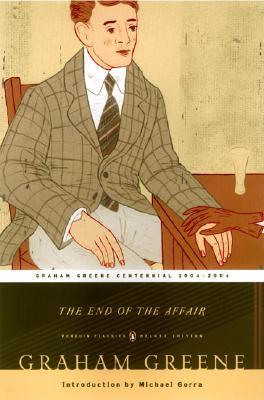 The End of the Affair by Graham Greene
Final Verdict: 3.5 out of 4.0
YTD: 12
Graham Greene is considered by many to be one of the most important 20th Century English writers. His novels are always highly masculine and usually carry a complicated but unambiguous Catholicism. For me, either of these “types” of literature could be highly repellant, but there is something about Greene’s ability that draws me in, something about his works that speak to me – even though I’m appalled by the misogyny and unreceptive to the religious overtones. The End of the Affair is, as its protagonist states at the outside, a story about hate. This, of course, means it is really about love – but a love which causes pain and heartache. The story takes place in England during the bombings of World War II, so there is always a sense of the uncontrollable – the powerlessness of man and the fleeting nature of life. The main character and narrator, Maurice, is a writer who falls in love (which, for him, means possession – sex!) with a woman named Sarah, who just happens to be another man’s wife. The two have a torrid affair which ends (not a surprise, considering the title of the book), but in a rather unconventional way. When it is over, Maurice and his lover’s husband become strangely close, almost coupling in a transitive way through Sarah.
The story is narrated in the first-person, from Maurice Bendrix’s point of view. Maurice’s anger and biases, as well as his own admission that he will choose what to include and what to leave out of the story, make his narration somewhat unreliable. That being said, he does come to an ultimate truth at the end and, despite his anger, admits to himself, to Sarah, and to the reader the very thing he had hoped to avoid throughout the story. Sarah, the love interest, as well as her husband, Henry, and a private investigator (Parkis), plus an atheist leader (Smythe) are all very well imagined and executed. They each have distinct personalities and their own parts to play in the story (as do other of the minor characters, such as the Catholic Priest and Sarah’s mother). For those interested in masculinity studies, for instance, one can clearly find representatives for the four principal categories of Hegemony, Complicity, Subordination, and Marginalization.
Like much of Greene’s work, The End of the Affair is a story about power and its prose matches that theme. Greene’s style and language are strong, direct, and highly “male.” He struggles a bit, I think, with the first-person narration. This was his first novel written in first-person P.O.V. and the story is also based on his own affair – the book was dedicated “To C”, which refers to his mistress, Lady Catherine Walston; so, given the first attempt coupled with the very personal nature of the story, it is not surprising that Greene may have been a bit uncomfortable. Still, the story would have been very different in the third-person – the anger may not have come across as genuine, the jealousy filtered through a narrator might not have been as raw, and certainly the condescension Maurice hold for all other males would not have been as pronounced.
What I enjoyed most about the book was its purity of sentiment. What I mean by that is, in this book, anger is anger. Jealousy is jealousy. Kindness is kindness. The book is like one raw, exposed nerved, pricked in different ways by different characters. It is also a good example of modernism, particularly in its structure (starting the story not at the beginning, but after everything has happened, the narrator trying to make sense of it all after the fact – reminding me of The Great Gatsby and The Good Soldier). Ultimately, I responded well to this book, as I did to The Power and the Glory. And, I must say, this troubles me greatly.
Suggested Reading for:
Age Level: Adult
Interest: Adultery, Catholicism, Religion, Jealousy, Sin/Redemption, Power, Masculinity.
Notable Quotes:
“What happens if you drop all the things that make you I?”
“A story has no beginning or end: arbitrarily one chooses that moment of experience from which to look back or from which to look ahead.”
“I hate you, God. I hate you as though you actually exist.”
“I refused to believe that love could take any other form than mine: I measured love by the extent of my jealousy, and by that standard of course she could not love me at all.”
“It was as though our love were a small creature caught in a trap and bleeding to death: I had to shut my eyes and wring its neck.”
“The sense of unhappiness is so much easier to convey than that of happiness. In misery we seem aware of our own existence, even though it may be in the form of a monstrous egotism: this pain of mine is individual, this nerve that winces belongs to me and to no other. But happiness annihilates us: we lose our identity.”
“Pain is easy to write. In pain we’re all happily individual. But what can one write about happiness?”
“Insecurity is the worst sense that lovers feel; sometimes the most humdrum desireless marriage seems better. Insecurity twists meanings and poisons trust.”
“I measured love by the extent of my jealousy.”
The End of the Affair is Book #10 for my Classics Club Challenge & Book #5 for my 2013 TBR Pile Challenge
Literary Giveaway Hop! (Feb 9-13)

THIS GIVEAWAY IS CLOSED.
Welcome to the Literary Blog Hop
Hosted by Leeswammes
Dates: February 9th-13th
Details:
This hop is open to all types of bloggers, but the giveaway on each blog must be of literary value/merit. Anyone who visits the participating blogs can enter to win – and there are LOTS of participants with LOTS of great stuff being given away – so hop around!
My Giveaway:
One lucky winner will receive a copy of ANY book of their choice ($20 USD or less) from my list for The Classics Club. I ship through The Book Depository, so this giveaway is open to anyone who lives in an area where The Book Depository delivers.
The “How To”:
Enter by Leaving ONE comment on this post, with the following information:
1. Your Preferred Name
2. Your E-mail in this format: roofbeamreader (at) gmail (dot) com
3. How do you subscribe to Roof Beam Reader? (Email? WordPress?)
4. Do you follow @RoofBeamReader on Twitter (+1 – Lave your @Handle)
5. Do you “Like” the Facebook Fanpage? (+1 – Leave your Facebook Name)
6. Which book from my Classics Club list caught your eye?
Rules:
–Must be a follower of this blog (E-mail or WordPress subscriber).
–Must be 13+ with parental permission if under 18.
–Winners must respond to e-mail within 48-hours or new winner selected.
–Winners chosen randomly through Random.org
–Giveaway ends at 11:00pm Central Time (USA) on Wednesday, February 13th. GIVEAWAY CLOSED.
Visit these Other Giveaway Blogs:
Thoughts: Gentlemen Prefer Blondes by Anita Loos
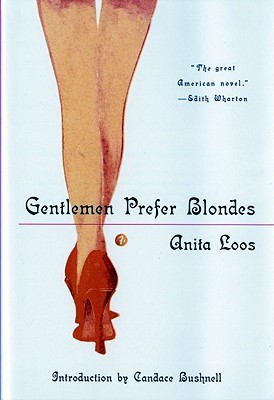 Gentlemen Prefer Blondes by Anita Loos
Final Verdict: 3.5 out of 4.0
YTD: 11
I first read Gentlemen Prefer Blondes in graduate school (2007?), as part of a 20th Century American Literature class. I loved that class, and the professor, because we read primarily unexpected texts – important ones, and ones which said much about the culture and politics of the time, but books which are nonetheless often overlooked, particularly in the classroom setting (such as Nathanael West’s, Day of the Locust, Willa Cather’s A Lost Lady, Henry Miller’s Tropic of Cancer, etc.). What I loved about the book when I first read it was its humor. Anita Loos’s protagonist, Lorelei Lee, a genuine flapper and perhaps America’s first sensational gold-digger, is also the epitome (perhaps the originator) of the all-too-recognizable “blonde joke.” Her story is one of “education” and “morals” – a girl who is on a journey to improve herself, except that improvement, in Lorelei’s case, simply means getting her hands on as many jewels and as much money as she possibly can.
Along for the ride is Lorelei’s best friend, Dorothy, who, while a flapper, is much more sensible than Lorelei and truly is in search of love, rather than money – a claim Lorelei makes of herself all along, but the evidence repeatedly says otherwise. Dorothy is outspoken and direct about what she wants, and this attitude – though feminists might champion it- cause Lorelei to think that it is Dorothy who is in need of “education” and “improvement.” The joke, of course, is that it is Lorelei whose choices are highly suspect and rather immoral.
Upon reading the book for a second time (this time for a Gender Studies course in my doctoral program), I find that I love all of the same things, including the humor, the wit, and the wild adventures, but I also responded strongly to the bond between Dorothy and Lorelei and also to the subversive themes, particularly women in traditional male roles (dominating sexual/romantic relationships, traveling abroad without chaperones, etc.). Much of what this book is about, and why it is so great, can be summed up by the following passage:
So Mr. Jennings helped me quite a lot and I stayed in his office about a year when I found out he was not the kind of a gentleman that a young girl is safe with. I mean one evening when I went to pay a call on him at his apartment, I found a girl there who really was famous all over Little Rock for not being nice. So when I found out that girls like that paid calls on Mr. Jennings I had quite a bad case of histerics and my mind was really a blank and when I came out of it, it seems that I had a revolver in my hand and it seems that the revolver had shot Mr. Jennings.
The spelling and grammar errors, the flippant attitude, the game of conceal and reveal (quite prevalent in this book – she has a lot of sexual encounters, for instance, though she never, ever specifically mentions them. She does, however, mention that this “diary” of hers might be given to a gentleman, one day, so we know she’s not revealing everything), the faux-innocence, it’s all here. What is interesting about Lorelei is that she seems to think that everything is a result of fate. She never takes responsibility for the things she does, though she is a character of extreme agency. For instance, when the above scene is referred to again later, Lorelei never says “I shot the man;” instead, see says that “Mr. Jennings came to be shot.” This victim-esque mentality comes about in many ways, as when she is “abused” by wealthier men and women, whom she will later exact revenge upon (though she was in the wrong in the first place), or in her general gold-digging nature – she believes she is a girl “that things happen to,” which leaves her free to make all sorts of dubious decisions and not feel any kind of guilt or remorse about them. She is a woman with a bad reputation (which even Dorothy jokes about, though Lorelei never “gets” the joke) – she’s understood by others to be sexually corrupt and morally bankrupt, yet she doesn’t see these things in herself; ironically, she ultimately seeks “saving” (rather than “education”) by marrying a religious man who works as a censor (hilarious considering both Lorelei’s personality as well as Anita Loos’s career as a screenwriter).
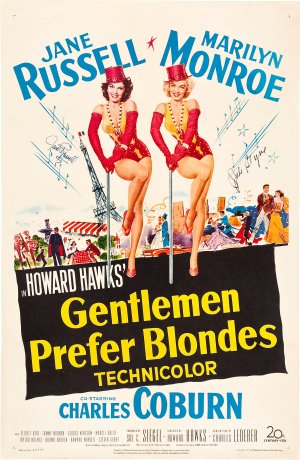 This book has received wide and varied reactions, from James Joyce who fell in love with it and reserved his ailing eyesight for the serial installments (the book having first been published in chapters, through Harper’s Bazaar) and Edith Wharton, who called it “the great American novel;” to William Faulkner, who absolutely loathed it. Many people are familiar with the 1950s film adaptation starring Marilyn Monroe and Jane Russell. The film, too, is brilliant, but readers should keep in mind that the two are very different. Much of the book’s essence is changed to suit the 1950s mentality and to strengthen the friendship between Lorelei and Dorothy (a relationship which is often stained in the book, but which is paramount in the film). Leaving the film aside, which one might argue is perhaps more feminist, the book is deceptively complex. Lorelei comes across, in her diary, as a type of brainless valley girl, full of “Like’s” and “So’s;” but this is Loos’s genius. She exposes the underbelly of 1920s hypocrisy and morality in a raw and humorous way. As Loos herself mentions in the introduction, this book was enormously popular in Russia, where it was likened to the dreary, often fatalistic social works of Tolstoy and this is because, leaving out the humor, Loos’s depiction of the world, of capitalism, sexual commodities, body image, and the treatment of women, is all very bleak. It’s a fun ride but, somehow, a dangerously serious one, too.
Suggested Reading for:
Age Level: High School +
Interest: Gender Studies, Feminism, Women’s Literature, 1920s American Literature, Flappers, Jazz Age, Modernism, Epistolary.
Notable Quotes:
“Kissing your hand may make you feel very, very good but a diamond and a sapphire bracelet lasts forever.”
“Does this boat go to Europe, France?”
“Memory is more incredible than ink.”
“I always think that the most delightful thing about traveling is to always be running into Americans and to always feel at home.”
“Fate keeps on happening”
 Roof Beam Reader