Roof Beam Reader
Adam Burgess
Banned Books Week: Giveaway Hop!


One Lucky Follower Will Win:
Any book of his/her choosing FROM THIS LIST, up to $20 USD, to be shipped from The Book Depository.
*Note: Books offered are from the Top 10 Most Challenged lists, 2001-2011.
This Giveaway is Open to any location where The Book Depository Ships.
Rules:
1. Be 13+ (with parental permission to enter if under 13).
2. Be a subscriber of this blog.
–You can subscribe by e-mail (right-side menu) or through WordPress (if a member).
3. Fill out THIS FORM. (Giveaway has ended)
4. Winner will need to respond to my e-mail within 48 hours or new winner will be selected.
5. One entry per person. Multiple entries will disqualify you.
You can earn additional entries (see Entry Form) by:
-Following me on Twitter (@RoofBeamReader)
-Liking my Facebook Page (Click Here)
That’s it! Good Luck!
Click Here for a list of other Midsummer’s Eve Giveaway Hop Participants
Click Here to visit I Read Banned Books
Click Here to Join October’s “The Literary Others: An LGBT Reading Event“
Review: Seize the Day by Saul Bellow
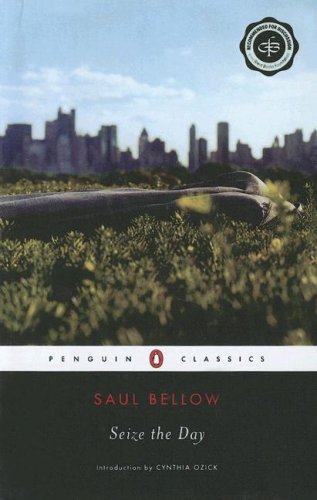
 Seize the Day by Saul Bellow
Final Verdict: 3.5 out of 4.0
YTD: 40
Plot/Story:
3 – Plot/Story is interesting and believable.
Poor Tommy Wilhelm. Lost, jobless, loveless, and completely devoid of pride or any self-confidence. This is Tommy’s day of reckoning. When the novella begins, Tommy (what kind of man in his mid-forties still calls himself Tommy, by the way?) is going to meet his father for breakfast, as he does every day, in the hotel Gloriana, where they both stay. Unlike on other days, though, Tommy is fearful of this meeting – the reader knows from the start that there is something wrong, or soon will be. The rest of the novella takes us through one day in Tommy’s life, but with many instances of flashbacks and memories, wherein his many problems, missteps, and miscalculations are revealed and his downfall is explained. Tommy trusts the wrong people (Dr. Tamkin), loves the wrong people (his father, his wife), and is made impotent and helpless in front of the only people he truly cares about (his kids). Seize the Day is a snapshot of life, exposing the burdens of modern man in a world where wealth and power have come to mean everything.
Characterization:
3 – Characters well-developed.
There are three primary characters in Seize the Day: Tommy Wilhelm, our protagonist; his father, Dr. Adler; and the con-artist, Dr. Tamkin. Some minor characters, such as the blind speculator and Tommy’s wife, also appear and contribute to the rising and falling action, up to and including Tommy’s final breakdown. Tommy is a much more layered character than one would assume, more complex than even himself realizes (though the narrator does admit that Tommy is “not less capable than the next fellow” when it comes to “concealing his trouble.”). So, Tommy wears masks, as we all do, both to make himself feel better about his situation, and also to hide from others the dire nature of his circumstances. He is essentially drowning under the weight of his mistakes and life choices, including walking away from his job and divorcing his wife. The story is about his day of reckoning and the realization he must come to – the childishness he must leave behind. Dr. Adler, Tommy’s father, comes across as cruel and unsympathetic because he refuses to help Tommy when he is in need; but the reader must keep in mind that we are seeing Tommy’s point of view, and the impression one gets is that Dr. Adler has perhaps been burdened with Tommy’s troubles in the past. Still, Dr. Adler is much less a sympathetic personality in general. He is a doctor and scientist, with a somewhat cold, technological mindset – he believes in man creating his own success and determining his own fate, and he is disappointed that his children have not amounted to anything. Adler is perhaps the temperamental counterpoint to Tommy, who acts much more on passion and emotion than on logic or reason. Finally, Dr. Tamkin – where to begin? Tamkin is a sort of new-age confidence man. He claims to be everything from a psychiatrist to a poet, not to mention a stock broker, world traveler, inventor, and a hypnotist/healer. Who is he, really? We never find out, except that he is largely a liar who drops snippets of truth into his long-winded sermons. He is a proponent of Romantic ideals and, while he seems rather absurd at times, still he practices what he preaches, which makes him a bizarre but still laudable character in many ways.
Prose/Style:
4 – Extraordinary Prose/Style, enhancing the Story.
What draws me to Bellow’s prose is that it very much reflects the themes of his story – modern Americanism. It is, in general, simple, clean, and straightforward. There are moments, however, of passionate romantic appeals, of poetry and narrative interjection which make the reader pause and reflect on what is being said or what is happening at that moment. One does not necessarily want to look too deeply into Dr. Adler, for instance, because he seems to be a cold, self-centered jerk who just doesn’t care for his kids very much; but Bellow’s narrator often forces the reader’s hand, subtly, to hint at Adler’s own fears and pains, which hint at the reasons for his detachment, without over presenting them explicitly. In this text, the narrator and the protagonist have a very close relationship – while it is technically an omniscient third-person narrator who has access to the minds and emotions of all the characters, he remains closest to Tommy. This creates an interesting phenomena with Point of View – something rather innovative, really. While it is clear that the Point of View is primarily that of Tommy, since this is Tommy’s story, it actually fluctuates throughout, as does the tense (past and present). These shifts in Point of View and Tense raise a lot of questions about the narrator – who is it, really? Who does the narrator sympathize with, if anyone? After all, though he seems to identify with Tommy, there is quite a bit of prodding and ridicule for Tommy’s character going on, too. It’s a fascinating approach to narration, which allows for much irony and (particularly in line with Dr. Tamkin’s personality) quite a bit of paradox.
Additional Elements: Setting, Symbols/Motifs, Resolution, etc.
4 – Additional elements improve and advance the story.
For such a short, seemingly straightforward novella, there is really quite a bit going on, here. At the forefront is the novella’s primary theme, which is that of the “predicament of modern man.” What is clear about the story is that it is one about isolation, which would be fitting as this novella falls into the “post-World War II” category of American literature, which was very much concerned with isolation and identity crises. The characters of Seize the Day are very much disillusioned, dislocated, and in search of meaning, all of which is indicative of the sentiments of the general population during this time period. In addition to Bellow’s concern with the external factors impacting modern man (his predicament in “place” and “time”), is his concern with paradoxical emotions and the internal man – his psyche and state of being. Bellow accomplishes this examination both in the narrative style (which becomes more complicated as the characters become more introspective) and also thematically. Psychology, conscience, and the human condition are very much being explored. Other interesting things to look for include this idea of City Life, which Tommy repeatedly proclaims his hatred for (the noise, the crowds) but which also, eventually, highlights the idea Tommy forms (via Dr. Tamkin) of a universal body – something not entirely dissimilar to Emerson’s Oversoul. Also, though a Modernist novel, Bellow plays with the idea of Naturalism and animal instinct/nature. There are many examples of characters being described as certain animals, but the most interesting is perhaps Tommy as a Wolf, which would parallel the isolation theme (“lone wolf”) established on a larger scale.
Suggested Reading for:
Age Level: High School+
Interest: Modernism, Novella, Jewish-American Novel, American Lit, City life, Naturalism, Isolation, Post-World War II / Cold War Lit.
Notable Quotes:
“How they love money. They adore money! Holy money! Beautiful money! It was getting so that people were feeble-minded about everything except money.”
“If love is love, it’s free.”
“After much thought and hesitation and debate he invariably took the course he had rejected innumerable times. Ten such decisions made up the history of his life. He had decided that it would be a bad mistake to go to Hollywood, and then he went. He had made up his mind not to marry his wife, but ran off and got married. He had resolved not to invest money with Tamkin, and then had given him a check.”
“There’s really very little that a man can change at will.”
“In the old days a man was put in prison for debt, but there were subtler things now. They made it a shame not to have money and set everybody to work.”
“He could be both sane and crazy. In these days nobody can tell for sure which is which.”
“Even a liar might be trustworthy in some ways.”
“Whatever you are, it always turns out to be the wrong kind.”
Review: Pride and Prejudice by Jane Austen

 Pride and Prejudice by Jane Austen
Final Verdict: 4.0 out of 4.0
YTD: 38
Plot/Story:
4 – Plot/Story is interesting/believable and impactful (socially, academically, etc.)
“It is a truth universally acknowledged, that a single man in possession of a good fortune, must be in want of a wife.” With this ironic statement, so begins what might be the greatest and most popular novel of all time. Jane Austen’s Pride and Prejudice is a tale of irony and contradictions, of misconceived intentions and misunderstood personalities. The Bennet family, headed by Mr. and Mrs. Bennet, are in a bit of a pickle. When they were young, they made the mistake of living somewhat beyond their means, with every intention of having a son who would ultimately inherit the Bennet estate (Longbourn) and care for his parents; unfortunately, not only did the Bennets fail to have a son, but, instead, they had five daughters! Now, Longbourn will eventually become the property of Mrs. Bennet’s next of kin (a cousin by the name of Collins). Mr. and Mrs. Bennet must find each of their daughters a suitable, well-to-do husband or risk their being lost to poverty or ruin. The trials, tribulations, and happy accidents which follow in the course of one year, bring the Bennet to the brink of familial ruin and then, like a pendulum, back to the pinnacle of happiness.
Characterization:
4 – Characters extraordinarily developed.
Of all Jane Austen works, Pride and Prejudice might have the largest and most varied cast of characters, each of whom has a distinct personality and serves a purpose to the larger story. One minor concern with some Austen works is that, with the exception of the heroine, the cast can, at times, be rather static (the heroes, in particular, are often similar and rather unheroic, on the whole). In this novel, though, Austen has given us characters across the spectrum of personalities: First, there are the five Bennet girls, including sensible, positive-minded Jane (the eldest). Elizabeth, the one most like her father, is our hero and the one who can best read others’ characters and intentions except when her own prejudices are involved (against Mr. Darcy, primarily). The two youngest, Lydia & Kitty, are rather shallow and materialistic, like their mother, and the middle daughter, Mary, is a bit of a bookish snob and bore. In addition to this minor cast are added the larger cast, which includes the four romantic interests: Darcy, Wickham, Bingley, and Collins. Each of these men is a distinct character and all of them have entirely separate personalities, a welcome change to other Austen works. The Bingley sisters, Georgiana Darcy, Madam de Bourgh, and the Bennets’ cousins also engage with the primary family, in lesser or greater scale, depending on necessity. It is one of the most diverse, interactive casts in pre-Victorian literature and Austen keeps a handle on them (for her reader) quite well, while also allowing them freedom to grow and to surprise us (and Lizzie Bennet!) at times.
Prose/Style:
4 – Extraordinary Prose/Style, enhancing the Story.
It is impossible to talk about Jane Austen without discussing her ridiculous talent for prose, style, and language. Her characters are brilliant, yes, but they work at their best, here, because Austen knows how to deliver their stories, actions, and words with varying amounts of suspense, surprise, wit, sarcasm, or forwardness, depending on what the occasion calls for. The narrator is a semi-omniscient third-person – she is omniscient when positioned closely to Elizabeth, so that the reader largely sees what Elizabeth sees, understands, and feels; however, to keep the sense of suspense alive, Austen does not allow her narrator complete knowledge of the story; or, if she does, the narrator is limited in what she is allowed to reveal to the reader. Instead, other elements of narration are incorporated, to get these more distant facts across. For example, there is the use of gossip, which brings unknown information to Elizabeth, both at the beginning and end of the story, which she would not have been privy to otherwise. Also, there is the use of letters (some believe Pride and Prejudice, when it was called First Impressions, might have originally been written in epistolary form and then reworked, as was the case with Sense and Sensibility). These letters provide information to Elizabeth at a distance – making her aware of things that were happening outside of her general vicinity. All of these layers of narration are added to her strength in general storytelling, a mastery of language, and a keen understanding of human nature, particularly willing prejudices, for what results in an essentially perfect example of fictional narrative. If Austen had originally written this in epistolary form, then her choice to rewrite it into standard prose further demonstrates her literary wisdom and genius craftsmanship.
Additional Elements: Setting, Symbols/Motifs, Resolution, etc.
4 – Additional elements improve and advance the story.
Of course, the primary themes in Pride and Prejudice are Love and Reputation. This is perhaps the most widely-read “love story” of all time, and the reason it works is because, though it begins and ends in a somewhat traditional storybook manner (“Once Upon a Time / Happily Ever After”), it is anything but traditional in what happens in the in-between. We have a narrator who is well-known for being the best judge of character, yet her own poor judgment and self-willed prejudices blinds her from seeing a man for who &how he truly is; this, in turn, nearly prevents her from finding true happiness . Darcy’s pride is also to blame, in the beginning, for his coming across to the Bennet’s as unlikable and even mean-spirited. Their reputations are important to them, but a poor first impression (then the added impressions Darcy has of the Bennet family, the ridiculous mother, in particular, as well as Elizabeth’s impressions of Darcy’s horrible aunt, the Bingley sisters, etc.), seem to conspire to keep these two would-be lovers apart. Ultimately, pride and prejudices must be set aside and characters must learn that it is possible to protect one’s reputation without making it the most important thing in the world and, when this is accomplished, happiness and peace of mind will follow. Other elements (motifs) of interest include the idea of “the journey” and courtship. In the year that the story takes place, there is quite a bit of traveling taking place, both for Elizabeth and other characters. Elizabeth is clearly a wandering soul – she is seen throughout the story to be walking around, on her own and with others. This gives the reader a clear idea of her character (strong, determined, independent). It also provides opportunities for others (Darcy, Colonel Fitzwilliam, etc.) to meet her in private and, during these walks, they relay important information to her, which could not have been mentioned or which would not have come up during conversation with company. The courtship motif is also present from start to finish, but the primary two are those between Jane and Bingley (the first courtship) and between Elizabeth and Darcy (the unexpected/unlikely courtship). There are many others as well, but the message is that courtship brings about the true nature of individuals’ personalities and helps to determine whether or not a marriage will be successful and, if so, what kind of marriage it will be (mutually respectful, passionate, whimsical, one of substance, one of comfort/necessity, etc.). Ultimately, Austen explores the many different reasons for marriage and seems to make a final comment on which type is most laudable and fulfilling.
Suggested Reading for:
Age Level: High School+
Interest: Love, Reputation, Class, Courtship, Personality, Marriage
Notable Quotes:
“I declare after all there is no enjoyment like reading! How much sooner one tires of any thing than of a book! – When I have a house of my own, I shall be miserable if I have not an excellent library.”
“I have not the pleasure of understanding you.”
“The more I see of the world, the more am I dissatisfied with it; and every day confirms my belief of the inconsistency of all human characters, and of the little dependence that can be placed on the appearance of merit or sense.”
“In vain have I struggled. It will not do. My feelings will not be repressed. You must allow me to tell you how ardently I admire and love you.”
“Till this moment I never knew myself.”
“I am the happiest creature in the world. Perhaps other people have said so before, but not one with such justice. I am happier even than Jane; she only smiles, I laugh.”
“To be fond of dancing was a certain step towards falling in love.”
“I cannot fix on the hour, or the spot, or the look or the words, which laid the foundation. It is too long ago. I was in the middle before I knew that I had begun.”
Classics Club: September Meme (#2)

This Month’s Question/Meme for Classics Clubbers is: Pick a classic someone else in the club has read from our big review list. Link to their review and offer a quote from their post describing their reaction to the book. What about their post makes you excited to read that classic in particular?
This was a tough one because the list is huge (What a great resource!) and there are so many awesome reviews out there – sometimes many awesome reviews for the same book! That being said, I decided that I would highlight two reviews of one book, Don Quixote by Miguel de Cervantes. This is actually one of the books I listed in the “Group Check-In #1” post as a (hopefully) upcoming Classics List read for me (maybe during Winter Break?).
The first review comes from Donna at Scrambled Books. I like that she talks about her re-reading experience (admitting that she didn’t remember much from the first time) and points out not just what she liked about the book, but also some interesting things about the book’s creation/history, etc. She also mentions Cervantes’s use of the meta-fiction technique, which is something I often enjoy in fiction, so that makes me even more excited to start reading this one!
The second is actually a series of thoughts on the book, posted throughout the reading process, and was found over at An Experiment with the Well-Educated Mind. Ruth’s posts are a fantastic way to experience the book vicariously through a talented reader’s eyes. I particularly enjoyed the last post, which listed some specific questions about the book & then her answers. These posts & those questions give me much to think about before reading the book – I can’t wait to experience it and see if I come up with some of the same answers (or not).
Review: The Great Gatsby by F. Scott Fitzgerald
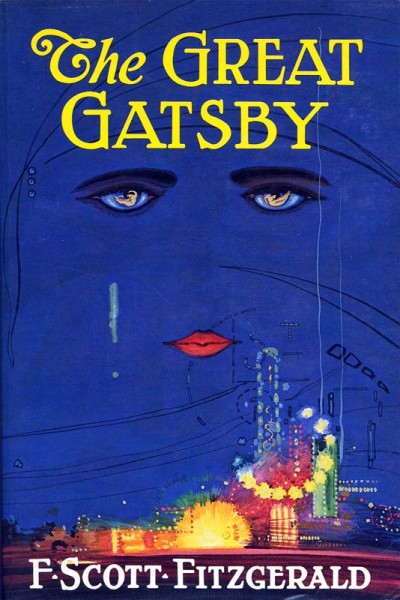
 The Great Gatsby by F. Scott Fitzgerald
Final Verdict: 4.0 out of 4.0
YTD: 37
Plot/Story:
4 – Plot/Story is interesting/believable and impactful (socially, academically, etc.)
Nick Carraway, our “honest” narrator, is a small-town, Midwestern boy who once spent some time in New York with the greatest man he has ever known, Jay Gatsby. To Nick, Gatsby is the embodiment of the American Dream. He is rich, powerful, attractive, and elusive. Gatsby is surrounded by an aura of mystery and illusion, not unlike L. Frank Baum’s Great and Powerful Oz. And, like the wizard of Oz, Gatsby and all that he stands for turn out to be nothing more than carefully crafted, delicate constructs. Gatsby is the dream of a man who does not exist, living in a world where he does not belong. Although Nick, at first, understands that Gatsby is far from being who pretends to be, it does not take long for Nick to give in to the dream and to believe wholeheartedly (or to willingly consent to suspend disbelief) in the ideals that Gatsby represents. Ultimately, Nick falls in love with Gatsby, or at least with the fantasy world that Gatsby champions; and, a romantic at heart, Nick helps Gatsby to preserve his dream and to pursue his one primary quest: Daisy Buchanan.
Characterization:
4 – Characters extraordinarily developed.
Nick Carraway, the narrator, is perhaps the most interesting character in the novel. He is simultaneously the one person who seems to see through Gatsby and to understand the facade, but also the person who most adores Gatsby and who cherishes the dream that this man represents. Carraway must continually lie to and deceive himself, while attempting to reassure the reader of his honest nature and unbiased intentions. Gatsby, or James Gatz, is fascinating in that he represents all aspects of the American Dream, from the tireless pursuit of it to the actual embodiment of it, and also, tragically, the loss of it (or realization that it does not really exist). The other characters, Daisy & Tom Buchanan, Mr. Gatz (Gatsby’s father) Jordan Baker, and others are all interesting and important in their relationship to Gatsby. We see Daisy as the traditional Jazz Age “flapper” – a woman interested only in beauty and riches; she returns Gatsby’s interest only because he is so materially advantaged. Tom is the representative of “Old Money” and its condescension to but vehement dislike of the nouveau-riche. He is racist, sexist and wholly unconcerned for anyone but himself. Jordan Baker, the artists, and others represent the various unspoken but ever-present notions of sexual exploration, individualism, and self-gratification that are indicative of the period.
Prose/Style:
4 – Extraordinary Prose/Style, enhancing the Story.
What typically draws readers to this book, whether or not they come away with the traditional understanding of the novel (a love story, a censure on the American Dream, etc.) is its strikingly beautiful prose. There are moments of description in this narrative which nearly take one’s breath away, particularly as they often come unexpectedly. Fitzgerald’s brilliance lies in his ability to undercut his every thought, showing both the positive and negative arguments of a situation within the very same paragraph (or sentence, even). This is perhaps best demonstrated in the final page of the novel, where the beauty of the dream that is Gatsby is contrasted with the disillusionment of those pursuing the dream. Fitzgerald explores the power of the American Dream, the heart-pounding, soul-shaking evocation of those early American immigrants who looked upon the new shores with such hope and longing, with such pride and eager determination, only to be crushed by the never-ending struggle to achieve the unattainable; to be trapped in a timeless, ageless, persistent dream that never amounts to anything but the dream. Fitzgerald’s prose and construction somehow manage to capture all of this, as the actions and events of the story itself do. It is a wondrous sight to behold and perhaps the primary reason why so many consider this to be the greatest American novel, and certainly Fitzgerald’s magnum opus.
Additional Elements: Setting, Symbols/Motifs, Resolution, etc.
4 – Additional elements improve and advance the story.
The Great Gatsby by F. Scott Fitzgerald is quite possibly the most widely-read piece of American Literature. But, while it is read by many, it is understood by few. For the majority of readers, The Great Gatsby is a love story. Jay Gatsby and Daisy Buchanan are the 1920s American Romeo & Juliet – two star-crossed lovers whose destinies are intertwined and whose fates are tragically sealed from the beginning; however, the love story is a facade. Does Gatsby love Daisy? Sure, but only insomuch as he has built up the idea of Daisy in his mind. Does Daisy love Gatsby? Not in the least – he was a whim for her when they were young, and he is desirable to her because of his wealth when they are older. Other readers find the novel to be a depressing critique of the so-called American Dream, one which, perhaps, can never truly be reached. Similar to Dreiser’s Sister Carrie, this story predicts a bleak fate for America. No matter how hard one works or how much one achieves, the American Dreamer will always want more – satisfaction & contentment can never be achieved. This, in my opinion, is closer to the true nature and purpose of The Great Gatsby, but not quite all. This is not a love story, nor is it strictly about one man’s striving for the American Dream. Instead, it is a story about a restless nation. It is a story about wealth and the disparity between “Old Money” and “New Money.” Fitzgerald, through his narrator, Nick Carraway, has created a dreamy, illusory vision of a society of dreamers – shallow, unfilled people who are rising too fast, consuming too much. Their children are neglected, their relationships disrespected, and their spirits crushed beneath the weight of soulless riches. This is the story of The Lost Generation and the lies they must tell in order to continue living every day when they are so sad, lonely, and disillusioned.
Suggested Reading for:
Age Level: Adult
Interest: Modernism, American Mythology, Idealism, Jazz Age, American History, Prohibition, Unreliable Narrators, Anti-Semitism, Racism, Class/Wealth in America.
Notable Quotes:
“What foul dust floated in the wake of his dreams that temporarily closed out my interest in the abortive sorrows and short-winded elations of men.”
“That’s the best thing a girl can be in this world, a beautiful little fool.”
“He smiled understandingly-much more than understandingly. It was one of those rare smiles with a quality of eternal reassurance in it, that you may come across four or five times in life. It faced–or seemed to face–the whole external world for an instant, and then concentrated on you with an irresistible prejudice in your favor. It understood you just as far as you wanted to be understood, believed in you as you would like to believe in yourself.”
“He knew that when he kissed this girl, and forever wed his unutterable visions to her perishable breath, his mind would never romp again like the mind of God. So he waited, listening for a moment longer to the tuning-fork that had been struck upon a star. Then he kissed her. At his lips’ touch she blossomed for him like a flower and the incarnation was complete.”
“Gatsby believed in the green light, the orgiastic future that year by year recedes before us. It eluded us then, but that’s no matter–tomorrow we will run faster, stretch out our arms farther…. And one fine morning– So we beat on, boats against the current, borne back ceaselessly into the past.”
 Roof Beam Reader