Roof Beam Reader
Adam Burgess
BBAW Day 1: Appreciation! (#BBAW)


Once again, I am participating in Book Blogger Appreciation Week this year. According to BBAW’s “About” page, “Book Blogger Appreciation was started by Amy Riley of My Friend Amy in an effort to recognize the hard work and contribution of book bloggers to the promotion and preservation of a literate culture actively engaged in discussing books, authors, and a lifestyle of reading.”
Today’s Topic is: Appreciation!
As BBAW states, “there are no awards this year, but it can still be hard to navigate the huge universe of book blogging. Share with your readers some of the blogs you enjoy reading daily and why.”
Last year, Roof Beam Reader was privileged enough to have been nominated and then short-listed for “Best Literary Fiction” blog. It was a humbling and gratifying experience, but I am excited to focus entirely on the larger community, this year!
You can visit the BBAW Site to find links for other blogs participating in BBAW.
There are honestly dozens upon dozens of book bloggers out there who I would love to recognize individually but for the sake of time and space (and all of our sanity), I have decided to choose 5 book bloggers with whom I communicate regularly and/or whose blogs I visit consistently.
Allie of A Literary Odyssey: Allie was one of the first book bloggers I “followed,” when I left my little independent self-hosted bubble and joined the connectivity-happy world of Blogger. Her blog and her journey through the Classics are special and unique, which makes her posts a joy to keep up with. I have collaborated with Allie on a few projects, and we are currently two of the co-moderators for The Classics Club.
Jillian of A Room of One’s Own: Jillian is the founder and another co-moderator of The Classics Club. What I love about Jill is that she considers herself more of an “explorer” than a blogger or reviewer. She is also a very smart cookie! She and I often disagree on books or topics, but what is so great about our disagreements is that they are always classy and well-argued, largely because Jill doesn’t let anyone get away with stating an opinion and walking away. She wants to know why people see things a certain way, which means I get practice thinking deeply and critically about my opinions whenever she & I have a discussion.
Judith of Leeswammes’ Blog: Leeswammes and I tend to have similar but different tastes in books; or, if not tastes , then experiences. While we have read a lot of the same books, Leeswammes tends to read more contemporary literary fiction, whereas a majority of my time is spent with the Classics. This is great, though, because a lot of the contemporary works I have added to my wish list have been ones I read about on her blog! She also hosts the Literary Giveaway Hop, which I participate in twice every year. It’s great to find other bloggers dedicated to literature and literary fiction, in a world largely dominated by YA/Paranormal reading.
Bev of My Reader’s Block: What I enjoy most about Bev’s blog is its depth and range. While it is primarily about books, she includes other things from time-to-time, which allows her readers a glimpse at who she is, not just what she thinks. This adds a nice layer of personality to the blog. What I enjoy most about BEV is her engagement! She actively participates in all sorts of events – she responds to comments and she visits other blogs to comment on others’ posts regularly, too. She seems to have a real spirit of community and community is what I most love about the book blogging world.
Laura of Owl Tell You About It: Laura hosts a self-identified “eclectic book blog,” wherein one might find reviews of classics, thoughts on contemporary or YA fiction, personal posts, giveaways, and much more. Laura is one of my newer favorites and what I love about her is her passion and enthusiasm, and of course her willingness to try new things (with regard to reading). This is something I try to do, too, so I respect her for it! How could you not love a blogger who currently has This Side of Paradise, The Catcher in the Rye, The Perks of Being a Wallflower, and The Marbury Lens on her reading docket all at the same time?! Not to mention some David Levithan (a personal favorite) and short stories/novellas as well as longer fiction. Hers is an exciting blog that I am grateful to have discovered!
So, who are YOUR favorite bloggers? Do you read any of the blogs above?
Review: A Lost Lady by Willa Cather
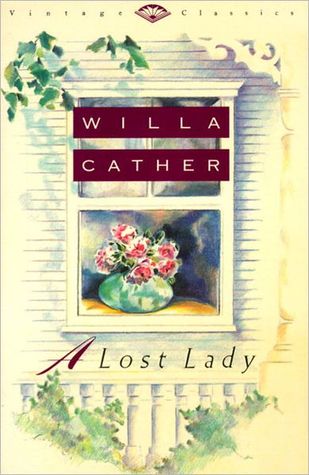
 Book Review Template
Final Verdict: 3.75 out of 4.0
YTD: 36
Plot/Story:
4 – Plot/Story is interesting/believable and impactful (socially, academically, etc.)
“If her image flashed into his mind, it came with a brightness of dark eyes, her pale triangular cheeks with long earrings, and her many-coloured laugh. When he was dull, dull and tired of everything, he used to think that if he could hear that long-lost lady laugh again, he would be gay.” Thus sums up the sense of loss, nostalgia, longing and romance which characterizes Willa Cather’s A Lost Lady. The narrator, Niel, is relating the story after thirty years. He is looking back on his boyhood and young manhood, remembering a certain woman who helped to define and destroy his ideals of chivalry, morality, and responsibility. When Niel is young, he and the other neighborhood boys adore Mrs. Marian Forrester, the wife of Captain Forrester – they are the Queen and King of little Sweet Water. With the rise of big industry – Federal banks and stock brokers- comes the fall of small town power and wealth. Suddenly, the Captain, a once mountainous figure, hero to young Niel, finds himself broken and displaced. His decline leads to the necessary rise (or adaptation) of his wife, and the subsequent disillusionment of Niel. Before Niel’s very eyes, the neighborhood bully, Ivy Peters, an ugly, crass, ignorant man, becomes the town’s champion and, suddenly, all Niel holds dear begins to disappear – the “Great West” becomes lost to progress.
Characterization:
3 – Characters well-developed.
Cather’s characters, like her prose, are sparsely and quietly drawn. They are best examined in relation to one another, rather than on their own individual descriptions or by their particular monologues. Their growth (or lack thereof) oftentimes must be inferred by decisions they make and by the things they leave unsaid. Still, there are clearly differences in each of the characters and purposes which each of them serve. Marian, for instance, is the opportunist. She is perhaps the most capable but vacuous person in Sweet Water. She takes on the characteristics of the men she is with and it can be reasonably understood that, without a strong man in her life, she would be nothing at all. Niel is the romantic – he is in awe of Captain Forrester, the great American pioneer, whose strength and composure reminds Niel of a great mountain, immovable and majestic. As Captain Forrester’s health declines and as Niel learns more about the Captain’s relationship with Marian (including sad notions of honor), Niel becomes jaded and confused, losing grip with his romantic notions. Ivy Peters is animalistic and amoral. His purpose is to make money at all costs. He is the enemy of the aesthete (Captain Forrester) and the champion of capitalism and unchecked wealth and power. In addition to the main characters are a few minor characters who also serve their purposes – the Forrester’s servants, including “Black Tom,” and the bread boys, German immigrants, who serve to demonstrate the disconnect in classes and the whispered racism of this region. Also present are the town gossips, the lower-middle class ladies whose primary responsibilities are to nose their way into others’ business and to demonstrate with clarity the fall which the Forresters suffer.
Prose/Style:
4 – Extraordinary Prose/Style, enhancing the Story.
Cather wrote this novel in two parts, so that the structure of the novel would be equal to its primary dichotomy (the eradication of regionalism and the rise of nationalism). In part one, we see the almost idyllic home life of the Forresters. They are popular, beautiful, wealthy, and well-respected by the entire town (with the exception of Ivy Peters, whose arrogance and jealousy will not allow him to respect anyone who has more than he does). They represent the top-tier, the upper-echelon of the rural class – a railroad giant and his wife, landowners, who displaced the native population to create their own Eden. In part two, the Forresters suddenly find that they are the ones who are being displaced. The railroad fails, the local banks and business fail, and the Captain’s own sense of honor, pride, and moral responsibility to his town and people leave him bankrupt. Soon, it is the Ivy Peters’ of the world who become dominant – the men who answer only to themselves. These men feel no sense of responsibility to anyone else and they, like locusts, will consume anything in their paths, without regard for those who might be ruined in the process. The simple but pointed prose allows for moments of irony and clarity, wherein we witness characters exposed in ways they would not normally allow themselves to be (Marian, alone in the field, a real smile on her face; Captain Forrester, retelling the story of his settlement and being caught by moments of remorse for what he may have done to the native population, etc.). The language, prose, and structure, though simple and somewhat sad, match the construction of the major themes perfectly.
Additional Elements: Setting, Symbols/Motifs, Resolution, etc.
4 – Additional elements improve and advance the story.
In this seminal work, the first of Cather’s to break away from traditional American Romanticism and into the realm of Realism, there is a clear dichotomy of virtue: Regionalism vs Nationalism; Rural vs. City; Pioneer vs. Industrialist; Tradition vs. Opportunity. The title would lead one to believe that the story is about Marian Forrester, the woman who Niel idolizes and whose story he narrates for us; however, the terms “Lost” and “Lady” seem to take on many meanings and one begins to realize that the story is not so much about Marian as it is about the loss of Niel’s idealism and naivety. Marian is the one character who can adapt to any situation and, though this lets Niel down, it is her great strength and it is this inability to accept and grow with change which leaves Niel forever a boy in Marian’s eyes. Furthermore, Cather employs a common literary theme (common, particularly to the preceding Romantic and Gothic eras) of Money/Wealth & Power/Health. As Captain Forrester’s money worries increase, as he becomes bankrupt, so does he lose his vitality, suffering from illness and injury until, finally, he succumbs to bankruptcy and to old age.
There is also much being said about the relationship between men and women, particularly in terms of sexual power and dominance. Cutting is a persistent theme throughout the book – each of the men, at some point, performing an act of cutting (sexual power) in the presence of Marian Forrester who, though capable, is constantly seeking to be controlled and, in her submissiveness, she adapts to become the woman her man needs her to be. There is also the theme of “falling,” which both opens and closes the narrative. Individual people, like Captain Forrester, as well as larger ideas, such as the romantic ideal of the Great American West and the small town bank, will fall from prominence and be replaced by new powers, human and otherwise. Ultimately, A Lost Lady is an elegy – it is one man’s (Niel’s) act of lamenting the loss of a particular era and predicting the impersonal, power and money-hungry era to come.
Suggested Reading for:
Age Level: High School+
Interest: Regionalism, Nationalism, Industrial America, Realism, Sexual Dynamics, Power, Money/Wealth & Health.
Notable Quotes:
“I’m just as good as she is.”
“There was something wild and desperate about the way the darkened creature beat tis wings in the branches, whirling in the sunlight and never seeing it, always thrusting its head up and shaking it, as a bird does when its drinking.”
“His clumsy dignity covered a deep nature, and a conscience that had never been juggled with. His repose was like that of a mountain.”
“My philosophy is that what you think of and plan for day by day, in spite of yourself, so to speak – you will get.”
“As she turned quickly away, the train of her velvet dress caught the leg of his broadcloth trousers and dragged with a friction that crackled and threw sparks.”
“In that instant between stooping to the window-sill and rising, he had lost one of the most beautiful things in his life.”
“I feel such a power to live in me.”
“When women began to talk about still feeling young, didn’t it mean that something had broken?”
“She had always the power of suggesting things much lovelier than herself, as the perfume of a single flower may call up the whole sweetness of spring.”
“The longer Niel was with Captain Forrester in those peaceful closing days of his life, the more he felt that the Captain knew his wife better even than she knew herself; and that, knowing her, he, -to use one of his own expressions, -valued her.”
The Literary Others: An LGBT Reading Event (Sign-Ups)
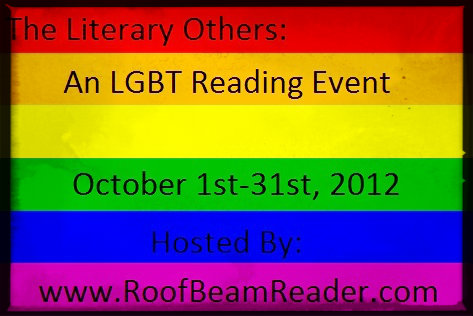

Welcome to the sign-up post for:
The Literary Others: An LGBT Reading Event!
October is LGBT History Month, so I thought it would be a great opportunity to host my second full-blown reading event, following the success of Austen in August.
I know my blog readers are an eclectic bunch. We have lovers of literature and the classics and lovers of Young Adult fiction. We have lovers of fantasy, science-fiction, poetry, and drama. We have non-fiction readers, audiobook listeners, and those wacky dystopian fans!
Well, did you know that, across all these genres and media types, there exists a wide-range of very powerful, very entertaining LGBT material? For many, this event could be an opportunity to read your very first gay classic; for others, it might be a time to re-read or re-visit favorite authors and share why you love them and their works so much.
So, for this event, the goal is to read as many pieces of gay literature as you want/are able to, during the month of October. Biographies, audiobooks, and re-reads count.
What is LGBT? LGBT stands for Lesbian, Gay, Bisexual, and Transgender. For the purposes of this event, “LGBT” works will refer to those which are written by a gay, lesbian, bisexual, or transgender author, or to those works whose major themes/characters are LGBT-centric (Books with a gay protagonist, books dealing with homophobia, poetry by a lesbian, stories where a character is dealing with gender identity issues or changes, etc.).
I will post throughout the month on different subjects related to the study of LGBT literature and theory, as well as my own reviews of the LGBT books I finish. I will also be offering giveaways, and I am hopeful that some participants will be interested in writing guest posts or hosting giveaways of their own, to make this more interactive.
If you are going to participate, then simply plan to read books by gay writers, or books whose primary themes/characters are gay/lesbian, etc. Below are a few representations of LGBT works within the many possible genres. This list is by no means comprehensive, it is simply a starting point.
Literature & Classics
- Giovanni’s Room by James Baldwin
- Nightwood by Djuna Barnes
- The Garden of Eden by Ernest Hemingway
- The Well of Loneliness by Radclyffe Hall
- Maurice by E.M. Forster
- Orlando by Virginia Woolf
- The Picture of Dorian Gray by Oscar Wilde
- A Single Man by Christopher Isherwood
- At Swim, Two Boys by Jamie O’Neill
Contemporary Fiction
- Oranges are not the Only Fruit by Jeanette Winterson
- Annabel by Kathleen Winter
- In One Person by John Irving
- Running With Scissors by Augusten Burroughs
- Rain God by Arturo Islas
- Memory Mambo by Achy Obejas
- Under the Poppy by Kathe Koja
- A Son Called Gabriel by Damian McNicholl
- The Swimming Pool Library by Alan Hollinghurst
Young Adult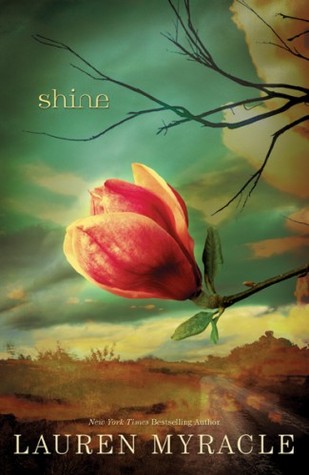
- Boy Meets Boy by David Levithan
- Shine by Lauren Myracle
- I’ll Get There, It Better Be Worth the Trip by John Donovan
- Becoming Nancy by Terry Ronald
- The Vast Fields of Ordinary by Nick Burd
- Jumpstart the World by Catherine Ryan Hyde
- Empress of the World by Sara Ryan
Science-Fiction/Fantasy
- Vintage: A Ghost Story by Steve Berman
- Jumping off the Planet by David Gerrold
- Shadow Man by Melissa Scott
- Santa Olivia by Jacqueline Carey
- Huntress by Malinda Lo
- The Last Herald Mage series by Mercedes Lackey
- Counterpoint (Songs of the Fallen series) by Rachel Haimowitz
Poetry & Drama
- Tender Buttons by Gertrude Stein
- Angels in America by Tony Kushner
- Howl by Allen Ginsberg
- The Complete Poems by Sappho
- The Complete Poems by Emily Dickinson
- Leaves of Grass by Walt Whitman
- The Satyricon by Petronius
Non-Fiction/Memoir
- Fun Home: A Family Tragicomic by Alison Bechdel (graphic novel)
- Zami: A New Spelling of My Name by Audre Lorde
- A Boy’s Own Story by Edmund White (semi-autobiographical)
- Running With Scissors by Augusten Burroughs
- The History of Sexuality by Michel Foucault
- Borderlands/La Frontera by Gloria E. Anzaldua
- Mississippi Sissy by Kevin Sessums
- The Persian Boy by Mary Renault (historical fiction)
Explicit/Erotica (Literary)
- Teleny, or The Reverse of the Medal by Oscar Wilde
- Our Lady of the Flowers by Jean Genet
- The Wild Boys by William S. Burroughs
- Le Livre Blanc by Jean Cocteau
In the meantime, if you would like to host a giveaway or provide a guest post, please: CLICK HERE.
And if you want to sign-up to participate in The Literary Others Reading Event, simply leave a comment on this post saying YOU’RE IN! Maybe include some of the books you hope to read, too. I plan to read Shine by Lauren Myracle, Howl by Allen Ginsberg, and Vintage: A Ghost Story by Steve Berman.
Please also post the button somewhere on your blog (in an announcement post or in your blog’s side-bar) so that we can spread the word, gather excitement, and encourage participation. It goes without saying that this is meant to be a positive, fun, and educational event, so bigotry of any kind will not be tolerated.
Sign-ups are open from now through October 10th. If you sign-up after October 10th, you can still absolutely participate, but you may not be eligible for some of the early giveaway prizes.
To Share/Discuss on Twitter, Use Hashatag #OthersLitLGBT
Review: Le Livre Blanc by Jean Cocteau
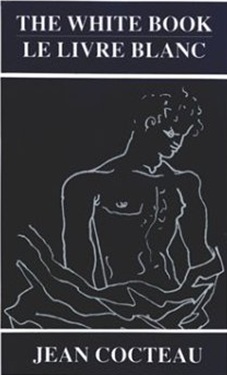
 Le Livre Blanc by Jean Cocteau
Final Verdict: 3.5 out of 4.0
YTD: 35
Le Livre Blanc was first published anonymously in 1928. Many people immediately attributed the work to Cocteau, based on its themes, style, and presence of characters from other Cocteau works; however, Cocteau remained coy about whether or not the work was his, even going so far as to pretend to accept unearned credit for it. Margaret Crosland tells us that Cocteau, in a letter regarding authorship of the book, says: “. . . be not uneasy if you find it in you to attribute this book to me. I’d not be in the least bit ashamed of it. And I simply beg the unknown author’s forgiveness for thus taking unfair usurping advantage of his anonymity.” Of course, Cocteau is doing what he does in his stories, which is to blend a certain amount of fact with a necessary amount of fiction. His works are not autobiographical, but they certainly draw from his real life experiences. Similarly, he would have taken credit for this book if he could have, but it was too dangerous. The book describes the life of a homosexual, freely and in no uncertain terms, including various sexual escapades. It also makes a passionate plea, in the end, not just for “tolerance” of homosexuals, but for free, un-arguable acceptance. The topic, today, is still touchy for many people, but in 1928 it could have been suicidal and career-damaging to put one’s name to such thoughts.
The term “Le Livre Blanc” is used in France to describe official legal (parliamentary) documents; it is the same (“White Paper”) term used for the same types of documents in England. So, though the conclusion of the story is an emotional crying-out for social and political change, in regards to how this certain group of people are viewed and treated, the majority of the text itself is presented not in emotional terms, but as pure fact. This lends itself well to that final passage because the point or moral, if you will, is that “we people just happen to exist.” It is almost a sociological documentary in print, particularly after the inclusion of the semi-erotic (although, in my opinion, they are not so much erotic as they are explicit, which could also be said of this story) ink drawings included in the later editions of the book.
There is not much to be said about characterization, since it is rather limited. This is acceptable, however, because the story is not so much about the narrator’s personal journey or the growth/development of any one person within the tale; rather, it is about the presence, acknowledgment and acceptance of an entire group of people as members of the human community and as typical people experiencing the human condition as anyone else would. The descriptions are sparse but raw and to the point, mirroring the uncomplicated, direct prose and the simple style. Cocteau does not want to complicate his message with tricky construction or complicated language, which turns out to be not only the appropriate choice, but the most effective one.
Ultimately, the book works as both a descriptive narrative which one can enjoy and also as a historically significant and socially important case study on homosexual culture. It presents the existence of gay men and women as being a fact of life, then takes us on a journey with a young man who travels the ups-and-downs of life and love, as we all do. He tries and fails at relationships and love; he tries and fails at discovering and rediscovering himself. At one point, he seeks out a place in the Abbey, grasping onto religion with both hands, in hopes that this new focus would cure him and allow him to re-enter the world as a “pure” and renewed (normal) man. This, of course, does not work, and the final pages reflect a truer self-realization for the narrator which coincides with the authors wish that he and this group of people be viewed as simply people. For readers interested in the history of gay literature, this book is a necessity.
Suggested Reading for:
Age Level: HS+
Interest: Homosexuality, Cultural Studies, GLBT History, Art and Literature, France.
Notable Quotes:
“I will not agree to be tolerated. This damages my love of love and of liberty.”
“The world accepts dangerous experiments in the realm of art because it does not take art seriously; but it condemns them in life.”
“In exiling myself I am not exiling a monster, but a man whom society will not allow to live, since it considers one of the mysterious cogs in God’s masterpiece to be a mistake.”
10 Books to read this Fall
 The folks over at The Broke and the Bookish have come up with another “Top 10” list that I couldn’t help but think about. With the start of school last week, and with my tendency to be over-organized and list-happy in the first place, I found this week’s topic not just interesting, but appropriate and helpful.
I will be reading far more than 10 books this Fall (because I need to read 20+ just for school), but I thought I would choose 5 books from my required reading that I’m most looking forward to, plus 5 books that I hope to read for fun. Here we go!
Required Reading:
1. The Good Soldier by Ford Madox Ford. I have never been particularly excited by or interested in reading this particular book; however, I have never read anything by Madox Ford, so when I saw him on the syllabus for my Narratology course this Fall, I thought: “Cool!” I’m always happy to add new/more authors to my bucket.
 2. The Sense of an Ending: Studies in the Theory of Fiction by Frank Kermode. Another text for my Narratology course. I imagine this one will be rather dense (just like the one I’m currently reading, Narratology by Schmid, but it is a fascinating subject for anyone studying literature at an advanced level, so I look forward to it.
3. White Noise by Don DeLillo. This one is for my American Lit seminar course, and I am very excited about it. DeLillo is another author I have yet to experience, and this specific book of his has been on my “wish list” for a long, long time. I now own a copy & will finally get to read it and discuss it in an academic setting. Stoked!
4. Green Grass, Running Water by Thomas King. Another for my American Lit seminar. I know absolutely nothing about this author and I know absolutely nothing about this book; BUT, my experiences with Native American fiction, so far, have all been fantastic. It’s a particular sub-genre of American Lit. that I find very interesting and appealing, so I can’t wait to delve a little deeper with this one.
5. From Puritanism to Postmodernism: A History of American Literature by Malcolm Bradbury and Richard Ruland. This is the only non-fiction text listed on my syllabus for American Lit, and it is “optional.” Optional texts, as far as school syllabi are concerned, tend to become “required” reading for me, personally. I feel that the professors put these texts on their syllabi for specific reasons (1. They add to the content of the course; 2. They aid understanding of the subject matter; 3. They are resources when it comes to writing research and analysis papers, etc.), so I may be the only one in the class who actually reads this one, but considering I’m a student of American Lit, how could I not? And how could I be anything but excited to get started?!
Pleasure Reading:
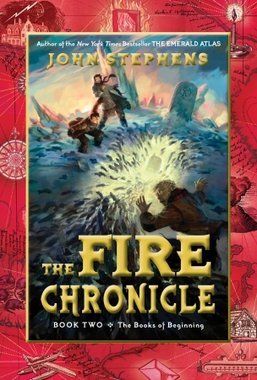 6. The Fire Chronicle by John Stephens. This is book #2 in the YA series, Books of Beginning. The first book, The Emerald Atlas, came out last year. I was lucky enough to receive an ARC and I fell in love with it. It really filled a void for this Harry Potter-loving reader! I can’t wait to get this book in October.
7. Passenger by Andrew Smith. This is the highly anticipated sequel to Smith’s The Marbury Lens, which I just recently read and reviewed for our Andrew Smith Saturdays event. I really enjoyed The Marbury Lens, and I have enjoyed every Andrew Smith book so far (I own and have read his complete works), so I’m definitely eager to read this one in October as well.
8. The Mark of Athena by Rick Riordan. Another October release! Wow – it’s going to be a busy month. I’m not sure I’ll actually be able to read all of these in October, but I know I’ll be buying this one, as well as the other 2, on their release dates. Mark of Athena is Book 3 in the Heroes of Olympus series, which I have loved so far. I am a big fan of the Percy Jackson & the Olympians series, as well as The Kane Chronicles, both by Riordan. So, this one is a must.
9. The Good Book: A Humanist Bible by A.C. Grayling. I’ve had this one on my shelf since it released quite some time ago. I keep wanting to read it, but keep putting it off (something I am forced to do far too often, with far too many books!). I really have been itching to get it done, though – so I’m going to try to read it in pieces over the course of the next few months.
10. Cannery Row by John Steinbeck. I have just a few books left on my 2012 TBR Pile Challenge List to complete (I’m almost done!), and this is one that I most look forward to reading. Every time I read something by Steinbeck (fiction or non-fiction), I fall deeper and deeper in love with him. There are a few books left on my list (Hemingway’s Islands in the Stream and Dickens’s Our Mutual Friend, for example) that I very much look forward to, but I think Steinbeck will be up next!
There you have it. 10 books, required or otherwise, that I’m really looking forward to reading this Fall! What’s on your “to read” list for the coming months??
 Roof Beam Reader