Roof Beam Reader
Adam Burgess
Review: The Eyre Affair by Jasper Fforde

The Eyre Affair by Jasper Fforde
Final Verdict: 3.5 out of 4.0
YTD: 67
Plot/Story:
3 – Plot/Story is interesting & believable.
Thursday Next, Special Ops LiteraTec Agent, has a secret or two. The biggest secret, perhaps, is that, as a young girl, she once met Mr. Rochester inside Bronte’s Jane Eyre. In doing so, she changed the story slightly, making the meeting scene between Jane and Mr. Rochester slightly more interesting than it had been before. Now, decades later, Mr. Rochester leaves the book to visit her – when she is in grave danger. Hunted by and hunting the formidable Acheron Hades, the world’s most dangerous and devious criminal, Thursday Next comes to realize that she and Mr. Rochester are not the only ones who can jump from reality to fiction. Acheron himself soon learns this secret – and it is up to Thursday to stop him before he destroys some of the world’s greatest pieces of literature forever, by visiting the original manuscripts and kidnapping their main characters. After a beloved Dickens character is murdered, Thursday is given all the power and money the government can grant her, but will it be enough to stop Hades? And who, of the many possible options (Thackeray? Shakespeare? Austen?), will be the next target?
Characterization:
3 – Characters well developed.
Characterization is definitely a strong point for Fforde. What makes this book stand out in regards to characterization is the fact that, not only does Fforde create his own characters, good and bad, who each have their own histories, relationships, quirks, etc. – but he also must re-imagine some of literature’s most beloved and well-known characters, making them believable in regards to their original works, but also relative to this story’s contemporary plot. Fortunately, Fforde manages this quite well, and the outcome (Dickens and Bronte characters interacting with people from the 21st Century and 21st-Century folks visiting Victorian England?) is quite delightful. Some of the minor characters, such as Thursday’s father and Bertha Mason, did tend to overshadow some of the primary characters at times, which was a bit odd. Thursday, the main character and narrator, was one of the least empathetic, in my opinion, which made it at times difficult to enjoy the story (because, although the reader roots for her as the “good guy,” she is not exactly a champion). Still, the characters’ stories overall are interesting, as are their histories (many are connected through distant pasts while others are new acquaintances who just happen to have excellent chemistry). Hades is evil for evil’s sake, as are his henchmen, which is admittedly difficult for me to swallow (I like explanations for my bad guys!) but it works fine in this case, particularly since the primary character, at least, is flawed (if the good guy was purely good in addition to the bad guy being entirely evil, I would not have been able to enjoy the story nearly as much).
Prose/Style:
4 – Extraordinary Prose/Style, enhancing the Story.
The best element of this story is the prose and style. The story itself is a bit odd. It is a mystery and a thriller. It’s contemporary literature and it’s a throwback to the classics. It’s fiction and it’s meta-fiction. It is science fiction and realism. What holds together all this craziness? The writing. Fforde is clever enough to realize that, with everything he is attempting here, a linear plot and limited first-person narration is the way to go. It keeps the story grounded and keeps the reader engaged; all the while the story verges on spinning out of control. The narrative voice is simultaneously witty and sincere – serious in what it aims to achieve, but light-hearted enough to poke fun at itself. The reading level is probably high school, but even more experienced readers will appreciate what Fforde accomplishes – although a fun read, it is not necessarily airy.
Additional Elements: Setting, Symbols/Motifs, Resolution, etc.
4 – Additional elements are present and enhance the story.
The enormity of literary allusions will leave less experienced readers (particularly those who do not read classics or literary fiction) feeling a bit out of the loop (or simply missing out on what others are enjoying, without even knowing it). As The Wall Street Journal notes, this book is “filled with clever wordplay, literary allusion and bibliowit” and it “combines elements of Monty Python, Harry Potter, Stephen Hawking, and Buffy the Vampire Slayer.” What could be more fun for bibliophiles and the literati than reading a sci-fi mystery-thriller all about books? How many of us would sacrifice ourselves to save the original works of our favorite author? To protect our favorite book from permanent destruction? The power of books – the danger of tampering with the classics – the sheer joy of finding oneself immersed in a literary mystery (who really wrote the Shakespearean plays, eh?). The book was a joy – a page-turner- a carnival ride for book lovers. This is the first book in a series that I definitely plan to continue reading.
Suggested Reading for:
Age Level: High School+
Interest: Literature, Literary History, Mystery, Science-Fiction, Action/Adventure, Meta-fiction.
Notable Quotes:
“Religion isn’t the cause of wars, it’s the excuse.”
“I think that you could have used your vast intellect far more usefully by serving mankind instead of stealing from it.”
“No bond is stronger than that welded in conflict; no greater friend is there than the one who stood next to you as you fought.”
“I’m not mad. I’m just…well, differently moralled, that’s all.”
“Literary detection and firearms don’t really go hand in hand; pen mightier than the sword and so forth.”
“Ordinary adults don’t like children to speak of things that are denied them by their own gray minds.”
Review: Jumpstart the World by Catherine Ryan Hyde
In honor of the paperback release of Catherine Ryan Hyde’s fabulous novel, Jumpstart the World, I wanted to re-post my review of the book. Let me know what you think, and head over HERE to learn more about the author and the book. If you follow Catherine on Twitter (@cryanhyde) you will also find links to recent guest posts about the book and some awesome giveaways happening!

Jumpstart the World by Catherine Ryan Hyde
Final Verdict: 3.75 out of 4.0
YTD: 11
Plot/Story:
4 – Plot/Story is interesting/believable and impactful
Catherine Ryan Hyde’s touching and daring Jumpstart the World is all about life and its many complications and confusions. Fifteen-year-old Elle is dumped off in her own apartment, by a mother with seriously troubling narcissistic/co-dependency issues. She chooses her new love interest over her own daughter, and while mom and her man are off on a cruise together (during Elle’s sweet sixteen birthday, no less), Elle is left to learn to live on her own – she gets a cat (Toto, a cat with a face only an adopted mother can love); she meets a few people at school and slowly starts to form friendships, sort of; and she introduces herself to the young couple living next door, Frank and Molly. There, the real trouble begins. Frank is not exactly who he appears to be – he is a sweet, kind, intelligent man, except that he was not always a man. Elle’s new friendships are tested when this information comes to light, and she must learn to accept others and deal with her own confusing romantic feelings, or return to that lonely, isolated world she had just begun to break free from.
Characterization:
3 – Characters well developed.
There are so many interesting characters, from Elle and her mother, to Frank and Molly, right down to that strange, sad little cat and Elle’s surprisingly new-found best friend, Wilbur. What is great about each of the characters is that they truly are identifiable and independent from one another – they each have their own quirks, personalities, and annoyances. There is definitely some room for growth, though. With so many interesting people interacting with one another, I definitely found myself wishing that the book was 50 or 100 pages longer, so there would be more time to learn about all these wonderful and interesting people. Wilbur, for instance, and Frank – there seemed so much to know about each of them – so much history behind each of their present personalities, but that history was reduced to one or two descriptive lines. Powerful descriptive lines, no doubt, but unbearably short. Elle’s relationship with her mother, too, was dynamic and intriguing – one of the most realistic and authentic relationships in the book, but it was kept somewhat on the periphery. Overall, I loved the characters in general, except, if I am being honest, for the main character. Elle was the one that bothered me most – she seemed so incredibly self-centered and juvenile. Of course, she was only sixteen and she clearly had a lot of growing up to do, but this did not prevent me from wanting to shake my fist at her on more than a few occasions. Still, when a writer can make you that irritated by or exasperated with one of her characters, that is typically the sign of a job well-done.
Prose/Style:
4 – Extraordinary Prose/Style, enhancing the Story.
Hyde’s prose moves along wonderfully well. It is evenly paced and fluid. The narration seems genuine and believable. Probably the greatest achievement is the narrative voice, which resonates strongly as that of a teenage girl, muddle-minded and working things out on her own for the first time. I do not typically relate to female narrators or main characters, so I rarely find myself reading books with these components; however, it was very easy to relate to Elle and the single-best reason for this was the narration – it draws you in and it appeals to or calls to mind that little outsider within every one of us, asking us to remember that we are all the same, really – people just looking for a place, similar in most ways, including in the way we all often self-consciously feel different from the rest.
Additional Elements:
4 – Additional elements improve and advance the story.
This is the second book I have read that dealt with the issue of gender identity and/or gender reassignment, the first being Eugenides’s Middlesex . Unlike that book, though, which deals with a hermaphroditic main character coming to realize who he is and how he was born “different,” this book is the first I have read which deals with Female-to-Male transgender reassignment or identification. The only minor complaint I have is the idea that “transphobia” does not exist in the GLBT community. When Frank is hospitalized, Elle stays with him because of his fear of being abused or mistreated there (due to the possibility of nurses/doctors not reacting well to his gender identity versus biology). When a male nurse comes to check on Frank, he identifies himself to Elle as a gay man and thus, one of the “community” – so therefore will have Frank’s back. Unfortunately, the issue is not so cut-and-dry and transphobia does exist, even within the GLBT community. Again, it is a minor complaint, as there are genuinely decent gay/straight people out there who would come to the aid of someone in trouble, as that nurse did, and I definitely do not think the author would actually argue that this issue exists in such a binary; but, I do wish the issue had not been championed on one side in the manner that it was. One of the greatest achievements of the book is its inclusion of diverse characters, from straight women and men, to gay women and men, to questioning youth and transgender adults. There are also the separations within the subcategories – the ultra-feminine gay teen male who still identifies as male in juxtaposition to the masculine female who reassigns as male. There are also the two Bobs (or Bobby’s) – the somewhat under-explained but distinguishable masculine/feminine roles in a male-male relationship. All of these different people exist in life together – never in harmony, because life is too chaotic for that, but in reality. We are what we are and we are who we are, seems to be the message. The issue of transgender-phobia and homophobia, too, is examined, but so are the ideas of coming-of-age and discovering one’s self and one’s passions – things like art, photography, mental illness, and independence.
Suggested Reading for:
Age Level: Teenage YA, Adult
Interest: Gender Identity, GLBT, Homophobia, Family, Friendship, Coming-of-Age
Notable Quotes:
“Love always looks nice. I don’t really know anyone who doesn’t enjoy it when they see it. Anyone who doesn’t, I don’t really want to know them.”
Originally posted on 2/26/11 at 10:48pm
Brief Thoughts on 8 Books
The books listed below are those I read for last week’s Read-a-Thon. I planned not to write a review for each, because I don’t really have time to play catch-up on 8 book reviews, particularly with National Novel Writing Month (NaNoWriMo) starting in two days. I did want to get some thoughts and a “rating” down for all of them, though.
1. Teleny, or The Reverse of the Medal by Anonymous (Oscar Wilde) 5 out of 5
2. The Red Pony by John Steinbeck 5 out of 5
—While I did not enjoy this one quite as much as The Pearl, it is still incredible. The Red Pony is actually a tightly woven collection of four short stories about the same young boy and his family. Steinbeck is one of America’s greatest storytellers, and I’m reminded anew of just how brilliant he is every time I pick up and read something by him. The way he recreates rural and poverty-stricken American life goes beyond genuine accuracy – it is perfection. The emotions he evokes, the nationalism (not patriotism) he inspires, and the history he harkens back to — I am never disappointed. The story of Jody, his parents, and their farm hand is the story of every American boy and his wide-eyed American dreams.
3. The Diaries of Adam and Eve by Mark Twain 4 out of 5
—Absolutely hilarious. I almost don’t know what else to say about this book. It is simple but imaginative. Hilarious but poignant. The book is a reimagining of the Creation, through the diaries of Adam and Eve. The reader first sees the world’s creation and the discovery of all life and things, including Eve, through Adam’s eyes. The diary entries are typically “male” – not much concern for anything but hunting and gratification (“What is this annoying thing that talks, talks, talks, and gets wet in the eyes when I ignore it?”). Then, the reader sees the same events and things through Eve’s eyes, which is wholly “feminine” – the pretty lights in the sky that one could reach if they only just climbed a bit higher in their tree, the moon that someone steals each morning and brings back each night, the animal friends and the new babies to love and nurture (which Adam believes must be another species – perhaps bear? Perhaps kangaroo?). Not my favorite Twain, as it is a bit simple, but it is still classic Twain – witty, cynical, holier-than-thou.
4. The Cat Inside by William S. Burroughs 3 out of 5
—For those not familiar with William S. Burroughs – he was the “godfather” to the American Beat generation. He did a lot of drugs, had sex with a lot of boys, and shot his wife when trying to aim at an apple on her head. He was a strange, twisted, brilliant man who had a bizarre love for cats. He worshipped them in a way near to the adoration given cats by the ancient Egyptians. Burroughs believed cats were the ultimate species and he allowed them to run rampant on his ranch, feeding them, playing with them, forcing friends to care for them when he had to be away. This book is a sort of collection of diary entries about his life with cats. It certainly tells of Burroughs and there are many “Burroughs-esque” elements to it but, overall, it’s probably one which could be skipped. Unless, maybe, you’re a bizarre cat lover.
5. Mockingjay by Suzanne Collins 3.5 out of 5
—The final book in The Hunger Games trilogy, and definitely my least favorite. I enjoyed certain aspects of the book – such as the inside-look at District 13 and how it is managed, not to mention the way it must readjust to the influx of new residents, as people from the other Districts flee their homes. I also appreciated that this book took place in the “real world,” outside the games – and was not just all about the champions (although, largely, it was). I was disappointed in the ending, though – it felt haphazardly constructed and unfulfilling. Too much time was spent inside District 13, doing not much at all (even the group’s attempts at rescuing the captured champions in the Capitol is left to the imagination) – too much politics, too much angst, and too quickly resolved sub-plots. The finale was predictable (though a bit welcome) and the fate of one of Katniss’s love-interests (and that relationship) was sadly, sadly deconstructed, as if Collins just got sick of having Katniss so indecisive so made up her mind for her. It was an okay book, but not a great conclusion to an otherwise interesting series.
6, 7, & 8 The Oresteia (Agamemnon, The Libation Bearers, The Eumenides) by Aeschylus 4 out of 5
—I definitely enjoyed this trilogy more than I expected to, especially since I was reading it in the late, late hours of the read-a-thon (somewhere around hour 18). It is hard to rate these as separate plays, since the trio really only works together in total – but they are separate plays and were written and performed separately at times, until the collection was completed. All-in-all, I found Agamemnon to be the strongest of the set, but each of the three were interesting. The Eumenides, in particular, with its examination of morality and judgment, a new judicial system and the struggle between old and new gods (old and new belief systems, moral structures, punishment processes, etc) was fascinating to read, particularly as precursor to modern-day judicial systems (the presence of the first ‘jury of peers’ is here). Aeschylus and The Oresteia are definitely worth the read.
November is National Novel Writing Month (NaNoWriMo). I will be writing my very first novel (at least 50,000 words) and would truly appreciate your sponsorship. All donations go to The Office of Letters and Light – a great charity working for a great cause! If you can spare even $5 (or more) – please Sponsor Me and help me stay energized to write my book and WIN NaNoWriMo!
Review: Inferno by Dante Alighieri
 Inferno by Dante Alighieri
Final Verdict: 3.75 out of 4.0
YTD: 52
Plot/Story:
4 – Plot/Story is interesting/believable and impactful.
Dante’s Inferno is the first part of a three-part epic poem, followed by Purgatorio and Paradiso. This first part is Dante’s journey through the nine circles of Hell, guided by the poet Virgil. At the beginning of the story, a woman, Beatrice, calls for an angel to bring Virgil to guide and aid Dante in his journey, so that no harm will befall him. Interestingly, the inspiration for the poem seems to be the real-life Beatrice, Dante’s love (in life) who died young. She plays a minor role in Inferno but will likely be more prominent in the later books (since Dante would hardly place Beatrice in Hell). The nine circles of Hell are (in order of entrance and of severity): Limbo, Lust, Gluttony, Greed, Anger, Heresy, Violence, Fraud, Treachery.
Characterization:
3 – Characters well-developed.
As an epic poem, characterization is not likely to be a strong point. I debated writing a general review rather than my typical, structured review for this reason. Having been written in the early 14th Century, though, the characters do seem more rounded and developed than some of those in the earlier Greek and Roman plays (comedy or tragedy – and which is this, by the way?). Dante’s character is a bit flat, but the way he interacts with the people he meets, and with his guide Virgil, is interesting to watch and is round (his character responds harshly to those he believes have sinned greater, and his character reacts warmly to those he might pity, such as his mentor). I couldn’t help comparing this to the Robin Williams movie, What Dreams May Come which is an interesting spin on Dante’s story, but which does much more with characterization. Had Dante perhaps spent a bit more time on the Beatrice sub-story, for instance (which, admittedly, will likely come later) or had the Dante character had to endure more personally, rather than just being inquisitive and asking “Oh, what famous people do we know in this circle, Virgilius?” all the time- it might have enhanced the story elements a bit.
Prose/Style:
4 – Extraordinary Prose/Style, enhancing the Story.
I read the Henry Wadsworth Longfellow edition of this book, which was the first American English translation. I did this for two reasons: first, to stay as true to the main story as possible, while reading it in English (Longfellow was in fact criticized by some for how literally he interpreted the Italian – which is what I wanted) and second, because I wanted to simultaneously read something by Longfellow (sure, it’s not his story – but it’s his translation and that is definitely something). In any event, it turned out to be a great decision. Longfellow kept the story in its original structure (9+1) and managed to make the language and delivery work. He did seem to overuse certain words at times – it seems he would get a particular word in his head for a while, let it go, then find another word to reuse for a while. Aside from that, though, and some minor “clunkiness” due to the literal translation, which at times made the story read like a book narrated by Yoda, it was generally beautiful. I did not expect the pages to turn as they did, nor did I expect some of the more graphic imagery (one man eating another’s brain, for instance, or demons tearing limbs from torsos). The prose is what kept the story advancing, when characterization just wasn’t doing it for me. Striking.
Additional Elements: Setting, Symbols/Motifs, Resolution, etc.
4 – Additional elements improve and advance the story.
Admittedly, quite a bit of this poem went over my head, as I am not all that familiar with ancient Christian history, ancient Italian political/social history, or even that much Greek and Roman mythology. I have read Ovid, Plato, Sophocles, Euripides, and others, so I was certainly familiar with many of the main characters (the Greek gods and heroes), but not as familiar as I would like to be, seeing as this poem was so referential to those classics. A deeper understanding of not just who they were, but of what they did and why Dante might see them in a certain light would have been helpful. Still, that Dante re-writes these classic characters in a way (placing treasured and beloved gods and heroes, like Paris and Achilles, in Hell) that is so daring was truly interesting to read. It certainly caused me to pause and reflect on the lessons Homer and the gang may have been trying to tell, versus those of Dante. Also, the commingling of Christian themes and pantheistic themes was surprising, not just in its presence but in how well it was done and in how natural it seemed. Medusa and Judas in the same story – why not?! Dante’s Inferno is absolutely brilliant – in a truly brilliant way, not in a “that ice cream flavor is EPIC” kind of way. It helps to have a strong background in the histories and mythologies, but the prose and story itself are enjoyable either way. I look forward to finishing the next two books in The Divine Comedy.
Suggested Reading for:
Age Level: Adult (High School +)
Interest: Mythology, Ancient Literature, Italian Literature, Christianity, Heaven/Hell
November is National Novel Writing Month (NaNoWriMo). I will be writing my very first novel (at least 50,000 words) and would truly appreciate your sponsorship. All donations go to The Office of Letters and Light – a great charity working for a great cause! If you can spare even $5 (or more) – please Sponsor Me and help me stay energized to write my book and WIN NaNoWriMo!
Review: The Son of Neptune by Rick Riordan
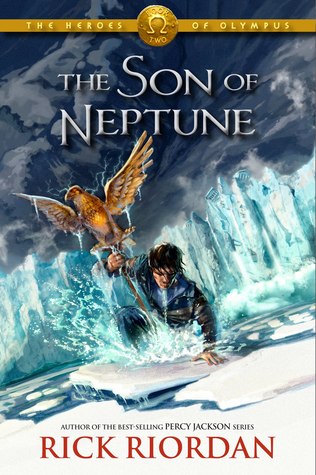 The Son of Neptune by Rick Riordan
Final Verdict: 3.75 out of 4.0
YTD: 51
Plot/Story:
3 – Plot/Story is interesting and believable.
Percy Jackson and the gang are back again. Well, Percy is back again – but the gang is a new one. In this second book of the Heroes of Olympus series, which is a sequel to Riordan’s hit Percy Jackson & the Olympians series, Percy finds himself battling demons that won’t die and suffering from near-total amnesia. He does not remember who he is, where he is from, or why these crazy un-killable baddies keep attacking him. Some instinct pulls him strongly toward a camp, where the goddess Juno awaits – but something isn’t quite right. Percy is a Greek demigod, and this camp is for Romans! Percy must join forces with the Romans, while rediscovering who he is and, afterwards, bringing the two people, Greek and Roman, together to prepare for battle against the mother of all goddesses, Gaea, who is raising a force of evil to crush the world. Can the Greeks and the Romans set aside their bitter, centuries-old rivalries to work together? Will the gods stand by their demigod children or let them face Gaea’s minions alone? Will Percy every gain all of his memory back? The Son of Neptune is about new friendships, burgeoning strengths, overcoming self-doubt and setting aside prejudices to fight for the larger good. It is a fast-paced, exciting, and surprisingly moving modern mythological fantasy – probably Riordan’s best yet.
Characterization:
4 – Characters extraordinarily well-developed.
As a big fan of The Percy Jackson series, I find myself a bit ashamed to admit that I actually enjoyed the new characters and Percy’s semi-reconstruction (due to his memory loss) a bit more appealing than the originals. The Roman gods, though less is seen of them, seem less severe than the Greeks, which is historically accurate but also makes for a more believable story. What added to the improved effect here, I think, is that not only did Percy have an interesting journey to embark on, rediscovering himself, his past, and his strengths, but so did the two supporting characters, Frank and Hazel. These two each come from very interesting backgrounds and have potentially scary, sad futures ahead of them. The triple-threat, as it were, of the main story (battling Gaea’s army and saving the world) combined with these sub-stories made for a dynamic new friendship and allowed for real growth from all three characters, but particularly Frank – who might have the most to lose, and to gain. Visits from favorite past characters, like Nico di Angelo and Tyson, are also welcomed and well-incorporated.
Prose/Style:
4 – Extraordinary Prose/Style, conducive the Story.
One of my biggest complaints in this area has been that whoever is responsible for editing and proofreading Riordan’s books consistently makes glaring oversights. The last few Riordan books in particular, including the Kane Chronicles and The Lost Hero were rife with omitted and/or extra words or other grammar errors. Now, this is not necessarily the author’s fault, so I tried to be lenient, but it was definitely becoming bothersome. I did see two such instances in The Son of Neptune, but they were minor oversights and, comparatively, nothing to scoff at. With that improvement, coupled with how well-paced this book was and how suiting the language is to both the story and the audience, I was pleased overall. Percy’s wit and sarcasm are back, which is possibly one of my favorite things about these books (“typical teenager” – but a funny one!). The dialogue is done well, as are the descriptions. I still sometimes hope for more progressive growth, year-to-year, but Riordan is sticking to his IR/MG readership, and that is in a way admirable, if not exactly what I would like to see as an adult reader (but, hey, the books aren’t marketed towards adults so I get it!).
Additional Elements: Setting, Symbols/Motifs, Resolution, etc.
4 – Additional elements improve and enhance the story.
In addition to the main purpose of the book, which I will get to in a minute, this book also has much to say about individual responsibility – responsibility to the self and to others (friends and family, in particular). Each of the characters has something they must overcome in order to be the hero they were meant to be and, although the book is fantasy, this aspect of the story is highly transferable to the traditional coming-of-age story. But, once again, the biggest selling-point for the book is what it teaches us. The Roman mythology is interesting and totally accessible, thanks to the modern setting, the relevant comparisons, and the engaging characters that learn and/or explain the histories as the reader journeys along with them. The Son of Neptune is particularly fascinating in that it exposes more of the specific differences between Greek and Roman mythology, and why there is such animosity between the two groups. If you are looking for educational and entertaining books about Greek and Roman mythology, which are accessible to novices, younger readers, and adults already familiar with the original epics – Riordan is your man.
Suggested Reading for:
Age Level: IR/MG
Interest: Roman Mythology, Greek Mythology, Ancient Greek-Roman History, Action/Adventure, Modern Day Retellings, Fantasy.
November is National Novel Writing Month (NaNoWriMo). I will be writing my very first novel (at least 50,000 words) and would truly appreciate your sponsorship. All donations go to The Office of Letters and Light – a great charity working for a great cause! If you can spare even $5 (or more) – please Sponsor Me and help me stay energized to write my book and WIN NaNoWriMo!
 Roof Beam Reader