Roof Beam Reader
Adam Burgess
Review: David Copperfield by Charles Dickens
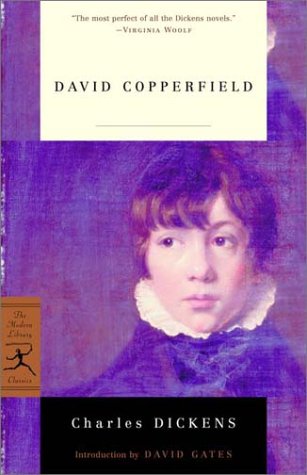 David Copperfield by Charles Dickens
Final Verdict: 3.50 out of 4.0
YTD: 40
Plot/Story:
3 – Plot/Story is interesting & believable.
David Copperfield by Charles Dickens is considered to be his most autobiographical work. As such, one would expect a certain amount of realism and empathy to be present in this book, perhaps more so than in any of his others. Fortunately, this proves to be the case. In comparison to Oliver Twist, for instance, which tackles many of the same themes as this book (most noticeably child orphans and neglect/abuse) David Copperfield proves to be much more effective, in that the story seems more grounded in reality and history, the characters seem more genuine, rounded, and believable, and the overall resolution takes into consideration not just the main character, David, but also those surrounding him – many of whom became important, cared about players in the story. The honesty of this book elevates it above others’ of Dickens work, such as the historical A Tale of Two Cities which, while entertaining and interesting, does not quite connect as well on a human level. David Copperfield is much more in sync with Dickens’s later works, such as The Mystery of Edwin Drood, in that you can sense Dickens in this book – his struggles, sorrows, triumphs, and haunting memories.
Characterization:
4 – Characters extraordinarily well developed.
Oftentimes, my second biggest gripe with Dickens is that his characterization and character development are almost non-existent. He typically seems to employ static characters to represent the good and bad elements of life and nature. The good characters, like Oliver Twist, are wholly good – sweet, innocent, naïve. The bad characters, like Fagin, are just downright evil. To an extent, Dickens does some of this in David Copperfield. There are no redeeming qualities in Mr. and Miss Murdstone, for instance. They are cold, hostile, devious siblings – and their motives are always clear and unchanging. Uriah Heep, the anti-hero to our David, and his mother are quite easy to despise, particularly when they try to gain sympathy by proclaiming their “’umbleness.” Similarly, there are the good characters who do no wrong – Peggotty and Mr. Pegotty, for example, are true friends to David and prime examples of hard work, kindness, and friendship. There are in this tale, however, a few conundrums – people the reader can love sometimes and hate at other times. Mr. Micawber, for example, is a good guy who keeps making bad mistakes. Steerforth, too, though relatively easy to despise, also inspires a certain amount of empathy. Even, and perhaps most importantly, the main character David can be exhausting at times but, ultimately, he is real and we root for him and his happiness in the end. Of the six Dickens novels I have read so far, this is by far the closest Dickens comes to creating a world of roundness – believable characters, with both flaws and saving graces. From Aunt Betsey to Mr. Traddles – Barkis to Dora Spenlow, these characters are interesting to watch because they can be surprising, which is something, I feel, Dickens stories often lack.
Prose/Style:
3 – Satisfactory Prose/Style, conducive to the Story.
The first argument I typically have against Dickens is that he says far too much. He is unnecessarily long-winded most of the time. Sometimes, it is in an attempt to be funny but, typically, it just seems to be “because.” For the first quarter of the book, I feared David Copperfield was doomed to this failure – as many other Dickens works have been. Fortunately, as it happens, I was quite wrong. Although the first portion of the book was a bit of a drudge, the rest of the book was written beautifully. As the story picked up and became more complicated, with David Copperfield establishing himself in business, falling in love, breaking friendships, and traveling abroad, the language wove an interesting web around him and his journey, one which connected the reader to David and encouraged him to come along, to see what happens, to experience what David was experiencing. Dickens seemed to set aside the pretension with which he usually crafts his prose, in favor of a sophisticated but straightforward language. It is possible that, the story being so near to Dickens personally, he felt less need to raise the language above it – as he does in his more didactic tales (where the prose often breaks into lecture and humorous diatribes). Although I was not entirely satisfied, it was the closest I have come to being so.
Additional Elements: Setting, Symbols/Motifs, Resolution, etc.
4 – Additional elements are present and enhance the story.
What is most rewarding about this book, particularly for one familiar with Dickens, is that he manages to get his point across without the preaching he does in so many other books. This is clearly a story about perseverance, growth, and interpersonal relationships but, rather than try to convince the reader of this through narrative lecturing, Dickens accomplishes it through the story-telling itself. All creative writers are at some point taught to “show, not tell” and while it may seem trite or cliché –perhaps even out of mode these days- to mention it, there is still much to be said about a writer who can show his reader what he means, without telling them. This is exactly what Dickens accomplishes with David Copperfield. If you can slug your way through the first three hundred pages of the book which, in my opinion, are rather slow, lofty, and indulgent, the reward is another five hundred pages of touching humanity in print – a boy, abandoned, is found and in the process, finds himself, not without stumbles and misjudgments along the way. This is perhaps a Victorian equivalent of Twain’s Adventures of Huckleberry Finn – less gritty and certainly haughtier but, ultimately, a satisfying tale of love, family, friendship, and coming-of-age.
Suggested Reading for:
Age Level: Adult, Literary
Notable Quotes:
“Whether I shall turn out to be the hero of my own life, or whether that station will be held by anybody else, these pages must show.”
“It’s a mad world. Mad as Bedlam, boy!”
‘”Never,” said my aunt, “be mean in anything; never be false; never be cruel. Avoid those three vices, Trot, and I can always be hopeful of you.”’
“Accidents will occur in the best regulated families.”
“Ride on! Rough-shod if need be, smooth-shod if that will do, but ride on! Ride on over all obstacles, and win the race!”
“My meaning simply is, that whatever I have tried to do in life, I have tried with all my heart to do well; that whatever I have devoted myself to, I have devoted myself to completely; that in great aims and in small, I have always been thoroughly in earnest.”
“There can be no disparity in marriage like unsuitability of mind and purpose.”
Review: The Lover’s Dictionary by David Levithan

The Lover’s Dictionary by David Levithan
Final Verdict: 3.5 out of 4.0
YTD: 38
Plot/Story:
3 – Plot/Story is interesting & believable.
It is hard to decide just what to say about David Levithan’s The Lover’s Dictionary, other than it is a unique, delightful, and educational little book about love. Having read two of Levithan’s Young Adult books, I was curious to see just what he could do with adult fiction. Fortunately, I was far from disappointed. The book itself is about two people (Two men? Two women? A man and woman?) who meet, date, and fall in love. Along the way, there are the ups-and-downs of life – romance & humor, loss & betrayal. The narrator uses the letters of the alphabet, one at a time, to place a single word with a single moment in time, and then describes that word and that moment – and what it means for the relationship.
Characterization:
4 – Characters extraordinarily developed
What is such an achievement for this sparsely worded book (some pages have just a few words on them, while others are filled-up) is that, though we never learn who exactly these two people are (no names are given) and though their story is unraveled quite literally in segments – one word plus its definition at a time- the characters somehow manage to grow and to connect with the reader. Their story, too, reaches through the page and allows anyone familiar with romantic relationships (be that one relationship, or twenty) to see something of themselves and their own experiences in it. This couple, like any couple, struggles with some very real issues – substance abuse and adultery being primary. And, like any couple, they struggle to deal with and overcome the problems.
Prose/Style:
4 – Extraordinary Prose/Style, enhancing the Story.
What is fascinating and unique about this story is that, being written in definitions, it at times feels as if the reader is one or another of the characters. Levithan has written an autobiography of human emotion – we laugh, we cry. We’re encouraged and disappointed. We struggle with when to fight, and when to give up. Being so sparsely written, one can fly through this book in hardly no time at all, but the story still manages to be so engaging, that I found myself slowing down – savoring certain passages, certain words. I dog-eared more pages in this book than in any since War and Peace, and considering this book is about 1/10th the size of Tolstoy’s classic, that is saying something! Levithan is a natural storyteller; his language and style draw the reader in and refuse to let him go – not while the story is in progress, and not even after it’s long over.
Additional Elements: Setting, Symbols/Motifs, Resolution, etc.
3 – Additional elements are present and cohesive to the Story.
The style and format of the book is in itself an interesting element, one which works well with this particular love story and one which I could see being referenced or duplicated in the future (though hardly, I imagine, with as much success). I also quite enjoyed the fact that it is not truly clear whether this is a straight relationship or a gay one – a male narrator or a female one. Typically, ambiguity like this would be annoying and distracting, and it would bar the reader from really connecting with the story or its characters; however, in this case, it only adds to the overall theme of the story – which is a universal exploration of love in general.
Suggested Reading for:
Age Level: Adult
Interest: Relationships, Romance (realistic), Love, Dating, Linguaphilia, Definitions
Notable Quotes:
“abstraction, n.
Love is one kind of abstraction. And then there are those nights when I sleep alone, when I curl into a pillow that isn’t you, when I hear the tiptoe sounds that aren’t yours. It’s not as if I can conjure you up completely. I must embrace the idea of you instead.”
“’It was a mistake,’ you said. But the cruel thing was, it felt like the mistake was mine, for trusting you.”
“Trying to write about love is ultimately like trying to have a dictionary represent life. No matter how many words there are, there will never be enough.”
“I want my own books to have their own shelves,” you said, and that’s how I knew it would be okay to live together.”
Review: Exterminator! by William S. Burroughs

Exterminator! by William S. Burroughs
Final Verdict: 3.25 out of 4.0
YTD: 37
Plot/Story:
3 – Plot/Story is interesting & believable.
Exterminator! is a loosely-related collection of 30 short stories, all neurotically obsessed with the American human condition before & during the 1960s. Like many of his other works, these stories are threaded with themes of “Control” (the American government over-reaching its power and invading privacy, commanding blind obedience and assimilation to “normalcy”), Drugs, Violence, and Sexuality. In this collection, a boy named Audrey makes repeated appearances. Audrey is the writer or, perhaps more appropriately, the creator – and one can assume that he is ultimately the narrator who is ultimately Burroughs. There is a deep sadness to these stories, and also a great sense of strength. Though the stories are bleak – offering little hope for or admiration of humanity, particularly America- they also assert the hope, however bizarrely, that people will discover and maintain their own unique individualities. Burroughs (or the narrator) of course identifies with seedier elements which most would hardly call admirable – the pederast, the junky, the rioter, the terrorist; yet, the extreme personas are meant to be obvious, “in your face” examples of the variety of mankind. Burroughs always romantics the unromantic, sexualizes the unsexy, and glorifies the unholy – Exterminators! is no exception to this tradition.
Characterization:
3 – Characters well developed.
While most of the stories are far too short to demonstrate any real character growth or development, even for those which include recurring characters, there is still a sense of well-crafted characterization. This is due in large part to the stories acting as characters themselves – they are the example, the personification, of the characters portrayed briefly within. Like many of Burroughs’s works, these stories are developed in such a way as to believe they almost exist – that they are living, breathing things. This is a thing of beauty, although most of the stories are not what most would consider “beautiful” at all. I speak, for example, of two particular stories: “They Do Not Always Remember” and “Seeing Red.” The first is a type of meta-fiction (which makes a strong impression throughout this collection) wherein a man, the main character, believes himself to be a type of detective, only to be confronted by a detective who turns out not to be a detective when exposed by a third detective, who reminds the first that he is not who he thought he was either. In contemporary terms, we might equate the story’s confusion to Alzheimer’s disease, but it is rather clear that, here, the culprit is likely drug addiction and the resulting brain damage. The story itself is the character – explaining an event – a general event- to the reader through a specific recounting. In the second story, “Seeing Red,” the story is again a grander story, applicable in wide swipes of the brush, but demonstrated through one specific instance. A man returns home to America and is searched by customs – the officers discover a photograph of a naked boy (age not disclosed) and are so distraught, disgusted, and horrified by this fact (that a man would have in his possession the photograph of another nude male) that they are drawn to it like flies to a bug zapper. They come in droves, from all across the county, to stare and to die. Burroughs is, in creepy and disturbing fashion, mocking law enforcement and the government’s obsession with invasion of privacy and prosecuting people for their sexual proclivities but, again, it is more the story in action than it is the characters described.
Prose/Style:
3 – Satisfactory Prose/Style, conducive to the Story.
Although Burroughs’s themes, subject matter, and language are oftentimes disturbing and raw, there is always a type of beauty in them. Like Marcel Duchamp’s Fountain, Burroughs’s works often expose the strange loveliness of the primal and romance of the ignored. As with his particular style of characterization, Burroughs’s prose takes on a life of its own. He is a master of the “cut-up” style – often beginning or ending a thought in the middle of a completely different thought, or starting a story in the middle of a sentence. He employs, somewhat, a stream-of-consciousness method, but it is the consciousness of the drug addict, random but almost cosmically interconnected – something one only understands on a large scale, but whose meaning disappears when examined too closely. The language itself and the imagery it creates are not going to appeal to everyone. This is not a book one would recommend to his grandmother, for instance, but though it can be disturbing, one cannot deny that it is masterfully crafted, genuinely constructed, and meaningfully employed.
Additional Elements: Setting, Symbols/Motifs, Resolution, etc.
4 – Additional elements are present and enhance the story.
There are so many raw and painful moments in this collection, the majority of which have to do with the theme of “tarnished mirrors” – regret over one’s lost youth, muddled self-worth and confused identity. The combination of insect/infestation and drug use is to be expected, as many “junk” addicts are afflicted by hallucinations of bugs but, in this collection, there is also a relationship between the insects and humankind in general. We are all scurrying from the exterminator – trying to survive by hiding in the dark, forced to live in fear, to devour when we can, and to leech off of those who tolerate us or who are too weak to get rid of us. That relationship correlates to the relationship Burroughs sees between the U.S. government and the American citizens, particularly the marginalized ones. Anyone who is different is therefore dangerous and must therefore be eliminated. Brief moments of hopefulness arise – images of human flight and tender friendships; however, ultimately, the book is not one of hope. The final message is one of death and dying – the idea that we hold on to false memories and perceptions of our lives, in denial of what we have done, what we have become or what we have left unaccomplished.
Suggested Reading for:
Age Level: Adult
Interest: 1960s America, American Counter-Culture, Beat Generation, Drug Culture
Notable Quotes:
“Do you begin to see there is no face in the tarnished mirror?”
“As a young child Audrey Carsons wanted to be writers because writers were rich and famous. They lounged around Singapore and Rangoon smoking opium in a yellow pongee silk suit. They sniffed cocaine in Mayfair and they penetrated forbidden swamps with a faithful native boy and lived in the native quarter of Tangier smoking hashish and languidly caressing a pet gazelle.”
David Copperfield Check-In #1
 David Copperfield Read-Along
Post 1 – Chapters 1-20 (Pages 1 -270)
Welcome to the first checkpoint for our read-along of the Charles Dickens classic, David Copperfield. This is the first read-along hosted right here at Roof Beam Reader, so any questions, comments, or suggestions as we go along would be greatly encouraged and appreciated.
I should start off by saying that, somehow, I managed to entangle myself with three books simultaneously this month, none of which are yet completed. I’m also about 100 pages behind in this particular read-along, something I hope to correct by the end of the weekend. Starting a new job and the excitement that is Harry Potter and the Deathly Hallows Part 2 definitely put a slow-down on my typical reading habits.
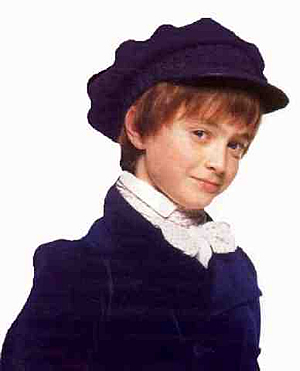 Speaking of Harry Potter, did you know that Dan Radcliffe, the boy who has played Harry Potter in all eight movies, was first selected for an audition because of his role as David Copperfield? Radcliffe did not even audition (in fact, his parents turned down the audition multiple times, as they did not want him to become a film star), but the producers enjoyed his David Copperfield performance so much that they kept at it until his parents said yes. I haven’t seen the movie yet, but I do plan to watch it once I’ve finished the book!
Quotes and Meaning:
“-‘To insult one who is not fortunate in life, sir, and who never gave you the least offence, and the many reasons for not insulting whom you are old enough and wise enough to understand,’ said Mr. Mell, with his lip trembling more and more, ‘you commit a mean and base action. You can sit down or stand up as you please, sir. Copperfield, go on.’
‘Young Copperfield,’ said Steerforth, coming forward up the room, ‘stop a bit. I tell you what, Mr. Mell, once for all. When you take the liberty of calling me mean or base, or anything of that sort, you are an impudent beggar. You are always a beggar, you know; but when you do that, you are an impudent beggar.'” (P. 92)
I think this particular passage will come to sum up much of what the book is about – the wealthy classes, even those who appear kind or generous- abusing with insults, mimicry, and other un-kindnesses, the lower classes – even those who least deserve the insults.
Likes and Dislikes:
So far, the two things I like most so far are the characters and the prose. As is not unusual with Dickens, I find characters who I instantly love (in this case, the Peggotty family) and characters who I instantly hate (in this case, the mother, Steerforth, and Mr. Creakle, and the Murdstones). There are also those who I don’t have much of an opinion about and, interestingly, the main character tends to be one. So far, I’m neither a fan of, nor an enemy of David Copperfield. This was the case in Oliver Twist, too. I don’t find David to be quite so innocent, angelic, or naive as Oliver Twist was (which annoyed me to no end), but he is not a stand-out character in any other way yet either.
What I dislike thus far is the story in general. I’m ignoring Dickens’s robust prose, as one must, because we all know he wrote per word – so there are many, many words that could have been removed and likely made the story more digestible. Still, that’s Dickens so I’ll leave that be. I’m just not yet attracted by what’s happening. Maybe this will change – I hope it will – and as there are nearly 700 pages left of the book, I assume quite a bit more will happen between now (David Copperfield arriving at Windsor Terrace) and the end.
What are your impressions so far? Likes? Dislikes? Are you all on pace with the timeline?
Post 2: To be posted on July 31st. Will cover Pages 278 – 562 (Chapters 21 thru 41)
Review: The Sign of Four by Sir Arthur Conan Doyle

The Sign of Four by Sir Arthur Conan Doyle
Final Verdict: 2.75 out of 4.0
YTD: 35
Plot/Story:
3 – Plot/Story is interesting and believable
In this second book of the immortal Sherlock Holmes series, Sherlock and Dr. Watson are once again brought in to solve a mysterious case which has been eluding local authorities. Just as the brilliant Sherlock Holmes is beginning to unravel (utter boredom coupled with a dangerous cocaine habit), a young woman turns up at 221B Baker Street with questions about her missing father and some mysterious gifts that have been arriving at her home on a regular basis – single, perfectly cut pearls. Sherlock and Dr. Watson are soon off to investigate – sifting their way through murdered suspects, red herrings, and budding romances, all with the help of the local street urchin gang.
Characterization:
2 – Characters slightly developed.
One element lacking in this particular installment of the series is characterization. In this book’s predecessor, A Study in Scarlet, characterization and character development was one of the stronger points for the book. Sherlock, Watson, and even the minor characters were paid satisfactory attention and their natures revealed to the reader honestly and with style. In The Sign of Four, however, most of the minor characters do not get much attention at all, nor are they given time to grow. Perhaps the only secondary character who does is the giver of the pearls, who ultimately plays a crucial but almost peripheral role in the plot. Sherlock and Watson are certainly identifiable, and they are each given ample attention in the book (which, being rather short, is perhaps all that could be asked) – still, had I not read A Study in Scarlet previously, I likely would not have felt very connected to either of these important characters, which is a disappointment overall.
Prose/Style:
3 – Satisfactory Prose/Style, conducive to the Story.
Where Doyle never seems to go wrong is in style and prose. He is a fantastic wordsmith and storyteller – he knows how to progress a plot, he knows how to write tension into scenes, and he has a fantastic sense of wit and humor. Both of the first two books in the Sherlock Holmes collection have been fast, entertaining reads, and while this story was not as complicated as the first, it was still a page-turner: interesting, exciting, and fun to read.
Additional Elements: Setting, Symbols/Motifs, Resolution, etc.
3 – Additional elements are present and conducive to the story.
Perhaps the greatest “shock” element in this book came right at the start, with descriptions of Sherlock Holmes reveling in his cocaine addiction. Dr. Watson was clearly and appropriately appalled by Holmes’s partaking in the habit, but Holmes almost glorified the drug, explaining that it helped stimulate his mind and allowed him to feel mentally challenged and engaged, even when (and likely because) there was no open case to focus on at that moment in time. There are also subtle references to certain types of bigotry and racism, which play an important role in the overall plot. Of course, the primary motive in the crime turns out to be wealth – so greed, deception, and betrayal are important elements as well.
Suggested Reading for:
Age Level: 15+, Adult
Interest: Mystery, Detective Story, 19TH Century British Culture/History/Literature.
Notable Quotes:
“No, no: I never guess. It is a shocking habit,–destructive to the logical faculty.”
“But love is an emotional thing, and whatever is emotional is opposed to that true cold reason which I place above all things. I should never marry myself, lest I bias my judgment.”
“I cannot live without brain-work. What else is there to live for?”
“He held up the lantern, and his hand shook until the circles of light flickered and wavered all round us. Miss Morstan seized my wrist, and we all stood with thumping hearts, straining our ears. From the great black house there sounded through the silent night the saddest and most pitiful of sounds–the shrill, broken whimpering of a frightened woman.”
“I never make exceptions. An exception disproves the rule.”
“I would not tell them too much,” said Holmes. “Women are never to be entirely trusted,–not the best of them.”
“The chief proof of man’s real greatness lies in his perception of his own smallness.”
 Roof Beam Reader