Roof Beam Reader
Adam Burgess
Review: Catching Fire by Suzanne Collins
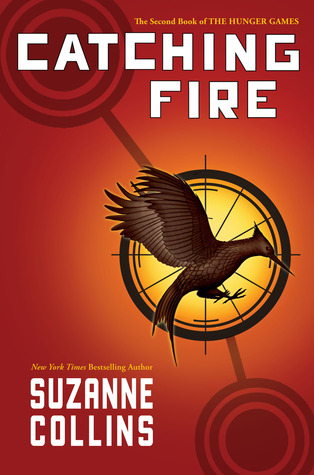 Catching Fire by Suzanne Collins
Final Verdict: 3.5 out of 4.0
YTD: 33
Plot/Story:
4 – Plot/Story is interesting/believable and impactful.
In book two of Collins’s Hunger Games trilogy, Katniss, Peeta, Haymitch, Gale, and the gang are back – and better than ever. In Catching Fire, Collins exposes her readers to the deeper horrors and animosities of the Capitol and of President Snow. Just when Katniss and Peeta begin to feel safe, President Snow, ever vindictive, turns up in District 12 to remind them that they have defied him and the Capitol, and vengeance would be served. Soon, the Hunger Games are brought to the districts and as uprisings begin to occur, Katniss and Peeta are dragged back to the games – their punishment for defying President Snow. What this sequel has that the first book lacked is a deeper and more realistic connection between this fantasy story and the world around us. The ideas of oppression, capital punishment, and resistance – passive and active- are well-developed, leaving the reader eager to find out what happens in the final installment of the series, Mockingjay.
Characterization:
3 – Characters well developed.
Though characterization is still one of the “weaker” elements in Collins’s series, Catching Fire was certainly an improvement over The Hunger Games. The majority of the story takes place in the districts, rather than inside the Games themselves, so the reader spends much more time with Katniss in the “real” world. This allows her relationships with Gale, with Peeta, and with Haymitch to grow and develop further, which is interesting to watch and builds the connections necessary for the reader to really start to care about what happens to them (something the first book lacked). Minor characters, too, like Cinna, refugees from various districts, and some of the previous Hunger Games victors are given page-time and attention, which adds to the believability and intrigue of this story’s universe.
Prose/Style:
3 – Satisfactory Prose/Style, conducive to the Story.
Once again, Collins demonstrates her talent for progressing a story smoothly, naturally, and at an appropriate pace. As with the first book, there are some disappointing deus-ex-machina moments, which provide resolutions to seemingly irresolute problems; however, in this case, the deus-ex-machina serves as a cliffhanger and catalyst for the third and final book. This is an added complication from the conflict resolutions employed in The Hunger Games and, overall, it works. There were moments where the story seemed to move too rapidly, as when the victors are called back to the Capitol. At times, these rapid changes made it seem as if Collins was writing the story without much forethought and without a clear idea of where she was heading with the story. This might not be the case, but the final impression is ultimately what matters.
Additional Elements: Setting, Symbols/Motifs, Resolution, etc.
4 – Additional elements improve and advance the story.
The tension Collins builds in this second book is superb, and it adds that realistic element readers of the series might be looking for after the knock-out introduction to the story, provided by book one. The idea of this story is what to love about it – the writing is good, the characterization is getting better, and the setting is interesting, but it is really the premise and underlying themes which make the book tick. Basic human rights and the idea that “absolute power corrupts absolutely” are at the core of this series, and it is a notion which is easily relatable to current events and human history. President Snow is like the love-child of Hitler and Nero – a leader who rules by fear and who is so evil and sadistic, he must be clinically insane. The psychological aspects too – how family, friends, and neighbors cope with sending their children off to die (or fight to the death)- are intriguing, and the new element – the resistance of the Districts against the cruelty and corruption of the Capitol government is just what this series needed to lift-off. Interesting, entertaining, and thought-provoking. Not to mention a little bit terrifying.
Suggested Reading for:
Age Level: MG, YA, Adult
Interest: Sci-Fi/Fantasy, Dystopia, War Games, Politics,
Notable Quotes:
“The bird, the pin, the song, the berries, the watch, the cracker, the dress that burst into flames. I am the mockingjay. The one that survived despite the Capitol’s plans. The symbol of the rebellion.”
“So it’s you and a syringe against the Capitol? See, this is why no one lets you make the plans.”
Review: The Absolutely True Diary of a Part-Time Indian by Sherman Alexie
 The Absolutely True Diary of a Part-Time Indian by Sherman Alexie
Final Verdict: 3.5 out of 4.0
YTD: 32
Plot/Story:
4 – Plot/Story is interesting/believable and impactful (socially, academically, etc.)
The Absolutely True Diary of a Part-Time Indian is the story about 14-year-old Arnold Spirit Jr. (or “Junior” as he goes by), a child of the “rez” or reservation, who is born with multiple physical handicaps (bad vision, oddly proportioned limbs, huge head filled with water, etc.) but with an unusually high intelligence. Junior is bullied almost daily, because he’s different, but his best friend is the toughest guy on the reservation, so he gets plenty of protection. Until he decides to go to the all-white farm town high school, 20 miles outside the reservation, instead of his tribe’s own school. This makes him an outcast everywhere – a betrayer of the tribe, and an oddity at his new school. After a year of experiences – deaths, new friendships and new “loves,” lots of masturbation – Junior learns to value himself and his talents, basketball and cartooning. Though all might not be well by the end of the story, the reader can see that there is certainly hope – Junior might just make it after all.
Characterization:
3 – Characters well developed.
When a book has such a touchingly terrific plot, the element that can really make it soar is its characterization. Alexie’s characters in ATDPT are realistic and genuine, both in their likeable qualities and in their flaws. The individuals, from Junior himself, to Rowdy, his best friend, and Penelope, his first girlfriend are all uniquely drawn and have personalities all their own. Characters on the periphery, too, such as Junior’s grandmother and sister, do not get much page time but come across clearly to the reader. Even the larger “character bodies,” of the tribe and the townsfolk are well-wrought so as to have cultural and societal personalities, discernible from the other. A bit of depth could have been added to the major characters and possibly a selection of the secondary characters, which would have created more meaningful relationships and possibly allowed for greater growth and development in general, but overall it was well done.
Prose/Style:
3 – Satisfactory Prose/Style, conducive to the Story.
This book has been on banned, challenged, or censored lists since its publication, largely because of its free expression of masturbation and sexuality. There are certainly quite a few “masturbatory moments,” let’s say – but what one should remember is this is a book, written journal style from the point of view of a fourteen-year-old boy. If you are a parent or school administrator, you are sadly mistaken to think that these thoughts are not on the teenage-boy brain nearly all the time. That being said, Alexie might be open to and with the idea, but he is never crude about it. There is a humor to it, an acknowledgment that these thoughts and actions take place and a metaphorical nod to his past or to those pre-teens and teens who might be reading the book now (“Hey, man, you’re not crazy – we all do it!”). This is just one example of why the prose is so good, and so effective. It is simple, honest, and delivers the story with a sense of complex-clarity that is not always found in MG/YA books. The book could possibly have benefited from a bit more complexity, even, considering the main character and one of his newest friends are the two most intelligent kids in school; however, the main character’s cartoons add an interesting, personal element to the narrative, as they are how Junior has learned to side-step his disabilities (stuttering, lisping) to communicate openly with the world.
Additional Elements: Setting, Symbols/Motifs, Resolution, etc.
4 – Additional elements improve and advance the story.
The greatest thing about the book is not its interesting and funny characters; it’s not the simple but effective prose, nor the clever inclusion of cartoons to help tell the story. It’s not even the story itself, so honest and sad, but hopeful. The best thing about this book is that it tackles real life issues and situations from a believable perspective. Junior has to deal with so much, in such a short time. He lives with an alcoholic father, an eccentric mother, and an absent sister. He faces bullies at his old school, bullies on his reservation, and being ignored and undervalued at his new school. He watches people close to him die and struggles to learn how to grieve, when his best friend has abandoned him. Despite all this, though, he also learns to value himself. He puts vigorous energy and effort into basketball and drawing. He refuses to sit by and let life pass him, instead choosing to engage with others, since they won’t engage with him. He makes new friends, earns the respect of others, and even dates the prettiest girl in school. This is a story about the sometimes horridness that is our teenage years, and it is a story of hope for all young readers – that they, too, can get through it. They can survive and, most importantly, they can find happiness.
Suggested Reading for:
Age Level: MG, YA, Adult
Interest: Reservation Life, Racism, Native American Culture, Coming-of-Age, Family, Death and Dying
Notable Quotes:
“That’s right, I am a book kisser. Maybe that’s kind of perverted or maybe it’s just romantic and highly intelligent.”
“You read a book for the story, for each of its words, and you draw your cartoons for the story, for each of the words and images. And, yeah, you need to take that seriously, but you should also read and draw because really good books and cartoons give you a boner.”
“Well, I don’t mean boner in the sexual sense. I don’t think you should run through life with a real erect penis. But you should approach each book – you should approach life – with the real possibility that you might get a metaphorical boner at any point.”
“I used to think the world was broken down by tribes. By black and white. By Indian and white. But I know that isn’t true. The world is only broken into two tribes: The people who are assholes and the people who are not.”
Review: City of Bones by Cassandra Clare
City of Bones by Cassandra Clare
Final Verdict: 3.0 out of 4.0
YTD: 31
Plot/Story:
3 – Plot/Story is interesting & believable.
City of Bones is the first book in a series of six (originally planned to be three) by author Cassandra Clare. The premise is an interesting take on some classic paranormal fantasy stories, which includes elements of wizardry, lycanthropy, vampirism, and the Nephilim (half-angel humans) or Shadowhunters. The primary character, Clary (Clarissa), finds herself in the midst of a secretive battle, hidden from human (mundane) eyes by “glamour” magic – something similar to what humans (muggles) of the Harry Potter world are blinded by. Clary, as it turns out, is not a mere mortal, and City of Bones takes the reader along with Clary as her fabricated world is unraveled; lies are exposed, and painful secrets, long-buried, are uncovered. Clary must learn as quickly as possible in order to save her mother; she must learn to trust those who are different from and unfamiliar to her, while balancing the oftentimes equally painful and dangerous realities of mortal life: love, friendship, and forgiveness.
Characterization:
4 – Characters extraordinarily well developed.
One great strength for this book is its characterization. Each character is clearly written to serve a purpose and, what is more, each character is distinguishable and independent from the others. Within moments of meeting a new character, the reader begins to understand their personality, their nature. Clary is strong-willed, hot-headed, and inquisitive. Jace is egotistical, emotionally guarded, and protective. Alec is shy, tentative, and jealous. Simon is sarcastic, loving, and carefree. The list goes on and on, and if each character were detailed, it would be clear that they all have personalities of their own. This is fantastic in its own right, but also adds enormously to the story by allowing for truly interesting, engaging, and oftentimes hilarious character interaction. One disadvantage for the characters, though, is their language – all of the characters, but particularly the younger generation, use high vocabulary which seems out-of-place at times, and which leaves one wondering if Clare went through her final draft with a thesaurus and changed a bunch of words to make the story sound smart. In theory, this is great and I applaud the chance any book/writer gives to expand its readers’ vocabulary; however, imagining that a bunch of sixteen-year-old New York City kids would run around talking like Ivy League graduates is a bit much. This is a prose/style issue, though, so I will not let it weigh heavily on characterization in general.
Prose/Style:
2 – Prose/Style in need of Development but works.
This particular segment is difficult to write, as there are a few items with which I must take issue. There is discord between Clare’s use of language and word choice, with her overall narrative voice. As an experienced reader with two degrees in English and who works professionally in Academic Affairs, I have a great deal of familiarity with the craft of writing and with instances of plagiarism. I preface this segment with my experience because I know some who read this will react negatively or be sensitive to what I am about to say. Now, to be clear, I am not accusing the author of plagiarism by any means; however, when the narrative voice and tone of a book do not necessarily match the language and word choices throughout, one begins to wonder. Typically, this happens with either a) novice writers or b) writers who are “borrowing” content and/or ideas from other writers and reshaping it to fit their own story. I find, in this case, the latter seems to be true. While there is a great deal of original content (in my opinion), there also seems to be a fair amount of re-working of previous themes, elements, and ideas. This is natural, to an extent, particularly within the fantasy genre where writers tend to be very much aware of and familiar with their predecessors’ works. The similarities were disconcerting, though, particularly when instances of flat-out non-credited quote-dropping occurred. For instance, at the start of Chapter 3, Simon wanders off and the narrator explains that, “it was a far, far better thing he did now than he had ever done before.” This line is taken nearly verbatim from the last lines of Charles Dickens’s A Tale of Two Cities. Now, the problem is not that she used the words – the problem is that there is no credit to the original author. It is possible that the majority of people who read this book might not be intimately familiar with Dickens’s work. This increases the importance of referencing the original content. Had I been writing this scene, for instance, I would have provided some simple clarity: “Simon headed off toward the coffee bar, muttering under his breath the time-honored Dickens sentiment that it is a far, far better thing he did now than he had ever done before.” Not only does it credit the original author, but it also makes this author appear clever – “Oh, wow, she reads Dickens!” Instead, for those who do recognize the material in this book which has been dropped from other works, the author comes across as lazy, inept, or deceptive. What person and author would choose to come across as such? Again, this could be chalked up to inexperience, but considering that the author had previous plagiarism issues with her early FanFiction, one would hope that she (and her editors – let’s be fair) would be much more careful in ensuring that any “borrowed” material would be properly cited. For these reasons, I sadly must score this section lower than I might otherwise, as the prose is generally fluid and the pace works well for an action-fantasy book. Had it not been engaging and enjoyable prose, this section likely would have scored a “1.” It is absolutely a “page-turner,” though, and at nearly 500-pages, this reader finished in just three days.
Additional Elements: Setting, Symbols/Motifs, Resolution, etc.
3 – Additional elements are present and cohesive to the Story.
First, I should point out that this story almost earned a “4” in this category, for its sensitive, blasé inclusion of GLBT and other issues into the plot-line, something which mass-marketed fantasy fiction often lacks. Unfortunately, some of the “catch-all” plot-wrapping (such as the disturbing revelation about Clary and Jace, which is borrowed from a very famous theme from Science Fiction) detracted a bit from other positive elements. At times, the book seemed to be slapped together piecemeal, with new and exciting elements latched onto popular, recycled themes. All-in-all, though, it was rewarding to experience a popular fantasy novel which included characters not just of different species, but of different genders, sexualities, and classes within those species. There are heterosexual humans, homosexual Shadowhunters, and bisexual warlocks who can all then be further divided into good, evil, or neutral. This adds a decent complexity to the story and an added social relevance, which should be welcomed by (and is definitely needed in) the genre. Other important themes include family, coming-of-age, relationships, and spirituality.
Suggested Reading for:
Age Level: YA+, Adult
Interest: Paranormal, Fantasy, Action-Adventure, Magic
Notable Quotes:
“Orgy in Hoboken!”
“If you were half as funny as you think you are, you’d be twice as funny as you are now.”
“The boy never cried again, and he never forgot what he’d learned: that to love is to destroy, and that to be loved is to be the one destroyed.”
“All knowledge hurts.”
Review: At Home Anywhere by Mary Hoffman
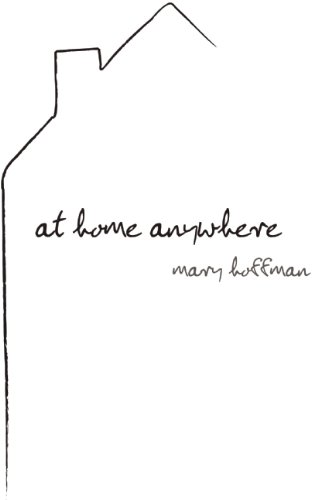
At Home Anywhere by Mary Hoffman
Final Verdict: 3.50 out of 4.0
YTD: 30
Plot/Story:
4 – Plot/Story is interesting/believable and impactful (socially, academically, etc.)
Mary Hoffman’s At Home Anywhere is a surprising collection of short stories about the American experience, post-9/11. In “Flat Earth Society,” we meet a hard-working man who just happens to be out of work, exhausted and enraged by his situation. He does the responsible thing by seeking help while continuing to work, but ultimately the pressure – and a bit of ethnocentrism-leads him to a desperate act of violence. The following story, “Moths,” is a touching tale about our responsibility for the ones we love, even after they have long exited our day-to-day lives. It also relates the difficulties, complications, and excitement one encounters when immersed within another culture– learning new rules and protocol, learning to understand and respect new roles and etiquette. “At Home Anywhere,” the third story in the collection, is perhaps the most current and relevant. It recounts the story of a white man –husband and father- living in New York City at the time of the 9/11 attacks. The reader watches as he rides the train home from work each day, getting off one station beyond his actual exit so he can walk through the more culturally rich and ethnically diverse neighborhoods. He befriends a Pakistani shop owner and his two sons, regularly visiting their store and making small, random purchases (including an “ethnic” soap which, his wife explains, turns out to be Palmolive). After the attack on the city, the man’s visits stop, suddenly, and he begins to feel paranoid about the items he’s bought – what would happen if anyone ever found them? What would happen if he goes back to the store – is it under surveillance? Would he be questioned? The shock, paranoia, and fear of the time and the stressors it placed on cultural relations in America are well-delivered. The final story, “Felix and Adauctus,” is a life story that takes on many topics, from mental health and isolation, to homosexuality, religion, and relationships. After very nearly being abused by a priest when he was a boy, the main character, Paul, grows to respect that priest – his strength and conviction. He recognized in that experience the power of temptation, and also the power of belief and self-control.
Characterization:
3 – Characters well developed
The characters in all four of these stories are strong – well-developed, independent, and interesting to watch. The best wrought of the bunch are those in “Felix and Adauctus” and “Moths.” In the former, there is a trio of characters who interact throughout the majority of the story, and their personalities (calm and steady, direct and commanding, unbalanced and manic) create fascinating, realistic, and genuine moments. Interaction with characters on the periphery as well, such as those described at a local restaurant or a friend of the primary homeowner, Sonia, add to the varying moods of the story and oftentimes provide a “real life relief” from the rather intense microcosmic interactions of the trio. In the latter story, “Moths,” there is are a bevy of captivating characters, from students in an art studio, to their teacher who is dealing with the reintroduction of her ex-husband into her life, to that ex-husband himself, who is suffering from what appears to be early-onset Alzheimer’s disease. There are also flashbacks to different countries, where the reader witnesses the main character interacting with people of another race and class, and their presence adds another layer of solemnity and interest to the story.
Prose/Style:
3 – Satisfactory Prose/Style, conducive to the Story.
Hoffman certainly has a way with words. Her use of language and dialogue propel the story forward evenly and smoothly, so the pages turn with ease. The entire book is 114 pages long and it can be read in one day without causing the reader to feel overburdened, but also leaving one with a sense of satisfaction and substance upon completion. It is evident that Hoffman is “honing her craft” – which is to say, she has real talent and ability, but might still be working to master certain elements. The lead-ins and –outs of dialogue, for instance, are not always as subtle as they could be, and narrative voice sometimes overshadows the scenes. Still, in total, the stories each work well as stand-alone pieces and they certainly fit together in this collection. The dialogue is believable and the moral didactics are present without being overbearing. Hoffman’s prose is not necessarily unique, but there is a bold and daring element to it which is enjoyable and refreshing, and which calls to mind the likes of Flannery O’Connor and Ambrose Bierce.
Additional Elements: Setting, Symbols/Motifs, Resolution, etc.
4 – Additional elements improve and advance the story.
What is most interesting and powerful about each of these stories and about the collection itself, is what they have to say about human nature. Hoffman is clearly an observant, reflective person. She has taken her observations of American life and created stories to help the rest of us see and understand, too: Whether it be racism or nationalism, mental instability or emotional turmoil, relationship-making or relationship-breaking, Hoffman exposes it all – honestly, unsparingly. Perhaps the best reason to pick up this collection is not for the engaging prose or the interesting characters, but for the self-reflection Hoffman induces – for the questions one asks himself when faced with these situations: How do I feel about this? What would I do in this situation? Have I been there before, too?
Suggested Reading for:
Age Level: High School+, Adult
Interest: American History, American Cultural Studies, Socioeconomics, Post-9/11
*Note: A copy of this book was provided by New Rivers Press for review at RBR.net. No monetary or other compensation is ever received by RBR.net for positive reviews or exposure on RBR.net.
Review: The Painted Veil by W. Somerset Maugham
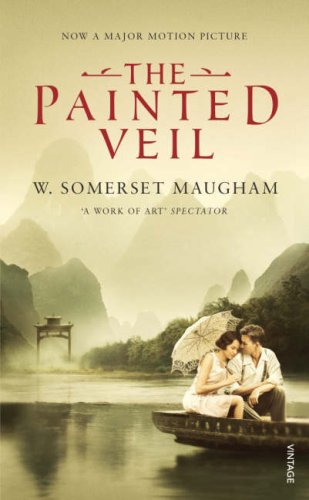
The Painted Veil by W. Somerset Maugham
Final Verdict: 3.5 out of 4.0
YTD: 29
Plot/Story:
4 – Plot/Story is interesting/believable and impactful (socially, academically, etc.)
W. Somerset Maugham’s The Painted Veil is a sad and beautiful story of love, betrayal, growth, and forgiveness. The main character, Kitty Fane, is described on the back-cover as “beautiful but love-starved.” What the reader learns about her, though, is that she does not feel beautiful, nor does she understand that much of her personality and actions are defined by the fact that she has felt perpetually neglected and unimportant. Kitty’s mother, a domineering woman, bred Kitty not to be happy or independent, but to seek out a beneficial –powerful and wealthy- partner. Kitty fails in this endeavor and is married only after her younger, less attractive sister finds a husband – which leaves Kitty permanently scarred, envious, and self-deprecating. The story takes us on Kitty’s journey of self-discovery. She is forced by her husband to move into the heart of a Chinese cholera epidemic, after he discovers that she has been having an affair. The double-suicide attempt is not successful, but it is fruitful, in a way. By the end of the story, Kitty has learned self-worth and, while not entirely redeemed, we can begin to believe that she is on her way.
Characterization:
3 – Characters well developed
While not as strong as the prose, Maugham does have ability with characterization. The characters here are not as developed or engaging as those in his masterpiece, Of Human Bondage, but that could partially be due to the fact that this novel is about one-third the length. Kitty Fane is the most interesting to watch, and while her revelatory growth can, at certain points, seem clichéd or forced, the overall journey is meaningful and believable. She makes steps forward, and takes steps back. Ultimately, watching her become a selfless, aware woman is rewarding, particularly as she started out completely selfish and self-doubtful. Kitty’s husband, Walter, is simultaneously the most interesting and underdeveloped character. There seemed to be so much to him, so much personality left unrevealed and while that was largely “the point,” it was also disappointing and left what should have been a momentous moment of the novel less-than paramount. The minor characters, including Kitty’s parents, the sisters of the convent, and Waddington, Walter’s compatriot in the thick of the Chinese epidemic, are extraordinarily well-wrought for minor characters. The best drawn of them all, though, is Charlie, Kitty’s lover. He is self-absorbed, cocky, indulgent, and rather stupid. All of these traits come across well, as does the fact that his charm and attractiveness could blind a lover to the less-savory aspects of his nature.
Prose/Style:
4 – Extraordinary Prose/Style, enhancing the Story.
As expected, the highest achievement for this novel is the prose and style. Maugham is a savant with language. His fluid prose carries the story along masterfully, as if the reader is a passenger on an Italian gondola, being steered across the Venetian Lagoon and up the Piave. Maugham also knows how to craft a story, which means mapping the language to the action. As tension mounts, so does the language and style. Dialogue complements the story and enhances many scenes as well.
Additional Elements: Setting, Symbols/Motifs, Resolution, etc.
3 – Additional elements are present and cohesive to the Story.
While The Pained Veil is best known as a story about marriage and betrayal – love and adultery- it is, in fact, a story about family and about self. Much of Kitty Fane’s character is shaped by her relationship to her mother and father. She is damaged because she is misled, as a youth, to believe that she has no worth of her own, only that of her beauty and its potential to attract a mate. She is given no genuine encouragement to develop any skill of her own, or to cultivate any interests, thus, she has no individuality, no identity, no feelings of self-worth. While it would be easy, then, to excuse Kitty’s adulterous actions on her emotional underdevelopment, Maugham is careful not to do so or to let his readers come away with that impression. Kitty must grow up, and she does so painfully (albeit it rather quickly). She suffers hardship and while she never comes to love her husband, she does come to understand and respect him, and to ultimately see her own folly and misdeeds through his example of selflessness and goodness. The book says much about how we come to learn about ourselves through our interactions with others, and how important and necessary it is to have an identity of one’s own before it can be possible to respect or appreciate anyone else.
Suggested Reading for:
Age Level: High School+, Adult
Interest: England, China, Science, Medicine, Adultery, Family, Cholera, Marriage, Self-Discovery, Growth, Literature
Notable Quotes:
“A little smoke lost in the air, that was the life of man.”
“If nobody spoke unless he had something to say, the human race would very soon lose the use of speech.”
“One cannot find peace in work or in pleasure, in the world or in a convent, but only in one’s soul.”
“As if a woman ever loved a man for his virtue.”
“I always find it more difficult to say the things I mean than the things I don’t.”
“Charm and nothing but charm at last grows a little tiresome. It’s a relief then to deal with a man who isn’t quite so delightful but a little more sincere.”
“Women are often under the impression that men are much more madly in love with them than they really are.”
 Roof Beam Reader