Roof Beam Reader
Adam Burgess
Rewind! Top 10 Favorite Book Quotes
Review: So You Want to be a Wizard by Diane Duane

Final Verdict: 3.5 out of 4.0
Plot/Story:
3 – Plot/Story is interesting & believable.
So You Want to be a Wizard is the first book in Diane Duane’s Young Wizards series. The story tells the tale of two young outcasts, Nita (Juanita) and Kit (Christopher) who each separately stumble across the manual of Wizardry and soon take “the Oath” to become Wizards themselves. In Diane Duane’s world, Wizardry and magic is not an easy or safe thing to get involved with. Nita & Kit concoct a daring spell on their first attempt and, in the process, bring through the dimensions a being named “Fred”, who turns out to be a “white hole” or star-gone-supernova. The two young wizards soon search for guidance, of which they find very little, in an attempt to learn more of the mysterious Wizarding world where plants, trees, and animals talk and where, when things go missing, you sometimes have to travel through different dimensions to find them.
3 – Characters well developed.
Prose/Style:
4 – Extraordinary Prose/Style, enhancing the Story.
4 – Additional elements improve and advance the story.
Age Level: 12+
Review: Lysistrata by Aristophanes

Final Verdict: 3.5 out of 4.0
3 – Plot/Story is interesting & believable.
 is one of the original “dramadies” – a mixture of dramatic and comedic elements, though this one leans toward the comedic. Still, some of the themes Aristophanes tackles, such as War, Power, and Gender are serious, and have severe implications. Fortunately, Aristophanes writes his main character, Lysistrata, and her gang of women to be witty, sarcastic, and rather crude – which is a lot of fun. The story itself is about a decision that the women of Greece make, to withhold sex from their husbands and lovers, until they finally write a peace treaty and put an end to all of the wars.
3 – Characters well developed.
Prose/Style:
4 – Extraordinary Prose/Style, enhancing the Story.
Additional Elements: Setting, Symbols/Motifs, Resolution, etc.
4 – Additional elements improve and advance the story.
Age Level: Adult
Review: Queer by William S. Burroughs
Queer by William S. Burroughs
Final Verdict: 3.5 out of 4.0
YTD: 20
Plot/Story:
3 – Plot/Story is interesting & believable.
William S. Burroughs’s Queer is a story about American expatriates, living in Mexico during the 1960s. Most of the ex-pats are male, and most seem to be homosexual or to have homosexual “tendencies.” What is interesting about Queer is that it was one of Burroughs’s earlier works, but one of his last published. The reason for this is that the book is “overtly” homosexual. Upon reading, though, and particularly for one familiar with Burroughs’s work, it is quickly realized that this is one of Burroughs’s tamer novels. Yes, it addresses homosexuality head-on, as opposed to via the abstract imagery and language employed in his other books; still, when one compares this to, say, Naked Lunch or The Wild Boys, it almost seems bland. It surprises me, then, that Burroughs managed to get his other, more daring and dangerous works published, while this one sat shelved for decades.
Characterization:
4 – Characters extraordinarily developed.
I was impressed with Burroughs’s characterization in Queer, particular with that of the main character, William Lee, and his love interest, Eugene Allerton. There are minor characters, too, who play important supporting roles, and all of these are written in a way so as to be distinguishable and individually important – this includes every character from the nameless taxi drivers to the bar tenders, to the “working-boy” locals and the “king” of the Mexican city’s American-Gay community. What Burroughs does so well is to allow you to empathize with a rather bizarre main character who is on an even stranger kind of journey (drug-induced romanticism). The reader sees William for what he is, all the while William is putting on a show for the people around him, trying to hide his pain and jealousy and, particularly, how much he wants to be wanted.
Prose/Style:
4 – Extraordinary Prose/Style, enhancing the Story.
As always, I adored the style of the book and Burroughs’s prose. He is a brilliant writer – it becomes impossible for me not to finish his books in one or two sittings, because the pages just turn and turn. Particular strengths in this book, I think, are the dialogue and the chapter breaks. The dialogue develops and flows naturally, so it is easy to imagine yourself in the room with these people, engaging in the conversation or simply overhearing it from the bar. It helps, too, that the description (characterization as well as setting) is so vivid and clear. The chapters are typically brief – they are much like individual scenes which progress William’s story – physically and temporally.
Additional Elements: Setting, Symbols/Motifs, Resolution, etc.
3 – Additional elements are present and cohesive to the Story.
Reading Queer in retrospect, after reading his later works, is almost eerie. There is this nascent, fetus-like Burroughs element to the writing. The story subtly hints at some of Burroughs’s later terrors – McCarthyism and the Red Scare, invasion of privacy, social crucifixions, political over-reaching. There are small glimpses, through William Lee of these fears – perhaps this group is made of the early refugees, the one who can sense the change coming, aren’t quite sure what it is, but know they have to get out to stay free and safe. This book certainly forecasts Naked Lunch in many ways – and the brilliance of Burroughs is revealed further, knowing that decades before his sociopolitical rants against government brutality and regimentation, he had written one small little book that had already been projecting it all. Also, it was interesting to see a softer-side to Burroughs. This is the first of his books that I recall addressing the issue of “love.” William has some clear yearning and need for companionship and the story here is very much about him trying to find it – sort of finding it – losing it, and dealing with that loss. Incredibly touching.
Suggested Reading for:
Age Level: Adult
Interest: Homosexuality, Drug Culture, Mexico, South America, 1960s American Politics
Notable Quotes:
William S. Burroughs on Queer: “I glance at the manuscript of Queer and feel I simply can’t read it. My past was a poisoned river from which one was fortunate to escape, and by which one feels immediately threatened, years after the events recorded. –Painful to an extent I find it difficult to read, let alone write about. Every word and gesture sets the teeth on edge.”
Review: Lolita by Vladimir Nabokov
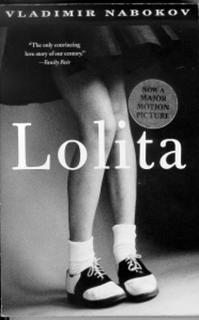 Lolita by Vladimir Nabokov
Final Verdict: 3.75 out of 4.0
YTD: 18
Plot/Story:
4 – Plot/Story is interesting/believable and impactful
Let’s take a moment to talk about true artistry, shall we? What Vladimir Nabokov does with Lolita is pure, unadulterated (heh heh) genius. The story is about a middle-aged man, Humbert Humbert, who falls madly in love and ravenously in lust with a twelve-year-old girl. Dolores (Lolita, to Humbert) is daughter to the woman who owns the house wherein Mr. Humbert lodges for a time, while wandering from place to place (which we soon discover is typical of him). Humbert has moved from France to the USA, after a lifetime of scholarly work and writing, and after being unable to shake the memory of and desire for his young first love, lost, Annabel. Devious, dirty, old Humbert establishes a plan to get rid of the troublesome mother, so that he may have Lolita all to himself – even going so far as to fantasize about a possible Lolita the second (who would be Humbert’s granddaughter, and future love). These plans falling into and out of action – and the many stumbling blocks and detours along the way – are the actions which drive this brilliant story forward.
Characterization:
4 – Characters extraordinarily developed.
It goes without saying that Mr. Humbert is a troubled man – but he is also brilliant and eerily endearing. Here is an anti-hero who one knows should be despised, yet you find yourself, at times, self-consciously rooting for him. Therein is the genius of Nabokov. His style and prose, his mastery of language and how to use it against his readers, coupled with his skill at characterization and knowledge of human psychology, all becomes irresistible. Lolita, too, is created with precision and great forethought. She is no victim (though she is). She garners little sympathy from the reader, though she may deserve it in general, and specifically at times. Still, one becomes convinced by Nabokov that, while Humbert knows what he is doing is wrong – as do you – you wonder if their relationship was meant to be, you wonder if it could work, after all. While the majority of the time is spent with these two characters, which are drawn effectively and flawlessly, there are also some minor characters which are written equally well – well enough to complement our two primaries. The nosy neighbors, the other nymphets (including Annabel), and Humbert’s “brothers” – often appearing much more devious than Humbert himself. Even Humbert’s demons – the phantoms of his mind, hunting him down as he and his Lolita roam from place to place – are extraordinary characters in themselves and add much to Humbert’s character. Finally, Humbert’s last mistress, Lolita’s innocent & injured husband, and Clare the villain are all drawn to serve Humbert & Lolita’s major story, but each have personalities and individualities of their own, which makes the story plausible, rounded, and interesting in a more rounded way.
Prose/Style:
4 – Extraordinary Prose/Style, enhancing the Story.
John Updike said of Nabokov’s ability, “Nabokov writes prose the only way it should be written, that is, ecstatically.” I find it impossible to disagree. The prose is beautifully fluid and, at times, overwhelmingly enthusiastic. It almost oozes across the page, like a lover’s bacchanalian walk towards the bedroom: as she looks back at you over her shoulder while stumbling forward – slightly clumsy, but unarguably riveting, you know that you cannot resist. You must follow. It is some of the most enveloping and inescapable prose I have ever read. There was also quite a bit of French, typically in descriptions or inner-monologue, which was distracting to me because my knowledge of French is extremely limited; however, it was important to see it there, as an essential piece of Humbert – it just became a piece which I needed to learn to acknowledge, then skip over. Nabokov was a master of language, so the structure was complex, yet the beauty of the prose made it easy to follow. The vocabulary is appropriately challenging while the plot-line remains straightforward. Ultimately, there is a fine balance between the challenging aspects and the zones of comfort, which matches the nature of the story impeccably.
Additional Elements: Setting, Symbols/Motifs, Resolution, etc.
3 – Additional elements are present and cohesive to the Story.
Vanity Fair magazine called Lolita, “the only convincing love story of our century.” While you cannot entirely argue that this is not a love story, I do insist that too much stress has been put on the idea of “love,” by readers of Lolita. Certainly, Humbert himself was convinced that he was madly en amorado for little Lolita and, in the years he is with her (and the few following their separation), the reader is witness to a staunch loyalty to her – but is this the loyalty of a true love, or of a lost pet who has eyes only for his master, because he knows that is how it should be (and because he hasn’t been sufficiently distracted, yet). I tend to lean more toward the latter, even after the self-sacrifice and mental break at the end. Still, the traveling life, the expensive gifts, the cheap motels – even the way Humbert describes his need to convert Celsius to Fahrenheit in order to take Lolita’s temperature – all work brilliantly to tug at the reader’s heartstrings, and perhaps that is the sad, scary love story, after all.
Suggested Reading for:
Age Level: Adult
Interest: Philosophy, Psychology, Sociology, Pederasty, Family, Sexuality
Notable Quotes:
“Lolita, light of my life, fire of my loins. My sin, my soul. Lo-lee-ta: the tip of the tongue taking a trip of three steps down the palate to tap, at three, on the teeth. Lo. Lee. Ta.”
“You have to be an artist and a madman, a creature of infinite melancholy, with a bubble of hot poison in your loins and a super-voluptuous flame aglow in your subtle spine (oh, how you have to cringe and hide!), in order to discern at once, by ineffable signs—the slightly feline outline of a cheekbone, the slenderness of a downy limb, and other indices which despair and shame and tears of tenderness forbid me to tabulate—the deadly little demon among the wholesome children; she stands unrecognized by them and unconscious herself of her fantastic power.”
“All at once we were madly, clumsily, shamelessly, agonizingly in love with each other; hopelessly, I should add, because that frenzy of mutual possession might have been assuaged only by our actually imbibing and assimilating every particle of each other’s soul and flesh; but there we were, unable even to mate as slum children would have so easily found an opportunity to do so.”
“We had been everywhere. We had really seen nothing. And I catch myself thinking today that our long journey had only defiled with a sinuous trail of slime the lovely, trustful, dreamy, enormous country that by then, in retrospect, was no more to us than a collection of dog-eared maps, ruined tour books, old tires, and her sobs in the night — every night, every night — the moment I feigned sleep.”
“Oh, my Lolita, I have only words to play with!”
 Roof Beam Reader