Roof Beam Reader
Adam Burgess
Review: A Study in Scarlet by Sir Arthur Conan Doyle
A Study in Scarlet by Sir Arthur Conan Doyle
Final Verdict: 3.75 out of 4.0
YTD: 6
Plot/Story:
3 – Plot/Story is interesting & believable.
Well, well, well. I suppose I should have known that enjoying this first book in the Sherlock Holmes series would be elementary, my dear – indubitably! Seriously, though, I am taken aback by how much I enjoyed this book. I am not typically a murder-mystery reader or lover, and I took up the Sherlock Holmes collection out of a sense of obligation to the mass popularity it has gained and out of a sense of nostalgia for the old black & white television episodes I watched with my Dad, as a kid; and, of course, to the very amazing (in my opinion) recent film starring Robert Downey Jr. and Jude Law (which I loved, loved). So, okay, what I am saying is – even though I am not a lover of the genre in general (my only experiences with it are some Agatha Christie and E.A. Poe), Doyle certainly made a believer and cautious-fan out of me. A Study in Scarlet introduces us to Holmes and Dr. Watson, as well as some of the bumbling London investigators, whom Holmes has a somewhat patronizing contempt for. A murder takes place, an odd one, and Holmes is called-in to investigate. Just when certain police detectives believed they had cracked the case, the suspect is found dead! In what I assume to be typical Holmes fashion, the unsuspected killer is lured to 221B Baker Street, where he is apprehended, and then the reader is afforded his complete back story, including an incredibly detailed and interesting regional history, which brings us twenty years earlier, to the southwestern United States deserts. The reader learns that so much more is involved than imagined, and what little clues were discovered actually amounted to just about nothing. Did I have anything figured out? Nope. Did I believe Holmes’s deductive reasoning, as he explained how he “analyzes backwards?” Sure – because there is no other choice. I’m more of a Dr. Watson – intrigued, capable, sometimes helpful but, more than anything, simply along for the ride.
Characterization:
4 – Characters extraordinarily developed.
Doyle does a very nice job of giving the reader a clear understanding of these characters’ personalities and, to some extent, their histories and motivations. Far more is learned about Dr. Watson than Holmes, though, which is partially frustrating but also extremely clever, because Holmes and his talents are such fascinating mysteries in their own right – it helps to propel the overall mystery of the story. What is most impressive, though, is the amount of time and attention paid to the “villain” and villains (the supposed and the actual). Doyle writes an intriguing history for this man – evoking a great sense of empathy from the reader, and a fantastic understanding of time and place. We learn, just in time, who is this man, and to what lengths he has gone to avenge himself of an unspeakable crime, committed by a deeply sinister group of people (a group who I will not expose in order to prevent any type of religious debate from breaking out in response). The minor characters, too – the incompetent detectives and their noble counterparts (Holmes’s gang of merry-men – street urchins) are given enough page time to be recognizable as characters long-familiar, though we are meeting them for the first time. All-in-all, the first meeting is done so well that this reader cannot help but want to spend more time with the characters, to see how they will develop and what type of predicaments they may find themselves in later.
Prose/Style:
4 – Extraordinary Prose/Style, enhancing the Story.
For a book published in 1887, I cannot believe how well-paced and easy to read it is, overall. It does not have simple language or easy prose, by any means, but the narrative voice is so witty and engaging that the pages just turn and turn. Dr. Watson’s narration via journal form is great and, though it is epistolary in form, it is written as if the reader is witnessing the events in real-time, which allows for a greater depth of involvement and connection to the characters and plot. I also enjoyed the break between “present” narration and the flashback, provided for the benefit of the murderer – that it was separated into two parts to accomplish this was well-planned and received (it kept the main plot from being convoluted or over-powered by the sub-plot). It was also interesting to get that history and back-story after the crimes had taken place – it was almost as if we were thinking like Holmes – back-tracking from “resolution” to causes, as he claims to do, whenever he is confronted with a mystery.
Additional Elements:
4 – Additional elements improve and advance the story.
The attention paid to modern science and medicine, plus historical criminal studies and psychology, really helps to progress the story and to allow the reader a real sense of Holmes’s genius and tenacity. Holmes is certainly innately gifted, but A Study in Scarlet does give the reader glimpses of how much time and effort Holmes puts into thinking about clues in each case, and about the vast amount of reading and research he has done, in general, to allow himself to become the greatest crime-solver in history. All of this did not come from nothing – Holmes is talented, yes, but he is not superhuman, though he enjoys being thought of as such! (See quotes 1 & 2 below). Also, as mentioned above, the sub-plot and back-story of the criminal in America is just brilliant. The attention to detail that is paid to the Mormons, the establishing of Salt Lake City, and the very real dangers that dissenters to the religion were faced with was wholly unexpected and almost breath-taking. I was caught completely off-guard by this sub-plot and, while reading it, I could not believe how much new information I was getting – it took the idea of “mystery novel” to an elevated level.
Suggested Reading for:
Age Level: Adult
Interest: Mystery, Murder-Mystery, Mormonism, Vengeance, History
Notable Quotes:
“I’m not going to tell you much more of the case, Doctor. You know a conjurer gets no credit when once he has explained his trick, and if I show you too much of my method of working, you will come to the conclusion that I am a very ordinary individual after all.”
“They say that genius is an infinite capacity for taking pains,” he remarked with a smile. “It’s a very bad definition, but it does apply to detective work.”
“There’s the scarlet thread of murder running through the colorless skein of life, and our duty is to unravel it, and isolate it, and expose every inch of it.”
“There is nothing new under the sun. It has all been done before.”
“It is a capital mistake to theorize before you have all the evidence. It biases the judgment.”
Review: I’ll Get There. It Better be Worth the Trip by John Donovan
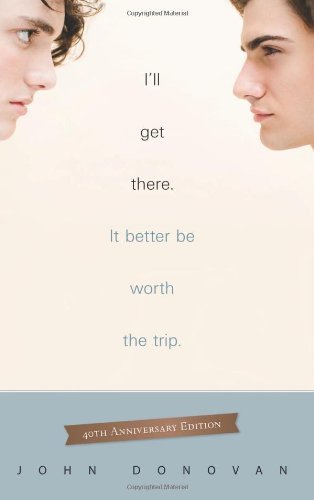
I’ll Get There. It Better Be Worth the Trip by John Donovan
Final Verdict: 4.0 out of 4.0
YTD: 5
Plot/Story:
4 – Plot/Story is interesting/believable and impactful
What is hardest to believe about I’ll Get There. It Better be Worth the Trip. by John Donovan is that the book takes place in the 1960s (and was written then, too!). I mean, honestly, where was this book all my life? As a teenager, I read a few gay-themed novels, like Dream Boy by Jim Grimsley (which I adore), but this book is the starting point for realistic gay fiction and, more specifically, the realistic gay YA novel. This is simultaneously a book that represents the end of idealized youths in YA fiction and also smacks its readers in the face with the presence of a typically denied or unrecognized type of person. Davy is thirteen, he’s in love with his dog, and his best friend and only role model is his grandmother, with whom he lives. When Davy’s grandmother passes away, he and his dog must be uprooted from their small suburban lakeside home, to New York City. Davy’s mom, the reader learns, is a delusional, self-absorbed alcoholic, the likes of which is not next seen until Augusten Burroughs’s memoir, Running With Scissors , almost forty years later. The father, like Burroughs’s, is a relatively weak, non-presence. Granted, he is “accepting” of Davy’s “predicament,” but only because he believes that all boys fool about a bit when they are growing up, and Davy is sure to soon grow out of it. Whether or not Davy will grow out of it, though, is left unsettled, as is the path his budding relationship with the school jock and loner (another odd but special combination of characteristics for one high school person) will take. Do they live happily ever after? Do they end up “making out” with all the girls, as they vow to do – or, possibly, does their relationship become even deeper and more intimate as the days go by?
Characterization:
4 – Characters extraordinarily well developed.
This section almost got a “3” rating, except that I had to pause and reflect on a lot of the other so-called YA books I have read recently and how those characters did not come close to the level of depth and interrelationships presented by Donovan here. Davy, the main character, is sad, lonely, and confused. He is also intelligent, witty, and incredibly loving. He understands his mother and father perfectly, despite how they try to dupe him into believing they may care more than they do, or be “cooler” than they are. His father’s new wife, too, comes across as genuine as she is meant to be, without it ever seeming phony (the use of which word made me laugh, as Davy did certainly have a certain Holden-esque feel to him, and Donovan’s prose was similar to Salinger’s in its sparseness and directness). Altschuler, Davy’s friend and crush, is complex from the start – there is something secretive about it, though it never seems sinister. Altschuler is handsome, clever, and great at sports – so why does he always place himself on the outside, in opposition when he could be in control? The reader finds out in due time and, quaintly (but without being too saccharine) it is another well-written character, Fred, who brings the two boys together and who, at the appropriate time, lets them go off on their own – to grow and experience life without his presence as a crutch. Fred is, believe it or not, Davy’s lovable dog, and one of the best written characters in any YA novel.
Prose/Style:
4 – Extraordinary Prose/Style, enhancing the Story.
As I mentioned above, the prose is reminiscent of the sparse and rather cold nature of the 1960s realists, post McCarthyism. There is a jaggedness to it, a pained emotionality. Donovan, like Salinger, has a bittersweet bite to his prose – something that draws the reader in, almost tenderly, but which also keeps him at a distance throughout, so that we bear witness to the story without feeling overwhelmed or coddled by it. The language was believable from a thirteen year old narrator’s perspective, as were the rather amusing and sometimes completely unpredictable and unconnected strings of thought. Davy relating his dream to the reader, as something uninteresting which can be skipped, for instance, is perfectly indicative of what a young, self-conscious boy might tell his friends or classmates – “well, I had this dream, it’s not important, I mean, I don’t even know why I’m telling it…” which, by nature of this lead in, indicates to everyone that the dream really is important, at least to Davy, and we should pay close attention despite how he tries to dismiss it. Similarly, the way in which Davy connects his “transgressions” with Altschuler to the loss of his dog is tragically comic – but wholly believable of a boy looking for answers to unanswerable questions.
Additional Elements:
4 – Additional elements improve and advance the story.
One of the most interesting and likely agitating pieces of this novel is its resolution, or lack thereof. The title of the book seems to allude to an eventual time or place the “there” where Davy (or Donovan – or all of us) will eventually reach. The ending of the book makes it perfectly clear that neither Davy nor us has gotten there, yet, but that the path is being laid and the direction is much clearer than it had been. When I read a novel like this, I cannot help but to think back to Whitman and Wilde, Shakespeare and Dickinson, the literary and poetic giants, masters of verse and prose, who had to disguise certain feelings, desires, or plain curiosities, in fear of persecution. Suddenly, it seems Donovan steps up to say “enough is enough” and grabs the readers hand to walk onward – where? That’s uncertain, but it’s somewhere and, ultimately, it may be the journey that is the most important part. There is self-discovery, here, and a hope for a social awakening. We see small glimpses of the larger world’s oppression, in Davy’s mother’s reaction and his father’s patronization. There are small glimmers of hope, though, unlike any in a novel previously – open embraces and acceptance, really, from characters like Stephanie, Davy’s step-mother, and in the candy shop owner, always eager to welcome the boys, to acknowledge their presence and treat them as guests – together (indeed, she’s even disconcerted when one appears without the other). All-in-all, this is one of the most impressive YA novels I have ever read, and certainly one of the top novels with a gay main character. That Donovan achieved both, together in one book, 40 years ago, is almost unfathomable, and my only hope is that there will be a great resurgence in this books popularity soon, because the world is really missing out.
Suggested Reading for:
Age Level: Young Adult
Interest: GLBT, Coming-of-Age, Family, Death & Dying, Loss, Friendship, Coming Out, Alcoholism
Dear Jerome: A Letter to J.D. Salinger

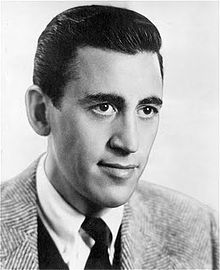 Dear Jerome,
Mr. Salinger. J.D. How would you like to be addressed, I wonder? Of course, it’s impossible to really ask, now, so I think I’ll just go with “Jerome.” It seems real and logical. And you seem real and logical. Do you want to know what’s illogical?
I was discussing with someone this letter that I meant to write to you, and the things I wanted to say. I was explaining how it’s a letter that has been a long time coming, but that I’m nervous about writing it – maybe even a little bit afraid. How will you react? I mean, you might think this is silly, absurd, or a waste of time (for both of us), right? But, you’re dead. I mean, you’re dead and you will have absolutely no opinion about or reaction to this letter whatsoever. So, why do I still worry about it? That’s illogical.
I think, too, you would find it funny that the inspiration for this idea comes from the story elements of another book, one in which the main characters write letters to their favorite romance authors. Can you imagine yourself a romance author? It’s too funny. You’re probably the least romantic writer imaginable – except that there is a certain something about your style and your messages that are a bit amorous. They’re romantic in some way that is almost, I don’t know, an Americanized new-Gothic, maybe? You tell it like it is, ya know? You look life right in the face and take its measure, and that’s romantic (even when your response to life is to spit in its eye).
So, why am I writing to you, anyway? I guess there’s been a lot on my mind lately – a lot that you have to do with. Some juvenile side of me always hoped to meet you one day, even though I knew you were a recluse, a famous recluse, and I was a Nobody from nowhere, with absolutely no resources. How our meeting was to happen, I can’t figure, but I did hope for it – if only for a five minute chat about absolutely nothing, over some really bad coffee somewhere. We wouldn’t even have to talk about your books or your “secret” writings or anything like that. What I would really love to talk about with you is just, life. I want to know the man that created these stories – I’ve read them, I don’t need to analyze them with you, and I know you’d hate that.
You should know, though, that in all your books – all these sad stories about seclusion, isolation, and the misunderstood genius- I get that the point was that nobody could really be connected to anyone else. We go through life looking for these connections: true love, soul mates, relatives, partners, friendships, mentors. The truth is, though, that you’re born cold, wet, and alone and, aside from maybe the wet part, you die the same way. Your Seymour and Teddy and Holden, they seemed to understand this, and they seemed to be different aspects of yourself – you who surely must have realized this truth about life and reality, to be able to write about it so bare-knuckled, so sadly.
 You know what, though? We are capable of connections, Jerome. Maybe they’re not the kind we’re raised to crave or expect. Maybe I’ll never truly be spiritually interwoven with another human soul, because that’s physically impossible. But, so what if we can’t make these tangible connections? We have the ethereal ones. Your writing, Jerome, it connected me to myself – and that’s the most important connection of all. I grew up a boy, very different from anyone else I knew. I was not like my family, or my friends. I was not like the people in the movies or on those teeny-bopper TV shows that everyone loved. I was just me, and for the longest time I was fooled into believing there was something wrong with that: we were all supposed to be alike.
Your stories showed me something else. All these things about myself that I never understood, this overwhelming sadness and melancholy, this complete infatuation with the potential beauty of life and the world, and the despair over all its (and our) failings – feeling this on a psychologically amplified level, and being frustrated that none of the cell phone-wielding, fast-car-driving, Starbucks-drinking teenage friends of mine seemed to have a clue. You and I, we were from very different generations, but despite yourself, I think, we connected. You might find that funny or ironic – I guess I do too, in a way. But, I wanted to let you know that it’s possible, after all. Meaningful connections.
Tell Seymour for me, if you see him around.
With Love & Kindness,
Adam
Review: The City of Ember by Jeanne DuPrau
The City of Ember by Jeanne DuPrau
Final Verdict: 3.25 out of 4.0
YTD: 4
Plot/Story:
3 – Plot/Story is interesting & believable.
It is sometime in the future, on planet Earth, and something rather terrible has happened. For reasons not explained (though one would infer nuclear apocalypse), most of the world’s population has been eliminated, and only a small few survive, deep below the Earth, generations after the catastrophic event. They have no knowledge of their true origins, or of what happened centuries before their births. All they know is a group of people named “The Builders” created their city and left it stocked with an inexhaustible amount of supplies. That is – the people of Ember thought their supplies were never-ending. As it happens, the people were to have vacated the city some time ago, using instructions left for them by the builders. They were supposed to have resurfaced and rebuilt their community above ground, before supplies ran out, but those instructions were lost – and it is up to two inquisitive and daring twelve-year-old children, who stumble upon the instructions, to find their way out and get a message to the rest of the city: Egress!
Characterization:
3 – Characters well developed.
The two main characters, Lina Mayfleet and Doon Harrow, are twelve year olds who have just graduated from school and gone off to join the city’s work force, as all citizens do at the age of twelve. Lina is fiercely loyal and has a strong sense of morality – wanting to do what is right. She is protective of her young sister and respectful of her grandmother and other elders, though she does not hesitate to let adults know when they are in the wrong. Doon is independent and hot-tempered, but sensitive. He too has a strong connection to his family, and his primary goal is to make his father proud. Unlike Lina, though, Doon is more able to leave the city behind and to let its people fend for themselves, preferring to leave further instructions for everyone on how to get out, rather than guide them. Doon’s independence comes across as uncaring or unsympathetic, which makes Lina, in contrast, seem to be the true leader (though she turns out to be forgetful – a trait which could cost the entire city but, fortunately, a convenient dues-ex-machina at the end is her -and their- salvation). These two are well written and distinct, as are the other minor characters, such as the Mayor, Lina’s caring neighbor, the botanist, and the shady shopkeeper. The characters do not have much depth, but this is a young adult novel, so they are as engaging as necessary, without complicating the story.
Prose/Style:
4 – Extraordinary Prose/Style, enhancing the Story.
*This portion has a few minor spoilers
The highest achievement for this book is the writing. Dialogue and prose are both very well done – simple but not boring, and well-paced overall. The most impressive example of the masterful writing, though, is in all that is described rather than told. This is necessary in a book where the people have forgotten their histories and do not know the meaning of many words or the uses for many tools. One of the greatest moments of the book is when Lina and Doon discover a boat, but have no idea what it is. Fortunately, “The Builders” anticipated this, and have left small cards indicating what each item on/around the boat is (though, not what it does). This type of description happens again later, when Lina and Doon come to the surface and see, for the first time, things like grass, the moon, the sun, a small animal and a new kind of fruit (fresh, not canned). None of these things have names, for the citizens of Ember, so they do not get names in the book – the reader does not witness Lina gazing at the moon but, instead, at the silver lantern in the sky. These types of necessary descriptions for common objects turn out to be some of the most beautiful and thought-provoking moments in the book.
Additional Elements:
3 – Additional elements are present and cohesive to the Story.
Overall, this book is an interesting take on the post-apocalyptic novel. Many of this genre are set in other places – outer space, other planets, underwater. Many are set on Earth itself, but an Earth changed – barren and hostile. The City of Ember,

Suggested Reading for:
Age Level: Young Adult
Interest: Dystopia, Eschatology, Post-Apocalyptic Society, Science-Fiction, Fantasy, Friendship, Adventure, Coming-of-Age
This book is now available in the SHOP @ Roof Beam Reader
Review: It’s Kind of a Funny Story by Ned Vizzini
Final Verdict: 3.25 out of 4.0
Plot/Story:
3 – Plot/Story is interesting and believable
15-year-old Craig is having problems. He sees a psycho-pharmacologist and psychologist regularly, he takes Zoloft, smokes pot, can’t eat, and regularly listens to the militant voice in his head, which sounds like a drill Sergeant and treats him like a cadet. Craig is a brilliant young man, at least, he thought he was brilliant after earning a perfect score on the entrance exam to an elite pre-Professional High School in Manhattan; but, once he starts school, he realizes that he is not brilliant – he just works hard, and cannot manage anything higher than a 93% (and who in the world could be happy with 93%?). So, Craig – estranged from his friends, embarrassed at his stupidity, intimidated by the pressures of technology (e-mail, voicemail, online romances), and at a loss for any real connections or passions, decides he wants to kill himself. What ensues is a 2am chat with the 1-800-SUICIDE hotline, a walk-in admission to the local psychiatric hospital (though Craig doesn’t realize what the meaning of “admitted” is), and a five-day stay with a cast of delightfully strange characters. Over these five days, Craig learns how to do without the pressures and distractions of the outside world, he puts life into perspective, rediscovers a passion for art, meets a pretty girl, and comes to the conclusion that his problems have come placing enormous pressure on himself to do the best at everything – get the highest grades, get into the best school around- only, without any real desire or purpose. In the end, Craig (with a supportive family throughout) realizes that he should be in another school, doing what he loves and not what he believes is expected of him – he no longer wishes to be the President of the United States but, instead, an artist who can help others heal , changing lives in other ways.
Characterization:
3 – Characters well developed.
Craig and the cast of misfits in the Adult Psychiatric wing of the hospital (where Craig was placed, because the adolescent wing was closed for repairs) are all interesting and fun to watch. Craig, being the narrator and main character, is also the most highly developed of the bunch. Craig’s family is interesting and sweet, though relatively flat throughout (the interactions between Craig and his sister, and Craig’s sister and their father are always fun to watch, though). Craig’s friends are also under-developed, but this is acceptable because they turn out to be relatively shallow people, not there in any way for Craig when he may have needed them, so they get pushed to the sidelines as Craig heals. Each of the patients at the psychiatric hospital do have their own quirks and characteristics, though, which makes them fun and interesting to watch, in relationship to one another and in their interactions with Craig. The reader gets to know a few, to learn how they ended up there, and to see small steps of progress for a few (and steps back for others).
Prose/Style:
3 – Satisfactory Prose/Style, conducive to the Story.
A great positive for this book is that the prose and style are genuinely “Young Adult.” What I mean by that is, the book does not come across as if an adult were trying to write as a teenager, making attempts to sound younger, cooler, or more angst-filled. Instead, it just feels like a teenager is narrating the story – honest, nervous, bold, and confused in equal measure. The style made the story incredibly easy to read – it almost sucks you into the events taking place, so that 400+ pages flew by and suddenly I was at the end. It took me less than two days to read it, largely because the storyline was pushed along with such ease, thanks to the simple, humorous, easy-to-follow writing style. The chapters were broken down into manageable parts, the language was simple (not complicated, thankfully, by the presence of a brilliant narrator) while the themes were more elevated, so that the marriage between the ambitious storyline and the easy-going prose matched the attitude and nature of the story’s protagonist, a simple teenager with rather extraordinary capacity and talent.
Additional Elements: Setting, Symbols/Motifs, Resolution, etc.
4 – Additional elements improve and advance the story.
What I enjoyed most about this book were its honesty, its setting, and its overall intent. Vizzini is clearly making a point that children today are pressured at earlier and earlier stages in life to “figure it out” – to know who they are, what they want to do with their lives, and how they are going to get there, before they are even legally able to drive or vote. There is a dangerous trend, this story implies, that is putting our young people at risk of grim psychological damage and which also causes serious impacts on physical health, growth, and development. The parents in this book are idealized, almost to the point of being grotesques, but to demonstrate a point – adults need to be the ones who know what they are doing, and what kids are going through. Adults need to know how to guide the younger generations, to encourage exploration and healthy competition, but to know when to say “enough is enough.” It is a shame, and it is laudable that Vizzini, in such a funnily-serious way, attempts to bring these issues and concerns to light. This is One Flew Over the Cuckoo’s-Nestfor today’s younger generation – and we should all be paying attention.
Suggested Reading for:
Age Level: Young Adult
Interest: Coming-of-Age, Mental Health, Depression, Youth, Education, Family, Friendship, Art
Notable Quotes:
“I don’t believe in destiny; I just believe in biology, and hotness, and wanting girls.”
 Roof Beam Reader