Roof Beam Reader
Adam Burgess
Review: Nip the Buds, Shoot the Kids by Kenzaburo Oe
Nip the Buds, Shoot the Kids by Kenzaburo Oe
Final Verdict: 3.25 out of 4.0
Plot/Story:
4 – Plot/Story is interesting/believable and impactful
Kenzaburo Oe’s Nip the Buds, Shoot the Kids
Characterization:
3 – Characters well developed.
The narrator is a boy likely around age 14 who is shadowed throughout the story by his younger brother, likely about the age of 10. They are traveling with a group of boys from the youth prison, where each of the boys were sent for misdeeds which are never really explained, though which the reader is meant to believe were probably relatively minor offenses, such as petty theft. The interaction between the boys is one of camaraderie (in fact, they often refer to each other as “comrade” rather than friend or some other distinction). While we get a general sense of what “adults” are and what “children” are – there are also brief moments of a deeper understanding, such as when the narrator and the doctor from another village interact on three occasions, and the dialogue goes very differently each time. The most developed or explained characters are the narrator, his brother, and their Korean friend Li. We also learn much (or at least just enough) about the boy who is nearest to being the narrator’s friend, Minami. The rest of the boys and villagers, except for the village leader, are left relatively undeveloped and without purpose, other than to fill in the space – particularly in the “mob mentality” moments, when the villagers confront the boys, for instance, or when the boys gang up on our narrator’s brother and his dog, Leo. This does not detract from the story, however, as the point seems to be that there are many “comrades” and “villagers” but few people of distinct personality, capable of independent thought, and those few who are – such as the defected militia man and the narrator, are either killed or are forced to desert. I would have perhaps enjoyed some deeper character interaction and development, particularly in regards to the narrator and Minami’s relationship, as well as the narrator and his “girl’s” relationship. The brothers, too, are interesting to watch, and witnessing more of their bond would have been helpful in terms of creating an empathic link between the story and the reader.
Prose/Style:
3 – Satisfactory Prose/Style, conducive to the Story.
Oe’s prose calls to mind a mixture of Hemingway’s simplicity and straightforwardness, with Golding’s stamina and honesty, and a dash of Japanese story-telling, redolent of what one might find in Americanized role-playing video games. It’s an odd mixture, but given the subject matter, it definitely works. For instance, Oe seems to me the Japanese mirror of Hemingway in terms of war-time story-telling. The prose is direct and powerful, but reveals a manly type of sentiment. The narration from a child’s point of view is remiscent of what Golding does in The Lord of the Flies
Additional Elements:
3 – Additional elements are present and cohesive to the Story.
The major themes of this novel seem to be: 1) the nature of the individual in war time; 2) the nature of the collective in war time; 3) the nature of family; and 4) the inversion of the adult/youth dichotomy. Oe clearly has much to say on the idea of war and its impacts on the individual and the “village” – be it hometown, state, or nation. There is a loss of self which is felt when a country is at war. Suddenly, there is nothing important about “me” and all attention must be paid toward the greater good – protecting and honoring the state. Also, he comments continuously on the dangers of a mob mentality and of ignorant persecution of innocents. Family seems to be the only bond which is unbreakable and, when it does snap, the repercussions are permanent and unbearably painful; family seems to be the one thing which remains fearless in the face of adversity so, when family – its protection, its hope, or its memory – is not present, the chances for survival or independence are annihilated. Finally, there is this interesting inversion of the social constructs relating to “adulthood” and “childhood.” Oe reverses the roles, so that adults act like lawless, persecuting, immature children, striking out irrationally at every danger and refusing to think or act within the realm of logic or reason. The children, on the other hand, form bonds and relationships in order to get tasks done, to feed themselves and their group, and to maintain a balance within the community. Oe seems to imply that, when left alone, adults are more likely to turn on one another, whereas children are more likely to work together to survive. An interesting study.
Suggested Reading for:
Age Level: Adult, Literary
Interest: World War II, Japanese Culture, Dystopia, Fear, Survival, Coming-of-Age
Saturdays, Uncensored! Thoughtful Musings
Good Day, Readers:
Since I have the honor of working tomorrow, I will probably not be able to do my typical Saturdays, Uncensored! post. So, instead, I am cross-posting my guest post on censorship and banned books, which you can also find at Smash Attack Reads. It generated a great dialogue amongst her followers, so I’m hoping my readers are equally interested and willing to dive in! Also, since the ALA’s annual Banned Books Week begins next Saturday, September 25th, I figured this was a great way to get ourselves ramped up.

Censorship: What’s With the Expurgation, Mr. Bogus?
In this day and age, the idea of censorship in books seems almost laughable. Most people certainly tend to believe that censorship in fiction went out of fashion in the 1960s (or sooner). Sadly, this just isn’t the case. Books continue to be challenged on a regular basis, particularly by parents who want the books pulled out of school district libraries. So, why should we care?
Well, for me it is a philosophical stance – an argument for personal freedoms. It is fine to censor what you or your children read – that is your right as a conscientious adult and caregiver, but does your right to choose your own reading material supersede the right of an author to present his or her thoughts? Should this ever be the case?
What comes to mind for me at the moment is the rather heated debate that has been surrounding the author Ellen Hopkins lately. I recently read my first Hopkins book, Tricks, and while I loved the prose and the plot, I found myself understanding the desire some parents might have to “protect” their children from the “bad” things. Interestingly enough, when reflecting on this epiphany, I realized that as a junior high or high school reader, I would have loved and devoured the book, but, on the other hand, if I had children of that age, I would probably want to keep them as far away from these books as possible. The automatic urge, then, is to push the bad things away; to make things better; to hide what we don’t want our children to see or learn too soon. This urge is the noble monster, though, which ultimately takes us astray and distracts us from being proactive in educating our kids in relation to the world so that they will be prepared. When we hide things from them, what good does it really do? Ultimately, the argument should be stripped down to individual tastes and choice and not to anybody’s “right” or power over another’s ideas. There exists within each of us no inherent right to censor someone else’s thoughts, dreams, or opinions, but there does exist in us a right to choose what is best for ourselves. This is the heart of the First Amendment to the United States Constitution and the sentiment, at its core, was born with man’s first thought.
There are limits, of course. Should we be allowed to print the names and addresses of real people, for instance, and slander them politically, socially, or culturally? No, I think not – but this isn’t so much a case for censorship as it is a testament of common human decency and respect for others’ privacy (another American social protection, though this one perhaps even more at risk – but I digress!). This is why biographers have such a strict code of ethics and why they are scrutinized so very closely by their critics and peers.
Banned Books: Let’s Talk Some Trash.
In fiction, though, in the land of make-believe, as long as reality-based characters are shrewdly disguised in parody and satire, and social opinions are handled with a respectful nod to dialogue, rather than a goading incite toward violence, then authors should have the freedom to express what they feel should be expressed! Let’s not forget Mark Twain, that clever so-and-so, whose greatest work of fiction, The Adventures of Huckleberry Finn, at first could not get off the ground because the publishers were forced to abandon sales of the book due to its many challenges by the public (and private) interests. Twain went door-to-door to sell his first printing of the novel (oh, if I could only get my hand on one of those!) because he knew it was important and, thankfully, the rest of the country and the world eventually picked up on this fact as well. Shockingly, Huckleberry Finn still holds a place on many of the “banned and challenged books” lists today. The reasons cited for challenges recently tend to be for depictions of violence and for what some call a derogatory depiction of class and race. These people are wrong, of course, but at least the argument has moved from the original inane charges of “use of slang” and “depictions of slavery as inhuman.”
Basically, this is my long-winded way of saying – fight censorship and the practice of banning books because it’s the right thing to do. Great works of literature (and, yes, bad ones too) will always be challenged for some reason. Many of the greatest books in history were censored at one point and an insane number of English-language novels were banned from publication in or shipment to the United States. While censorship laws of the 1960s and 1970s eventually opened the flood-gates, the risk still pervades and those who do the challenging take different approaches and tactics, making new claims to request censorship of the same books. As Mad-Eye Moody would say, “Constant Vigilance!”
Comments?
So, do you agree with my sentiments? Do you disagree? I would love to hear your thoughts and ideas on the subject. Obviously, censorship and banned books are often lumped into the same category, but they are different things and it is feasible that some of you may be okay with censorship but not okay with altogether banning books (or vice versa). Some of you might agree with me that it is up to adults to choose their books based on their own tastes and to monitor their children’s reading, while others might find it perfectly acceptable for schools to pull books that are deemed inappropriate off of their library shelves. So – share! Leave a comment below and let’s get a dialogue going!
You can read the full guest post here.
Review: The House of the Spirits by Isabel Allende
Final Verdict: 4.0 out of 4.0
Plot/Story:
4 – Plot/Story is interesting/believable and impactful (socially, academically, etc.)
Characterization:
4 – Characters extraordinarily developed.
Prose/Style:
4 – Extraordinary Prose/Style, enhancing the Story.
Additional Elements: Setting, Symbols/Motifs, Resolution, etc.
4 – Additional elements improve and advance the story.
Suggested Reading for:
Age Level: Adult, Literary
Interest: Latin-American history, political history, magical realism, family, literature, fiction
My Top Ten Fictional Heroines
Top Ten Tuesday is an original feature/weekly meme hosted by The Broke and the Bookish. You can join in by clicking on the link. This week’s theme: Your Top 10 Favorite Fictional Heroines. I have honestly never given this much thought; so, why not start now??
1. Countess Ellen Olenska from The Age of Innocence
– Countess Olenska is one of my favorite female characters because she is the embodiment of strength and courage. In the face of perpetual social attacks, from family and strangers alike, she keeps her head held high and lives for herself, not for others. Her past romantic history is the gossip of New York, but Olenska keeps the truth to herself, despite the fact that revealing said truth might actually make her appear ‘better” in others’ eyes. Still, she knows that private things are private, and that people should learn to respect that.
2. Hermione Granger from the Harry Potter
-This is the first of three characters from Harry Potter that I will be including on this list. I name her first because 1) she is the most prominent throughout the series and 2) she is the one who puts herself most in danger. Her strength of character and loyalty to friends develops and increases from book to book, and it is admirable what she does, what she sacrifices, for the well-being of others. In book seven, particularly, she makes perhaps the greatest and most difficult sacrifice that one could ask of a seventeen-year-old girl because she has the courage to put others before herself.
3. Valentine Wiggin from the Ender’s Game
-The elder sister of the series’ main character, Ender (Andrew), Valentine is one constant force for good in a family of siblings who are always teetering on (or falling over) the boundary of greatness and tyranny. Valentine is notable to me because she has to pit her own wit and moral fiber against the fierce domination of her third brother, who is equally intelligent but far more vicious. Again, she does so for the good of all mankind, and for no benefit of her own.
4. Marian Forrester from A Lost Lady
-This is a funny one for me, in that I see Marian as a feminist, though she really isn’t. But she is. If we are to judge merely on appearances and examples, it would seem as if Marian Forrester is, actually, quite old-fashioned in terms of gender roles and female submission. Upon close reading, though, we truly see that Marian is tormented by her decisions and does what she must do to survive and to keep face amongst the townspeople. Some may call this a failing or believe her to have “given in,” but I see it quite the opposite – I find it courageous to continue to survive, by any means necessary, and to be smart enough and clever enough to read men the way she does, to adjust to circumstances as she can.
5. Zenobia from The Blithedale Romance
-Ah, the beautiful Zenobia. So passionate, so strong. I almost like Zenobia for demonstrating the opposite of what Marian Forrester demonstrates in A Lost Lady. Throughout the novel, Zenobia appears to be this strong, modern feminist. She gives lectures and speeches on woman’s suffrage and equal rights; yet, when confronted for the first time with real love, she shows a very honest, touching realness. She, in a way, becomes prey to the very symptoms of womanhood which she had been known to rail against. Many read this as Hawthorne’s condemnation of feminism – or, at least, his commentary that the project is fruitless. I see it quite differently (go figure). To me, Zenobia represents an idea of personhood – not just womanhood. She is equal parts hard and soft; she can stand up and fight publicly for what is right (something most find difficult to do) and yet, in intimate relationships, she can let go and be delicate. She can want to belong to someone or something. This is not so much female submission as it is romantic idealism – which I sometimes am a sucker for.
6. Professor Minerva McGonagall from the Harry Potter series by J.K. Rowling
-Probably my favorite literary schoolteacher character of all-time. Professor McGonagall, who one can assume is single, divorced, or widowed (she is probably in her 60s) is an interesting combination of rigidity to policy and compassion to human circumstance. She never shows favorites and is always fair in executing punishments or direction. She is the literary embodiment of all those schoolteachers from past experiences who come creeping up memory lane from time-to-time. She is also a champion for the good and the just. Though not a recognized member of any of the “societies” in the novel, which champion good or evil, when push comes to shove, Minerva McGonagall dives into the thick of things – either to protect her students, to fight for good, or both.
7. Antoinette from Wide Sargasso Sea
-This re-telling of the “woman in the attic” from Jane Eyre
8. The Doctor’s Wife from Blindness
-This is likely the strongest female (or male) character I have ever read. The Doctor’s Wife (names are never revealed in the novel) is the one person not afflicted by a blindness plague which, over time, causes every person in the greater New York (assumed) area to lose his or her vision. The Doctor’s Wife must bear witness to incredibly terrifying events – human violence and defilement; cannibalism, rape, and existence in the foulest conditions imaginable. She must remain quiet and pretend to be blind herself, or her life would be in danger – either from those jealous of her sight or by the pressures which would have been brought to bear upon her. She must guide her blind husband and their cell mates through the detritus of a confined, evacuated hospital – she must feed all, clean all, and protect all from danger. She does so selflessly – knowing, always, that she, of all these people, could easily escape.
9. Lorelei Lee from Gentlemen Prefer Blondes
-I simply must include Lorelei because she is absolutely hilarious. I suppose, speaking just in terms of the character herself, Lorelei is not much of a heroine. I include her, though, because I think what Anita Loos did with Lorelei, and with the Gentleman Prefer Blondes/But Gentlemen Marry Brunettes duet was incredibly brave for the time. This is a reverse-feminist novel; the parody and satire are over-the-top. The women are incredibly selfish, stupid, ignorant, and innocent of all things. When Lorelei goes abroad and runs into Americans, she is simply delighted as, “what’s the point in traveling to other countries if you can’t understand anything the people say?” The men, of course, are gallant, chivalrous, well-educated and well-bred. They are good with their money, and the women just want to spend it all (“diamonds are a girl’s best friend”). Loos hit a home-run with little Lorelei, knocking New York high society and all the expectations of class and women’s “station” on their tails.
10. Mrs. Molly Weasley from the Harry Potter
-Mrs. Molly Weasley is the aunt we all wish we had. As a mother, she is perhaps too overbearing, too coddling, and too intrusive. But, as the mother of your best friend, she is a hero – she bakes wonderful food, she always remembers you on your birthday, she welcomes you with open arms to her home at holidays, and she worries about you when you are ill or injured. She is frustratingly oppressive at times but, she is also fiercely protective. When her family is put in danger, she roars to life, putting herself in front of her children and defying anyone to break her down.
Okay! So, those are my top 10 favorite females in fiction – who are YOUR favorites?
Review: Harry Potter and the Deathly Hallows
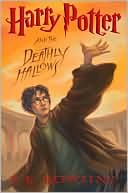 Harry Potter and the Deathly Hallows
Final Verdict: 4.0 out of 4.0
YTD: 48
Plot/Story:
4 – Plot/Story is interesting/believable and impactful
The seventh and final installment of the Harry Potter series is a whirlwind of great turmoil and great joy. There has been criticism in terms of how many fatalities Rowling employs, without much time for reflection or mourning. My retort would be that, this is war – plain and simple. In this last book, one really feels that each day could be the last, and there just is not much time for some of the things we (and the characters) would normally take for granted. Even a wedding is disrupted by the events happening in the world, which infiltrate this most intimate of ceremonies. One of the greatest achievements for this installment of the series is that much of the action takes place outside of Hogwarts School, the setting for the vast majority of all the action in the first six books. This is important because it allows the readers to identify with the world-at-large, to see how all the spreading evil and danger is impacting society as a whole, and not just the students and teachers of one small school. It is also beneficial as it allows the readers to further grow and develop with the three main characters: Ron, Hermione, and Harry. They strike out on their own, for this one, and must rely on themselves and each other, without assistance from parents, guardians, teachers, or their beloved gamekeeper, Hagrid and, most importantly, no Dumbledore to protect them. When their final task returns them to Hogwarts, where the last great battle develops, the atmosphere is incredible – the pace is brilliant and, upon reflection, one realizes why the upcoming movies are due to be released in two parts, as the first 400-500 pages of the book seem to follow one theme and pace, whereas the latter part of the novel moves much more quickly, has much more action as opposed to back-story and investigation (think an on the road detective story). The strength of self, the bonds of friendship and family, and the importance of education coupled with instinct – these themes are all further developed from the first six books and, here, accumulate masterfully towards a final purpose, which Harry must realize in the final moments.
Characterization:
4 – Characters extraordinarily developed.
The three main characters, Harry, Ron, and Hermione all get an extraordinary amount of development and attention in this novel. Watching Harry and Hermione interact as a twosome (whereas normally the group is always together in three) is fantastic, as it allows the reader to see a different side of both characters; we also learn much more about some of the minor characters, including Luna, Neville, Mrs. Weasley, and Snape – all of whom have outstanding growth and resolutions, worthy of the time Rowling has put into developing them throughout the previous books. We meet new characters, such as Mr. Lovegood and Gellert Grindlewald, who, though present for the first time and relatively minor in comparison, get the perfect amount of attention – enough to explain why they are important and to help advance the plot, without feeling like time was ever wasted on characters who would not matter much otherwise. The D.A. (Dumbledore’s Army) makes a return, as does The Order of the Phoenix – the interaction between the two groups, and all of their members, is exhilarating and powerful. Also, Harry and Ginny’s relationship continues to grow and develop, getting more intense as the book progresses, though they spend most of the year apart. Even some of the antagonists, like Draco Malfoy and his mother, Narcissa, are further examined and explained, so that we begin to understand them and appreciate them more than might have been possible in earlier books in the series. Voldemort, of course, gets more examination. His past – as well as Snape’s and Dumbledore’s – is further disclosed, including his flaws and failures. For those who care, Rita Skeeter and Dolores Umbridge both return full-force as well, in all their wickedness.
Prose/Style:
4 – Extraordinary Prose/Style, enhancing the Story.
Rowling has stepped up her prose once again in this final installment; she increases the vocabulary level of the work overall and she does a masterful job of weaving in and out of flashbacks. She also manages to incorporate many different settings, without bringing stress to the overall structure of the novel. As with previous installments of the series, Rowling breaks from the monotony of regular prose by including things like letters and newspaper articles; also, in this book, she includes excerpts from “biographical” books relating to characters in the novel. She manages to distinguish between characters by emphasizing dialect, slang, and inflection – so, for instance, when Mundungus Fletcher speaks, we know it is not Lucius Malfoy; when Hermione speaks, we know it is not Luna or Ron. In a novel with so many characters, interacting on so many levels, this is not an easy feat – but Rowling does it quite well (though she does start to overuse the word “Alas” when the adults are speaking – one minor obnoxious failing, barely worth mentioning, but I have to be fair). Overall, the style is well suited to this brand of fiction, the prose is whimsical yet serious enough to be realistic, and the language/dialogue is clearly and consciously distinguished.
Additional Elements:
4 – Additional elements improve and advance the story.
“I’m going to keep going until I succeed – or die. Don’t think I don’t know how this might end. I’ve known it for years.” Thus, we come to the first and the final theme of the Harry Potter series – sacrificing oneself for the well-being of others. Complete, unerring, selflessness for the triumph of good. This is what Rowling has been getting at for seven books – what Harry’s mother died for; what Dumbledore died for; what Snape died for. It is, as the song goes, “all for love.” What I cannot help but smile at, sardonically, is the fact that all of the extremists out there, who refuse to read or to allow their children to read this series because it includes witchcraft and witchcraft is “of the devil” – what they are missing out on is perhaps the greatest modern literary example of the idea that love and generosity are the world’s greatest strengths. This is a text which examines the bonds of family and friendship, and what it really means to serve “the greater good” – nobly and honestly. We see characters stumble and struggle; we watch as the greatest role models of the series painfully evaluate themselves and turn from the temptations of power and immortality and riches, instead to humbly serve those around them – to help others grow, achieve personal greatness and awareness, and defeat the evils of the world. What you get at the end of the series is the feeling that evil comes in many forms – fantastic or not – and that only through strength of character and bonds of common decency and humanity can it be overcome. As the world stood up and said “enough” to the Nazi oppression of Jews and other minorities, so too did Harry and his friends stand up and say “enough” to the persecution of the “dirty” or “half” blood, as well as the “lesser” magical creatures of the world. This relationship became clearest in Deathly Hallows, but though the prominent example might be Nazi oppression, Rowling makes it quite clear that what she hopes for is the awakening of responsibility in all people, at all times, to the benefit of serving others before serving one’s self; of protecting the helpless; of lifting and caring for the meek and the unable. And, though after my first reading of this novel I was a bit disappointed in the “Epilogue,” I now realize and appreciate its purpose as a type of proof that change is possible, and not just in the short-term. One small choice, one single voice can echo around the world and through the ages. Job well done, Ms. Rowling.
Suggested Reading for:
Age Level: Adult, Teen
Interest: Education, Friendship, Magical Realism, Coming-of-Age, Family, Love, Fantasy, Good/Evil
Notable Quotes:
“Of course it is happening inside your head, Harry, but why on earth should that mean that it is not real?”
“I’m going to keep going until I succeed – or die. Don’t think I don’t know how this might end. I’ve known it for years.”
“We’re all human, aren’t we? Every human life is worth the same, and worth saving.”
“Do not pity the dead, Harry. Pity the living, and, above all those who live without love.”
 Roof Beam Reader