Roof Beam Reader
Adam Burgess
Mansfield Park #AustenInAugustRBR

Jane Austen is perched on a curious point in the literary timeline, caught somewhat between the eighteenth and nineteenth centuries, both of which influenced her work. She greatly admires Samuel Johnson (as demonstrated by the many Johnson quotes & references that can be found in her various works), and many, if not most, of her works are about a woman attempting to –or somehow finding herself- climbing the social ladder, out of her station and, through marriage, into a higher one. This is largely an influence of eighteenth century works, such as Pamela. Still, there is much of Romanticism and the nineteenth century in her works, as in their preference for intelligence and natural beauty over traditional wealth and caste systems. Austen’s work also dips into the Victorian concerns of sensational-realism, which is where Mansfield Park and its Pragmatism are mostly situated. In its exploration of modernity, shifting family dynamics, city and suburban lifestyles supplanting the country manors, parties, and public scandals, and politics (such as the Slave Trade and aristocratic corruption), Mansfield Park is much wider-reaching and more concerned with society and the world-at-large than her earlier works (whose simplicity and blind-eye caused her to be much maligned).
At the center of the story is Fanny Price, who leaves her parents’ home to live with her aunt and uncle at Mansfield Park. Fanny’s mother, though once beautiful, has been run ragged. She married beneath her and, soon after her marriage, her husband became permanently disabled and a drunk. Fanny, at first, is a black sheep at Mansfield. Although she is kind and mild in temperament, her female cousins tease her mercilessly and her ridiculous Aunt Norris spites her at every occasion. Eventually, through natural charm and beauty, Fanny does manage to win over her hosts, Sir Bertram and Lady Bertram (who is her mother’s sister) and also her cousin, the youngest brother of the family, Edmund.
Unlike Austen’s other works, which are largely episodic (likely because they were originally written or imagined in epistolary form), the style and structure of Mansfield Park is much more aligned with the traditional novel, with lengthy chapters and regular progression of time. Austen manipulates time and chronology in clever and subtle ways, so that the reader is navigated through the story without being given many direct reminders of where she is in the calendar. This is something typically Austen and can be seen in her other novels, particularly Pride and Prejudice; and though a simple thing, this control of time and keeping it both relevant and in the background truly helps hold the story together by maintaining the fictive illusion and also the structural integrity of the work.
In Mansfield Park there are balls and plays, flirtations and scandals. While most of Austen’s novels are rather complex, Mansfield Park is perhaps the most complex of all her work and is probably an inspiration for later Victorian novels (many of which are concerned with child orphans, their patronage and rise from nothingness into seemingly-unachievable stations). Fanny, like other Austen heroines, is a young woman on the verge of adulthood and who will find her place through her soon-to-be husband. Unlike other of Austen’s novels, though, which are primarily interested in the act of courtship, family, and love, Mansfield Park also tackles ideas of nature vs. nurture (what makes a person who they are?) and true positive qualities, in family and friends (both Edmund and his father, Lord Bertram, learn much about themselves and about others, by the end of the story – because of their growing appreciation for and admiration of the quiet but naturally classy Fanny). The book is also interested in the nature of vice and it uses two polar locales, the city and the country, as backdrops for “bad” and “good.” Surprising, for readers of Austen’s other works in particular, are the inclusions, though subtle, of sexuality (what we will eventually see from Freudian symbolism), of social and political morality, and of graphic poverty.
Ultimately, I find Mansfield Park to be one of the least exciting, most dense of Austen’s novels; however, it is also the most complex, the most daring, and the most revolutionary of her works. She takes many risks, borne out of disillusionment and hardship, which would likely inspire the next generation of Victorian novelists who would champion the lower classes and write for social justice. It was a difficult read, being slow-paced and simultaneously familiar to and wildly different from other Austen works, but while it may not be as perfectly constructed, entertaining, or accessible as her most popular work, Pride and Prejudice, it might just be her most important.
Notable Quotes:
“I think it ought not to be set down as certain, that a man must be acceptable to every woman he may happen to like himself.”
“We do not look in great cities for our best morality.”
“Good-humoured, unaffected girls, will not do for a man who has been used to sensible women. They are two distinct orders of being.”
“Life seems but a quick succession of busy nothings.”
“She was not often invited to join in the conversation of the others, nor did she desire it. Her own thoughts and reflections were habitually her best companions.”
“I was so anxious to do what is right that I forgot to do what is right.”
“Let other pens dwell on guilt and misery. I quit such odious subjects as soon as I can, impatient to restore everybody not greatly in fault themselves to tolerable comfort, and to have done with all the rest.”
“Varnish and gilding hide many stains.”
“When I am out of doors, especially when I am sitting out of doors, I am very apt to get into this sort of wandering strain. One cannot fix one’s eyes on the commonest natural production without finding food for a rambling fancy.”
August Checkpoint #TBR2022RBR

Greetings, TBR Pile Challengers!
Y’all! We have more than 150 posts linked-up for this challenge! How incredible is that?
I hear summer is coming to a close; students and teachers are returning to school, and many are eagerly awaiting the autumn season. Count me in as one of those many! It’s still very much summer in my part of the world, with temperatures hitting 105+ degrees every day (for at least a few more weeks). I’m more than ready for September to get here (or October…or November…)
Last month’s checkpoint came with the third of four planned mini-challenges. I hope you’ll all take the opportunity to return to last month’s post and look at the few book title poems that people submitted — they were fantastic! Thanks to those who did participate, it was a lot of fun reading your poems. You made the choice very difficult, so I ultimately put them all in contention and allowed an algorithm to choose for me! Mini-challenge #4 will be coming soon.
Progress: 8 of 12 Completed / 7 of 12 Reviewed
Well, I finally managed to post some thoughts for Richard Siken’s CRUSH, which means I’m nearly caught up on the reviewing side of things. I’m still stuck at 8 of 12 (or 14) read, though. I’m working on the big chunky poetry tome, which technically means I’m “in progress” on Book 9. I think I’m going to knock out a couple of poetry collections and a James Baldwin novel, which is slim but which I hope to force myself to take slowly so that I can savor it. If I can do those in September, then I’ll be at 11 or 12 and can be confident about finishing all 12 plus my 2 alternates. How are YOU doing!?
Books read:
- Chicago Poems (1916) by Carl Sandburg
- When My Brother was an Aztec (2012) by Natalie Diaz
- Sing, Unburied, Sing (2017) by Jesmyn Ward
- Zen and the Art of Motorcycle Maintenance (1974) by Robert M. Pirsig
- A People’s History of the United States (1999) by Howard Zinn
- The Warmth of Other Suns (2010) by Isabel Wilkerson
- Crush by Richard Siken
- A Book of Common Prayer by Joan Didion (needs to be reviewed)
How are you doing?

Below, you’re going to find the infamous Mr. Linky widget. If you read and review any challenge books this month, please link-up on the widget below. This Mr. Linky will be re-posted every month so that we can compile a large list of all that we’re reading and reviewing together this year. Each review that is linked-up on this widget throughout the year may also earn you entries into future related giveaways, so don’t forget to keep this updated!
MINI-CHALLENGE #3 Winner:
Congratulations to Bev from My Reader’s Block! Your book title poem was awesome, as were all the contestant entries. Your comment number was randomly selected as the winner, so you’ve won a book of choice, $20 USD or less, from The Book Depository!
LINK UP YOUR REVIEWS!
Throwback: Year 1 #AustenInAugustRBR
As part of this tenth anniversary year, I’ll be sharing some favorite posts from previous Austen in August events. I hope you enjoy discovering or re-discovering these Austen explorations!
Please give a warm welcome to the next guest blogger for our Austen in August event: Meaghan from A Cineaste’s Collection!
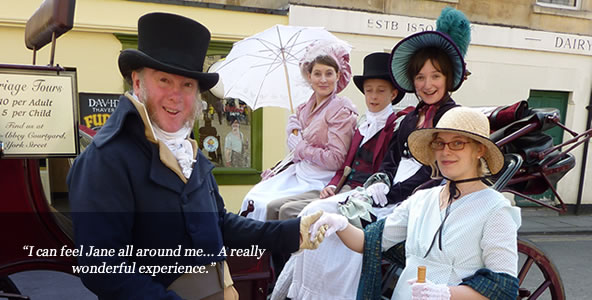
Just about a year ago I had the incredible fortune to finally visit England. I’ve been an Anglophile my entire life (I am all for reunification). One of the stops on our trip was Bath, Somerset. I believe on my next trip to Bath, I will time it to coincide with the Jane Austen Festival Promenade. Over 500 people dress in Regency attire and walk the streets of Bath. This time, we had to settle for a lovely visit to the Jane Austen Centre on Queen’s Square.
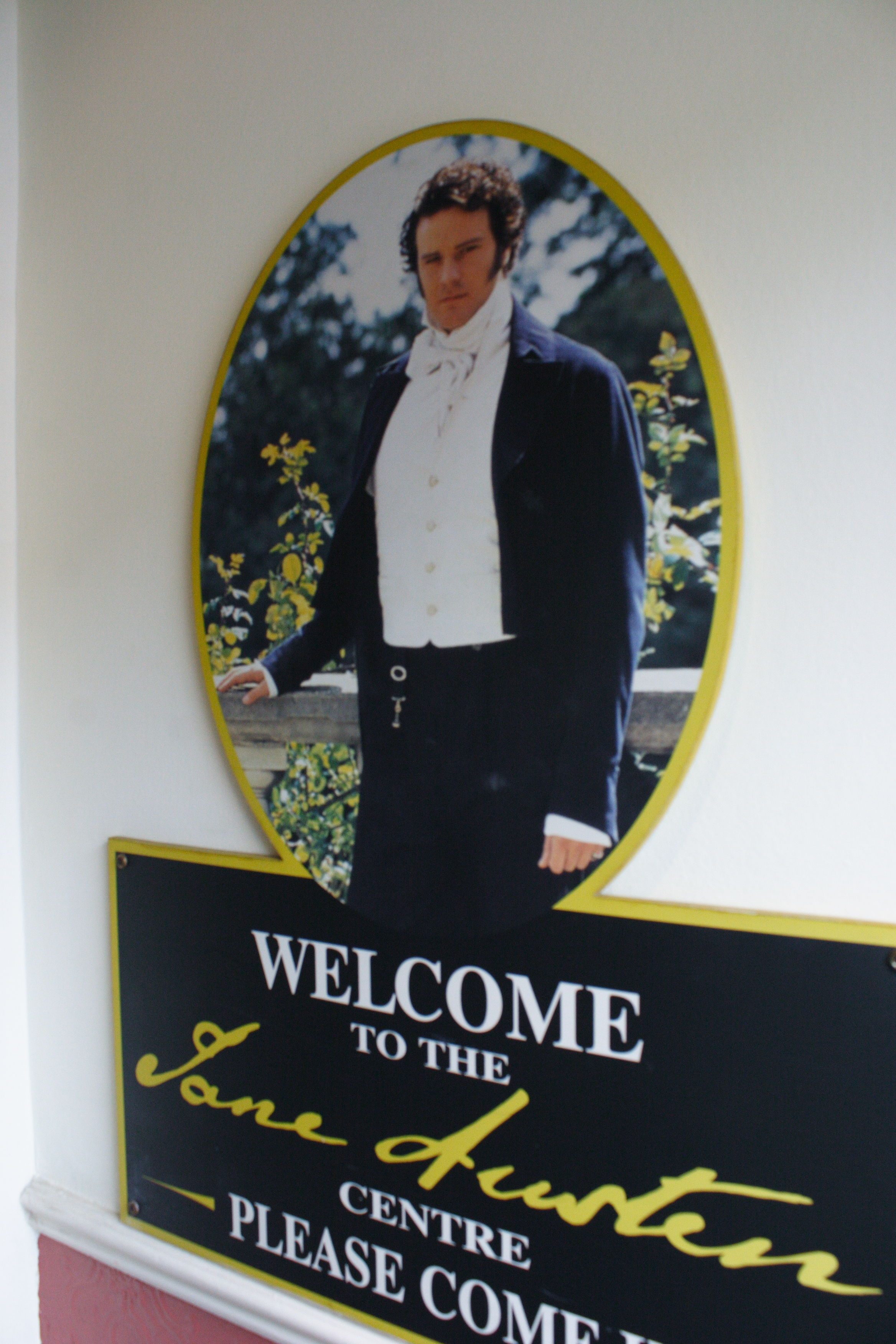
The centre is housed in a Georgian townhouse near the centre of town, populated by friendly staff in period dress. I can’t help but admit I giggled a little at the portrait of Colin Firth as Mr. Darcy in the entrance, welcoming us to the centre. A small gift shop occupies the front room that features Austen’s books, of course, but also lesser known and hard-to-find items like her juvenilia. Guests are then directed upstairs to a rooms with a number of chairs to watch a video while waiting for the next available docent.
The visit officially begins with a very informative talk about Austen’s life and her connection to Bath. Aside from a few highlights, much of what we were told was new information to me. Most surprising perhaps was how much Jane came to despise Bath. She set two of her novels (Northanger Abbey and Persuasion) there but the depiction of the spa town varied greatly. For wide-eyed Catherine Morland (and a much younger Austen), Bath is a glittering place of parties, society and romance. This, as we learned, was likely influenced by Jane’s visits to Bath to see her Aunt and Uncle Leigh-Perrot. They kept rooms in the Paragon and it seems Jane enjoyed her time there. Austen’s character Morland in Chapter Ten of Northanger Abbey expresses her delight in Bath:

“Oh! Yes. I shall never be in want of something to talk of again to Mrs. Allen, or anybody else. I really believe I shall always be talking of Bath, when I am at home again — I do like it so very much. If I could but have Papa and Mamma, and the rest of them here, I suppose I should be too happy! James’s coming (my eldest brother) is quite delightful — and especially as it turns out that the very family we are just got so intimate with are his intimate friends already. Oh! Who can ever be tired of Bath?”
However, Austen wrote this novel a couple of years before she was forced by strained circumstances to move there. In 1801, Jane’s father decided to retire as rector and move the family (his wife and two daughters) to the Somerset city. She writes to her sister Cassandra shortly after arriving:
“The first veiw [sic] of Bath in fine weather does not answer my expectations; I think I see more distinctly thro’ Rain.–The Sun was got behind everything, and the appearance of the place from the top of Kingsdown, was all vapour, shadow, smoke & confusion.” –letter to Cassandra — May 5, 1801

Perhaps it was the cramped quarters and city living that did not agree with Jane. The social frivolity that had once amused her in small doses was now forced upon her ad nauseum.
“Another stupid party last night; perhaps if larger they might be less intolerable, but here there were only just enough to make one card table, with six people to look over, & talk nonsense to each other.” –letter to Cassandra — May 13, 1801
“We are to have a tiny party here tonight; I hate tiny parties–they force one into constant exertion.” –letter to Cassandra — May 21, 1801
It is also likely that her misery was intensified that she wrote no novels during the five years the family lived in Bath. By 1806, the Austens had moved numerous times, each place being smaller and less adequate than the last. When Reverend Austen died, the women were too poor to maintain their life in the city and moved in with Jane’s brother, Frank, in Hampshire. After these trying times, the city of Bath becomes a less friendly place in Austen’s work.

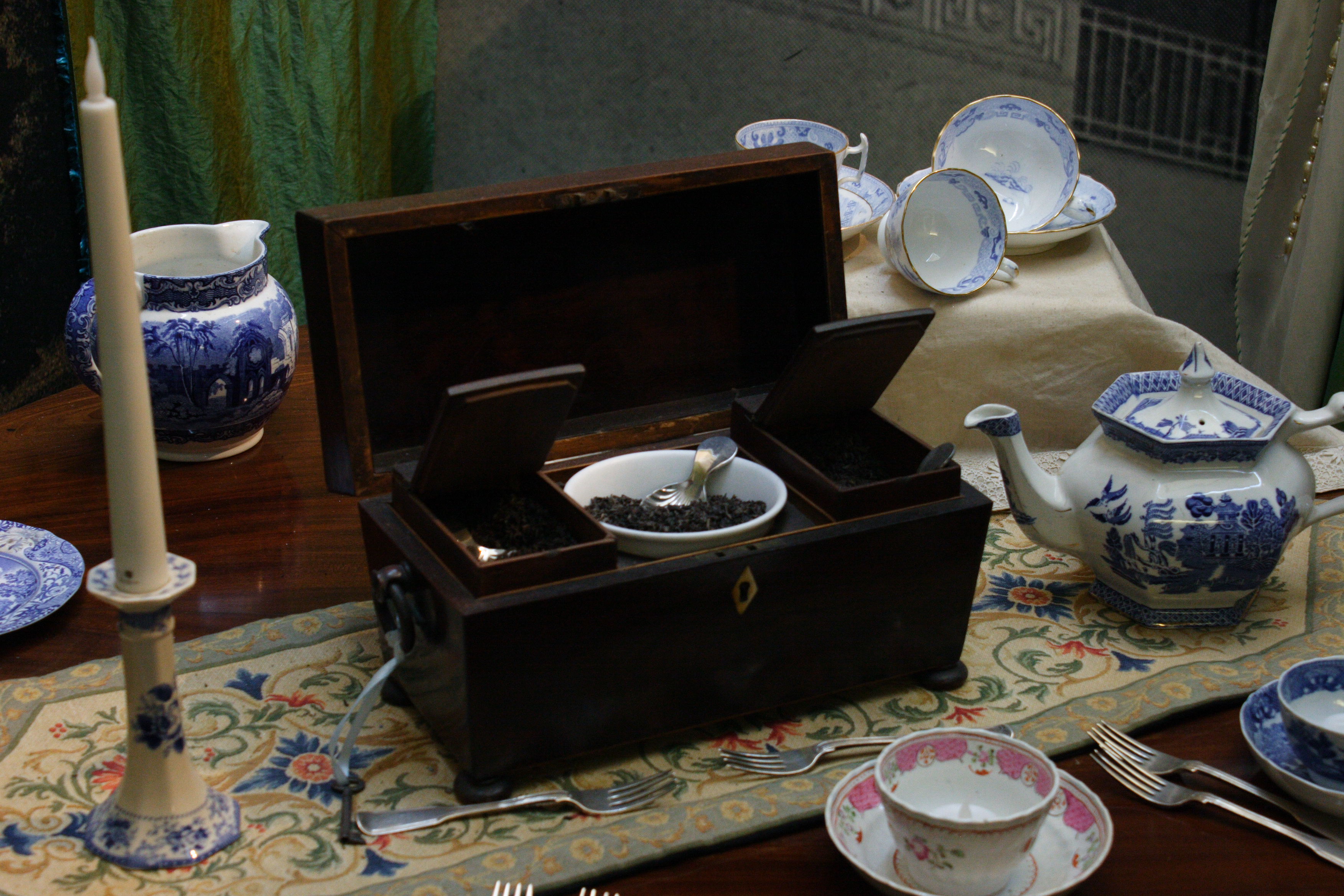
Despite her short and relatively unhappy years in Bath, the current residents and visitors could not be more proud of their literary heritage. After we were given the overview by a quite knowledgeable docent, we were set adrift in several rooms of museum dedicated to life in Bath during Austen’s time. While they did not have anything owned by her or her family, they did have numerous genuine items from the Regency period. The Jane Austen Centre does a great deal with very little. Their focus is on what life would have been like for someone like Jane Austen. The last room was dedicated to film adaptations of Jane’s works, including a letter from actor Emma Thompson, highlighted the continual popularity of her stories.
The permanent exhibit is a bit claustrophobic at times, especially if there are a number of people in there as well. Then again, it helps us to understand Jane’s own annoyance at tight spaces. The staff is what makes the place a real treat. They are very well-versed and so enthusiastic. But then who of Jane’s fans aren’t.
Suggested Links:
- http://www.janeausten.co.uk/
- http://www.jasa.net.au/japeople/leighperrots.htm
- http://www.austenquotes.com/
Thanks to Meaghan for stopping by and for sharing with us her trip to Bath! Please visit Meaghan at her blog, A Cineaste’s Collection.
Giveaway: Northanger Soapworks! #AustenInAugustRBR
Welcome back, Janeites!
As I mentioned at the top of yesterday’s guest post, today, Rachel of The Edge of the Precipice is here with a special giveaway for Austen in August: A $20 Gift Certificate from Northanger Soapworks!

Here’s what Rachel says of them: “I love ALL of her products, especially her candles and soaps. I’ve been using them for several years and they are such high quality!”
All you have to do to be considered is:
- be a subscriber of Roof Beam Reader (email or WordPress); and
- leave a comment on this post saying you’d love to win; and
- make sure I have a way of contacting you if you win (email, social media handle, etc.).
Remember, as you’re reading through Austen in August and sharing any Austen-related content, please post links to your blogs or social media posts about the event in the comments on our master post. Use the #AustenInAugustRBR hashtag to share on social media.
Note: This giveaway is open until 11:59 PM pacific time on Wednesday, August 15th. One winner will be selected at random. Winner will be contacted for shipping information and will have 48-hours to respond before a new winner is chosen. Giveaway host will ship item to the winner. Neither the giveaway host nor Roof Beam Reader are responsible for any items lost or damaged in the mail.
Austen(ish) Books #AustenInAugustRBR
Today, we welcome Austen fan Rachel from The Edge of the Precipice, who is here today to talk about books inspired by Austen and Austen’s worlds. Stop by again tomorrow for a special giveaway sponsored by Rachel!
While they will never come close to being as rewarding as Jane Austen’s actual books, I do quite enjoy reading retellings and continuations of her stories, as well as books about people who read her books. Here are some of my favorites:
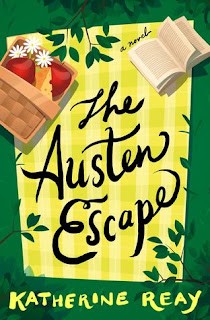
The Austen Escape by Katherine Reay — Two friends visit a resort in England where they get to wear Regency clothes, adopt names from Austen’s books, and have some escapist fun. Then one of the friends suffers a nervous breakdown, and the other slowly realizes she needs to stop pretending she doesn’t have non-work-related feelings for a co-worker. It’s got rom-com vibes, but also friendship-based.

Captain Wentworth’s Diary by Amanda Grange — This retells Persuasion from Captain Wentworth’s point of view, told in journal entries. It’s kind of fluffy, but I think it very accurately captures the characters from Austen’s original. And seeing the story from a different angle is surprisingly rewarding. The other books in this series are also fun, but this one is my favorite.

Jane of Austin by Hillary Manton Lodge — This modern-day retelling of Sense and Sensibility focuses on two sisters who move to Austin, Texas, after a family crisis. They open a tea shop, make new friends, and fall in love. It’s told alternately from the Marianne and Colonel Brandon characters’ points of view, which was a really interesting take!

Pies and Prejudice by Heather Vogel Frederick — A mother-daughter book club reads Pride and Prejudice over the course of a year while one girl and her mother spend several months living in England. The other girls in the club bake and sell pies to raise money to bring their friend home for spring break, and they all learn a lot about friendship, love, and judging people based on first impressions.

Pride by Ibi Zoboi — This modern-day retelling of Pride and Prejudice is set in a Brooklyn neighborhood. A rich new family with two handsome sons moves in, setting all the teen girls aflutter. All except Zuri Benitez, who can’t stand the Darcy boys or the way she assumes they want to change the neighborhood. This is the only book on this list I can’t recommend to readers of all ages, as it does include some strong language and subjects that would be too mature for young teens.

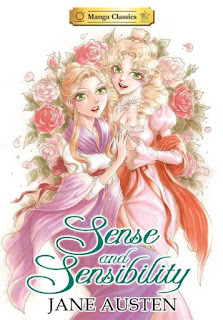
Sense and Sensibility from Manga Classics — This graphic novel has manga-style artwork, and the story is told in slightly updated language. The art is beautiful, and I think the adapters really captured the essence of the original book and its characters. There are two other Austen books available from Manga Classics too: Emma and Pride and Prejudice. They’re both enjoyable, but I like this one best.

The Jane Austen mysteries by Stephanie Barron — A series of sixteen (so far) mysteries solved by Jane Austen herself! The mysteries are fun, the regency setting is well-researched, and the series as a whole is delightful. But best of all is the chance to imagine you’re hanging out with Jane Austen, who is portrayed as being intelligent, curious, witty, and clever.
-Rachel Kovaciny
https://theedgeoftheprecipice.blogspot.com/
Thanks so much, Rachel, for this fun panorama! Austenites, remember to stop by again tomorrow, August 10th, for another event giveaway, generously offered by Rachel. Don’t forget that our first giveaway ends on August 10th.
 Roof Beam Reader