Roof Beam Reader
Adam Burgess
A Dark Day, Remembered: 1/27/2010
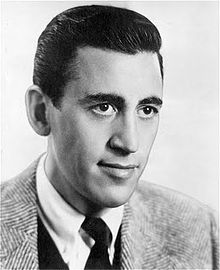
This particular blog entry has been months in the making. The literary world lost two giants on Wednesday, January 27th 2010.
 J.D. Salinger
I had to stifle a gut-reaction blog entry on J.D. Salinger after first hearing he had died. He was, to me, as he was to so many professional readers and writers, an inspiration and an example. J.D. Salinger is the man who got a reluctant high school boy to pick up another book, and another, and then another after that. Aside from Goosebumps books by young horror writer, R.L Stine, The Catcher in the Rye was the only book I had read multiple times as a youth and enjoyed. Unlike the Goosebumps books, though, I actually connected with Salinger’s works. I learned something and this was an absolute revolution for fourteen-year-old me. Learn something from books? You’re kidding me!
I recently got into a heated discussion with someone close to me about the value of The Catcher in the Rye. He was adamant that the novel was out-dated and pointless. That Holden Caulfiled represented nothing but juvenile angst and whiny, bratty self-indulgence. I disagreed. To me, Holden Caulfiled and his disgruntled anti-fascination with everyone and everything “phony” was a direct indicator of what was happening in America at the time. People were terrified to be themselves, so they became someone else. They put on masks and poses, especially in mixed company. They appeared “tough” and “relaxed.” They did all they could to appear whole-heartedly American, as if there’s any one thing that could represent what it means to be American or not. This was, let us not forget, the time of the great Communism scare (and hoax, really). Neighbors were turning in neighbors over simple disagreements. Teachers were brought in front of inquisitorial panels for teaching “subversive” materials. Scientists, philosophers, and even actors were grilled, black-listed, subpoenaed to testify in court against themselves, against their spouses, their friends, their relatives.
American culture was simultaneously being attacked, subverted, and preparing to explode. The Stonewall riots were around the corner. The independent literary and music scenes were beginning to grow in numbers and in influence. Artists and Hollywood were gaining power, threatening the iron-clad control of government over it’s people. False idols. (“Thought police” as Burroughs might phrase it).
Salinger was quite obviously terribly disturbed by the disillusionment of “American” ideals. He was concerned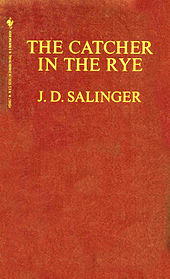 that children were growing up too fast. That the advent of media sources, exposé literature, radio, faster transportation – was all contributing to a loss of innocence for American youth. Franny and Zooey and the other Glass Family stories, for instance, are concerned with a type of perfect child – more intelligent and civil than adults, but less capable. Strained to the breaking point between the inability to grow up, and the necessity to grow up too fast – to be too responsible, too young. Too soon. Where were the good old days, when children could be children? Where adults could be counted on to be responsible, reliable, to make the right decisions and to protect and guide their children? Why are children being left to make these choices on their own? To grow up without role models?
In one of my favorite Salinger stories “A Perfect Day for Bananafish,” found in the Nine Stories collection, one of the Glass children, Seymour (whose story is also told in the novella Seymour: An Introduction) commits suicide. The reason is still debated, but it seems to me to have a particular relationship to Seymour’s encounter with a young, innocent girl on the beach, whom he can’t help but compare to his wife – a superficial, shallow, insubstantial woman, mainly concerned with fashion and stature. Like Holden Caulfiled, who goes apparently insane at the thought of losing his sister to adulthood, Seymour cannot cope with the idea that this young girl may soon grow up to be just like his wife, or his wife’s mother, or any other adult American woman, so preoccupied with absolutely nothing important.
I’ve somehow detoured from the path, here. Salinger was my first literary influence and inspiration. I enjoy his writing for the very reasons I began to get so distracted above. The honesty, the pain, the confusion, and the fear for the future. I also appreciate that Salinger was disturbed that people found his writing so important. It must have terrified him to think that his worst fears for America were being popularly devoured by American (and foreign) critics as art, as literature. Certainly, he knew he was a writer. Still, I think it hurt Salinger to be so painfully honest with the public about his fears, only to be received in such a populist, star-studded fashion (Salinger was no fan of Hollywood stardom, after all). I’m not sure what he was hoping for. Perhaps an awakening, a renaissance in America. A realization that we were headed down a destructive path, where all our children were ultimately doomed to become mindless drones. Instead, he became his own worst nightmare – an idol to people.
 Of course, Salinger would likely despise this and any other commemorative writing about him. He would say it’s just another representation of the kind of nonsense he was trying to escape, avoid, destroy. Another reason why he disappeared from the world, stopped publishing, etc. And I get that. I think a lot of us who really get Salinger understand that, ironically, our very adoration for this man and his writing is what Salinger would find most troubling about us. Still, I for one can’t help it. I will continue to read his works, to write about him and about his stories. I hope that more of his writing will be released, someday. I dream of the day I can visit private collections, like the ones at Princeton University, and spend hours devouring more Salinger.
There are many ways I could end my reflection on Salinger, but – oddly enough, I think I will go with a quote, not from The Catcher in the Rye or “Teddy” or Raise High the Roof Beam, Carpenters but from the above-named “A Perfect Day for Bananafish.” This quote, I think, encompasses what Salinger was saying to his audience, about himself. You want to read my works? Fine, read them – just don’t pretend that they’re anything other than words on paper, or that I’m anything other than a man and a writer. I’m no prophet, and my writing is no gospel:
“If you want to look at my feet, say so,” said the young man. “But don’t be a God-damned sneak about it.” – J.D. Salinger
——————————————————————————–
 Howard Zinn
The second literary and cultural giant we lost that day, Howard Zinn, was author of A People’s History of the United States. He was a liberal progressive, whose goal was to educate people about the often altered or ignored United States history. I never had the opportunity to meet Mr. Zinn, nor to hear him speak, nor even to read much of his work. I admit, I only ordered his A People’s History after hearing of his passing. Still, the loss is felt. Honesty and “alternative” views of history are rare indeed, especially when that alternative view (counter to schoolbook textbooks, that is) is closer to the hardened, factual truth of what is American history. From Christopher Columbus and the native Americans – the “Trail of Tears” and the “Gold Rush”. McCarthyism, the “Red Scare”, and Women’s Suffrage. All of our American history is told in a certain, tending-to-be sugar-coated manner. We refuse to remember the realities, the tragedies, the truly awful things we’ve put ourselves and fellow citizens through (Japanese Concentration Camps, anyone?) and, instead, focus only on the great American dream – and it is a great dream. It’s just important to also remember the truth – the mistakes. The who, what, where, when, and, most importantly why of American history. These realities are what make up America as we know it now, and as we will shape it in the future.
I’m eager to read more about Zinn, and to read his best known work, his opus of American history. I wish I had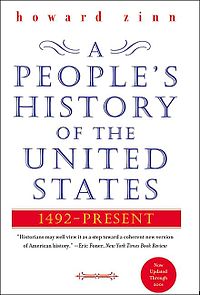 more knowledge of the man before he passed on. I wish I could have seen him, spoken to him, read his works before he was gone. But if historians have taught us anything about history, it’s that it’s never too late. Regrets are pointless, really, because there’s always something that can be learned and a change that can be made.
“There is no flag large enough to cover the shame of killing innocent people.” – H. Zinn
Review: Harry Potter and The Goblet of Fire
 Harry Potter and the Goblet of Fire
Final Verdict: 3.75 out of 4.0
YTD: 42
Plot/Story:
3 – Plot/Story is interesting & believable.
The Goblet of Fire is the fourth book in the famous Harry Potter series. This is the point, in my opinion, where Rowling clearly takes a turn from “young adult” fiction toward a more mature audience. After three books of back-story and buildup, book number four surges forward and suddenly brings the old evils, the suppressed terrors, to full light. While Harry and his friends faced many challenges and learned much about the great antagonist, Voldemort, it is in Goblet of Fire
Characterization:
4 – Characters extraordinarily developed.
Once again, I cannot commend Rowling enough for her incredible skills at characterization and character development. Our old friends – Ron, Harry, Hermione, Professors Dumbledore and McGonagall, The Weasley family and more – are recommitted and established on a deeper, more complex level. Similarly, old foes – Professor Snape, Malfoy, Voldemort and others – are further flushed out and explained, so that their true natures seem to become more present, their powers, goals, and determinations reexamined. We also meet many new characters, from various places including the Ministry of Magic, The Daily Prophet, the visiting schools, Durmstrang and Beauxbatons, and relatives, neighbors, and friends of characters we already know. These new characters, whether major or minor, are given enough page-time for the reader to become familiar with them, to feel as if they know these people – could recognize them on the street or see them in a coffee shop and not be the slightest bit surprised. Of particular note are the new Defense Against the Dark Arts instructor, Professor Alastor Moody, and Rita Skeeter, writer for the wizarding newspaper, The Daily Prophet.
Prose/Style:
4 – Extraordinary Prose/Style, enhancing the Story.
Rowling’s prose is as magical as the world she has created. Her imaginative descriptions, the vivid imagery and the impeccable use of dialogue make each Harry Potter book in the series impossible to put down. Also extraordinary, and not typical of most fantasy writers, is the obvious growth from each prior novel to the next. It is almost as if Rowling makes a conscious effort (and maybe she does) to increase the reading level and potential for each of her books in direct correlation to the growth of the characters (each novel is a new school year for the characters so, at age eleven, the characters may be thinking and acting one way and now, by age fourteen, they have begun to grow and to be capable of more – of thinking a bit deeper and analyzing a bit more closely). As one who has read the series previously, I know that the growth continues from book to book up through the final book, and it is one of the biggest positives and likely the greatest draw for readers (as newer readers are always allowed to grow and develop with the story – to progress at a steady and comfortable pace, as if we are with Harry and the gang at school, learning alongside them). Rowling also has a sharp mind – she is clearly educated, or has become learned, in philosophy and the nature of human interaction – friendships, rivalries, parent/child, and educator/pupil dynamics. Her prowess at presenting these relationships through dialogue and inner-monologues is astounding. She drops clever quips on life throughout the pages, particularly as the characters are growing older. Finally, Rowling breaks up her prose into different pieces – interspersing, for instance, bits of newspaper articles or letters into the story to add depth and intrigue. She manages flashbacks seamlessly and builds multi-layered, interwoven plot-lines, which connects the various characters to others, and back again, with seemingly little effort but with what must have taken an extraordinary amount of planning, organization, and preparation. Outstanding execution.
Additional Elements:
4 – Additional elements improve and advance the story.
As I mention in the section above on prose/style, Rowling is clearly a master of many aspects of human natures and in The Goblet of Fire, her didactic purposes begin to get much more focused and prominent. Her ideas on equality, for instance, or on one’s ability to be judged on his actions rather than on his ancestry (e.g. Britain’s lingering and antiquated aristocratic system) are quite clear. Another positive aspect of this fourth installment is that there is less re-explanation of previous characters, terms, and situations (books one through three are littered with reminders to the reader about things learned or events which happened in prior novels or the story-line’s earlier history). This is refreshing, as it allows much more growth to the story, and characters and events are allowed to develop in a way previously restricted by the structure of the first three books – it also allows readers who are familiar with the early books, having read them recently or multiple times, to engage with and sink into the story, without too many breaks for redundant explanations (admittedly, something I find to be quite a nuisance in Chamber of Secrets

Suggested Reading for:
Age Level: Young Adult, Adult
Interest: Friendship, Fantasy, Good/Evil, Education, Family
Notable Quotes:
“If you want to know what a man’s like, take a good look at how he treats his inferiors, not his equals.” (P. 525)
“You fail to recognize that it matters not what someone is born, but what they grow to be!” (P. 708)
“Differences of habit and language are nothing at all if our aims are identical and our hearts are open.” (P. 723)
Saturday, Uncensored! (#4)

Hello! And Welcome to Week 4 of my Banned Book themed weekly post, Saturday, Uncensored! This meme is meant to bring continued and renewed attention to the dangers of censorship and banning books.
As always, I thank you all for your continued support and encouragement. I greatly appreciate your personal stories, too! I received comments and e-mails last week from people with first-hand experience of “encounters with the dark side” i.e. literary prejudice. Hearing from you all keeps me motivated to continue spreading the word. If you are interested in the theme and/or getting involved, I would highly encourage you to visit deletecensorship.org. This fantastic website has great material on the cause, and I personally have purchased some of the anti-censorship related items, like book totes and a mouse pad. Of course, I’m a bit of a nerd like that. They are also partnered with one of the best resale bookstores, Half Price Books (who are also eco-conscious, another major plus!).
Now, on to the good stuff! This week, in Saturdays, Uncensored: We take a look at two classic African-American Banned Books, from two inspiring writers.
1. The Color Purple by Alice Walker
The Color Purple, written in 1982 but taking place in 1930s Georgia (for the most part) has been challenged on numerous occasions, and holds a spot on the ALA’s Top 100 Most Frequently Challenged Books of the 1990s. The book is challenged most often under the charge of “explicit content,” which is largely due to violent episodes which take place throughout the novel (often male-on-female abuse). What I loved most about the novel was its style. I am a sucker, I admit, for a good epistolary novel. The letters Celie writes to God are so heartbreakingly simple and honest it is impossible not to connect with her on a human level (even though her dialect, slang, and personal story are so far removed from anything I have experienced). My favorite part, of course, is when Celie, after being slapped by the Mayor for her impudence, smacks him right back! How anyone could challenge such a historically significant and culturally powerful novel is beyond me but, to be fair, there are moments in this novel which, having been written so well, did make me rather uncomfortable and disgusted.
“Celie is a poor black woman whose letters tell the story of 20 years of her life, beginning at age 14 when she is being abused and raped by her father and attempting to protect her sister from the same fate, and continuing over the course of her marriage to “Mister,” a brutal man who terrorizes her. Celie eventually learns that her abusive husband has been keeping her sister’s letters from her and the rage she feels, combined with an example of love and independence provided by her close friend Shug, pushes her finally toward an awakening of her creative and loving self.” -Amazon.com Product Description
2. Their Eyes Were Watching God by Zora Neale Hurston
Zora Neale Hurston’s best known work, Their Eyes Were Watching God is, ironically, listed as one of the most often challenged novels and listed on the TIME 100 Best English-language Novels from 1923-2005. Janie Crawford, the protagonist, begins the novel by starting to tell her life story to an old friend, recently met again – the majority of the book, then, is a flashback of Janie’s life, from childhood and up to the time Janie and her friend Pheoby meet again. Like the epistolary form found in The Color Purple, this novel too progresses through story-telling, a common method in early and post-slavery African-American fiction. Hurston’s prose is also similar to Walkers in its stark and unflinching realism; nothing is shied away from or hinted at – every cold reality is placed full-frontal before the reader. This is truly effective and allows an already beautiful story to take hold of one’s attention and imagination and go wild with it. So, why attempt to ban such an honest, moving piece? Much of the criticism arises from Hurston’s audacity to use different dialects for her characters, including slang spelling of terms used by the characters of Caribbean and African decent (similar to Mark Twain’s Huck Finn being censored for its use of “southern slang”). It was also challenged for “sexual explicitness” because, as we know, those who are in charge of our readings lists are often quite terrified at the thought of anyone having sex. A personal problem, perhaps?
“Of Hurston’s fiction, Their Eyes Were Watching God is arguably the best-known and perhaps the most controversial. The novel follows the fortunes of Janie Crawford, a woman living in the black town of Eaton, Florida. Hurston sets up her characters and her locale in the first chapter, which, along with the last, acts as a framing device for the story of Janie’s life. Unlike Wright and Ralph Ellison, Hurston does not write explicitly about black people in the context of a white world–a fact that earned her scathing criticism from the social realists–but she doesn’t ignore the impact of black-white relations either.
Hurston’s use of dialect enraged other African American writers such as Wright, who accused her of pandering to white readers by giving them the black stereotypes they expected. Decades later, however, outrage has been replaced by admiration for her depictions of black life, and especially the lives of black women. In Their Eyes Were Watching God Zora Neale Hurston breathes humanity into both her men and women, and allows them to speak in their own voices.” –Alix Wilber, Amazon.com
Junky by William S. Burroughs
Junky by William S. Burroughs
Final Verdict: 3.5 out of 4.0
Plot/Story:
4 – Plot/Story is interesting/believable and impactful.
William S. Burroughs’s Junky
Characterization:
3 – Characters well developed.
Most of the minor characters remain minor and static throughout the novel, but Bill and his more regular acquaintances (keeping in mind that, in the world of the drug addict, few friendships last long) are told well – they are interesting to watch and, while you cannot really “root” for anyone, you still enjoy being along for the trip (double entendre?). The characters in Junky are also much more real, relatable, and believable than those in other Burroughs novels. While it is hard to reconcile the “on the go” lifestyle of the book’s main character (considering he seems to survive for quite some time without any money or income – he never works and rarely steals, at least so we are led to believe), the emotions of the addict, the ups and downs, the highs and lows, the irrationality and the sobered sensibility are wonderfully realized through Bill. He is a complete do-nothing bum, really, but he is witty and entertaining, he is charming – in a way, and mysterious. All of this – the complexity of his character- makes the reader want to see a little bit more, know a little bit more, and it keeps the pages turning ‘til the end.
Prose/Style:
3 – Satisfactory Prose/Style, conducive to the Story.
The clear, naturalistic day-by-day story-telling, characteristic of The Beat generation, is also conducive to this sort of “witness” story. It allows the reader to connect with what is happening in the story, rather than feeling distanced as one will in later Burroughs works, like Naked Lunch

Additional Elements:
4 – Additional elements improve and advance the story.
The great thing about Burroughs is he really gets it. This is one of the first and best examples of drug-addiction writing (I cannot classify it as “fiction” with a clear conscience) because Burroughs has no need to exaggerate anything, in the way so many contemporary writers of the same topic do. He tells it like it is, he hints at the nastier sides of the living, and he explores equally the highs of being sober and the functioning ability of the addict. Though the novel is generally about Heroin addiction, Burroughs also explores other drugs, from marijuana and peyote to Cocaine and Morphine. Whether or not drugs interest you, per se, the examination of each against the other – the effects, the dangers, the results of mixing such-and-such of one with the other, is truly fascinating. It becomes clear that Burroughs knows what he is talking about (which, in a way, is rather sad) and is being honest with his readers. It’s as if he’s saying: “Look, guys, this is how it is – take it or leave” without getting too heavy-handed or political. Of course, the burgeoning U.S. laws regarding narcotics – the “crack down” in the states comes up near the end, and Burroughs makes it clear on which side of the argument he stands – both in words and actions. While his experiences and his positioning on the topic are not exactly laudable, the way he tells his story certainly is.
Suggested Reading for:
Age Level: Adult
Interest: Society, Literature, Drug Culture, Beat Generation, GLBT
Review: Mirrorscape by Mike Wilks
Mirrorscape by Mike Wilks
Final Verdict: 2.0 out of 4.0
Plot/Story:
2 – Plot/Story could work with better development.
Mike Wilks’ Mirrorscape
Characterization:
2 – Characters slightly developed.
While the plot was a slight disappointment, the characters were heartbreakingly underdeveloped. Wilks provides very little history or motivation for his characters; they interact in the most superficial ways with one another, yet the reader is meant to believe that, somehow (in a matter of days, really) these deep friendships and deeper animosities manage to develop – so that good and evil comes to fight a battle to end all battles at the climax of the novel, and yet, the reader couldn’t really care less who prevails or who falls along the way. It is also disappointing that every character remains flat and static. The characters we meet in the beginning who are “bad” remain bad through to the end. The characters who are “good” are, of course, the “heroes” of the novel. Wilks attempts to throw a curveball in the character of Dirk Tot, the eminent artist’s right-hand man, but it fails disastrously (where there could have been potential) because the sub-story goes absolutely nowhere. When Mel, our main character, reveals his misgivings about Tot to the master artists, they can only laugh and the reader is unable to do anything but laugh at the absurdity of the whole scene.
Prose/Style:
2 – Prose/Style in need of Development but works.
Aside from an acceptable amount of grammar errors and oversights in dialogical breaks (the copy I read is an uncorrected proof), the prose is generally clean and the style is simple; however, therein lies the problem. The clean and easy prose is a double-edged sword. On one hand, it makes the story easily accessible for many reading levels (though rather a bore for me, personally) and, on the other hand, it lacks any ingenuity or creative flair. This is typical, I suppose, for the general young adult fantasy novel but, for what could be such an enchanting idea, one would expect the prose and style to be equally magical and enticing. Sadly, again, the promise of the novel and its idea far outshine the execution. The dialogue is a shining characteristic, but only in comparison to other aspects of the author’s style. Sentences are short and choppy. The writer incessantly “tells” the reader about everything, moment after moment, without really showing, implying, guiding, or inspiring anything at all. This left an incredibly bland taste in my metaphorical mouth and left me rushing through the pages just to get it done with. Again, this might be okay for younger readers, who would perhaps be kept entertained by the action-packed pace, and for readers who would prefer not to get bogged down by things like sub-plots, intrigue, themes, and motifs. Essentially, the style is conducive for a reader who might be new to the trade, who needs to be kept “busy” but does not hope to gain anything meaningful from the story.
Additional Elements:
2 – Additional elements are present but do not develop the Story.
There are a few elements present throughout, which the author clearly wants the reader to identify and support. The main theme, “owning” color, is one which, for artists in particular, is rather appealing. Who owns creativity, after all, and what would we do if a government or religious entity suddenly demanded that only they had the rights to all creative outlets? The novel fell short, though, of one such as The Giver
Suggested Reading for:
Age Level: Young Adult
Interest: Art, Fantasy, Easy Reads
 Roof Beam Reader