Roof Beam Reader
Adam Burgess
These Violent Delights by Micah Nemerever

Psychological thriller? Dark academia? Queer stereotyping? Whatever way we choose to categorize Micah Nemerever’s These Violent Delights, it’s fair to say, simply, this book was unputdownable! Many are comparing it to Hanya Yanagihara’s A Little Life, but I’m not sure where that comes from except for the general similarities in gay protagonists and the presence of domestic violence/partner abuse. However, even that latter comparison is questionable.
I’m not sure where to begin with this novel. It’s uncomfortable. It’s complicated. And so much of the story is left beneath the surface. The primary complaint I’ve read about this one, via Goodreads reviews, is that it’s often (almost always) impossible to understand how these two main characters, Paul and Julian, feel about each other. I will admit to being frustrated by this as well, although I do think it’s partly explainable through analysis of their relationship. Paul and Julian, too, are unsure about how they feel or how their relationship is supposed to work. Slowly, we begin to understand that Julian is less unsure, but we get much of our view through a third-person narrator who is typically closer to Paul’s perspective, and Paul is an absolute mess. It’s impossible to understand anything clearly if we’re seeing it through his eyes.
The plot itself is a rather simple one. Paul and Julian both come from broken families, though Paul himself seems to be psychologically damaged in a way that is separate from his family life. He is a murderous individual and these tendencies can’t be explained away by his father’s death or his mother’s absence. Julian, on the other hand, has two overbearing parents who want to control his life and set him on a path he has no interest in. In Paul, he finds someone he thinks is strong and who can help him, Julian, break free. To achieve that, though, he seems to accept that he’ll need to become a kind of physical outlet for Paul and to lead Paul to his ultimate satisfaction: getting away with murder. To me, Julian is easier to empathize with, particularly as the story unfolds, because despite appearances, it’s his feelings that seem most genuine and human, and his motives that seem explainable. He is emotionally damaged, and he is desperate, but he is not a maniac. That said, he does enable a maniac, and how can we forgive this?
I’m always concerned with gay storylines that seem to reinforce typical queer literature stereotypes and dangerous tropes, like glorifying violence or explaining homosexuality as mental illness, etc. These Violent Delights gets uncomfortably close to this, but the story is unique enough, in my opinion, and contemporary enough, to succeed anyway. In my mind, it’s wholly possible to interchange characters of other sexes or genders, or sexualities, and still see how this story could unfold this way. While I wish there was a little bit more to love in one or both of these characters, and at least some joy to be found somewhere in the story, I have to admit that that simply wasn’t the point of this one, and it’s no use being annoyed that the protagonists are so melodramatic or the plot so dark, when both of those are what makes the story what it is and was meant to be. Ultimately, the novel is a success because it is what it is what it intended to be and achieves what it sets out to do.
Also, the final line is devastating.
You Can’t Take It with You by George S. Kaufman

George S. Kaufman’s post-Depression comedy, You Can’t Take It with You, is in many ways the perfect three act play.
The first act is a simple and direct introduction to the characters and the major conflict/event. There’s a Romeo & Juliet tale playing out between a young woman from a bizarre, poor family and a young man from an extremely wealthy family. While the two groups don’t necessarily hate each other in Montague-Capulet rivalry, there certainly seems to be enough of a difference between them to make Alice & Tony’s future doubtful.
Act two is the longest of the three and it is in this one where most of the drama in this comedy plays out. We get to know each of the diverse characters a little better and gain more insight into why Alice and Tony’s relationship was probably doomed from the start.
Finally, act three is a sprightly and rather delightful dénouement, much shorter than its preceding act and much more satisfying. It’s well suited to a traditional comedy of romance.
While the structure of the play is textbook, the play itself is a bit out of time. It doesn’t quite work for contemporary audiences. The primary issue or conflict is Alice’s supposedly strange family, but to be honest, it’s hard to find them anything other than a tiny bit quirky by today’s standards. That’s the rub, of course. There’s no choice but to read this by today’s standards; if we transport ourselves in time and read these characters the way a 1930s audience would, then the shock and hilarity is much more pointed. In that way, the play could be easily adapted to the modern stage by reimagining Sycamores and casting them in such a way that would make them outlandish by contemporary perception. In other words, not much needs to be changed to make this one work, and that’s probably because it’s a tale as old as time.
Other notes of interest are the minor conflicts of identity faced by Tony’s father, the hedge fund manager, and the commentary on marital relations, government mismanagement, themes of independence, and philosophical musings on the meaning of life and happiness. The long waited for title phrase, spoken by the Sycamore patriarch, comes right at the end of the play, where it packs the most punch. While I didn’t find much to immerse myself in for most of the play, I ultimately appreciated where it goes in the end, even if we see it coming.
Now, I’ve only recently learned that Frank Capra adapted this play to film, starring James Stewart, and I have to say, that definitely gets my attention! (Oscars for best picture and best director? Sign me up!)
January Checkpoint #TBR2022RBR

Hello, TBR Pile Challengers!
Yahoo! It’s time for our very first Checkpoint (with mini-challenge #1 — see below). As a reminder, the deadline to sign-up for this challenge is January 31st, so if you know of someone who would love to join and/or if you have been trying to make up your mind, here’s your chance P.S. This also means currently registered participants should feel free to make a change, up to January 31st, provided the link leads to an updated list as of that date.
Progress: 1 of 12 Completed
So far, I’ve read 1 of my 12 required books. I’ll take it! This puts me at 100% on pace, technically, since reading one book per month for the challenge means completing the challenge by year’s end; however, I really do hope to read my two alternates as well, so that means I’ll need to squeeze in a second challenge book in at least two of these twelve months (I’m guessing that’s going to have to be during the summer months, but we’ll see!).
The next book scheduled from my challenge list is When My Brother Was an Aztec by Natalie Diaz.
Books read:
How are you doing?
Below, you’re going to find the infamous Mr. Linky widget. If you read and review any challenge books this month, please link-up on the widget below. This Mr. Linky will be re-posted every month so that we can compile a large list of all that we’re reading and reviewing together this year. Each review that is linked-up on this widget throughout the year may also earn you entries into future related giveaways, so don’t forget to keep this updated!
MINI-CHALLENGE #1
As I mentioned in the Announcement post, there are four mini-challenges planned for this year. Our first checkpoint also brings with it the first mini-challenge!
Here’s the plan: Visit this link to see the list of linked-up participants. Travel around and leave a comment (or two, or five) with some encouragement for this new year and new challenge. Then, when you’re done, come on back to this post and comment with a link to the blog where you left your encouragement.
Everyone who spreads a little cheer and positivity to another challenger’s post(s) will be entered to win a book of choice, up to $15 USD, from The Book Depository! Comments need to be posted and linked-up here by the end of January and the winner, drawn randomly from the collection of comments, will be announced in the February checkpoint post. Only those who registered for the 2022 TBR Pile Challenge by January 31st are eligible to participate in these challenges and/or to win any of the TBR Pile prizes.
LINK UP YOUR REVIEWS
Zen and the Art of Motorcycle Maintenance by Robert M. Pirsig
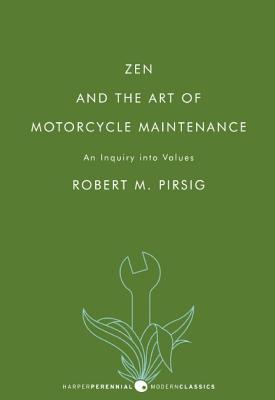
Zen and the Art of Motorcycle Maintenance is a philosophical memoir based on the life of its author, Robert M. Pirsig. In it, the protagonist and his son set out on a cross-country road trip, from Illinois through the great plains, up into the pacific northwest, and down through California. This is the primary, or surface, plot, but this primary journey is supported by a second plot, that of a man named Phaedrus who, through the voice of our narrator, recounts a philosophical journey that leads to psychological break causing him to be institutionalized. As the story unfolds, these two journeys come together, culminating in a synthesizing of the two men and a reconciliation between father and son.
Although the book was published in the 1970s, its ideas remain relevant today, particularly the protagonist’s ruminations on technology and the investigations into the self. Many readers have taken umbrage with two things about this book. First, that the protagonist seems to go off into the weeds about motorcycle maintenance/technology, to the point of exhaustion. It can be difficult to get through these parts of the text, but what helps is to remember that this is metaphor for the philosophical position Pirsig is trying to convey. When the narrator describes care for his motorcycle, what he’s really talking about is his main thesis, “Quality,” and how any person can pursue Quality in anything in their life, especially the things that matters to them. For Pirsig, this is his motorcycle, but I could just as easily substitute writing or photography into these sections and make it more relevant to myself.
The second issue many readers take with the book is that Pirsig seems to be arguing that the right way to live—his idea of authenticity—is to be completely self-involved and self-centered. I do see where this interpretation comes from, and I think it’s an unfortunate misstep on the part of the writer (something he tried to correct in the forward to his anniversary edition.) At the end of the book, we’ve seen Phaedrus elevated to “right livelihood,” but everything we see about Phaedrus, through the narrator’s memories, is mostly unpleasant. His intellectual curiosity is admirable, sure, and the fact that he wanted to serve his students fully and authentically, rather than subjecting them to rote pedagogy simply because it was the accepted form. Yet, in the end, this Phaedrus just comes across as arrogant, cruel, and rather cold. I don’t think this is what Pirsig intended. Indeed, if we look to what the narrator’s son says about him near the end of their journey, we see that Phaedrus was the one of these two personalities who was more interesting, pleasant, and involved with his family. (His son, Chris, remarks that his father used to be fun, used to make them laugh, etc.) This, unfortunately, doesn’t come across because there’s very little—indeed none—of that part of Phaedrus’s former life presented to the reader. We only know it was true because of one line from the son to his father, right near the end of the tale.
Personally, since I’ve been reading a lot of philosophy in the last half-decade or so, I found much to appreciate in Zen and the Art of Motorcycle Maintenance. That said, I can understand the criticisms, and I do think those unfamiliar with the philosophical perspective he’s championing, here, will simply not understand what he’s trying to get at, and that’s not the readers’ fault.
The heart of the message is to be true to oneself, to think for oneself, and to respect both the universal oneness that makes us all the same while searching for and adhering to Quality as we understand it. It’s an interesting message of independence and collectivism.
Zen and the Art of Motorcycle Maintenance is Book 1 of 12 for my #TBR2022RBR Challenge.
The Official TBR Pile Challenge Returns! (Sign-Up Post) #TBR2022RBR
The Goal: To finally read 12 books from your “to be read” pile (within 12 months).
About: I am pleased to announce that Roof Beam Reader’s official TBR Pile Challenge is back for its NINTH YEAR! This challenge started when I realized I had some MAJOR issues with buying books but never reading them (not because I don’t read – but because I have such a book buying problem!) Year after year, books would sit on my shelf untouched, and I would end up reading newer ones first. I realized I was missing out on a lot of great books because I let them sit there gathering dust instead of reading them as I bought them.
Specifics:
1. Each of these 12 books must have been on your bookshelf or “To Be Read” list for AT LEAST one full year. This means the book cannot have a publication date of 1/1/2021 or later (any book published in the year 2020 or earlier qualifies, as long as it has been on your TBR pile). Caveat: Two (2) alternates are allowed, just in case one or two of the books ends up in the “did not finish (DNF)” pile.
2. To be eligible, you must sign-up with the Mr. Linky below. Link to your list (so create it ahead of time!) and add updated links to each book’s review. Books must be read and must be reviewed (doesn’t have to be too fancy) in order to count as completed. You can participate via blog, Instagram, Goodreads, Tumblr, etc.
3. The link you post in the Mr. Linky below must be to your “master list” (see mine below). This is where you will keep track of your books completed, crossing them out and/or dating them as you go along, and updating the list with the links to each review (so there’s one easy, convenient way to find your list and all your reviews for the challenge). See THIS LINK for an idea of what I mean. Your complete and final list must be posted by January 31st, 2022.
4. Leave comments on this post as you go along, to update us on your status. Come back here if/when you complete this challenge and leave a comment indicating that you CONQUERED YOUR 2022 TBR LIST! Every person who successfully reads their 12 books and/or alternates (and who provides a working link to their list, which has links to the review locations) will be entered to win a $50 gift card from Amazon.com or The Book Depository!
5. Crossovers from other challenges are totally acceptable, as long as you have never read the book before, and it was published in 2020 or earlier!
*Note: You can read the books on your list in any order; they do not need to be read in the order you have them listed. Audiobooks count. Graphic novels count. Poetry collections? Essay collections? All good! As you complete a book – review it, go to your original list and turn that title into a link to the review. This will keep the comments section here from getting ridiculously cluttered. For an example of what I mean, Click Here.
Monthly Check-Ins: On the 15th of each month, I’m going to post a “TBR Pile Check-In.” This will allow participants to link-up their reviews from the past month and get some recognition for their progress. There will also be small mini-challenges and giveaways to go along with these posts (Such As: Read 6 books by the June Check-in and be entered to win a book of your choice!) I’m hoping this will help to keep us all on track and make the challenge a bit more engaging/interactive. I started these mini-challenges in 2014, and I think they were a great success, so I am continuing them this year!
Chat: On Social Media, please use #TBR2022RBR
My 2022 TBR Pile Challenge List:

- Chicago Poems (1916) by Carl Sandburg
- Crush (2005) by Richard Siken
- Rimbaud: Complete Poems and Prose (2002) by Arthur Rimbaud
- Nature Poem (2017) by Tommy Pico
- Madness (2017) by Sam Sax
- When My Brother was an Aztec (2012) by Natalie Diaz
- A Book of Common Prayer (1977) by Joan Didion
- If Beale Street Could Talk (1974) by James Baldwin
- Sing, Unburied, Sing (2017) by Jesmyn Ward
- Zen and the Art of Motorcycle Maintenance (1974) by Robert M. Pirsig
- A People’s History of the United States (1999) by Howard Zinn
- A Poet’s Guide to Poetry (1999) by Mary Kinzie
Alternates:
- A Short History of Nearly Everything (2003) by Bill Bryson
- The Warmth of Other Suns (2010) by Isabel Wilkerson (not pictured)
 Roof Beam Reader