Roof Beam Reader
Adam Burgess
Thoughts: The Tradition
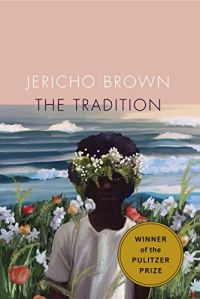 My “no pride without Black lives” month of reading continues with Jericho Brown’s incredible poetry collection, The Tradition.
I have been following Jericho Brown on Twitter for some time, now, and I have read various of his poems in other places, but this is the first time I’ve picked up one of his complete volumes. Somehow, I ended up with a signed copy, which was wholly accidental but perhaps one of the greatest surprise gifts.
I was floored from the very first poem, “Ganymede,” where he writes, “Grief sounds as good as the gallop / Of an animal born to carry those / Who patrol our inherited / Kingdom.” The poem looks at myth “this way,” luxuriously and deceptively, to remind us of how we’ve convinced ourselves to see the rape of a people, their enslavement, from a slanted perspective. We need to be careful not to memorialize it in our memories the way we have so many other truths-turned-legends, lest we turn the ultimate pain into a fantasy.
The collection contains three parts. Running through all three is a series of poems all of which are titled “Duplex.” Each one grows considerably sharper and more poignant, more pressing, as the collection roars forward to its conclusion. Somehow, Brown creates beauty where none should exist. His poems make explicit the horror we have grown accustomed to in our daily lives, but they do so in the way “Ganymede” promises from the outset. When he asks us, who doesn’t want to be loved by God, we see the answer in the very craft of the poetry. Everyone, everyone. And what have we sacrificed for it?
“I begin with love, / hoping to end there” Brown writes in one of his “Duplex” poems, and I have to cheer him for succeeding. This collection and every poem in it, whether it is tackling issues of rape or terror, mass shootings, workplace struggles, or the intimacies of the bedroom, is filled with love. Crafted with love. Expressing love in every word and line, in every syllable and caesura. I’ve been reading poetry more regularly this year, but I haven’t been as moved by a complete collection since Ocean Vuong’s Night Sky With Exit Wounds. In both cases, we have a queer poet of color singing the rhythm of his life. I find that Jericho Brown’s rhythm, like Vuong’s, both harmonizes with and dances away from the lyric of the great American life; a life that both men, perhaps, have felt has never fully included them in its promise or its machinations.
These are poets of power and critique, of eros and of deep pain. And the songs they sing, though remarkably individual, will resonate deep in the soul of the collective American psyche. Jericho Brown is one whose voice I hope to become more and more familiar with; his is a song that, once heard, cannot be forgotten.
Thoughts: Felix Ever After
 I have said many times that the best kind of book, even those within a genre we often dismissively label “pleasure reading,” is the book that teaches while it entertains. Perhaps not surprisingly, Young Adult novels tend to fall into this category. They make for lovely and usually simple reading, perfect for stressful times when we need escapist leisure (hmm… why is that so appealing right now?). Yet, they are also often quite instructive; at least, the really good ones are. Kacen Callender’s Felix Ever After is a good one.
The protagonist and narrator, Felix Love, has never been in love. And, as he states at the beginning of his story, he is quite aware of the irony, thank you very much. He has an adoring best friend, though, and a father who, despite awkward and annoying mistakes, tries his best to accept Felix for the young man he is. Unfortunately, Felix also has some baggage. A mother who disappeared when he was young. An ex-girlfriend who is, let’s be real, a pretty lousy person. And an arch-rival who is not only gorgeous, but also rich, and brilliantly talented in the same field as Felix; and let’s not forget, he’s also vying for the same scholarship and single space at the same university. Oh, the humanity!
So, yes, there’s drama in the land of Felix. There’s also love when it is least expected. Who knew that a boy so desperate for love could find it in the two unlikeliest of places?
The balance of these tensions throughout is handled well, though if I’m being honest, I’m getting farther and farther away from being the “target audience” for young adult fiction. My patience for the drama and the perhaps inevitable character failings in young casts is wearing thin. I’m also always put off by characters that speak about things that seem, to me, well beyond their years. I understand the argument that this is often intended to give young readers a pathway toward learning, toward expanding their own knowledge, awareness, consciousnesses, and heck, even vocabularies. I think that’s an admirable goal, but I also think it can cause characters to seem unrealistic at times. All that being said, my two minor irritants (an ignoble narrator and a sometimes too-erudite group of kids) aren’t nearly problematic enough to take away from the goodness this story has to offer. It is well-paced, complex, sometimes dangerous, and often surprising. And best of all? It is edifying even for those of us who think, fallaciously, that we’re “beyond” its audience.
Here’s an example of what I mean. Have you heard of the term demiboy? Maybe you have. I haven’t! Or, I hadn’t until I read this book. Now, here I am, neck-deep in LGBT Studies and queer theory, in queer pedagogy, and intersectional feminism. And here am I, learning something new about my own field of study from a young adult novel. I love that feeling. I love that reading young adult fiction keeps me in touch with what is current in the world today. There is always and will always be a place in my heart and on my shelves for great YA novels if for no other reason than this. It is instructive and it keeps me grounded.
Felix’s story, the story of a young queer (trans) black man, is a particularly important and powerful one right now. It is a story that needed telling. Kacen Callender’s book, and voice, has entered the conversation in exactly the right moment. How very lucky we are to have it and how happy I was to read it.
Thoughts: Citizen, An American Lyric
 The first half (give or take) of Claudia Rankine’s poetry collection, Citizen: An American Lyric, actually felt to me like a collection of short, flash fiction. It wasn’t until about that midpoint when the full force of Rankine’s work hit me and I suddenly understood what she had been doing. And it was powerful.
This collection hits particularly hard socially, right now, given all that’s happening with the Black Lives Matter movement. But it hits hard personally, too, because for weeks on end I’ve been unable to get Trayvon Martin out of my mind. I know we have lost a lot of young black men and women, and a lot of transgender black women. No, we haven’t lost them. They’ve been taken from us. And each and every one deserves justice. But it has been young Trayvon that I think about every day. The tribute Rankine pays him in this collection, the tribute she pays to so many, is hard to describe. It is a visceral experience even more than an emotional one, though of course the two go together. And Rankine’s genius is in the slow building momentum of her work, the kind that meets us where we are at the beginning and builds with us as we take in more, as we press forward despite the discomfort, as we too rage and cry, distraught, in the end. And she ends where perhaps a professor must: with a lesson.
I think what I found most moving and profound about this work is the way Rankine weaves together the most mundane, seemingly innocuous acts of “everyday” racism with the more noteworthy ones. In the very beginning, for example, she includes alongside one of her poems a simple picture, as if taken glibly from someone’s cell phone camera. The photo shows a beautiful day in a beautiful suburban neighborhood. Near-center in the frame is typical street sign, bright green, at the crossroads of a neighborhood intersection. The sign reads, “Jim Crow Rd.” This is how Rankine works. She finds the most subtle, insidious reminders, the kinds we, most of us, might pass by day in and day out without much thought, and she drags our focus onto it, damning us and damning it together. And we deserve it because we’ve allowed so much to go unnoticed, unattended, uncorrected.
Later, Rankine explores the more popular arenas, such as the spectacle of sports. Her love for tennis comes through in the way she writes about it, with such passion and such knowledge. But in her love she is forced to expose the deep faults and fatal flaws of a blatantly racist pastime. She takes us into the experiences of the Williams sisters, the mockery, the abuse, the psychological damage they faced for simply existing on the court and for being good. For being better than they should have been in a place where they shouldn’t have been.
She connects these racist news events and these racist monuments and these racist pastimes with the personal moments of her life. The days at the office, the outings with her friends and colleagues, where even the pleasantries are miscast. She ponders freedom and language, memory and faith, life and death, with such careful precision that one feels the sting of the arrowhead’s penetration before we have even noticed Rankine drawing her bow. It is a difficult read because it is so effective, but it is an important read for the same reason. Rankine exposes us to ourselves.
“Words work as release,” she writes. “Occasionally it is interesting to think about the outburst if you would just cry out — / To know what you’ll sound like is worth noting–” (69). Rankine’s cry is somehow beautiful in its heartbreak and its rage.
What is ours?
Thoughts: How to Be an Antiracist
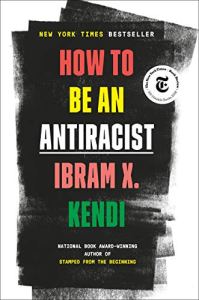 I’ve noticed there’s a fun(?) little trend happening this year about playing the “bingo card” of life. Murder hornets? Deadly kissing bugs? Global pandemic? It seems every few weeks, there’s something else to worry about, some new extravagant nightmare to “check” on one’s bingo card. Well, if you happened to have a square that reads, “Adam is reminded how to practice Buddhism by reading about antiracism,” bingo to you! Honestly, the experience of reading Ibram X. Kendi’s How To Be an Antiracist right now was wild and humbling, and here is why.
For the last year or so, I’ve been beginning my Buddhist practice. For the most part, that has meant reading about Buddhism and Buddhist practice from a variety of sources, as well as taking one of the Great Courses in Buddhism. Something I’ve learned is that Buddhist practice is very much about checking one’s ego. It’s really much more about the process of unlearning than it is about learning; it’s about accepting what is and living in the moment rather than hoping for something or wishing for something. Enter Kendi’s book. Going into it, I thought I’d see myself and applaud myself, really. I thought I numbered among the enlightened few. I know how arrogant that must sound, but the truth is important. I’m an ally, a strong one, and I thought I knew what that meant. I thought I knew, mostly, how to act, how to stand up, how to speak up, what to say and not say, what to think and not think, and what to do and not do. My ego was large and glorious, and as it turns out, maddeningly obstructive. Maybe even destructive.
You see, more than anything, Kendi’s book made me face my contradictions. It exposed me to thoughts that were antithetical to the ones that were at the core of my (seemingly) anti-racist identity. Kendi teaches his reader about the damaging effects of color-blindness, something which I only learned recently. He teaches his readers the difference between what seems helpful and what is helpful. For example, in one chapter he explains that black people can be racist and that the idea that “those without power cannot be racist” is a harmful fallacy. This particular revelation shook me to my core because, for a decade, I had been learning this very sentiment, that racism is a one-way street and those in power are the only negative actors. Kendi explains that, no, to think this way means to reinforce the idea that only one group of people has any power and that individuals cannot have power; that right there is the racist thought. If we excuse any person in a position of power, even a “minority,” from acting for the benefit of anti-racism (or worse, if we accept their actively racist actions as unavoidable or non-racist because they happen to be a “minority”), then we are reinforcing the false notion that black people, women, the differently-able, people of color, etc., cannot be powerful. And that’s not just a lie, it’s an attack. As he writes late in the book, “the problem of race has always been at its core the problem of power, not the problem of immorality or ignorance” (208). In other words, we are not racist simply because we are bad people (good people are racist) or because we are stupid to the facts (we can be racist even while knowing better), but because we–those in power–understand, either implicitly or explicitly, that our racism has its benefits and we want, consciously or unconsciously, to maintain those benefits, that power, at all costs. This pertains to any individual in any position of power and the choices that make at any moment.
Of course, I don’t do justice to the way Kendi is able to explain antiracism, and there are so many more remarkable examples in the book that cover a range of perspectives, including his own struggles with homophobia and sexism, for example. I found these chapters a welcome surprise, too, as a scholar of gender and sexuality. His admissions, his willingness and ability to share how he too was wrong, and how he went about the long and arduous journey of changing, is an inspiration to any reader, and perhaps most of all to the reader who thinks she or he was already enlightened, was already doing the work. After all, those who believe they are doing the good work without reflecting on how they might be doing it incorrectly, are perhaps the bigger danger. It reminds me of the way the Reverend Dr. Martin Luther King Jr. began his Letter from Birmingham Jail:
“First, I must confess that over the last few years I have been gravely disappointed with the white moderate. I have almost reached the regrettable conclusion that the Negro’s great stumbling block in the stride toward freedom is not the White Citizen’s Council-er or the Ku Klux Klanner, but the white moderate who is more devoted to “order” than to justice; who prefers a negative peace which is the absence of tension to a positive peace which is the presence of justice; who constantly says “I agree with you in the goal you seek, but I can’t agree with your methods of direct action;” who paternalistically feels he can set the timetable for another man’s freedom; who lives by the myth of time and who constantly advises the Negro to wait until a “more convenient season” (King 1963 para. 1).
Professor Kendi asks us to be courageous, both in reading this book and hearing it, but also in the steps we take after reading it. Being antiracist means thinking and acting in ways that are sometimes contradictory to what we have been taught by our parents, our schools, our workplaces, our places of worship. And being antiracist also means thinking and acting in ways that are sometimes counter to what we thought were our own best practices. “‘Racist’ and ‘antiracist’ are like peelable name tags,” Kendi writes, “that are placed and replaced based on what someone is doing or not doing, supporting or expressing in each moment. These are not permanent tattoos. No one becomes a racist or antiracist. We can only strive to be one or the other” (23). Just as the Buddhist knows he only exists from moment to moment, that the “self” today is not the “self” tomorrow, and therefore cannot be defined as a permanent identity, so too is the antiracist always a work in progress, always an identity of action and of choice. To claim to be an antiracist means to be doing the work every day, in every way, and to admit when you have failed.
Every chapter in this book, from “Power” and “Biology” to “Body” and “Survival” has a powerful story to tell and fulfills a crucial function in learning how to be antiracist at one’s core. Taken together, the chapters–the book as a whole–provides the reader who is open to learning with a pathway to taking her first steps on what must be a lifelong walk. Through use of dichotomous definitions, deep history, and clear examples, not to mention his own personal experiences, Kendi helps the reader understand the many ways, large and small, personal and systemic, that racism is perpetuated. Some of these are hard to read. Some are hard to understand. But hearing and seeing and accepting each piece is necessary for learning how to be truly antiracist in every moment. To make the choice, continuously. I am beyond grateful to Dr. Kendi for his courage and clarity in offering everyone a map.
Notable Quotes
“This is the consistent function of racist ideas–and of any kind of bigotry more broadly: to manipulate us into seeing people as the problem, instead of the politics that ensnare them” (8).
“But crime bills have never correlated to crime any more than fear has correlated to actual violence. We are not meant to fear suits with policies that kill. We are not meant to fear good White males with AR-15s. No, we are to fear the weary, unarmed Latinx body from Latin America. The Arab body kneeling to Allah is to be feared. The Black body from hell is to be feared. Adept politicians and crime entrepreneurs manufacture the fear and stand before voters to deliver them–messiahs who will liberate them from fear of these other bodies” (76).
“Some of us are restrained by fear of what could happen to us if we resist. In our naivete, we are less fearful of what could happen to us–or is already happening to us–if we don’t resist” (124).
“Goldwater and his ideological descendants said little to nothing about rich White people who depended on the welfare of inheritances, tax cuts, government contracts, hookups, and bailouts. They said little to nothing about the White middle class depending on the welfare of the New Deal, the GI Bill, subsidized suburbs, and exclusive White networks. Welfare for middle- and upper-income people remained out of the discourse on “handouts,” as welfare for the Black poor became the true oppressor” (154).
“They define capitalism as the freedom to exploit people into economic ruin; the freedom to assassinate unions; the freedom to prey on unprotected consumers, workers, and environments; the freedom to heave the tax burden onto the middle and lower classes; the freedom to commodify everything and everyone; the freedom to keep poor people poor and middle-income people struggling to stay middle income, and make rich people richer” (161).
“[T]he power of the spoken word is in the power of the word spoken” (167).
No Pride Without Black Lives

In February 2019, I published my book, From A Whisper to a Riot: The Gay Writers Who Crafted an American Literary Tradition. In it, I explore the long, quiet road that writers all over the United States took, the private communications they had, the many friendships they made and allies they found, and the difficult struggles they faced, not just as people but in the path to publication, for decades leading up to the infamous Stonewall Riots.
As a gay man, a writer, and an American, it was important for me to try to understand the history of my people and to share it with anyone I could. It’s important because we don’t tend to think contextually or historically in our everyday lives. We forget about the how and the why and the when of situations, and especially, the how long. Instead, we see only what happens immediately in front of us and wonder, “how could this have happened!?” Or worse, instead of listening to the cries of the people, we lecture them on how they share their pain.
The Stonewall Riots were commenced and successful in large part because of black, brown, and transgender people who had had enough abuse and intimidation. The Riots are important to remember, but they did not not materialize out of thin air. They were not an impromptu party. They were not a parade. And they did not happen as a first resort. In the years leading up to Stonewall, other, smaller protests were taking place in cities around the country because queer people were getting tired of being told how and when and where to live their authentic lives and because they were tired of authorities, mostly the police, invading their spaces to brutalize them, shame them, and expose them. So, yes, before Stonewall, there were other kinds of battles, other kinds of cries, and other kinds of actions, all of which were paving the way for a lasting impression. It is not enough just to remember Stonewall. We have to remember what made Stonewall necessary.
The road to equity and justice for the oppressed is always much longer and rockier than we recognize, particularly when there’s one flashy event happening in our time that is demanding our attention. But as Dr. Martin Luther King Jr. said, “riot is the language of the unheard.” It happens because nobody is listening in the first place. This is why, for Pride Month every June, I try to read and write about LGBTQ+ stories and to encourage others to join me in the process. I do the same in October, in honor of National Coming Out Day, which is October 11 in the U.S. Reading and listening are acts of love. The more we read about others’ lives, the more we truly listen to the history of those lives, the more empathy and understanding we can build, and the better we begin to understand that “riots” and “movements” and “monumental events,” the ones that we celebrate now, well, they didn’t happen overnight, and they were not always celebrated; they were often feared.
The Supreme Court ruling declaring marriage equality the law of this land did not happen because someone asked politely for a couple of years. That fight began decades earlier, and it was bloody and demoralizing. Martin Luther King Jr., who is so often quoted today, especially by white people looking to ease tension and call for peace, was not beloved by white people in his time, despite contemporary fantasies. He was on the list of America’s most hated people. We remember him for his peaceful protests, but by the same flawed logic, we forget that he was assassinated for it. We praise our nation’s progress through the Civil Rights movement, but we forget how long that fight was–still is–and who it is that have given their lives for it.
Angela Davis said, “it is not enough to be non-racist, we must be antiracist.” She is right. Considering all that is happening in our world right now, the murders of black men and women and the all too frequent inability of courts to bring their murderers to justice, I’ve decided not to focus on my story this year, but to amplify the stories of our black brothers and sisters who have been fighting this battle, often alone. White people, in particular, have always had and still maintain a special privilege in this country that allows them opportunity to speak and to be present in every space, without fear. That doesn’t mean we have it easy. But it does mean that the color of our skin has never made it harder. As a gay man, I know what it is to feel not just the active abuses of bigotry, but the severe, daily loneliness of existing differently and the deeply painful process of needing to “come out” every single day. But as a white man, I know that my personal struggles do not compare to those perpetuated by racism. I know that I am not looked at with skepticism, with fear, with distrust, and with animosity whenever I leave the house (at least not unless I signal myself). This racism is everywhere. It is in our systems. It is in our laws. It is even in the best intentions of our good people. And it is important that we stop asking our black brothers and sisters, and other people of color, to carry this load alone. We benefit from it. We need to end it.
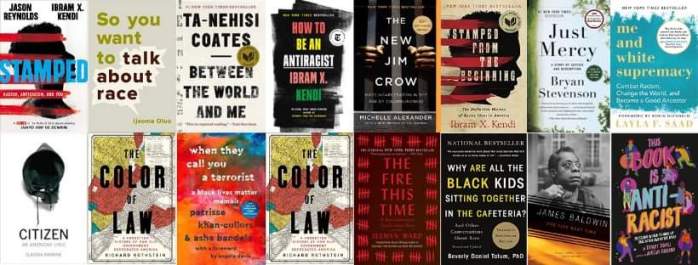
I would like to share some resources for learning how to be antiracist; some voices that can be found on social media who should be heard; some books we can read to help us learn; and some ways for all of us to help right now. This list is minuscule, in the grand scheme of things, but it is a place to start. Black lives matter.
How to Be Antiracist
- 75 Things White People Can Do for Racial Justice
- A Letter to White Parents
- Your Kids Aren’t Too Young to Talk About Race
- An Antiracist Reading List
Important Voices
Recommended Reading
- White Fragility: Why It’s So Hard for White People to Talk About Racism by Robin DiAngelo
- How to Be an Antiracist by Ibram X. Kendi
- Just Mercy by Bryan Stevenson
- Why Are All the Black Kids Sitting Together in the Cafeteria by Beverly Daniel Tatum
How to Help
- A List of Categorized Places to Donate
- Donate to The Equal Justice Initiative
- Donate to the Reporters Committee for Freedom of the Press
- Donate to the Freedom of the Press Foundation
If you know of any other important voices, important resources, or important programs that need help, please feel free to share a little bit about them in the comments below. Thank you! Be safe out there.
 Roof Beam Reader