Roof Beam Reader
Adam Burgess
#2018BibleRBR Daily Reading Plan: June

Hello, Bible-As-Literature readers! As you’re probably noticing, I’m way behind in my own reading/posting. The end of the semester was a real beast, but I do plan to get caught up (I might not post weekly, however. I’m going to try to get caught up on the reading and then post one big “catch-up” — and then stay on track from that point forward.)
Here is my daily reading schedule for June. As mentioned in the original post, this month the reading plan is Job 1 – Psalms 89. As always, feel free to read ahead, fall behind, or jump around. I’ll be back again every Sunday with my thoughts on that week’s reading. On June 30, I’ll post the daily reading plan for July.
The Reading Plan for June:
- June 1: Job 1-4
- June 2: Job 5-7
- June 3: Job 8-10
- June 4: Job 11-13
- June 5: Job 14-16
- June 6: Job 17-20
- June 7: Job 21-23
- June 8: Job 24-28
- June 9: Job 29-31
- June 10: Job 32-34
- June 11: Job 35-37
- June 12: Job 38-39
- June 13: Job 40-42
- June 14: Psalms 1-8
- June 15: Psalms 9-16
- June 16: Psalms 17-20
- June 17: Psalms 21-25
- June 18: Psalms 26-31
- June 19: Psalms 32-35
- June 20: Psalms 36-39
- June 21: Psalms 40-45
- June 22: Psalms 46-50
- June 23: Psalms 51-57
- June 24: Psalms 58-65
- June 25: Psalms 66-69
- June 26: Psalms 70-73
- June 27: Psalms 74-77
- June 28: Psalms 78-79
- June 29: Psalms 80-85
- June 30: Psalms 86-89
I look forward to sharing my thoughts on the stories and literary elements of the Bible, as I see them, and I am especially eager to hear what you all find in your own explorations. As a reminder, this is a secular reading of the bible as literature, so any/all respectful thoughts and opinions are welcome. In my opinion, the more perspectives we have, the better!
To share on Twitter/Facebook/Instagram, etc, please use: #2018BibleRBR
Reading Literature Causes Misogyny?
 Recently, Electric Lit published an essay by Erin Spampinato titled, “The Literary Roots of the Incel Movement.” In it, the author argues that a culture of reading and privileging “white male” (para. 5) texts has resulted in the modern-day incelmovement (note: the term “incel” is a portmanteau for “involuntary celibates.” It is most often used by white, male, heterosexuals online who claim they cannot “find love/romance” because of contemporary culture’s “demands” on their gender [read: supposed emasculation]. The term is now often used as analogous to misogynist because these self-described incels believe they have a “right” to sexual intercourse, without condition).The author names titles such as Great Expectations, The Catcher in the Rye, and The Things They Carried, to support her point that much of our school-taught canon (aside: I was not required to read any of these in school) is made up of books whose protagonists are sexually frustrated, then connects that literary frustration to modern-day “young men [who think] that male pathos is so pathetic, so worthy of tribute” (para. 1). Just a few sentences later, she connects that sentiment to the dawn of “the incel,” a “monstrous birth of our casually cruel and anonymous internet culture [and] a product of Anglo-American literary culture, which treats the topic of male sexual frustration as if it is of prime importance to us all” (ibid).
While I find much of Spampinato’s argument regarding the tradition and its still-too-exclusive canon compelling and accurate, the leap she makes between reading literature (even literature of the white male) and becoming a violent misogynist and/or internet troll, is tenuous at best. Consider two prominent incels (I refuse to use their names, but they are easy enough to find) who made headlines for their violent attacks in North America: one, a self-identified incel who carried out the recent Toronto van attack was 25-years-old; the other, described as the Toronto terrorist’s “hero,” murdered six people at a University and was 22-years-old. Isn’t it just as (perhaps even more) likely that the dominate narrative exposure these young men had was not from literature, but from, say, streaming television and social media?
In addition, study after study suggests that reading classic literature/literary fiction, among other genres, makes people more humanist and empathetic. In addition, study after study demonstrates that people are reading less and less (especially “literature”). People having these conversations (writers and readers of articles like this one) are discussing these very ideas about men and women, masculinity and femininity, race and class, nationalism and colonialism, patriotism and religion, in literature and elsewhere. Are we to believe that these “incels” are reading literature and also having these discussions? Reading these books but ignoring their themes or interpreting them differently? Treating The Awakening, for example, as a story about woman who got what was coming to her, rather than an example of a courageous woman who boldly demands her sexual freedom in a time when that was nearly impossible? And, assuming they are readers, what’s to say they’re not reading someone like Ayn Rand?
I take Spampinato’s point that we must continue to diversify the canon and discuss what gender (and other) disparities in reading and publishing have done to readers, writers, and cultures to date; however, I think the author’s primary thesis is unsound and no evidence is given to support her major claim, that reading classic literature causes misogyny. Do we have statistics, for example, on incel members and their reading habits, including choice of texts, frequency of reading activity, or favored genre? Where does the writer’s assumption originate, that literature causes these tendencies rather than helps people realize them? After all, without any data, isn’t it equally possible that these men simply do not read literature and therefore are less empathetic because of lack of exposure to humanistic ideals; or that they have not studied literature and therefore lack comprehension skills and global awareness?
Indeed, while some kinds of reading might make human beings “better people,” other genres seem designed to do the exact opposite. How do we know these men are not instead being influenced by, say, classic westerns or true crime novels, or comic books? (no shade meant to these genres!) Spampinato suggests that the problem is classic literary fiction, specifically, and its focus on male sexual superiority, that causes cultural sexism/misogyny, but fascinating textual analysis aside*, where is the evidence that would support this claim? As a part of the larger context, certainly our literature is a contributing factor to how we think about and communicate with the world around us. But to claim it is the root?
Perhaps, if we accept that these “incels” read classic literature/literary fiction, we should also look at the difference between “reading” and “comprehending” (or learning). If we are to grant that what she says is true, an overabundance of white male literature that privileges male sexuality is to blame for misogyny, must we then jump to the conclusion that it is because young men are simply reading a lot of these stories? Or is it possible that they are reading without understanding (or discussing) the issues? Here’s an excerpt from the essay:
The literature we choose to teach our children evidences how untroubled we are by this disturbing cliché that rage and a fascination with violation are characteristic features of (again, white) male sexuality. This is of course one of the main points of O’Brien’s beautiful book, but it doesn’t change the fact that as a teenager I had read many fictional accounts of men’s rape fantasies long before I had ever read a literary account from the woman’s perspective of rape, or even of consensual sex. I was trained to accept that male sexual frustration was a serious issue because I read hundreds of pages about it before the age of 20, far more than I read about issues of undoubtedly greater social import, like the legacy of slavery, the alienation of women and people of color from public life, or the violence of the settler colonialism on which the United States was founded. Perhaps these novels even coached me into taking male sexual frustration seriously through a kind of frightful education: look what happens, they seemed to say, when men don’t get what they want. (para. 6)
I have highlighted two sentences in this excerpt because they are profound personal post hoc reflections from a thoughtful and critical reader (although she problematically provides just one scene/motif from each representative novel, all of which are arguably complex, and then suggests that these books are “about” that scene/motif). I think it is important to recognize, however, that while I believe she is accurate and honest in what she describes here as her own experience and edification, the anecdotes are also being presented in such a way as to suggest a generalization about larger reading outcomes for other groups/populations. I am not a female-identified reader, so I cannot speak to how broadly the author’s personal experiences translate to other women, but I believe her. As a gay man, I certainly felt the lack of LGBTQ representation (or at least the acknowledgement of it) in my own classes, even throughout college.
It seems important to acknowledge, however, that literary criticism itself has existed for generations because of these very individual interpretations and analyses, and that attempts to assert cultural causation (with any kind of media, really) have been regularly and resoundingly defeated. In other words, Spampinato’s personal reflections on and responses to the assigned reading she was given in school are an important and valid part of this conversation, but I am reluctant to accept them as examples for causation between reading literature and becoming “fill-in-the-blank” (in this case, militantly misogynistic), if only because it stems from a projection of her experience onto others’ reading experiences (all the while assuming that these other people have done the same reading and absorbed the same messages). It is also reductive to say that the incel movement is born in any single thing (i.e. “a product of Anglo-American literary culture”). Perhaps this is hyperbole to generate discussion about our (this community of readers) reading habits, or to illustrate just how systemic and institutionalized the problem of misogyny is; but if that is the case, it needs to be stated more clearly.
In the rest of this passage, Spampinato suggests that reading a number of texts that include, for example, rape fantasies, results in a kind of acceptance of or resignation to rape culture. If this is true, is that not a fault of the teaching and study of literature, rather than the literature itself? Perhaps that is too fine a distinction, but for those few remaining high school programs teaching classic literature, the question would seem highly relevant. It reminds me much of the debates over teaching books like Adventures of Huckleberry Finn, which some people object to based on its use of racial slurs (despite that fact that reading in context would and does reveal a great deal about why Twain chooses to use those foul terms, and about history itself). If “we choose to teach our children” literature that is violent or fascinated with white male sexuality, does that mean we accept those features as good, necessary, or normal? In other words, does “reading make it so?” (Et tu, “violent video games create violent people”?) Do we look at every other feature or theme in literature independent of its context, whether classic or some other genre, and suggest that reading a lot of it makes us think that only those issues are important or that only that way of thinking is the right one? Or is teaching these texts an opportunity to have these very discussions? To reject them, question them, teach alongside them? And is that happening?
Spampinato gets to these same questions near the end of her essay. She asks us to think about why we almost intuitively recommend Catcher in the Rye to a teenager, but not The Bell Jar. She suggests that we do not need to eliminate all these white males from the canon, but we do need to change the conversation and we do need to add more diverse voices. With all of these suggestions, I heartily concur. But just as we should avoid unexamined and habit-based recommendations in literature (casually or in the classroom), so too must we be cautious in suggesting, especially without evidence^ and in this age of anti-education, anti-intellectualism and “alternative facts,” that the activity of reading literature is damaging us morally, socially, or otherwise. That seems, to me, a leap too far.
*Her analysis of this theme in the texts she provides is interesting and provocative. I would like to read more.
^No evidence is presented that incels are reading classic literature/literary fiction of the types addressed in the article and no evidence is provided that reading literature causes negative socio-cultural behaviors (indeed, most studies seem to suggest the opposite). For a comprehensive study of this phenomenon and why “the answer is not simple,” see Angela Nagle’s book, Kill All Normies: Online Culture Wars from 4Chan and Tumblr to Trump and the Alt-Right (John Hunt 2017).
A Garden, A Maze, A Sematary*
In this second “potpour-reads” post, I share some quick thoughts on three recent reads, all of which were completed in May. The Secret Garden was a title on my Classics Club Challenge list. The Burning Maze is third in the Trials of Apollo series by Rick Riordan, and I read Pet Sematary because a new film adaptation is supposedly in the works and I tend to get caught up in that sort of thing.
The Secret Garden by Frances Hodgson Burnett
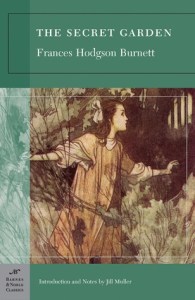 I recently read The Secret Garden as part of my Classics Club Challenge, after many years of seeing it come and go from my various TBR lifts and shelves. I’ve been meaning to read this book for years but have always put it off, probably because, subconsciously, I thought of it as a children’s book – a sorry excuse indeed because why should that matter? How many children’s books, especially classics, have I read and loved? Nevertheless, I have these tendencies, as I’m sure all readers do, to approach my reading with certain prejudices, and this being both a “child’s” book and a “girl’s” book, I wondered, isn’t it likely to be well beyond my interest at this point? Of course, then I actually started reading the book and couldn’t stop myself thinking, where has this book been all my life? Confession time? I guess I’m a bit of a reading diva, and it’s pretty stupid.
Anyhow, The Secret Garden begins in India under British colonial rule. We are introduced to the protagonist in this way: “When Mary Lennox was sent to Misselthwaite Manor to live with her uncle everybody said she was the most disagreeable-looking child ever seen. It was true, too.” Hilarious. Who begins a children’s book by dissing the main character’s appearance!? Something about that opening, and the honesty of the narrator throughout, drew me into the story and had me feeling equal hatred and empathy for little Mary and even little Colin, her cousin, both of whom are really rather terrible little brats at the beginning. But then a farm boy named Dickon starts to come around, and the secret garden is discovered, and the magic of humanity found in friendship, childish wonder, and the natural world begins to do its work. And it’s stunning and romantic in the best way imaginable.
For some reason, I thought this book was going to be more of a magical realism/mystery/fantasy kind of tale. It is actually firmly rooted in naturalism and realism; it is a coming-of-age tale that expresses magic in the everyday experience, and in the way children, even horribly disagreeable ones, can grow and change into wonderful people, given the right environment, the best challenges, and some great friends. I wasn’t expecting this kind of story, but it was exactly the kind I needed at the time of reading it. And Dickon, the nature sprite who is all things dirt and animal, plant and hill, is now one of my favorite characters of all-time. If Burnett had written a sequel from Dickon’s perspective, I could easily imagine it becoming a favorite of mine. The other characters, including the adults, are human enough and just present enough to matter without getting in the way of the children’s’ tale, which is and should be front and center. There are some very adult themes, a truly underlying sadness, and some dark commentary on colonialism, which makes reading this one as an adult all the more interesting and moving.
Now the real question: Should I watch the movie? Final Verdict: 4.0 out of 4.0.
The Burning Maze by Rick Riordan
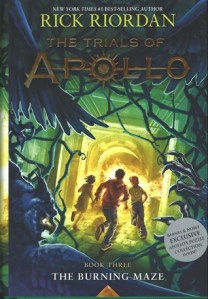 The Burning Maze is Book Three in the Trials of Apollo series. Apollo has been sent to earth in the form of a pudgy, pimply teenage boy, largely without any kind of godly power at all, and is tasked with helping the Roman and Greek demigods fight the horrors of the Triad: three evil, dangerous, and powerful former Roman Emperors with plans to take over the world. Beneath their plot, even, lies the power of Apollo’s most feared antagonist, Python, the god of snakes. As is typical with Riordan’s books, the pace is fast and the plot is fun. There is a lot to learn regarding roman mythology, especially, and that is always exciting for me. There is also a bit of tragedy in this third book, one that the reader is somewhat eased into but that is nevertheless difficult for those who have been invested in the two Roman series’ so far.
In this third installment, we learn much more about Meg, the twelve-year-old demigod who is essentially Apollo’s “master,” and her background. Some old and familiar characters from other books in this series, as well as the Percy Jackson and Heroes of Olympus series’, reappear. As with many of the other books, this one follows a certain formula that readers of Riordan’s books should come to expect; Burning Maze even revisits one of the original Percy Jackson battlegrounds, the Labyrinth, but in this case the visit is short and sweet, and the maze then becomes an underlying menace rather than a place of action for the entire plot.
Riordan has also taken more and more chances with his books over the years, something he began with (I think) the Heroes of Olympus series and then carried over into the Magnus Chase books (I have not kept up with the Kane Chronicles, unfortunately, so I can’t speak to that one). Riordan is an outspoken LGBTQ ally, for example, and a number of LGBTQ+ characters have been written into the stories, some major and some minor. This has been extraordinarily exciting to witness in the middle grade genre, and it has been particularly effective, I think, because Riordan does a nice job of delicately handling the reality of “coming out” with the kinds of reactions his queer characters receive from other characters, mostly accepting but sometimes with shock, wonder, curiosity, etc. The humor is still excellent, as are the character relationships. One of the most interesting and rewarding elements is the way that Apollo is growing from book-to-book. One of the themes of all the Riordan novels is how flippantly the gods take their relationships with humanity and their human children. The fascinating piece of this series is that we have a god who has been made human and who is now experiencing all that it is to be human, which is changing him in very profound ways. It is a smart and meaningful take on the modern myth series. Final Verdict: 3.25 out of 4.0.
Pet Sematary by Stephen King
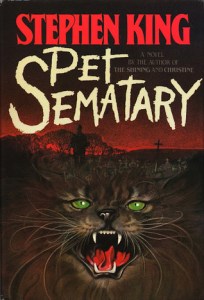 I was going to check my Goodreads account to see how many King novels I have read so far and where this one falls in that line, but I realized it would take more time than I’m willing to give it. We’ll just say, I’ve read a lot of Stephen King. The reason why I like King so much is actually not because I like horror/thrillers (it’s quite frankly not a genre I read very often). Instead, I like King because he has so much to say about the human psyche and human instinct. Pet Sematary is considered to be one of King’s most chilling horror novels and, while I don’t think it’s really his scariest or goriest or any of that, I can agree with the assessmentbecauseit treats the human condition in such an honest, and horrible, way.
The book is about Dr. Louis Creed and his young family, all of whom move to Ludlow, Maine so that Creed can take a job as a University physician. The majority of the novel is background, character building, and scene-setting. Almost all of the real action, the terror, takes place in the third and final section, which is much shorter than the first two. This helps create a false sense of security throughout most of the book while simultaneously allowing the ending to be much more dramatic and exhilarating, even unexpected (if anything from King can be considered unexpected – maybe that’s silly!) The horror begins when Creed’s daughter’s cat is killed and Creed’s neighbor, perhaps against his will, shares a secret that is better left unknown. This sets forth a series of ominous events that increase in impact and effect, until at last, a force beyond anyone’s control grips Ludlow, especially the Creeds, and begins to pull all the strings.
Pet Sematary was written between 1979-1982 and then published in 1983. King was reluctant to send it out to his publishers because he himself was so concerned with what he wrote, and it is not hard to understand why. Few popular novels that I can think of at this time so honestly and deeply addressed the lengths to which a person will go in order to ease an unthinkably painful emotional and psychological burden. Creed is suffering the worst pain imaginable, as is his wife, and his grief causes him to be compelled further and further down a path he knows is horribly dangerous and morally wrong. How can a man be driven to make all the wrong steps? In small increments and through tiny justifications and false ratiocination (as Poe would call them), until, without realizing what is happening, the decisions have been made and the actions have been taken, and all hell has broken loose.
Pet Sematary reminded me very much of King’s other most popular of horror novels, IT. The ominous force is even described as “IT” –an unnamed thing—and various points in the novel. I wonder if King was already working on that idea as early as 1979, even though IT itself did not appear until 1986. There are so many similarities, but the most prominent is the theme of evil as an uncontrollable force of human nature: good and smart and decent people being compelled to do terrible things. What is scarier than that? Final Verdict: 3.5 out of 4.0.
Zan-Gah by Allan Richard Shickman
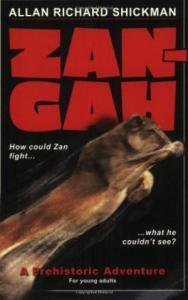 Zan-Gah is a prehistoric adventure tale of young Zan, a tribal boy and twin brother, who earns his name “Zan-Gah” after fearlessly slaying a dangerous lioness and, in the eyes of the local clans, proves himself a hero and future leader. The book spans more than a year (or more, with flashbacks), in which time Zan goes on a journey to find his lost twin brother, who has been captured by a dangerous clan, more powerful than even the Wasp People, Zan’s clans bitterest and most deadly foes. Zan must survive on his own, fashioning new weapons and tools, and improvising for food and water sources. While the tale is interesting and Zan’s story fascinating to watch, much was packed into this little book, so that no time is spent truly developing the plot or characters, or allowing the story to breathe.
I actually quite enjoyed the different characters in this book. There is an appropriate depth to each, being a novel for young readers. Still, there is some complexity in the characters; descriptions of Dael’s psychological trauma, for instance, and Zan’s devotion to his family and burgeoning leadership skills, are well-done. The author is also careful to create a balance between the serious and the joyful. Chul and his wife, for instance, remind me almost of a prehistoric Lucy and Rickie of I Love Lucy. They balance out Zan’s rather sad parents. Also, the book includes representatives of the wise and the foolish, the brave and the spineless. The greatest achievement in this regard, though, is that each of the characters are simple enough to understand, but complex and independently imagined enough so as to avoid becoming caricatures or grotesques of an idea.
There is a bit of an imbalance, I think, in the reading level versus maturity level of the targeted audience. While the prose and structure are simple and easy to follow, there are varying degrees in vocabulary and thematic difficulty levels. Also, there are instances of rather adult elements and situations, such as the graphic slaying of a rival clan member. For this reason, I felt at times that the story itself would be more suited for the “Independent Reader,” in general, except that I would not encourage a child under the age of 12 to read it (due to some of the more difficult vocabulary and the graphic scenes). Still, for those young teenagers or middle schools who do read this book, it does have a decent balance of difficulty and maturity, with ease of reading, so that the young reader may be challenged without feeling “burnt out,” particularly if he/she is a developing reader.
There are certainly some larger issues at work, here – like the ideas of courage and bravery, and responsibility to duty and family. Physical and emotional pain, too, and their lingering effects on the injured and their loved ones are also presented fairly and with prominent importance. I enjoyed the inclusion of ideas like compromise, teamwork, and resourcefulness, all great elements for a young adult reader to encounter. Still, and unfortunately, due to the rushed pace (three days or a year might pass within one or two sentences), these elements did not have much time to develop or grow, or really implant themselves in the reader’s psyche, before the story moved on. The same could be said for the settings, which change quickly as Zan moves quickly across the landscape. It might be enough for a new reader, wetting the appetite without overwhelming, but adult and experienced readers, I think, would be underwhelmed, though appreciative of the attempt. All-in-all, I believe young readers, particularly adventurous or historically/culturally-inquisitive young boys and girls, might have a great time with Zan’s adventure, but experienced or adult readers might find it difficult to connect with.
Ten LGBT History Books for Harvey Milk Day
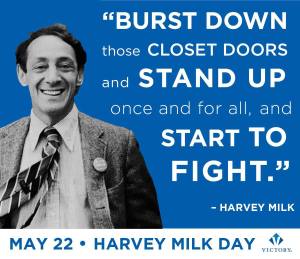 Today we remember an important figure in LGBT American History: Harvey Milk. Harvey Milk, known as the “Mayor of Castro Street,” was a gay rights activist and community leader. In 1977, Milk won a seat on the San Francisco Board. He became the city’s first openly gay officer and one of the first openly gay individuals elected to office in the United States. In addition to gay rights, his campaign platform incorporated a variety of issues, including child care and affordable housing, as well as a civilian police review board. Harvey Milk was assassinated on November 27, 1978, by a conservative political rival who infamously claimed the “Twinkie defense” at trial, asserting that his junk-food diet had made him mentally unstable. The jury convicted him of manslaughter rather than murder and sentenced him to just six years in prison.
To honor Milk’s memory, I would like to share ten books on LGBT history that I think everyone should read. Someday, I hope to add my own book on Gay American Literature to this list, but that will have to wait until it successfully finds a publisher. Feel free to reach out to me if you’re looking for a researched, academic text on early twentieth century gay American literature. It’s ready for you!

Gay New York: Gender, Urban Culture, and the Making of the Gay Male World 1890-1940 by George Chauncey: Gay New York brilliantly shatters the myth that before the 1960s gay life existed only in the closet, where gay men were isolated, invisible, and self-hating. Based on years of research and access to a rich trove of diaries, legal records, and other unpublished documents, this book is a fascinating portrait of a gay world that is not supposed to have existed.

A History of Bisexuality by Steven Angelides: Why is bisexuality the object of such skepticism? Why do sexologists steer clear of it in their research? Why has bisexuality, in stark contrast to homosexuality, only recently emerged as a nascent political and cultural identity? Bisexuality has been rendered as mostly irrelevant to the history, theory, and politics of sexuality. With A History of Bisexuality, Steven Angelides explores the reasons why, and invites us to rethink our preconceptions about sexual identity. Retracing the evolution of sexology, and revisiting modern epistemological categories of sexuality in psychoanalysis, gay liberation, social constructionism, queer theory, biology, and human genetics, Angelides argues that bisexuality has historically functioned as the structural other to sexual identity itself, undermining assumptions about heterosexuality and homosexuality.

The Straight State: Sexuality and Citizenship in Twentieth-Century America by Margot Canaday: The Straight State is the most expansive study of the federal regulation of homosexuality yet written. Unearthing startling new evidence from the National Archives, Margot Canaday shows how the state systematically came to penalize homosexuality, giving rise to a regime of second-class citizenship that sexual minorities still live under today.

How Sex Changed: A History of Transsexuality in the United States by Joanne J. Meyerowitz: From early twentieth-century sex experiments in Europe, to the saga of Christine Jorgensen, whose sex-change surgery made headlines in 1952, to today’s growing transgender movement, Meyerowitz gives us the first serious history of transsexuality. She focuses on the stories of transsexual men and women themselves, as well as a large supporting cast of doctors, scientists, journalists, lawyers, judges, feminists, and gay liberationists, as they debated the big questions of medical ethics, nature versus nurture, self and society, and the scope of human rights.
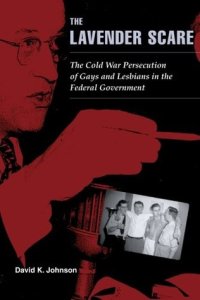
The Lavender Scare: The Cold War Persecution of Gays and Lesbians in the Federal Government by David K. Johnson: Historian David K. Johnson here relates the frightening, untold story of how, during the Cold War, homosexuals were considered as dangerous a threat to national security as Communists. Charges that the Roosevelt and Truman administrations were havens for homosexuals proved a potent political weapon, sparking a “Lavender Scare” more vehement and long-lasting than McCarthy’s Red Scare. Relying on newly declassified documents, years of research in the records of the National Archives and the FBI, and interviews with former civil servants, Johnson recreates the vibrant gay subculture that flourished in New Deal-era Washington and takes us inside the security interrogation rooms where thousands of Americans were questioned about their sex lives. The homosexual purges ended promising careers, ruined lives, and pushed many to suicide. But, as Johnson also shows, the purges brought victims together to protest their treatment, helping launch a new civil rights struggle.
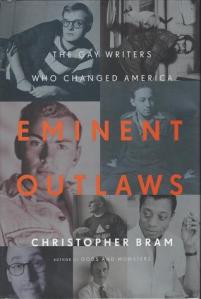
Eminent Outlaws: The Gay Writers Who Changed America by Christopher Bram: In the years following World War II a group of gay writers established themselves as major cultural figures in American life. Truman Capote, the enfant terrible, whose finely wrought fiction and nonfiction captured the nation’s imagination. Gore Vidal, the wry, withering chronicler of politics, sex, and history. Tennessee Williams, whose powerful plays rocketed him to the top of the American theater. James Baldwin, the harrowingly perceptive novelist and social critic. Christopher Isherwood, the English novelist who became a thoroughly American novelist. And the exuberant Allen Ginsberg, whose poetry defied censorship and exploded minds. Together, their writing introduced America to gay experience and sensibility, and changed our literary culture.
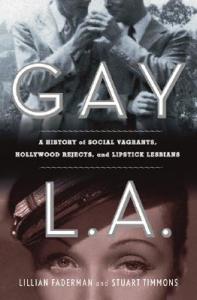
Gay L. A.: A History of Sexual Outlaws, Power Politics, and Lipstick Lesbians by Lillian Faderman and Stuart Timmons: Drawing upon untouched archives of documents and photographs and over 200 new interviews, Lillian Faderman and Stuart Timmons chart L.A.’s unique gay history, from the first missionary encounters with Native American cross-gendered “two spirits” to cross-dressing frontier women in search of their fortunes; from the bohemian freedom of early Hollywood to the explosion of gay life during World War II to the underground radicalism sparked by the 1950s blacklist; from the 1960s gay liberation movement to the creation of gay marketing in the 1990s. Faderman and Timmons show how geography, economic opportunity, and a constant influx of new people created a city that was more compatible to gay life than any other in America. Combining broad historical scope with deftly wrought stories of real people, from the Hollywood sound stage to the barrio, Gay L.A. is American social history at its best.

Queer: A Graphic History by Meg-John Barker and Julia Scheele: Activist-academic Meg-John Barker and cartoonist Julia Scheele illuminate the histories of queer thought and LGBTQ+ action in this groundbreaking non-fiction graphic novel.From identity politics and gender roles to privilege and exclusion, Queer explores how we came to view sex, gender and sexuality in the ways that we do; how these ideas get tangled up with our culture and our understanding of biology, psychology and sexology; and how these views have been disputed and challenged.
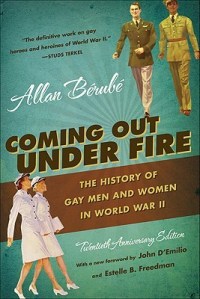
Coming Out Under Fire: The History of Gay Men and Women in World War II by Allan Bérubé: During World War II, as the United States called on its citizens to serve in unprecedented numbers, the presence of gay Americans in the armed forces increasingly conflicted with the expanding anti-homosexual policies and procedures of the military. In Coming Out Under Fire, Allan Berube examines in depth and detail these social and political confrontation–not as a story of how the military victimized homosexuals, but as a story of how a dynamic power relationship developed between gay citizens and their government, transforming them both. Drawing on GIs’ wartime letters, extensive interviews with gay veterans, and declassified military documents, Berube thoughtfully constructs a startling history of the two wars gay military men and women fought–one for America and another as homosexuals within the military.
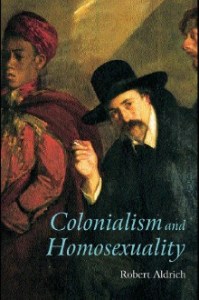
Colonialism and Homosexuality by Robert Aldrich: Colonialism and Homosexuality is a thorough investigation of the connections of homosexuality and imperialism from the late 1800s – the era of ‘new imperialism’ – until the era of decolonization. Robert Aldrich reconstructs the context of a number of liaisons, including those of famous men such as Cecil Rhodes, E.M. Forster or Andre Gide, and the historical situations which produced both the Europeans and their non-Western lovers. Each of the case-studies is a micro-history of a particular colonial situation, a sexual encounter, and its wider implications for cultural and political life. Students both of colonial history, and of gender and queer studies, will find this an informative read.
 Roof Beam Reader