Roof Beam Reader
Adam Burgess
Numbers 18-Numbers 34 #2018BibleRBR
Reading the Bible as Literature
Week Eight: Numbers 18-Numbers 34
We are coming to the end of the books of Moses, and also the end of the tales of the tribes of Israel wandering the deserts. The next book, Deuteronomy, will leave us with the final wisdom of Moses, consisting of a number of speeches he is purported to have given. Before we can get to Moses’ farewell, however, we wade through a few more chapters of laws, rules, and customs, as well as another census and the plans for dividing “the promised land” amongst the tribes of Israel. Numbers 18-34 also tells of the death of one leader along with the rise of another, plus more complaining, some tribal warfare, and the interesting story of a famous sorcerer. One special guest also makes an appearance: the unicorn!
The King is Dead: In this part of Numbers, as the Israelites are near to Gilead and settling in their promised land, Miriam and Aaron die. Fortunately for the Israelites, Aaron and Moses entreat god for one last favor, some water. Numbers 20:10-11 recounts the story of Moses cracking rocks to discover water. Imagine, decades of leading a whiney, squabbling, ungrateful group of people through the desert, constantly performing miracle after miracle to keep them safe, fed, and sheltered, and boom. You die before the payoff. What a shame! With Aaron’s demise, however, comes the formal rise-to-power of Joshua, one of the two most acclaimed military leaders (the other being Caleb). In addition to the death of Aaron and the rise of Joshua, we are treated to another census of the people of Israel, as the tribes currently stand. Near the end of this book, we also learn how the new Israel will be divided (lots are drawn, supposedly, but it is more likely that this was reconstructed by the priests based on where each tribe settled and how rich/powerful and permanent that settlement was at the time of recording).
War, What is it Good For?: This brief part of the book of Numbers also tells of numerous squabbles between the Israelites and other tribes. It is possible that the main beef was actually between the Israelites and the Moabites, but as a familial (Hebrew-descending/sibling-like) tribe, the formal record might have been intentionally distorted. In any case, we learn that there is a rift between the Kingdoms of Israel and Edom, and between Arad and Israel, and finally between the Moabites and Israel. It seems that, as Moses and his people wandered the desert, they made a habit of taking what they wanted and ticking off a whole lot of people in the process. For this reason, the King of Moab entreats a famous sorcerer, Balaam, to curse the Israelites and bless his own people. What Moab doesn’t know, however, is that the Hebrew god has spoken with Balaam and caused him to do the exact opposite: every time Moab asks Balaam to curse the Israelites, he blesses them instead. This drives Moab absolutely nuts. Clearly, god is on the Israelites’ side, at least when they’re not complaining and/or having orgies with non-Israelite women. (Note: the story of the talking ass also comes from this section, as that ass belonged to Balaam. This is the second of only two recorded instances of talking animals in the bible; the first, of course, is the serpent in the Garden of Eden, recounted in Genesis).
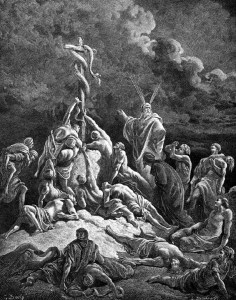
Punishments: Speaking of complaints and bad sex. God comes up with a couple of interesting punishments for his people in this part. First, when the people go to Moses complaining, again, that he took them out of Egypt only to have god forsake them, god responds by sending “fiery serpents” to bite everyone. “Fiery” means poisonous, and the cure turns out to be a Serpent of Brass. This is interesting in that it perpetuates a much older mythos surrounding the serpent, one first outlined in the Book of Genesis. In the Epic of Gilgamesh and in Greek Mythology, the serpent is an important figure. Both of those ancient tales treated the serpent as a kind of god or symbol for healing and medicine, and here, too, we find that a serpent’s bite can be healed by worshiping the same, a serpent coiled on a brass rod. This reminds one of the caduceus (a symbol some doctors still use to this day). As it turns out, the Serpent of Brass was ritually honored by the Israelites for about 500 years, until all other forms of idols were eventually stamped out. God’s second punishment is a massive plague given to the Israelites as punishment for sleeping with Moabite women (whom god says are tricky, tricky!). We learn that the plague kills “four and twenty-thousand” people. That’s some serious punishment.
OTHER INTERESTING BITS
Women’s Rights: In Numbers 27, women who are the only heirs in their family speak with Moses about inheritance rights. New laws are established which indicate that all property will descend to the son, but if there are no sons, the inheritance then goes to the daughter(s). This is quite the progressive step, based on everything we’ve seen about the treatment of women thus far; however, we are soon reminded just how oppressed women are. In Numbers 30, it is decreed that all women’s “vows” (or rights/decisions, in other words) are to be determined by the father, if they are unmarried and living at home, or by their husbands. Essentially, whatever a woman wants to do must be sanctioned by her closest male relative.
God’s Wrath: The extent of god’s wrath – or, to put it more accurately, the rules of engagement for the Israelite army, reflected as god’s will—is made clear in Numbers 31. After war with the Midians, “god commands” the Israelites to kill all the men, women, and children, except for any female virgins; these young women are treated as spoils of war, to be taken by whichever Israelite man wants them. Kinda gross, ya’ll.
Unicorns: Funny how I have no recollection of reading about unicorns in the bible, and yet they’re there! Did you know unicorns actually did exist? Here’s the thing, though: they were basically buffalo. Still, it’s an interesting bit of history. The Hebrew word for unicorn was “re’em,” which derived from “urus” or “aurochs” for wild oxen. These were ancestors to our modern-day cattle. When painted in pictures, the re’em were drawn in profile, so only one horn was visible. When the Greeks encountered images and statues of this rare animal, they called it “monokeros,” or one-horn. From there, we get the Latin translation for one-horn, “unicorn.” And a legend is born. Note: some have also suggested the legend might stem from the rhinoceros, but those were native to India and thus probably not the inspiration, at least not the biblically documented inspiration, anyway.
Joyce’s Ulysses: Episodes 13-18 #FebBloom
Melissa over at Avid Reader’s Musings is hosting a read-along of James Joyce’s Ulysses this month, and I promised to post my reading guides/reactions for anyone who might want another perspective on this difficult read. This post covers Episodes 1-6. If you are reading along or want to join, remember to use #FebBloom for social media.
The Episodes
Book Two, Continued
 Nausicaa: Now, here was an interesting episode. It jumps ahead in time quite a bit, bringing us to 8pm, and we arrive back at Sandymount, where we were with Stephen Dedalus early in the day (in “Proteus”).
The major theme of this episode is sex, or perhaps more specifically, sexual climax. Throughout the episode, we see references to objects moving in arc – that is, rising and falling. For example, there is a roman candle that is described rising into the air, where it explodes; there is also the rising and falling of Gerty MacDowell’s leg, and the description of the swinging censer in the church. This theme actually ended the previous chapter (with the rising and falling of the biscuit tin), but it is explicitly related, here, to Bloom and Gerty’s coordinated orgasms. It also, of course, parallels The Odyssey, in that Odysseus, having been stranded on the island of the Phaeacians, is awoken after his shipwreck by a ball thrown by Nausicaa, the island princess. Incidentally, a ball is thrown toward Bloom in this chapter, too, which briefly awakens him from his sexual stupor (until the girls and children leave, at which point he and Gerty return to their mutual and simultaneous self-gratification).
The first part of this episode is mainly about Gerty, and the second part is about Bloom. I think we get a glimpse at Joyce’s thoughts on Irish womanhood (and women in general) in this chapter. Gerty is compared to the Virgin Mary, but she is in no way innocent or pure, as evidenced by the fact that she teases Bloom sexually and keeps at it until they both “finish.” My understanding of the censorship history of this book leads me to believe that much of the outrage stemmed from a few things: first, vivid descriptions of bodily functions; second, mixing sex and religion; and third, presenting women as sexual, passionate creatures filled with their own erotic desires (and willing to seek gratification). All of these things are certainly present in this episode.
We also find out a few things about Bloom’s sexual desires (though not nearly as much as we will find out in “Circe.” For instance, he has been known to visit prostitutes. We learn that he once paid a woman just to say dirty words to him, and we see him recall a moment when he had sex with his wife, but this memory is combined with the memory of Molly and another man (Mulvey). This is the second time where Bloom seems almost willing and desirous of seeing his wife with another man. Also, strangely and surprisingly, we learn that Bloom might not really be Jewish (even though he has been playing the role of the persecuted Jew throughout this book, and especially in the last chapter!). After he ejaculates, he mentions his foreskin, which a true Jew certainly would not have. Weird.
Finally, he discovers that his watch stopped at 4:30pm, which is probably when Molly & Blazes Boylan were having sex, and he writes a message in the sand: “I . . . AM. A.” I’m not sure what this message is supposed to mean, though a search on this topic yielded some probable explanations; still, it seems no one can say for certain.
 The Oxen of the Sun: This was a bizarre episode – at least, I thought it was bizarre until getting to the next episode, “Circe,” which is completely insane. Anyhow, the episode begins about 10pm and lasts until 11pm.It takes place at the National Maternity Hospital in Dublin, where Mina Purefoy (previously mentioned early in the book and thought of by Bloom, throughout) is in labor and about to give birth, after three long days of trying.
Bloom has decided to visit Mina Purefoy, but he also discovers Stephen Dedalus here, visiting with some of his friends who are medical students at the hospital. It is here where the father-son theme really starts to take hold; Bloom decides to stay and watch over Stephen, partly because he (Bloom) and Simon Dedalus (Stephen’s father) are friends, but mostly, I think, because Bloom has been searching for a son ever since his own died. Bloom does not care much for Stephen’s friends and the group are clearly under the influence of something (we later learn that it is absinthe), so Bloom decides to follow them when they leave the hospital.
The parallels between Joyce and Homer in this episode seem more difficult to find, especially following how overt they were in the previous episode. The only obvious connection I can draw is between the slaughter of Helios’s cattle in The Odyssey with the epidemic of foot and mouth disease in Ireland, which is killing their cows. The larger theme, and perhaps the real connection, is that of life and death in general. Joyce, through his characters, seems to go on a tirade against birth control, prophylactics, etc. He staunchly supports family and the idea that married couples should have as many children as possible (despite poor Mina Purefoy’s obvious predicament).
Mulligan is made the villain (again) in this episode because he is pro-contraception. There is a funny scene where Mulligan goes on and on about how he will offer up his “services” to any and all women who choose it, but he’ll make sure he doesn’t “pay” for it (by becoming a father) nor ask them to literally pay for it (meaning, he wants to screw around, free of charge). The next page or so that follows is rife with puns about condoms – umbrellas, cloaks, etc. It is really quite funny.
The true genius of this episode, though, is that Joyce has essentially recreated the history of the English language, from Beowulf to modern slang, and put it into practice. Every few pages or so, the dialogue and narration move from one moment in the history of the English language to another, and the reader must keep up with it in order to both understand what’s happening in the episode and more importantly, what Joyce is trying to say about language – which is the real message. I had to backtrack a bit and begin rereading, as I only realized what he was doing after moving into the third moment. Essentially, he evokes Beowulf to Bunyan, through the University Wits, Dickens, the Gothic novel (probably my favorite part) and even Socratic rhetorical dialogue. He ends the episode in modern slang, with bits of American black slang included, which seems like clear condemnation of the “destruction” of the English language. Apparently, Joyce was not happy with where English had gone & probably feared that there was no turning back, no reclaiming of the greatness of earlier prose. Is Ulysses, then, an ode to the English language? Or a eulogy for it?
 Circe: This is probably my favorite episode of the book, so far, which is ironic because it was the one I most feared (it is enormously long – about 150 pages). It was also again difficult to find parallels to the original epic. In The Odyssey, the goddess Circe turns Odysseus men into swine, but Odysseus managed to resist her spells and remain human. In this chapter, Circe is clearly Bella Cohen, who runs a brothel. Is the parallel, then, that Bella turns men into swine by providing these kinds of services? Certainly there are some bizarre, descriptive sexual scenes between Bella and Bloom – and Bloom does ultimately break free of the spell, which would reinforce the Bloom-as-Odysseus idea. I suppose, now that I’ve talked my way through it, this is indeed connection enough!
Like “Nausicaa,” I think this could certainly be an episode, if not the episode, which had censors bringing charges of obscenity against the book. The overarching theme seems to be psychological – a fear of free sexual expression. If we dare to act out are fantasies, will we become animals? Almost the entire episode, though, is narrated as if in a bizarre dreamworld fantasy – and both Bloom and Stephen Dedalus suffer from hallucinations, sexual and terrifying.
One of the most important parts of the episode, and probably of the entire book, is the moment when Stephen Dedalus, after suffering through terrible hallucinations of his mother (who has appeared to further guilt him for not praying at her bedside) breaks free of the fantasy by smashing a chandelier and shouting the word, “Nothung.” At first, I thought this was another silly sexual reference “not hung – impotent?” but I looked up the word and learned that it is actually a reference to Wagner’s The Ring of the Niebelung, whose hero is named Richard (also Wagner’s first name) Rowan (an Ash tree). The hero’s name not only stands for the Ash tree, but he also has a sword made of Ash , which is the same wood that Stephen’s walking stick is made of. Unfortunately, I don’t know much about Wagner or about this opera, but clearly Joyce was heavily influenced by it. The major significance, though, is that Stephen refuses, through the haze of his blurred vision, his absinthe-induced delusions, and his fevered dancing with whores, to succumb to his mother’s guilt-trip.
Another deeply interesting and important element of the episode is how very much (too much?) we learn about Leopold Bloom and his wonderfully, deliciously, seriously gross fantasies. As it turns out, Bloom is a serious masochist. He has a foot fetish, he is a coprophiliac (sexually attracted to the anus/fecal matter), and he is turned on by transvestism. In his mind, Bloom sees Bella become “Bello,” a man, who then dominates Bloom and calls him “girl.” She/He sits on Bloom’s face, spanks him, has him worship his (her) foot, and much more. We also learn that Bloom has watched (or has had fantasies of watching?) his wife have sex with other men. I think it is possibly this episode which leads some scholars to make the claim that we (readers) learn more about Leopold Bloom than any other literary character, ever. There are no secrets left.
In the end, though, Bloom wakes from the frenzy and becomes that same Bloom from “The Cyclops,” a man with self-confidence and a voice – one who can break Circe’s spell. He cares for Stephen Dedalus by handling his money, by standing up for him when he breaks the chandelier and refusing to allow Stephen to pay any more than the damage is actually worse (and Bella demands about 10x more), and by running after Stephen when he “escapes” the brothel. He also stands up to bully-British military men and Irish policemen, all of whom could be a serious threat to the delusional Dedalus. This says, again, very much about the goodness in Bloom, and about his strength (often veiled).
At the very end, Bloom has a vivid fantasy of his own, where he sees his dead son, Rudy, alive and as he would be had he lived; a boy at Eton, well-dressed and healthy. As he is caring for Stephen, his newly adopted son, at this time – the father-son motif is even doubly reinforced. More importantly, though, we see that Bloom has an enormous capacity for awe, for beauty. The finale to this episode is definitely the best thus far.
BOOK THREE
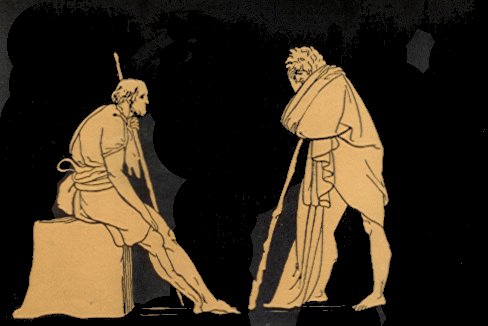 Eumaeus: Episode 16 begins around 1am and immediately follows the whirlwind action of “Circe.” In Homer’s Odyssey, Eumaeus is a swineherd, faithful to Odysseus. When Odysseus returns to Ithaca after his long absence, he meets with Eumaeus, who is still loyal to the family after all this time, and then joins his son, Telemachus, to rid their home of Penelope’s many suitors.
In Joyce’s episode, we get a sort-of “meeting” between this epic’s Odysseus and Telemachus, Leopold Bloom and Stephen Dedalus. They meet in a coffeehouse that is run by a man nicknamed “Skin-the-Goat,” who we learned in “Aeolus” drove the decoy car for the Phoenix Park Murderers. The real parallel between this episode and the original epic, I think, is in its description of the returning wanderer. There are three characters, here, including Bloom, Parnell, and “W.B. Murphy,” a sailor who seems to be using a pseudonym, though we don’t know why, who are all “returning” to their wives/lovers, just as Odysseus was in The Odyssey.
We learn in this episode that Stephen does not plan to return to his job as a schoolteacher (he meets a friend on the street, lends him money and tells him that there will be a job opening at his school – referring, of course, to his own position). We also learn a bit more about Bloom, as we do with each episode. We have seen that Bloom is in general a good man – caring and altruistic in many ways. He displays that altruism here with Stephen, warning him away from Buck Mulligan, whom Bloom does not trust, and decides to bring him home since it is late and Stephen clearly has nowhere to go (having given up his key early in the book).
This kindness is in many ways double-edged, though. Bloom ruminates on Stephen’s talents and abilities, and he imagines how Stephen’s talents as a writer could help Bloom gain publicity for a project he has been considering (starting a new opera). Bloom also imagines writing stories of his own, as he did earlier in the book, and considers extending his evening with Stephen for the single reason that it might add fodder to the stories he would write, and then publish in Titbits (the magazine he mentioned previously). So, Bloom is willing to part with a bit of food and maybe give up a bed for the night, in exchange for what he hopes will become a creative, and even a business, relationship with Stephen Dedalus.
Two important things to note about this episode are its syntax (style) and the dichotomy it establishes between Bloom and Dedalus. First, the syntax is notable because it mirrors the tone of the story at this point. The sentences of this episode tend to be long, rambling, and many times unfinished – petering out into nowhere. This creates a sense of tiredness and exhaustion in the reader, which mimics the way Bloom and Stephen must both be feeling after this very long day (and night). In addition to the fatigue-inducing syntax is the perpetual theme of miscommunication between Stephen Dedalus and Leopold Bloom. The two never seem quite in sync or in agreement on any topic. Not only does this confusion add to the tiredness of the episode, but it also clearly establishes them as two distinct personalities – they are not both Christ-like figures, after all, nor, I think, is the father-son dynamic, one so often reinforced throughout the book (and so hoped for by Bloom), necessarily going to come to fruition. Stephen represents the non-religious, intellectual artist, while Bloom is the faithful mercantile opportunist. Stephen is concerned with deep issues, like the soul of the Irish people, while Bloom only comments on the surface beauty of an unknown language (having heard a couple arguing in Italian, Bloom found the language beautiful, but Dedalus knew they were arguing about money).
I was also intrigued by the presence of a new character, Murphy, who only appears in this episode. I haven’t spent enough time thinking about him to be able to develop any thorough analysis about him, but he certainly seems to perpetuate a few themes, such as the motif of disguises and the theme of the wanderer (like Bloom and Parnell, and Odysseus). Is he just there for comic reinforcement, though? I doubt it. One thing that struck me is the possibility that he might be homosexual (like Mulligan, perhaps). Neither is “outed” in any obvious way, but Mulligan’s possible attempt at drugging (through drink) Stephen, coupled with his silence during the Oscar Wilde/Shakespeare debate and his verbosity about Bloom’s sexuality made me wonder. In the same way, Murphy’s stories about Antonio seem highly suggestive – filled with longing and hints at romantic & carnal attachment. There is also tattoo on his chest, which includes the number sixteen. After wondering about it and searching around the interwebs, it seems that, in European slang and numerology, this number represented homosexuality. It also happens to be the number, in sequence, of this episode. I don’t know nearly enough about European slang nor numerology to be able to attest to this, but an interesting analysis of the whole situation can be found here. It’s possible to read this inter-textually or extra-textually and arrive at the same, or different conclusions. Which is part of what makes reading and discussing this book so fun (and frustrating!).
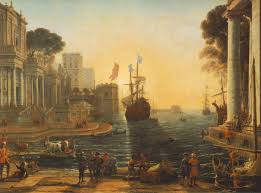 Ithaca: Bloom has finally returned home, with his Telemachus (Dedalus) in tow. It is about 2am when they arrive, and the episode is set up very much in terms of a religious ceremony, like a communion. The episode is littered with recurrence of the numbers 3 and 9 (suggesting the Holy Trinity). Not only are these numbers simply mentioned repeatedly, but we also learn that this is the third time that Bloom and Dedalus have met in this way, that Bloom was baptized three times, and many of the categorization that goes on in this episode come in lists of 3 or 9. In addition, terms like “mass,” “host,” and “Lucifer matches,” and images of crosslaid sticks, all feed into the allegory of religious ceremony – as does the almost literal ceremony that takes place as Bloom (hatless, with candle and aching side) leads Dedalus into his home (upon the conclusion of which, bells chime). Of course, the episode concludes as it must, with Stephen and Leopold urinating next to one another, mixing, as it were, their sacramental wine.
This entire scene (the entire episode) is delivered in a Question-and-Answer method, very much like that of the Catechism. Each episode has had a unique syntax and structure, matching the episode’s contents. What I wonder about, though, is the purpose of all of this religious imagery. This is a comic novel, very much concerned with humanity and the human experience (down to the very nitty, gritty details of it). Neither Bloom nor Dedalus is “religious” (though Molly is) and it’s hard to imagine that the Trinity, here, could represent a conjoining of the three of them. The mysticism that is infused – the moments of “elevation” and speechlessness that Bloom and Dedalus experience- is, perhaps the real point. The Catholic imagery might be a means-to-an-end, evoked in order to metaphorically explore human potential in creative moments, rather than divine inspiration.
Another important revelation (or reinforcement) from this episode comes from Bloom’s reaction to the physical evidence of Molly and Blazes Boylan’s affair. His reaction is calm, measured. He is portrayed as a humanist and a passive anti-hero, accepting of the affair, understanding it as for the most part natural (though he does have momentary thoughts of possible responses, such as divorce). Whether this reaction, or Bloom as a person in general, should be lauded is hard to say and will likely depend on the reader, but that’s not Joyce’s goal. Instead, I think Joyce wants to fit as much detail about the world, and especially about human nature, into Ulysses as he can (and, being Joyce, he had to of course up the ante by making this all fit into one 24-hour period). We learn even more about Bloom in this episode, as we will in the next, and, by the end, there’s hardly anything more we could hope to learn about him (and plenty which we would probably have preferred not to know).
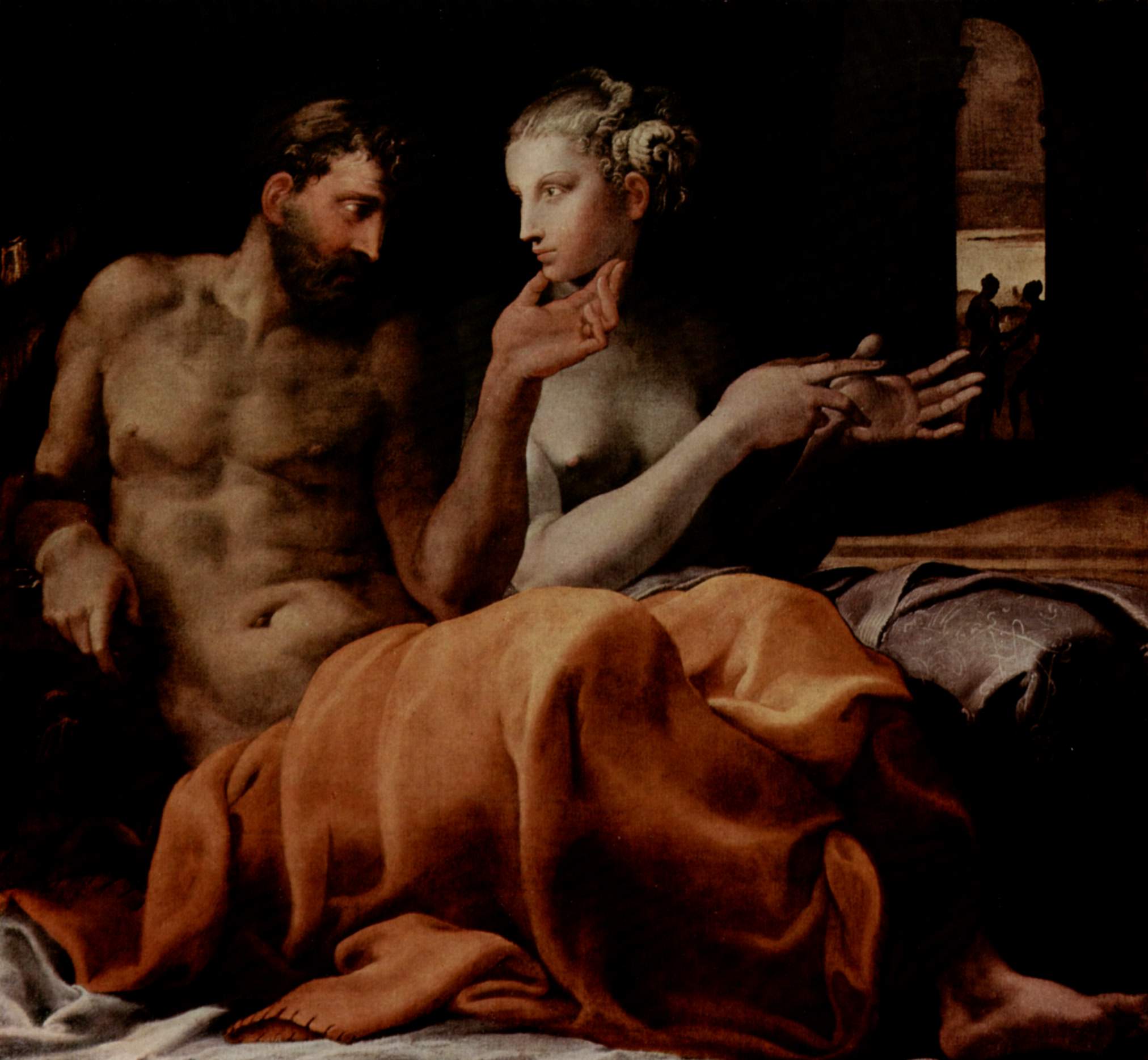 Penelope: Many readers have described this chapter as being Joycean stream-of-consciousness on steroids. I think, however, that stream-of-consciousness does not quite describe the kind of narration happening, here. Yes, we are witnessing Molly’s uninhibited, raw thoughts, but whereas stream-of-consciousness is typically a steady flow of thoughts, one after the other, Molly’s have little flow or patter to them at all. What we have here is something more akin to word association, where each sleepy thought (Molly is slowly waking up) signals another idea, which Molly’s brain then rambles off on. There is some slight structure to the episode, such as the bookends of Molly’s specific thoughts about Bloom and also the eight sentences that make up the episode (they are sometimes ten pages long, but they are still “sentences” structurally – separated by line breaks and such).
Speaking of the eight sentences, eight is a number that recurs frequently in this episode. We learn that Molly was born on September 8, for example, and that Bloom once bought her eight flowers (poppies – significantly). Her body position, too, curled on her side on the bed, as she is, also recalls the number 8. This allows for, at least, some symbolic structure to a chapter which is relatively free-flowing (even Molly is probably not very aware of her thoughts). Also, the number 8, of course, typically works as a stand-in for the lemniscate (“infinity” symbol  ). As for its meaning here, that is as yet unclear to me. My first instinct is that it, like this entire episode, has something to do with womanhood and the “realness” of it (as opposed to what, until this book, was admitted/able to be discussed about womanhood, female sexuality, etc.).
I find it fascinating that Molly’s soliloquy ends a book that has been, for the most part, about Leopold Bloom, her husband. We know the entire time that Bloom knows that Molly is going to have an affair. Now, here we are after the fair, with the could-have-been villain of the story, and yet the irony is she becomes, in many ways, the hero – womanhood personified. Molly is lonely, and sad. She clearly does not despise her husband; no, she even misses him and wishes he would “return.” Even while her thoughts drift off, thinking about Boylan, sailors, Narcissus, and boys from her youth, still she always comes back to Bloom. We learn that she knows how to tease and how to fake an orgasm. We learn that she is jealous of other women and worries about Bloom cheating on her with other women. We learn, too, that she has standards – having been deeply offended by the way Boylan so nonchalantly disrobed in front of her, without even asking for permission.
Most importantly, though, we see Bloom from Molly’s perspective and learn even more about him. We learn that, really, Molly and Bloom both blame themselves for their distance, for their failing relationship. Molly, though, let’s us in on all of Bloom’s little secrets – his dark and dirty fantasies, the way he sleeps at the foot of the bed to be near her feet, the way he kisses her bottom, how he asked for her underwear, and even that he asked her to add her own milk to his tea, when she was nursing. What woman would put up with such a man? Molly does. Like Bloom, or perhaps even more so than he, Molly is completely accepting of the body. Bloom seems to sometimes feel guilty or apprehensive about his desires, but Molly represents almost a new Irish woman, one who is aware of her body, her sexuality, her needs and desires, and not ashamed of them. She also contemplates others’ sexual proclivities and the male body, as well as the female. She wonders what it would be like to be the man during sex, doing the penetrating. We get a detailed description of Boylan’s “manhood,” and also of a woman’s menstruation.
Much of this, in today’s literature, would not be shocking (though some of it – such as Bloom’s coprophilia- probably still would be), but for the time, Joyce was breaking ground by allowing such openness, such raw contemplation of the private elements of everyday thoughts and actions. Who describes a character’s irritated vagina after a period? Joyce does. Who describes a character defecating, picking his nose, smelling someone’s bum? Joyce does. Nothing about the human experience, it seems, should be closed to discussion or rumination, and “Penelope” drives that point home.
The episode also leaves us with the question of Bloom and Molly. There are hints, I think, that the dynamic of their relationship may be changing. We learn at the beginning of the book that Bloom usually caters to Molly, in a masochistic way. He makes her breakfast in bed every day, with care not to make too much noise so as to disturb here. In this episode, we learn that it is Molly who will be making him breakfast. There is repeated mention of “eggs,” which is a common symbol of rebirth – could their marriage be on the mend? Did they need to get beyond the affairs, beyond the jealousy, in order for Bloom to reclaim his space and for Molly to remember (as she does in her winding thoughts) just how much she really does love him? Molly recalling that moment where she feeds Bloom seedcake from her own mouth, something Bloom had recalled himself earlier in the day, links their desire for reconciliation. The fact that Molly knows so much about Bloom (and likely vice versa) and yet they remain together and still enjoy tender reminiscences about each other, perhaps tells us that they will manage to fix what’s broken and carry on. As do her final thoughts before fully waking:
“I asked him with my eyes to ask again yes and then he asked me would I yes to say yes my mountain flower and first I put my arms around him yes and drew him down to me so he could feel my breasts all perfume yes and his heart was going like mad and yes I said yes I will Yes.” (644)
So, that’s it! Ulysses complete! If you are interested in reading my thoughts on the rest of the book, you can find my responses to Episodes 1-6 here, and my responses to Episodes 7-12 here. What did you think of the book? Did you finish? Was this your first time reading it?
Numbers 3-Numbers 17 #2018BibleRBR
Reading the Bible as Literature
Week Seven: Numbers 3-Numbers 17
How much more wandering in the desert must we put up with? These poor Israelites, no wonder they continue to whine and gripe every few decades. Can you imagine years and years of the nomad lifestyle, in regions of the Middle East where it is nearly impossible to find food and drink? Perhaps it is no wonder that Moses faces a couple of uprisings in this part of their journey, nor that god becomes severely exasperated again with the Israelites griping. Despite a lot of tedious rules and even more tedious moaning and groaning from the people, this part of Numbers also explores important histories, such as the introduction of Caleb and the Judeans, the role of the various tribes within the priesthood (servants, ministers, etc.), and reminders about the superiority (or at least historically retrospective explanations for such) of certain tribes over others, e.g. the fall of the eldest tribe, Reuben.
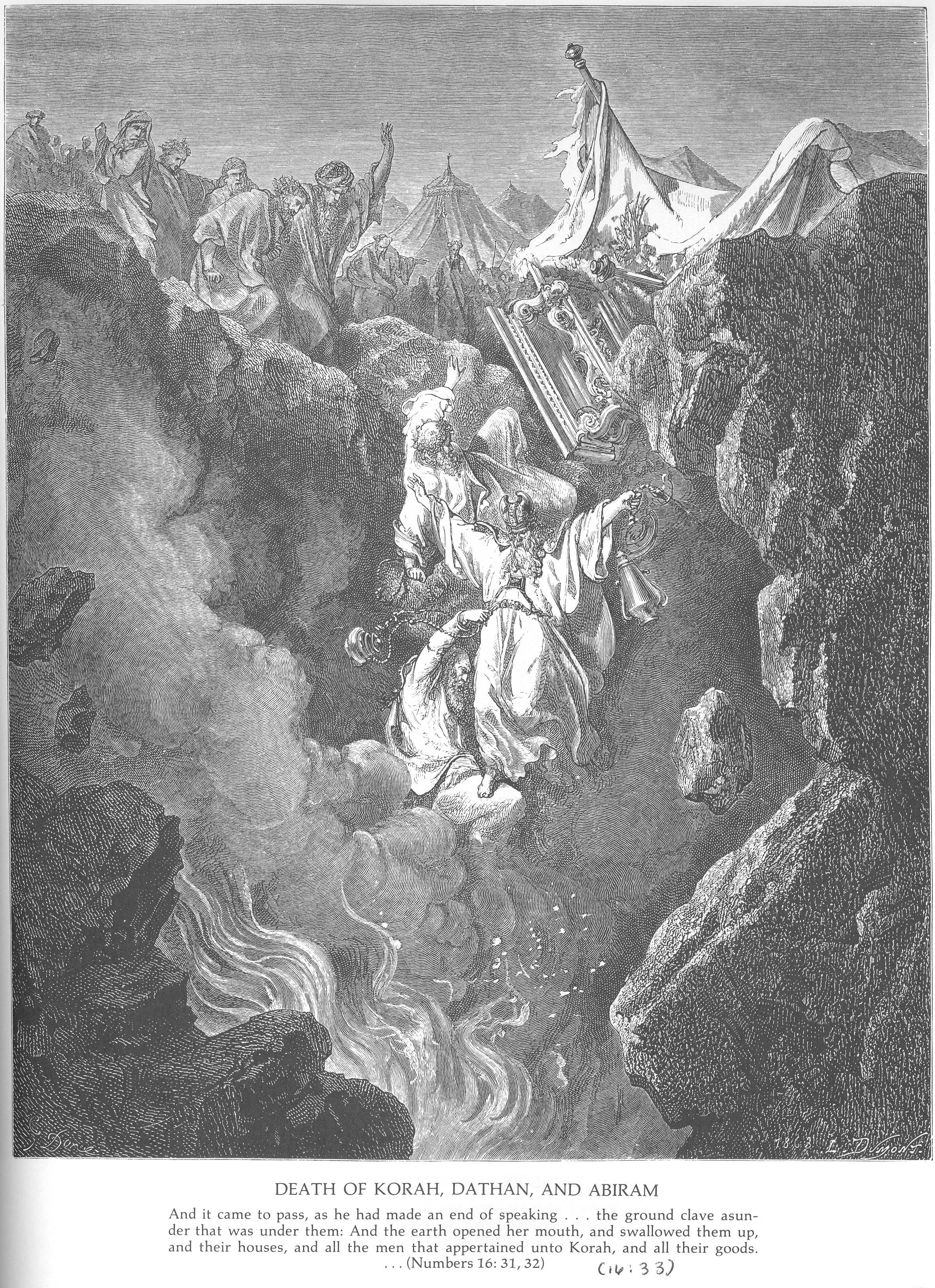
Uprisings: Over the course of a forty-year period, Moses and Aaron face two uprisings from the people, most of whom are getting pretty tired of waiting for god (and Moses) to deliver on their promises. The first uprising comes from the tribe Korah and is essentially a religious rebellion. God has favored the Levites and placed them in charge of the church, including anything to do with ministry or the tabernacle. Priests become the most powerful people in the tribe, capable of both forgiving sins and casting judgments, as well as treating the sick, etc. This doesn’t sit well with the Korah people, who feel left out; so they rise up against Aaron but are quickly struck down by god (indeed, god causes the earth to open up and swallow them). The second uprising is a political one, started by the Reubenites. Reuben was the first/eldest tribe and thus would normally hold some kind of honor among the tribes, but as has already been described, they were “prophesied” to fall in stature. Their uprising against Moses and Aaron, here, reflects their attempt to regain stature and some control, perhaps total control, of the tribes. They fail completely and will never rise to prominence again.
Racism, Jealousy, and Pride: One of the seemingly random parts of Numbers occurs in Chapter 12. Miriam and Aaron, though we are to understand it’s probably Miriam, become jealous of Moses’s wife, an Ethiopian woman (Zipporah – Exodus 2:21). We were told earlier that he took for a wife a Cushite/Arabian woman, and here we learn that Miriam, an Israeli woman, finds that problematic. Because of her reaction, which seems borne out of jealousy and pride (that a woman from another culture is wife to the most powerful Israeli leader), god afflicts her with leprosy and forces her out for 7 days. This is an interesting turn of events as, earlier, god had commanded his people not to inter-marry; however, he has also suggested numerous exceptions relating to “strangers” and “ignorance.” In other words, if someone not of the tribe can be taught and is willing to convert, then perhaps an exception can be made. This scenario would certainly apply to Moses’s wife. So, the lesson here must be not to let pride and jealousy control our opinions or actions (after all, god catches them “gossiping”).
Almost to The Promised Land: Moses and Aaron lead the Israelites around for another few decades, and after much disrespect from the Israelites, god essentially promises to make them wander for another forty years before they find a permanent settlement. Naturally, the people get pretty upset about this. While they settle in Kadesh for 38 years, so the people at least have a “homeland” of sorts, they can essentially see “the promised land” is within reach, and yet they cannot get there. One scout from each of the 12 tribes is sent out to explore and to discover if they have indeed reached the “land of milk and honey.” They have come pretty close, but this promised land is already inhabited, and by a powerful tribe; indeed, the people are so powerful they are described as “giants,” next to whom the Israelites seem like “grasshoppers.” Alas, while Joshua and Caleb, the heroes of the northern and southern tribes respectively, argue that the Israelites should push ahead and claim the land, they are overruled, and the promised land remains just out of reach. So close, yet so far away!
OTHER INTERESTING BITS
Hell Sheol: In this part of the bible, we see the first iteration of hell, which is called “Sheol.” When god strikes down the Korahs’ uprising, he casts the tribes into a pit. This pit is essentially the early Hebrew understanding of hell. It was not the hell many think of today, with a devil and torturous punishments; instead, it is a joyless nothingness, a dark pit where virtually everyone save for a select few, chosen by god, will go after death.
Ignorance: Among the many laws outlined in this part of Numbers (aren’t we done with those yet?) is another mention of how to treat strangers. This has become a common theme in the last two books of the bible, so we should probably take it seriously as a major philosophical tenant. In this case, god tells his people that the ignorance of strangers will be forgiven because, after all, they could not know any better. An interesting thought to kick around, particularly when we hear people making arguments about who will be “saved” or not (this is often reduced to who is or is not baptized, with “strangers” to Christianity getting the severely short end of the stick).
Heroes: Earlier, we were introduced to Joshua, a military hero from the northern Israeli tribes. In this section of Numbers, we are introduced to the southern tribes’ counter-part, Caleb. He hails from the Judean region, which has an interesting history (and future – including pending civil war), as one of the direct descendants of Israel (Jacob). Caleb and Joshua both wanted to enter the Promised Land and take it from the giants when all other tribes resisted. They lose that argument, but god rewards their faith with honor (a long and powerful succession).
Ready Player One by Ernest Cline
 Ernest Cline’s Ready Player One was first published by Broadway Books in 2011. I’ve had it on my “to be read” pile for about six years and finally decided to read it as part of my 2018 TBR Pile Challenge because the movie adaptation is releasing this March. The story is set in the United States, in the year 2044. The world is a bleak and dismal place. War, disease, and famine has become a world-wide problem. Economic, social, and government institutions have all but collapsed, and income inequality is at its greatest levels of all-time. Despite these problems, technological advancements have continued and the new ideal world is one called the “OASIS,” a virtual space unlike any we could currently imagine, where people can be whomever they choose. People can meet and get married in the OASIS, children go to school and earn their diplomas through the OASIS. It is a beautiful and powerful opportunity and, as it turns out, also deadly dangerous. When the creator of the OASIS dies, leaving behind an immeasurable fortune plus control of his company, an international, play-to-the-death quest begins. The first person who can solve each riddle and beat each boss, wins it all. Billions of dollars. Total control of the OASIS. But despite years and years of effort by individuals, groups, and corporations, the scoreboard remains empty. Empty, that is, until one lonely, poor, awkward geek named Wade Watts, AKA Parzival, figures out the first test and beats it. Then all hell breaks loose.
Ernest Cline’s style is effective in creating this science-fictionalized, virtual reality cross-over world, where people exist in two places simultaneously, sometimes as themselves but often not. He creates great tension in the idea of this universal split-personality, where everyone is someone else and where people are often only truly honest in the virtual world. The tone, too, is appropriate given the content and topic. Cline writes with a kind of frenetic irreverence that suits the abundance of geeky reference, nerd history, and 1980s pop culture that permeates the narrative. It is crystal clear who this story is about and what kind of audience will be attracted to it, though I don’t think the book will be appreciated only by self-professed geeks like me. This is because the prose itself is engaging, the pace is fast but not overwhelming, and the two worlds being created are delicately balanced and well-treated so that both seem believable, each with its own graces and terrors.
THERE ARE SPOILERS IN THIS SECTION. One of the most common and powerful critiques I’ve read from other reviewers about this book is its lack of characterization or problematic issue with stereotyping, and I get it; there might be some problems here. First, though, I want to start with what I think was a great strength for this novel’s characterization: the antagonists. The bad guys. They are so realistically normal, and so realistically evil, in that deeply human way, that I found them horrifying and compelling at the same time. What is the nature of their evil? Greed and a consuming desire for power. That said, some reviewers have pointed out weaknesses in character development, as when Wade Watts, having fallen in love with a girl, realizes that he is overweight and thus commences to get in shape (the process of which is described in just a few sentences so, sure, that’s a bit unrealistic). The rather fanciful and laughably easy weight-loss/fitness process aside, I’m not sure what the primary resistance is to that character’s impulse. How many of us, especially when we were young, tried to modify our appearance to impress a person we were interested in romantically? I appreciate that the “message” isn’t great, but is it unrealistic?
In addition, some have argued that Ready Player One is just another cis-white-het-male fantasy because the protagonist is a white heterosexual male. Do we need more diversity in fictional protagonists? Yes, particularly in the still male-dominated genres of science-fiction and fantasy. That said, I can’t fault a good novel and its interesting-if-flawed hero because of the fact that he is a straight white male. I also appreciated the diversity of his friendships (though, as I will discuss in a moment, reviewers have found plenty to fault there, too).
SPOILER AHEAD. I’ve also read critiques about the way Cline draws some of the diverse characters: Art3mis, Aech, Daito, and Shoto (OASIS character names for real people). Wade’s best friend in the OASIS is Aech, whose character is a heterosexual male but who, it turns out, is a black lesbian woman in real life. When the two finally meet, Wade is taken aback for a moment, and then they have a good laugh and carry on like the best friends they are. Some have taken issue with the fact that Wade was shocked by Aech’s real gender/race/sexuality, and others have said the character was drawn that way to tic all the “diversity” boxes. I simply didn’t read it that way. To me, seeing a straight white teenage male discover his best friend is a black lesbian woman, and then shrug it off as entirely unimportant, was a welcome and powerful statement, especially in the science-fiction genre which remains heavily heteronormative.
SPOILER AHEAD: There have been complaints, too, about Daito and Shoto being stereotyped by their race. There are a few pages where the two, plus Wade, repeatedly mention the word “honor” as in, was someone’s actions honorable or not. At first glance, I could see how this might come across as racist: you’re drawing Japanese characters and scripting them with cheesy samurai film clichés? But, wait. Daito and Shoto identify as samurai. They talk about honor because they care about honor. I’m not convinced that this is the author being lazy or making a racist mistake in narration or dialogue; to me, it is an expression of what is important to the two characters themselves, and it aligns with their backgrounds and their other actions throughout the novel. (But do Parzival and Art3mis both need to repeat it in the span of a few pages? No, probably not – I hear you, there.)
SPOILER AHEAD: Lastly, I’ve read criticisms about the love-interest, Art3mis, and the development of Wade’s and Art3mis’s relationship. Some have said she “succumbs” too quickly in the end, after rejecting his advances for so long. I’m again on the opposite side of this debate, I guess. The two were the top competitors in a prize that would change not just their own lives, but the entire world. Art3mis took the smart route, which was to focus on the tasks at hand. Wade couldn’t get past his feelings for her. What’s wrong with either of these responses? And who is to say that, once the competition ends, particularly given all that the two go through and all that Wade does for Art3mis, Aech, and the others in the real world, where all of their lives are at risk, the two wouldn’t come together after all?
Ultimately, I do agree that characterization is the weaker element for this novel. I think there’s enough to make us care about Wade’s success and about the fate of his friends, but there are also things that happen too quickly or perhaps go without enough explanation. Wade, too, makes some decisions which leave us wondering whether or not we should be thinking of him as a hero, but as Aristotle suggests, an effective hero is mostly admirable and to be rooted for, but he is not necessarily perfect.
The Huffington Post calls Ready Player One, “The Grown-Up’s Harry Potter.” This isn’t quite right. Although there are some comparisons between the Muggle/Wizarding world and the Real/OASIS worlds, and between the orphaned lives of Harry Potter and Wade Watts, Ready Player One is much more of a realistic science-fiction novel than it is a fantasy. As a child of the 1980s, and a self-confirmed geek, I saw much more of Stranger Things in this novel. It’s a dystopian thriller for contemporary society. And I loved it. Final Verdict: 3.75 out of 4.0
Ready Player One is Book 3 completed for my 2018 TBR Pile Challenge.
February Checkpoint #TBR2018RBR
 Greetings, Challengers!
Congratulations! We have reached the second checkpoint and I am pleased to announce that we have 30+ book reviews linked up in our Mr. Linky widget (below). Nice work! Can we get another 30 this month?
I’m also thrilled to announce the winner of the first Mini-Challenge: Fanda from Fanda Classiclit! Fanda won a book of her choice ($20USD) from The Book Depository. She chose a copy of Charles Dickens’s Hard Times, in honor of Dickens’s birthday. Enjoy, Fanda!
Question of the Month
What are your strategies for staying on top of your reading goals? Do you keep a bullet journal or other kind of planner? Do you aim for a certain number of books per week, per month? Do you just “wing it” and let whatever happens, happen? Tell us your secrets!
My Progress: 3 of 12 Completed / 2 of 12 Reviewed
So far, I’ve read 3 of my 12 required books. At the moment, I’m feeling pretty confident that I will be able to read and review all 14 books on my TBR Pile Challenge list this year! I’m pretty excited about that, although, to be honest, my two year-long projects have been suffering a bit since the semester started in mid-January. I need to stick to my commitment of pacing myself this year so that I can keep up with both of those projects (reading and writing) while also keeping up with my challenge list and other pleasure reading. It’s always a balancing act, isn’t it!?
Books Read So Far:
- The Hound of the Baskervilles (Completed 1/3/18)
- Aristotle’s Poetics (Completed 1/10/18)
- Ready Player One by Ernest Cline (Completed 1/1/18 – review coming)
How are you doing?

Below, you’re going to find the infamous Mr. Linky widget. If you read and review any challenge books this month, please link-up on the widget below. This Mr. Linky will be re-posted every month so that we can compile a large list of all that we’re reading and reviewing together this year.
Each review that is linked-up on this widget throughout the year may also earn you entries into future related giveaways, so don’t forget to keep this updated!
 Roof Beam Reader