Roof Beam Reader
Adam Burgess
The Circle Cast by Alex Epstein
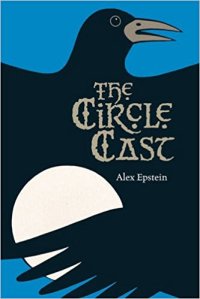 The Circle Cast: The Lost Years of Morgan Le Fay is an interesting retelling of the young life of Merlin’s arch-nemesis, Morgana. The story takes place in the late 400s; the Romans have fallen and Christianity is on the rise, reaching the superstitious, pagan-rich lands of Britain and Ireland. Young Anna, whose father is a powerful governor father and whose mother is the beautiful Ygraine, a timid witch, is forced to flee Britania from the wrath of Uter Pendgragon, who kills Anna’s father (with the help of the Enchanter) to be with and have a child by Ygraine. At sea, Anna is reborn as Morgan, and it is in Ireland that she is both enslaved and freed. She falls in love with an Irish warrior, uses her magical abilities and military background to help him rise to greatness, before leaving Ireland to return home and take vengeance upon Uter Pendgragon. Unfortunately, not everything goes according to plan, and Morgan, though victorious, will ultimately meet another great and legendary new leader instead.
The majority of the story is spent with its main character, Morgan. Fortunately, Epstein has drawn her to be rather interesting. There are inklings of Morgan’s adult personality, with which many familiar with Arthurian legend will be familiar, and Epstein allows these traits to manifest gradually and with believable impetus. Morgan’s youth and rise to power and self-discovery is satisfying, though more time spent on the magic itself (and understanding it/helping the readers to understand it) would have improved the relationship between reader and Morgan’s journey. The minor characters, too, are interesting – though many (like Uter) do not get as much page-time as one might expect. We get the sense, for instance, that Uter was a bad, power-hungry man, but there is only one hint as to why, and it comes near the very end. Still, others, like the various Irish clans, the lover-interest Conall, and the Christian colony (Salvatus, Befind, and Luan, in particular) are well-developed so as to supplement and progress Morgan’s story.
The story flows well because it is broken into logical segments and because the language and prose are conducive to the age range and maturity level of the story. Once into the story, it easy to become engrossed in it, wanting to know what will happen next. It took this reader, for example, just over two days to read the entire 300-page book. One criticism, however, is the relatively simple sentence structure. For middle grade readers this might be fine, but the story is more advanced than that, so the structure should be as well. At certain points, the short sentences certainly serves the purpose of creating a sense of action, as is true in general; however, much of the prose is made up of relatively short, simple sentences, when more complexity in the structure could have added substance, positive complication, and engagement.
One of the most interesting aspects of the book is not just that it is about Morgan Le Fay, which is a fascinating subject; in fact, one of the most interesting elements was the conflict between the budding Christian culture and the well-established but threatened pagan religions. Added with the various nationalities – the British, the Irish, the Saxons, and (in some relative respect) the Romans- the book becomes a fascinating culture study. It also tackles aspects of family, revenge, and forgiveness. This is certainly an appealing and creative re-imagining of the young life of Morgana, and one can only hope that it will be the first book in a series that will expand further on her life and times. The book’s website also contains some great background and historical information on Morgan and this era, which is a great benefit to readers who have a deeper interest.
Final Verdict: 3.0 out of 4.0
Announcing The Official 2018 TBR Pile Challenge!
 About:
After a two-year hiatus (while I was writing my doctoral dissertation – sorry!) I am pleased to announce that Roof Beam Reader’s official TBR Pile Challenge is back for the SEVENTH YEAR!
This challenge started when I realized I had some MAJOR issues with buying books but never reading them (not because I don’t read – but because I have such a book buying problem!) Year after year, books would sit on my shelf untouched, and I would end up reading newer ones first. I realized I was missing out on a lot of great books because I let them sit there gathering dust instead of reading them as I bought them.
The Goal: To finally read 12 books from your “to be read” pile (within 12 months).
Specifics:
1. Each of these 12 books must have been on your bookshelf or “To Be Read” list for AT LEAST one full year. This means the book cannot have a publication date of 1/1/2017 or later (any book published in the year 2016 or earlier qualifies, as long as it has been on your TBR pile). Caveat: Two (2) alternates are allowed, just in case one or two of the books end up in the “can’t get through” pile.
2. To be eligible, you must sign-up with the Mr. Linky below. Link to your list (so create it ahead of time!) and add updated links to each book’s review. Books must be read and must be reviewed (doesn’t have to be too fancy) in order to count as completed.
3. The link you post in the Mr. Linky below must be to your “master list” (see mine below). This is where you will keep track of your books completed, crossing them out and/or dating them as you go along, and updating the list with the links to each review (so there’s one easy, convenient way to find your list and all your reviews for the challenge). See THIS LINK for an idea of what I mean. Your complete and final list must be posted by January 15th, 2018.
4. Leave comments on this post as you go along, to update us on your status. Come back here if/when you complete this challenge and leave a comment indicating that you CONQUERED YOUR 2018 TBR LIST! Every person who successfully reads his/her 12 books and/or alternates (and who provides a working link to their list, which has links to the review locations) will be entered to win a $50 gift card from Amazon.com or The Book Depository!
5. Crossovers from other challenges are totally acceptable, as long as you have never read the book before and it was published before 2017!
*Note: You can read the books on your list in any order; they do not need to be read in the order you have them listed. Audiobooks count. Graphic novels count. Poetry collections? Essay collections? All good! As you complete a book – review it, go to your original list and turn that title into a link to the review. This will keep the comments section here from getting ridiculously cluttered. For an example of what I mean, Click Here.
Monthly Check-Ins: On the 15th of each month, I’m going to post a “TBR Pile Check-In.” This will allow participants to link-up their reviews from the past month and get some recognition for their progress. There will also be small mini-challenges and giveaways to go along with these posts (Such As: Read 6 books by the June Check-in and be entered to win a book of your choice!) I’m hoping this will help to keep us all on track and make the challenge a bit more engaging/interactive. I started these mini-challenges in 2014, and I think they were a great success, so I am continuing them this year!
Chat: On Social Media, please use #TBR2018RBR
My 2018 TBR Pile Challenge List:
- Poetics by Aristotle (335 BCE)
- Homegoing by Yaa Gyasi (2016)
- Kindred by Octavia Butler (1979)
- Gemini by Michel Tournier (1998)
- The White Album by Joan Didion (1979)
- Pudd’nhead Wilson by Mark Twain (1894)
- Don Juan in the Village by Jane Delynn (1990)
- The Courage to Teach by Parker Palmer (1997)
- The House of the Vampire by George Sylvester Viereck (1907)
- The Hound of the Baskervilles by Arthur Conan Doyle (1901-2)
- A Guide to the Good Life: The Ancient Art of Stoic Joy by William B. Irvine (2008)
- The Ascent of Woman: A History of the Suffragette Movement by Melanie Phillips (2004)
Alternates:
- Good Without God by Greg M. Epstein (2009)
- Ready Player One by Ernest Cline (2011)
Sign-Up to take the 2018 TBR Pile Challenge:
The Hollow Hills by Mary Stewart
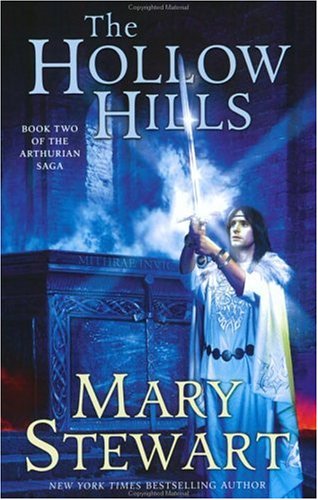 The second installment in Mary Stewart’s Merlin Trilogy picks up just where book one, The Crystal Cave, left off. Young Merlin has assisted High King Uther Pendragon to bed Lady Ygraine, and a child has been conceived. Pendragon declares to Merlin and Ygraine that he will not claim the child as his, but that he also will not harm him (in case Uther has no other sons, the boy must be prepared and safe). Merlin is charged by Pendragon and Ygraine to take their son, Arthur, into hiding and to prepare him for his birthright, without allowing Arthur or anyone else know who he truly is and what might become of him. Emrys is given to a neighboring minor king to be cared for and raised in noble fashion, but with the burden of being labeled a bastard, as Merlin himself was labeled. As the boy grows, Merlin has taken an expedition abroad, following the path that his god has laid for him, in search of an ancient and powerful sword, Caliber (Excalibur). After his journey is completed, Merlin returns to England, where he disguises himself as a caretaker of a small chapel near to Arthur’s home. Eventually, Arthur (known as Emrys) meets the magician Myrrdin one day by “chance.” Merlin teaches the boy what little he can of magic, but also all he knows of history, culture, and legend. The time comes when Uther’s health begins to fail him and, left without a son, he must call the boy to his side.
Characterization in this particular installment of the series is more deeply explored and more effectively delivered than in its predecessor. Two major characters from The Crystal Cave, Merlin and Uther, are afforded interesting growth and development. Uther’s daughter, Morgause, also has a notable presence and, though explored rather briefly, is clearly presented as a character to watch: mysterious, cunning, and dangerous. King Lot, Uther Pendragon’s most powerful rival, and other minor characters, like Bedwyr, Arthur’s trusted friend (fashioned after Lancelot, perhaps?) also add exciting and meaningful levels to the plot, most intriguingly, at times, when they are not directly involved but referenced or alluded to. Arthur himself, as Emrys, is drawn quite well; there is something innately regal about him, though he is growing up as an orphaned boy in a relatively low-royalty home. Comparisons to Merlin and Ambrosius (Merlin’s father / Arthur’s uncle and former High King) do not go unnoticed; even as a child, Stewart writes his character in such a way as to believe that this boy could one day be a powerful and revered leader. The handling of the crux, where Emrys discovers that he is Arthur, son of Uther, is also quite nicely done and gives the reader further appreciation of Arthur’s and Merlin’s characters.
As with The Crystal Cave, I was not entirely enthralled with the story, nor was I truly excited by the magical elements, which I found to be rather lacking for a Merlin story. Still, Stewart is a good writer and a good storyteller, both of which are necessary for the effectiveness of fantasy stories in particular. Because she draws Arthur’s character so well, and because of the many ways she re-imagines the more recognizable elements of the Arthurian legend (such as the sword in the stone), The Hollow Hills remained interesting almost despite itself. Had I not been a fan of the legend already, I may not have appreciated the book as much as I did; however, even readers who are not familiar with Arthurian legend will still appreciate how well the story is written; the pace is conducive to the experience, the language is appropriate and adds fascinating elements in its own right, and the prose is fluid in an enchantingly mystical kind of way (imagine taking a lazy raft down a slow-moving river, but with vividly wonderful views of a vibrant and blooming forest on either side).
It is clear that Stewart does her research. Not only does she know the legend inside-out and back-to-front, but she also takes the time to appreciate the difficulties that readers might have in interpreting the more elusive facts or in keeping track of ancient, extinct locations and kingdoms. She recreates the story in a more linear, accessible way, but with all of the deeper, permanent elements in tact (though changed to fit a modern, skeptical reader). Stewart does away with the majority of the true fantasy elements and reinterprets the magic of Merlin as legend which is based in fact and which grew exponentially over time; the reader witnesses perfectly reasonable, scientific, and creatively man-made events give birth to the well-known stories which have stimulated young minds and imaginations for centuries. In a way, it could almost be compared to an atheist’s reading of the Bible, wherein foundations of fact would be located and re-written to explain the more divine elements. It is a commentary on the human experience, on superstition, and on man’s struggle between his desire for fact and his fascination with the inexplicable.
Final Verdict: 3.25 out of 4.0
Notable Quotes:
“To remember love after long sleep; to turn again to poetry after a year in the market place, or to youth after resignation to drowsy and stiffening age; to remember what once you thought life could hold, after telling over with muddled and calculating fingers what it has offered; this is music, made after long silence.”
“Every life has a death, and every light a shadow. Be content to stand in the light, and let the shadow fall where it will.”
“I was left kneeling there in the choking cloud of dust, with the shrouded sword held fast in my filthy and bleeding hands. From the apse, the last of the carving had vanished. It was only a curved wall, showing blank, like the wall of a cave.”
“You and I between us, Merlin, we will make such a king as the world has never known.”
November’s Classic: The Brothers Karamazov

As we wrap-up October and our latest classic, Tony Kushner’s Angels in America, it’s time to start planning for November! This time, I chose a new-to-me book that has been on my TBR pile (and my Classics Club list) for years . . . The Brothers Karamazov by Fyodor Dostoevsky!
This is a long book, and the Russians always seem intimidating, but what I have read of Dostoevsky has always qualified as a “page-turner,” to me, so I’m hoping a month is more than doable. We Americans also have the Thanksgiving holiday in late-November, so hopefully anyone participating can spend a few of those days reading this classic tome.
Don’t forget: We have a Goodreads group! And we’re using #CBAM2017 to chat on Twitter, Facebook, and Instagram.
About the Book:
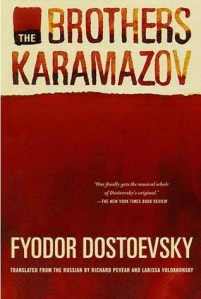 The Brothers Karamazov is a murder mystery, a courtroom drama, and an exploration of erotic rivalry in a series of triangular love affairs involving the “wicked and sentimental”
Fyodor Pavlovich Karamazov and his three sons―the impulsive and sensual Dmitri; the coldly rational Ivan; and the healthy, red-cheeked young novice Alyosha. Through the gripping events of their story, Dostoevsky portrays the whole of Russian life, is social and spiritual striving, in what was both the golden age and a tragic turning point in Russian culture.
This award-winning translation by Richard Pevear and Larissa Volokhonsky remains true to the verbal inventiveness of Dostoevsky’s prose, preserving the multiple voices, the humor, and the surprising modernity of the original. It is an achievement worthy of Dostoevsky’s last and greatest novel.
Schedule:
- November 1st: Begin reading
- November 15th: Mid-point Check-In
- November 30th: Final Thoughts
Feel free to read at your own pace, post at your own pace (or not at all), and drop by to comment/chat about the book at any point. The schedule above is just the one I plan to use in order to keep myself organized and to provide some standard points and places for anyone who is reading along to get together and chat.
The Folio Society’s Mansfield Park!
Exciting news, dear readers!
 Listen. You all know by now that I’m a huge fan of Jane Austen and a huge fan of The Folio Society. I’ve been beyond excited by the fact that The Folio Society has been slowly releasing new, illustrated editions of every Austen novel.
Today, I’m so excited to announce that MANSFIELD PARK has now been published, which also means the complete Austen set is now available!
O frabjous day! Callooh! Callay!
Jane Austen’s Mansfield Park
Published in 1814, Mansfield Park marked a conscious departure from Austen’s previous novels. While Sense and Sensibility and Pride and Prejudice were drafted in the 1790s, Mansfield Park was composed between 1811 and 1813, when Austen was in her late thirties. The work of a practiced writer, this is Austen’s Bildungsroman: the only one of her novels to follow her heroine from a young girl into womanhood, and to trace the development of her moral consciousness.
 At just ten years old, Fanny Price is sent from her poor Portsmouth home to live with the family of her wealthy uncle, Sir Thomas Bertram, in the vast grandeur of Mansfield Park. Timid and fragile, Fanny is neglected, belittled and constantly reminded of her lowly status. Her only comfort is the kindness and attention shown by her cousin Edmund, and her sole strength the sense of her own moral integrity. But this strength is tested when the alluring and sophisticated Henry and Mary Crawford arrive, and Fanny must watch her cousins – even her beloved Edmund –succumb to their seductive charms. As Lucy Worsley writes in her erudite introduction, ‘Mansfield Park is complex, mature Austen’, in which familiar themes of unrequited love and social propriety are played out against the backdrop of a nation in transition, one that – in reaction to the Napoleonic Wars and the French Revolution – is responding to ‘the great questions of the age: slavery, religion, wealth, right, wrong’.
This final volume in Folio’s celebrated Jane Austen series is illustrated by Darya Shnykina, whose beautifully textured illustrations won her the commission in the Book Illustration Competition 2017. Like Austen’s heroine, student Shnykina’s work displays a maturity beyond her years; her sensitive images convey a delicacy of atmosphere and expression entirely suited to Austen’s most subtle, discerning novel.
Special Note: I’ve just been in communication with The Folio Society, and I’ve been told that I can whisper this in your ear: Keep your eyes peeled for another visit from The Folio Society in November, during Thanksgiving Week (US). There just might be a special holiday gift available to one of my readers. (subtle, right?)
 Product information
Bound in metallic buckram blocked with a design by the artist. Set in Baskerville with Trajan display. 432 pages.
Frontispiece and 7 color illustrations. Blocked slipcase. 9½ ̋ x 6¼ ̋.
For seventy years, The Folio Society has been publishing beautiful illustrated editions of the world’s greatest books. It believes that the literary content of a book should be matched by its physical form. With specially researched images or newly commissioned illustrations, many of its editions are further enhanced with introductions written by leading figures in their fields: novelists, journalists, academics, scientists and artists. Exceptional in content and craftsmanship, and maintaining the very highest standards of fine book production, Folio Society editions last for generations.
 Roof Beam Reader