Roof Beam Reader
Adam Burgess
Lullaby by Chuck Palahniuk
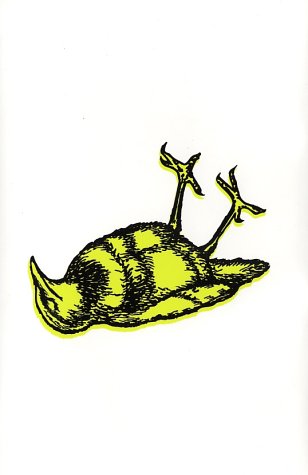
Chuck Palahniuk’s Lullaby asks the question: what would you do if you discovered the power to make you a god? Suddenly, the command of life and death, sickness and health, growth and destruction, is in your hands. Do you want it? Will you use it? Can you control it?
Carl Streator, the main character and narrator, is a journalist who stumbles upon the mysterious powers of a Culling song, an ancient spell that, when read aloud or focused on in the mind, has the power not only to put people to sleep but also kill them. As he discovers the vast reach of the song, he meets another, Helen Hoover Boyle (a real estate agent), who knows this secret and who has been using it to assassinate people all over the world. The two quickly come together, both hoping to find the Book of Shadows, an ancient spell book where the Culling song originated; Streator so he can destroy it and Boyle so she can become even more powerful and invincible. The two will be hunted down by time, by witches, by police detectives, and by each other, until the Book of Shadows falls into the wrong hands and, suddenly, the two realize they must become the hunters.
In Palahniuk’s books, characterization, I find, is typically the weaker element, much less dynamic than the prose and plot. That is not the case in Lullaby. One of the most fascinating elements in this book is its characterization; how will different people react to the power they find? What do our actions tell us about human nature and the nature of power? Perhaps the reason the characters are so interesting is because they are based on people in Palahniuk’s own world; perhaps the reason their stories are so powerful is because Palahniuk wrote this book when mired in a deep, personal struggle (his father and father’s girlfriend had recently been murdered by the woman’s ex-husband), which directly relates to the plot of the story: How do we decide who lives and who dies? Does any one of us, regardless of circumstances, have authority over another’s fate? All-in-all, the dark personal circumstances of Palahniuk’s life create great tension and allow for extraordinary character growth and development. Each individual in the book, from the main characters, Streator and Hoover, to their friends and rivals, Mona and Oyster, down to a necrophilia-obsessed paramedic, has a back story, a history, and a purpose, which makes them all equally interesting and dynamic, particularly in relation to the others.
There is no doubt that Palahniuk is a master of the macabre. He explores the darkest, most dangerous elements of human nature, in transgressive style. The book is structured by a temporal ending, which frames the story and is interspersed throughout the traditional, linear plotline. As with most Palahniuk books, there is a plot twist near the end of the story, which brings the temporal ending into focus with the linear plot. The temporal segment chapters are italicized, which creates an enigma of sorts, as the reader cannot be entirely sure whether or not the narrator of both the present and future stories is the same person, or even whether or not the future narrator is alive (thus putting the “present-linear” plot into a past tense, without expressly doing so in the linear style). The story progresses quickly and is well-paced, but the plot twist at the end, which was hinted at throughout the story by those temporal-future segments, could likely have been achieved without those interruptions.
The best thing about great books is that they are more than just a good story. While Lullaby is entertaining, mysterious, and bizarre, it is also highly psychologically exploratory. The story is meant to make the readers think: think about power and how one should (or would) wield it; think about capital punishment, its merits/effectiveness or lack thereof; think about sacrifice, self-worth, penitence, forgiveness, mourning, and recovery. So much of what happens in this story is deeper than the story itself, but that these themes and elements are delivered within the realm of such an interesting, disturbing, and quite terrifying story just makes it all the better. The gothic writers would be proud of what Palahniuk achieves here.
Final Verdict: 3.75 out of 4.0
Notable Quotes:
“Old George Orwell got it backward. Big Brother isn’t watching. He’s singing and dancing. He’s pulling rabbits out of a hat. Big Brother’s busy holding your attention every moment you’re awake. He’s making sure you’re always distracted. He’s making sure you’re fully absorbed. He’s making sure your imagination withers. Until it’s as useful as your appendix. He’s making sure your attention is always filled. And this being fed, it’s worse than being watched. With the world always filling you, no one has to worry about what’s in your mind. With everyone’s imagination atrophied, no one will ever be a threat to the world.”
“When ancient Greeks had a thought, it occurred to them as a god or goddess giving an order. Apollo was telling them to be brave. Athena was telling them to fall in love. Now people hear a commercial for sour cream potato chips and rush out to buy them, but now they call this free will.”
“You turn up your music to hide the noise. Other people turn up their music to hide yours. You turn up yours again. Everyone buys a bigger stereo system. This is the arms race of sound. You don’t win with a lot of treble. This isn’t about quality. It’s about volume. This isn’t about music. This is about winning.”
“The best way to waste your life is by taking notes. The easiest way to avoid living is to just watch.”
“These people so scared of silence. These are my neighbors. These sound-oholics. These quiet-ophobics.”
The Blessings of Liberty

What do these all have in common?
- Religious fanatic who slaughters people with a gun.
- Political ideologue who slaughters people with a gun.
- Racist who slaughters people with a gun.
- Mentally ill person who slaughters people with a gun.
- Homophobe who slaughters people with a gun.
- Seemingly “normal” person who snaps and slaughters people with a gun.
- Child who accidentally kills himself or someone else with a gun.
- Individual who commits suicide with a gun.
I’m done with the pitiful attempts at injecting false nuance into this debate. I’m done with the lazy, cowardly responses that “anyone who wants to get a gun will.” I’m done with legislators who want to legislate everything else about our lives but refuse to legislate the one thing robbing us of life itself.
Yes, there are any number of factors that could contribute to any of these incidents. But there is ONE result made more possible by ONE factor. Easy ACCESS to an overabundance of unnecessarily lethal weapons.
They say the second amendment is sacred, nevermind how outdated. But what about our “Unalienable rights” to life, liberty, and the pursuit of happiness? What about the Constitution’s first purpose: to “insure domestic Tranquility . . . promote the general Welfare, and secure the Blessings of Liberty to ourselves and our Posterity”? Are we tranquil? Are we well and safe? Did the children of Newtown receive their Blessings of Liberty?
It is past time to demand that the Second Amendment no longer speak for the entire Constitution.
It is past time to demand that our lawmakers respect OUR will and speak OUR voice, rather than perform at the pleasure of the NRA and other powerful moneyed interests.
It is past time to demand that the 97% of the population who want to see progress on this are freed from their bondage to the other 3%.
It is past time that we start to value our right to survive more than we value someone else’s right to murder us.
It can be done. It has been done in other places. We in “the home of the brave” need to grow a spine and do it here.
It is time for courage.
Every Day by David Levithan
 Can you imagine yourself not as a physical being, but as an ethereal entity – a formless consciousness that floats through life from day-to-day, always looking like someone different but always knowing yourself to be the same?
Every day since birth, A wakes up in a different body. Sometimes he wakes up as a boy, sometimes she wakes up as a girl. A has no physical or biological sex, instead needing to adapt to the sex of the host body where s/he resides any particular day. S/he is capable of accessing the memories of the host bodies and can also allow (or not) that host to remember what A experiences on the day of his visit, though s/he usually chooses to block these memories so that the host will not feel as if they have been possessed or invaded. Each night, when A falls asleep in one body, s/he knows that s/he will wake up in the morning as someone entirely different.
A does have a personality, consciousness, and sense of self that is entirely individual, though s/he has no physical form, and A carries this individuality into each new day and every new body. This is the story of 40 days in the life of A – perhaps the most important 40 days that s/he will ever experience. S/he learns that s/he is perhaps not alone in this very unique experience – there may be others out there who are doomed (or blessed?) to exist only in others’ bodies. A also falls in love, for the second time, and must learn how to make a relationship work under such extraordinary circumstances or s/he must choose to make the ultimate sacrifice, for someone else’s happiness.
The two main characters are A and Rhiannon, 16 year olds who are on their own paths to self-discovery and whose encounter with each other will set the trajectories of their lives in new directions. Through A, we also witness, on the surface, the lives of dozens of other teenagers: boys and girls; popular kids and nerds; athletic kids and beautiful ones; kids who are blind, fat, depressed, alcoholic, addicts, or suffering from ADHD. We also get glimpses of their families and friends, though their stories are always in the background as A navigates their lives for one day, in pursuit of his own. The only other recurring characters include two of A’s former hosts, Justin (Rhiannon’s boyfriend and the way A comes to meet her – awkward!) and Nathan, whom A has left, perhaps purposely, with lingering feelings of his “possession” and who ultimately introduces him to Reverend Poole, the man who will change A’s perspective forever. Levithan’s primary characters are interesting individuals, as are the host bodies, all of whom are believable teenagers with varied personalities and circumstances. Viewing the characters through A, who essentially is each of them (including Rhiannon) at one point or another, creates a unique experience for the reader.
 The structure of the book, too, is interesting, though not entirely unique. It is, in a way, a journal-format. Each small chapter is one day in the life of A and, indeed, the chapter titles correspond to the chronological day (such as Day 6014) in A’s life. This structure, while not entirely original, is absolutely appropriate for the type of story being told and is suitable to A’s narrative style. Levithan’s writing style, too, his prose and language, are appropriate to the age and maturity level of the narrator and also match the oftentimes didactic nature of the story. It is lofty but grounded, well-paced but reflective.
One criticism of the book is that it is at times preachy. This point is well-taken and I do agree with those who find certain elements, such as the narrative arguments for social and sexual equality, not just pointed, but sometimes heavy-handed. Levithan is an issue writer, though, and as another reviewer has aptly mentioned, issue writers are interested in making their point and, in fact, making points is necessary to their purpose. The fact that I agreed with most of the points Levithan was making (gender equality, love of the person not of the sex, etc.), made the story more interesting for me, but I can certainly see how readers who struggle or disagree with such sentiments might find the “lecture” portions of the narrative a bit jarring.
My primary point of contention comes from a particularly disturbing element of the story, which is, I believe, both indicative of the narrator’s personality but also, though I am usually reluctant to make these arguments, of the writer’s bias. Throughout the book, the narrator makes a point of being highly understanding and empathetic. Since s/he has spent his (I will stick with gendered-male pronoun from here on out, as that is ultimately how I perceived the narrator) life living inside of different bodies, it is understandable that he would be a more enlightened individual. He has been male and female, blind, deformed, ugly, and everything in-between. In each case, he makes the argument for empathy and compassion – that we should love ourselves and each other as we are and that each of us suffers from our own demons which might affect the way we treat ourselves and the way we interact with the world. A is able to build his relationship with Rhiannon, another equally enlightened young woman, whether he be in the body of a beautiful black girl, a beefy metal head, or a stringy track jock. The point is well-taken: be yourself, try to show others what is on the inside, and learn to accept others for who they truly are, not just for what they look like.
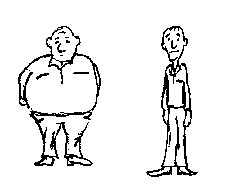 But then we get near the end of the book and A wakes up in the body of an obese boy. The body weighs 300 pounds and suddenly the tone changes dramatically, for the worse. This chapter, and the next one, is devoted largely not to acceptance or understanding, but to feelings of disgust and anger. It is this body, and only this one, that A is ashamed to show Rhiannon. It is this body that A blames for what it is. Unlike the addicts or depressed teenagers, whom A tries to empathize with and thereby get the reader to think more deeply about, this fat kid gets nothing but criticism – A even tries to “access” the reasons why he might be so fat, but finds only laziness as the cause. Then, after deciding to meet with Rhiannon anyway, it is after this particular meeting that Rhiannon concludes she can no longer engage in this kind of relationship, because she cannot build a relationship with someone who never looks the same. Rhiannon struggles with this all along, but with all of the other bodies, male and female, tall and short, pimpled, hairy, or beautiful, Rhiannon accepts the body. Until the fat, sweaty boy shows up and everything changes. It would be easy to say that this is just a teenage insecurity – that the author is trying to make a statement about the judgmental nature of people and youths; however, throughout the book, both A and Rhiannon, as I have already mentioned, are incredibly enlightened and accepting of all people and situations. Why, then, is this one person so different – so disgusting? Unfortunately, I feel it is a deeper bias coming from the author. He makes a point of making points in this book, as in all of his books. It would be naïve and unfair to think, then, that this, too, is anything other than his making a point: do not be fat. Fat comes from being lazy. There are no psychological or emotional reasons for obesity, it just means you eat too much and do too little. It is outrageous. Not since reading Atlas Shrugged have I been so angered by a particular element of a particular book and it saddens me that this perspective comes from Levithan who is, otherwise, a very positive, compassionate writer.
Ultimately, though, I did love this book. I found the premise incredibly interesting and thought the social/gender politics were expressed in a unique way. The story moves at a great pace, the characters and their stories are fascinating and believable. There is a fantasy element to the story which comes into play late in the book, when Reverend Poole and A finally meet, but the narrative is still grounded firmly in reality. Had it not been for the one bizarrely glaring prejudice mentioned in the paragraph above, I could have easily found this to be a perfect read. As it is, I found it, still, to be a wonderful one. Highly recommended.
Notable Quotes:
“Kindness connects to who you are, while niceness connects to how you want to be seen” (56).
“You shouldn’t have to venture deep down in order to get to love” (72).
“Tomorrow . . . a little less than a promise, and a little more than a chance” (97).
“I see no sin in a kiss. I only see sin in the condemnation” (223).
“Ultimately, the universe doesn’t care about us. Time doesn’t care about us. That’s why we have to care about each other” (320).
Roof Beam Renaissance
“Whatever your labors and aspirations, in the noisy confusion of life, keep peace with your soul.” –Max Ehrmann

October 1st always brings with it some psychological change in me. Sometimes it’s a permanent, long-term thing. Other times, the feeling fades rather quickly. Interestingly, this year, I’ve felt the day coming for a long time. I’ve been counting down to it for weeks, since before the first day of autumn, even. I think part of it is that the first day of fall is like the first day of spring, for me. It is my time of rebirth, renewal, and rejuvenation. This year, that takes on, again, a heightened meeting.
Less than two months ago, my partner and I moved across country, about 1,800 miles from Chicago, where we had been living for the last 9 years. After finishing my Ph.D. in May, I accepted a position as an English professor at a large college in the American southwest. It has been a wild, exciting, thoroughly exhausting (and quite nerve-wracking, to be honest) time, but so far, we both love it here. It is hard to be away from friends, and family, though. I’ve become even more reliant on Facebook and Twitter, for which I was already a junky, and in our culture and country’s current state, this is not a good thing.
So, as October has approached, and as the mess of moving and settling in has reduced from a boil to a simmer, I’ve begun to think more and more seriously about getting back to blogging, and about what that would mean since a year ago, the last point at which I was making a serious effort. Would I return to Roof Beam Reader? Create something new? Would I go back to blogging mostly book reviews and hosting events? Or would I focus on my creative writing and journaling, on politics and current events?
For a long time, I elevated book blogging above all else and left other things for other places. But that always made me feel overwhelmed and schizophrenic. In the last few weeks, as I’ve anticipated my “return” to blogging, I realized I needed two things: First, I needed to stay at Roof Beam Reader. Maybe it’s bizarre, but it feels to me like an important part of my identity. Second, my blog needed a kind of renaissance, a re-alignment with my current place and perspective. That being said, a new vision has emerged.
Going forward, Roof Beam Reader will still be mostly (51% or more?) about books. I’ll still be writing my personal reviews, posting fun memes, answering surveys, and maybe even joining some events like the upcoming Dewey’s 24-Hour Readathon (10th anniversary!). I still read like a mad person, though my tastes have altered slightly, and I once again need a space where I can keep track of my thoughts. I’ve been breezing through books without reflecting on them and, for me, this is almost sacrilegious. Some of the books I’ve read in the last few months that have gone without reflection include:
What Happened by Hillary Rodham Clinton Death Comes for the Archbishop by Willa Cather Charlie and the Chocolate Factory by Roald Dahl At the Edge of the Universe by Shaun David Hutchison The Subtle Knife and The Amber Spyglass by Philip Pullman Traffick by Ellen Hopkins Bluebeard by Kurt Vonnegut Brown Girl Dreaming by Jacqueline Woodson The Virgin Suicides by Jeffrey Eugenides Murder on the Orient Express by Agatha Christie History is All You Left Me by Adam Silvera Brave New World by Aldous Huxley We are the Ants by Shaun David Hutchison The Inexplicable Logic of My Life by Benjamin Alire Saenz.
I have to stop myself there because this list only takes me back to mid-July. My last “new” reviews were posted on July 8th as mini-reviews (a feature I will probably continue because I’ve learned, I hope, to be less strict with myself; sometimes I don’t want or need to write a complete review for a particular book, but I could still get a paragraph or two down). On a positive note, even if I did not review these books, I did mark them all as 4 or 5 out of 5 on Goodreads, which means at least I still know my tastes!
One thing I will probably do less of in regards to the book side of blogging is participating in challenges. When I first started, I absolutely loved doing challenges. I also had the time for them. Now, that’s not so much the case. I might join one every now and again, but I have to learn to limit myself to the “easy” levels. I was always a competitive student and am still a competitive professional in many ways, and this habit flows over into blogging. When I am “challenged,” I want to win. But that isn’t fun for me anymore, not when it comes to reading. I want to explore and enjoy, I want to meander down the walkway of my reading choices, joyfully taking it all in and deeply appreciating every experience, rather than devouring simply to consume. This is also why, in the last couple of years, my Goodreads challenge lists have shrunk from 70 or 80 books per year to something like 50 or 60. If I beat it (and I always do), that’s great! But I don’t want to feel the need to hit it. Last year, I ended up reading a bunch of graphic novels in the final few days of December in order to hit my goal. How silly! That being said, I’m very strongly considering bringing back the Official TBR Pile Challenge. I’m leaning heavily toward yes at the moment. That challenge is flexible and rather small, but also so special to me and this blog, and its readers.
In addition to books and reading, I plan to talk quite a bit about politics and current events. Or, if not quite a bit, whenever I feel the need. I’ve only posted once in a rare while on issues that “mattered” because I was worried about my audience and tiring them out or scaring them off. I have to keep this place mine, though, and I have to break from the rapid-fire, highly-charged, completely insufficient platforms that are social media when thinking about or writing about such important issues. I feel social media has done a great deal of damage in the way we communicate (or not) today, and the way we treat each other. I recently read an article in the The New York Times titled, “The Dying Art of Disagreement.” I disagreed with some of the points the author makes, such as his total dismissal of identity politics, but in general I found myself nodding appreciatively through it. We don’t know how to disagree anymore, largely because we do not look each other in the eye when we debate and because we do not value liberal education that once taught us to listen and consider before speaking; to find common ground where possible, rather than striving only to be right. I want to be more intentional in my own arguing, now, particularly because I teach my students to do so. Facebook and the like – I’m rather done with you, my dears.
Lastly, I plan to incorporate more of my personal and creative writing, here. I doubt I’ll share anything I plan to publish in some other venue, for obvious reasons, but I do consider myself a writer and am starting to understand what kind of writer. I need the practice, and I need some steady, routine, and mostly enjoyable mode. What’s better than my own writing space? In addition to playing around with fiction and poetry, I’ll probably focus quite heavily on non-fiction, particularly the personal essay. I think that’s my niche, when it comes down to it, though I didn’t realize this until about 6 months ago. Odd, considering that’s about 90% of what I’ve always written. I just figured, if I’m not already a famous person, who would want to read what I have to say, even if I sometimes manage to say it well?
I think I do have a lot to say, though, especially about what’s happening in our country right now, in our culture and our humanity. I also want to say things about books and music, about my new adventures in a new state and new region, about education and travel, and about my own little life and what it means to me. I had been, no, I still am self-conscious about writing and speaking, and what my solitary voice means or matters in the grand scheme of things. But Vaclav Havel once wrote, only “by throwing yourself over and over again into the tumult of the world, with the intention of making your voice count – only thus will you really become a person.” I’ve always been a fan of Madeline L’Engle’s statement that “a self is always becoming.” In lessons to my students, I often pair that sentiment with what E.M. Forster said about writing: “How can I tell what I think until I see what I say?”
Maybe if I throw myself into the world by observing it and writing about it, I will continue to grow and continue to understand myself.
October’s Classic: Angels in America #CBAM2017

Welcome to October! Last month, we read Death Comes for the Archbishop by Willa Cather, which I found to be quite beautiful (no surprise – I’m a big Cather fan!). A new month is here, which means a new book! This time, I chose one to correspond with national and international LGBT History/Pride month. Drum-roll, please! . . . Angels in America by Tony Kushner!
We will be reading both Part One and Part Two, so if you can find an edition that has both, all the better! I’ve read this play a few times already, but it’s really quite an experience, which is why I added it to the 2017 list of Classics for our club this year. I cannot wait to get started on it again!
Don’t forget: We have a Goodreads group! And we’re using #CBAM2017 to chat on Twitter, Facebook, and Instagram.
About the Book:
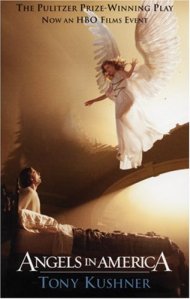 In two full-length plays, “Millennium Approaches” and “Perestroika,” Kushner tells the story of a handful of people trying to make sense of the world. Prior is a man living with AIDS whose lover Louis has left him and become involved with Joe, an ex-Mormon and political conservative whose wife, Harper, is slowly having a nervous breakdown. These stories are contrasted with that of Roy Cohn (a fictional re-creation of the infamous American conservative ideologue who died of AIDS in 1986 and who, it should be noted, was a mentor to our current POTUS) and his attempts to remain in the closet while trying to find some sort of personal salvation in his beliefs.
One of the most honored American plays in history, Angels in America was awarded two Tony Awards for Best Play and the Pulitzer Prize for Drama. It was made into an Emmy Award-winning HBO film directed by Mike Nichols. This two-part epic, subtitled “A Gay Fantasia on National Themes,” has received hundreds of performances worldwide in more than twenty-six languages.
Schedule:
- October 1st: Begin reading
- September 15th: Mid-point Check-In
- October 31st: Final Thoughts
Feel free to read at your own pace, post at your own pace (or not at all), and drop by to comment/chat about the book at any point. The schedule above is just the one I plan to use in order to keep myself organized and to provide some standard points and places for anyone who is reading along to get together and chat.
 Roof Beam Reader