Roof Beam Reader
Adam Burgess
A Visit from the Incomparable Kathe Koja
Today, I’m very excited to welcome back a brilliant writer and wonderful person, Kathe Koja! Kathe’s here to share a bit about Christopher Marlowe and her new book, Christopher Wild (Roadswell 2017). Oh my GOSH, I cannot wait to read it!
MARLOWE’S HERE! LET’S HAVE FUN
by Kathe Koja
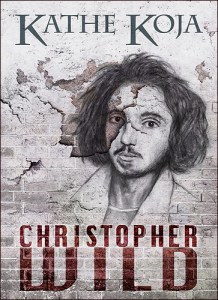
In his lifetime, Christopher Marlowe was notorious for a lot of things: bold and brilliant plays and poems that were the talk of Elizabethan London, and equally bold behavior—as a gay man, as a freethinker—that dangerously challenged the authorities, until he was murdered in what was called a drunken brawl in a tavern, and buried so quickly no one can say for sure where his body lies.
But his badass spirit is still very much alive.
His plays continue to be performed all over the world, and taught in universities alongside his poetry. The TNT series WILL prominently features Marlowe—as a riotous, rivalrous colleague to newcomer Shakespeare—and viewers have already called for a spinoff Marlowe show.
And in fiction, there are all manner of Marlowe bio-novels. The one that blew me away was Anthony Burgess’ insightful and superbly written A DEAD MAN IN DEPTFORD, my first introduction to Marlowe’s life and work, work I read in a wild binge and emerged ravished and determined: Oh my god, I have got to write about this guy.
So I did.
CHRISTOPHER WILD is three lives, one man: we meet Marlowe in his own era, then the gritty mid-20th century, then a dark near-future where surveillance is everywhere. He makes his way with his words, makes friends and enemies, finds lovers, and flees those authorities who try to use him, or silence him, every time.
And he lives his life, his lives, like a Roman candle: all heat and spark, daring the darkness, throwing light. If you run with him you’ll be dazzled or burned, or maybe both, but you’ll never, ever be bored.
That’s how it was with CHRISTOPHER WILD, its research and its writing: enthusiastic early backers supplied funding, and in return I sent them emails with research snippets and excerpts as the book took shape. I was nervous—I’ve never shown my WIP before, not even to my beta readers—but Marlowe’s inspiration made me bold. (Check Out What Cory Doctorow Had to Say)
And the book’s launch events are scheduled at parties and in bars (NYC, Detroit, Chicago, with more cities on the horizon), because Marlowe was always joyfully, thoroughly drunk on words, and who wants to sit quietly in a folding chair when you can declaim or argue poetry over a drink?
I’m hoping that readers who know Marlowe and those who’ve never met him will join the party with this book, this man, who always seems to get the last word:
How’s your nose?
Fine, fingering the tape, eyes still bruised. You broke it, you know.
I know.
That wasn’t exactly fighting fair, was it?
No, it wasn’t.
Well . . . My pop always said, if you can’t kick a man’s ass, make him your pal.
We’re not pals. The last swallow of beer as flat as tap water, he sets aside the bottle with a smile unfeigned—Icarus still rising, the sun’s heat to his upturned face, what would that be like? to fly, know the fall was imminent, fly anyway—and Come on, he says, turning that smile on Jay Reeder, let’s live a little. Drive us someplace, I’ll buy you a drink.
– from CHRISTOPHER WILD
Check out the beautiful book trailer below & then get your copy!
The Fault in Our Stars by John Green
 Plot/Story:
What’s that old saying? Laughter is the best medicine? John Green, of all people, certainly understands that. The Fault in Our Stars is a rather tragic tale of two young lovers, both of whom are suffering from fatal and debilitating illnesses. They meet each other at a Support Group where neither wants to be, and there begins the wild, mad ride that is: “Hazel and Augustus.” As Green explains in his Author’s Note, and again in the Afterward, this is a book of fiction – a book of realistic circumstances and realistic characters, but wholly imagined. Even the drugs and treatments mentioned are created by the author; all this to say, this is not a story about cancer or the treatment of cancer: it is a story about life and living. This story is about being a parent and a friend. It is about being sick and about being healthy. It is about the many different ways that many different people deal with their own grief, some coming out stronger and more focused than they could have imagined, while others sink deep into a dark and dangerous depression that is nearly impossible to escape. This book is about freedom, the chance we all have to live life the way we want to live it, no matter how short and painful that life may be. Circumstances happen, but they do not define us; what defines us is how we meet those circumstances; and that is what we will be remembered by.
Characterization:
One of Green’s strengths is creating believable characters, people we could recognize in our own real worlds. They are loveable or despicable, but we adore them all for the very fact that they are “right;” they fit the world he has created and they serve a purpose in the grand scheme of things. The Fault in Our Stars is no exception to this Green-rule. From our main character, Hazel, who is sick but refuses to let that define her, to her parents – who are strong and weak, open and secretive; from Augustus, who is so consciously self-absorbed that he (and we) are actually able to enjoy his ego, even if his perfection is a bit irritating at times, to Isaac and Van Houten, minor characters who make a big impact on Hazel’s life and on the story itself. Each of their stories is connected, in some way, and spending time with them will bring laughs and tears, anger and fear. The only small complaint I have is that the two main characters are a bit too brilliant. This is a theme I’ve noticed rising in young adult fiction, lately – teenagers who are so smart, and so wise, pop culture philosophers with the vocabularies of Ivy League undergraduates. It makes the story more interesting, sure, and it helps the readers learn a bit (if they’re paying attention) but it undermines the believability aspect just a bit, for me. It also caused the distinction between Hazel and Augustus to blur a bit – at times, they seemed to be almost the same person, because they spoke the same way, had the same sense of humor (elevated and clever), and hoped the same lofty hopes. Maybe all the teenagers Green knows are wordsmiths and geniuses, but in my experience (now and as a teenager myself) these were few and far between. Minor irk – but an irk, nonetheless.
Prose/Style:
Green’s wit and charm ooze out onto the page in such an effortless way; it’s almost as if the reader is sitting in a room with him, listening to him chatter on. There’s a difference between writers and storytellers, and Green is absolutely a storyteller. His cadence and rhythm are beautifully constructed and timed. He delivers punches in the right moments, and then allows his readers to catch their breath. The pages are lined with humor and messages of beauty, hope, strength, courage and individuality. I became a fan of his style when I read Looking for Alaska years ago, because it was just so very honest. He proved me right with Will Grayson, Will Grayson, and he makes me feel like a master critic these days, because I’m so right about his prose being so wonderful (see – it’s all about me!). Although the story is a heavy one, it is not despondent. Some of the characters suffer a hopeless fate, but they do not succumb to it. There is a lighter message woven through the pages, to embrace the inevitable and leave the world behind you a better place for having done so; this, coupled with Green’s unique way of crafting a narrative, is what turns the pages and makes the book almost un-put-down-able.
Additional Elements: Setting, Symbols/Motifs, Resolution, etc.
Markus Zusak calls The Fault in Our Stars a story about “life and death and the people caught in between.” This is true in a literal and metaphorical way. Some of the characters are quite literally stuck in that “in-between” world, where they are alive, but they know they have little time left. They must decide to either submit to their illness and avoid the world, or choose to live the best possible life they can, with however few moments remain for them. There are others caught in between, though, on that battle ground. Friends and family who are healthy and who have years ahead of them, but who are preparing for a new life, a life without the ones they love, without their sons and daughters, without their friends and lovers. As much as this is a story about cancer and how it impacts people, Green makes it clear that it is not a story about cancer, not in any traditional sense. The cancer sufferers do not go quietly into the good night, with proud and angelic smiles on their faces as they drift softly into oblivion. They are real people; they fight, kicking and screaming. They cry and get angry. They soil themselves, fall down, struggle to get out of bed; they deal with the side-effects of their illnesses but they recognize that these are just side-effects. Life is still happening, because they have the power – until the last – to make it happen.
A story like this leaves the reader thinking: What will the world say about me, when I’m gone? How will I be remembered? That power is mine and mine alone.
Notable Quotes:
“Writing does not resurrect. It buries.”
“Okay.”
Final Verdict: 3.75 out of 4.0
TBR Pile Cleanse #3!

It’s been a little while since I posted the second entry in my “TBR Pile Cleanse” project, introduced here. This week, I’m taking a look at another 10 books on my 2,200+ TBR Pile, in order to determine the books I will KEEP and the ones I will let GO. The titles have been sorted according to the books I added first to my TBR list, so these have been lingering the longest.
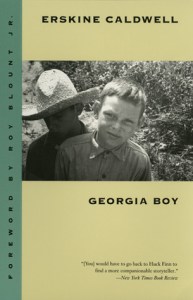 Book #1: Georgia Boy by Erskine Caldwell
- Date added?: Oct. 27, 2009
- Why is it on my TBR?: I do not remember adding this book. I saw both the title and the author and couldn’t recollect anything about either one. I do, however, notice that there’s another Caldwell book on my TBR list, titled Tobacco Road; that book has higher ratings, more compelling reviews, and seems more like something I would appreciate, based on the synopsis. So, I’ll keep the one Caldwell and get to it eventually. If I love it, maybe I’ll add more to read in the future.
- Do I own it?: No
- Project lists: None.
- Verdict?: GO
Book #2: The Italian by Anne Radcliffe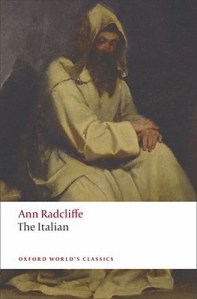
- Date added?: Oct. 27, 2009
- Why is it on my TBR?: This one is on my TBR list intentionally. It’s Radcliffe. I should read it. I want to read it. I’ve only ever given one Radcliffe novel a try, though: The Mysteries of Udolpho. I had to set that one aside after, I don’t know, 80 pages? (Out of 600-ish?) It wasn’t gripping me at the time, but I do want to finish it at some point. Interestingly enough, I was first introduced to Radcliffe via Jane Austen’s Northanger Abbey, which is a parody of the Gothic Romance genre which owes so much to Radcliffe. This one’s about 200 pages shorter than Udolpho, so maybe I should start here.
- Do I own it?: No
- Project lists: None
- Verdict?: KEEP
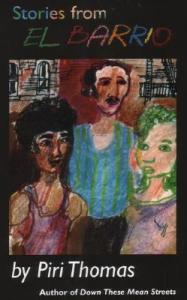 Book #3: Stories from El Barrio by Piri Thomas
- Date added?: Oct. 27, 2009
- Why is it on my TBR?: Here’s another book that, if you mentioned the title or author to me, I would respond that I had “never heard of it/him.” I imagine there are probably hundreds of circumstances like this on my TBR list, now that I’m digging through it. I’m loving the fact that I’m being re-introduced to books that, at some point, looked really interesting to me. This one seems to have some fervent fans, and the description is interesting (as is the fact that he’s a Cuban-Puerto Rican street writer). I want to keep it on my list if only to make sure that I might some day stumble across it again and give it a try, but is that really enough to continue listing it? Nah. If fate wills it, we’ll meet again.
- Do I own it?: No
- Project lists: None
- Verdict?: GO
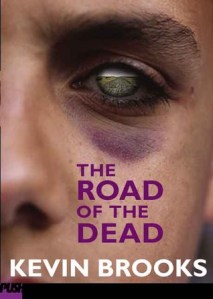 Book #4: The Road of the Dead by Kevin Brooks
- Date added?: Oct. 27, 2009
- Why is it on my TBR?: I’m almost certain that I’ve read something by Kevin Brooks, yet in reviewing my Goodreads list and his author page, I don’t find anything reviewed. I do also have a couple of his other titles, such as The Bunker Diary on my list. I was totally ready to remove this one because I imagined that I was just in a mood for crazy YA/MG dystopia whateverness on that particular day; but, then I read this in the blurb: “Cole, 17, is a dark-eyed devil who doesn’t care if he lives or dies, while Ruben, 14, is a strange child who sometimes, inexplicably, experiences sensations above and beyond his own. This is the story of the boys’ journey from their half-gypsy home on a London junk lot to the ghostly moors of Devon, where they hope and fear to find the truth about their sister’s death.” Come on.
- Do I own it?: No
- Project lists: None
- Verdict?: KEEP
 Book #5: The Souls of Black Folk by W.E.B. Du Bois
- Date added?: Oct. 27, 2009
- Why is it on my TBR?: I’m fairly certain that I added this one after reading Langston Hughes’s The Ways of White Folks. Du Bois was a leader in the black protest movements of the late-1800s and early-1900s, often standing in direct opposition to Booker T. Washington, whose philosophy tended toward slow change and accommodation rather than “radical” demands for equality. I’m fascinated by the history of race in America, so this is, I know, a must-read, particularly as its publication resulted in a deep polarization between the conservative and progressive black liberation wings, something we’d see again with Dr. King and Malcolm X, and something we’re likely close to seeing again.
- Do I own it?: No
- Project lists: None
- Verdict?: KEEP
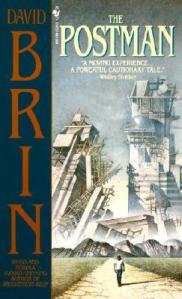 Book #6: The Postman by David Brin
- Date added?: Oct. 21, 2009
- Why is it on my TBR?: Remember what I said up there about how many times I’d probably have that “huh?” moment with these titles and authors? DING! Here we are again. I have no idea why I added this book or how I heard of this author. In reading the synopsis, I get nothin’. It’s apparently a sci-fi/apocalyptic tale about a guy who wears a Postman’s uniform to stay warm and discovers it has other powers (“as a symbol of hope,” they say?) How weird. It’s almost unique and strange enough to make me want to give it a try. I mean, seriously, a postal uniform as rallying flag? That’s ballsy.
- Do I own it?: No
- Project Lists: None
- Verdict?: GO
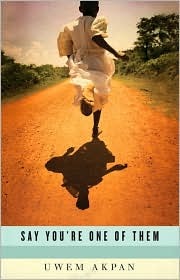 Book #7: Say You’re One of Them by Uwem Akpan
- Date added?: Oct. 27, 2009
- Why is it on my TBR?: I do remember adding this short story collection to my pile, but only because of the cover image. I don’t recall the title or the author, though. That said, in reviewing the blurb, these stories of Ethiopia, Kenya and Nigeria, of children with the will to survive in even the harshest conditions, sound interesting and informative. Has anyone read this one? I’m actually considering moving it up on my list.
- Do I own it?: No
- Project Lists: None
- Verdict?: KEEP
 Book #8: World’s Fair by E.L. Doctorow
- Date added?: Oct. 27, 2009
- Why is it on my TBR?: I must have added this one sometime after reading Homer & Langley. I’ve also since read Ragtime. I really enjoy Doctorow. He’s a special kind of writer, and the historical aspect to his novels adds just another delightful layer to his excellent storytelling, at least for someone like me who loves history almost as much as literature. This one, from what I remember, is about a boy in 1930s New York, when everyone was in awe about the wonders of the world as seen through the lens of the World’s Fair. I’ve got to get to this one sooner than later. And I’m also remembering that I haven’t yet read Billy Bathgate or Andrew’s Brain yet, either. Maybe I should have a Doctorow month!
- Do I own it?: No
- Project lists: None
- Verdict?: KEEP
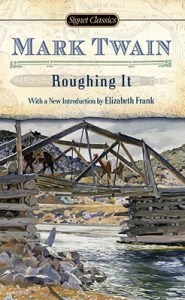 Book #9: Roughing It by Mark Twain
- Date added?: Oct. 27, 2009
- Why is it on my TBR?: I fully intend to read everything Mark Twain has ever written. I absolutely adore him, as a person and as a writer. One area of his canon I’ve neglected is his journalism and travel writing. I don’t think I’ve really read any of it; in fact, the only non-fiction I’ve read from Twain, I think, is his autobiography. I’m actually not sure how much of Roughing It can be considered non-fiction, but I know its based on his travels around Nevada, California, and over to Hawaii. I’m sure it’s filled with his typical fire-brand style of social commentary, satire, and whatnot. I look forward to it.
- Do I own it?: Yes
- Project lists: None
- Verdict?: KEEP
 Book #10: Story of O by Anne Desclos (Pauline Réage)
- Date added?: Oct. 27, 2009
- Why is it on my TBR?: I’ve heard an awful lot about this book. I’m not the biggest fan of erotica (especially of the heterosexual kind) or straight-up romance, but as a student/scholar of gender and sexuality, I can’t not be intrigued. Here’s an excerpt from the synopsis: “How far will a woman go to express her love? In this exquisite and taboo novel of passion and desire, the answer emerges through a daring exploration of the deepest bonds of sensual domination. “O” is a beautiful Parisian fashion photographer, determined to understand and prove her consuming devotion to her lover, René, through complete submission to his every whim, his every desire.” I can’t say I’m not intrigued. This also reminds me that I need to hurry up and get to my collection of works from the Marquis de Sade. They’ve been sitting around for, oh, fifteen years? Oops.
- Do I own it?: No
- Project lists: None
- Verdict?: KEEP
Books removed this week: 4 out of 10 (40%)
TBR Pile Count at Start of Project: 2,170
TBR Pile Count Currently: 2,228 (uh… funny how this ain’t workin’ at all!)
Three Fan Favorites Are… Mediocre?
Somehow, miraculously, I’ve found my reading groove again. I was something like 11 books behind schedule in my Goodreads challenge (which I intentionally did not make very ambitious this year, as I knew this would be a riotously busy year for me); but, I’ve managed to bring that up to being just TWO books behind schedule (and I’m currently reading 3 – so there!)
Anyhow, here are some thoughts on a few of those recent reads:
American Studies by Mark Merlis
 I really wanted to love this book. Or at least like it? The good news, I suppose, is that I didn’t hate it. At no point, however, did I feel much attachment to the story or its characters. It was a struggle to get through it. I’ve never been a “DNF” kind of person; even those books that I actually have not finished sit somewhere in a box with bookmarks still in them. Call it some kind of compulsion, I guess. The main character, Reeve, is a 60-something-year-old gay man who has been brutally assaulted by a young trick he picked up at a bar. The majority of the story unfolds in flashback while Reeve recovers in the hospital. There’s some interesting history of the Lavender Scare/McCarthyism and its purge of homosexuals and “communists” from educational, governmental, and entertainment industries, among others. Interesting thoughts on friendships, family, bigotry, and self-loathing. All said and done, though, I found the pace slow and the story bland; nevertheless, it is also subtly moving and all too human in its consideration of aging, loneliness, and desire. Despite the fact that I was not a fan of this novel, I appreciate Merlis’s perspective and his style. I’m really looking forward to reading another of his, An Arrow in Flight, which I think might be more to my tastes. Final Verdict: 3 out of 5.
The House of Mirth by Edith Wharton
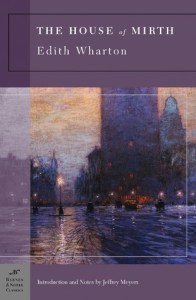 Wharton’s House of Mirth was the Classic Book-a-Month Club’s selection for March. Now, I run the CBAM and am in charge of choosing the books. I selected this one because, well, it’s a Wharton I’ve never read and that everyone seems to love. Unfortunately, I felt about this one the way I was feeling about Middlemarch. I just couldn’t connect to it, or care much about it. Now, I’m looking at the list of books I’m briefly “reviewing” here in this post and noticing something similar: I read them around the same time, spring, and didn’t really enjoy any of them, although many people seem to love them. So, if I’m being fair, I think I should consider that I just wasn’t in much of a reading mood for a few months earlier this year? I am normally a sucker for this kind of story. A “dark view of society, the somber economics of marriage, and the powerlessness of the unwedded woman in the 1870s”? Sign me up! (I know that sounds weird, but I love a good critique of class and high society). That being said, I just couldn’t come around to empathizing with Lily Bart. I felt that she had so many opportunities to improve her situation, but didn’t. I suppose part of the point of this story is that she does indeed make one bad choice right after another, and hence the tragedy of her life. Still, even a tragic hero is one we want to root for, isn’t it? Of course, some of the criticism rests at the feet of her snobbish and unforgiving community. Wharton does a wonderful job of leveling those criticisms, but I much prefered her Age of Innocence, or even Ethan Frome. Final Verdict: 3.0 out of 5.0.
American Gods by Neil Gaiman
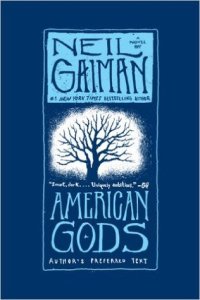 I begin to worry that I’m setting myself up for a barrage of hate mail (hate comments?) on this particular set of musings. Oh well. This is the second Gaiman novel I’ve read. The first was Stardust, which I read years ago. I didn’t really enjoy Stardust, and I didn’t really enjoy this one. Something strange happens when I read a Gaiman novel. I see its potential. I see the potential in his imagination, his world-building, his characters, all of it. I brace myself for a pretty groovy ride. And then everything fizzles out and I feel like I’ve been ripped off. The whole concept of American Gods, a battle between the worlds oldest deities, of all types, and the new “false” gods of technology, is so fascinating. Shadow was actually a fascinating protagonist, a non-hero who just sort of falls in with an old god, named Wednesday, who needs help. Shadow becomes a sort of participant-observer in some pretty intense, behind-the-scenes, nasty god business. There are moments, which I won’t give away, that are kind of stunning. But most of the book just seems to, I don’t know, “go on.” I feel it building toward something, and then the something happens, and it’s disappointing and kind of pointless. Funny enough, though, I still want to watch the television adaptation, because I think it might be cool. Final Verdict: 3 out of 5.
A Monster Calls by Patrick Ness
 A Monster Calls by Patrick Ness is actually a completed story inspired by the notes of British author Siobhan Dowd, who passed away in 2007. The forward tells the story of how these notes came to Ness’s attention, and why he decided to complete the story for Dowd. We are extremely grateful that Ness decided to do so, as the story is incredibly profound and hauntingly honest. Thirteen-year-old Conor has been having nightmares – horrifying nightmares that wake him up nearly every night. One night, at seven minutes past midnight, Conor gets a visit from a monster – but it is not the monster from his nightmare, and it is not just a dream this time. When Conor asks the monster why he has come, he learns that the monster wants Conor to tell him a story – not just any random tale, but Conor’s own true life story. After the monster returns multiple times, at seven past midnight, and telling Conor harrowing stories where bad seems good and good seems bad, it is time for Conor to meet the monster’s demand. A Monster Calls is about growing up and facing the dark, scary, and confusing elements of life. It is about admitting to ourselves the parts of us we try to keep hidden, so that we can be freed. It is a lesson all young people need to learn, and a lesson all grown-ups need to be reminded of, from time-to-time.
Characterization:
Because the story is geared toward younger readers (though adult readers might appreciate it even more), there are not a plethora of characters and none of those present are exceedingly complicated. That being said, each of the characters, from the main character, Conor and his monster, to Conor’s ailing mother, his absent father, his strict grandmother, and even his school mates and teachers, each have unique personalities and react to situations in independent ways. Certain of the characters are a bit flat (the absent father, for instance, is about what you would expect him to be) while others, like Conor and his grandmother, can be surprising and do show multiple aspects of themselves. Conor’s journey to self-discovery (admitting what he is terrified to admit and learning to understand why he feels and acts the way he does) is fascinating not just because the story is deeply honest and painful, but because its impact on Conor manifests itself in wholly believable and understandable, but haunting ways. The monster, too, is a character one could despise or love, which is brilliant.
Prose/Style:
The only less-than-perfect aspect of this book is the prose, and that is largely due to my own struggle with understanding the intended audience for the book. While the writing is great – good pacing, appropriate amounts of dialogue v. narrative v. description, intelligent style and form – there is still just a little something missing. I think the disconnect, for me, comes from the fact that the story itself is dark, but is displayed/presented in a picture-book type way. I would compare the theme and certain elements of the book, including many scenes where Conor’s anger is unleashed, to works by Robert Cormier – they are appropriate to the story and the audience because they are realistic and have something to teach us, but the glossy pages coupled with the limited language (accessible to younger readers, though certainly not “simple”) left me feeling just a tiny bit confused about who the intended audience was. Overall, though, it was not distracting “in the moment” and did not deter me from enjoying and appreciating the story.
Additional Elements: Setting, Symbols/Motifs, Resolution, etc.
There is very much a “caught in-between” feeling to this book when it comes to theme and age appropriateness. Since this is really a coming-of-age tale, supported by drawings that enhance the story, the book at times feels as if it is meant for young readers; however, the subject matter and the intensity of the story are clearly more appropriate for adults. Ultimately, the book probably works best for young adults and adults, but could be a great “life lesson” book for younger children as well, if read with a parent. This middle-road effect is simultaneously appealing and unsettling. As an adult reader, I did not always feel wholly comfortable reading a “picture book,” but in the end, the story is so powerful, the images so beautiful (but dark) and the psychological/spiritual needling so personal, it is impossible not to fall head-over-heels in love with it (think: The Little Prince by Antoine de Saint Exupery). Without the images, the book would not be what it is, and without the story, the images would be nice, but hollow. The combination of the two turns out to be perfection in print.
Final Verdict: 3.95 out of 4.0
 Roof Beam Reader