Roof Beam Reader
Adam Burgess
Guest Post: A Jane Austen Daydream! (#AustenInAugustRBR)
Trying to Find Jane
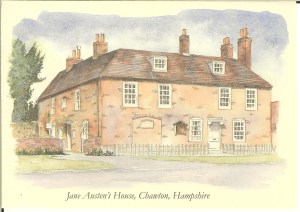
I went to England to try and find Jane Austen.
When you read Jane’s books, you can feel her alongside you, laughing with you, leading you down the path, but when you have to define her as an actual person things get complicated. Her heroines have so many different traits; Emma is very different from the Bennet sisters, etc. She is so good at characterization you have to wonder if any of her “real life” experience and traits inhabit any of her characters.
Most scholars will argue that authors grow from book to book, so could an argument be made that she is the most like Catherine Morland from Northanger Abbey? No, I can’t imagine a character like Catherine (even with her wild imagination and love of books) creating novels.
Some Austenites would point to Anne Elliot from Persuasion for being the most like her (maybe the book is playing out a fantasy she had about a returning love?), but that would be a much later creation when her skills were at the strongest. With someone with her literary skills it feels like a moment of weakness.
Chawton (home of the Jane Austen’s House Museum) is a small village and not at all easy to find. It is very charming and I can see why fans of her novels love visiting it. It feels like one of her novels could take place on those streets, in those gardens, in those fields… yet, something felt off to me.
Jane’s actual home, which is the museum now, was a modest house even then. While there have been some structural changes to it, it is easy to imagine her wandering those halls, sitting in that garden. Still, my feeling of discomfort was growing. Yes, as I visited each room, the feeling increased until I had to leave and sit in the garden, get a breath of fresh air.
It was then, looking around me, watching other visitors come and go, that the feeling that had been haunting me so prevalently became clear…
Trapped.
Jane Austen had one of the great minds of her century, easily one of the greatest minds in literature. So how could someone with her capacity be content in a small house, in a small village like this?
That is not to say she didn’t enjoy her family’s company or her friends in the village; I’m sure some days she was happy with the arrangement. Yet my gut was telling me that on many days she felt utterly trapped, stuck in a world she couldn’t escape from. I’m not going to compare it to a prison; but consider what the life of someone with Jane’s ability would be like today, and then think of a person like that living in such a small environment with little resources. And little capability for growth because of her gender…
You see what I mean?
Then add in the fact that her books were anonymous. She had no writing friends, no one she could talk to really about her favorite artform, her passion.
Trapped, lonely, misunderstood.
No wonder Jane did so much writing during her eight years in this home. It was her only escape, her only way to be herself fully.
That visit made Jane real and helped inspire my novel A Jane Austen Daydream.
Giveaway!
Congratulations to Melissa of Avid Reader’s Musings, who was randomly selected as the winner for our final giveaway! She has won a signed copy of A Jane Austen Daydream!
About the Book:
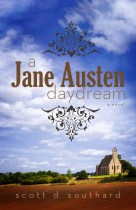 All her heroines find love in the end–but is there love waiting for Jane?
Jane Austen spends her days writing and matchmaking in the small countryside village of Steventon, until a ball at Godmersham Park propels her into a new world where she yearns for a romance of her own. But whether her heart will settle on a young lawyer, a clever Reverend, a wealthy childhood friend, or a mysterious stranger is anyone’s guess.
Written in the style of Jane herself, this novel ponders the question faced by many devoted readers over the years–did she ever find love? Weaving fact with fiction, it re-imagines her life, using her own stories to fill in the gaps left by history and showing that all of us–to a greater or lesser degree–are head over heels for Jane. You can purchase A Jane Austen Daydream at Amazon.com
About the Author:
 Scott D. Southard, the author of A Jane Austen Daydream, swears he is not obsessed with Jane Austen. He is also the author of the novels: My Problem with Doors, Megan, Permanent Spring Showers, Maximilian Standforth and the Case of the Dangerous Dare, and 3 Days in Rome. With his eclectic writing he has found his way into radio, being the creator of the radio comedy series The Dante Experience. The production was honored with the Golden Headset Award for Best MultiCast Audio and the Silver Ogle Award for Best Fantasy Audio Production. Scott received his Master’s in writing from the University of Southern California. Scott can be found on the internet via his writing blog “The Musings & Artful Blunders of Scott D. Southard” where he writes on far-ranging topics like writing, art, books, TV, writing, parenting, life, movies, and writing. He even shares original fiction on the site. Currently, Scott resides in Michigan with his very understanding wife, his two patient children, and a very opinionated dog named Bronte.
Jane Austen and the Subversion of Sexist Tropes (#AustenInAugustRBR)
Caro is a 20-something Lit student with a tendency to ignore the world in favor of books and coffee, prone to having far too many projects going on at once, and destined to become a drunken cat lady. She blogs about books over at Wuthering Reads and writes TV recaps at NoWhiteNoise.
Jane Austen & the Subversion of Sexist Tropes
We live, for the most part, in a largely patriarchal society – so it’s not surprising to find that many storytelling tropes ooze sexism. A conversation I had with an extremely intelligent, articulate and socially aware friend re: this sort of trope and its subversions got me thinking – what sexist tropes did Jane Austen deconstruct and subvert in her novels?
Entitled to Have You and Nice Guy™
 The Entitled to Have You trope presents a man who, because of whatever reason, feels entitled to a woman. If she rejects him, the man in question will usually show remarkably selective hearing and interpret her “no” as a “maybe” and keep harassing her with invitations, convinced that his relentlessness will eventually pay off. And the worst part is that, in most cases, it does.
Austen presents this trope in Pride and Prejudice, through the one and only Mr. Collins. Elizabeth very clearly tells him that, while she’s flattered by his interest, she doesn’t feel the same way. Instead of taking it at face value, Mr. Collins assumes that she’s playing hard to get. Now, in many other works of fiction, his perseverance (see harassing) would have paid off and Elizabeth would have eventually ~seen the error of her ways and married him – but not in an Austen novel. No, Mr. Collins isn’t portrayed as sympathetic for his insistence, but rather as pathetic, annoying and incapable of taking a hint.
Another trope, often closely linked to Entitled to Have You, is the Nice Guy™. John Thorpe from Northanger Abbey is the perfect example of this. Thorpe believes that because he’s such a Nice Guy, he’s entitled to Catherine’s love. When she doesn’t reciprocate his feelings, he sulks forevermore and decides that her rejection stems from Catherine not Appreciating Him Like She Should, instead of realizing that hey, the lady has the right to want whoever she decides.
Bad Boy Woobie, or Jerkass Woobie
This is another particularly annoying trope, especially because it’s everywhere lately. Writing the Big Bads as, you know, bad, and still going out of their way to make them sympathetic is something that narrators everywhere do all the time; and after over two decades of being exposed to storytelling, I have no patience for it anymore.
Apparently, neither did Jane Austen. The Jerkass Woobie was not at all woobified. We’re not only not expected to excuse his faults because of his Daddy Issues, but we’re actually encouraged to hold him accountable for his actions, as we would any functional adult. An example of this is Pride and Prejudice’s George Wickham, whose lies, manipulations and tendency to prey on young girls are by no means excused by the trauma of losing his father as a child.
One Special Girl
 This one’s tricky, because at first sight, it doesn’t seem sexist. What’s wrong about portraying a woman as a human being worthy of respect, after all? But scratch a little under the surface and you’ll realize that there are few things as insulting as a normally assholish man suddenly wanting to be ~good and ~different to a woman he perceives as The Paragon of Right Womanhood. This is problematic because it implies that certain women are ~deserving of being treated horribly, unlike the One Special Girl who makes the otherwise horrible guy want to respect her because She’s Not Like The Other Girls. That One Special Girl is usually also a Madonna, never a Whore.
Austen subverts this trope in Sense and Sensibility, through the relationship between Willoughby and Marianne and the fact that he’s not magically redeemed by her love. Being a serial player is part of who Willoughby is, and somebody’s personality is not about to change because The Right Person entered their life. It’s one thing when a person wants to change – but placing the responsibility of somebody’s change on an external party is not the way to go, partly because it’s too much responsibility and partly because it quite simply doesn’t work.
Thanks, Caro, for the excellent guest post on sexist tropes. A lot of food for thought! What do you all think? Have you noticed anything similar in Austen’s works? Can you give other examples, from other texts?
What Marriage Really Meant to the Women of Austen (#AustenInAugustRBR)
Hello, Ladies & Gents! Today’s guest post is all about marriage (that inescapable theme) in the works of Jane Austen. It comes to us from the wonderful Sarah of The Every Day Reader. Please give her a warm welcome!
Austen’s major works have many commonalities, but there is one glaring similarity that stands out above the rest: Marriage. All of Jane’s heroines begin their stories unmarried and end it married to a man they not only love, but who are an advance in social status and/or wealth.

Why was marriage so important to them? The heroines of Austen are strong women, who face trials that we would today see as completely unconnected from the marriage institution. Yet, marriage was important enough that Charlotte Lucas accepts Mr. Collins. Why? Because for them, marriage was more than a love match. It was their salvation.
Financial Security: Austen lived and wrote in a time without pensions, unemployment, health insurance or social benefits. Women also had extremely limited opportunities for independent employment and those they did have, such as being a live in governess, were not well-respected or well paid. Mrs Elton in Emma expresses her surprise that Emma’s former governess is ‘so very lady-like.’ Marriage to a wealthy (or at least financially secure) man was the dream, because it gave Austen’s heroines their only realistic chance at a secure life. Austen knew what a strain financial insecurity could be, spending several years traveling between relatives and friends with her mother and sister after the death of their father.

An Escape from their Family: It would have been unheard of in Austen’s time for a woman to live alone, or with friends. Family, or family approved guardians were the only options. Jane Austen herself would have known the reality of such a situation, never leaving the companionship of her family. Austen was blessed with a family that she enjoyed the company of, but if a woman of her time wasn’t so blessed, marriage would be her only permanent escape. Imagine Elizabeth Bennet’s reaction if she had to resign herself to spending her life in the company of her mother!

Social Status: Connections-connections-connections. Life then, as is now, was just as much about who you knew as what you knew (in fact, perhaps even moreso than now). Advancing up the social ladder was also far more difficult than it is today. Men could do so by earning a fortune through trade or being promoted within the military, though would still be looked down upon by those who hadn’t had to earn it. For women, advancement was through marriage. Making a fortuitous connection not only immediately advanced their own status in society, but meant their children would likely have opportunities that they had not.

A House of their Own: The importance of this factor can not be underestimated and goes far beyond escaping family or having financial security. Being able to manage their own home was a woman’s greatest chance at independent action. These were the days before vacuum cleaners, online shopping, Chinese made clothing and disposable lifestyles in general. Managing the household, especially a large one, was a career in itself. Even Elizabeth Bennet would have found a match for her quick mind in the management of Pemberly and indeed, it is seeing the estate which first makes her rethink her attitude to Darcy.

From Jane Austen’s point of view: It is well-known that Jane Austen never married, despite having at least one serious offer (and another mutual attachment that was never acted upon because of that darned financial insecurity). It’s nice to think that by marrying off her heroines Austen was giving them the future she never secured for herself. Although she later expressed relief at having avoided the pitfalls of married life (especially the risks of childbirth) her heroines still all hit the jackpot. They have everything that could have been desired in a late 18th century marriage and something more besides. They had love, which Austen believed to be the most important factor of all. Indeed, many scholars believe was the true reason she never married. Marriage was important to Austen not only because of societal constraints, but because of the relationship that it represented in its best manifestation.

Thanks, Sarah, for these great thoughts on Marriage in Jane Austen’s books! What do you all think? Have you noticed anything similar in your reading this month? How do the Austen works (or reimaginings) that you’ve read this month, or are reading now, treat marriage? Are there any differences in the marriage of Austen’s works versus marriage in the more contemporary remakes? Let’s discuss!
Thoughts: Persuasion by Jane Austen
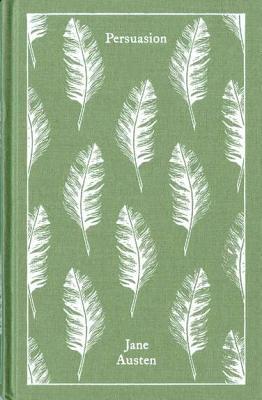 Persuasion by Jane Austen
Final Verdict: 3.75 of 4.0
YTD: 47
Plot/Story:
4 – Plot/Story is interesting/believable and impactful (socially, academically, etc.)
Persuasion is the story of Anne Elliot, the middle-daughter of Sir Walter and Lady Elliot, the latter of whom died fourteen years prior to the start of the book. Elizabeth and Anne are both single, but Mary, the youngest, is married to a wealthy man called Charles Musgrove. Sir Elliot is on the brink of ruin, having spent lavishly and recklessly for some time, but particularly following the death of his wife. He is a vain man who must be “convinced” by a trusted family friend, Lady Russell, to limit his spending, relocate, and rent out their expansive manor (Kellynch Hall) to raise income. Lady Russell is also responsible for Anne’s somewhat melancholy state, having persuaded Anne to reject the proposal of one Captain Wentworth who, at the time, was without name or income. As the story unfolds, secrets are exposed, friends and family are reunited and divided, and the questions of enduring love and what it takes to create a meaningful and functional marriage are raised.
Characterization:
3 – Characters well-developed.
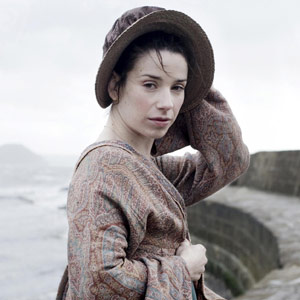 Many, if not all, of the characters in this book are important and necessary to the plot. In Sense and Sensibility, it can be argued that perhaps not all of the Dashwood sisters were necessary to the story; here, however, each character who is introduced seems to serve a purpose – the prose, plot, and character development, then, are all concisely and purposefully crafted. That being said, however, and while much can be found laudable in the Crofts and Anne Elliot, and even Mrs. Smith, most of the characters, even the primary ones, do not seem deeply developed in such a way as to be truly engaging – to connect the reader with their stories and lives more personally. This could be because the larger theme of the novel is social change, rather than personal growth, but I still would have liked to have been more personally vested in Anne and Captain Wentworth’s interests. Anne certainly is an Austen heroine – so much so that Austen herself said that Anne was “a heroine who is almost too good for me.” She has her flaws, including being “advanced” in age and lacking somewhat in beauty, and also her openness to persuasion (hence the title of the book). Yet, she stands above her female contemporaries by being calm, collected, and rational, not to mention constant in her friendships and affections. She earns the admiration of not only Captain Wentworth, but also of Charles Musgrove and Mr. Elliot.
Captain Wentworth, too, is interesting as the representative of a “new gentleman.” He has excellent manners, he is considerate of those around him, and he is hard-working, brave, and independent. Also, instead of being born of land and title, he represents a shift in or softening of the potential for social, upward mobility in Britain at this time. As a naval officer, he worked hard to advance through the ranks and create wealth for himself, rather than “earn” it through inheritance. We can contrast him with Sir Walter Elliot who is largely a caricature of the very same titled, upper class nobility mentioned above. Austen’s wit and satire play heaviest on Sir Walter – she shows no mercy, really, when describing him as a vain, imbecile spendthrift whose dressing rooms are lined with mirrors and who refuses to be seen in public with any but those who are incredibly attractive. He is in many ways a sort of “dandy” to Captain Wentworth’s more masculine presence.
Still, although the characters do what they are supposed to, thematically, they do not reach me, personally, in the way that those of Sense and Sensibility or Pride and Prejudice have. Of course, there are many fans of Anne and Captain Wentworth out there, and of their romance, and I certainly see them as a good match – still, a small “something” – some kind of spark, could have given the more clinical craftsmanship of these characters the personable touch I was hoping for (with the exception of the Crofts – I really enjoyed them!).
Prose/Style:
4 – Extraordinary Prose/Style, enhancing the Story.
 The story is told in the third-person omniscient, like most of Austen’s works. And, also like most of Austen’s narrators, this one is very closely allied with the main character, in this case, Anne Elliott. Although the narrator is not Anne, and not directly involved in the story, she does make judgments that are similar to Anne’s, while maintaining a point of view that is separated from the story by means of free indirect discourse. Keeping the narrator separate from but close to the character of Anne allows for slightly more honesty in describing the motives and personalities of the various characters, and also some distance between Anne and the others, which is necessary in creating tension and mystery (which we found out near the end of the story is rather important, as certain schemes have been developing behind the scenes). The narrative voice is softly satirical and at times subtly subversive, making it very interesting to compare with Austen’s first novel, Northanger Abbey, which was ultimately published at the same time (and which is much more obvious and raw in its humor and parodist tone). Some of Austen’s most tried and true devices, such as the “big reveal” being delivered via letter (in this case, Captain Wentworth’s letter to Anne; in a previous instance, Mr. Darcy’s letter to Elizabeth), as well as the motif of walking to advance a character’s conscience or growth, or to provide opportunity for necessary meetings between key players, are included here again and, again, work quite nicely.
Additional Elements: Setting, Symbols/Motifs, Resolution, etc.
4 – Additional elements improve and advance the story.
 Jane Austen wrote Persuasion in 1816, while she was extremely ill and just before her death. The book would not be published (with Northanger Abbey) until 1818, after she had already passed away. Like many of her stories, this one is a novel of manners. Its focus is not so much on any one character’s growth, as would be the case in a coming-of-age story, but, instead, it is concerned with a group of primary characters who interact with one another and who are learning to navigate their lives within new rules and structures of a changing world. Although Austen is widely, and rightly, considered to be a writer of marriage plots which lead to happy endings, what some miss in their readings is Austen’s deep concern for the complexities of gender relations and class structures, both of which were rapidly changing in the early 19th century. Persuasion, while certainly constructed as a marriage plot, is absolutely concerned with the latter interests as well. It is clear that Persuasion is Austen’s later work, as it demonstrates great maturity and mastery of purpose and of craft. This is evidenced in her subtle but biting satire of the upper middle classes, represented primarily by the character of Sir Walter Elliot.
Persuasion questions the idea of “Separate Spheres,” which has been a traditional way of viewing male and female roles in Britain and much of Europe. Men would live in the public sphere, taking care of finances and legalities, while women were in charge of the private sphere, including tasks such as running the home and managing the servants. With the introduction of the Crofts, however, Austen challenges this dichotomy and offers the option of a true marriage partnership, where husband and wife share equal responsibility in both spheres. That the Crofts are the ideal married couple, and the one which it is presumed Anne and Captain Wentworth will evolve into, it is safe to assume that Austen, who never married, had rather progressive opinions about what a happy and functional marriage could be.
Austen is also often criticized for creating “bubble” worlds, stories which are narrowly confined to their own small towns, without concern for larger world issues. Yet, it cannot be denied that Austen is aware of the fact that Britain is at war with America and France during this time, and her representation of the British Navy and Naval Officers both pay dues to the “real” Navy and also introduce, in literature, a mirror of what, in real life, was becoming an ideal of manliness – a new gentleman who can rise, through the military, to fame and wealth, if not necessarily to title. Austen does indeed understand the world around her and, just as with Mansfield Park, she incorporates elements of that world into her stories in ways that are so natural, they hardly stand out. That these issues flow so neatly into the plot is a sign that Austen is an extraordinarily adept, socially aware novelist, not, as some would argue, of a writer oblivious to the world around her.
Suggested Reading for:
Age Level: High School +
Interest: Novel of Manners; Marriage; Separate Spheres; Persuasion; “The Gentleman”; Class; Social Mobility; Family.
Notable Quotes:
“She had been forced into prudence in her youth, she learned romance as she grew older: the natural sequel of an unnatural beginning.”
“Let us never underestimate the power of a well-written letter.”
“How quick come the reasons for approving what we like.”
“Facts or opinions which are to pass through the hands of so many, to be misconceived by folly in one, and ignorance in another, can hardly have much truth left.”
“I hate to hear you talk about all women as if they were fine ladies instead of rational creatures.”
“Men have had every advantage of us in telling their own story. Education has been theirs in so much higher a degree; the pen has been in their hands. I will not allow books to prove anything.”
“One man’s ways may be as good as another’s, but we all like our own best.”
“She hoped to be wise and reasonable in time; but alas! Alas! She must confess to herself that she was not wise yet.”
“Time will explain.”
“Unjust I may have been, weak and resentful I have been, but never inconstant.”
TBR Pile Checkpoint #8 – August Progress!

Congrats to this month’s winner, Karen from Karen’s Books & Chocolate!
Dearest TBR Pile Challengers – Welcome to Another Checkpoint!
It is August 15th, which means we have crossed the half-way point and are now officially on the downslope for our 2013 TBR Pile Challenge! So far, the overall progress and participation in this year’s challenge has been outstanding! I really have been impressed by you guys – even just reading one or two of your twelve, to this point, is great. Keep at it!
Where I’m At: I have now read 10 of my required 12 books – so I’m feeling pretty good! This might be the first year in the last few where I could manage to complete all 12 books + the 2 alternates on my list (although I have some hefty books left to read, so I’m not going to get ahead of myself, here). I need to write my review for Persuasion, which is Book #10, but I do plan to do that, and post it, before the August 20th deadline.
.
My Progress:
Book #1: O Pioneers! by Willa Cather
Book #2: The Alchemyst by Michael Scott
Book #3: Orlando by Virginia Woolf
Book #4: The Gunslinger by Stephen King
Book #5: The End of the Affair by Graham Greene
Book #6: Sodom on the Thames: Sex, Love, and Scandal in Wilde Times by Morris Kaplan
Book #7: A Streetcar Named Desire by Tennessee Williams
Book #8: Shine by Lauren Myracle
Book #9: Gods and Monsters by Christopher Bram
Book #10: Persuasion by Jane Austen
Below, you’re going to find the infamous Mr. Linky widget. IF you have completed any reviews for books on your challenge list, please feel free to link them up here so that we can easily find your posts, encourage one another, see what progress is being made on all these piles, etc. Also, feel free to link-up to your own checkpoint post, should you decide to write one (not required – but feel free!)
GIVEAWAY: This month’s check-in comes with a giveaway! One winner will be chosen from those who link-up to their reviews of books completed between July 21st & August 20th. Anyone who posts a check-in for this month and links-up by August 20th will also be included. The prize is any book of winner’s choice, up to $20 USD, from The Book Depository! Good Luck!
Link-up Your Reviews for July 21st – August 20th:
 Roof Beam Reader