Roof Beam Reader
Adam Burgess
The Beats of Summer: Master Post
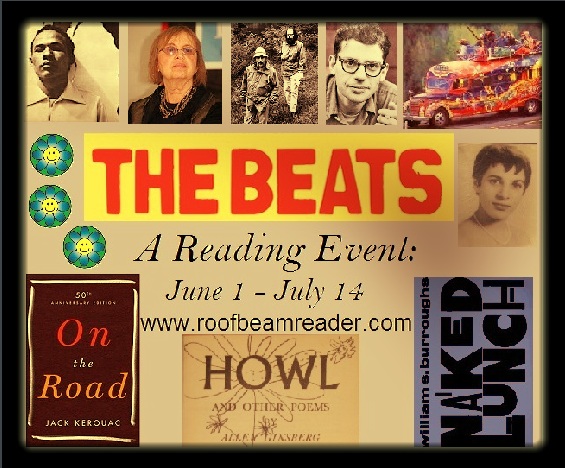
Welcome to the Master Post for The Beats of Summer! This is a one-month event focused on all things Beats, including primary texts, any re-imaginings of their original works, biographies, critical texts, etc. In early May, I announced sign-ups for the event, and was very surprised by the great response from all different types of readers & bloggers! I know many of you, like me, have been anxious to get started – so thank you all for your interest, for signing-up, and for spreading the word.
I have a lot of things planned for this month-including giveaways, guest posts, and, of course, my own reading and reviewing of Beat works. First, let’s talk logistics.
At the bottom of this post is a “Mister Linky” widget. Whenever you review a book or write a post related to the event, please link it on this master post. Please include the title or subject of whatever your post is AND your blog name in the “Name” section of the link. It should look something like: “On the Road by Jack Kerouac (Roof Beam Reader).” This will ensure that all the links are in a similar format, and that others will know what your post is about before they click on it. I will make sure that the button on the right side of my blog will take you to this post. Please make sure to only link-up your posts on this main list!
Whenever you link a post, you will become eligible to win the giveaways that I will be hosting here throughout the month. The only way to be entered for these prizes is to make sure your posts are linked-up here (this includes reviews of the books you’ve read, commentary on Beats topics, giveaways, or any other posts directly related to this event).
There are also going to be giveaways hosted by participants of the event (we are still accepting offers!). Specific details for each of these giveaways may be different, so be sure to read the rules on those giveaway posts carefully and enter if you are interested! For any of the giveaways, here or at other participants’ blogs, you will need to be pre-registered (before June 15th) for this event in order to win.
Our first giveaway comes courtesy of Vintage Books!

They have generously sent me one copy of The Voice is All: The Lonely Victory of Jack Kerouac by Joyce Johnson
Rules:
1. You must be a registered participant of The Beats of Summer reading event.
2. You must read, review, and link-up one review by June 15th or post a new announcement on your blog about your participation in this event (also by June 15th).
Alright, I think that’s it! I hope you are as excited as I am! Let’s go get our Beats on!
The first book I’ll be reading is Howl by Allen Ginsberg- what’s yours!?
Armchair BEA Day 4: Non-Fiction!
Today is Day # 4 of Armchair BEA and our Genre of Choice is: Non-Fiction!
I will be honest and say that I do not read very much non-fiction. At least, I haven’t before this last year. Since September of 2012, though, I have been reading an enormous amount of non-fiction, at least compared to what I usually read. This is because I started my Ph.D. in English program and, despite what people think, it’s not just reading novels! That’s probably the least of it, actually.
In addition, I have also been making a concerted effort to read more books on writing and to read more biographies/autobiographies/memoirs of people who I find interesting. I also recently purchased a pile of books on the French Revolution because I’ve been fascinated by it, lately. Most of those books remain unread, but still!
So, while a year ago I may not have known where to go with this category and what to suggest, today I feel pretty confident that I can recommend some good ones. I’ve listed a few below, with a short description and a reason why I recommend the book. If you have any great suggestions for me, please let me know!
On Writing:
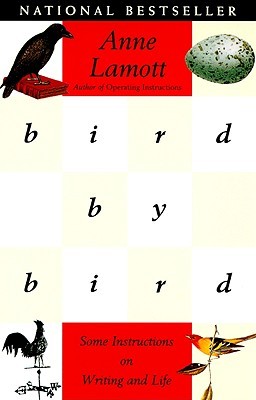 Bird by Bird by Anne Lamott: I’m actually in the process of reading this one right now, so I can’t give to many details about it. What I can say, though, is that as a reader and a writer, I responded to it right away. The struggles, the confusion, the way real life seeps into our writing and into our writing process, it is all there in a well-told voice that is lovely to follow along with. I can’t wait to finish this one.
Willa Cather On Writing by Willa Cather: Willa Cather is one of my favorite writers. I read this collection of essays and letters (or at least parts of it) a long time ago and have it on-shelf for a re-read sometime soon. Cather talks about her own writing and process, as well as that of other notable writers, such as Katherine Mansfield and Stephen Crane. She focuses on how writing is an art form that is deeply personal, regardless of what one is writing. Cather is easy to read and her thoughts are inspiring.
On History:
 Vive la Revolution: A Stand-Up History of the French Revolution by Mark Steel: This book is a very concise, amusing look at the French Revolution. It is written by a comedian, but which makes it fun to read, but it is also well-researched and well-written. You get the basic facts of who, what, where, why, and when. It’s not the most insightful or detailed book in the world, but it’s a great overview and introduction, for newbies. I enjoyed it.
Colonialism and Homosexuality by Robert Aldrich: This book is a comprehensive overview of same-sex relationships in the European Colonies (Africa, Asia, South America) during the 18th and 19th centuries (there are some discussions of earlier and later periods). It really opens up the discussion about homosexuality, homosocial relationships, same-sex desire versus identity, and, most importantly, the power-relationship between Colonists and the Colonized, and how same-sex sexual relationships were bred from this dynamic. Fascinating.
On Literary Theory:
 Literary Theory: A Very Short Introduction by Jonathan Culler: I almost always like the “Very Short Introduction” books that I read. They are put out by Oxford University Press and cover a wide-range of topics. They are, as their titles indicate, short – which means they are compact, sometimes lacking detail, but great resources for beginners or those who want to brush up on a topic without spending too much time on it. This was the first of the series that I read, and the first book on literary theory that I ever read. It was definitely a good introduction, it pointed to a lot of the major schools, movements, and theorists, and, most importantly, it had a great bibliography for further reading.
Literary Theory: An Introduction by Terry Eagleton: This book (and After Theory, also by Eagleton) is an incredible resource for literary theorists, new or experienced. The 25th Anniversary edition is a must, as Eagleton revised the original to include material on feminist and cultural theory. This text covers all of the major schools, goes more in-depth than the “Short Intro” books and, most importantly, is written in a way that is not a burden to read. Eagleton’s narrative voice is engaging and relaxed, which is helpful when the information being discussed is so complex and sometimes dry.
On Philosophy:
 Five Dialogues by Plato: A collection of essays which recount the days leading up to Socrates’ trial for “corrupting the youths of Athens”, as well as Socrates’ defense (apologia) to the jury, and his final conversation with his closest friends before his induced suicide by hemlock. The essays are an exploration of the man and his methods, as well as an historical account by Plato of the time period and its dangers (during the transition from oligarchy to democracy there was a tension between the government and its people – the government being always weary of its own weaknesses). For anyone interested in history, philosophy, rhetoric, or law, this is a must-read.
A Room of One’s Own by Virginia Woolf: Some call this book a work of feminism, others an instruction on writing. It is, indeed, a collection of lectures given by a feminist woman to a group of university writers and while I do believe it checks-off those boxes, I found this book to be more than just a “feminist writer’s piece” or a “woman’s piece,” despite its most famous quote about what a woman needs. Woolf tells a story in order to get her point across about telling a story – it is metanarrative and humanist philosophy in one. She’s commenting on gender dynamics, power struggles, individual liberties, and personal fulfillment. This is one of the most powerful, and empowering, books that I have read in the past decade – and I am a dude, so it’s clearly not just for women.
Biographies/Memoirs:
 The Beautiful Room is Empty by Edmund White: The Beautiful Room is Empty is the second memoir n an autobiographical trilogy. It discusses not just the growth of boy-into-man, but also gives a historical account of the period. The 1950s and 1960s – the rise and fall of the Beatniks. The advent of hipsters. The strain for one man to understand what being homosexual means, and for one nation – one culture – to begin approaching a similar question. What is “gay?” White seamlessly weaves individual struggle with populous turmoil. There is the question in general, and the answers as approached through different lenses: class, education, region. How do the Midwestern intellectuals, mundane and suburban, treat homosexual? What about the artsy, edgy New York City high-rollers? The rich? The destitute? What’s the difference between a “trick,” his “john,” and day-life versus night-life? This novel attempts to answer these questions, and more. Really, though, it’s a novel of questions. It’s a memoir of life, as lead by the author – someone still obviously affected by the pain, the struggles, the joys, and the many, many questions of his youth. I also highly recommend the prequel, A Boy’s Own Story.
The Autobiography of Mark Twain by Mark Twain: One of the benefits of reading an autobiography, and their primary appeal for most, is that they allow readers an opportunity to learn more about a historical figure’s life and work – things that could only be guessed at or inferred by reading their fiction, watching their movies, examining their politics, etc. Twain’s autobiography fulfills this promise, in that it reinforces what one might learn about him through his fiction, but also reveals so much more about his private life, his personal ambitions, and his deep, deep pains. I found Twain’s Autobiography to be wonderful and painful. Anyone who is already a fan of Twain’s writing will certainly enjoy this text; however, conversely, those who do not enjoy his books may have difficulty with this, because his style and approach in narrative and essay form are similar (also some credit must be given to the editor, Charles Neider, who put some structure and organization into this edition of the work – Twain had dictated the entire thing, so its original form was far from fluid or cohesive). It was incredibly rewarding not just to learn more about the man and his private life, but also about his writing process, his relationships with other prominent writers and figures of the time.
Ultimately, I am still a fiction reader, most of the time. I do enjoy non-fiction, though – much more than I used to. I think what helped me most was exploring topics that I was really interested in. Biographies of favorite writers, for instance, or well-reviewed books about time periods, events, or issues that I am passionate about.
What are your thoughts on non-fiction? Do you read much of it? Do you struggle with it? Any recommendations?
Armchair BEA Day 3: Literary Fiction!
Hello, Again, Armchair BEA folks & Readers, All!
Somehow, I have been blessed this year with two early topics that just happen to be completely in line with what this blog is mainly about: Classics and Literary Fiction! You can find my post about The Classics here. Today, it’s all about Literary Fiction.
So, what is Literary Fiction? Well, in my opinion, literary fiction is similar to classic literature in that it tends to have a timelessness of theme and a wideness of reach. What I mean is, regardless of where or when one reads a great work of literary fiction, it is likely to speak to that reader on some level. This means, of course, that the greatest pieces of modern and contemporary literary fiction have the very real possibility of becoming classics in their own right, someday.
Another similarity that Literary Fiction has to The Classics is that it tends not to be restricted by genre. So, I thought I would give a few suggestions, by genre, of books that I love and which I consider to be Literary Fiction. These books, I feel, are well on their way to become future classics:
General Fiction:
Possession: A Romance by A.S. Byatt
Dinner at the Homesick Restaurant by Anne Tyler
Play It As It Lays by Joan Didion
Sci-Fi/Fantasy: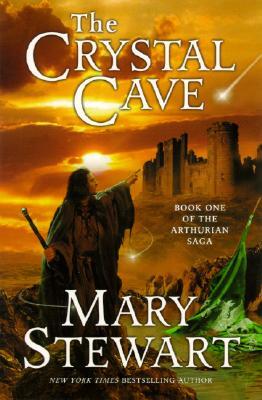
Cat’s Cradle by Kurt Vonnegut
Cloud Atlas by David Mitchell
The Crystal Cave (Arthurian Saga #1) by Mary Stewart
Historical:
Wolf Hall by Hilary Mantel
The Pillars of the Earth by Ken Follett
The Name of the Rose by Umberto Eco
LGBT/Gender:
Middlesex by Jeffrey Eugenides
We the Animals by Justin Torres
These Things Happen by Richard Kramer
Magical Realism/Dystopia:
Midnight’s Children by Salman Rushdie
The Handmaid’s Tale by Margaret Atwood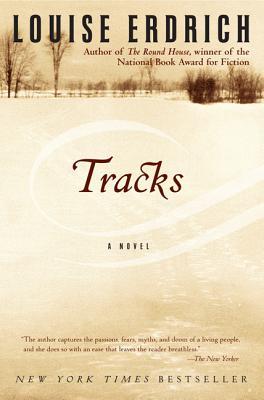
Tracks by Louise Erdrich
Ethnic American:
Memory Mambo by Achy Obejas
Rain God by Arturo Islas
The Joy Luck Club by Amy Tan
So, there are some suggestions of great (in my opinion) literary fiction, by genre, which are destined to be around for a long time. I could have gone on and on with these lists and suggestions, but for the sake of time (yours and mine), I limited myself.
Do you recognize any favorites, here? What are your thoughts on Literary Fiction, and which books do you think could be added to this list?
Giveaway: I will be offering one winner one copy of the above listed books, provided it is available at The Book Depository and is priced at $20USD or less.
To enter, please leave a comment on this post telling me which book from those listed above you would like (please do be sure to check that The Book Depository has the book and that it ships to your location). Also, be sure to leave a way to contact you, in case you win {e.g.: roofbeamreader(at)gmail(dot)com}.
The giveaway will close at 10pm CST on the last day of Armchair BEA. Good luck!
Armchair BEA Day 2: Blog Development & Genre Fiction
Becoming a Better Blogger: Discussing Development
 Today’s Armchair BEA topic is all about developing one’s blog. “Developing” and “becoming better” can carry different meanings, depending on who is asking and who is answering. It might mean reaching a wider audience or becoming an expert in a chosen field. It could also mean learning more about technology and building one’s skills to enhance the look, feel, and functionality of one’s own blog (which would likely come with the added benefits of ease-of-reading, which might naturally grow one’s readership).
I have written two posts in the past which, I think, explain what book blogging means to me and also how I charge myself with being an empathetic reader and an effective reviewer.
But, in answer to the specific question of my approach to blogging and how I have tried to develop, personally and professionally, I have just a few thoughts:
1) Honesty. My book blog is more about me than it is about any book, author, genre, etc. I read because I love it. I engage with this community because I love it. It would be doing myself and this community a great disservice, then, to be dishonest in my reviews. Whether I have received a book from a publisher, picked it out on my own, won it in a contest, or been gifted it by a friend, I follow the same standard criteria when reviewing and am honest, though, hopefully, comprehensive and fair, in my posts. I believe if I stay committed to fairness and quality and that if my readers can continue to trust that I will do this, then I am succeeding.
2) Community. I really do enjoy the book blogging community, and I respect it and the people involved. For this reason, I do my best to engage on Twitter and Facebook (and sometimes Tumblr), to visit other blogs and leave comments so writers know that I’m reading, and also to reply to comments here on my blog. I am a full-time doctoral student, an academic advisor, and a college English instructor, so I don’t have a whole lot of free time – but I do my best!
3) Income and Events. These two go hand-in-hand with the above topics. I never accept payment for reviews because I believe that, however honest and diligent I am, when money is involved, expectations change. I do, however, certainly partner with publishers, authors, publicists, and other bloggers in joining and creating events that will spotlight new books (or classics to be rediscovered). I do this because it is a fun way to engage with others who have similar interests and it also adds some spice and variety to my blog. I love to give my readers options, such as my annual Austen in August event and the upcoming Beats of Summer event. I’ve also hosted events for Andrew Smith, had authors interviewed and guest posting, and have helped to publicize new audiobook collections of Hemingway and others.
On Genre Fiction
Although I read primarily literary fiction and the Classics (thanks for yesterday’s topic!), I do also read plenty of genre fiction. I’m an eclectic reader, I guess, though I do tend to veer towards timeless works.
Some of my favorite genres include Fantasy, LGBT fiction, and Young Adult (particularly dystopian). I’m very picky about my YA books (I tend to enjoy YA that also appeals to older readers, such as the works of John Green, Andrew Smith, and David Levithan tend to do). I do also read some horror, on occasion (I love Stephen King) and intellectual thrillers/puzzlers (Yes, I’m a fan of Dan Brown – it’s a guilty pleasure!).
Out of all genre fiction, though, and, to be honest, of all books, my favorite all time reads are the books in the Harry Potter series. I know, I know – that’s the most incredibly unique opinion, right? But, seriously – the books are fantastic. The world J.K. Rowling created, the history (factual and mythological) that she put into it, and the themes she explores, are all incredible. Not only do the themes from book to book become deeper, darker, more complex and adult, but so does the narrative. The difficulty level of the prose, the intricacy of the subplots, and the characters’ growth and development all allow the reader to grow along with the series. It’s brilliant and, in my opinion, unmatched.
Here are some of my favorite works of genre fiction, by category:
LGBT:
- Under the Poppy by Kathe Koja

- A Single Man by Christopher Isherwood
- I’ll Get There. It Better Be Worth the Trip by John Donovan
Young Adult:
- The Giver by Lois Lowry
- Winger by Andrew Smith
- Every Day by David Levithan
Horror/Mystery/Thriller:
- Angels & Demons by Dan Brown
- Beautiful Children by Charles Bock
- And Then There Were None by Agatha Christie
Sci-Fi/Fantasy/Dystopia:
- The Road by Cormac McCarthy
- The Night Circus by Erin Morgenstern
- The Dark Towers Series by Stephen King
Magical Realism/Other
- Midnight’s Children by Salman Rushdie
- The House of the Spirits by Isabel Allende
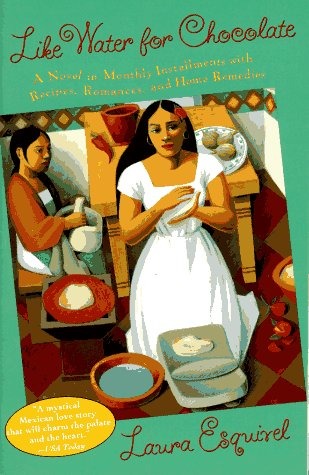
- Like Water for Chocolate by Laura Esquivel
So, there you have it! My thoughts on developing and a blogger and on genre fiction. Now, I’m off to explore other blogs and other thoughts!
Armchair BEA Day 1: Intro and The Classics!

Hello, Armchair BEA folks (and everyone else)! I’m excited to be participating in Armchair BEA again this year. Today’s post includes both my introduction and also my response to today’s genre question. Please do leave comments, ask questions, etc. I look forward to talking with you all, and I can’t wait to visit your blogs, too!
Introduction:
- Please tell us a little bit about yourself: Who are you? How long have you been blogging? Why did you get into blogging?
-
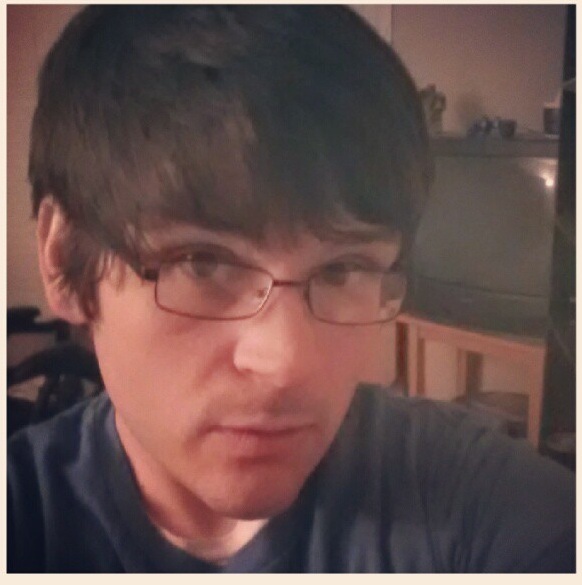
- My name is Adam AKA Roof Beam Reader. I have kept a blog for well over a
 decade, now, but I have been blogging about books, specifically, for four years. I first got into blogging because it seemed a good format for creative expression. Then, as I moved through college (English major) and onto graduate school (English/American Lit), I realized I wanted & needed a place to keep my thoughts on books. Voila – book blog!
- My name is Adam AKA Roof Beam Reader. I have kept a blog for well over a
-
- Where in the world are you blogging from? Tell a random fact or something special about your current location. Feel free to share pictures.
- I’m blogging from Chicago, Illinois! Random fact? Despite popular folklore, there is no evidence that the O’Leary cow started the great fire if 1871. That being said, there’s no real evidence to dispute it, either. After all, the fire DID start in their barn, on an unusually warm October day, after a hot and dry summer.
- Have you previously participated in Armchair BEA? What brought you back for another year? If you have not previously participated, what drew you to the event?
- Yes! I believe this is my third year. I’ve not been able to make it to the actual BEA yet (maybe next year?), but I still like to be involved. I always have fun, I always meet great, new (or new-to-me) bloggers, and I always love the topics. So, why not!?
- What are you currently reading, or what is your favorite book you have read so far in 2013?
- I’m currently reading Don Quixote by Miguel de Cervantes, for the Classics Club (more about this below). My favorite books of the year, so far, have been Winger by Andrew Smith and Orlando by Virginia Woolf.
- Tell us one non-book-related thing that everyone reading your blog may not know about you.
- I was born on Easter Sunday and the nurses put me in a little blue bunny suit. The pictures continue to haunt me.
- Name your favorite blog(s) and explain why they are your favorite(s).
- This is tough. There are so many blogs that I love. But, I really enjoy A Literary Odyssey and Delaisse. Both Allie and O, the respective bloggers, are intelligent and engaging, and they, like me, consider reading to be a personal journey of sorts.
- Which is your favorite post that you have written that you want everyone to read?
- Another impossible question! As far as reviews go, I’m really proud of my review for War and Peace by Leo Tolstoy. I also wrote a blog post about the 10 posts I consider to be most representative of me as person and blogger, which has a few links. It is titled: 10 Posts to Get a Glimpse of Me!
- If you could eat dinner with any author or character, who would it be and why?

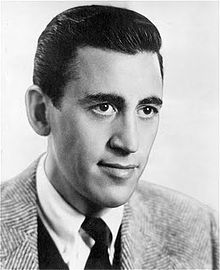
Salinger (1919-2010) - This is something I think about all the time, and my answer always changes. If I had just one chance and one choice, though, I would sit down with J.D. Salinger. It’s impossible for me to choose anyone else.
- What literary location would you most like to visit? Why?
- I would love to visit Edgar Allan Poe’s house and also the Globe Theatre. The Irish pub where James Joyce used to write would be fun to see, too.
- What is your favorite part about the book blogging community?
- So many great, passionate people sharing a common interest. I learn a lot from these folks, and I’m exposed to great books that I might not have otherwise taken a chance on.
- Is there anything that you would like to see change in the coming years?
- I kinda wish e-readers would disappear. 😉
Genre Topic 1: The Classics
The Questions:
- Today, tell us all the reasons why you love classic literature.
- Well, that’s quite the undertaking! Why do I love classic literature? I suppose the easy answer is that “classics” are considered as such for a reason. They have staying power, they speak to every new generation, regardless of how much time – decades or centuries- has passed. The reasons for this are debatable, but I think classic literature is very human at its core. It speaks to us because it causes us to be introspective, to reflect on situations in our life that were similar, but it also gives us opportunities to explore things we’ve always imagined.
- What are your favorite classics?
- Oh, another impossible question! Okay, then! I really have no idea how to answer this. Of course, I do have my favorites, but there are so many – and so many great classics that others love but aren’t my own personal favorites- that I’m not sure where to start. To keep myself sane, I’m going to limit myself to three. I will say, some of my all-time favorites and some of the best pieces of literature that I know, are: The Grapes of Wrath by John Steinbeck; Pride and Prejudice by Jane Austen; and Les Miserables by Victor Hugo.
- If you could give a list of classics to someone who claims to hate them to make them change their mind, what would be on it?
- I feel that people who don’t read classics are probably intimidated by the idea of them more so than by any (or many) actual experiences with them. I would recommend books by Willa Cather, Charlotte Bronte, and Thomas Hardy, among others.
- How would you convince them to give classics a try?
- I would also suggest reading them in groups, to begin with – it’s sometimes more fun, more informative, and less scary to
 read classics as a group. So, if this is you, perhaps consider starting a book club or, even better, join The Classics Club! I’m one of the moderators and co-founders of The Classics Club, so don’t mind the shameless self-promotion, but to be honest, we have a great group of people, readers of all levels, who read at their own pace, participate in various events and challenges, all with the goal of reading more classics. It’s quite the club! We are also on Twitter and Facebook!
- I would also suggest reading them in groups, to begin with – it’s sometimes more fun, more informative, and less scary to
- And why do you keep coming back to those old favorites?
- They teach me about myself, about others, and about the world around us. There’s nothing more interesting, nor more important, than that. Plus, the good ones are just so good.

 Roof Beam Reader