Roof Beam Reader
Adam Burgess
TBR Pile Checkpoint #4: April Progress!

Welcome Back, TBR Pile Challengers!
It is April 15th and we are now at Checkpoint #4 for the 2013 TBR Pile Challenge! Can you believe we’re already 1/3 of the way through our challenge? Congrats to all those who have been keeping pace and making some progress – it has been awesome to see all the discussions on Twitter, Facebook, and your blogs!
Where I’m At: I have already read 7 of my required 12 books. I can’t believe I’m more than half-way done! I plan to read one more (Gods and Monsters) by mid-May, which will leave me with just 3 more books to finish this challenge. Looks like I might get to read all of my 12 and the 2 alternates, this year!
Book #1: O Pioneers! by Willa Cather
Book #2: The Alchemyst by Michael Scott
Book #3: Orlando by Virginia Woolf
Book #4: The Gunslinger by Stephen King
Book #5: The End of the Affair by Graham Greene
Book #6: Sodom on the Thames: Sex, Love, and Scandal in Wilde Times by Morris Kaplan
Book #7: A Streetcar Named Desire by Tennessee Williams
My favorites so far have been Orlando, A Streetcar Named Desire, and O Pioneers! but, I’ve really enjoyed all of my choices – the Morris Kaplan text, in particular, was very interesting!
Now that we’re 1/3 of the way into the new year and this challenge, what are your thoughts? How are you doing? Have any of your books blown your mind? Any major duds leave you diving for the alternate pile?
Below, you’re going to find the infamous Mr. Linky widget. IF you have completed any reviews for books on your challenge list, please feel free to link them up here so that we can easily find your posts, encourage one another, see what progress is being made on all these piles, etc. Also, feel free to link-up to your own checkpoint post, should you decide to write one (not required – but feel free!)
Now, Onward! And Happy Reading!
LINK UP YOUR REVIEWS March 21 – April 20
(Please wait until May 15th to link-up posts written after April 20th)
Thoughts: City of Glass by Cassandra Clare
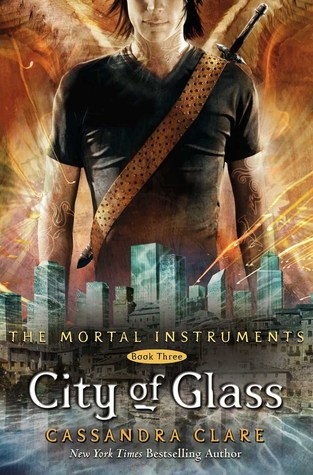 City of Glass by Cassandra Clare
Final Verdict: 3.25 out of 4.0
YTD: 25
Plot/Story
3 – Plot/Story is Interesting & Believable
City of Glass is the third book in the Mortal Instruments sextet. It follows the story of Clary, Simon, Jace, Alec, and Isabelle, which is first established in City of Bones and then built upon in City of Ashes. In this one, Clary and Jace, having fought together in the battle against their father, Valentine, have resolved to put their rather odd feelings for each other aside and move forward as siblings. Clary, having gained recognition and respect in the Shadowhunter world, having fought to protect New York (and the world) from Valentine and his demons, gains permission to visit Alicante, the capital city of Shadowhunters. Jace, hoping to protect her from what he is sure will turn into a difficult interrogation (no one else being as yet aware of Clary’s special abilities), attempts to get himself and the others through Magnus Bane’s portal before Clary can join them. Of course, nothing goes quite right and, eventually, Clary finds herself in Alicante, where Simon has been imprisoned, and begins to learn much more about her family history and the history of the Shadowhunter race. Soon, through his network of spies, Valentine manages to discover where the third Mortal Instrument has been hidden and manages to bring down Alicante’s protections, forcing the Shadowhunter and downworlder races to come together or face extinction.
Characterization:
3 – Characters well-developed
One of the reasons why this third book is my favorite in the series, so far, is that we finally get more history about the Shadowhunter race, the rise of Valentine, and the histories of Clary and Jace’s families (as well as the Lightwoods). There is some overcomplicating to the Valentine story, which leaves some of the relationships and their necessary resolutions feeling contrived and convoluted, but it also allows for a clearer path for the main characters, moving forward into the second half of the sextet. The relationship between Magnus Bane and Alec develops nicely, and unlikely friendships (such as between Jace and Simon) begin to form, which adds nice depth and interest to the overall plotline. Allowing for the building of these minor relationships, such as those between Luke and Jocelyn or Simon and Izzy, gives strength and complexity (and a bit of relief) to the main relationship between Jace & Clary (which, if not complicated enough, also gets added complications from two new potential romantic interests). Some characters from previous books return to add perspective and other new characters, such as Luke’s sister, provide some clarity and new information to the history of this story and the people involved.
Prose/Style:
4 – Extraordinary Pose/Style, enhancing the story.
Clare is definitely fantastic storyteller and her prose manages not just to keep up with the rapid pace of her stories, but also to give the story appropriate constraint and structure. The chapters are long, which is unusual in such a fast-moving book, but each chapter works well as its own small scene with connections to the chapters preceding and following, as well as to the larger story (which includes the earlier and likely the later books) as a whole. I always enjoy Clare’s inclusion of literary allusions, though I still would like to see her give more pointed reference to the works and writers she’s invoking (many of the chapter titles come from prominent literary works, for instance, as do various phrases throughout the book – even a ‘Notes’ section at the end of the book, with explanations about why she chose to title her chapters certain ways would be not only professional but also quite interesting and fun, particularly for readers who then might be inspired to read the original works). Still, Clare controls her story well, allowing it to surge forward when appropriate, as a fantasy-adventure story should, but always keeping the reigns so that the plot does not lose direction. The language and structure are appropriate to the reading level.
Additional Elements: Setting, Symbols/Motifs, Resolution, etc.
3 – Additional elements are present and cohesive to the story
One of the primary criticisms of this book is how blatantly derivative it is and, to be honest, I could not help shaking this feeling throughout the entire reading experience. There are clearly many elements of the story which are taken directly from other fantasy works, such as the Lord of the Rings, Harry Potter, and even Star Wars. While it is important for sci-fi/fantasy writers to be aware of the predecessors and, in most cases, to draw upon that tradition to inform their own works, Clare has not quite managed to balance inspiration with originality – she leans far too heavily on reworking others’ themes, perhaps modernizing them, but employing them in such a way as to find them basically creatively recycled. This is an important and valid criticism, I think, but it must also be said that she does have a solid grasp on contemporary social issues and includes them appropriately in her works – modernizing the fantasy genre in a way which is only just beginning to take hold. The melodrama and humor are balanced well and the book brings a satisfying if rather predictable ending to the first half of the sextet (I felt the trilogy could end here, so I am not quite sure what the next three books in the sextet will be all about). Ultimately, those who enjoyed the first two books and who have come to love these characters and their stories will likely be quite satisfied with this third installment – I am interested to see what happens next.
Suggested Reading for:
Age Level: MG, YA+
Interest: Fantasy, Supernatural, Angel Lore, Magic, Good vs. Evil, Family, Friendship, Racism.
Notable Quotes:
“Love didn’t make you weak, it made you stronger.”
“People aren’t born good or bad. Maybe they’re born with tendencies either way, but it’s the way you live your life that matters.”
“I love you, and I will love you until I die, and if there is life after that, I’ll love you then.”
“I am a man and men do not consume pink beverages. Get thee gone, woman, and bring me something brown.”
“You never really hate anyone as much as someone you cared about once.”
Thoughts: A Streetcar Named Desire by Tennessee Williams
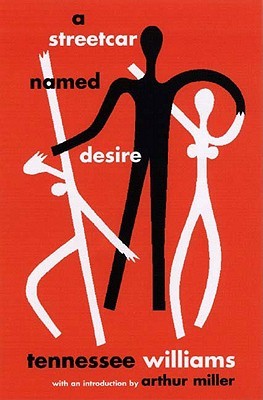 A Streetcar Named Desire by Tennessee Williams
Final Verdict: 4.0 out of 4.0
YTD: 24
A Streetcar Named Desire is my first experience with Tennessee Williams. Going into this work, I knew very little about it and I knew very little about the writer. As it turns out, I may have just discovered a new favorite. Williams was a semi-openly gay man (at the time of this publication – he did come out publicly in the 1970s) whose works, though certainly rife with queer elements, did not deal directly with gay characters or situations. A Streetcar Named Desire, though, like The Glass Menagerie, and Cat on a Hot Tin Roof, is a perfect example of how Williams subverts heteronormative literary traditions in order to queer his text. The play is about two sisters: Blanche, a mild, hypersensitive, and mentally disturbed/delusional middle-aged woman; and Stella, subordinate, sexual, and a symbol of the “New South.” It is also about Stella’s husband, Stanley. He is disturbingly sympathetic – an evil man who one can’t help but identify with. Not since reading Lolita and encountering Mr. Humbert Humbert have I felt so simultaneously enthralled by and repulsed by a literary character.
Blanche, who has suffered two major traumas, comes to New Orleans to stay with her sister and brother-in-law for a short time, until she can get back on her feet. It is soon discovered that these traumas have been the impetus for certain scandals which have forced Blanche out of her hometown and her career. These secrets are revealed to Stanley through informants (he is a man of “connections” – likely due to his time in the Army and his lingering camaraderie with GI Vets), but Blanche continues to lie and tell stories right up to the end; the end being one of the most disturbing imaginable. Stanley, in all his pure heterosexuality and machismo is the source of the play’s sexual gaze. This is a revelation for the time period and is in fact, ironically, one of the two major sources of queerness in the play. Blanche and her history explain the second and more obvious queering. The most interesting element of this play, and there are many, is that these two queer representations are battling each other for supremacy over the heteronormative element, which is to say – Stella.
What is particularly powerful and unique about the play, and I hear this is common for most of Williams’s plays, is that it is much more about language and character than it is about story (though that is there too, obviously). The nature, the structure, of plays typically do not lend themselves well to story-through-language or through characterization, due to their sparseness; however, Williams tells quite a bit of his story in the stage direction, so it is easy to see why this play would be so difficult to stage successfully (and, to my knowledge, it has only been done perfectly well in one instance – with is that of the first staging, including Marlon Brando). Williams comments on the changing nature of gender roles and sexual politics, post-World War II; he adeptly, brilliantly, exposes the new American male – the romantic but tragic and dangerous hero-come-home. Women, who had taken up work and head-of-household positions were suddenly forced back into their homes, back into submission, and the power dynamics, social confusion, and family disruption this caused is clearly explored and sensitively, if shockingly, delivered.
He also comments on elements such as “New South versus Old South,” mental health, pederasty, post-traumatic stress disorder, class, race, gender, power, and control. This short play packs a wallop – it is loaded with themes, yet so delicately crafted that the characters and their stories still manage to come first. While Tennessee Williams is largely considered to be a “New Realist” or “Expressionist,” and this certainly shows in the themes of this play and in its construction, I would argue that this play is a work of Modern Tragedy, particularly due to the absence of religion/morality and the inability of any character to gain redemption or find peace. The film, though perfectly cast and lovingly produced, unfortunately changes the ending and one of the most important dialogic moments, which eliminates the modern and tragic elements of the play. This is a great disappointment, as the play itself is perhaps perfect – which is simultaneously why it is one of the most often produced, most sought out by high-profile actors, and most disappointingly delivered.
This is one of the most moving, enjoyable, disturbing, and surprising works that I have read this year. I am eager to read more from Tennessee Williams, hopefully in the very near future (I’m considering pursuing him as a project, after finishing with John Steinbeck).
Notable Quotes:
“They told me to take a street-car named Desire, and transfer to one called Cemeteries, and ride six blocks and get off at—Elysian Fields!”
“When I was sixteen, I made the discovery – love. All at once and much, much too completely.”
“What is straight? A line can be straight, or a street, but the human heart, oh, no, it’s curved like a road through mountains.”
“I don’t want realism. I want magic! Yes, yes, magic! I try to give that to people. I misrepresent things to them. I don’t tell the truth, I tell what ought to be the truth. And it that’s sinful, then let me be damned for it!”
“I have always depended on the kindness of strangers.”
Thoughts: Sodom on the Thames by Morris B. Kaplan
 Sodom on the Thames: Sex, Love, and Scandal in Wilde Times by Morris B. Kaplan
Final Verdict: 3.5 out of 4.0
YTD: 20
Sodom on the Thames is a descriptive and argumentative essay divided into four chapters, each of which focuses on one element of male same-sex love and/or sex in the late-Victorian period.
Part One, “Sex in the City,” deals with the infamous Boulton and Park case. In it, the history of two men (Ernest Boulton and Frederick William Park) who were also crossdressers and likely prostitutes, known as Lady Stella Clinton (Boulton) and Fanny Winifred (Park), is given and their trial for intent to commit the act of sodomy is relayed. Kaplan employs readings from court records, newspapers, personal correspondences (diaries, letters, etc.) and a famous pornographic novel written by John Saul to reconstruct the world of Boulton and Park, including the way male-male love and sexuality manifested itself.
Part Two, “Love Stories,” recounts the story of William Johnson Cory, a master at Eton College who had intimate relations with some of his students. It also relays the story of those students’ relationships with each other (and other male and female lovers) as they aged and moved on from college (high school). Kaplan again relies heavily on primary source documents, such as letters and diaries, to reconstruct their friendships and romantic and sexual relationships. He also discusses linked fears and perceptions between the Boulton and Park case and the pederasty and effeminizing nature of all-boys schools (where boys were encouraged to play the role of women in plays, for instance).
Part Three, “West End Scandals,” and Part Four, “Wilde’s Time,” both deal with sexual and romantic scandals of the period, not all of which were homosexual in nature (many were about Irish divorce cases, for instance). His primary investigation here is not just how homosexual acts were persecuted and prosecuted, but how class and wealth impacted one’s treatment by the law and by the press. Kaplan makes the case that the aristocratic and powerful “criminals” were often given preferential treatment under the law, but the press at this time became more publically outspoken against such biased treatment and often pushed prosecution of offenders when the legal authorities might have otherwise turned a blind eye. Such realities set the scene for Oscar Wilde’s trial and are likely why he was eventually convicted and sentenced to such severe punishment.
The introduction, epilogue, and conclusion are, like the intermediary chapters, very interesting and add much to Kaplan’s overall argument. He discusses in these sections, for instance, the role that queer and feminist theories play on the construction of this work. He also supports his decision to relay these histories in story form as a way to add depth and honesty to the discussion, elements which historical analysis or theoretical approaches might typically lack. Kaplan is clearly passionate about the subject material –sometimes arguably to the point of bias- and anyone interested in sexuality and gender issues of the late-Victorian period will likely gain much from reading this book. Though it is not in the strictest sense a historical synthesis (the lack of a works cited/bibliography speaks to this), Kaplan’s argument for adding storytelling narrative to historical analysis is well-taken and well-received.
Review: Claiming One by E.J. Runyon
 Claiming One by R.J. Runyon
Final Verdict: 3.75 out of 4.0
YTD: 23
Full Disclosure: I received a copy of this book from the publisher, Inspired Quill, with whom I have a working relationship; however, I was not in any way involved in the editing, publishing, marketing, proofing, or submission review process for this book. In fact, I only received a copy because the editor-in-chief mentioned that this writer comes recommended by Catherine Ryan Hyde, who is a favorite writer of mine, so she thought I might like to take a look.
The collection is made up of seventeen short stories of varying length, some of which deal with the same characters and all of which deal with the same general region (southwestern United States / southern California) and the same type of people (struggling poor/working-class ethnic and sexual minorities). Most of the stories are incredibly interesting and well-written. There were a few stories in the bunch which did sometimes feel stressed or project-like, reminding me a bit of a bad hair day (not that the stories were bad, but that one starts with a good head of hair and, no matter how you tease it, yank it, or play with it, it just will not do what you want it to do). That being said, these few stressed stories were definitely the exception, not the rule. In fact, I wrote a ranking next to each story in the index (Poor, Good, Very Good, Great) and of the seventeen stories, only two were anything other than Good.
What struck me first about the writing is the narrative voice. It is distinct, commanding, and engaging. The first story, “The Giant Rubber Gorilla,” opens the collection with a perfect sense of what is to come. The reader quickly recognizes these people who will be explored, the situations that might be examined, and the tone which can be expected throughout. Similarly, the collection closes with “Dandruff as Tall as Donald Duck,” which, in conjunction with the lengthier story which immediately preceded it, was a great way of wrapping-up the collection, reminding the reader of its major themes and the general determination of these people to survive, despite the perpetual road blocks placed in their way.
Some of the stories went even beyond good story telling. “Mother’s Tongue” and “Secrets of the Days and Nights,” for example, were stand-outs in their creative approach and in the slight inkling toward hopefulness they emulated, which is not an overarching theme in this collection. The stories work together the way a great fashion show should: The collection has a primary theme, it starts with bang, and then has its lulls and explosions throughout, and finally ends with a reminder of what the collection was all about, leaving the memory of it strong in the mind. Each story, like each piece in a fashion collection, simultaneously stands on its own and fits into the larger theme of the work. In this case, the theme is a restless disappointment among a class of people on the margins. There is a small, flickering light of hope that blinks throughout, meek but ever-present.
My personal favorites were the stories about Duffy and her family. They were the most powerful and seemed to work almost like the back-bone of the collection. It would be very interesting to see Duffy and the others in her life appearing again in future collections.
With this first collection, Runyon is following in the tradition of the great regional American writers. Flannery O’Connor, John Fante, Bret Harte, and Sinclair Lewis all wrote stories about a particular group of people in a particular region of the United States, and their stories stayed true to the people and their particular plights and successes. The triumph of their stories was due in part to the writers’ craftsmanship and vision, but also to the honesty of the narrative which grounded the fictive worlds deeply in reality.
If Runyon continues to write about this world and these people, we might be witnessing the start of a very special body of work. E.J. Runyon is a new writer to watch, and I applaud Inspired Quill for recognizing this talent and taking a chance on sharing it with the world.
 Roof Beam Reader