Roof Beam Reader
Adam Burgess
Guest Post: Kathe Koja, Author of Under the Poppy! (#OthersLitLGBT)

Ladies & Gents:
I am pleased to introduce to you the incredibly interesting, devastatingly talented, wholly terrific author of my favorite read of 2011, Kathe Koja!
Kathe is here today to celebrate The Literary Others and to talk a bit about her book, Under the Poppy; more specifically, she’s here to talk about love, both in the story and in the world. Please give her a warm welcome!
A REAL LOVE STORY

Only Rupert is real, has ever been, through all the cold boyhood nights, the young men’s journeys, the play upon play upon play; and Rupert is gone.
This is the heart of my novel UNDER THE POPPY: the love story of Istvan and Rupert, the way love makes another person, once a stranger, so joyously, terribly real that to suffer that person’s loss is to suffer the end of the world. Loving so thoroughly makes the lover real in a new way, too, brings out tenderness or fury or some other qualities entirely; anyone who’s ever loved knows this is true.
 Is UNDER THE POPPY a gay love story? Yes. And no. Yes, because the two true lovers are men; no, because any real love story is universal, the sweep of pleasure and loss is the same for us all. What can and does change is how that love will be experienced by that particular character in that setting in that writer’s hands: and that’s the business of fiction, of creating people who are people, whom we readers can feel for, root for, be exasperated by, yell at on the page. And if, in the story’s time and place, it’s difficult or forbidden for one man to love another openly, then that becomes part of the story, and of the love as well. But not because the men are gay: because the society insists on their separation. That same separation might affect two young people in warring Verona, a star-crossed pair, say … Does it change the story, if Romeo’s a boy and Juliet’s a girl? For sure. Does it change the love? Not at all. Because love in all its manifestations is universal at its heart.
Rupert’s smile is slower, but sweet to Istvan when it comes, Istvan’s gaze a boy’s when he murmurs as sweetly, “Shall I come to you? Later on?” Rupert’s look in return is one of helpless heat, and cherishing, calamity and love …
That’s love. That’s human. That’s real.
Kathe Koja has another special gift for us! She is going to be giving away one SIGNED copy of her book, Under the Poppy, to a lucky participant of The Literary Others event. All you need to do is leave a comment on this post, saying you’d like to win. Please also leave your email, in this format: roofbeamreader(at)gmail(dot)com. The giveaway is open until Sunday and Kathe is willing to ship Internationally!
Guest Post: My Literary Crushes! (#OthersLitLGBT)

My Literary Crushes
Anthony R. Cardno
We all develop crushes – on new acquaintances, on actors, on musicians. Sometimes our crushes fit a pattern (I have a “catastrophic attraction complex” towards redheads/gingers – my good sense goes right out the window), sometimes they don’t. And of course, sometimes our crushes are on fictional characters. Here are ten of mine, in somewhat chronological order from my teen years to now.
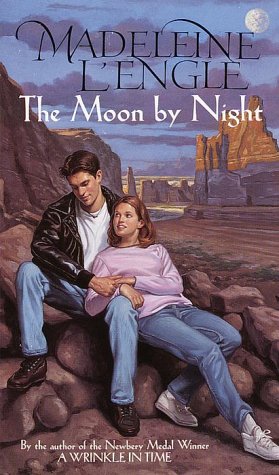 1. John Austin from Madeleine L’Engle’s “Austin Family” series. I loved L’Engle’s “Wrinkle In Time” books, but I was obsessed with the Austins. I wanted to be Vicky’s best friend, so that I could hang out with her big brother John, who is 15 when the book opens, slightly older than I was the first time I read it. His character is athletic, but not the “dumb jock” type I was already encountering, the book cover showed me a guy I immediately felt a rush for. Ah, young unrequited love! We’ve all had that straight best friend who would be perfect for us, if only…
2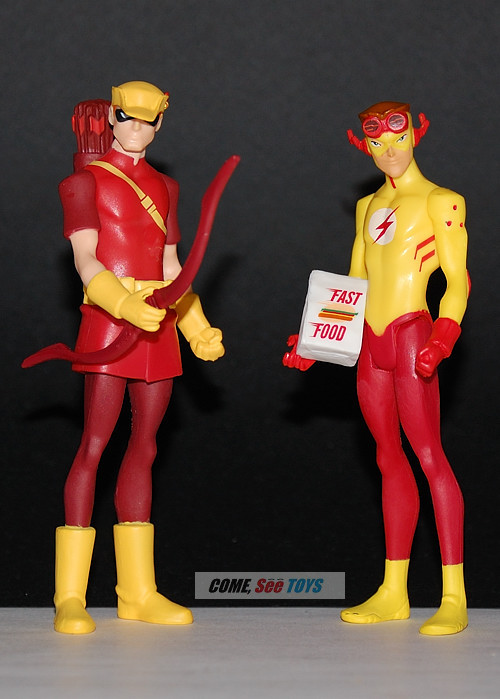 . Kid Flash and Speedy (Wally West and Roy Harper) from DC Comics’ Teen Titans. I’m pretty sure my “catastrophic attraction complex” for redheads started with these two. During the late 1970s Teen Titans run, the characters were in mostly in college and the art reflected that. Let the guys moon over Wonder Girl (Donna Troy) and the girls admire Robin’s bare legs – I wanted the bad-boys of the Titans: super-fast Wally and super-flirty Roy. Add in fellow DC redheads Red Ryan of the Challengers of the Unknown and Lightning Lad & Sun Boy of the Legion of Superheroes (especially in those Dave Cockrum / Mike Grell costumes) and … well, ‘nuff said.
 3. John Carter of Mars from the books by Edgar Rice Burroughs. Probably the first adult literary character I had a crush on. From the moment Burroughs described Carter’s arrival on Mars completely naked, I was hooked. Sure, he was violent and perhaps a bit misogynistic in some folks’ eyes – but he was naked! For almost the entire book! (The Marvel Comics adaptation that gave him clothes was of great disappointment to my teenage self, I can assure you.)
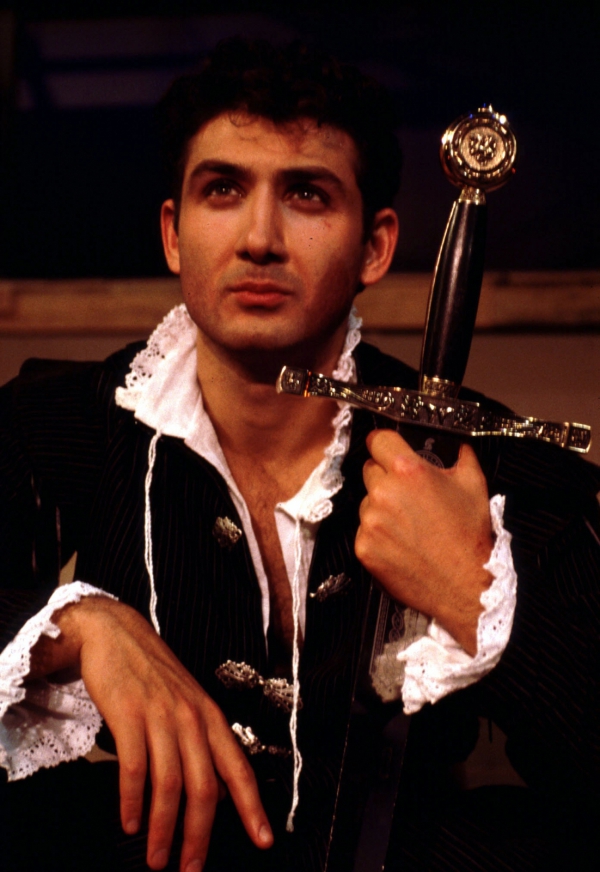 4. Prince Hal / King Henry V from Shakespeare’s Henry IV Part One and Two and Henry V. I have no idea what the real Henry V looked like, but in my mind he’s always had flaming red hair and a strong build. He grows from teen-rebellious malcontent to inspiring leader over the course of Shakespeare’s three plays, and that growth made him even more desirable to me. Come to think of it … our current Prince Harry is pretty much what I pictured Prince Hal looking like, and he’s certainly got the right personality for the role.
 5. Brother Cadfael from the mysteries by Ellis Peters. Sure he’s a monk, as well as being retirement age (or what passed for such in the 1100’s). But what a brain! And he was no slouch physically either, judging by the situations he finds himself in over the course of almost two dozen books. Older men can indeed be hot. I wasn’t at all disappointed when the BBC got Derek Jacobi to play Cadfael.
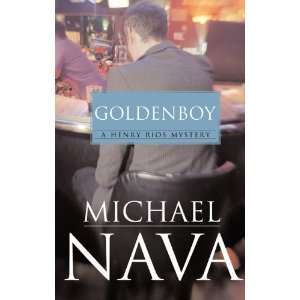 6. Henry Rios from the mysteries by Michael Nava. I haven’t read all of the Henry Rios mysteries yet, but even in the first book I found myself crushing just a little bit on the Hispanic lawyer who solves crimes (don’t they all?) and deals with lots of hot-button topics. It occurs to me that Henry is the first (but not last) actually gay character on this list.
 7. Harry Dresden from Jim Butcher’s Dresden Files. Tall with a runner’s build; snarky & full of pop culture humor but with a good heart under it all. What’s not to love about Chicago’s only professional wizard listed in the phone book? You’re probably noticing a theme by now. Smart, honest, willing to die for his friends, athletic without being muscle-bound …. the only thing that could make Harry more attractive to me would be red hair.
 8. Atticus O’Sullivan from Kevin Hearne’s Iron Druid Chronicles … speaking of which. Atticus has almost everything going for him that Harry does, plus he’s a 1000 year old Druid. He speaks Gaelic (accents turn me on). He’s a bit more boyish-looking that Harry, with that adorable soul-patch on his chin. And he’s got just enough tattoos for it to be sexy without being a distraction.
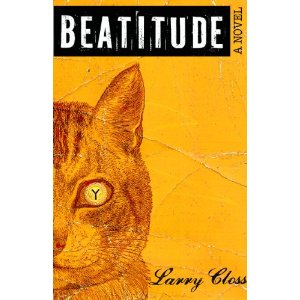 9. Harry Charity from Larry Closs’ “Beatitude.” Harry is completely, totally, in every way shape and form average. And yet I still finished the book having the hugest crush on him and wishing I could do something to make him feel better. (That’s a tribute to Closs’ writing, by the way.) There are always those one or two guys we crush on who don’t fit our “usual pattern.” This Harry isn’t a redhead, isn’t overly athletic, isn’t a bad boy or boyish, he doesn’t start in a series of books or plays. But he is openly and contentedly gay (with a penchant for being attracted to the wrong guys) … he’s the exception that proves the rule, so to speak.
 10. Ira Adler from Jess Faraday’s “The Affair of the Porcelain Dog”. I fell for boyish, smart, stuck-on-the-wrong-side-of-the-tracks Ira from the start of Jess Faraday’s first (but hopefully not last) book about the gay assistant to a Moriarty-like criminal mastermind. His situation has changed by the end of the book, but everything that makes Ira attractive remains, with a slightly harder edge to him thanks to his experiences.
I also can’t put this list out there without mentioning my own characters. Working on my college-set mystery novel “Ambergrin Hall,” I’ve populated it with guys I’d have been crushing on big-time in my actual college years: Garrett Anderson (the straight guy everyone loves), Ezra Sferra (the openly gay, highly energetic theater student) and Dylan Cole (the shy, boyish freshman just coming out of the closet). One of these days I’ll finish this book and maybe other people will crush on them, too.
Website: www.anthonycardno.com
Twitter: @talekyn
Facebook: www.facebook.com/anthonyrcardno
Goodreads: http://www.goodreads.com/Talekyn
So, who are YOUR Bookish Crushes??
Guest Post: I’m A Book Shark! (#OthersLitLGBT)


Hey everyone! First of all, I have to thank Adam for letting me be a guest on his blog today. His LGBT month is a fantastic event, and I’m so happy to be a part of it. For my guest post, I am sharing with you my top ten list of favorite LGBT books and characters. I’ve read more books with LGBT characters than I thought I had, and I plan to read many, many more. If your favorite isn’t on my list, I probably haven’t read it yet, so feel free to send suggestions to me! Thanks again, and I hope you enjoy my list and the rest of Adam’s LGBT event!
Top Ten LGBT Characters and Books
1. Sing You Home
Jodi Picoult – Sing You Home
This was my number one favorite book of 2011. Jodi Picoult always knows how to write a gripping novel. This one may change your perspective on LGBT issues if you’re undecided.
2. Nedra
Melanie Gideon – Wife 22
Nedra is so confident, witty, smart, and funny. She’s a divorce lawyer and has a loving partner named Kate. Nedra is an all-around brilliant sidekick character.
 3. Paul
David Levithan – Boy Meets Boy
In my review of Boy Meets Boy, I write, “Paul’s a cool kid, and I’d love to know someone like him in real life.” I really enjoyed his confidence and perspective.
4. Beauty Queens
Libba Bray – Beauty Queens
I won’t name the characters because it turns out to be a surprise, but I was glad that it was added in there. Side note: this audio book is amazing!
 5. Portia de Rossi
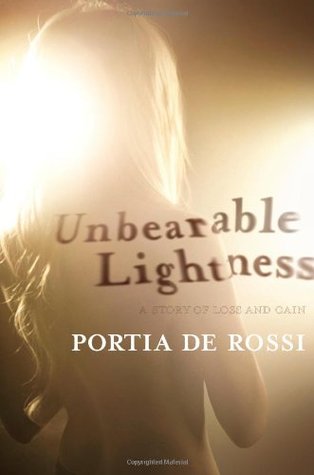
Portia de Rossi – Unbearable Lightness
Yeah, I know she’s not a character, but her memoir is a gorgeously put together story of her struggles with weight and sexuality. Kudos to her for being so honest.
6. Nathan and Andy
Stephanie Perkins – Lola and the Boy Next Door
Nathan and Andy are Lola’s two fathers, and BOY did I love them! Not only did Lola have supportive, loving parents, but they happened to be gay. They are a great family!
 7. The Perks of Being a Wallflower
Stephen Chbosky – The Perks of Being a Wallflower
It has been a while since I’ve read this one. I didn’t particularly enjoy it, but I did love all the Rocky Horror Picture Show references. It’s a novel lots of people have loved.
8. Impulse
Ellen Hopkins – Impulse
This book is raw and real. This is a good example of why books that tackle tough topics should not be banned. They should be available so teens know they’re not alone.
 9. A Single Man
Christopher Isherwood – A Single Man
I was so sad while reading this book. There were good moments, but if you take away the fact that he’s gay, he lost his partner and doesn’t know how to move on.
10. Brokeback Mountain
Annie Proulx – Brokeback Mountain
Anyone can appreciate this short story about love and loss. The movie did a great job of sticking with the story, but the book really shows the struggles of the two men. Great literature.
Thanks, Mickey, for stopping by and sharing your awesome list with us! There are quite a few of my favorites (The Perks of Being a Wallflower, Boy Meets Boy, A Single Man) on your list!
Folks, you can visit Mickey (I’m a Book Shark) at the following:
Blog: www.imabookshark.com
Twitter: @imabookshark
Facebook: www.facebook.com/imabookshark
Goodreads: www.goodreads.com/imabookshark
Review: One Flew Over the Cuckoo’s Nest by Ken Kesey

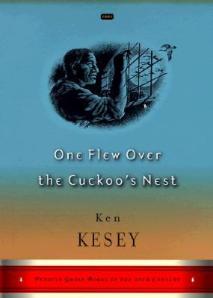
One Flew Over the Cuckoo’s Nest by Ken Kesey
Final Verdict: 3.75 out of 4.0
YTD: 41
Plot/Story:
4 – Plot/Story is interesting, believable, and impactful.
One Flew Over the Cuckoo’s Nest is the story of a group of men residing in an Oregon (USA) mental hospital during the late-1950s /early-1960s. It is narrated by a seemingly deaf and dumb inmate called “Chief Bromden,” who is half-white and half-Native American. His story revolves primarily around the “battle” between a new inmate, Patrick McMurphy, and the ward’s head nurse, Mildred Ratched. There are also minor struggles between the white inmates and the black staff, who work for (and whose loyalties lie with) Nurse Ratched. While some of the patients are in the hospital for valid reasons, such as Bromden’s inability to engage with the world (he is perhaps somewhat schizophrenic), others seem to use it as a hiding place of sorts. Many of the men are the “victims” of overbearing women – be it their wives or their mothers. They have been institutionalized because they cannot deal with their emasculation. McMurphy, the Alpha Dog of the group, comes to the hospital having faked insanity to escape a prison term for statutory rape. His virility and manhood are what inspire the men of the ward to revolt against Ratched’s authority, and to see her as a woman for the first time.
Characterization:
3 – Characters well-developed.
The main characters are Chief Bromden, the narrator; Randle McMurphy, the “hero”; and Nurse Ratched, the “villain.” Bromden narrates the story through cloudy, drug-fogged eyes. He is being medicated for the entirety of the novel, though sometimes, it seems, there is less or more medication, and this naturally follows with less or more clear narration. Still, he is rather unreliable on the whole, even admitting as much sometimes (“… it’s the truth, even if it didn’t happen”). Bromden is a bit of an outsider. He has faked ailments, including his supposed inability to hear or to speak. He reveals himself inadvertently to McMurphy, and we understand that Bromden has just been using these ailments to remain outside conflict and to “witness” things without having to participate in them. He is also a bit of a Huckleberry Finn personality- an innocent, wrapped up in a complicated situation. Huckleberry Finn is often torn between doing what “is right” according to his society’s standards and doing what “feels right” to him. Ultimately, he does what “feels right” (which turns out to be what is actually right), despite pressure from society, religion, etc. Bromden is caught in similar predicaments.
McMurphy is a comic book hero if ever there was one – bold, brash, and flawed. He also, fittingly, has a hero complex. He believes he needs to save these men from Nurse Ratched because he believes that Nurse Ratched, being “in charge,” must necessarily be in the wrong. While Ratched is not necessarily the warmest of creatures (far from it), she is also a woman in a precarious situation – she is attempting to maintain balance and calm in a psychiatric ward filled with insane people. While McMurphy labels her a “ball buster” and leads the men to revolt against her, she tries to maintain control; ultimately, that is what the battle is all about – control. But does either Nurse Ratched or McMurphy truly want control for the right reasons? Are the patients’ best-interests their first priority?
Minor characters, such as “The Black Boys,” Billy Bibbit, Dale Harding, and Nurse Pilbow are all present to serve a function, be it to inspire conversation on race or sexuality, religion, homosexuality, femininity, or emasculation.
Prose/Style:
4 – Extraordinary Prose/Style, enhancing the Story.
One of the most interesting aspects of this novel is its prose, particularly as it is closely related to the narrator, Bromden. As Bromden’s mind clears or fogs, so does the prose become clearer or more convoluted. It is impossible to know, for sure, whether the things being narrated are really happening (or have ever happened), or if they are just figments of Bromden’s imagination (such as the mechanical devices, alive in the walls). For the first half of the novel, the story is narrated in the present tense; then, suddenly, there is a shift to the past tense (and future back-and-forth to follow). This creates some ambiguity as to when things happened and, given the end of the novel, one is left wondering whether Bromden might have escaped or, perhaps, imagined himself as having escaped, then relaying the story after the fact (either after his “striking out” – another Huck Finn parallel- or after his psychotic break which lead him to believe that he left, when he really didn’t). The language itself is simple but, as Kesey points out, sometimes the best writing does not make for the best story. Part of why One Flew Over the Cuckoo’s Nest works so well as a narrative is because it is simple but strange; it is straightforward, but twisted; it is clear, but perhaps entirely unclear.
Additional Elements: Setting, Symbols/Motifs, Resolution, etc.
4 – Additional elements are present and enhance the story.
Ken Kesey’s 1962 novel, One Flew Over the Cuckoo’s Nest is a haunting look at the polar natures of power and authority, madness and sanity, vitality and emasculation. Published to critical acclaim, the book is unique in its ability to be both comic and tragic throughout. Kesey’s background in comic books & graphic novels comes across loud and clear, as there is a clear battle between certain elements of “good” and of “evil.” Some of these battles are explored in the dichotomies of feminine vs. masculine and civilization vs. the wild. There is also an interesting exploration of laughter as some kind of superpower – laughter giving strength and courage; laughter healing pain, etc. Also impossible to ignore is the Christian imagery, with McMurphy a Christ-like figure. We witness scenes which recall The Last Supper and the Crucifixion, not to mention echoes of the Money Lenders, the Pentecost, and the Betrayal. There is also the fishing trip (which, one should notice, includes twelve men – twelve being the number of disciples Christ had) where Bibbit is told to be a “fisher of men.” The phrase is an evangelical one that describes how Christians on a mission to convert others would be viewed. Another overt reference includes the repetition of the phrase “I wash my hands…”, which McMurphy hears in the Disturbed Ward and which was the phrase used by Pontius Pilate at the crucifixion of Christ. The major difference, though, is while Christ died so that the sins of his followers could be forgiven, McMurphy’s sacrifice seems to be somewhat different. Rather than dying for the patients’ sins, he seems to be trying to save them from the abuses of society (and the ward) against them. He is much more a martyr, attempting to awaken and inspire his people, than a savior hoping to cleanse them.
Suggested Reading for:
Age Level: High School +
Interest: Masculinity, Mental Health, Displacement, Race in America, Homosexuality, Gender Roles, American Mythology (of the West).
Notable Quotes:
“All I know is this: nobody’s very big in the first place, and it looks to me like everybody spends their whole life tearing everybody else down.”
“But it’s the truth even if it didn’t happen.”
“The stars up close to the moon were pale; they got brighter and braver the farther they got out of the circle of light ruled by the giant moon.”
“He knows that you have to laugh at the things that hurt you just to keep yourself in balance, just to keep the world from running you plumb crazy.”
 *I include this title as Book 1 for “The Literary Others” event. The themes of gender roles, masculinity/femininity, and homosexuality are present throughout, and Kesey himself spent a great deal of time with some of the most prominent homosexual writers of the period, including William S. Burroughs and Allan Ginsberg.
Guest Post: Hemingway’s Garden of Eden (#OthersLitLGBT)


Gender bending in the Garden of Eden
By Natalie Ramm http://BooksAreTheNewBlack.com
“Even though she is launched from the naive premise that sexual fantasizing is a form of madness, she takes on the stature of the self-tortured Faustian, and is portrayed as a brilliant woman trapped into a vicarious participation in someone else’s creativity. She represents the most informed and delicate reading Hemingway has given to any woman.” – E.L. Doctorow
 Hemingway began writing The Garden of Eden 15 years before his death. He wrote about 200,000 words and yet the published version is only about 70,000. The book is arguably nothing like it would have been, if Hemingway had lived to finish it (this is probably why I like it).
I have never loved Hemingway. His writing is often misogynistic and his protagonists are all literary extensions of himself. However, one of the most striking differences between The Garden and Hemingway’s other work is that a woman becomes the main character (despite the fact that we see her through David’s eyes) and there is some serious gender bending. I fell in love with Catherine Bourne—when I first read this story in college—and was intrigued by Hemingway’s messages about gender and art.
GENDER/SEX
Catherine and David are newly married and their honeymoon is full of the typical midday romps and leisurely tanning sessions. But Catherine begins to change. She cuts her hair short and wears clothes that are similar to David’s. Catherine becomes David’s mirror.  This gender bending is not exclusive to appearance. She increasingly wants to be the man when they make love. When she and David meet Marita, Catherine is the one to initiate the affair with the exotic beauty. Catherine thinks of their sexcapades as more than just girls having fun, and she is severely upset when Marita doesn’t feel the same. Catherine’s sexual flexibility scares David, and he refuses to join the two women in bed. Unlike Catherine, Marita nurtures David and defers to him, and he finds solace in her uncomplicated femininity. Around Marita, David occupies the dominant male role in which he is comfortable. Catherine upsets the balance.
Gender bending is more easily accepted now than it was in 1946 when Hemingway began writing The Garden. Thank God. However, in many aspects of life we still hold on furiously to definitions of gender. Why is this? Is it just fear of disrupting the order of things? Or is it something else? Also why is Catherine the one who loses her mind? Is Hemingway saying that upsetting the natural order will make us all crazy?
ART
 David is a writer (big surprise!) and Catherine is a rich girl with no creative outlet. Catherine holds the power in their relationship because they are living on her dime. She is nurturing an artist or, in her mind, creating an artist. She makes herself a mirror of David but she also transforms him slightly to look more like her (by cutting and dying his hair). Her body becomes her canvas (as trite as that may sound). Through tanning and dying her hair she changes her outward appearance to mirror the change she feels inside. David is a central part of her art, but when she reads his story and finds out that he doesn’t even mention her, she is crushed. Why do you think Catherine’s art revolves around David when she seems to be the dominant character? Is David’s art more real than Catherine’s? What does each character’s relationship to art say about their gender?
 Roof Beam Reader