Roof Beam Reader
Adam Burgess
Review: Ghost Medicine by Andrew Smith
 Ghost Medicine by Andrew Smith
Final Verdict: 3.0 out of 4.0
YTD: 32
Plot/Story:
3 – Plot/Story is interesting & believable.
Ghost Medicine is Andrew Smith’s debut novel and, though there are some similarities to his later works (elements of danger, young protagonists, brotherly relationships at the core of the narrative), it is also quite a bit different. The story is about Troy Stotts, a teenager who lives alone with his father and who is trying to deal with the loss of his mother. He and his friends set out to have a summer of “Ghost Medicine” – a summer in where time stands still. Troy works on the Benavidez ranch, owned by his best friend’s father. The girl Troy is crushing on just happens to be Troy’s best friend’s sister, so a delicate balancing act beings, wherein Troy must figure out how to maintain his friendship with Gabriel while also building his relationship with Gabe’s sister, Luz. Joining this trio for a summer of danger and wild abandon are Tom Buller, a rough-shod ranch-hand youngin’ who is impossible not to fall in love with, and Chase Rutledge and his father, the deputy sheriff, one of whom harbors a violent anger toward Troy and his friends, the other of whom wants nothing but to retire with his full pension, even if that means lying about or ignoring his son’s misdeeds. It is a thrilling, precarious, life-changing summer – a summer none of them will ever forget.
Characterization:
3 – Characters well-developed.
Troy Stotts and Tom Buller might be two of my new favorite characters in YA fiction. Tom Buller, especially, was impossible not to be attracted to; his primary characteristics include a hilarious sense of humor, a strong sensitivity, and a die-hard loyalty to his friends. Troy, too, is incredibly loyal and brave, although a bit self-involved at times (he heads off for days at a time, and at all hours of the day/night, without much concern for how his Dad will worry). Their friendship and the relationship they build with a lonely older woman, is indicative of what the summer of Ghost Medicine is all about: passion, freedom, and doing what’s right. The two, together, are a joy to watch and, with the addition of Gabriel, Luz, Mr. Benavidez and other solid supporting characters, allows for a moving and entertaining story, progressing the plot in ways the narration does not always manage to do.
Prose/Style:
3 – Satisfactory Prose/Style, conducive to the Story.
Smith is clearly a talented writer and storyteller and though this is his first novel, it demonstrates an understanding of language, pace, and tone that makes it clear to readers: “This is a writer.” The story, though, does move rather slowly – it felt, sometimes, like swimming through molasses – liquid enough to move forward, but at a reduced pace. Perhaps this is fitting, considering the story takes place in a dusty old ranch town, far from the nearest city. Things are bound to be slowed down, here, and Smith’s prose does make the reader feel that. Fortunately, the story does move forward without stalling, even if it is going slowly. The characterization and the minor hints at danger and intrigue create just enough tension to keep things interesting, and keep the pages turning.
Additional Elements: Setting, Symbols/Motifs, Resolution, etc.
3 – Additional elements are present and cohesive to the Story.
Perhaps the most interesting sub-elements of the plot are the various forms of “Medicine” that Troy creates, to suit certain situations that the boys (and Luz) find themselves in throughout the story. Some Medicine makes them strong and some makes them disappear. But the Ghost Medicine makes them have a summer that will last forever. Troy is on the cusp of manhood and this summer is really the last between his boyhood and his adulthood – the story is not just about him coming to terms with the loss of his mother, but also with the loss of his innocence, his childish freedom. His friends are on a similar path, except for Gabey who everyone seems hell-bent on trying to protect and to save from growing-up. Unfortunately, the events of the summer do not spare anyone. We all must grow up sometime.
Suggested Reading for:
Age Level: MG+
Interest: Friendship, Family, Coming-of-Age, First Love, Rural South, Ranching, Grief/Recovery, Loss, Death/Dying
Guest Post: Mr. Darcy in the Modern World (#AustenInAugustRBR)

Today’s guest post comes from Samantha at As Read By An Aspiring Receptionist. Please give her a warm welcome!
Mr Darcy in the Modern World
It is a truth universally acknowledged that every woman in the world is in love with Mr Darcy.
Okay, so I’m exaggerating. Greatly exaggerating, I know. But what is true is that Mr Darcy is, arguably, Jane Austen’s most recognisable character. And I’ve noticed lately that Darcy’s name, his instantly recognisable name, seems to be tied up intrinsically with his character. You can see it in every modern adaptation of Pride and Prejudice. No matter how many other character’s names change to fit the new era or setting, Mr Darcy always remains Mr Darcy. But I hear you all shouting, “But Samantha! Where’s your proof?” (Or maybe that’s just the uni lecturers that reside in the back of my head continually telling me to support my claims.) So, some examples? Let’s have a look:
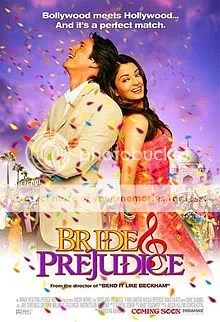
Bride and Prejudice
Bride and Prejudice moves the story of Pride and Prejudice to modern-day India (with a pit-stop in London and LA). And as such the characters’ names need to reflect this change. The Bennet family become the Bakshis, Charles and Caroline Bingley are now Balraj and Kiran, and Mr Collins turns into the amusing Mr Kholi. However, for our favourite Fitzwilliam Darcy the only change is that the Fitz is dropped from the beginning of his name. Of course, this could easily be simply because in this adaptation Darcy is American, and William Darcy sounds like a nice, normal name.

Pride and Prejudice: A Latter-Day Comedy
So this time we’re in present day Utah, and most of the characters get to keep their names with only minimal alterations. With the exception of Elizabeth, the Bennet sisters have new surnames as the five of them are now housemates rather than family. The only other notable change is that Georgiana Darcy becomes Anna Darcy (technically Euphemiana Darcy). And lucky Darcy gets to keep his full name, although no one calls him Fitzwilliam, and Elizabeth only finds out about it when Anna starts teasing him.

The Lizzie Bennet Diaries
And now we come to the most recent modern adaptation of Pride and Prejudice. The Lizzie Bennet Diaries is told through video blogs and across social media (Twitter, Tumblr, Facebook, etc.). In this version we see a lot of changes to names and characters. Instead of five Bennet sisters we have three – Jane, Lizzie and Lydia. Kitty Bennet is now literallya cat, and Mary has become the quiet cousin that most people forget. Bingley and his sister are now Bing Lee (which, in my opinion, is the most clever naming ever, as it still sounds very similar to the Bingley name but is so modern) and Caroline Lee. Charlotte Lucas, being of Asian descent, is Charlotte Lu and Mr William Collins is now Ricky Collins, though he tries to get people to refer to him as Mr Collins. But Mr Darcy? He’s still William Darcy, known and referred to by all and sundry as simply Darcy. (Lizzie: “Darcy. It’s like he’s a dub-step DJ.”)

And if you wanted to you could even draw this as far as the character of Mark Darcy in Bridget Jones’s Diary. I once read an interview with Helen Fielding where she said that she had based the character of Mark Darcy on Colin Firth’s portrayal of Mr Darcy in the 1995 BBC mini-series. (Though don’t quote me on that – it was a long time ago and I honestly can’t remember where I read it…) Although Bridget Jones’s Diary is only loosely based on Pride and Prejudice I still find it interesting that the Mr Darcy-like character still retains the name of Darcy, while every other character has their own original name. You can make of that what you will. (And yes, I picked this particular image rather than the movie poster because hey, who doesn’t love this scene?)
So what was the point I was trying to make? Shakespeare wrote that “a rose by any other name would smell as sweet,” and for the majority of characters this seems to be the case. Elizabeth Bennet still has the characteristics of Lizzy Bennet and acts like Lizzy Bennet, even when she’s being called Lalita. But we can’t seem to separate Darcy as a name from his character. Just a little something to ponder as you start watching or reading some modern adaptations…
*Related side note: It wasn’t until I was going back through these movies that I noticed that Mr Wickham always retains the same name as well (with the exception of Bridget Jones’s Diary obviously). Just an interesting point to think about, considering the relationship between Darcy and Wickham, that only just occurred to me.
Thanks, Samantha, for taking time to stop by and share an interesting perspective on Austen in the Modern World! Be sure to keep-up with Samantha at her blog and on Twitter.
Samantha is also hosting a Giveaway at her blog, to coincide with this guest post. Head on over (Here) to check it out!
Guest Post: Author C Marie Mosley (#AustenInAugustRBR)

Hello, Austenites! Today’s guest post for our Austen in August event comes from author C. Marie Mosley! Please give her a warm welcome. Also, as we are just over the half-way mark – I’ve got a special treat for you all, following the guest post.
When I heard that Adam was hosting an event for August highlighting Jane Austen, I jumped at the chance to be a part of it. As many of my followers have probably already gathered, I am a huge JA fan. An avid reader myself, the first of many books that I tend to recommend to all of whom inquire will always be a piece written by the lovely Jane Austen.
 Though I do love and enjoy reading, and re-reading, all of her works, Pride and Prejudice is my absolute favorite. I connected with this story a long time ago. There are so many pieces to this ingenious piece of art that speak to me on many different levels. I found myself to have once been very much like Miss Elizabeth Bennett– her commentary and wit seems to have almost been taken directly from my own. “I am no longer surprised at your knowing only six accomplished women. I rather wonder now at your knowing any.” But of course, we all have our “A-ha” moments …“Till this moment I never knew myself.”
I have also found a resemblance in the way Lizzie and her father are in relation to each other. I found several ‘tid-bits’ within the story that reminded of my own father. “From this day you must be a stranger to one of your parents. Your mother will never see you again if you do not marry Mr. Collins, and I will never see you again if you do.” My father, very much the same as Mr. Bennett, was always protective, concerned with what was in my best interest, as well as in tune with my hopes for my own future. Growing up, siding with me and my opinionated revels was a regular event – it has always been said that I could argue with a fence post … and win.
But the story doesn’t just resonate with me for reasons of my likeness with Lizzie, or even her  relationship with her father. My fondness of this story goes way beyond those. I do, in fact, have a Mr. Darcy of my very own. And for the continuance of my very own parallel story, I did, indeed, marry him.
Switching back, now, I love how Darcy calls Lizzie out for things that she may say or do. “…you find great enjoyment in occasionally professing opinions which in fact are not your own.” But what looks, on the outside, like pride and presumptuous prejudice … holding a proud head … I believe, is actually his way of loving her. And vice versa.
Holding your head up high with great pride is a wondrous virtue … but laying down your pride for the one you love is even more so.
I would like to extend a warm thanks to the late lovely Jane Austen for continuing to enlighten me with her words every time I pick up one of her works for the twentieth (or so) time. JA’s wit and charm will never get old.
Thank you, Ms. Mosley for stopping by and sharing your love for Jane Austen and for Pride and Prejudice! P&P is one of my personal favorites, too.
 Givewaway: Folks, our event has been such a huge success! We are just over half-way through the month and already have nearly 70 linked-up posts (posts about Jane, reviews of her books, thoughts on film adaptations, and more!).
I’m very excited about how very excited you all have been! As a “thank you / good job / w00t!” – I will be giving away, to one randomly selected winner, any “in-Austen’s-League” book of their choice from The Book Depository.
Rules:
1. Open to Austen in August Participants Only.
2. Prove your Active participation in the event (see form for details).
3. Live anywhere the Book Depository ships.
4. Select a book ($20USD or less) in “Austen’s league” (must be of literary merit).
5. Fill out This Form. Giveaway Closed. Winner selected.
Giveaway ends at 11:59pm CST on Thursday, August 23rd. Good Luck!
Review: Sanditon by Jane Austen (#AustenInAugustRBR)

 Sanditon by Jane Austen
Final Verdict: 3.75 out of 4.0
YTD: 31
Sanditon, though unfinished, is perhaps Austen’s most exciting, unusual, and promising piece of literature. Unlike The Watsons, whose plot and ending can be relatively inferred, Sanditon is quite different from any of her other stories and could probably have followed a variety of paths, so predicting its resolution is difficult to do. The story’s heroine, Charlotte Heywood, is a somewhat-exaggeratedly sensible young woman. She comes to the small coastal tourist town of Sanditon upon the urgings and guardianship of its proprietor, who is attempting to build the town’s reputation. The rest of the story’s cast are also exaggerated, but in different ways, most of them being comic caricatures – folks obsessed with false ailments, shoddy business ventures, tourism, and the like. The story is ultimately not about the characters, though; in fact, it is much more similar to Austen’s early work than her later, in that it exaggerates characterization to elevate a larger theme and, in this case, the major theme is the town of Sanditon itself and what that town represents for its inhabitants and visitors (the spirit of change).
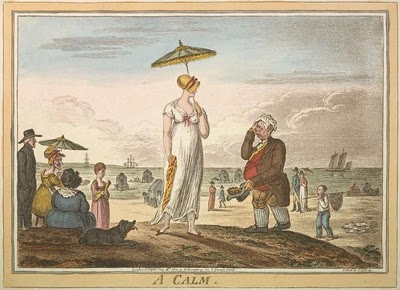 The majority of the characters in Sanditon are somehow dealing with the theme of health/illness. The main character scoffs at the many ailments of siblings Diana, Susan, and Arthur Parker, all of whom seem to be perpetually suffering from and taking medication (if you can call tonics and “asse’s milk” medication) for various laughable illnesses (although Arthur, for the most part, seems to know he is not truly sick – he just enjoys the many opportunities to be lazy and gluttonous). There is also a genuinely ill character introduced near the “end”, Miss Lambe, who is under constant medical supervision and care. Austen, it seems, might have been putting a bit of herself into Miss Lambe – her story seems to be an attempt at two things: 1st, mocking those who pretend to be ill and who seek out the various cockamamie “cures” that would go in-and-out of vogue (Austen’s mother was a hypochondriac, so this could have been a playful jab at her, too); and 2nd, a brave expose about Austen’s own ailments – perhaps a somewhat autobiographical “sea bath,” which allowed Austen to face her dying days with a sense of courage and a sense of humor.
As would be expected, the prose, style, and structure of Sanditon are masterful. Everything has a place and purpose. Unlike most, if not all, of Austen’s other works – Sanditon is a fresh, new town. It is not an old mansion, in need of repair (Mansfield Park), nor is it a crumbling, haunted priory (Northanger Abbey). It does not take place in settled old rural areas (Pride and Prejudice), but, instead, near the fresh, invigorating seaside.  Although the setting is new, Austen still makes sure to amply describe its various areas and even the names of houses and other locations; in this regard, she approaches description in very much the same way as she has done in the past. Her language is fluid as always and the dialogue is often the best, funniest element – it allows for better understanding of the characters and also moves the action of the plot along in interesting ways.
Sanditon was Jane Austen’s final composition. She was working on it in the spring of 1817, and her last notes on the manuscript were dated just months before the day she died on July 18th, 1817. Austen had been dying of Addison’s disease, her health deteriorated rapidly, so it is very interesting and appropriate that one of the primary themes of Sanditon is health and hypochondria. As a story, it was bound to be interesting and unique, had it been finished; unfortunately, what little there is of it is not quite as entertaining and “Austen-esque” as her other incomplete novel, The Watsons. Fans of Austen’s traditional, completed novels would likely be more drawn to the latter than the former, but in terms of innovation, importance, and ultimate literary impact (not to mention autobiographical import), Sanditon likely would have held the trump card, had both novels been finished.
Sanditon is Book #4 Completed for Austen in August
Review: The Watsons by Jane Austen (#AustenInAugustRBR)

 The Watsons by Jane Austen
Final Verdict: 3.5 out of 4.0
YTD: 30
There is something bizarre about my relationship with unfinished works by brilliant writers; for some reason, these works end up being my favorites. My favorite Hemingway novel, for instance, is The Garden of Eden. Hemingway worked on the novel for decades, but never finished it, and it was published posthumously. Similarly, The Mysterious Stranger is my favorite work by Mark Twain – it is also incomplete and was also published posthumously! Now, with Austen’s The Watsons, I find myself for the third time in the same situation. What, I think, connects these texts, other than the fact that they were never finished, is that they were started by the author and revisited multiple times, and other works (now famous) were published by these authors in their lifetimes, while the unfinished texts remained sedentary. These three texts are more brazen, personal, and somewhat opposite to any of the authors’ other works and it is because of this, perhaps, that the authors never seemed quite able to “complete” them, nor were they desirous of seeing the works published. I think the three expose something of the authors’ souls – they strike a sensitive nerve, which resonates with me. So, I understand why they were not completed and I doubt that, had they been finished, they would be as raw and wonderful as they are, incomplete.
This is the only novel that Austen attempted to write while living at Bath, a place she came to hate. Her previous works were written at Steventon and her later works at Chawton. The theme of the novel and its heroine, then, are suitably different from her completed novels. In this highly accomplished but incomplete fragment of a novel, we find young Emma Watson, a would-be heiress, disappointed from her inheritance and about to be orphaned by the (anticipated) death of her ailing father. At one point, her cousin Robert says to her, of her situation: “After keeping you at a distance from your family for such a length of time as must do away all natural affection among us and breeding you up (I suppose) in a superior style, you are returned upon their hands without a sixpence.” This would seem to sum up what would be the major conflict of the story – a young woman, more refined than her situation in life would want her to be, returns to a world in which she is now out-of-place, in hopes of finding a husband. It is similar to other Austen tales in that it finds a young woman seeking (or being sought for) marriage and a heroine who is determined not to marry for money.

Many believe The Watsons to have been an early draft of Emma, but it is perhaps even more similar to Pride & Prejudice, both in theme and in presentation (particularly the rapid introduction of family members and other characters at the start, and the narrative opening with a ball wherein all the major players are to be introduced, etc.).
One thing that does consistently irk me about Austen is her tendency to throw-out a lot of characters all at once, at the start of her stories. The Watsons is no exception in this regard – though it is just 5 chapters long, we seem to meet a whole host of people. This has its positives and negatives, of course; on the positive side, Austen is a master of characterization and a lot of what holds her stories together (and enhances them) is her deep understanding of people and of human nature; the negative, though, is trying to keep up with all the people, their relationships (who is related to whom?), etc. Usually, the same characters which are presented at the beginning of her novels are present throughout and right up to the end, so the reader has plenty of time to get to know them and really figure out who means what to whom, to the story, and to the narrative, but because The Watsons is so short, we do not get that particular satisfaction. It is not fault of the story itself, just the result of its having not been finished. That being said, Emma Watson is a wonderful character, one who was bound to become a classically brilliant Austen heroine (I could see her being one of my favorites, in fact, as she is somewhat of a mixture of Fanny Price, Elizabeth Bennet, and Emma Woodhouse). Her sister, too, so obsessed with marriage and other peoples’ business is fun to watch, and one can assume that the Osbornes would have been an interesting family to get involved with, particularly as they live on such a grander scale than the Watsons. Then, there is Tom Musgrave – the lady’s man. His attempts at “making love” to Emma were hilarious, in the short amount of time we were able to see it – so that, too, could have been great fun.

After “suffering” through the epistolary style of Lady Susan, it is refreshing to see Austen back in her true form, third-person narrative. Aside from the difficulty which arises from the manuscript having not been segmented in any way (a similar problem was also found in Lady Susan where, though the letters were separated, they were not dated – so one lost all sense of time), the prose is noticeably improved from her earlier works and is a clear indicator of what will become the masterful style found in Pride and Prejudice and other future novels.
With five chapters and just under 18,000 words, The Watsons providers readers with just enough content to be furious with Jane Austen for not giving us more and, especially, for not finishing it. Jane began writing the story in 1803 and though there were some revisions (the editor to the Penguin edition, which I read, points them out), Austen likely gave up on the story after her father fell ill and, in 1805, passed away. It is also possible that Austen never returned to The Watsons because she, instead, began working on Pride and Prejudice, which is very similar. At one point in the novel, Emma says to her sister: “To be so bent on marriage – to pursue a man merely for the sake of situation – is a sort of thing that shocks me.” This particular line reminds me a great deal of Elizabeth Bennet’s conversations with Mrs. Bennet (Mrs. Bennet having the same opinion of marriage as Emma’s sister in The Watsons – that it is, primarily, a financial arrangement). Ultimately, reading The Watsons results in great joy and in some melancholy. What little of the text we have is a delight to read, but the experience comes with the disappointment of knowing that this could have been a seventh novel that would have been just as strong as the completed six. What a bummer!
The Watsons is Book #3 Completed for Austen in August
 Roof Beam Reader