Roof Beam Reader
Adam Burgess
Review: Lady Susan by Jane Austen

 Lady Susan by Jane Austen
Final Verdict: 3.0 out of 4.0
YTD: 29
Lady Susan is one of Austen’s early, short works. It is written in epistolary form, as many of Austen’s early works were (even Sense & Sensibility was originally constructed as such, but later re-worked into traditional prose). Although it is somewhat similar in theme to Austen’s other novels, in that its primary characters are found to be searching for husbands, and as it is also a character study in general, with morality its major focus, Lady Susan is actually the polar opposite of what one typically expects from Austen’s works. The plot of the novella is clearly inspired by Richardson’s Clarissa. Lady Susan is on a quest to marry off her daughter Frederica to a wealthy young man, so as to relieve herself from the burden of having to “care for” the girl. Frederica resists and beseeches her family members to come to her aid, in hopes that she will not have to marry a man whom she despises. While seeking a suitor for her daughter, Lady Susan is also actively employed in flirtations (and more) with just about every man she encounters. Overall, it is a much more direct, cynical, and vindictive story than any other by Austen, and these could be the reasons why it was not published in her lifetime.
The main character, Lady Susan Vernon, is beautiful, when many of Austen’s female protagonists are plain; she is vain, conniving, and  cruel, whereas Austen’s heroines are typically kind-hearted, familial, and caring. Susan Vernon reminds me somewhat of Mommy Dearest (“No wire hangers!”). Austen essentially subverts the traditional romance genre by creating a main character who is simultaneously intelligent and attractive (traditionally, the female characters would be either/or, but not both); she plays an active role in scheming and plotting against others; she is an adulteress; and, finally, she courts younger men (unlike the rest of her novels, which find younger women being courted by much older men). Lady Susan is also entirely selfish and anti-family, which can be found in Austen’s novels, but usually only in the male characters or in certain specific circumstances (such as the matriarch’s dismissal of her son based on his choice of bride). Aside from Lady Susan, who is a love-to-hate kind of character, there is not much to speak of in any of the others. Her daughter, Frederica, is spoken well of by everyone except her mother. Catherine Vernon, who is married to Lady Susan’s brother, is rather smart and is the only one who can see right through Susan’s machinations. The men are sideline characters, for the most part, and are easily played by Susan. Because of the form and the shortness of the novella, not much growth can be expected from the characters – Susan also dominates in terms of page-time, so much of what we see from other characters are short reactions to her or descriptions of them via Susan’s skewed opinions.
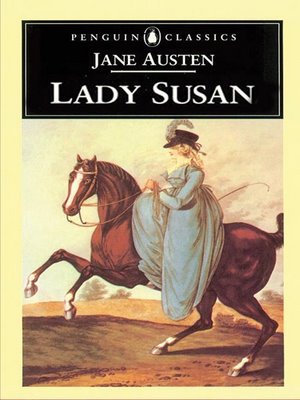 Jane Austen’s early works were drafted primarily in epistolary form; however, Austen clearly was not comfortable with writing in this way. Her mastery of prose and style suffers with the constraints that epistolary-style fiction by nature must have. Part of Austen’s brilliance as a writer comes from her ability to shape and mold characters throughout the course of a novel, and this ability is severely limited when third-person narration is excluded. That being said, the letters did still allow for Austen’s wit and sense of humor to shine, although, in the case of Lady Susan, those tools were still rather sharp and jagged – to be refined with time. It is fascinating to see the author from this younger, rougher vantage point and to wonder what her novels might have been, had she not taken the very-wise step of reworking the early ones from epistolary form and into third-person narrative prose. It is also quite edifying to see so clearly how much Austen was truly teetering on the edge of two very different generations of writing – she is quite literally the bridge between the Neoclassicism & Gothic periods and the Victorians, and to watch her progression from this early work on through to Persuasion is evidence enough of just how different these periods were and of how Austen somehow both embodied and defied them.
Quotes:
“She talks too well to feel so very deeply.”
“Facts are such horrid things!”
Lady Susan is Book #2 Completed for Austen in August!
Please Welcome: Amanda Grange, Author of Mr. Darcy’s Diary! (#AustenInAugustRBR)

Aloha, Austen fans! Today’s guest post for our Austen in August event comes from author Amanda Grange! Please give her a warm welcome. Also, Amanda’s publisher, Penguin Group USA, has a special treat for us – read on to learn more!
 I’ve been in love with Jane Austen’s books since I was about thirteen when I first discovered Pride and Prejudice in my local library. I quickly devoured Jane’s other books and read them again many times over the following decades. But in my thirties, my relationship with Austen changed because I became a writer, and I found myself looking at her books in a different way.
I was re-reading Pride and Prejudice one day and I was astonished at how modern it was in terms of style and tone. It had many of the features that editors look for today in a new submission: a lot of dialogue, a fast pace and a plot so perfect it has become the standard template for romantic fiction ever since. But the one thing it didn’t have, which a modern romance would have, was a selection of scenes from the hero’s point of view.
I was intrigued by this and I started to write some of the scenes from his point of view for my own amusement. The whole thing snowballed and those scenes ultimately became Mr Darcy’s Diary. It fascinated me to find that the book could be successfully turned 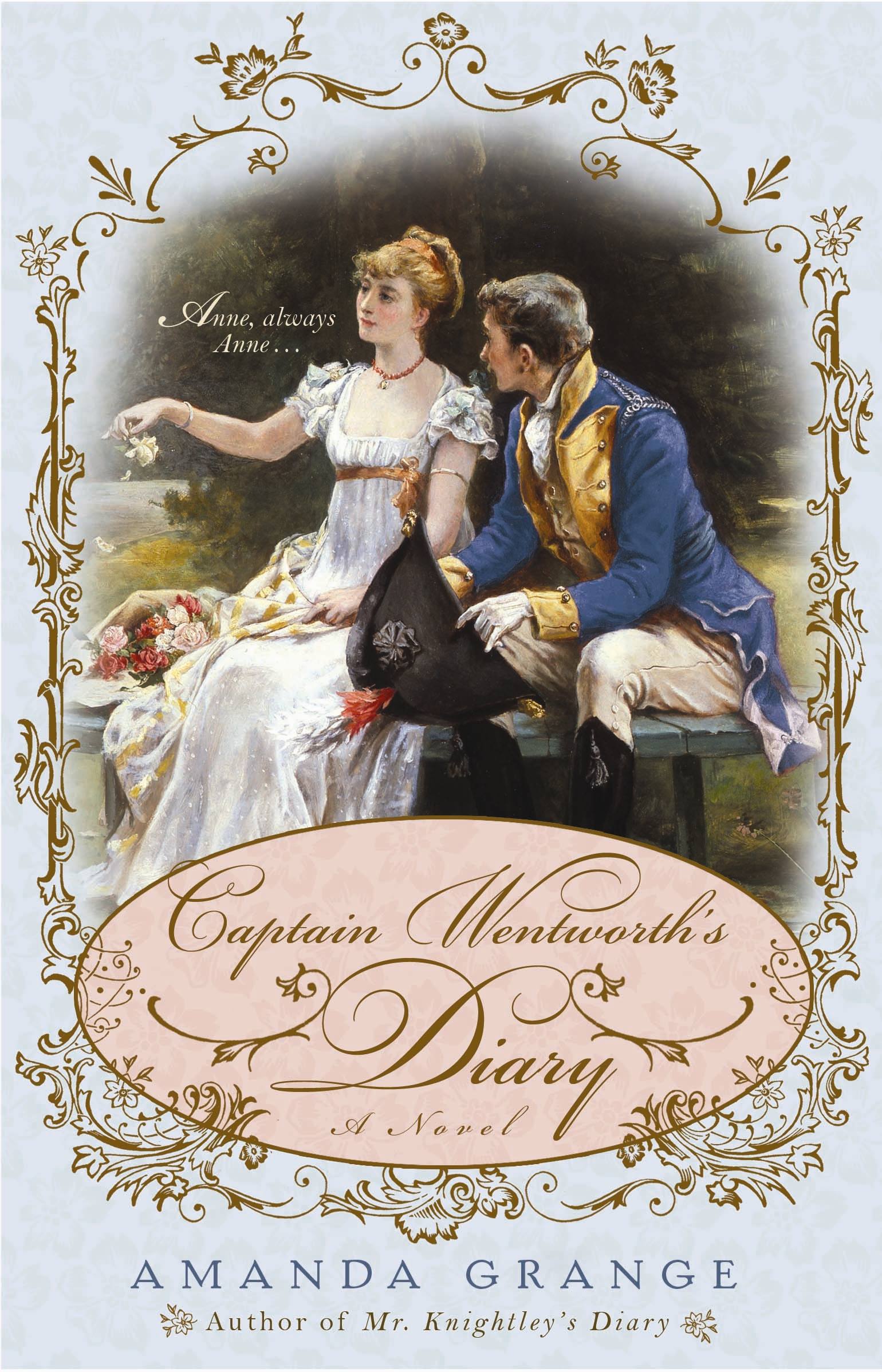 round in this way, because with most books the impetus would fade away or holes in the plot would be revealed. But Pride and Prejudice is like a perfectly formed piece of porcelain. It’s so well made it can be viewed from any angle and it still rings true.
With her other books, the same applies, and this led me to write a whole series of retellings which are now usually known as “the heroes’ diaries”. Jane’s books have so much depth that I was able to write complete back stories for the heroes, using the information contained in the original novels, before going on to look at the events of the original novels through the eyes of the hero. In the cases of Colonel Brandon’s Diary, Captain Wentworth’s Diary and Henry Tilney’s Diary, the back stories form almost half the book.
It might reasonably be assumed that my Austen obsession would have ended with the end of my series of heroes’ diaries, but in fact the more I examine Jane’s works, and her style of working, the more fascinating they become. Somehow, the books set up resonances in me and I find myself thinking, ‘I wonder . . . .’
‘I wonder . . .’ led me to write my latest book, Dear Mr Darcy.
 We know that Jane often used the epistolary form as a young woman, and Lady Susan still exists in this form. There is reasonable speculation that Sense and Sensibility and Pride and Prejudice were also originally written in letter form, before being extensively reworked.
I found myself wondering, in idle moments, what the epistolary version of Pride and Prejudice must have been like. Where did it begin? With Darcy’s arrival at Netherfield Park, or earlier? The latter, I thought, as we know that Jane later “lopt and cropt” the original text in order to turn it into the book we know today.
Rather like a forensic detective I found myself wondering how the story was carried, if it had no narrative to help it along. How would readers learn of the disastrous first proposal, for example? Were there initially more characters who were edited out when Jane had a narrative form to help her tell the story?
I began to write a few letters between the characters, piecing together the story like a giant jigsaw puzzle, to see how Jane could have managed it. Over the years I added to the letters, creating new characters as necessary, until I could no longer stop myself finishing the novel. The result was my new book, Dear Mr Darcy. It’s a unique glimpse into Jane’s early working methods as well as an entertaining read and I hope fans of Pride and Prejudice adaptation will enjoy it.
 Giveaway:
Giveaway closed & Winner notified. Thanks again to Penguin Group, USA for offering a copy and to Amanda Grange for taking time to stop by!
Thanks, Amanda, for taking time to stop by and share with us your love of Jane Austen. For more information about Amanda’s books, please visit her website at www.amandagrange.com.
Review: Sense and Sensibility by Jane Austen

 Sense and Sensibility by Jane Austen
Final Verdict: 3.75 out of 4.0
YTD: 28
Jane Austen is a subtle vixen. My first attempt at reading her work was about 8 years ago, when I decided to declare myself an English major and realized that I had best get to work on reading some of these “canonical” texts. I started with Pride and Prejudice, but only made it about one-quarter of the way through before giving it up. I wasn’t ready to take Austen seriously – I was under the common, misconceived notion that she was just a “romantic” writer. But then, in graduate school, Austen’s Northanger Abbey was assigned in one of my seminar courses, as a precursor/companion to the study of Victorian Lit. How quickly my opinion of Austen changed! To this day, Northanger Abbey remains one of my favorite books, and my favorite work by Austen. I attempted Pride and Prejudice again not more than a year later and was stunned to find myself crazy-in-love.
Sense and Sensibility is my third experience (or fourth, if you count that first time with P&P) with Austen, after more than 5 years’ absence and I could not be more thrilled to be back. The book was, somehow, more than I hoped it to be. I believe I was frightful that the last two experiences were flukes, and I was sure to hate the next Austen novel I read, because who can continue to surprise and delight a discerning reader time after time? Well, Austen can. In fact, after reading Sense and Sensibility, I truly believe Austen might be the perfect novelist. Her prose is tight and purposeful, her description just present enough to be important without being overwhelming; her characters identifiable, independent, and drawn to reflect a “type” without ever becoming grotesques (here’s lookin’ at you, Dickens!). And her humor. Her wit. What can one say about this? I will start by referring to those experts who found her completely lacking:
Rowland Grey tells us that Dickens was “blind” and “ungrateful” when he would “deny women humour”, particularly in that he denied Austen her due in this regard. Ignoring the woman who write Emma, when speaking about humour in literature by women, “was an act of scandalous injustice,” says Grey. I would whole-heartedly concur and, though Dickens was certainly not the most shining example of decent humanity (he was quite the bigot and sometimes applauded violence against/extermination of other races), but he was, in a way, a suffragist, so for him to make such a blanket statement, when such a positive example of female humor in literature was present in his nation’s own literary history, seems not just inaccurate, but almost willfully ignorant and sexist.
Then, of course, there are the infamous critiques of Austen’s work by my personal all-time favorite writer, Mark Twain, two of which (out of many) are below:
“I haven’t any right to criticise books, and I don’t do it except when I hate them. I often want to criticise Jane Austen, but her books madden me so that I can’t conceal my frenzy from the reader; and therefore I have to stop every time I begin. Everytime I read ‘Pride and Prejudice’ I want to dig her up and beat her over the skull with her own shin-bone.” – Letter to Joseph Twichell, 13 September 1898
“Jane Austen’s books, too, are absent from this library. Just that one omission alone would make a fairly good library out of a library that hadn’t a book in it.” – Following the Equator

Whether Twain himself was being satirical by violently hating, on purpose, an author so beloved just for the sake of being contradictory, I do not know (though I certainly wouldn’t put it past him). Unfortunately, we have only the many direct anti-Austen quotes to go on and, in or out of context, they seem to point to the fact that Twain truly despised her writing, including her prose and her characters. How could he and Dickens, both literary giants and geniuses, be so wrong? Conjecture about their potential biases could go on forever, so it is enough, I think, just to say that they were wrong – they either refused to give her a fair chance, from the start, or they completely misunderstood her, possibly from a lack of empathy in regards to the female psyche or, particularly in Twain’s case, from a great and real disconnect between Austen’s background and his own.
All that being said, my experience with Sense and Sensibility (S&S) was a great one. I found it to be not quite so perfectly written or constructed as Pride and Prejudice (P&P), nor quite as bold and funny as Northanger Abbey (N.A). There is a clear development of skill and practice, however, from that first novel (N.A.) and her second (S&S). Her narrative voice is more confident, her satire and wit are more subtle and refined, and the story’s overall structure and pace are delivered with a cohesive clarity which N.A. lacked. Also, though not a parody of Gothic fiction, S&S does pick-up where N.A. left off, in regards to Austen’s critique of Romantic themes. Austen is much more of a Realist than people tend to give her credit for, and while her books are certainly romantic, they are almost a counter-argument to the sensationalism of the Romance (capital R) movement.
The story itself is about the two Miss Dashwoods, Elinor and Marianne (they also have a third sister, Margaret, who is largely left out). The sisters have an extraordinary bond, being great friends and siblings alike. They are also quite devoted to their mother and are, though not from a well-to-do family, quite happy overall. Elinor, the eldest, is calm and collected at all times – always sensible of her situation, acting with propriety and class in any situation. Marianne is more passionate and unreserved – she falls in love quickly and deeply and sometimes acts in the present with little regard for the future consequences. The two both find themselves in love with men they cannot have and their eventual let-downs, recoveries, and final resolutions provide the crux of the story and also the means for deeper investigation of the sisters’ characters (and Marianne’s growth).
Elinor and Marianne’s personalities and relationships actually reminded me quite a bit of those of mine and my
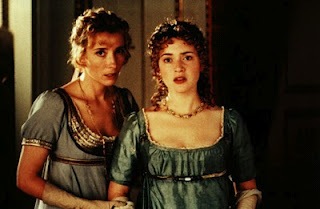
sister. My elder sister is very much like Elinor and I (though a man) saw much of myself in Marianne. There is a scene where the two sisters are engaged in conversation with some ladies and gentlemen of society, and the conversation has dulled to the point that two mothers are discussing the relative heights of their young boys. Each mother, of course, properly defers to the other – indicating that the others son, surely, is the tallest. The grandmothers, as grandmothers will, make no qualms about their grandchild being the absolute tallest, sturdiest boy alive. Then, everyone around the room is courted for his/her vote in this oh-so-serious survey. When it is Elinor’s turn, she, true to form, acts with the greatest propriety, assuring both mothers that each of her sons is surely strapping and tall for his age, indeed! Marianne, the would-be tie-breaker, decides to vote for neither, indicating that she does not know either of the boys and really cannot be bothered with the question. And the whole party is shocked and disturbed! Hilarious!
What I enjoyed most about the novel, separate from the story which was entertaining in and of itself, was the prose and construction. The pace is deceptively slow, but because each new character, scene, or event is included with a specific purpose in mind, the story is in continuous motion, which makes a non-sensational story somewhat of a page-turner (though it is hard to tell, in the moment, what it is exactly that is gripping you!).
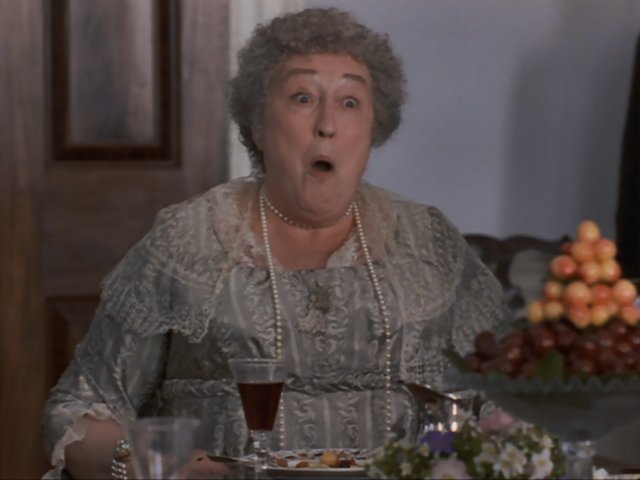
There are characters who were easy to love (like the adorable older lady, Mrs. Jennings, who dotes on everyone and who reminded me of Mrs. Santa Claus) and characters who were easy to hate (like John Dashwood, the girls’ brother, and his wife, one of the most convincingly selfish and manipulative wives in literature) but, though certain characters were clearly drawn to represent something in particular, be it a personality type, or a certain level of the caste system, none were developed in such a way as to be a “character type” rather than a “character.”
I was slightly disappointed by Marianne’s ultimate fate and found Elinor’s to be fairly expected but the way in which Austen wrapped-up the near-contrived plot (much happens suddenly at the end which allow things to go the sisters’ way) turned out to be quite masterful. There were moments near the end when I thought to myself “Okay, Jane, how will you get us out of this one?” – wholly expecting to have to believe in a resolution for the sake of believing in it, but she tied things up in believable ways, which left the expectedly saccharine ending satisfying. Yes, the dessert was always going to be sweet, but instead of the quick and easy candy bar ending, we get a crème brulee, crafted and presented with skill, to be savored and remembered forever.
Quotes:
“And they were neither of them quite enough in love to think that three hundred and fifty pounds a year would supply them with the comforts of life.”
“People always live for ever when there is any annuity to be paid them.”
“Where I have most injured I can least forgive.”
“He had just compunction enough for having done nothing for his sisters himself, to be exceedingly anxious that every body else should do a great deal.”
“She hated him so much that she was resolved never to mention his name again, and she should tell every body she saw, how good-for-nothing he was.”
“It is not time or opportunity that is to determine intimacy; it is disposition alone. Seven years would be insufficient to make some people acquainted with each other, and seven days are more than enough for others.”
“Thunderbolts and daggers!”
Sense and Sensibility is Book #1 completed for Austen In August.
The Jane Austen Centre: Bath, England (#AustenInAugustRBR)
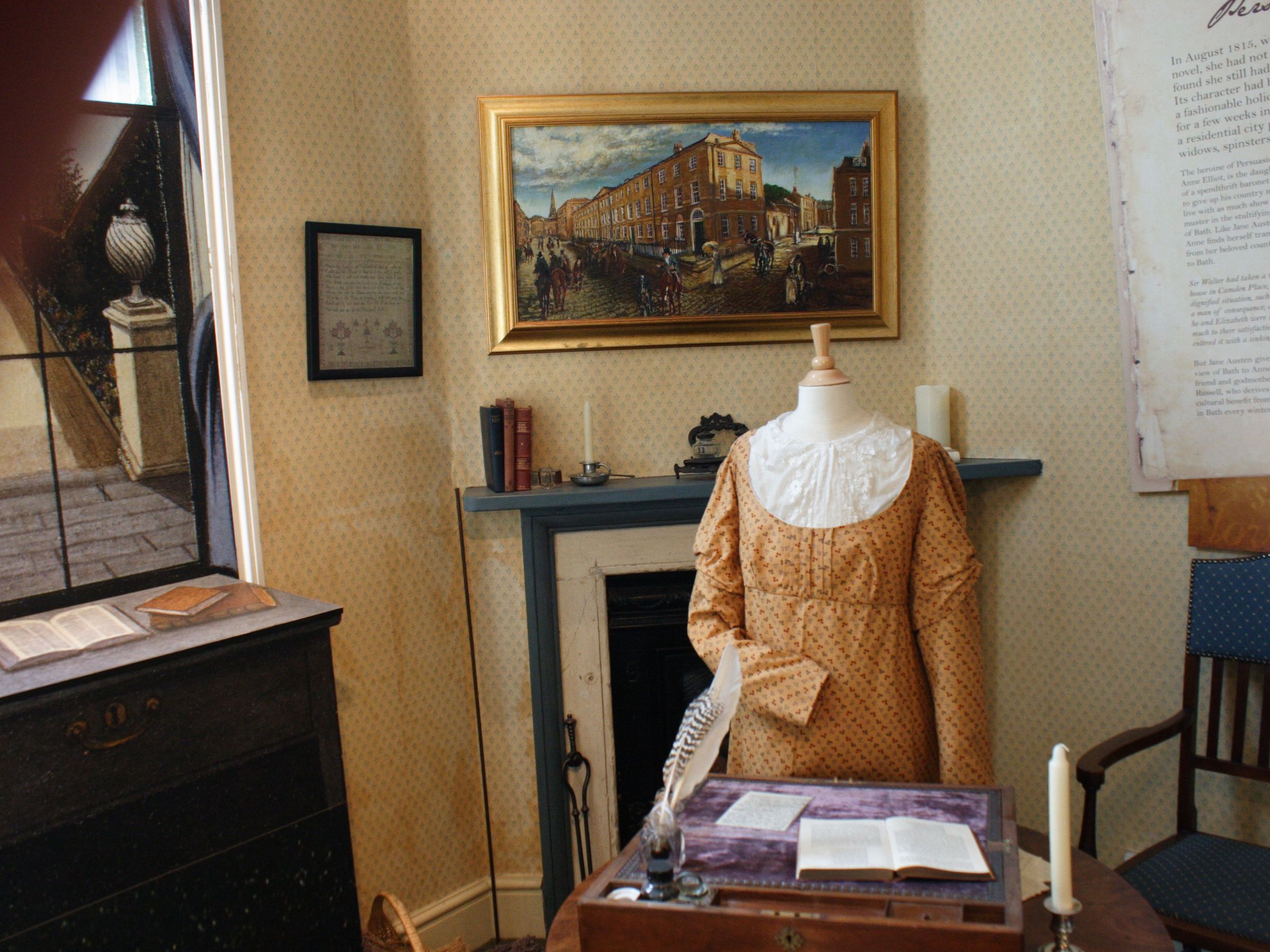
Please give a warm welcome to the next guest blogger for our Austen in August event: Meaghan from A Cineaste’s Collection!
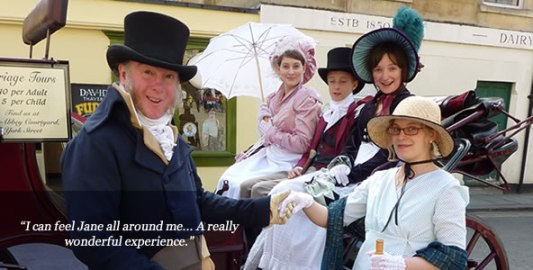 Just about a year ago I had the incredible fortune to finally visit England. I’ve been an Anglophile my entire life (I am all for reunification). One of the stops on our trip was Bath, Somerset. I believe on my next trip to Bath, I will time it to coincide with the Jane Austen Festival Promenade. Over 500 people dress in Regency attire and walk the streets of Bath. This time, we had to settle for a lovely visit to the Jane Austen Centre on Queen’s Square.
The centre is housed in a Georgian townhouse near the centre of town, populated by friendly staff in period dress. I can’t help but admit I giggled a little at the portrait of Colin Firth as Mr. Darcy in the entrance, welcoming us to the centre.
Just about a year ago I had the incredible fortune to finally visit England. I’ve been an Anglophile my entire life (I am all for reunification). One of the stops on our trip was Bath, Somerset. I believe on my next trip to Bath, I will time it to coincide with the Jane Austen Festival Promenade. Over 500 people dress in Regency attire and walk the streets of Bath. This time, we had to settle for a lovely visit to the Jane Austen Centre on Queen’s Square.
The centre is housed in a Georgian townhouse near the centre of town, populated by friendly staff in period dress. I can’t help but admit I giggled a little at the portrait of Colin Firth as Mr. Darcy in the entrance, welcoming us to the centre. 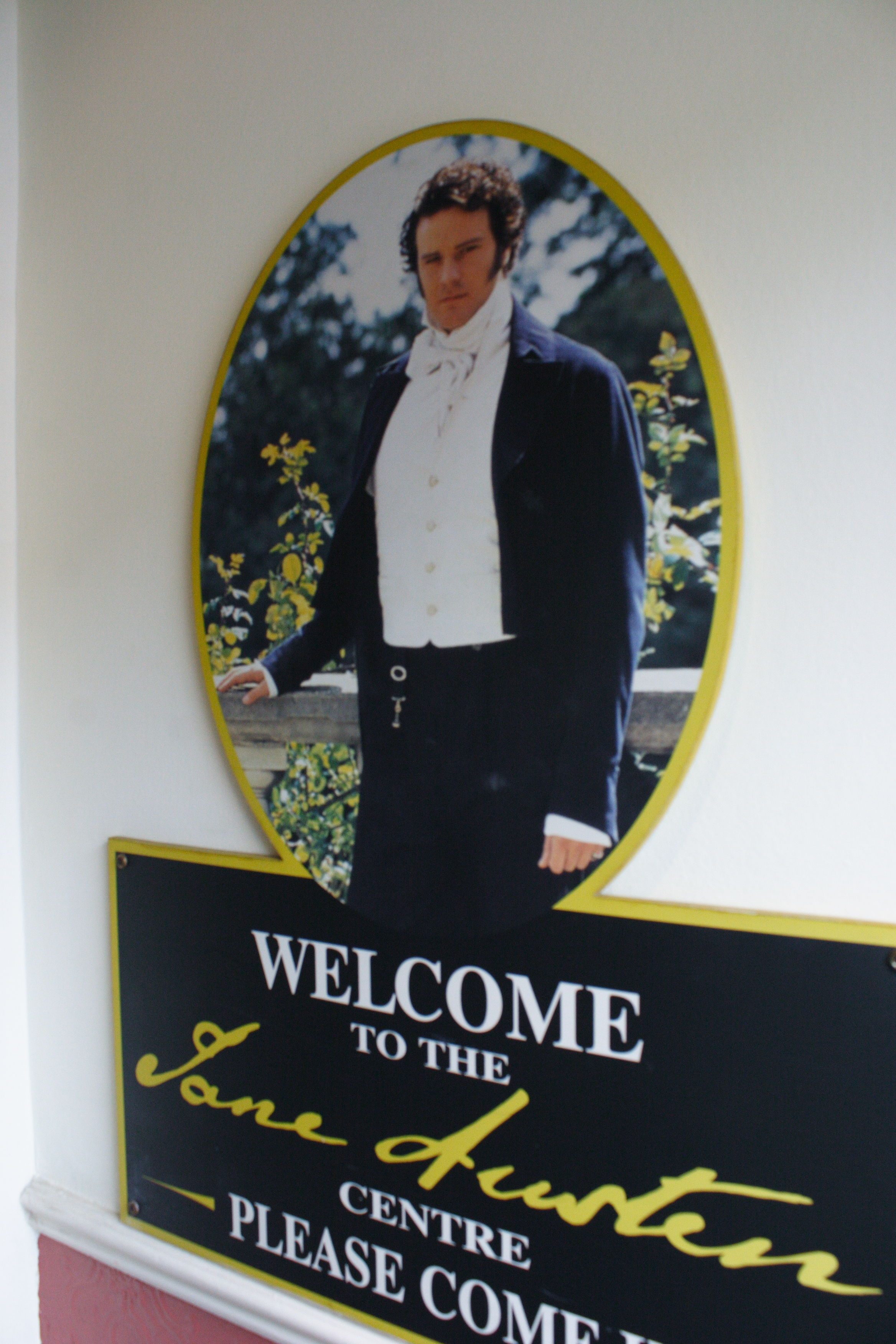 A small gift shop occupies the front room that features Austen’s books, of course, but also lesser known and hard-to-find items like her juvenilia. Guests are then directed upstairs to a rooms with a number of chairs to watch a video while waiting for the next available docent.
The visit officially begins with a very informative talk about Austen’s life and her connection to Bath. Aside from a few highlights, much of what we were told was new information to me. Most surprising perhaps was how much Jane came to despise Bath. She set two of her novels (Northanger Abbey and Persuasion) there but the depiction of the spa town varied greatly. For wide-eyed Catherine Morland (and a much younger Austen), Bath is a glittering place of parties, society and romance. This, as we learned, was likely influenced by Jane’s visits to Bath to see her Aunt and Uncle Leigh-Perrot. They kept rooms in the Paragon and it seems Jane enjoyed her time there. Austen’s character Morland in Chapter Ten of Northanger Abbey expresses her delight in Bath:
A small gift shop occupies the front room that features Austen’s books, of course, but also lesser known and hard-to-find items like her juvenilia. Guests are then directed upstairs to a rooms with a number of chairs to watch a video while waiting for the next available docent.
The visit officially begins with a very informative talk about Austen’s life and her connection to Bath. Aside from a few highlights, much of what we were told was new information to me. Most surprising perhaps was how much Jane came to despise Bath. She set two of her novels (Northanger Abbey and Persuasion) there but the depiction of the spa town varied greatly. For wide-eyed Catherine Morland (and a much younger Austen), Bath is a glittering place of parties, society and romance. This, as we learned, was likely influenced by Jane’s visits to Bath to see her Aunt and Uncle Leigh-Perrot. They kept rooms in the Paragon and it seems Jane enjoyed her time there. Austen’s character Morland in Chapter Ten of Northanger Abbey expresses her delight in Bath:
 “Oh! Yes. I shall never be in want of something to talk of again to Mrs. Allen, or anybody else. I really believe I shall always be talking of Bath, when I am at home again — I do like it so very much. If I could but have Papa and Mamma, and the rest of them here, I suppose I should be too happy! James’s coming (my eldest brother) is quite delightful — and especially as it turns out that the very family we are just got so intimate with are his intimate friends already. Oh! Who can ever be tired of Bath?”
However, Austen wrote this novel a couple of years before she was forced by strained circumstances to move there. In 1801, Jane’s father decided to retire as rector and move the family (his wife and two daughters) to the Somerset city. She writes to her sister Cassandra shortly after arriving:
“The first veiw [sic] of Bath in fine weather does not answer my expectations; I think I see more distinctly thro’ Rain.–The Sun was got behind everything, and the appearance of the place from the top of Kingsdown, was all vapour, shadow, smoke & confusion.”
letter to Cassandra — May 5, 1801
“Oh! Yes. I shall never be in want of something to talk of again to Mrs. Allen, or anybody else. I really believe I shall always be talking of Bath, when I am at home again — I do like it so very much. If I could but have Papa and Mamma, and the rest of them here, I suppose I should be too happy! James’s coming (my eldest brother) is quite delightful — and especially as it turns out that the very family we are just got so intimate with are his intimate friends already. Oh! Who can ever be tired of Bath?”
However, Austen wrote this novel a couple of years before she was forced by strained circumstances to move there. In 1801, Jane’s father decided to retire as rector and move the family (his wife and two daughters) to the Somerset city. She writes to her sister Cassandra shortly after arriving:
“The first veiw [sic] of Bath in fine weather does not answer my expectations; I think I see more distinctly thro’ Rain.–The Sun was got behind everything, and the appearance of the place from the top of Kingsdown, was all vapour, shadow, smoke & confusion.”
letter to Cassandra — May 5, 1801
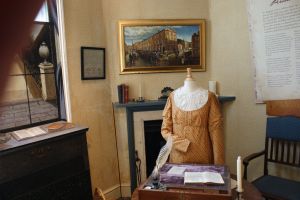 Perhaps it was the cramped quarters and city living that did not agree with Jane. The social frivolity that had once amused her in small doses was now forced upon her ad nauseum.
“Another stupid party last night; perhaps if larger they might be less intolerable, but here there were only just enough to make one card table, with six people to look over, & talk nonsense to each other.”
letter to Cassandra — May 13, 1801
“We are to have a tiny party here tonight; I hate tiny parties–they force one into constant exertion.”
letter to Cassandra — May 21, 1801
Perhaps it was the cramped quarters and city living that did not agree with Jane. The social frivolity that had once amused her in small doses was now forced upon her ad nauseum.
“Another stupid party last night; perhaps if larger they might be less intolerable, but here there were only just enough to make one card table, with six people to look over, & talk nonsense to each other.”
letter to Cassandra — May 13, 1801
“We are to have a tiny party here tonight; I hate tiny parties–they force one into constant exertion.”
letter to Cassandra — May 21, 1801
 It is also likely that her misery was intensified that she wrote no novels during the five years the family lived in Bath. By 1806, the Austens had moved numerous times, each place being smaller and less adequate than the last. When Reverend Austen died, the women were too poor to maintain their life in the city and moved in with Jane’s brother, Frank, in Hampshire. After these trying times, the city of Bath becomes a less friendly place in Austen’s work.
Despite her short and relatively unhappy years in Bath, the current residents and visitors could not be more proud of their literary heritage. After we were given the overview by a quite knowledgeable docent, we were set adrift in several rooms of museum dedicated to life in Bath during Austen’s time. While they did not have anything owned by her or her family, they did have numerous genuine items from the Regency period. The Jane Austen Centre does a great deal with very little. Their focus is on what life would have been like for someone like Jane Austen. The last room was dedicated to film adaptations of Jane’s works, including a letter from actor Emma Thompson, highlighted the continual popularity of her stories.
It is also likely that her misery was intensified that she wrote no novels during the five years the family lived in Bath. By 1806, the Austens had moved numerous times, each place being smaller and less adequate than the last. When Reverend Austen died, the women were too poor to maintain their life in the city and moved in with Jane’s brother, Frank, in Hampshire. After these trying times, the city of Bath becomes a less friendly place in Austen’s work.
Despite her short and relatively unhappy years in Bath, the current residents and visitors could not be more proud of their literary heritage. After we were given the overview by a quite knowledgeable docent, we were set adrift in several rooms of museum dedicated to life in Bath during Austen’s time. While they did not have anything owned by her or her family, they did have numerous genuine items from the Regency period. The Jane Austen Centre does a great deal with very little. Their focus is on what life would have been like for someone like Jane Austen. The last room was dedicated to film adaptations of Jane’s works, including a letter from actor Emma Thompson, highlighted the continual popularity of her stories.
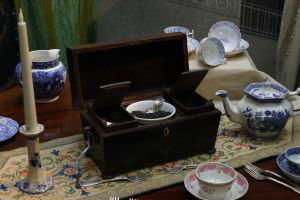 The permanent exhibit is a bit claustrophobic at times, especially if there are a number of people in there as well. Then again, it helps us to understand Jane’s own annoyance at tight spaces. The staff is what makes the place a real treat. They are very well-versed and so enthusiastic. But then who of Jane’s fans aren’t.
Suggested Links:
http://www.janeausten.co.uk/
http://www.jasa.net.au/japeople/leighperrots.htm
http://www.austenquotes.com/
The permanent exhibit is a bit claustrophobic at times, especially if there are a number of people in there as well. Then again, it helps us to understand Jane’s own annoyance at tight spaces. The staff is what makes the place a real treat. They are very well-versed and so enthusiastic. But then who of Jane’s fans aren’t.
Suggested Links:
http://www.janeausten.co.uk/
http://www.jasa.net.au/japeople/leighperrots.htm
http://www.austenquotes.com/
Thanks to Meaghan for stopping by and for sharing with us her trip to Bath! Please visit Meaghan at her blog, A Cineaste’s Collection, or find her on Twitter!
10 Posts to Get a Glimpse of Me!


While we are in the middle of our Austen in August event, I still could not pass on this week’s topic at The Broke and the Bookish. Their “Top 10” prompt today is to consider and share the ten posts that most represent who you are, as a person, blogger, reader, etc. I found this idea very intriguing and, as I know I have been steadily gathering new subscribers over the years, I thought it would be a great way to re-introduce myself, with old and new posts alike. So, here we go!
1. Censoring Mark Twain: A Literary Embarrassment. My response to the news that Alan Gribben and NewSouth Books planned to release an expurgated edition of Adventures of Huckleberry Finn.
2. Darkness and Light. My take on the argument that some Young Adult fiction is “too dark.” This is where I support the authors.
3. Saturdays, Uncensored: Thoughtful Musings. One of my regular memes in the past was a “Saturdays, Uncensored” post, where I discussed various issues related to book banning, censorship, etc. This post was a gear-up to the ALA’s Banned Books Week. Saturdays, Uncensored might be returning soon.
4. Book Review: War and Peace by Leo Tolstoy. Probably my personal favorite review, of any I have written. I was so surprised by how much I loved this book.
5. The Empathetic Reader & The Effective Reviewer. My thoughts on responsible book blogging and the standards I try to uphold.
6. Three Years, Thirty: A Reflection. An introspective post on what the past three years as a book blogger and last thirty (almost) years of life have taught me.
7. Dear Jerome: A Letter to J.D. Salinger. Wherein I write a letter to one of my favorite writers (who inspired the name of my blogger persona) and say the things I feel need to be said.
8. Experimental Review: Nova Express by William S. Burroughs. I have a little fun with this review, attempting to write it in a similar style to that in which the novel is constructed. I’m heavily influenced by Burroughs’s prose, so this was fun for me.
9. Starbucks: Indie Giant Meets Corporate Greed. This is a totally non-bookish post. It tells a little bit more about the everyday me, I think. It’s really just an out-and-out rant, which can be fun, sometimes.
10. I’m From: An Autobiography. This post is, quite literally, all about me. It’s a creative autobiography about who I am, where I’m from, and where I hope to go in the future.
There you have it. 10 posts which, I hope, will help my readers get a better understanding of who I am.
It’s nice to meet you (again)!
 Roof Beam Reader