Roof Beam Reader
Adam Burgess
Review: Battle Royale by Koushun Takami
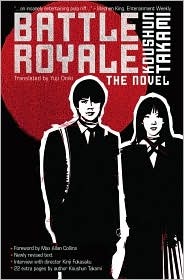
Battle Royale by Koushun Takami
Final Verdict: 3.25 out of 4.0
YTD: 25
Plot/Story:
3 – Plot/Story is interesting & believable.
Every year, in the Republic of East Asia, one 3rd-year Junior High class, made up of 15-year olds, is selected at random to participate in a Battle Royal – an epic fight to the death, where the final student to survive is crowned the winner. The rationale for this yearly “program” is that the totalitarian government uses the events as a learning exercise for their military but, in reality, it is simply a way of generating fear and total devotion to the government. The kids believe they are on a school trip, but as they are journeying via bus, a sleeping agent is released and everyone wakes up inside a classroom, where they discover they have been collared with an electronic device which not only monitors their whereabouts but will also explode if they try to escape or are caught in certain “forbidden zones” on the island where they have been relocated. The kids each get one bag of supplies, including one random weapon (ranging from simple instruments like a sharp stick or ice pick, to hand grenades and even a machine gun). Suddenly, these classmates and friends are pitted against each other – some become killers out of fear, some because they were destined to be all along, and others only take lives while trying to save their own.
Characterization:
3 – Characters well-developed.
There is a wide range of characters in this story, which is necessary with a cast of more than 40 people (42 students, initially, plus their schoolmaster, the game director, security guards, parents, etc.). While there is a lack of depth in the more “evil” of characters (those like Kazuo and Mitsuko who are soulless and violent for the sake of being violent), there are certain characters who are truly interesting to watch, and who the reader might root for, such as Shinji, the sweet and brilliant computer nerd who has a plan to escape, and Shogo, the boy who seems a bit older than the rest and who has incredible secrets. The two main characters, Noriko and Shuya, develop well over the course of the story – they grow somewhat as individuals and also as a couple (and, with Shogo, as a team). The varied responses and ways of “playing the game” are reflected well in the diverse types of personalities present in this group of school kids, which makes a sometimes unbelievable plot feel more realistic and natural.
Prose/Style:
3 – Satisfactory Prose/Style, conducive to the Story.
The story reads somewhat like an action movie-meets manga/graphic novel. It is, at times, ridiculously over-the-top and cheesy. Some of the dialogue, particularly the internal dialogue, is silly and very much “Japanese Pop” in nature. The dialogue felt, at times, stiff, unnatural, and not at all in keeping with the age level of these kids or with the nature of the story which is quite dark, but which sometimes feels self-parodied (as if the writer sometimes felt self-conscious about his own seriousness, or lack thereof). Still, the book is appropriately fast-paced and the breaking up of chapters to focus on different characters is interesting in that it allows the reader an inside-look at everyone involved. Keeping the book narrated in the third-person also means that the reader does not need to rely too heavily on a possibly flawed narrator. The book’s structure might be its greatest achievement, as it is extremely difficult to care about characters in a book whose point-of-view, so to speak, changes on a constant basis. There was some choppiness and grammar/spelling errors due, in part, to the translation – but which should have been caught and corrected during the editing process.
Additional Elements: Setting, Symbols/Motifs, Resolution, etc.
4 – Additional elements improve and advance the story.
First of all, it must be said that the similarities between this book and The Hunger Games trilogy by Suzanne Collins (which came after Battle Royale) are prevalent enough that it would be irresponsible to ignore them. From the premise itself, to the idea of trackers, from the importance of the bird call to the inclusion of “bags of supplies” for the contestants, from betting on winners to televising the results, from manipulating the game to discourage participants from being idle to awarding the winner a lifetime pension and national fame, the similarities go on and on. The primary difference, though, is that the Battle Royale game is seen as a military training necessity for Greater East Asia, where as the Hunger Games are specifically meant to be a reminder to the districts of how the Capitol punishes disobedience and disloyalty. Slim difference. That being said, the primary idea (which has been retold many times by many authors in many different forms, by now) is brilliant and original. Although the author does not mention it, it would be hard not to see some minor influence, at least, from The Lord of the Flies. The study of human nature, group dynamics, and survival instincts by witnessing the actions of teenagers isolated on an inescapable island – of course the influence is there; however, the important distinction is that these children did not land on the island by mistake, they were kidnapped and are being manipulated by their government and their elders. This says just as much about society and politics as the microcosm of Golding’s island did. The influence of action films and rock music, too are clear – both in the themes of the story and in its structure; for example, the main character and two main supporting characters (one who aids the main character, the other who is hunting him) are directly inspired by the movie Terminator 2. The questioning of blind obedience to authority, the themes of oppression, fear, trust, isolation, and the dangers of totalitarian governments and violent Nationalism are all explored and effective.
Suggested Reading for:
Age Level: High School +
Interest: Pop Culture, Youth Violence, Survival of the Fittest, Fight to the Death, Action, Humanity, Politics, Society, Japanese fiction, Dystopia.
Quotes:
“And so his choice to reduce the numbers of “the enemy” as efficiently as possible wasn’t motivated by rational thoughts but instead by a deeper, primal fear of death.”
“Please live. Talk, think, act. And sometimes listen to music . . . look at paintings, allow yourself to be moved. Laugh a lot, and at times, cry. And if you find a wonderful girl, then you go for her and love her.”
“It’s not a bad thing to be loved.”
“Their two bodies danced in the air beyond the cliff, their hands still clasped together, the black sea under them.”
Review: The Haunted House by Charles Dickens
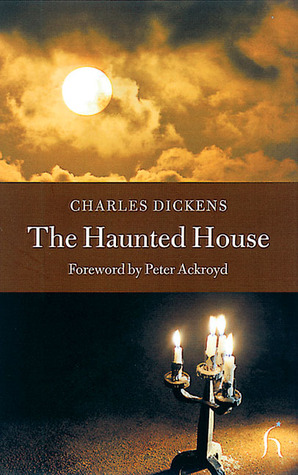
The Haunted House by Charles Dickens
Final Verdict: 2.75 out of 4.0
YTD: 24
Plot/Story:
3 – Plot/Story is interesting & believable.
The Haunted House by Charles Dickens is actually a compilation work, with contributions from Hesba Stretton, George Augustus Sala, Adelaide Anne Procter, Wilkie Collins, and Elizabeth Gaskell. Each writer, including Dickens (who wrote the opening and closing segments, as well as a middle segment) writes one “chapter” of the tale. The premise is that a group of people have come to a well-known haunted house to stay for a period of time, experience whatever supernatural elements might be there to experience, then regroup at the end of their stay to share their stories. Each author represents a specific person within the tale and, while the genre is supposed to be that of the ghost story, most of the individual pieces fall flat of that. The conclusion, too, is saccharine and unnecessary – it reminds the reader that, though we came for ghost stories, what we leave with is a mirthful Christmas story.
Characterization:
2 – Characters slightly developed.
Because this is a compilation of separate short stories, one would not expect much character growth and development (short stories are, after all, more about the theme/event/plot than they are about the characters). Still, because they were interconnected via the primary story (a group of folks coming together to the same house), there could have been at least a bit of time spent developing those guests, so as to better understand the stories they ultimately told. Gaskell’s story, being the longest, did allow for some characterization and what was done, was done well. The characters remain generally flat throughout, but they are recognizable characters – a mother who would act like a mother, a father who acts like a father, etc. Still, when coming to this collection, it cannot be for its interesting characters because they just are not very interesting (and this could be even more acceptable if the stories themselves were thrilling ghost stories, because then there is something else to entertain and occupy the reader, but….).
Prose/Style:
3 – Satisfactory Prose/Style, conducive to the Story.
Dickens, Gaskell, and Collins are clearly the masters here, but in my opinion Dickens was in fact out-shone by the other two in this one. Dickens’s portions read too much like someone trying to write a thriller but not quite knowing how (it felt like someone mimicking Poe – getting the general mechanics right, but not quite being Poe). Gaskell’s piece is the longest, and her narrative brilliance – use of dialect in particular- are clear. Collins has the best paced and most appropriately toned prose which, from the author of The Woman in White, probably should have been expected. Salas’s writing seemed pompous, arrogant, and long-winded; it was funny, at times, but a bit too self-serving. The inclusion of Procter’s verse added a nice element to the overall scheme, and a nice break from the various competing proses. The verse itself was haunting and reminded me quite a bit of the pace and scheme of Poe’s “The Raven.” Stretton’s short piece was perhaps the most enjoyable, because it was so well-written and more intricately layered than the rest.
Additional Elements: Setting, Symbols/Motifs, Resolution, etc.
3 – Additional elements are present and cohesive to the Story.
Dickens himself was reportedly underwhelmed and disappointed by his peers’ contributing portions of this serial Christmas tale. I believe his hope was that each of the authors would put into print a certain fear or terror particular to each of them, as Dickens’s story did. The “haunting,” then, would be something personal and, while not necessarily supernatural, could still be understandably frightening. Like Dickens, I was left disappointed by the end-result of this ambition. For Dickens, the fear was in revisiting his impoverished youth, the death of his father and the fear of never escaping the “ghost of [his] own childhood.” Gaskell’s story revolved around betrayal by blood – the loss of a child and lover to the darker elements of humanity. Again, understandably frightening in its way. Sala’s story was a dream within a dream within a dream, but while the dream could have been unnerving, there seemed little that was truly frightening about it, supernatural or otherwise. Wilkie Collins’s story is the one in this compilation which could actually be considered a “suspense” or “thriller” story. Hesba Stretton’s story, too, while not necessarily scary, is romantic, somewhat suspenseful, and well-accomplished overall. When considering the group of tales in this compilation, it is Stretton’s which leaves me wanting to read more of her work. Ultimately, though it is called “The Haunted House,” this compilation of ghost stories is not really a ‘Halloween’-type read. If one reads this collection as a study of these individual writers, their thoughts, and what they considered haunting, then it is quite interesting. But as a ghost story, it is no extraordinary achievement, possibly because Dickens (and presumably the other writers) was a skeptic and found the popular interest in the supernatural rather silly.
Suggested Reading for:
Age Level: High School +
Interest: Victorian Literature, London Literati, Creative/Fictional Autobiography, Short Story, Compilation Fiction.
Notable Quotes:
“The women (their noses in a chronic state of excoriation from smelling-salts), were always primed and loaded for a swoon, and ready to go off with hair-triggers.” – Dickens
“On some subjects it is better to have a silent understanding than an expressed opinion.” – Stretton
“No star is ever lost we once have seen, / We always may be what we might have been.” – Procter
“The hopes that, lost, in some far distance seem, / May be the truer life, and this the dream.” – Procter
“No other ghost has haunted the boy’s room, my friends, since I have occupied it, than the ghost of my own childhood, the ghost of my own innocence, the ghost of my own airy belief.” – Dickens
“What ardently we wish we long believe.” – Gaskell
“But the broken-hearted go home, to be comforted of God.” – Gaskell
–The Haunted House is Book #5 completed for the Victorian Celebration.
Discussion: Stick by Andrew Smith (Part 1)

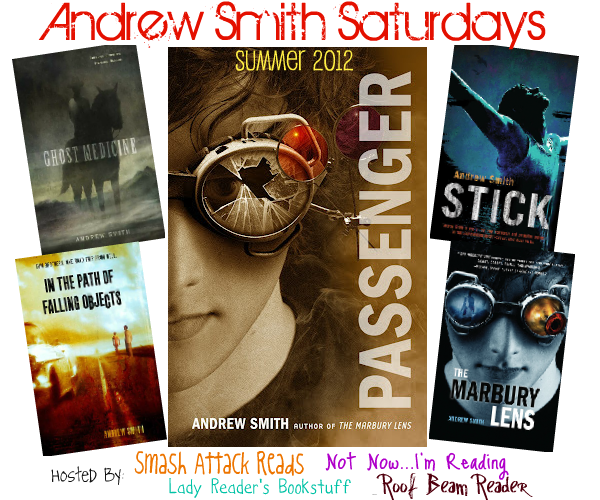
Welcome to the Discussion Post for Part 1 (Pages 2-59) of Stick by Andrew Smith.
1. Last month, we read In the Path of Falling Objects which had, as its protagonists, two brothers with quite an interesting relationship. A third brother, absent from the main story, was also involved. Here again, with Stick, the main characters are brothers. What do you think of their dynamic so far? Do you have any expectations for them individually, or for their relationship?
2. Stark “Stick” McClellan, our main character, is different in a few ways. First of all, although he is only 13 years old, he is already six feet tall – which is taller than his older brother. But, even more importantly, he has a physical deformity which impacts his every day life and relationships. The deformity is mirrored in the prose. Do you think this effective, so far? Are there other examples you can think of, from other books, where a main characters’ “something other” is somehow reflected in the book’s prose or structure?
 3. The brothers seem pretty different – Bosten is pretty bold, he smokes pot, and seems like an easy-going guy, the kind people like to be around. Stick, on the other hand, is (understandably) more of an introvert. He hates even the smell of pot, and doesn’t seem like the biggest risk-taker in the world. Despite their differences, the brothers seem very close. Why do you think their relationship is so strong? Do you get the impression that their bond will survive anything?
4. Mom and Dad. They seem to be a pretty good team, themselves. But for different reasons. Right away, we get an “Us vs. Them” feeling, between the boys and the parents. When the boys come home late and walk into an onslaught of violence, Stick narrates: “Maybe once per week things exactly like this happened in our house.” Where do you think the anger comes from? Are there any hints about some deeper issues, or do you think, as Stick says, this is just the way things are done in their household?
5. And Emily. Friend? More than a friend? Her words seem to be saying one thing (Friend) but her actions seem to be hinting at a desire for more. We haven’t seen much, yet, but does this seem like it could be a good thing for Stick? Would a relationship with Emily be a healthy one? Or does this seem doomed to fail, from the start?
Can’t wait to see what you all think of this one, so far! I’ll reply with my own answers in a few days, after others have a chance to say what they think.
Don’t forget to check back next Saturday, when we will be discussing Part 2 (Pages 60-103).
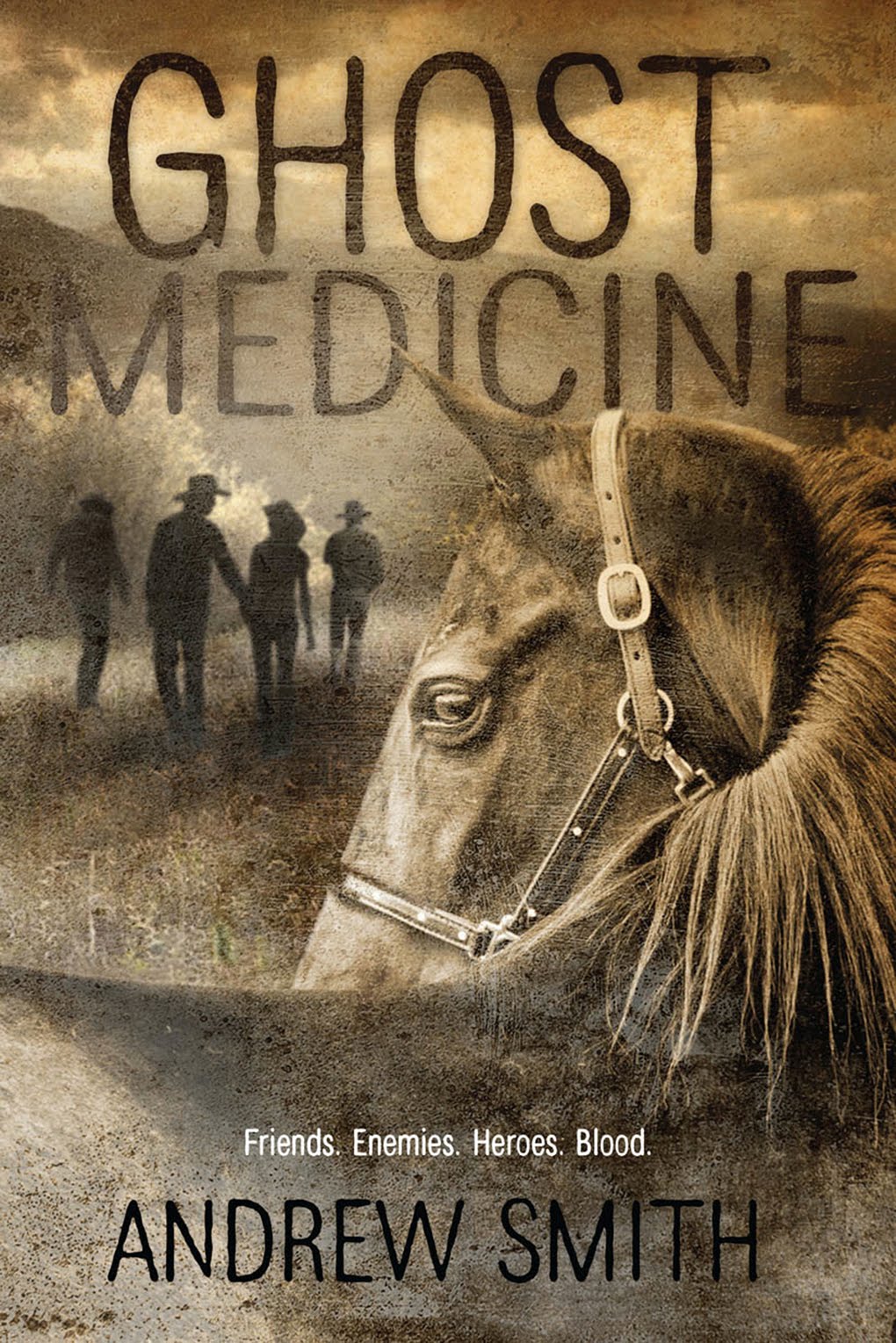
Also, have you entered to win a copy of next month’s Andrew Smith book,Ghost Medicine? Head over to Not Now, I’m Reading for your chance! The giveaway ends July 14th!
Review: Germinal by Emile Zola
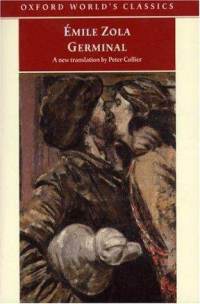
Germinal by Emile Zola
Final Verdict: 3.75 out of 4.0
YTD: 23
Plot/Story:
4 – Plot/Story is interesting/believable and impactful (socially, academically, etc.)
If you ever want to read a book about miners, or a book about family, or a book about unions, or a book about poverty, or a book about the whole wide-world and how awful and wonderful, hopeful and disappointing, romantic and coldly real it is – if you ever want to read a book about humanity and everything that it means, Germinal is that book. The book is one in Zola’s famous twenty-book series, Les Rougan-Macquart. It is considered to be the best of the series and also Zola’s crowning achievement – a masterpiece. Its purpose is to expose and lament the horrendous and inhumane working and living conditions of miners in rural France during the 1860s. Germinal vilifies the excesses and indulgencies of the bourgeoisie, while lauding Socialism and Darwinism. Etienne Lantier, the main character (who first appears in Zola’s L’Assommoir), is an outsider – a wandering mechanic who is searching for employment. His rise to leadership in the mining community is almost accidental and highly unlikely, in that he never intended to become a worker, nor did he plan to stay in the community. Yet, as he spends time with these poor creatures, he realizes that someone must force a change – soon, after hours of study and correspondence with strike leaders in Paris- he unites the miners and leads a revolt, with heartbreaking consequences.
Characterization:
3 – Characters well-developed.
Germinal has a host of characters, primarily Etienne and the Maheude family, with whom he lives after his decision to stay at the mining colony. There are mining women and mining men, managers and invalids, wealthy owners, Parisian visitors, and revolutionaries of all types (including simple strikers and also full anarchists). There are bar owners, retirees, abusive husbands, whorish daughters, and every imaginable person in-between. While Zola certainly creates a great and diverse community, with nearly every conceivable character, few of them truly stand out on their own. Chaval, in his animalistic brutality is one, as is Etienne as the primary focus. La Maheude, the sensible mother and ultimately one of the most tragedy-stricken of the cast, is interesting particularly in contrast to the other female-mother figures of the village (in that she, for the most part, seems more responsible, less prone to impulse, and, on the whole, a genuine person). Still, the downfall to such a large cast of characters is that not much time is spent developing many of them, even the major ones. Etienne certainly has a journey and he changes somewhat over time – but, in the end, it is the community itself, as a whole, which is being characterized. The community is what is alive – what is awakened. The miners, as a group, are the story – it is their journey, their oppression, their battle, their failure, which constitutes the growth and development, here. Their larger story is more interesting to witness than any single story within it.
Prose/Style:
4 – Extraordinary Prose/Style, enhancing the Story.
For the longest time, I was nervous about reading Zola. I find French literature to be either extraordinarily appealing (Victor Hugo) or almost impossible to bear (Marcel Proust). Fortunately, Zola reads to me similarly to the greatest Russian writers – like Dostoevsky and Tolstoy. It is simultaneously beautiful, self-reflective, and transporting. The language of Germinal is warm and real, it allows you to feel enveloped, but never loses sight of the fact that it is the means to an end – its purpose is to guide the reader through an instructive, meaningful story. There are moments, such as in the description of the miners’ final revolt, where all sense of restraint has been cast off, when the story seems to press onward with a fierce intensity, like a tidal wave rolling mightily onward, unstoppable – dangerous. And there are moments of pure tenderness, as when Etienne and Catherine come together after being held apart for so long. The dialogue is well-crafted and the voices of the bourgeoisie and the managers are distinctly different from that of the miners. The story itself is powerful, but the prose takes it to a transcendent level.
Additional Elements: Setting, Symbols/Motifs, Resolution, etc.
4 – Additional elements improve and advance the story.
When Emile Zola passed away, his funeral was attended by masses of people. At the ceremony, they began to chant: “Germinal! Germinal!” It is telling that the crowd would call out the name of this one book, even though the author had been such a prolific writer – it is telling and it is understandable. Germinal, similar to its peers (such as Les Miserables, War and Peace, and The Grapes of Wrath) is an epic tale about “the people.” It’s a story of desire and passion, working life, family, friendships, and community. The nature of humanity, from its most noble capacities to its darkest, most dangerous possibilities, is explored in microscopic detail, painful and wondrous to witness. It is, quite literally, a tale about germination – the planting of a seed, an idea, and the birth and growth of a movement.
Suggested Reading for:
Age Level: High School/Adult
Interest: France, Labor, Working Class, Mining Life, Revolution, Sexual Desire, Politics, Philosophy, Class Studies.
Notable Quotes:
“Coal transmits sound over great distances with the clarity of crystal.”
“He went away calmly like an exterminating angel, headed for anywhere that he could find dynamite to blow up cities and the men who live in them.”
“There’s no pleasure in life when you’ve lost your hope.”
“You’re better off on your own, there’s nobody to disagree with.”
“When the men and the girl came back from the pit, they’d have to eat again; for nobody had yet discovered how to live without eating, unfortunately.”
“If people can just love each other a little bit, they can be so happy.”
“Blow the candle out, I don’t need to see what my thoughts look like.”
–Germinal is book #121 completed for the “1,001 Books to Read Before You Die” Challenge.
–Germinal is Book #4 completed for the Victorian Celebration.
–Germinal is Book #4 completed for The Classics Club.
Random Acts of Kindness June/July

Once again, I am signing-up for the super-fun and feel-good event, “Random Acts of Kindness” book-exchange! I have participated pretty regularly over the past year, and it has been great! Not only have I given and received great books, but I’ve also met some groovy new book bloggers.
RAK time for me is usually around the middle of the month – and I look forward to it every time it comes around! I spend the first two weeks “window shopping” through people’s wish lists, then make a few selections sometime around the 15th. Can’t wait to do it again in July!
Books Received in June:
The Last Interview by Kurt Vonnegut from Heather at Book Stacks on Deck.
Zastrozzi and St. Irvyne by Percy Bysshe Shelley from Kassiah at Kassiah.
Books Gifted in June:
The Curious Incident of the Dog in the Night-time by Mark Haddon to Michelle at Beagle Book Space.
Invisible Monsters by Chuck Palahniuk to Ellie at Musings of a Book Shop Girl.
The Night Circus by Erin Morgenstern to Natalie at Mindful Musings.
For July: Here’s My Wishlist!
So, that’s RAK, in a nutshell! Hope you’ll join in on the fun!
 Roof Beam Reader