Roof Beam Reader
Adam Burgess
Review: The Autobiography of Mark Twain
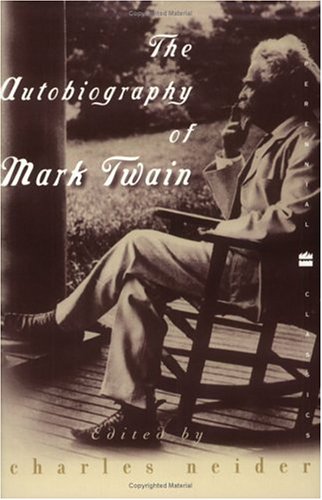

The Autobiography of Mark Twain
Final Verdict: 4.0 out of 4.0
YTD: 20
Charles Neider considered Twain’s Autobiography to be “a classic of American letters, to be ranked with the autobiographies of Benjamin Franklin and Henry Adams.” While I haven’t read the Adams autobiography, I absolutely agree that Twain’s is comparable in importance and substance to that of Benjamin Franklin; and, as The Modern Library says, it is probably “one of the best 100 Nonfiction books of the 20th Century.”
One of the benefits of reading an autobiography, and their primary appeal for most, is that they allow readers an opportunity to learn more about a historical figure’s life and work – things that could only be guessed at or inferred by reading their fiction, watching their movies, examining their politics, etc. Twain’s autobiography fulfills this promise, in that it reinforces what one might learn about him through his fiction, but also reveals so much more about his private life, his personal ambitions, and his deep, deep pains. Most who are familiar with Twain’s novels know that he was considered (and is still considered) to be one of America’s greatest humorists and satirists. But Twain did not look at himself that way – he believed himself to be a moralist and a sermonizer – one who allowed humor into his stories when it occurred naturally. Twain cared deeply about the human race, but was also so disappointed by it.
 When reading Twain’s works in chronological order, it is clear that the nature of his texts change over time. In the beginning, his stories can be characterized by a youthful innocence – a playful, all-American view of the world (The Adventures of Tom Sawyer). The future stories become more complex and delve into more delicate territory (Adventures of Huckleberry Finn; The Prince and the Pauper) when he begins to look at race and class issues, social and economic inequalities. Ultimately, his late works are almost despairing in nature – the early hopefulness and joyful themes becoming distilled, to say the least (The Mysterious Stranger). One might wonder why – but the Autobiography explains. Twain had been a trusting, almost naïve person for most of his life. He put his finances into the hands of publishers and lawyers who would ultimately betray him. He speculated and invested in “certain” ventures, only to watch those ventures disappoint and nearly ruin him financially. In addition to his financial losses and the deceptions he endured, he also suffered through the loss of many of his closest friends and family – including his wife and three of his children. Twain even felt personally responsible for the death of his only son, who died an infant. These losses and disappointments seemed to haunt him throughout his entire life and, throughout the Autobiography, there is a heartbreaking desire for death – a respect and appreciation for it which only one who had suffered enormously could truly feel or understand. Repeatedly, throughout the passages, Twain describes bluntly his envy for those who have passed on from this world and expresses an anger toward those who helped him survive, when he himself was at death’s door. It is a private despondency not often exposed in his public persona or in his writing.
Ultimately, I found Twain’s Autobiography to be wonderful and painful. Anyone who is already a fan of Twain’s writing will certainly enjoy this text; however, conversely, those who do not enjoy his books may have difficulty with this, because his style and approach in narrative and essay form are similar (also some credit must be given to the editor, Charles Neider, who put some structure and organization into this edition of the work – Twain had dictated the entire thing, so its original form was far from fluid or cohesive). It was incredibly rewarding not just to learn more about the man and his private life, but also about his writing process, his relationships with other prominent writers and figures of the time (William Dean Howells, Ulysses S. Grant, Rudyard Kipling, Robert Louis Stevenson, and Bret Harte, in particular). Baring witness to some of the more intimate moments and relationships – especially, for instance, Twain’s friendship with General Ulysses S. Grant, adds so much to my appreciation of Twain as a person. Similarly, witnessing him lose his cool and blast certain people who he held in the highest contempt is, of course, hilarious. Twain clearly tried his best to be respectful and considerate of all people (at least in his adulthood), so when those rare moments occur when Twain describes dealing with people he truly despised – it is a (guilty) pleasure to witness!
For fans of Twain – do yourself a favor and read his Autobiography. As much as I thought I knew about Twain, I now realize that I can approach his works with a deeper and renewed appreciation.
Notable Quotes:
“It is an odd and curious and interesting ass, the human race is.”
“When I was younger I could remember anything, whether it had happened or not; but my faculties are decaying now and soon I shall be so I cannot remember any but the things that never happened.”
“Where prejudice exists it always discolors our thoughts and feelings and opinions.”
“It seems a pity that the world should throw away so many good things merely because they are unwholesome.”
“Doctor Meredith removed to Hannibal by and by and was our family physician and saved my life several times. Still, he was a good man and meant well. Let it go.”
“But who prays for Satan? Who, in eighteen centuries, has had the common humanity to pray for the one sinner that needed it most…?”
“I have always preached. That is the reason that I have lasted thirty years. If the humor came of its own accord and uninvited I have allowed it a place in my sermon, but I was not writing the sermon for the sake of the humor. I should have written the sermon just the same, whether any humor applied for admission or not.”
“It is the will of God that we must have critics and missionaries and congressmen and humorists, and we must bear the burden.”
“I was not able to convince her that we never do any duty for the duty’s sake but only for the mere personal satisfaction we get out of doing that duty. T he fact is, she was brought up just like the rest of the world, with the ingrained and stupid superstition that there is such a thing as duty for duty’s sake, and so I was obliged to let her abide in her darkness.”
“I do like to hear myself talk.”
“The sweet placidity of death! It is more beautiful than sleep.”
Read as part of the Victorian Celebration
Books and Loss (In Memoriam)


“If we listened to our intellect, we’d never have a love affair. We’d never have a friendship. We’d never go into business, because we’d be cynical. Well, that’s nonsense. You’ve got to jump off cliffs all the time and build your wings on the way down.”
We all have our favorite books and favorite authors. Books that touch us in some way and writers whose style or ideas consistently make us feel “at home.” Some books make us laugh or cry; others make us think and wonder about distant lands, alternate realties, or ancient times lost and at the mercy of history or mythology.
While I have only read a couple of works by Ray Bradbury and cannot in all honesty call him a “favorite” of mine, I can say without reservation that Fahrenheit 451 literally changed my life. It (along with Lois Lowry’s The Giver) changed the way I thought about my place in society and in the world.
This book forced me to suffer through the pangs of introspection for the first time (a haunting experience for a young teenage boy!). “Who am I?” and “What can I do?” became just as important to me, if not more so, than that ever-important juvenile query: “What do I want?”
And, to this day, there is a question I ask myself on a regular basis, one which was formed by the experience of reading this book: “What do I believe and to what lengths will I go to support it?”
I wouldn’t be who I am today if I hadn’t read some amazing books along the way. Fahrenheit 451 is one of those.
Today, I want to take a moment to say thank you, Mr. Bradbury, as I want to thank so many of my favorite writers who have come and gone before you. May you and the extraordinary company you keep rest in peace.
I will forever fight the firemen, Ray, whoever and wherever they might be.
In Memoriam:
Jane Austen (1775 – 1817)
William S. Burroughs (1914 – 1997)
Willa Cather (1873 – 1947)
Agatha Christie (1890 – 1976)
Charles Dickens (1812 – 1870)
William Faulkner (1897 – 1962)
F. Scott Fitzgerald (1896 – 1940)
Thomas Hardy (1840 – 1928)
Ernest Hemingway (1899 – 1961)
Herman Melville (1819 – 1891)
Flannery O’Connor (1925 – 1964)
J.D. Salinger (1919 – 2010)
Maurice Sendak (1928 – 2012)
William Shakespeare (1564 – 1616)
John Steinbeck (1902 – 1968)
Leo Tolstoy (1828 – 1910)
Mark Twain (1835 – 1910)
Kurt Vonnegut (1922 – 2007)
Edith Wharton (1862 – 1937)
Oscar Wilde (1854 – 1900)
Are there any writers who you believe deserve a “Fond Farewell”? Please share some thoughts on your favorite writers and what they left for you (and for all of us).
Review: Agnes Grey by Anne Brontë
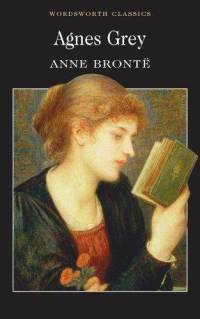
Agnes Grey by Anne Brontë
Final Verdict: 3.5 out of 4.0
YTD: 18
Plot/Story:
3 – Plot/Story is interesting & believable.
Agnes Grey is the first novel of the youngest Brontë sister, Anne. It is based in large part on Anne’s life and was created with the use of Anne’s personal diary and letters. It was also the first of the sisters’ works to be written/completed, although all three sisters (Charlotte, Emily & Anne) would publish their first works within the same one-year time period. The story is essentially a failed bildungsroman; Brontë intends to send her heroine, Agnes, on a coming-of-age journey, which would be developed through her tenure at various households, where she is employed as governess. But because Agnes never truly develops (partly because she started her journey as a positive person in the first place, and partly because growth was stunted by the families she served – horrid folks!), the story never reaches true bildungsroman potential. The purpose of the story, though, is to expose certain deficiencies in the class system and in human nature, which is ultimately achieved despite the main character’s lack of growth.
Characterization:
3 – Characters well-developed.
Perhaps the primary failing of this novel is that there is little concern for character growth and/or development. Neither Agnes, nor her sister or parents, nor the members of the families she works for, nor her love interest ever change in any way, except that Agnes develops a slight awareness for the darker side of human nature (to which she had been sheltered, having come from a loving home and positive community). There is some change in a secondary character, Rosalie, after she departs from home, where she is being instructed by Agnes, to become the wife of Sir Ashby. Rosalie, a serious flirt, had one goal in life: to marry a wealth man and become a Lady. That accomplished, she soon realizes that her dreams had not come true after all, and she tries, in some small way to make amends with Agnes. Of course, this change is not truly growth, because it is ultimately self-serving; Lady Ashby has been essentially imprisoned at home, with no friends, so the minor changes in her manner towards Agnes are the result of desperation, rather than real emotional or moral development. Despite the characters lacking any major transformation, they fit well with the story being told and their simplicity in a way aids in making the primary themes of the story more apparent.
Prose/Style:
4 – Extraordinary Prose/Style, enhancing the Story.
George Moore, an Irish novelist, praised Agnes Grey as being “the most perfect prose narrative in English letters.” He even compared Anne Brontë’s prose & ability to her predecessor, Jane Austen. It is not difficult to understand why he thought so highly of her abilities, as the style and prose of this novel are its greatest achievements. The prose is similar to Austen in its subtlety and its ability to be witty/ironic without being necessarily overt. The style is simple but effective, it progresses the story smoothly and naturally, without much fanfare, but never feels stunted or boring. At times, I was comparing themes to Clarissa, but where Richardson is often repetitive and overbearing Brontë tends to make a point and then move on. In addition to effective prose and style, there is an employment of dialogue which is more than competent – it is natural and in many ways imperative to the story, as many of the elements, such as characterization, are revealed through dialogue.
Additional Elements: Setting, Symbols/Motifs, Resolution, etc.
4 – Additional elements improve and advance the story.
Although certain elements of the story are underdeveloped (primarily characterization but also, to an extent, plot arc and setting), it is clear that Brontë knows what she wants to say, and says it well. She tackles multiple themes, but at the forefront of these are oppression of women and mistreatment of governesses/maids. In both of the families that Agnes serves, she is treated not just as an inferior, but almost as a non-entity. The male children are also clearly favored over the female and the maids are treated with no respect or consideration. It is clear that Brontë is driven to expose and refute the “natural” superiority of men over women, but also of one class over another. In addition to these primary themes are also those of isolation and tutelage. Anne, upon leaving home, finds herself entirely without friends or significant relationships of any kind. While there is some despair in this, Brontë also posits the idea that isolation can be an opportunity for self-reflection, study, and intellectual/spiritual growth. This theme carries on to one of tutelage, wherein Brontë, through her narrator’s isolation and experiences, can instruct the reader on certain ideals – particularly her beliefs of right and wrong- without breaking from her prose into narrative sermonizing. Another prominent theme is one of Empathy, for mankind and animals. Brontë is clearly disturbed by those who treat animals cruelly, as she is disturbed by people who treat others (particularly their servants or “inferiors”) with disdain. Brontë clearly views empathy as a virtue, but one which is difficult or perhaps impossible to instill in others (as demonstrated by Agnes’s inability to impart this virtue on her charges).
Suggested Reading for:
Age Level: High School +
Interest: Bildungsroman, Victorian Literature, Governesses, Family, Caste System, British Literature, Empathy, Women, Education
Notable Quotes:
“All true histories contain instruction; though, in some, the treasure may be hard to find, and when found, so trivial in quantity, that the dry, shrivelled kernel scarcely compensates for the trouble of cracking the nut.”
“Reading is my favorite occupation, when I have leisure for it and books to read.”
“It is foolish to wish for beauty. Sensible people never either desire it for themselves or care about it in others. If the mind be but well cultivated, and the heart well disposed, no one ever cares for the exterior.”
“I always lacked common sense when taken by surprise.”
“I wondered why so much beauty should be given to those who made so bad a use of it, and denied to some who would make it a benefit to both themselves and others.”
“The end of Religion is not to teach us how to die, but how to live; and the earlier you become wise and good, the more happiness you secure.”
“Alas! how far the promise of anticipation exceeds the pleasure of possession!”
“To think that I could be such a fool as to fall in love! It is quite beneath the dignity of a woman to do such a thing. Love! I detest the word! As applied to one of our sex, I think it a perfect insult.”
Read as part of the Victorian Celebration
Don’t Miss It Monday!
Hi, Folks!
I’m not typically one for monthly or weekly “recap” posts, but there is SO MUCH happening at RBR.net this month and this summer, that I thought it would be a good idea to put it all together in one post and remind everyone about what’s going on. I’m including some major events that are taking place here at RBR.net, as well as some big events hosted elsewhere, but in which I’m participating (I think many of you might want to get involved in these as well!).
Andrew Smith Summer Event
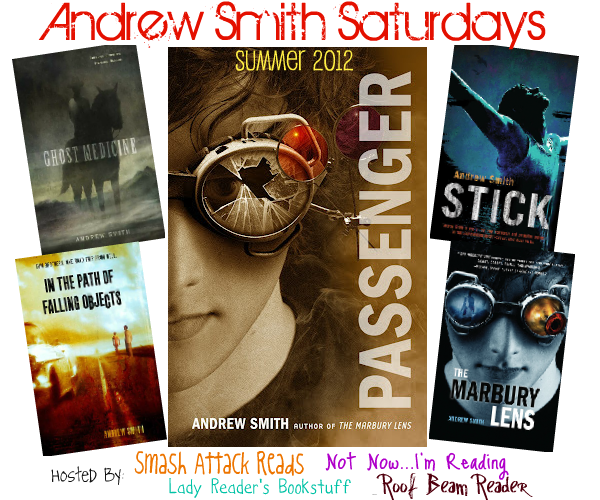
Register for the Event HERE.
Enter to win a copy of July’s book, Stick, HERE.
Participate in Week 1 Discussion of In the Path of Falling Objects HERE.
Why Join?: Andrew Smith’s books are CRAZY good and terribly under-appreciated. Giveaways, interviews, guest posts, group discussions, and more!
Catherine Ryan Hyde Event

Hosted by: Roof Beam Reader & Shooting Stars Mag.
Sign-Up to Join the Pay It Forward Giveaway Hop HERE (Closes June 20th; Event June 23-30).
Why Join?: This event is all about showing appreciation to our blog readers/subscribers, by giving away some of our favorite things!
Purchase a Book or Spread the Word to Win Awesome Prize Packs HERE (Deadline June 23rd).
Why Participate?: The author is amazing and the prize packages are crazy!
A Victorian Celebration (June & July)
Hosted By: Allie of A Literary Odyssey.
Register to Participate HERE.
Why Join?: Lots of great giveaways, guest posts, etc. Plus, tons of good reading!
Enter to win a copy of North & South by Elizabeth Gaskell HERE (Ends June 8th).
Books I Plan to Read:
Agnes Grey by Anne Bronte, The Autobiography of Mark Twain by Mark Twain, The Haunted House by Charles Dickens, Cranford by Elizabeth Gaskell, and The Warden by Anthony Trollope (Plus Middlemarch by George Eliot and The Old Curiosity Shop by Charles Dickens, if I have time).
Other Items of Note

Join the Literary Blog Hop HERE (Closes June 20th; Event June 23-27). Hosted by Leeswammes.
Random Acts of Kindness June Event HERE. Hosted by Book Soulmates.
Review: In One Person by John Irving

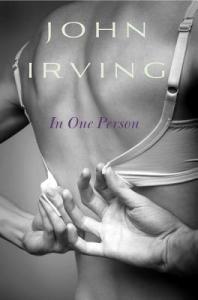
In One Person by John Irving
Final Verdict: 3.25 out of 4.0
YTD: 18
Plot/Story:
3 – Plot/Story is interesting & believable.
Irving is known for his bold approach to sexuality and the social/familial “other.” This latest is no exception to that well-established reputation. Meet William Dean Abbott, a teenage boy with a speech impediment. And meet the first love of his life, Miss Frost, the town library. William (or Bill, or Billy, depending on who we’re talking to) develops at a young age a love for reading and writing – the answer to that primordial question “What do you want to be when you grow up,” is, for Billy, “A Writer.” He divulges this secret to just one person, Miss Frost. It’s no wonder that a boy who loves to read and write might develop a crush on the town librarian, an attractive middle-aged woman. Except, there might be quite a bit more to Miss Frost than meets the eye. The story is essentially a fictional memoir, with Billy as narrator looking back on his life and works. It takes us along Billy’s journey from boyhood to manhood and into old age. We watch as he comes to terms with and explores his bisexuality and particular interest in transsexuals. Along the way, the reader is exposed to a variety of Billy’s friends, family members, and lovers – some male, some female, and some transgendered. There are marriages and divorces, deaths and rebirths, supportive folks and terribly antagonistic ones.
Characterization:
3 – Characters well-developed.
The characters in this book are one of its greatest charms and, simultaneously, one of its greatest issues. While one can expect, from Irving, a blunt and over-the-top approach to any sensitive topic (in this case, bisexual & transgender people), what I found disturbing was the overabundance of both. Billy, for instance, is a bisexual who finds himself attracted primarily to transgender women (“the best of both worlds”). As it turns out, Billy’s father just happens to be gay – the effeminate kind, and Billy’s grandfather also thoroughly enjoys dressing up as a woman. Billy’s mother, too, has sexual peculiarities of her own, though I will leave those for the reader to discover, since they are a particularly interesting aspect of the back-story which is revealed later in the book (it’s not the biggest mystery in the world, but it’s fun to let it unfold naturally). One could say this might just be an odd family, but considering Billy’s best friend, Elaine, their mutual love interest, Jacques, others of their schoolmates (revealed later in the book) and the town librarian are all either bisexual, gay, or transgender – well, maybe there’s something in the water in First Sister, Vermont! The plenitude of sexually “other” characters was not wholly believable and, for me, even detracted from Billy’s journey a bit (the main theme seemed to be about a bisexual writer calling for tolerance in a world of normalcy, yet most elements of his world, with the exception of a few people whose negativity seems less than bothersome to Billy, are largely the “other” world rather than the “standard” – so where is the conflict?). That gripe aside, the majority of the characters are more than interesting – as Irving’s characters usually are. There are a plethora of personalities, from the butch lesbian to the effeminate old man, to the teenage boy trying to figure out what he is. There are overbearing mothers, alcoholic uncles, and hilarious foreigners who can’t pronounce anything right, especially when they’re excited. Although one might find it hard to believe that virtually every person Billy meets could actually be in some way queer, the journey itself and Billy’s interaction with all these people are still worth the ride.
Prose/Style:
3 – Satisfactory Prose/Style, conducive to the Story.
As with characterization, the overall experience with Irving’s prose was positive, but there were some elements which irked me, two in particular. First, the narrator had a penchant for repetition. He would re-tell certain parts of the story multiple times, like an old man reminiscing with his friends or grandchildren about life-gone-by, sometimes forgetting that he had already told parts of the story twenty minutes ago. The second issue was his tendency to skip around in the timeline. The narrator is writing this as a memoir, looking back fifty or sixty years, but rather than following a clear trajectory through boyhood, the teenage years, manhood, etc., he often skips around so that one moment he is a college student in Europe, and the next he is a boy again, getting ready for his school play. This, at times, disrupted the flow of the story so that it was difficult to relax and sink-in completely. That being said, there was also an endearing quality to it, when all was said and done. The language and prose itself matched the characterization in that it was clever, witty, and sharp. The dialogue was often the most interesting element of the story, and Irving’s ability at description certainly shows – it is perhaps the glue that holds the entire novel together, when it seems to be jumping around.
Additional Elements: Setting, Symbols/Motifs, Resolution, etc.
4 – Additional elements improve and advance the story.
What I found most difficult about this novel is that it is written by a heterosexual man who seems to be trying too hard. Granted, Irving certainly has a history of exploring sexuality and human nature; still, because it was so over-the-top (almost every character had to be at least a little “gay” in someway) it almost felt like Irving was pandering to a particular audience. That being said, Irving is also doing what his narrator is accused of doing by some of the more bigoted characters: He is demanding tolerance. This I respect to the utmost and, in the end, I was able to put aside the fact that almost everyone in the book carries a “Different and Proud” card because so many moments in the book were pure, sensitive, and hopeful. The story tackles the specific difficulties that bisexual men and women face, separate from general homophobia; for example, that they are distrusted by the gay community and treated with prejudice by the straight community. Ultimately, this book puts bisexuality and transgendered people on center stage in the literary world, in an empathetic and intelligent way. There are very few examples of high literature approaching these topics (few examples even in the YA or other genre categories, to be honest), so Irving’s In One Person is a welcome addition both to the LGBT canon but also to contemporary literary fiction in general.
Suggested Reading for:
Age Level: High School+
Interest: Gender, Sexuality, Coming-of-Age, Transgender, Transvestite, Cross-Dressing, Family, AIDS, Death & Dying
Notable Quotes:
“We are formed by what we desire.”
“Before you can write anything, you have to notice something.”
“All I say is: Let us leave les folles alone; let’s just leave them be. Don’t judge them. You are not superior to them – don’t put them down.”
“Don’t forget this, too: Rumors aren’t interested in the unsensational story; rumors don’t care what’s true.”
“Your memory is a monster; you forget – it doesn’t. It simply files things away; it keeps things for you, or hides things from you. Your memory summons things to your recall with a will of its own. You imagine you have a memory, but your memory has you!”
 Roof Beam Reader