Roof Beam Reader
Adam Burgess
Review: Notre-Dame de Paris by Victor Hugo


Notre-Dame de Paris by Victor Hugo
Final Verdict: 3.75 out of 4.0
YTD: 17
Plot/Story:
4 – Plot/Story is interesting/believable and impactful (socially, academically, etc.)
Count Frollo, Quasimodo, and Esmeralda are quite possibly the most twisted, most bizarre, and most unexpected love-triangle in literary history. And if their problematic involvement with one another is not enough, throw-in Esmeralda’s philosopher husband, Pierre, and her unrequited love-interest, Phoebus, not to mention the self-isolated mother-in-mourning with a sad history of her own, and Frollo’s younger, troublemaking brother Jehan, and finally the various kings, burgesses, students, and thieves, and suddenly we have an epic history in the making. The main character, as it turns out, is not Quasimodo or Esmeralda, but Notre-Dame itself. Almost all of the major scenes in the novel, with a few exceptions (such as Pierre’s presence at the Bastille), take place at or in view of/reference to the great cathedral. Hugo’s primary purpose is not to present the reader with a heart-rending love story (or two), nor is it necessarily to comment on social and political systems of the time (though this is certainly a high purpose); the main purpose, though, is a nostalgic view of a diminishing Paris, one which puts its architecture and architectural history in the forefront and which laments the loss of that high art. Hugo is clearly concerned with the public’s lack of commitment toward preserving the rich architectural and artistic history of Paris, and this purpose comes across directly, in chapters about the architecture specifically, and indirectly, through the narrative itself.
Characterization:
3 – Characters well developed.
Hugo is concerned with one character above all in this story, and that is the cathedral. While other characters have interesting backgrounds and do develop slightly over the course of the story, none seem truly round. This is a minor point of contention, because though the story may have a loftier sociological and artistic purpose, it loses something by not also working completely as a stand-alone narrative. One can certainly empathize with Quasimodo’s dilemma, for instance, when he finds himself caught between the two loves of his life, Count Frollo and Esmeralda. The sub-story relating to the mourning woman who has locked herself in a cell, weeping over a child’s shoe (and who vehemently despises the gypsies for stealing her daughter) is also moving, but ultimately unsurprising. Count Frollo’s descent from learned man and upstanding caregiver is not entirely unbelievable (given, especially, the relationship between Frollo and his brother), but it still seems sudden and quite dramatic. Of course, this suits the Gothic element of the story nicely and also parallels Hugo’s analysis of science versus religion & physical art versus linguistic, so it is not out of place – yet the characters seem flat in relation to the overall attempt by Hugo to re-instill, through means of Romanticism, a renewed passion for the Gothic era. In the end, the characters and there interactions are interesting and, at times, moving or hilarious. The reader can engage with and, to a certain extent, believe them, but they are not perfect characters; this is in large part due to the fact that their stories are not the primary focus of the work.
Prose/Style:
4 – Extraordinary Prose/Style, enhancing the Story.
What moves this story along so well, even through chapters such as “A Bird’s Eye View of Paris,” which is, literally, a textualized description of the city of Paris, if looking at it from on high, and in all directions, is Hugo’s great ability at crafting words – phrases – sentences. Although I found this story inferior to Les Miserables, which is perhaps to be expected, considering it was published 30 years prior and much of it was written under a pressing deadline, one thing the two clearly have in common is a richly beautiful and workable prose. There were certain other “tells” of inexperience, such as Hugo’s confusing dates/places or allowing certain items to exist in the time of the story that were not yet invented (the story takes place nearly 400 years before Hugo wrote it). Still, the language and prose are clearly masterful, almost umatched. Hugo’s sense of humor (especially sarcasm and irony) are very well developed and leap across the page. His Gothic elements are appropriately dark, even surprisingly so at times.
Additional Elements: Setting, Symbols/Motifs, Resolution, etc.
4 – Additional elements improve and advance the story.
What is most interesting about Hugo’s Notre-Dame de Paris is that everyone knows the story, but few really know the story. There have been numerous adaptations of this work, for film, theater, television, etc. Most people are probably familiar with the story through various retellings in children’s books or movies (i.e. Disney’s The Hunchback of Notre Dame). Those of us who are only familiar with this story as told through the grapevine are led to believe that it is a tragic “Beauty and the Beast” type love-story, where true love rules in the end. This explanation of the tale could not be farther from the truth. Notre-Dame de Paris is first and foremost a story about art – mainly, architecture. It is a romanticizing of the Gothic period and a study of the time period which brought together traditional art forms and oratory with the novel idea of a printing press (and published works as artistic/statement pieces). Yes, Quasimodo and Esmeralda are there and their story is a sad one and yes, Count Frollo turns out to be a downright despicable antagonist; but, ultimately, this, like Hugo’s Les Miserables is more than a story about its characters – it is a story about the whole history of Paris and about the absurdities of the caste system. It is the first novel where beggars and thieves are cast as the protagonists and also the first novel in which the entire societal structure of a nation, from King to peasant, is present. It might also be the first or most prominent work to feature a structure (the Cathedral of Notre-Dame) as main character. Hugo’s approach, and this novel in particular, would later influence Charles Dickens, Honore de Balzac, Gustave Flaubert, and other sociological “writers of the people.” When one thinks of writers who are genius at fictionalizing the history of a people, the first who comes to mind might be Tolstoy, but Victor Hugo certainly belongs in this league.
Suggested Reading For:
Age Level: High School+
Interest: French History, Art History, Architecture, Paris, Romanticism, Epic Theatre, Alchemy, Caste, Class & Society, Gypsy Lore, Gothic literature, Religious Inquisition/Witchcraft.
Notable Quotes:
“For, even if we believe in nothing, there are moments in life when we are always of the religion of the temple nearest to hand.”
“Never has there been loose such an unruly mob of students! It’s the accursed inventions of the age that are ruining everything–the artillery, the muskets, the cannons, and above all the printing press, that scourge brought from Germany. No more manuscripts, no more books. Printing is ruining bookselling. The end of the world is upon us.”
“You can be a great genius yet understand nothing of an art which is not your own.”
“Fashion has done more harm than Revolutions. They have cut into the quick, they have attacked the wooden bone-structures of the art, they have hewn and hacked and disorganized, and have killed the building, in its form as well as its symbolism, its logic as well as its beauty. They have also remade it: which neither time nor revolutions have presumed to do.”
“She danced, she spun, she whirled on an old Persian carpet thrown carelessly down beneath her feet, and each time she spun and her radiant face passed in front of you, her great black eyes flashed like lightning.”
“I have not crawled all this time on my belly with my nails in the earth, along the countless passages of the cavern without glimpsing, far ahead of me, at the end of the unlit gallery, a light, a flame, something doubtless the refelection from the dazzling central laboratory where the wise and the patient have taken God by surprise.”
“I perceived, at the end of a certain time, that I was, for one reason or another, fit for nothing. So I decided to become a poet and rhymester. It’s a profession one can always take up, if one’s a vagabond.”
“To destroy the written word, you need only a torch and a Turk. To demolish the constructed word, you need a social revolution or an earthquake. Barbarism swept over the Colosseum; a deluge, perhaps, over the pyramids. In the fifteenth century everything changed. Human intelligence discovered a way of perpetuating itself, one not only more durable and more resistant than architecture, but also simpler and easier. Architecture was dethroned. The stone letters of Orpheus gave way to the lead letters of Gutenberg.”
“The press, that giant engine, incessantly gorging all the intellectual sap of society, incessantly vomits new material for its work. The entire human race is its scaffolding. Every mind its mason. Even the humblest may block a hole or lay a stone….It is the second Tower of Babel of the human race.”
“One drop of wine is enough to redden a whole glass of water. To tinge a whole company of pretty women with a certain amount of ill-humor, it is enough for just one prettier woman to arrive on the scene–especially when there is but one man present.”
“When one does evil one must do the whole evil. To be only half a monster is insanity! There is ecstasy in an extreme of crime. A priest and a sorceress can melt in delight together on the straw of a dungeon floor!”
“Every civilization begins in theocracy and ends in democracy.”
10 Surprisingly, Shockingly O-M-G Good Books!


This week’s original idea for “Top 10 Tuesdays” (hosted by The Broke and the Bookish) was “Authors I’d Like to See on a Reality Show“. This one turned out to be too hard for a lot of folks (although I think I could manage – Mark Twain, Kurt Vonnegut, Ernest Hemingway, Ayn Rand, Agatha Christie, David Foster Wallace…. That’s 7. I’ll leave the other 3 to your imagination!) – so they decided to open it up to whatever we choose. So, my topic is Top 10 Surprisingly Enjoyable Reads! Wherein, I list and talk about 10 books that were much better than I expected them to be. Go!
01. The Garden of Eden by Ernest Hemingway. This book blew me away. It was not at all what I expected from Hemingway, and I’m pretty familiar with the dude at this point. It was so honest and so personal – something that, yes, Hemingway’s work always is, but it was, in a way, more sensitive and delicate than his other works. I found this one to be incredibly beautiful and rather fascinating as an autobiographical study.
02. The Ways of White Folks by Langston Hughes. A collection of short stories written during the incomparable Jazz Age and as a response to W.E.B. DuBois’s The Souls of Black Folk. Hughes takes what was a well-meaning anthropological study and exposes its unintentional but ever-present racism and condescension. The stories range from sad to hilarious and from typical to tragic. Hughes demonstrates his genius, here, not only in the stories themselves, but in his evaluation and deconstruction of DuBois’s work (right down to the very meaningful difference between the titles’ use of the words “Folk” vs.”Folks”).
03. The Confidence-Man: His Masquerade by Herman Melville . One of the books I recommend most often to lovers of literature. This book is almost always overlooked, both by students of American literature in general and by students of the period (or of Melville) specifically. I found it nothing short of brilliant! Melville died tragically without recognition; even Moby Dick, his masterpiece, was almost lost to obscurity (it was thanks to a researcher, decades later, that the work -and its author- were finally recognized). Reading this one in conjunction with Milton’s Paradise Lost is an experience well-worth having!
04. The Emerald Atlas by John Stephens. I have not been too enamored by any YA Fantasy books since the completion of the Harry Potter series. So, when I received an ARC of this one last year, I didn’t have very high expectations. After reading and reviewing it, however, I made sure to set my calendar so that I could go pick-up a copy of the first edition first printing as soon as it was released (and I did!). The sequel (The Fire Chronicle) releases later this year, and I am super-stoked to get my hands on it!
05. Lust for Life by Irving Stone. A fictional memoir (or biographical novel?) about the life of Vincent van Gogh. The narrative is based on actual letters written between van Gogh and his brother, so it is both factual and personal. I don’t know a whole lot about art – I took one Art History course in college and did well-enough, but while I’m interested in the subject, I can’t pretend to be any kind of resource or critic. This book, though, is so well written that I found myself learning about and appreciating art and “the process,” without having much relatable experience. The author seems highly reputable (an incredible researcher with honest intentions), which made the experience even more enjoyable for me.
06. Running with Scissors by Augusten Burroughs. This might be the first book to have ever made me actually laugh-out-loud. I’m not typically one for memoirs or autobiography (despite my applause of Book #5 above), but I found this particular work to read like fiction, though it was based on factual events. For me, that’s a great thing, as it means the narrator isn’t only a real person, but also a great storyteller. Parts of the book are absurd, sure, but there’s nothing I love more in my books than an epically dysfunctional family.
07. The History Boys by Alan Bennett. Along with poetry and non-fiction, another type of literature I don’t seem to read enough of is drama. While the premise of this one did sound interesting – an English teacher trying to guide and influence his students at an English all-boy’s school- I didn’t see much in the blurb that made me think “this is gonna be somethin’!” Fortunately, a friend had mentioned how great the movie is – and I’m typically adamant about reading books/plays before watching. So, I read the play. And then saw the movie. And then read the play again. And then saw the movie again. And so it goes, every couple of years. I read very few books multiple times (because I always have so much new material on-deck)… the fact that I’ve read this one at least three times is saying something, alright!
08. Tender is the Night by F. Scott Fitzgerald. I am not the biggest Fitzgerald fan. I enjoyed The Great Gatsby and some of his short stories, but I just “liked” This Side of Paradise. I read Tender is the Night in graduate school, though, and was utterly stunned. There might be a pattern, here, in that I find a lot of my favorite/surprisingly enjoyable reads are autobiographical in nature. This one deals directly with the tumultuous relationship between Fitzgerald and his troubled wife, Zelda (whose one published novel, Save Me the Waltz, deals with the same time period and was recently reviewed on this blog). I related, personally, with a lot of what Fitzgerald was going through, which also, I think, made me appreciate the book on a deeper, more personal level.
09. War and Peace by Leo Tolstoy. This book intimidated me like no other. I had read and enjoyed both Anna Karenina and The Death of Ivan Ilyich, so I’m not sure why I felt this one would be so daunting. Perhaps it’s because War and Peace is considered one of “the” great literary tomes, one that all serious readers and intellectuals either hope to read or take pride in having read at some point. The story (or, should I say, stories) was beautiful and the philosophy explored was stimulating and passionate. I couldn’t believe that such an intensely serious (and lengthy) work could be so much fun to read. I have to also thank the translator for making this experience a great one. If anyone has been putting this one off, as I had been, because they feel it will be “too hard” or “too dense” – pshaw! Take it from me, you want to read this one! It’s actually (seriously) a page-turner.
10. A Single Man by Christopher Isherwood. I had never heard of Isherwood, until stumbling across this book in the “Recommended For You” section of Amazon.com. The book is about how a man deals with life, after the death of his long-time partner. How do we get used to living alone and being single again? What do we become, after half of what used to define us has disappeared? This is by no means a fun read; it is, in fact, quite sad and difficult. That being said, it is very, very human and, although the relationship explored is a homosexual one, the message and experiences are, I think, completely relatable to all of us and particularly to those of us who are growing older (in a relationship) and worry about that future time, or to those of us who have already lost our other half. So good.
Review: Save Me the Waltz by Zelda Fitzgerald


Save Me the Waltz by Zelda Fitzgerald
Final Verdict: 3.5 out of 4.0
YTD: 16
Plot/Story:
3 – Plot/Story is interesting & believable.
Zelda Sayre Fitzgerald was the troubled wife of F. Scott Fitzgerald, one of the most famous American writers of all-time. Save Me the Waltz is her first and only novel, one which is largely autobiographical and which covers approximately the same time period as her husband’s masterpiece, Tender is the Night. Both books fictionalize the couple’s life in Paris together, but each from their own perspective. While Tender is the Night deals with F. Scott’s attempt at handling his wife’s eccentric nature (and ultimate mental breakdown), Save Me the Waltz is much more about Zelda’s hopes and dreams and her sense of being overshadowed in most regards by her husband’s great success. Zelda Fitzgerald was considered to be one of the first American “Flappers” – a glamorous and materialistic woman whose greatest hope was to become a superior ballerina, though she only pursued dance late in life. The story itself is interesting in that it reveals Zelda’s perspective on F. Scott as well as her interpretation of that great American time period known as “The Roaring ‘20s.”
Characterization:
3 – Characters well developed.
The majority of the characters aside from Alabama (Zelda), David (F. Scott) and Bonnie (their daughter) are relatively flat and, at times, even incongruous (characters’ names spelled in different fashions, eye colors changing, etc.). What Fitzgerald does well, though, is creating characters in relation to Alabama. The dance instructors and love interests, for example, all come to life quite unexpected because of the way they interact with Alabama. The relationship between David and Alabama is drawn extraordinarily well and, in fact, reminds me of a lovers’ relationship written by Hemingway in The Garden of Eden. It is tortuously romantic – hopeless and beautiful at the same time. It makes sense that this would be the most aptly developed relationship, considering it is at the core of the story (and the primary impetus for Zelda’s writing the story in the first place). Little Bonnie’s character is also quite charming and her relationship with her Dad is lovely, particularly near the end.
Prose/Style:
4 – Extraordinary Prose/Style, enhancing the Story.
This book has been both praised and derided for its prose and style. The structure is sound and relatively traditional; however, the prose and language itself is quite odd. At times, it reminds me of a less sexual, female version of William S. Burroughs, as there are oftentimes breaks into vivid streams of consciousness, where one has to wonder if passages were written in a fury of (drunken? drugged?) rage; while these moments are sometimes over-the-top and even inexplicable or largely irrelevant, they are also quite beautiful. There’s a bizarre honesty to the breaks in tempo and the seemingly random items which Fitzgerald chooses to romanticize through language. As a lover of creative storytelling and free prose, I was quite enamored by it. Still, for some readers the prose could be distracting or even exasperating as it is, in many ways, self-indulgent and can come across as a novice creative writing student’s first, best work.
Additional Elements: Setting, Symbols/Motifs, Resolution, etc.
4 – Additional elements improve and advance the story.
When Zelda Fitzgerald originally wrote this book, it was much more accusatory and obviously biographical than the version which was ultimately published. Her husband believed that she had created the book in a fit of self-destruction, hoping to destroy her (and his) reputations. F. Scott Fitzgerald and their editor, Max Perkins, “assisted” Zelda with revisions. Although historical evidence (letters, manuscripts, etc.) seem to prove that their part in the revision process was limited and mostly geared toward making elements and characters who were modeled after real-life events and individuals more obscure, Zelda would later accuse her husband of forcing her to change the book entirely and also allege that he stole her original manuscript to write his own (Tender is the Night). Perhaps the most intriguing aspect of this book, then, is in its history and historical significance. Much can be learned about the Fitzgeralds’ relationship and personalities not only by reading the story (as the two main characters are modeled directly after F. Scott and Zelda), but also in researching the creation of the book itself, as well as F. Scott’s similarly themed novel (which is ultimately much more despondent).
Suggested Reading for:
Age Level: Adult
Interest: Literary History, F. Scott Fitzgerald, Dance, Paris, Italy, Expatriate American, Jazz Age, Roaring ‘20s, Family, Schizophrenia, Creative Non-Fiction.
Notable Quotes:
“Alabama had learned from the past that something unpleasant was bound to happen whenever the Saviour made his appearance in the dialogue.”
“The heat pressed down about the earth inflating the shadows, expanding the door and window ledges till the summer split in a terrific clap of thunder. You could see the trees by the lightning flashes gyrating maniacally and waving their arms about like furies.”
“People are always running all over the place to escape each other, having been sure to make a date for cocktails in the first bar outside the limits of convenience.”
“The troubles with emergencies is that I always put on my finest underwear and then nothing happens.”
“A shooting star, ectoplasmic arrow, sped through the nebular hypothesis like a wanton hummingbird. From Venus to Mars to Neptune it trailed the ghost of comprehension, illuminating far horizons over the pale battlefields of reality.”
“People are like Almanacs, Bonnie – you never can find the information you’re looking for, but the casual reading is well worth the trouble.”
Review: The Perks of Being a Wallflower by Stephen Chbosky
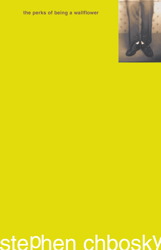
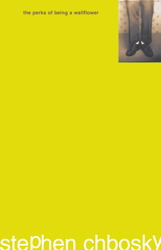
The Perks of Being a Wallflower by Stephen Chbosky
Final Verdict: 4.0 out of 4.0
YTD: 15
Disclosure: This is a book that I have read five times, now, but have yet to review. The first three times I read it were in the pre-blogging days, so naturally I could not have posted any thoughts about it. The fourth time, I wrote a brief comment but could not bring myself to write anything constructive. This time, I set out to read the book with the intent of reviewing it.
Plot/Story:
4 – Plot/Story is interesting/believable and impactful (socially, academically, etc.)
Fifteen-year-old Charlie is a wallflower. Like a wallflower, there is something strangely beautiful about him. He is silent but observant; shy but determined to please; introverted but filled with love and compassion. His story starts in August, 1991, just as he is about to begin his first year of high school, and it ends almost exactly one year later. He has lost someone close to him and is clearly confused about how to deal with his feelings about this loss (amongst the other complicated growing pains he experiences); so, he decides to begin writing letters to a stranger – someone who he once overheard a mutual friend talking about. The recipient of Charlie’s letters is never disclosed – we do not know his/her name or age, his/her profession or relationship to the people in the story, just that s/he is considered trustworthy and addressed by Charlie as “Dear Friend.” This friend becomes the unwitting conduit for Charlie’s coming-of-age. In this year of his life, he builds and compromises friendships; he is exposed for the first time to some of the darker elements of life; he learns to drive and to dance; he goes to parties and reads books. Most importantly, though, Charlie becomes Charlie. He blossoms from a wallflower into a “participant” – and he learns how to feel infinite.
Characterization:
4 – Characters extraordinarily developed.
Since the entire book is comprised of letters written by one character, to one person, it would be easy to question the narrator’s reliability and to wonder about the development or accurate representation of the other characters involved. Charlie, however, seems to have only one major fault, and that is honesty (as when he is dared to kiss the prettiest girl in the room and doesn’t kiss his girlfriend). While Charlie certainly seems to have mental issues – possibly a mild form of schizophrenia (many other reviews seem to think he is Autistic, but I would disagree) – he never comes across as the type to mislead his audience, particularly as the audience is, for all intents and purposes, just one person, his “Dear Friend” and the only one in whom Charlie confides everything. The narrator’s reliability being established, then, allows the reader to believe Charlie’s story and to watch as he grows through experience and heals through memory, acceptance, and forgiveness. While other characters in the book, including Charlie’s family and friends, and his favorite teacher, Bill, do not evolve as much as Charlie, they are, however, natural characters, believable in every way. The situations these people find themselves in, from first loves and broken romances, to family holidays and personal tragedies, are written with a realistic passion, as one who is watching and engaged in the drama but who has nothing to gain from sensationalism would write them. This makes the events, though not experienced by each of us, relevant to all, because they are facts of life. In the end, these characters are just people and these people are just living.
Prose/Style:
4 – Extraordinary Prose/Style, enhancing the Story.
At one point in the story, Charlie’s teacher, Bill, tells him that some books are “very easy to read but very hard to ‘read well.’” This book just happens to fit that mold – its language is simple and straightforward, but it is littered with sub-context and deeper elements which are introduced at the start of the story, nursed throughout, then, finally, come to fruition at the end.
The novel is structured in a one-way epistolary format. It is almost a diary, except that each entry is a letter to an unknown stranger, and that stranger never responds. Because these letters are being sent off to someone who is not expected to reply, and because (we can assume) no copies of the letters are being retained by Charlie, they tend to be much more personal and provocative than even a diary or journal might be (because, subconsciously, we all worry that someone might find our diaries and expose our secrets, or at least confront us with them – which is of particular concern when the writer is a teenager living at home with his parents and siblings). For this reason, because the letters are assumed secret, they are simultaneously simple but revelatory.
While researching other thoughts and opinions on the book, I have found that one of the primary points of contention for many readers is the underdevelopment (so they say) of the main character, Charlie. Throughout the book, we discover that Charlie is considered to be a rather smart individual. He is given extra projects by his English teacher and he regularly receives perfect scores/grades on his schoolwork. Some have wondered, then, why Charlie writes in such a simplistic way. Looking back, though, and reading critically, there are two things to keep in mind: first, that Charlie is considered to be smart for his age; he is at no point called a “genius” or “brilliant” or any other superior term- just smart; second, Charlie himself admits early on to preferring common vocabulary, as opposed to loftier language (which he finds pompous and pointless). In contemporary Young Adult fiction, a trend has developed wherein teenage characters are given the narrative or dialogic voice of Ivy League college graduates. This is, I think, unfair to the readers and, though it might make the characters more interesting and the story more edifying, it does not represent the typical teenage voice. Chbosky, on the other hand, aims to depict an honest teenage writer, one who is not composing essays or communicating with scholars, but who is simply writing letters. These letters allow him to release emotion and, eventually, to reconnect him with some deeply-buried, painful and important memories. His writing allows him to heal – it is simple but poignant and, most of all, it is real.
Additional Elements: Setting, Symbols/Motifs, Resolution, etc.
4 – Additional elements improve and advance the story.
This is absolutely a story which tackles many issues, from rape and abortion, to teenage sex, drugs, and suicide. Some readers might find the amount of dramatic material overwhelming or off-putting, but when one compares this story to others which approach teenage life in a similar way, such as Go Ask Alice, it is clear that The Perks of Being a Wallflower aims to be nothing but honest. Charlie is an unconventional narrator and his story is composed in an unconventional way but, ultimately, he is just a confused American teenager trying to find himself in a world that seems to be always changing. Not every one of us will have dealt with all (or any) of these issues, in high school or as adults, but these things do happen and wishing them away –ignoring them- will not change their reality. Charlie, like some readers, does sometimes disengage himself from the more disturbing things that have happened to him, or around him – but the moral of the story is that growing-up means learning to live and learning to live means participating in what goes on around us. Ready or not, life happens – there is good in it and there is bad in it, but the meaning of life is in how we live it; it is whether we choose to navigate our own way or to get lost in the current; to be the wallflower, or the participant.
Suggested Reading for:
Age Level: Young Adult
Interest: Coming-of-Age, Family, Friendship, Identity, Sexuality, Abuse, Drugs, Psychology
Notable Quotes:
“Things change. And friends leave. And life doesn’t stop for anybody.”
“I just need to know that someone out there listens and understands and doesn’t try to sleep with people even if they could have. I need to know that these people exist.”
“So, this is my life. And I want you to know that I am both happy and sad and I’m still trying to figure out how that could be.”
“I really think that everyone should have watercolors, magnetic poetry, and a harmonica.”
“What’s the point of using words nobody else knows or can say comfortably? I just don’t understand that.”
“We accept the love we think we deserve.”
“I know that things get worse before they get better because that’s what my psychiatrist says, but this is a worse that feels too big.”
“I am very interested and fascinated by how everyone loves each other, but no one really likes each other.”
“Sometimes people use thought to not participate in life.”
“Everyone else is either asleep or having sex. I’ve been watching cable television and eating jello.”
“So, I guess we are who we are for a lot of reasons. And maybe we’ll never know most of them. But even if we don’t have the power to choose where we come from, we can still choose where we go from there. We can still do things. And we can try to feel okay about them.”
“And in that moment, I swear we were infinite.”
Related Links:
Smash Attack Reads, Reviews The Perks of Being a Wallflower
The Perks of Being a Wallflower Movie Information
Shooting Stars Mag Interviews Stephen Chbosky
Book Blogging, A Breakdown
The Empathetic Reader & The Effective Reviewer
Not too long ago, while browsing through my virtual bookshelf on Goodreads.com, I became inspired to go back to some of my favorite books and see what other readers & reviewers had to say about them. The result was a surprisingly unpleasant experience, which lead to my making a comment on Twitter about the need for effective reviewers to be empathetic readers. The response I received to that Tweet was unexpectedly overwhelming, with replies in agreement and confutation.
As book bloggers and reviewers, we all have an obvious passion for reading. Why would we spend our free time and our own money building up our blogs, buying books, organizing events, and giving away books, swag, etc., if not out of love for the material and the industry? But with that passion, there comes great responsibility.
We must recognize that the book blogging world has expanded exponentially over the past few years, particularly with the advent of electronic reading devices. The landscape of the reading and reviewing world has shifted – how many average readers pick up a copy of The Paris Review or the New York Times Review of Books? Not many. Instead, they subscribe to book blogs or browse for reviews online, which inevitably lead to book blogs. Like it or not, we have become the new critics – and we need to take that responsibility seriously.
So, when I encounter reviews on Goodreads.com, LibraryThing, Shelfari or similar websites and these reviews are obviously biased or incomplete (such as 1-star ratings of books the reviewer clearly didn’t understand, or 5-star ratings of books the reviewer has never read but would like to) there is a serious disservice being done to those who are browsing titles and searching average ratings for recommendations and, perhaps, an even greater injustice to the authors who deserve honest, specific feedback on their work – be it positive or negative.
Roof Beam Reader is committed to providing comprehensive reviews of quality, without bias or coercion. The following passages provide thoughts on how I aim to achieve this, consistently and under varying circumstances.
Reviewing Books Whose Stories are Outside my Experience
First, let me clarify what I mean by being an empathetic reader. I do not mean that we need to try to like books that are simply not very good (or, let’s face it, downright bad). What I mean is this: our reviews should be constructed based upon the literary merit and/or entertainment value of a book, depending on its intended audience and purpose. Of course, whether it “speaks to us” personally is important, particularly if we are reading the book for pleasure; however, there are countless books whose subject matter, narrator, or characters were beyond my realm of experience, yet, as a reader, I could empathize with their situations and emotions. If you find that you are reading a book that is not wholly relatable to your life and experiences, ask yourself: “But, how would I feel if I were dealing with this particular situation?”
One of the reviews I came across on Goodreads.com was written by a woman in her twenties, who was commenting on a book narrated by a teenage boy. The story involved sexual situations and experiences with drugs and alcohol. Ultimately, the reviewer gave this book a 1-star rating, stating: “When I was 15 I would have never engaged in things like this, and neither would any of my friends.” So, because her personal history was different, the book had no merit?
As a male reader, it would be easy for me to remain disconnected from female narrators. How can I, as a man of the 21st Century, feel any connection with Nathaniel Hawthorne’s Zenobia, from The Blithedale Romance? The answer is simply this: because I imagine it is so. Yes, it takes a great writer to create characters and situations which allow the reader to feel s/he could be a part of the story, but it also requires an active reader to make the effort, to let go of contemporary restraints, be they temporal, socioeconomic, cultural, religious or otherwise, and just feel. I do not know what it would be like to live in a world where women are used as biological vessels and nothing more, as Offred of Atwood’s The Handmaid’s Tale does; but I can imagine myself in that world, and I can reflect on how it would feel to live in a society that would force my mother, my sister, and my friends into sexual servitude. I am not a woman, that particular world does not exist, and my society is unlike the one created in the book, but that does not mean the book is irrelevant to me.
Reviewing Books that I Couldn’t (or Wouldn’t) Finish
I recently found a 1-Star review on Goodreads.com for one of my favorite books, The Perks of Being a Wallflower. I was flabbergasted that anyone could dislike the book so much as to give it the most negative rating possible, particularly since my experience with it was the polar-opposite. Still, I was curious and approached the review with an open-mind and a desire to learn how this book spoke to others (having already known how it speaks to me). The reviewer essentially rated the book so low not because it was poorly written, nor because it had lack of character development or depth, nor because it was meaningless or inaccurate; instead, the review, summed up, came to this: “The main character was a 15-year-old who didn’t know what masturbation was and who cried a lot, so he wasn’t believable and I couldn’t finish the book.” Astounding.
Reading further into the comments on the review (not in the actual review itself), I discovered that the reviewer had not read more than 40-pages of this 200+ page book. How can one make a judgment about a character and about an entire book, when they have read less than 20% of the text? Had the reader given the book a chance and read through to the end, she would have soon realized that two major events in the main character’s life, which are revealed later in the story, have much to do with his introverted personality and his seemingly extraordinary sensitivity.
So, what should we do when we choose not to finish a book, whether because we do not connect with the story or its characters, or because it is so poorly written that the effort doesn’t seem worth the outcome? I think, in both cases, it is perfectly appropriate to write a reflection post about the book. It is necessary, however, to explain in your response that you did not finish the book and clarify just how far into it you got before you stopped reading. People out there are reading our reviews for guidance – so, to rate a book poorly and then not explain that you did not finish the book or elaborate on why exactly you chose not to continue, is misleading and irresponsible.
That being said, it is perfectly fine not to finish a book – there have been a few books that, try as I might, I could not see through to the end (I still have to try Radcliffe’s Mysteries of Udolpho again); but those books do not get reviewed on Roof Beam Reader. It is an issue of fairness and, in fairness, I believe a book should be completed before being reviewed. That is not to say, of course, that I won’t mention why I stopped reading it – that, too, my readers deserve to know.
Reviewing Books that I’ve Never Read
Years ago, when I first joined Goodreads.com (it was still in beta version, believe it or not!), I spent much of my time searching through reviews of the books I had already read, to get an idea of how people were organizing their thoughts. The idea of reviewing and rating books was still very new to me at the time, so I was looking for some direction. Imagine my surprise when I came across a 1-star review for The Catcher in the Rye by J.D. Salinger (who, incidentally, is the inspiration for the name Roof Beam Reader).
Do I know that there are people out there in the world who did not like or connect with Catcher? Yes, of course. I have had my fair share of conversations with readers who found Holden Caulfield to be bratty and unlikable (which is fine and even true, and which, ironically, is why some people hate the book and why some review it so highly). This review, however, one of the first I ever read, went something like this:
“I haven’t read this book, but I’m giving it one star and will never read it, because the guy who shot John Lennon loved it so that creeps me out.”
To me, this type of review – this type of thinking– borders on blasphemy. Yet, even now, from experienced book bloggers, I occasionally stumble across books that were given positive or negative ratings, but have never been read! Some bloggers will give 5-stars to the next book in their favorite series (like the new Cassandra Clare book) but advanced reader copies haven’t even been released because the book is still in the editing phase. Conversely, as with that review of Catcher above, some book bloggers will give the lowest possible rating to a book they have never read, simply because they do not like the author or premise or a previous book by the same writer. There have been times, too, when I have seen negative reviews based on an earlier/unfinished version of the book and while the reviewer may have had valid reasons for disliking it in its initial form, this is not that book and thus deserves its own judgment.
If we take ourselves seriously and if we truly believe in what we are doing, we need to restrain ourselves from making these snap-judgments. For instance, I strongly dislike Orson Scott Card as a person; I disagree with him philosophically and his positions on social issues make me cringe, but readers will never find me leaving one-star reviews on his books simply out of spite. In fact, I have read some of his books and, much to my chagrin, have absolutely loved them. It is hard, sometimes, to separate the author from the book – but unless the primary purpose of your book blog is in fact political punditry or something similar, then we need to judge books on their own merit and not based upon our feelings about the writer(s).
Reviewing Books that I’ve Been Asked to Review
One of the most difficult situations a book blogger can find him/herself in is having to write a negative review for a book they received from an author, agent, or publisher. There have been countless posts and articles about the back-and-forth between industry representatives and book bloggers who write negative reviews, as if agreeing to read and review a book on one’s blog guarantees for the author a positive review and free publicity.
There are two effective ways to handle this sticky situation. The first is not to accept any books for review from anyone directly involved in the marketing or publication of the book. Simply buy your own books, read them, and review them. The second is to make it clear, in disclaimers on your blog, on your review request forms, and in your e-mail agreements (or Facebook/Twitter communications, whatever the case may be) that you will accept the book for review, you will review it honestly, good or bad, and that you have the right to post it wherever you want to post it (your blog, Goodreads.com, Amazon.com, etc.). This is not only courteous to the agent/author, but it could also save you headaches down the road. If you make it perfectly clear to everyone what your review policy is, yet someone still gets flustered about a negative review, know that you have your disclaimers and agreements at the ready.
The policy for review requests at Roof Beam Reader is clearly outlined on a page of its own. Does this limit the number of requests I receive? Maybe – but it also means that the majority of requests are coming from professional sources who understand the true nature of book blogs and expect only honest thoughts and reviews in return for their provided book(s).
Of course, there are many book bloggers who are paid reviewers – whether they disclose that fact or not. We cannot be so naïve as to imagine there are not people in the world who are willing to accept cash in exchange for a glowing review on a book or books that, in reality, are quite terrible. These reviews can be found all over the web. Sometimes the more ethical of folks will disclose their relationships up-front (as they should), but oftentimes the fact that a review was provided for money/gifts is never made clear; thus, inaccurate ratings and mislead readers, once again. This is perhaps the greatest deception and darkest mark on the book blogging community, after plagiarism of another’s ideas (which will be left alone for now).
Final Thoughts – Where to go From Here
So, as “professional” book bloggers, what do we do? There is no easy answer. People use book review websites in many ways. Some rank books they’ve never read based on the order in which they want to read them (giving 5 stars to the books they want to read first, 1 star to the books they might read someday, etc.). Others rank books without providing thoughts at all, and still others intentionally try to sabotage ratings for popular books and authors, simply because they get irritated by the hype. And, of course, there are those who copy/paste reviews from others’ sites or who are reviewers-for-hire, posting inaccurate or misleading information about a book and receiving compensation in return.
Personally, I have decided not to use these types of websites for review or recommendation purposes. Instead, I visit seasoned, trusted book blogs and suggest the same to my friends, co-workers, and family. At least, in visiting a responsible book blogger, I know that although they may disagree with my opinion on a particular book, they will at least support their decision with a thoughtful, honest review.
For this reason, because I expect so much from other book bloggers, I can guarantee my readers that they will always find the same quality here at Roof Beam Reader. As a lover of books, my commitment is to the reader, which means a promise that visitors will always get my honest opinion. You will find here books that are rated based on a comprehensive system, with clearly expressed thoughts about how and why a particular book appealed to me, or not.
If I receive books for review from publishers, agents, or authors, that will be indicated up-front and the fact that the book was received with a review request will in no way impact my thoughts about it. I will never, ever rate/review a book that I haven’t read or that I haven’t finished, though I might provide a response on why I started a book but couldn’t continue with it.
I believe in this community and I believe in what I do. The thoughts and opinions you find here will always be mine and no one else’s. I hope that I can continue to be a trusted and reliable source on books, and I look forward to the continued growth and success of our little community, come what may.
A Small Sample of my Most Trusted Blogs:
 Roof Beam Reader