Roof Beam Reader
Adam Burgess
Review: Dracula by Bram Stoker
Note: Those reading Dracula for our October Group Read, please be warned before continuing that there may be mild spoilers contained either in the review or in the Notable Quotes section below.
 Dracula by Bram Stoker
Final Verdict: 3.75 out of 4.0
YTD: 50
Plot/Story:
4 – Plot/Story is interesting/believable and impactful.
It is not difficult to imagine Bram Stoker’s Dracula as being highly erotic, particularly for those of today’s vampire-crazed era: Suckling another’s neck to drain their life source, dark and mysterious men, and gorgeous, scantily clad women of other-worldly beauty. Sex, sex, sex. The surprise, though? This has largely been re-imagined, as the original work is nowhere near so explicit. Is the story erotic? Yes, in fact it is both hetero-erotic and homoerotic. Yet, the erotic elements (setting aside, of course, the overall plot which is ever-present) are cleverly spaced throughout the book, which is made up mostly of the “down-time” where our Guardians of Light are reasoning things out amongst themselves, or in their own minds. The story is about, of course, a Transylvanian Count, much feared by the local people. Jonathan Harker, an English solicitor, goes to visit the Count on business. Dracula has purchased property in England and the details must be worked out. Harker soon realizes things are not quite right in Castle Dracula, and he must escape before it is too late. Even in England, though, the evil has followed and innocent maidens and children are suddenly susceptible to attacks of the strangest sort. Only when Dr. Van Helsing arrives do the pieces start to come together and, soon enough, a group of international men, and one unique woman, form the coalition to destroy Count Dracula and put an end to his lineage of Un-Dead.
Characterization:
3 – Characters well developed.
Characterization was the weaker element of Dracula, in my opinion, possibly because the novel was written in epistolary form. Still, each character did get his/her time, as each of the main characters writings were present in the book (though some more than others – Dr. Van Helsing, for instance, sends a few telegrams and writes a memorandum, but he is present, for the most part, within the writing of others). This creates much unreliability, for two reasons: 1) One’s own personal writing, particularly that which has been written in retrospect, is not always going to be the most truthful and 2) One’s writing about another can also be biased, tainted, or under-realized. The only way to avoid unreliability, though, is to have a third-person omniscient narrator, which would have utterly ruined this book – so the choice was a good one, ultimately. The reader does see personality differences in each of the main characters and can begin to guess at how certain characters will react in various situations; also, dialect is handled well, particularly in the minor characters. Stoker does allow a female character, Mina Harker, prominence in a heroine form which, at least for this reader, seems unusual for a horror/adventure story of the time – and it was a welcome exception to the rule, even if many of the stereotypical male/female dynamic elements were still present.
Prose/Style:
4 – Extraordinary Prose/Style, enhancing the Story.
Dracula is written in epistolary form – a series of letters, diary entries, recordings, and telegrams composed by each of the main characters and compiled chronologically. This method had become popular at the time, and Stoker likely took his cue from Fielding (Shamela), Collins (The Woman in White) and especially from Walpole’s The Castle of Otranto, which has a preface similar to that of Dracula’s, wherein the reader is told how very authentic the following documents are and in what serious regard they should be held. The effectiveness of the form in this book is largely due to the fact that so many characters (unreliable, all of them) are allowed their say through their writing – reactions on paper which come either at the time of events, or soon after, so that the story is almost told in the present tense. Having multiple unreliable narrators, male and female, adds to the overall sense of ambiguity and self-deception of the novel, which likely mirrors its authors state of being (discussed further in “Additional Elements”). The attention to dialect of the classes and nationalities was very well done, as was the prose in general. I was not expecting Dracula to be a page-turner, even as a horror story. What I thought would be lofty or oppressive prose turned out to be quite gentle, fluid, and engaging.
Additional Elements: Setting, Symbols/Motifs, Resolution, etc.
4 – Additional elements improve and advance the story.
Dracula is similar to its contemporaries (Frankenstein, Dr. Jekyll and Mr. Hyde) in that the horror story is used as a canvas for discussing the burgeoning paradigm between advancements in science and traditional religious/superstitious belief systems. It is a welcome surprise, however, that this is not the primary motive. There is something Stoker is hinting at and shying away from throughout the entire novel (something relative to what was happening with Oscar Wilde at the time, and related also to Stoker’s relationships with Henry Irving and Walt Whitman). Stoker uses the fear element and the mystery element to advance his views on censorship (whether those views be freely expressed or a result of the narrowing times, it is hard to say). Still, though the book, on the surface, is very much Christian-inspired, coming from a place of suppressed sexuality wherein sexual cravings are sinful, sub-surface it seems to be just the opposite. This is the brilliance of the book: Stoker says what he needs to say, but hides, masks, or avoids what he feels is most dangerous – sex, be it heterosexual (the pornographic material of the day was coming under fire) or be it homosexual (manly-friendships and admiration were very much real for Stoker, and in the book he comes close to exposing it, particularly in the scene where Dracula tells the female vampires that Jonathan Harker belongs to him). There is also a clever nod from Stoker that what has been “stamped out” of society (homosexuality/promiscuity/general sexual desire) has been “stamped out” in the character Dracula – but not quite. A seed has been planted and allowed to grow in the child of Mina Harker, just as the seeds of ideas had been planted in Victorian minds and, though oppressed, must surely come to fruition someday. All of these elements, which are the most important, are also the most guarded – and this is where the true sense of horror and mystery comes from. Certainly, there are moments of terror and suspense in the book which are narrated openly, but the really exciting possibilities are below surface-level and are so much fun to fish out – it made the book much, much more than I expected it to be.
Suggested Reading for:
Age Level: High School+
Interest: Horror, Victorian, Sexuality, Mythology, Christianity, Classics, Irish, Literature
Notable Quotes:
“The fair girl went on her knees and bent over me, fairly gloating. There was a deliberate voluptuousness which was both thrilling and repulsive, and as she arched her neck she actually licked her lips like an animal… I could feel the soft, shivering touch of the lips on the supersensitive skin of my throat, and the hard dents of two sharp teeth, just touching and pausing there.”
“’How dare you touch him, any of you? How dare you cast eyes on him when I had forbidden it? Back, I tell you all! This man belongs to me! Beware how you meddle with him, or you’ll have to deal with me.’”
“No man knows till he experiences it, what it is like to feel his own life-blood drawn away into the woman he loves.”
“With his left hand he held both Mrs Harker’s hands, keeping them away with her arms at full tension; his right hand gripped her by the back of the neck, forcing her face down on his bosom. Her white nightdress was smeared with blood, and a thin stream trickled down the man’s bare breast, which was shown by his torn open dress.”
“My revenge has just begun! I spread it over centuries and time is on my side.”
Review: The Night Circus by Erin Morgenstern (With Bookalicious Pam)
Hello, Readers!
This is a week of firsts for me! Yesterday, I posted my very first video-blog, and today I am posting my very first joint review! Bookalicious Pam and I decided that, since The Night Circus by Erin Morgenstern was getting so much hype, we would read it together and review it under the same format, to compare notes as it were. Enjoy!
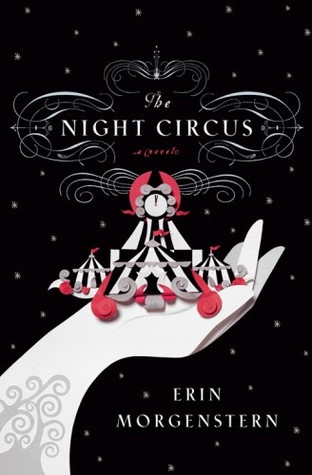 The Night Circus by Erin Morgenstern
Roof Beam Reader’s Final Verdict: 4.0 out of 4.0
Bookalicious Pam’s Final Verdict: 4.0 out of 4.0
Plot/Story:
RBR’s Thoughts:
4 – Plot/Story is interesting/believable and impactful (socially, academically, etc.)
Welcome to Le Cirque du Rêves! The sun has set, which means the doors are just opening. Catch it while you can – it’s back in town, but not for long. Be sure to visit the Ice Garden and the Wishing Tree… and don’t miss out on the Pool of Tears. Grab a caramel apple, something hot to drink, and wander through the aisles of black and white. If you have questions while you’re here, feel free to seek out someone wearing just a splash of red – they’re the experts, after all. Celia Bowen and Marco Alistair, magicians trained since birth, are bound by their masters’ unbreakable spell, to compete against each other, exhaustively and eternally, until one magician wins. But what determines a winner? In whose hands does the final verdict rest? And what will it cost the victor to win? Morgenstern’s darkly-whimsical drama is an intricate play – the reader is strung along, a viewer to the events unfolding. There are brief moments when the reader is invited in, allowed to be a part of the action, but one soon learns that The Night Circus is largely a private event, where spectators are allowed, but never truly privy to all that is happening. The Night Circus is Romeo and Juliet meets The Prestige – a delicately constructed, intricately designed, beautifully crafted love story, with a novel twist.
BP’s Thoughts:
4 – Plot/Story is interesting/believable and impactful (socially, academically, etc.)
I was entranced by the first sentence of The Night Circus and every sentence after that. Rarely does a book hold so much magical fodder to keep me entertained long past the 200th page has passed. I am in awe of Morgenstern’s writing chops and the fact that she flashed these chops so brilliantly in a debut Novel. Normally I am wont to breeze through a novel and swiftly move on to the next, however, The Night Circus is like an expensive woody Cabernet to be savored slowly and in small doses. It’s not easy to make a magical world wholly believable and Morgenstern did just that.
Characterization:
RBR’s Thoughts:
4 – Characters extraordinarily developed.
Characterization and character development were almost the sole point of contention for me. There are certainly a wide assortment of characters, from the dark, dangerous, and seemingly cold-hearted mentors, to the naïve farm boy, a gentle soul who is sucked into the magic of the Circus, almost against his will (not that he isn’t willing, ultimately). While the characters –be the major or minor, external to the Circus or crucial to it- are each of them interesting in their own way, filling a separate need in the plot and final climax/resolution, it is ultimately the subtle changes in certain characters, including Marco and Celia, their mentors, and some of the Circus folk, which demonstrates Morgenstern’s mastery of characterization. It is further demonstrated, and perhaps most profoundly, in the realization that the Circus itself is a complicated character, the one which grows, develops, and changes the most throughout the story – and the one which is crucial to the existence of all the other characters.
BP’s Thoughts:
4 – Characters extraordinarily developed.
The Night Circus has a brilliant cast of characters. Moving beyond your main protagonist there is a whole circus to explore full of everything and everyone you believe would be haunting and working at a circus that only opens at night. It is very comparable to that episode of Torchwood about the Night Circus. At times I was able to imagine Captain Jack running about in Morgenstern’s world. The whole characterization style was wholly refreshing.
Prose/Style:
RBR’s Thoughts:
4 – Extraordinary Prose/Style, enhancing the Story.
The Night Circus is narrated in the third-person present for the majority of the story, aside from brief second-person interludes, where the reader is specifically directed to certain aspects of the Circus. It is also constructed as a series of episodes, interspersed through time and space: one moment, the reader is watching events unfold in 1890s London, and in the next moment the story is developing in Boston, twenty years later. The construction is interesting in that it almost forces the reader to slow-down and savor the story; if you read too quickly, it will be easy to get lost in the timeline. Though I am not typically a fan of non-linear plots, Morgenstern’s layout is somehow appropriate, largely because it is 1) written so well and 2) an interesting addition to the already surreal story, mirroring the intrigue and mystery of the Circus. Similarly to the unique structure and style of the book (which includes, I should add, a gorgeously crafted book, from cover-to-cover – you can feel the quality of this book under your fingertips), the prose is also demonstrative of high-art writing and ability. This type of prose, so meticulously wrought, is lacking in today’s fiction, aside from a few literary writers. Though the chapters are short, the words are so intense and the style so powerful that it makes each episode in the story impossible to skip.
BP’s Thoughts:
4 – Extraordinary Prose/Style, enhancing the Story.
The style of the book was candy but the really rich darkest chocolate. It had sustenance with indulgence that never overwhelmed the reader. The editing was top notch and reflected the author’s darker subplot fantastically. Honestly I really don’t have much to say here except that this section was perfection on a stick.
Additional Elements: Setting, Symbols/Motifs, Resolution, etc.
RBR’s Thoughts:
4 – Additional elements improve and advance the story.
What really brings this altogether and makes The Night Circus not just an interesting, dramatic, magical-romance is the world Morgenstern creates both in the book and external to it. The Night Circus has its own interactive website, where fans can continue to participate and even interact with some of the “cast.” The proprietor of the Circus even leaves the reader his business card, with e-mail address, so that anyone can send a message (and actually get a response – try it!). This world-building, coupled with the gorgeously designed physical book (the paper quality is superb, the book boards themselves, outside and inside are beautiful, the jacket art is lovely, the constellation section-breaks and font/type are beautiful, etc. etc.) make this a book one will not just enjoy reading, but will be proud of owning. There is something very old-fashioned, almost ancient, about this story – though it takes place just 100-years ago. It’s as if Morgenstern channeled the history of magic, from the Merlin myth through the Salem-age, and wrapped it up tight in this one book, for all to taste. Some reviewers have been put off by the “diversions” in the book, which distract readers from a supposedly predictable plot, but in my opinion, these diversions complement the Circus. At the Circus, visitors are allowed glimpses of different acts and events, depending on which tents they visit. Because the Circus is so big, and always changing, no one person has ever seen every tent, every act. Morgenstern allows us to see as much as we can see, to get glimpses of the characters in different times and locations, which affords readers the opportunity to come to the Circus on their own and to like whichever aspect of it is most appealing to them. Some will fall in love with the romance, others with the magic. Some will be charmed by the clockmaker, others by the fortune-teller. Readers might adore the Circus twins, who are born in the Circus and grow along with it, while others might find the competition itself, the power and history of it, most intriguing. The point is, readers get to see all of it – brief glimpses which create the whole story. Think of it as a mosaic, where up close any one image out of hundreds can be seen, but when you stand back and look at the images from afar, the true portrait appears.
BP’s Thoughts:
4 – Additional elements improve and advance the story.
Hello, it’s a circus, and who doesn’t love a circus? Well to be honest the only circus I will visit is an imaginary one. I have all of these thoughts and feelings about animal treatment and real circuses don’t work out for me on the whole so it was wonderful to learn about circus worlds/terms/ideals via this book. I found myself enamored by the setting which was just as much a protagonist than the characters.
RBR’s Suggested Reading for:
Age Level: Adult
Interest: Fantasy, Romance, Whimsy, Competition, Family, Magical Realism
BP’s Suggested Reading for:
Upper YA, College Students and fans of dark literary motif.
Review: Every You, Every Me by David Levithan
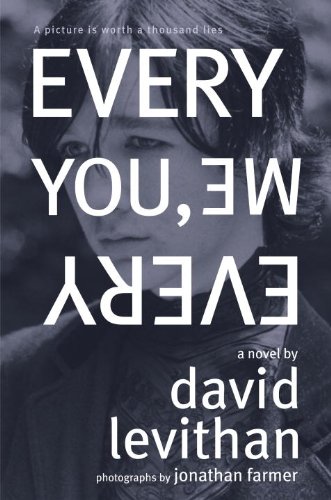 Every You, Every Me by David Levithan
Final Verdict: 3.75 out of 4.0
YTD: 48
Plot/Story:
4 – Plot/Story is interesting/believable and impactful (socially, academically, etc.)
I can say it now: I hate David Levithan, unequivocally. Why do I hate him? Because he continues to write every book I would have written, had I the talent, stamina, or patience to actually become a writer. First, there was Boy Meets Boy, a beautiful high school romance between two teenage boys, delivered in the most natural way I have ever seen. Then, there was Will Grayson, Will Grayson, which he co-wrote with John Green and which was, let’s face it, a match made in heaven. Most recently, he released The Lover’s Dictionary, which is one of the most interesting and relevant re-imaginings of the adult love story in current fiction. So, alright, I actually love David Levithan. With his latest, Every You, Every Me, David Levithan again cooperates with another artist, this time a photographer named Jonathan Farmer. The main character, Evan, recently lost a friend – the one friend he wished could have been much more than a friend. He and Ariel’s (that’s “the one”) boyfriend, Jack, are struggling in their own ways to deal with their grief and feelings of responsibility about what happened to Ariel. Suddenly, as Ariel’s birthday approaches, Evan –and Jack- start to receive random, cryptic photographs in places which remind them of Ariel. Some of the photos even have Ariel in them. As the torture continues, Evan struggles to fight the madness and find the person responsible for leaving these photos – but who is it? Could Ariel herself be somehow haunting them? Is it a mysterious stranger with a grudge brought to bear? Or, could Evan himself have truly snapped and not even know it? Thrilling, poignant, and surprising – David Levithan has definitely done it again.
Characterization:
3 – Characters well-developed.
As is the case with most of Levithan’s work, the book is rather sparsely written. That is to say, the story tells itself, in a way, and is much more the focal point than its characters are. For this reason, the characters do not get as much growth, development, or characterization as one might hope. Still, the various personalities – particular of Evan and Jack, but also of some of the minor characters- are clearly written so that each character is identifiable as him or herself. What is most impressive in this regard, though, is the characterization of Ariel, the dangerously disturbed girl who Jack and Evan are pining over, and who is long-gone before the story even begins. To develop a character that is so crucial to the story, yet not technically a presence in it, takes a certain amount of craft – and Levithan has it.
Prose/Style:
4 – Extraordinary Prose/Style, enhancing the Story.
What I am often most impressed with is Levithan’s story-telling ability. His prose is sparse but engaging – not lofty in the least, but also not quite conversational. There is an interesting balance between these two extremes which Levithan always manages to scale delicately, and Every You, Every Me is no exception. The interposing of images at crucial moments of the story, coupled with the “chapter parts” and the varying lengths (sometimes a chapter part is one or two sentences, other times it is a few pages) adds an interesting complexity and novelty to the structure. There is also quite a lot of strikethrough in the prose, as if the narrator, Evan, is arguing with himself as the story progresses – fighting certain memories, battling certain emotions. At first, the strikethrough was a bit irritating, because I wasn’t quite sure whether I should skip or scan through that and read just the open prose, or if the strikethrough itself was really part of the storytelling. This is a determination each reader will have to make on his own, as it works either way; for me, it felt most appropriate to read every word because the struggle for the character, being mirrored in the prose was ultimately moving and important.
Additional Elements: Setting, Symbols/Motifs, Resolution, etc.
4 – Additional elements improve and advance the story.
To live or to die. That is a decision every person makes every day, though hardly any of us think about it. Still, the choice is ours, really – we wake up each day and we decide, consciously or subconsciously, whether or not to continue living. This is a very personal, private thing, and for most, not really a consideration at all. So, what if someone else forced that decision – of whether they would continue to live or not- on you? What if they put you in command of their survival? Could you let someone –a best friend, a girlfriend- die, if they really wanted to die? Would you force them to get psychiatric help against their will if it meant they would live – but live hating you forever? This is the nature of Every You, Every Me. The title is taken from a moment in the book when Ariel is telling Evan that all of us have multiple personalities, in a way. We don’t ever show 100% of ourselves to anyone else and, likewise, we never see that 100% in another. Sometimes, we can’t even admit all of the truths about ourselves to ourselves. What is so wonderful about each of Levithan’s books is that they say something, and usually it is something few others know how to say or how to admit. Every You, Every Me is a story about love and friendship, yes, but more importantly it is about struggles with depression, social anxiety, psychotic breaks, and decisions none of us should ever have to make. It is about how to survive and move on, when all is said and done.
Suggested Reading for:
Age Level: YA/High School+
Interest: Friendship, Coming-of-Age, Loss, Psychology, Manic/Polar Psychosis, Suicide, Recovery.
Review: This Side of Paradise by F. Scott Fitzgerald
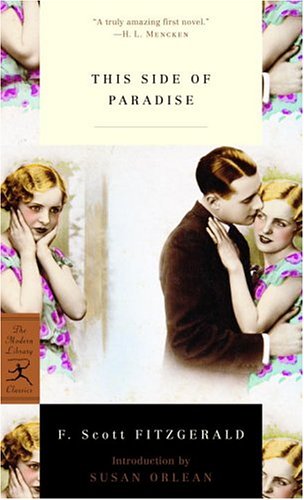 This Side of Paradise by F. Scott Fitzgerald
Final Verdict: 3.0 out of 4.0
YTD: 46
Plot/Story:
3 – Plot/Story is interesting & believable.
This Side of Paradise is Fitzgerald’s first published work, and it shows. It comes across as a sort of announcement from Fitzgerald himself: “I am here. This is what I am about. You will love me and all the genius things I have to say.” Unfortunately, though the announcement and intent are clear, the story itself is rather disjointed, disconnected, and underwhelming. Amory Blaine is a spoiled brat who thinks incredibly highly of himself, and who condescends to everyone else (including his mother, who also thinks incredibly highly of him – the beginning of the problem). He comes from a wealthy family and he and his mother are essentially given all the money they want from Amory’s father, to keep them occupied, satisfied, and generally out of his way. The story is about Amory’s journey from boyhood onto prep school, college, and the military. While the story itself isn’t worth much, the book does live up to its reputation as a siren for the advent of Fitzgerald and a lighthouse beacon to the dawn of “The Lost Generation.” Much of what Fitzgerald writes about here is reshaped, reformed, and reworked by him in later works and by other authors of the period, whom Fitzgerald influences.
Characterization:
3 – Characters well-developed.
Although none of the characters are particularly likeable, they are developed in such a way as to be distinctive and purposeful. Amory Blaine’s spoiled narcissism is clearly a problem with the generation – a generation of children who grew up with married but estranged parents; husbands supporting their disillusioned wives’ every whims, to the detriment of the family unit; children shipped off to boarding schools with professions chosen for them long before they’re old enough to make decisions of their own. There is a blasé attitude about the church’s function in family affairs (although the minister himself is a rather charming intellectual, he is also insignificant in the grand scheme of things). Amory’s many girlfriends are further example of the interesting male-female dynamic. The women all come across bolder and more promiscuous than the men, though no one would ever admit it. Amory’s reaction to his first kiss is perhaps one of the most realistic moments in the book – excitement, shock, fear, self-doubt, anger. Typical teenage boy! Unfortunately, Amory never really grows out of that phase and, thanks to his relationship with his parents (and their horrendous example) he also never learns to respect women. They are trophies – he falls for very few women (they must be perfect) but when he does fall, he falls fast, hard, and in a near-suicidal way. Still, though he would appear utterly devoted to these girls, their real significance seems to be only in as much as they can inspire him creatively (and for how long they can stroke his ego).
Prose/Style:
3 – Satisfactory Prose/Style, conducive to the Story.
Fitzgerald was definitely flexing his literary muscles here. It is clear, though the story is a bit discombobulated, that Fitzgerald is bound to be a shining star in the literary world. There are certain moments – be it a phrase, a paragraph, or entire passages – where I can see Fitzgerald becoming what we later know he is. This is one of the most fascinating things about reading writers’ first works long after reading their later works. It is also fortunate that This Side of Paradise had such moments, because without the Fitzgerald name and without these examples of high-quality writing and craftsmanship within a rather dull story, it is possible that I would have given up on the book. I also enjoyed the few moments where Fitzgerald broke into political posturing a bit – indeed, there is a moment where I envisioned Fitzgerald writing in one corner of a room, with Ayn Rand in the other, and they are each violently scratching away at their own papers, espousingolar opposite ideals. I think Fitzgerald is putting himself to the test with this first book – he is finding out who he is, what he believes, and what he wants to say. The voyage is a bit shaky, but getting there is worth the trip.
Additional Elements: Setting, Symbols/Motifs, Resolution, etc.
3 – Additional elements are present and cohesive to the Story.
The most interesting aspect of the novel is that it is the dawning of a new generation. This Side of Paradise was published just two years before T.S. Eliot’s The Waste Land, and it is impossible not to draw comparisons. Following World War I, much art and literature was devoted to describing “The Lost Generation.” As Eliot’s poem is concerned with the emotional and spiritual stagnation or snuffing-out of western civilization (particularly the male population), so too is This Side of Paradise concerned with a people devoid of substance and without purpose or direction. Eliot’s poem is more innovative in terms of structure, form, and narration, but there is a certain musicality to This Side of Paradise which is also present in The Waste Land and which, I think, is indicative of The Jazz Age in general. Keeping this work in perspective – reading it in relation to the period and other works of the time (not just literature – but art and music as well) makes the significance of This Side of Paradise truly apparent.
Suggested Reading for:
Age Level: High School +
Interest: Jazz Age, Prohibition, Bildungsroman, The Lost Generation, Post-World War I
Notable Quotes:
“It was always the becoming he dreamed of, never the being.”
“The idea that to make a man work you’ve got to hold gold in front of his eyes is a growth, not an axiom. We’ve done that for so long that we’ve forgotten there’s any other way.”
“People try so hard to believe in leaders now, pitifully hard. But we no sooner get a popular reformer or politician or soldier or writer or philosopher — a Roosevelt, a Tolstoi, a Wood, a Shaw, a Nietzsche, than the cross-currents of criticism wash him away. My Lord, no man can stand prominence these days. It’s the surest path to obscurity. People get sick of hearing the same name over and over.”
“Here was a new generation, shouting the old cries, learning the old creeds, through a revery of long days and nights; destined finally to go out into that dirty gray turmoil to follow love and pride; a new generation dedicated more than the last to the fear of poverty and the worship of success; grown up to find all Gods dead, all wars fought, all faiths in man shaken. . . .”
Review: House of Stairs by William Sleator
 House of Stairs by William Sleator
Final Verdict: 3.5 out of 4.0
YTD: 45
Plot/Story:
4 – Plot/Story is interesting/believable and impactful (socially, academically, etc.)
William Sleator’s House of Stairs is a fascinating psychological thriller about five orphans who are kidnapped, brought to an enormous facility (housed entirely of stairs and nothing but stairs) and left to their own devices. They are controlled by a mysterious box which provides food – but at a cost. Slowly, the box begins to subtly demand what it wants, and the teenagers must react and adapt accordingly, dancing a twisted dance of survival; if they refuse to participate or if they do not infer correctly what the box wants from them, they will go without food – and it is never certain when the next chance might come. As three of the teenagers descend further and further into darkness and insanity, two others take a stand, willing to risk their lives to do what is right, rather than submit to the devious whims of whatever mad scientist controls the box. House of Stairs is a psychological page-turner, similar to the likes of Cormier’s I Am the Cheese. It is a rebuke of the over-reaches of science and a warning against the loss of humanity for the advancement of research.
Characterization:
3 – Characters well developed.
Each of the characters in this book is interesting in his or her own way, including the scientist who makes a rather brief appearance at the end. While I found certain characters a bit flat and overly simplified (such as the “fat girl,” Blossom, being always hungry and eager to steal food), others were genuinely interesting. The main character, Peter, is one of the interesting ones. He has a fascinating back-story and intriguing personality; unfortunately, because the book is so short – the more interesting characters do not get nearly enough time or development. Learning more about Peter and his obsession with a boy named Jasper, or spending more time with the scientist and finding out what happens to him after his “results” presentation, could have gone a long way to developing this story as a work of master dystopia and science-fiction, rather than just a pretty good, interesting YA book. What is an achievement, though, is the clear distinction between the characters – Abigail, the shy, pretty girl who wants to be good; Oliver, the dominant, popular kid who is needled with self-confidence issues; Blossom, the rich girl who was orphaned recently and knows of a world different from any of the others; Lola, the tough girl, who smokes, has sex (probably) and breaks pretty much any other rule she can; and Peter, the follower who just needs someone to believe in him and who turns out to be the one possible hero. Thrown together, the five of them create an environment which is disturbingly fun to watch – it’s just too bad the story was so short.
Prose/Style:
3 – Satisfactory Prose/Style, conducive to the Story.
Sleator is certainly a good writer. His style and narrative voice, plus a great use of dialogue and an interesting plot all work together to create an interesting, worthy read – which makes me wonder why I had never heard of the book or author before. The writing level is middle grade or young adult, but the themes are definitely YA+ so some parents may want to preview the book beforehand for violence, psychological abuse, and “mild” torture. Despite the twisted elements, the skimmed histories, and the too-rapid, open-ended conclusion (or, perhaps because of these things), the book is still an enjoyable, quick read. Much of this is thanks to the style and prose – this is an easy story to sink into, because the writing seems effortless, and it echoes what is happening in the story at any particular time.
Additional Elements: Setting, Symbols/Motifs, Resolution, etc.
4 – Additional elements improve and advance the story.
Aside from the general theme and moral of the story, what is also great about this book is that it presents elements which, in other books, might seem like a big deal (such as one of the characters being gay) but, in this book, just “happens to be.” I also appreciated the study of human experimentation and the nature of violence and decline into madness.
Suggested Reading for:
Age Level: High School +
Interest: Dystopia; Psychological Experimentation; Nature of Violence; Survival of the Fittest; Government Control.
 Roof Beam Reader