Roof Beam Reader
Adam Burgess
Review: The Garden of Eden by Ernest Hemingway
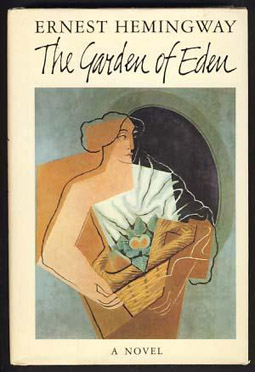 The Garden of Eden by Ernest Hemingway
Final Verdict: 4.0 out of 4.0
YTD: 44
Plot/Story:
4 – Plot/Story is interesting/believable and impactful (socially, academically, etc.)
It is no surprise that it took Hemingway fifteen years to write The Garden of Eden; nor is it surprising that the book was not published until twenty-five years after he died. This story is like no other Hemingway work. It is dark and dangerously bold. Hemingway described this book’s theme as “the happiness of the Garden that a man must lose.” It is about the loss of innocence and a shedding of naivety – the realization that the world is much more complicated and uncontrollable than one imagined. At the center of the book are four relationships: one between David and Catherine, newlywed Americans honeymooning in Europe; one between Catherine and Marita, a young woman she discovers and begins a romantic relationship with; one between David and Marita, whose own relationship is encouraged by Catherine; and the final one, a ménage-a-tois between the three – simultaneously necessary and destructive.
Characterization:
4 – Characters extraordinarily developed.
Catherine and David are two of the most compelling characters from Jazz Age literature. They are, by far, the most rounded and interesting of Hemingway’s works, particularly Catherine. Hemingway is often criticized for his (mis)treatment of women in literature (specifically the absence of any primary females in his literature). Catherine, and even Marita, should push Hemingway miles away from this argument. Catherine is tragically beautiful – she is written with a deeply-felt honesty that one can imagine was truly painful for Hemingway to put in print. The evolution of her character and devolution of her sanity were impossible to look away from, even when the character turned petty or when the subject matter became bizarre. Hemingway’s development of Catherine and her development throughout made it clear that she was not strange just to be strange and, similarly, that the husband David was not just passive or acquiescent, but truly loving and sadly lost. The minor characters, such as David’s father who is present only through David’s stories, and the hotel keeper, are well-written and important to the plot, as contrast characters and biographical presences.
Prose/Style:
4 – Extraordinary Prose/Style, enhancing the Story.
Typically, I am appreciative of but never over-the-moon about Hemingway’s prose. Anyone familiar with Hemingway knows what we mean when we say “Hemingway-esque.” Simple, plain, mild – made up of short sentences, sparse dialogue, and little creative expression. Sometimes (usually) this serves the purposes of the stories quite well. What is different about The Garden of Eden, is that Hemingway keeps his signature style, but adds two things: one, a character (David) who is a writer and who, as a sort of Hemingway projection, explains why he writes the way he does; and two, adds a certain level of emotion to the same sparse style: drama, disappointment, fear, passion, eroticism. Hemingway typically leaves the emotional side of his stories sub-service, to be inferred. The Garden of Eden is similar in that respect, but not exactly the same – it breaks the mold and adds an interesting dynamic to the writing style of one who is already considered to be a master craftsman – further supporting the fact that Hemingway was groundbreaking in his prose.
Additional Elements: Setting, Symbols/Motifs, Resolution, etc.
4 – Additional elements improve and advance the story.
Had it not been for the novel’s style and prose, which is clearly Hemingway, it would have been difficult to believe that he had written this book. There is a great deal of sentimentalism and raw emotion, which is typically sparse in Hemingway’s novels. Much of this book reminded me more of Fitzgerald’s Tender is the Night than anything else. It is strikingly modern in comparison to his other works, and it tackles serious exploration of gender roles and “taboo” sexuality, including reversed masculinity/femininity and bisexuality. The primary relationship in the book is a ménage-a-trois, the presence of which is rather sparse in literature to date, and the major conflict is Catherine’s mental degradation and psychosis – a psychological instability which becomes more intrusive and violent as the story progresses. All of this, coupled with the meta-fictional aspects, wherein Hemingway talks about his own writing process through his own story’s writer, David (who finds himself evaluating his own process), manages to create a work which is highly dangerous and incredibly ahead of its time.
Suggested Reading for:
Age Level: High School +
Interest: Sexuality, Gender Roles, Expatriate American Literature, Psychology, Open Relationships, The Writing Process, Identity & Co-Dependence
Notable Quotes:
“Happiness in intelligent people is the rarest thing I know.”
“When you start to live outside yourself, it’s all dangerous.”
“Everybody has strange things that mean things to them.”
Review: 1984 by George Orwell
 1984 by George Orwell
Final Verdict: 4.0 out of 4.0
YTD: 43
Plot/Story:
4 – Plot/Story is interesting/believable and impactful (socially, academically, etc.)
In the country of Oceania, Big Brother is always watching. Even the tiniest twitch in one’s face or a blink of recognition from one person to another is enough to condemn one as a traitor, a spy, or a thought-criminal. Winston Smith is a thought criminal. He is one of those who The Party employs to destroy printed history and recreate it, to suit The Party’s needs. He knows what he does is wrong and one day purchases a small diary (the very act of which could incriminate him), which he keeps hidden in his home. In this diary he writes down his thoughts about Big Brother, The Party, and the daily struggles he must go through just to appear “normal” (read: submissive and obedient). Unfortunately, one day, he takes a step too far and trusts the wrong person, in hopes of joining a group known as The Brotherhood, which Winston believes exists to overthrow The Party. He is soon arrested, tortured, and re-indoctrinated… released only after committing the deepest betrayal imaginable, his soul and spirit completely broken. How can there be hope in a world where even one’s children will spy against his parent? Where lovers will betray each other to save themselves? There is no hope – there is only Big Brother.
Characterization:
4 – Characters extraordinarily developed.
Winston Smith’s development over the course of the novel is written brilliantly. The mindset Orwell must have been in – the steel he would have needed in his bones – to write about this one lone character’s struggle for individuality and independence, like a gnat battling against an ocean tide, is incredible. Winston’s slow-developing confidence, his minor decisions which move him closer and closer to large decisions, the methodical way in which Orwell allows Winston to come to realizations and make choices are all very natural and thus very exciting to witness. His character is what makes the plot work and his development is what keeps the reader engaged, rooting for him and hating Big Brother, to the death. The minor characters as well, such as Winston’s mother, who appears only in memories; or O’Brien, one in possession of “the book” of rebellion are crucial to understanding Winston and the dynamic between what is good and what is evil – what makes a person a person, or an animal. Winston and Julia’s relationship too, and Julia herself, are imperative to the final resolution. Julia’s youth and dismissive attitude of Big Brother and The Party, in contrast to Winston’s defiance of it, show two interesting viewpoints – two hatreds of the power structure, but hatreds which developed for very different reasons (Julia has never known anything different, so hates it without any hope or understanding of things being different; Winston knows another time, so hates with a hope that Big Brother can be defeated). Julia’s use of sex as a form of rebellion is also fascinating, particularly in relation to Winston’s use of writing/journaling.
Prose/Style:
4 – Extraordinary Prose/Style, enhancing the Story.
What I knew about Orwell, from reading Animal Farm, was that he was a great writer. He was smart, creative, and thoughtful. He had great ideas and could put these ideas into story form with seemingly little effort. What I know after reading 1984 is that Orwell was not just a great writer, but a masterful one. His prose is almost cinematic – the words flow in such a way as to create flashes of images in one’s mind. He connects his reader to the story, through the language. When moments are tense, the language and prose reflect it. When people are being secretive, deceptive, or easy-going, the style mirrors this. The language he created, Newspeak, for the people of this universe is naturally incorporated into the story in a way which makes it understandable but appropriately different, and the appendix which explains “The Principals of Newspeak” – its development, mutations, purpose, etc. is genius.
Additional Elements: Setting, Symbols/Motifs, Resolution, etc.
4 – Additional elements improve and advance the story.
George Orwell’s 1984 is a classic and a “must-read” on nearly every literary list imaginable, and for good reason. Lord Acton once said: “Power tends to corrupt, and absolute power corrupts absolutely.” 1984 is the quest for power, in print. Big Brother is the symbol of absolute, near-omnipotent power. It is the figure-head or symbol for “The Party,” a group of humans completely obsessed with wielding unlimited power through the oppression of all other people. To gain control, The Party employs people to alter history, making Big Brother appear infallible, and keeps people in a state of fear, where they must always doublethink rather than just “think.” Orwell clearly held misgivings about the advent of electronic media and the potential for it to be misused or altered to suit the party in power’s needs. I found myself relating this book to Fahrenheit 451 in that the primary themes are destruction of the self, blind loyalty to government and the law, and elimination of creative or independent thought in print (and the dissemination of those materials to others). I also couldn’t help but hear the band Muse’s song Uprising playing in my head, whenever talk of The Brotherhood or rebellion came up: “Paranoia is in bloom / The PR transmissions will resume / They’ll try to push drugs that keep us all dumbed down / And hope that we will never see the truth around / They will not force us, / They will stop degrading us, / They will not control us / We will be victorious.” Although I did expect 1984 to end on a hopeful note, Orwell fully committed to this anti-utopian vision; The Party’s control and methods, crafted over decades, turn out to be resolute. Interestingly enough, the follow-through and lack of happy ending, though part of me was hoping for something else, is actually what makes 1984 such a stand-out novel – powerful, thought-provoking, and terrifyingly possible.
Suggested Reading for:
Age Level: High School +
Interest: anti-utopia, oppression, political/social oppression, rebellion, nature of power, nature of fear.
Notable Quotes:
“Four! Four! What else can I say? Four!”
“It is a beautiful thing, the destruction of words.”
“If there was hope, it lay in the proles!”
“One does not establish a dictatorship in order to safeguard a revolution; one makes the revolution in order to establish the dictatorship. The object of persecution is persecution. The object of torture is torture. The object of power is power.”
The Left Behind Ones

This week’s theme is: Top 10 Books I Loved but Didn’t Review
Technically speaking, I have “reviewed” pretty much every book I have read; however, as you can see by looking on my “Reviews” page, many of these reviews are actually just brief thoughts. The reason for this is, I only started book blogging/reviewing a couple of years ago, so anything I read before then … well, wasn’t reviewed. I tried to go back and at least provide a sentence or two about what I thought/felt about each book, but I do need to write actual reviews for many. Of the many, these are ten books I hope to go back and re-read someday, so I can provide a formal review for books I love but haven’t had the chance to review:
1. All works by J.D. Salinger. (The Catcher in the Rye, Nine Stories, Franny & Zooey, Raise High the Roof Beam, Carpenters and Seymour: An Introduction).
I have read all of these books multiple times, but none of them since I started book blogging. I know, without a doubt, that I will go back and read them all, to review them all (especially since I recently bought the complete works in a hardcover set).
2. Fahrenheit 451 by Ray Bradbury.
Another one of my all-time favorite books. As a book lover, it’s almost impossible not to cherish this novel. I do own a copy, though it’s in storage. Hopefully, someday, I can get all of my books out of storage and into a little library of my own; then, I can find books like Fahrenheit 451 which deserve a re-read & review!
3. Naked Lunch by William S. Burroughs
My introduction to Burroughs, the Beats, and subversive/counter-culture literature. I owe this book so much and I have already read it twice, but both were previous to graduate school (at which point I started to really keep track of what I was reading). I have read and reviewed numerous Burroughs novels since – but I definitely need to get back to the beginning.
4. Ender’s Game & Ender’s Shadow by Orson Scott Card
My two favorite science-fiction novels of all-time. I have reviewed a couple of the books which come later in the Shadow series, but never had the chance to re-read or review these two originals. They are the starting point to an incredibly well-crafted universe, one which I hope to revisit (and complete) someday soon.
5. The Perks of Being a Wallflower by Stephen Chbosky
It actually pains me to admit that I have not reviewed this book, considering it is likely my favorite book in the world. I have read it four times (that I can recall), and I quote it or reference it all the time. When I began book blogging, I had every intention of re-reading and reviewing this book right away, but I always feel guilty for re-reading books I love, when there are so many out there left un-read.
6. Where the Red Fern Grows by Wilson Rawls
This is another book I think about all the time. It’s just one that stays with you forever. I’m not ashamed to admit that it made me cry! I read this book when I was just out of high school, I think. So, ten years later, I think it’s about time for another read. It definitely deserves a proper review.
7. The Giver by Lois Lowry
One of the most profound books I have ever read – and it’s Young Adult! As a literature and classics lover, I am always tickled when a young adult or sub-genre book can move me or speak to me, as much as this (and the previous three mentioned) book did. I have read this one twice – first in 7th grade and again in college, and it would be hard to imagine never reading it again. I will absolutely provide a real review for this book sometime in the near future.
8. Adventures of Huckleberry Finn by Mark Twain
I may have written more on my blog about this book than any other – so how can I not have a formal review of it?! I have read this one three times – in college and in graduate school, then again about two years ago. The first time, I wasn’t such a fan. The second time, I gained serious respect for it (and for Twain). The third time, I fell head-over-heels in love with it. Hopefully, the fourth read will be the one which finally comes with a proper review.
9. Cat’s Cradle by Kurt Vonnegut, Jr.
Readers of my blog will find quite a few Vonnegut reviews here – and will likely see me mention or reference Vonnegut fairly regularly. Unfortunately, the two books which introduced me to Vonnegut (Cat’s Cradle and Slaughterhouse-Five) came before my book blog was established. While I may not re-read Slaughterhouse-Five, I will definitely re-read Cat’s Cradle. It was my first Vonnegut and still, in my opinion, Vonnegut’s best.
10. The Picture of Dorian Gray by Oscar Wilde
Here is another one I have read more than once. For some reason, the advent of my book blog has actually deterred me from re-reading books I really enjoy. I re-read the entire Harry Potter series last year, because I had never reviewed any of the books, but that was an exception to the rule. I loved Dorian Gray and now own Wilde’s complete works (including a “lost” text which was published anonymously but is purported to have been written by him). I do plan on re-reading this book some day; hopefully soon, I can provide a review.
Maybe some day I will remember to re-read the books I love and not just focus on the number of “new” books I finish each year. I think those of us who feel guilty or anxious about re-reading books might be suffering from a similar ‘book blog numbers’ syndrome.
Review: The Magician King by Lev Grossman
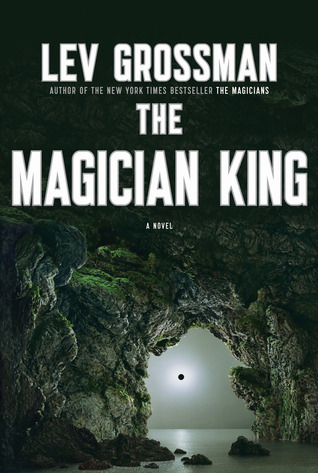 The Magician King by Lev Grossman
Final Verdict: 3.25 out of 4.0
YTD: 42
Plot/Story:
3 – Plot/Story is interesting & believable.
The Magician King is the sequel to Grossman’s 2009 novel, The Magicians (my review can be found here). Quentin Coldwater and the other genius-magicians are back to save the world(s) again, only this time Quentin is forewarned that, part of accepting a quest and winning it is sacrificing or losing something most dear to him. And this time, he not only battles magicians and monsters, but must take on the creators of all life, all worlds, and all universes: the gods. In the first book, Quentin loses someone very close to him and that pain has stayed with him over the intervening years; so, what more could Quentin have to lose? As it turns out, quite a lot, although he doesn’t realize it yet. In this second installment of the lives of these realistic magicians, the reader gains perspective on more than just Quentin’s struggles. Julia, a recurring character from the first book, has a front and center role here, and her story is a dark and dangerous one. The quests that Quentin and Julia are on ultimately lead to the same place, though the majority of each is played out in different worlds (Fillory and Earth). Only when they come together are they able to make headway toward finding the Seven Golden Keys and to avoid a catastrophic event, the return of the gods, which will doom all worlds to the loss of magic forever.
Characterization:
3 – Characters well-developed.
The Magician King reintroduces us to some of our favorite (and least favorite) characters from The Magicians. The four monarchs of Fillory – Quentin, Eliot, Julia, and Janet, have been ruling the land since their defeat of Fillory’s previous dictators and restoring balance to the realm. Josh, another magician from the genius school Brakebills, reappears and helps the others on their quest to save the worlds. Aside from Janet, who does not get much page time, and Eliot, who has minimal growth near the end, most of the recurring characters grow quite a bit over the course of the story, and are noticeably different from the personalities of The Magicians. Some of the new characters, too, like Poppy – a brilliant Australian research magician, who is studying dragon lore, and the secret society of magicians who Julia manages to engage with, after years of strenuous study and training, add great depth and new life to this second book in the would-be series (as I do anticipate at least one more book). The great disappointments, though, are the final resolutions for Quentin and Julia, the book’s main characters. Each ending seemed relatively unsatisfying – Quentin seems to have learned something at the end, but he’s not quite sure what. Julia becomes more than human, which we are led to believe is what she deserves for all her sacrifice, except that her sacrifice always seems selfish and, if anything, makes her less worthy (at least in this reader’s opinion).
Prose/Style:
3 – Satisfactory Prose/Style, conducive to the Story.
Grossman certainly has a unique voice, particularly within the fantasy genre. His Magicians books are much more realistic than one would expect fantasy novels to be, and this includes the language. The magicians speak in real voices – they are vulgar, colloquial, and sarcastic. They are, aside from their magical abilities and supposed genius (a lingering point of contention for me, from the first book), very normal people. This may be difficult for a lot of readers, particular those who pick-up these books expecting a typical fantasy story. Reading Grossman’s fantasies is much more like reading Irving or Updike, with magical/fantasy elements, than reading J.R.R. Tolkien or C.S. Lewis (though both authors’ works, in addition to works by Rowling and other fantasy writers are referenced many times, in a tongue-in-cheek manner). This could be a pro or a con, depending on what individual readers want from their fantasy novels. Still, Grossman’s language is fluid and engaging; the story moves forward at a steady but sometimes disjointed pace and, aside from a few proofreading errors, which I only blame an author for when he/she is self-publishes, the style is well-done and appropriate.
Additional Elements: Setting, Symbols/Motifs, Resolution, etc.
4 – Additional elements improve and advance the story.
What I love most about this book is what I worry others may not enjoy: the realism. It could be very difficult for fantasy lovers to enjoy this take on fantasy. It almost comes across as satire, at times. Many reviews of The Magicians, for instance, took issue with that book because they believed it either stole from or made fun of traditional fantasy books, and the genre in general. I will say of The Magician King what I said of its predecessor: Grossman does what he intends to do, which is pay homage to the fantasy genre and its giant writers, while making the genre his own. This is a difficult thing to do, but I believe Grossman does it well and should be applauded for his efforts. I would caution sensitive readers to be prepared for some disturbing scenes. I read subversive literature often, William S. Burroughs and Dennis Cooper being two of my favorite writers, but there was one particular passage in The Magician King which made even me a bit squeamish. Still, if you are looking for a truly different, envelope-pushing, dangerously real-life kind of fantasy, The Magician King (and its predecessor) is for you.
Suggested Reading for:
Age Level: Adult
Interest: Realistic Fantasy, Fantasy-Parody, Magic, Friendship, Epic Quest Tales, Multiverses, Mythology, Theology, Poly-deities
Review: The Library of Shadows by Mikkel Birkegaard

The Library of Shadows by Mikkel Birkegaard
Final Verdict: 2.75 out of 4.0
YTD: 41
Plot/Story:
3 – Plot/Story is interesting & believable.
The Library of Shadows by Mikkel Birkegaard is a supernatural mystery thriller, written especially for book lovers. John Campelli, a promising young lawyer in Copenhagen, is brought back to his family’s home town and his father’s elegant, antique book store, Libri di Luca, after his father, Luca, dies under mysterious circumstances. Suddenly, despite John’s better judgment, he is drawn into a vast, dangerous war between factions of “Lectors” – persons who have magical reading or receiving abilities. These Lectors can enhance a story’s potential, simply by reading it aloud. Scenes come to life – imagery blazes in the mind, blurring the lines between reality and imagination. The more powerful Lectors can influence others’ actions, simply by reading aloud to them – from planting subliminal messages to causing one to commit suicide. All of this is news to John but, as it turns out, there is even more to the story, as the two factions of Lectors soon discover. John’s latent abilities are awoken and he proves to be one of the most powerful Lectors in history. In short time, a deep, hidden cult, as old as the ancient Library of Alexandria, seeks him out and hopes to use his powers to super-amplify their own, in hopes of taking over the world by controlling its leaders. John and his colleagues from Libri di Luca must find a way to stop this powerful shadow organization, without knowing who they are, what they want, or where they come from.
Characterization:
3 – Characters well developed.
While some may have been lost in translation (literally), in general the characterization in this novel was quite good. A few of the major characters, like John and Katherina, have major conflicts to resolve, with the help (or hindrance) of minor characters surrounding them. John, for instance, comes to realize his true calling through the help of Katherina and Iversen, two of the remaining employees at Libri di Luca. While none of the characters have grand epiphanies, such as the “bad” guy realizing the error of his way and fighting for good in the end, there is still sufficient back-story to explain some of the “why” factors for each characters’ decisions. The villain(s) is/are not immediately apparent, either. Some of the obvious antagonists and heroes will have the reader guessing, while others may ultimately be just what the reader expects.
Prose/Style:
2 – Prose/Style in need of Development but works.
The book’s greatest weakness is its prose. Much of the story prattles on rather slowly, particularly for a supernatural mystery-thriller, which one would expect to move with some rapidity and suspense. There were moments of this, but they were far fewer than necessary, which causes the reader to feel disengaged or to be easily distracted. Some of this could be due to the translation to English from its original Danish. This is the first Danish novel in my repertoire, so it is difficult to comment on style without a cultural frame of reference but, for an American-English reader, it is not quite sufficient. Some of the usual literary techniques are present, such as using short sentences to reflect action or suspense, but they are often taken to the extreme. For example, much of the novel was written in these types of short-bursts, but the movement of the story was slow – so the pace and the prose did not coincide, which caused some confusion and disorientation (and even frustration, at times). Fortunately, the story itself was interesting enough, so the rather bland prose is simply an obstacle and not a kill-note.
Additional Elements: Setting, Symbols/Motifs, Resolution, etc.
3 – Additional elements are present and cohesive to the Story.
For book lovers, The Library of Shadows is a real charmer. What could be more endearing to us than a story about the super-charged power of books and the magic of reading? Rhetorical question; obviously, the answer is “nothing!” The infusion of the supernatural in this murder-mystery thriller is an interesting twist, particularly the type of magic – which is almost an adult version of Inkheart. The political and social commentary, too, including the nature of power and the presence of organized sub-governments which control the larger political structure is a fascinating and disturbing inclusion. The brief history of the Library of Alexandria is interesting, although really just enough to whet the appetite, and the commentary on racism in Denmark was surprising and educational, as this reader was not aware that such racism (particularly anti-Muslim/anti-Islam) was present. All-in-all, The Library of Shadows is an interesting story, which could have been outstanding. If you love books in general, and are in the mood for a simple supernatural thriller, this could be a fun summer read.
Suggested Reading for:
Age Level: High School, Adult
Interest: Mystery/Thriller, Literary Mystery/Thriller, International, Bibliophiles
 Roof Beam Reader