Roof Beam Reader
Adam Burgess
Review: Our Lady of the Flowers by Jean Genet

“The despondency that follows makes me feel somewhat like a shipwrecked man who spies a sail, sees himself saved, and suddenly remembers that the lens of his spyglass has a flaw, a blurred spot — the sail he has seen.”
Top 10 Dudes I Wanna Wallop!
This week’s theme is: Top 10 Biggest Jerks in Literature.
I have linked to my reviews, when available – click on the book title to go to that review.
1. Javert from Les Miserables by Victor Hugo
—-This guy is savage. He hounds poor Jean Valjean relentlessly, simply because Jean “appears” to be “the type” associated with criminality, and of course because young Jean escaped from prison after being sentenced to hard labor for simply stealing one loaf of bread to feed his family. Javert has a bit of a moral crisis, eventually, but for much of this very long book, he’s a big fat jerk.
2. Humbert Humbert from Lolita by Vladimir Nabokov
—-So well spoken. Such grandeur of dreams, romance, and emotion. Such a twisted, despicable little bugger! This isn’t even about the fact that he essentially kidnaps a 13 year old girl to take as his lover – that speaks for itself. But the way he justifies and lauds it, my goodness. If he weren’t so pompous about it maybe, well, no… he’s just 100% nincompoop.
3. Esteban Trueba from The House of the Spirits by Isabell Allende
—-Classic traditional father and husband. Abusive, totalitarian, and with an ego that could crush a rhinoceros. Still, at times, you’re almost rooting for the guy. He definitely loved his family and worked incredibly hard. If only he could have been, you know, not violent.
4. Heathcliff from Wuthering Heights by Emily Bronte.
—-What can I say? Women (and some men, perhaps?) swoon over this guy – and it’s not saying much for those who do (sorry). This guy is the epitome of grouchy, conniving, and dangerous. He’s a real “bad boy,” but not the semi-cutesy type you’d actually bring home to meet the parents. At least, I hope not!
5. Bill Sikes from Oliver Twist by Charles Dickens
—-Total punk. The guys isn’t exactly Einstein, so he uses brute force to get what he wants. He’s a bit of a sociopath – with no concern for anyone else’s well-being or feelings. If it gets in the way of his end goal (money, riches) he eliminates it. No woman or child is safe.
6. Alphonso from The Color Purple by Alice Walker
—-Oh, this guy! Impregnating your own step-daugther and forcing her to have and raise the child? Beating your children and leaving them destitute. Lying to them their whole lives about who their parents really are. Need I go on?
7. M. de Metz from Under the Poppy by Kathe Koja
—-The mastermind behind the evil forces of this incredible puppet show. There were a couple other “bad guys” from this book who I wanted to choose, but the truth is that M. de Metz, big daddy, is the brains behind the operation, and the one ultimately responsible for Rupert & Istvan’s misery (as well as Benjamin’s).
8. Tomas from The Unbearable Lightness of Being by Milan Kundera
—-I have a serious problem with adulterers. Male or female, I find adulterers – particularly unrepentant, compulsive ones like Tomas- totally jerky and loathsome. Tomas is also a bit of a coward and thinks more highly of himself than he should, which irks me. Only think highly of yourself if you have good reason for it. 😉
9. Severus Snape from the Harry Potter series by J.K. Rowling
—-Come on! How could I not? Sure, Snape kind of has a few good reasons to be such a tool, but he is still a tool. He’s cruel, he’s sneaky, he takes pleasure in others’ misfortunes. Still, I love the guy – he’s a jerk I can justify being proud of!
10. Dorian Gray from The Picture of Dorian Gray by Oscar Wilde
—-The charmer. There’s always gotta be one in the bunch, right? The jerk who uses his incredible good looks to get what he wants and to use others for his own purposes. He goes a bit nuts (not helped any by the opium) but that doesn’t excuse his jerkish nature.
Review: The Emerald Atlas by John Stephens
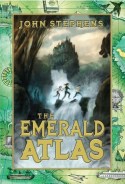
The Emerald Atlas by John Stephens
Final Verdict: 3.75 out of 4.0
YTD: 24
Plot/Story:
3 – Plot/Story is interesting & believable.
The Emerald Atlas is Book One in a new and exciting series by John Stephens, called The Books of Beginning. This is where Lord of the Rings meets Harry Potter – a realistic everyday world, where orphaned siblings are suddenly thrust into a coexisting world of magic and magical beings. Kate, Michael, and Emma are the “P” children. They were swept away from their parents by a mysterious man when young and, for ten years, spent their lives being shuffled around from orphanage to orphanage. When the trio is kicked out of the “Edgar Allan Poe Home for Hopeless and Incorrigible Orphans,” they are sent to Cambridge Falls, a village whose sole orphanage is run by the strange and allusive Dr. Stanislaus Pym, his housekeeper Miss Sallow, and the servant-of-sorts, Abraham. Immediately, the children are off exploring the expansive home and their curiosity soon leads to trouble – the kids discover a large green book with mysterious powers, which has them whipping back and forth through time, eventually into the hands of the evil Countess, whom they – with the help of a magician, dwarfs, giants, and townsfolk, must defeat, or be doomed forever. Along the way, the kids learn more about each other, themselves, their long lost parents, and their own important, cosmic destinies.
Characterization:
4 – Characters extraordinarily developed.
As a writer for various television series’, such as Gilmore Girls and The O.C., Stephens clearly has experience writing and developing characters, young and old. That talent and experience shine through in The Emerald Atlas. The three siblings are interesting to watch because they are each unique and independent, but also function together as a family unit. Sibling rivalry rears its ugly head on more than one occasion, at times leading one or another of the characters into dubious territory. Kate, the older sister, feels responsible for her younger siblings, and her actions are largely based on the need to protect them. Michael, the middle child, is intelligent, bookish, and, well, a know-it-all. This can be exasperating, but also comes in handy (sometimes reading books really can save your life!). Emma, the youngest, is clearly the youngest – she is bold, precocious, and loves attention. She also looks up to her brother and sister, modeling her own behavior after them, though she would rather die than admit this. Watching the three interact with each other, as well as with other characters (particularly when they are separated from one another) is interesting and allows room for character growth and development, which readers and fans of this book can only hope is taken advantage of in later installments. The secondary and tertiary characters, too, are interesting – from Gabriel the giant and Wallace the dwarf, to the Countess and the nameless monsters who serve her, good and bad characters are given equal time and attention, which makes the overall conflict stimulating and workable.
Prose/Style:
4– Extraordinary Prose/Style, enhancing the Story.
Another clear talent for Stephens is his ability to construct and deliver a story in an effective way. The prose is highly attractive – it is challenging and complex, more so than others which this book might be compared to (A Series of Unfortunate Events or Percy Jackson and the Olympians, for instance). Though this book will likely be marketed to a similar audience, it is equally attractive to more experienced readers. The dialogue and description are well developed as well. There were some grammatical issues, but my copy of the book is an Advanced Reader’s Copy, so it is likely these will (or have) disappeared in the final stages of editing, and they do not detract from the overall effectiveness of the delivery. While the story is interesting and exciting, it is almost too fast-paced and large in scope. So much is covered in this first book, it is hard at times to catch one’s breath. Also, though plenty of time is spent with each of the three children (singly and together), the creative range and pace at times do a disservice to their deeper story and growth. Despite this one minor complaint, the plot is solid, engaging, and incredibly interesting, and the prose is appropriate to the story itself and helps to progress it without any choppiness or confusion, so it is a solid effort overall.
Additional Elements: Setting, Symbols/Motifs, Resolution, etc.
4 – Additional elements are present and cohesive to the Story.
While this is a great fantasy novel, it is more as well. The book pays homage to many of the greatest fantasy novels of all time, whether subtly or overtly. At times, I was reminded of The Chronicles of Narnia, A Series of Unfortunate Events, Percy Jackson, The Kane Chronicles, Harry Potter, The Lord of the Rings, and even The Dark is Rising. Now, whether or not the author actually ever read any of these books (it would be hard to imagine a genre author not being intimately familiar with his predecessors), their concepts are certainly there – but in a way which makes it impossible to claim any simple re-working of old plots. Some of the best elements of each – such as family, the nature and purpose of magic, responsibility, growth and discovery, and coming-of-age, are present here and work together intricately and seamlessly. I also thoroughly enjoyed the mystery aspect of the book (as a Poe fan, the “Poe House” and another Poe reference in Dr. Pym make me tingle), something not always at the forefront of fantasy novels – but which add another level of intrigue here. The sibling rivalry is also something present in a few of The Emerald Atlas’s predecessors, but Stephens does such a remarkable job of writing it, one wonders if he has a background in child psychology (or perhaps it’s simply all that screenwriting experience). These additional elements, done so well, add layers of complexity and interest to the traditional fantasy plot and make for one fantastic read.
Suggested Reading for:
Age Level: Young Adult +
Interest: Fantasy, Magic, Family
Review: Stick by Andrew Smith
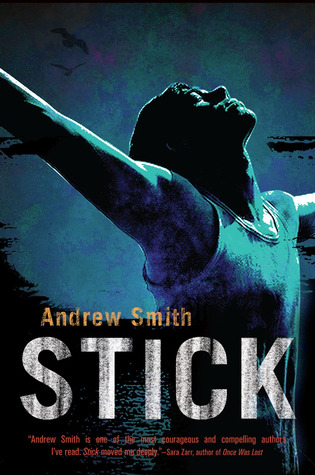
Final Verdict: 3.75 out of 4.0
Plot/Story:
4 – Plot/Story is interesting/believable and impactful
Andrew Smith’s Stick is a powerful story about love and brotherhood. Not since Brothers by Ted van Lieshout has there been such a touching, personal, and believable story about the bond between teenage brothers. Stark (Stick) and his elder brother Bosten both have their individual burdens to bear, but they also must both fight the same battle against an abusive father and an unkind, dispassionate mother. The main character, Stick, was born with a facial disfigurement, which has left him scarred physically and emotionally for most of his life. It has caused him to believe that he is a disappointment to his parents (possibly true) and an embarrassment to his brother. Just as Stick is coming-of-age, learning who he is (including how to handle himself around girls and women), he finds out that his brother, his idol, is gay. Stick handles the revelation well, standing by his brother despite his own doubts and confusions, but the boys’ parents are not as understanding. The fall out at home is too much, and both boys take off, separately – Bosten disappearing, and Stick gone to search for him. Each of the brothers is forced to deal with distinct horrors while on the road, alone, both hoping to finally find a home, which turns out simply to be each other.
Characterization:
4 – Characters extraordinarily developed.
Andrew Smith’s characters are simply beautiful, even the horrid ones. Characterization and character development are clearly strengths for this writer. Stick and Bosten are impressively wrought: their weaknesses are at times frustrating, as they should be, and their strengths shine through. The way they develop simultaneously independent of one another, as well as together as a pair, adds a great level of complexity and interest to the story as a whole. The minor characters, such as the boys’ friends, Emily, the Twins, Aunt Dahlia, Mr. and Mrs. McClellan, Paul and even the tertiary characters like Willie and the Truck Driver all have unique personalities and interact with the boys in genuine ways, so as to advance the plot fluidly and with purpose. Little if anything seems out-of-place, all of the characters seem necessary and unquestionably purposeful to the story.
Prose/Style:
4 – Extraordinary Prose/Style, enhancing the Story.
The second great strength for this book (and writer) is the prose –it is fluid, interesting, and meaningful. There is much creative liberty taken with the book’s form and structure, which can sometimes be irritating (and which, admittedly, caused doubts in this reader at first); however, the structure breaks and style choices ultimately served the larger purpose of reflecting the mood of the story and its main character. It was nearly impossible to put this book down, largely because the story was so interesting and the characters were endearing, but also because the prose progressed the story and its characters masterfully, from day-to-day, scene-to-scene. The dialogue was well-written, the description was simple but effective, appropriate for the genre.
Additional Elements: Setting, Symbols/Motifs, Resolution, etc.
3 – Additional elements are present and cohesive to the Story.
Two weaker spots in the story, for me, include the deeper, darker revelation about the nature of Bosten’s relationship with his and Stick’s father, and the book’s final resolution. The former turns out to fit into a stereotypical “explanation” cliché, played out often in stories of this kind; however, in Stick, it is, at least, more subtle and not an all-encompassing “why” to Bosten’s state of being. The latter issue, the resolution, is not a disappointment in terms of vision, but more so in execution. The descent to which Bosten falls, after leaving home, seems quite far in such a short time, and for one with such strength of character. Also, his return to “home,” given where he ended up, seemed almost easy or simple. Either of these parts of the resolution could work, I think, given more time – the ending just felt a bit rushed, though it did not dissuade from the overall quality of the book, nor was it a disappointment in general; in fact, where the boys ultimately end up was a great and welcome relief, appropriate to their natures and journeys. The larger themes of family, independence, fear, self-empowerment, and growth are all well-executed and come about in realistic fashion.
Suggested Reading for:
Age Level: High School +
Interest: Dysfunctional Families, Brothers, Friendship, Coming-of-Age, Gay Youth, Drug Culture
Notable Quotes:
“’It’s better, I think, to have a “best friend” than a girlfriend,’ Dahlia said. ‘Girlfriends are your friends because they’re girls. But best friends are people you can share everything with and not be afraid they’ll leave you with less.’”
*Note – This review pertains to an Advanced Reader’s Copy, graciously sent to me by Andrew’s publisher at Feiwel and Friends, and imprint of Macmillan, at Andrew’s request. The book will be available to all on October11th, 2011.
Review: The Agony and the Ecstasy by Irving Stone
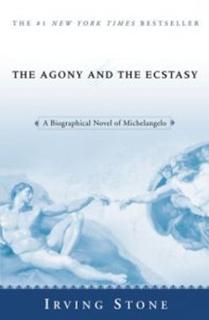
The Agony and the Ecstasy by Irving Stone
Final Verdict: 4.0 out of 4.0
YTD: 22
Plot/Story:
4 – Plot/Story is interesting/believable and impactful (socially, academically, etc.)
The Agony and the Ecstasy is a biographical novel of the life of Michelangelo. The story begins when Michelangelo is a young apprentice and ends with his death at 89. All in all, the book is put together brilliantly. Michelangelo was tormented throughout his life – never left to satisfy himself as he was always at the mercy of political and religious leaders’ desires. The reader is afforded an intimate look at how difficult and dangerous Michelangelo’s days were – Popes, Cardinals, and Political leaders were assassinated regularly; even Michelangelo’s own life was threatened on more than one occasion. Michelangelo was forced to create at the whim of various Popes for the majority of his life, under threat of being thrown in prison if he were to deny his services to the Vatican. Not only is the political atmosphere interesting to witness, but so are the personal relationships Michelangelo has with his family and friends, as well as other artists. Leonardo da Vinci, Raphael, Martin Luther, and Machiavelli are all alive and working during Michelangelo’s days (Donatello had died not too many years before), so much of what they are doing, and their works in relation to Michelangelo’s, is included. Stone gives modern day readers an incredible look at what it was like to live during the Reformation and Renaissance, for the artist and for the everyman.
Characterization:
4 – Characters extraordinarily developed.
There are so many characters in this book, it is almost ridiculous. Of course, the book is nearly 800 pages long and spans nearly 80 years of Michelangelo’s life, so this is appropriate. It was difficult, though, to connect with characters other than Michelangelo. There are certain people, like Topolino family – stone cutters who tend to be more a family to Michelangelo than his own biological one is- as well as Tommaso and Il Magnifico who are written very well, even beautifully, and who truly demonstrate the good nature possible in humanity. They are also written (as are some of Michelangelo’s masters) with a clarity of inspiration and impact on Michelangelo’s life and works, so that hundreds of pages (decades of time) after they are no longer in Michelangelo’s life, their presence is still felt in his creation. Conversely, there are the rotten apples as well – such as the irritating Popes (some better than others, but almost all a nuisance and dictator to Michelangelo) and the disgusting Aretino of Venice, who spends his life earning money by blackmailing others. The different people and portions of Italy, too, become characters. There are the Florentines – lusty, artistic, and wealthy; the Romans – dangerous, dark, self-involved; the Carrara – interdependent, suspicious, isolated; the Bolognese – joyous, hearty, uncultured. As Michelangelo travels and interacts with these different people, their cultures come to life and these too have lasting impact on Michelangelo’s works and methods. The only complaint would be that Michelangelo is truly the only character in the book to be cared about which, while granting the fact that this is a biographical novel of Michelangelo, is still somewhat disappointing given the number of characters involved.
Prose/Style:
4 – Extraordinary Prose/Style, enhancing the Story.
It was surprising to find a few grammatical errors in the book, particularly as this is not a first edition and the book was a #1 NYT Bestseller, but one cannot fault the author for items which should have been caught during the editing process. Those tiny complaints aside, Stone is a powerful and entertaining writer. His prose and language are both intelligent, yet fluid. It would be easy to imagine a book of this length, which takes place 500 years ago, being incredibly difficult to read. Fortunately, this was not the case. Stone uses many Italian words and phrases for emphasis, but translates these words into English immediately following their use (in dialogue or description). This is incredibly effective, as it allows the reader to stay in period and to learn something, but also allows the reader to continue the story without confusion or without stops to search for a word’s meaning. He is also adept at dialogue in general, as well as in timing/transitioning from prose to poetics. There are moments where the general prose breaks off into a poem, a letter, or a list – and these moments are seamless and natural. The chapters, too, are an appropriate length and seem to be pre-planned, so that the right amount of information is covered in the correct amount of time (and this information is also cohesive with the present time/situation in the story). It was not as vividly written as Lust for Life, which at times seemed to read like one was watching a film; but, it was appropriate to the time and mood of Michelangelo’s life and work. Michelangelo was much less emotionally extroverted than Vincent van Gogh, and his works were more soulful than passionate, so the prose followed appropriately.
Additional Elements: Setting, Symbols/Motifs, Resolution, etc.
4 – Additional elements improve and advance the story.
What is most appealing about this novel is that it was written with the help 495 of Michelangelo’s personal letters (all translated from Italian for the author to create this book specifically), as well as his contracts and professional records. This is the same method which Stone used to write his brilliant book, Lust for Life, a biographical novel of Vincent van Gogh, and it works again here, just as well. It took 6 years from the start of research to the completion of the book, and Stone spent many of those years living and researching in Italy, specifically in the various cities where Michelangelo spent much of his time and which were therefore important to his life story. This incredibly detailed study resulted in a brilliant work that is both factual and creative – much of the dialogue had to be recreated, of course, and specific happenings in Michelangelo’s travels and studies were also necessarily created by Stone. With so much historical fact, though, and so much based on Michelangelo’s own letters, coupled with the extensive research that Stone did, the book ends up reading as if it were written by a first-hand observer of Michelangelo’s life. Stone was careful not to take liberties too far, as well; for example, he wrote in the important decades-long relationship between Michelangelo and Tomasso, including the “scandal” that was invented by a jealous fan and known blackmailer of information (contemporary readers should think of a 1500s-era Rita Skeeter) over their relationship; however, he left the nature of that relationship largely open to interpretation, which seems appropriate as there is not much firm evidence to support either opinion (lovers or just master/apprentice).
Suggested Reading for:
Age Level: High School+
Interest: Art History, Michelangelo, Renaissance, Italian History, Catholic History
Notable Quotes:
“For what is an artist in this world but a servant, a lackey for the rich and powerful? Before we even begin to work, to feed this craving of ours, we must find a patron, a rich man of affairs, or a merchant, or a prince or… a Pope. We must bow, fawn, kiss hands to be able to do the things we must do or die.”
“Still, it is true: people who are jealous of talent want to destroy it in others”
“Listen, my friend: it’s easy to get used to the expensive, the soft, the comfortable. Once you’re addicted, it’s so easy to become a sycophant, to trim the sails of your judgment in order to be kept on. The next step is to change your work to please those in power, and that is death to the sculptor.”
“He knew that many artists traveled from court to court, patron to patron, for the most part well housed, fed and entertained; be he also knew he would not be content to do so. He promised himself that one day soon he must become his own man, inside his own walls”
“Art has a magic quality: the more minds that digest it, the longer it lives.”
“Humanism … what did it mean? … “we are giving the world back to man, and man back to him. Man shall no longer be vile, but noble…. Without a free, vigorous and creative mind, man is but an animal and he will die like an animal, without any shred of a soul. We return to man his arts, his literature, his sciences, his independence to think and feel as an individual, not to be bound to dogma like a slave, to rot in his chains”
 Roof Beam Reader