Roof Beam Reader
Adam Burgess
Guest Post: Author Janet Todd
My Life with Jane Austen’s Face
by Janet Todd
Ok, I didn’t read her as a child. I pretended I had—unintentionally! I didn’t come from a bookish family and wasn’t pointed towards the classics at a young age. Instead, I stayed firmly with comics, Enid Blyton and boys’ own adventures. So, when for a boarding-school entrance exam taken just before my eleventh birthday, I was asked if I had read Jane Austen, ‘Yes’ I said brightly, ‘I have.’
What I had actually read was a Comic Classics version of Jane Eyre and then wonderfully muddled novel and different author. In one comic frame was a memorable image of the first Mrs. Rochester standing wild eyed over the bed of the second, the virtuous Jane. Fortunately, Jane Austen can’t have featured on the entrance exam—or the school I was headed towards was so eager for fee-paying students it didn’t matter. Once there, I must have been forced to read Pride and Prejudice but I don’t remember the occasion. I certainly went on associating Jane Austen with the face of Brontë’s Bertha.
Over long academic years of teaching and researching early women writers, I came to my adult taste for Austen’s novels. To me she is very much an author for grown-ups. I marvel at women who declare they read and loved her at the age of 7 or 8, but I’m not among them. Yet, I see that she might have been a good guide and model to the young adult just emerging into independent life. Pity I missed out there.
Some years back, when I was undergoing cancer treatment and making a great fuss about it, I started hearing from Jane Austen. For example, when I was pitying myself for my low spirits and failing body, I remembered her great word for the admirable mind and body: ‘elasticity’. That’s exactly what I wanted then. Still do.
I also tried to buck myself up by thinking of moments from her fiction, not her best but memorable ones. When for example I saw images of my unkempt self and felt like crying over them, I recalled the passage from Persuasion where bulky Mrs Musgrove is shedding real tears for her worthless dead son. It is an unbecoming conjunction, and her fat sighings simply raise colluding curls of handsome lips from hero and heroine. And the moral: good taste simply can’t accommodate the sight. That’s sardonic Jane Austen: it stopped my tears.
Another bit that floated into my panicking mind just then was the story she wrote aged 12 or so, called The Beautiful Cassandra. The heroine walks out of her mother’s millinery shop, steals, hits, scoffs, ignores people and refuses to pay for a hackney cab; when she returns home to her loving mother, she hugs her and remarks, ‘That was a day well spent.’ So, I said to myself, did Jane Austen –or Cassandra –give up, whatever was happening, or turn her face to the wall? She did not. Nothing sick there.
In my academic life I wrote critical books on Jane Austen and then became the general editor of the Cambridge edition of her complete works. I read her again and again, footnoted the texts and teased out words in manuscripts that had been overwritten and sometimes scribbled out. I didn’t feel her present, however, and there were times when I wished I’d been editing someone who was less of a global celebrity and involved fewer competitive scholars—I had had more fun with Mary Wollstonecraft and Aphra Behn, both wonderful writers but not household names and fridge magnets. But, though tricky, it was an enjoyable enterprise.
So, to the pandemic and lockdown.
It was the first and sternest shutting down in England—in March of 2020. My usual days of working a bit at home and a little in the library and scoffing a croissant or scone with a friend in a bookshop café, were curtailed. I was left to my own devices. I turned to writing a novel, my favourite post-academic pastime. This became Jane Austen and Shelley in the Garden. Having given away my library of books at the last house-move, to hand I had only memories, photos, and leftover bits from earlier projects to give to the new fiction.
Then in stepped my main character—and it really felt like this! Prickly, eccentric Fran is not much like me, closer to what I would like to have been or would like a friend to be. She has had a contented rural childhood and knows about wildflowers and gardens, copes well with solitude, is a carer, a giver rather than a taker. But she shares a few of my memories. Even more than me, she feels haunted by Jane Austen.
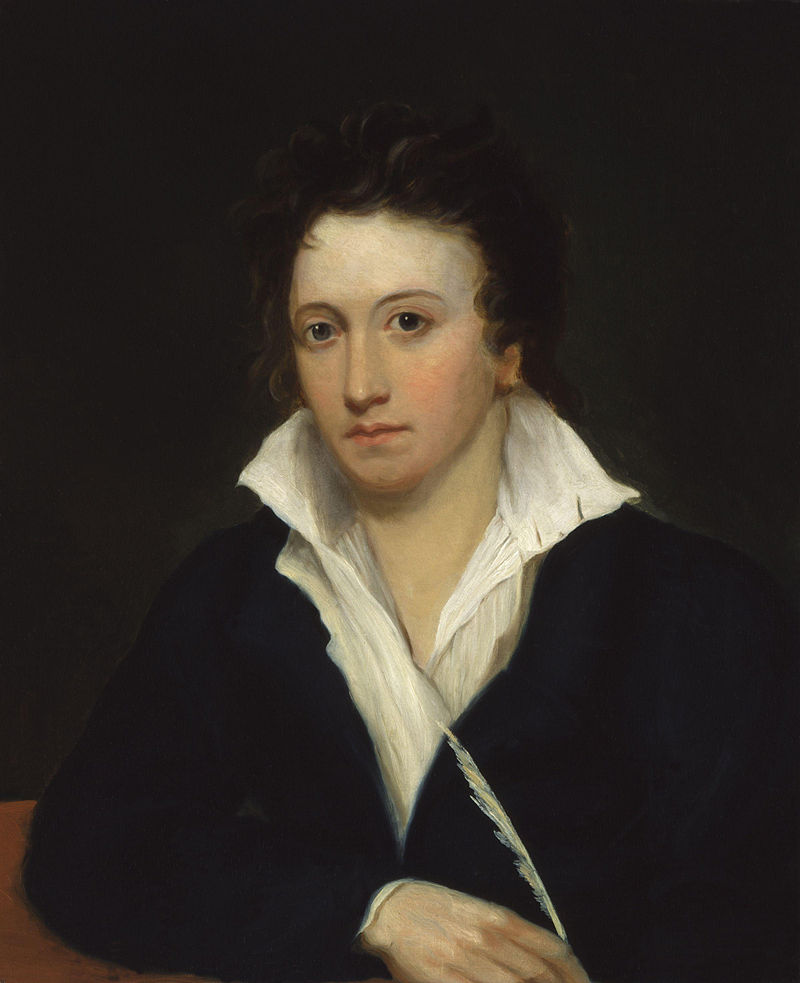
And the Shelley of the title? The Romantic poet Percy Bysshe Shelley, almost contemporary with Jane Austen and dying even younger, at 29—she was 41. In 2007 I published a biography called Death and the Maidens: Fanny Wollstonecraft and the Shelley Circle. (Fanny was the sister of the future Mary Shelley.) This ended with Fanny’s suicide in 1816. I have always felt I had unfinished business with P.B. Shelley, who did not play an heroic part in this story of death and emotional carelessness. I felt I was due to meet him again.
There are of course those who adore the poet and find him a visionary guide to politics and life. I have given a little of this enthusiasm to two of my characters, who between them describe pursuing Shelley through moments in his life. Since in their quest they travel with Fran, it was inevitable that in time, or rather my time, Jane Austen and Shelley should meet– in a garden.
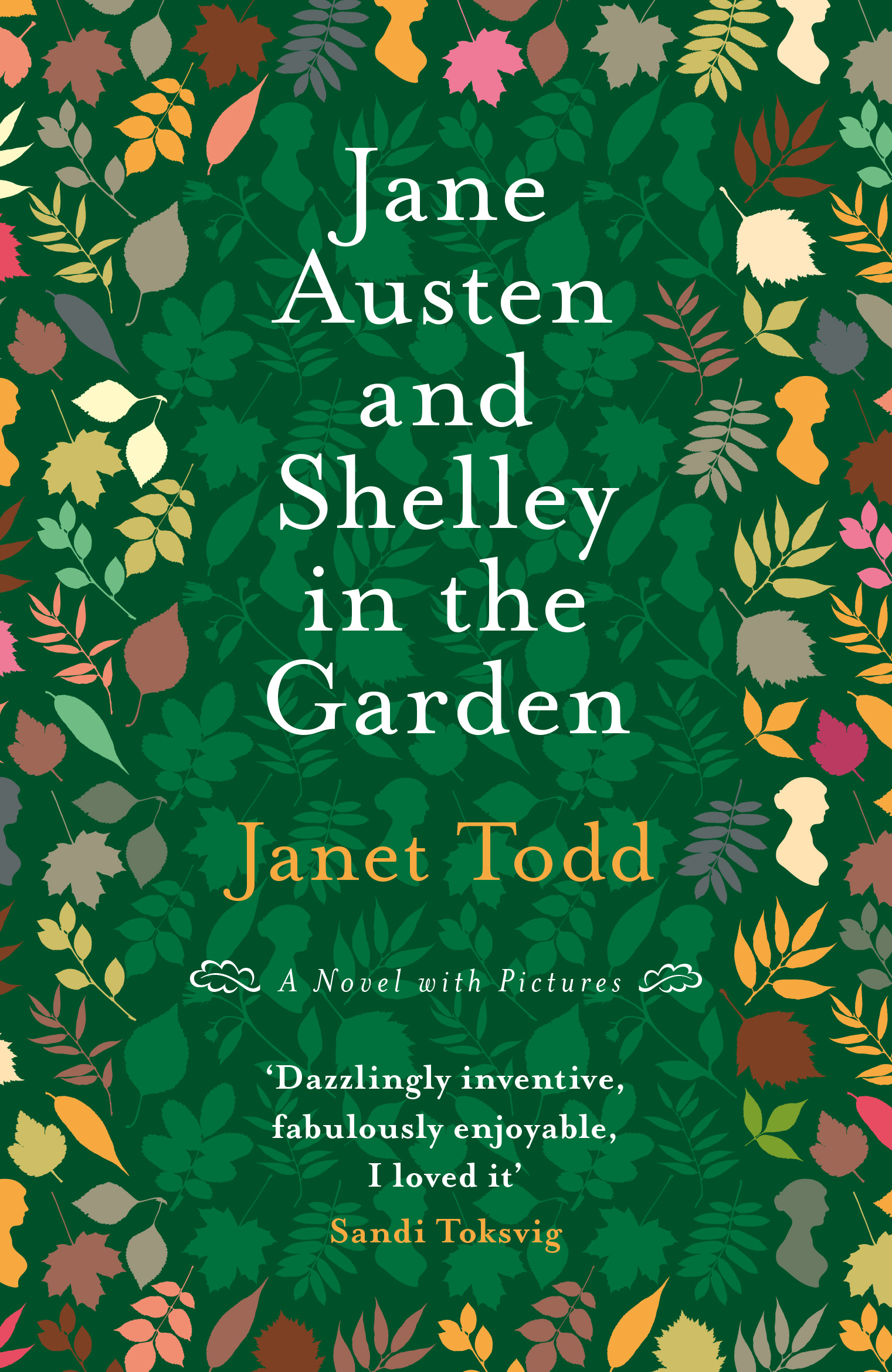
While writing this novel, I imagined my character seeing the face of Jane Austen, not as Bertha Mason this time or as the prettified image of her the later family favoured—but in the slightly sour portrait made by her sister Cassandra. Here is Fran, just arriving in Wales with her friends in search of young Shelley. At first she worries that Jane Austen has not have come with her:
Fran surveys herself in the mottled mirror on the inside of the wardrobe door. Who are you? she says. The mirror image smirks.
Though eccentric, the action improves on her habit of staring at Cassandra’s crude sketch so fixedly that the aslant eyes swivel to catch hers. That really is naughty.
She grins, sensing that, despite her doubts, Jane Austen has come…What are men to rocks and mountains? says Lizzie Bennet, heading for the barren Lake District. She’s waylaid by the romantic plot, some strategy – and that luck. But she might have gone.
Do you go to a place or does the place come to you?
Jane Austen’s busy climbing into the wardrobe ignoring its mirrored door. There are moments when Fran is defiantly angry with the Author and her free indirect manner. Such an easy way to watch others deceive themselves. For now, she simply feels deflated by this quick removal.
Until she thinks: Jane Austen, the Witch in the Wardrobe.
About the Author:

Janet Todd (Jane Austen’s Sanditon, Don’t You Know There’s a War On?, Radiation Diaries, Aphra Behn: A Secret Life, A Man of Genius), novelist, biographer and internationally renowned Jane Austen scholar, is a former president of Lucy Cavendish College, Cambridge. her new novel Jane Austen and Shelley in the Garden: A Novel with Pictures will be published in September 2011.
Now a full-time writer and literary critic, she is an Emerita Professor at the University of Aberdeen and an Honorary Fellow of Newnham College, Cambridge. Born in Wales, she grew up in Britain, Bermuda and Ceylon/Sri Lanka and has worked at universities in Ghana, Puerto Rico, India, the US (Douglass College, Rutgers, Florida) Scotland (Glasgow, Aberdeen) and England (Cambridge, UEA). She lives in Cambridge, England and Venice, Italy.
Austen in August: Persuasion
 Greetings!
Today is August 1st, which means the (very lowkey) Austen In August event is here again!
Two months ago, I sent out a call for volunteers to participate in a reboot of Austen in August. Typically, the event is jam-packed with guest posts and giveaways, including blog hopping and a wide range of reading on all things Austen, including her original works plus the many contemporary spin-offs. Unfortunately, we couldn’t get it all together this time (perhaps the pandemic has changed blogging? There’s a research project for anyone who wants it!)
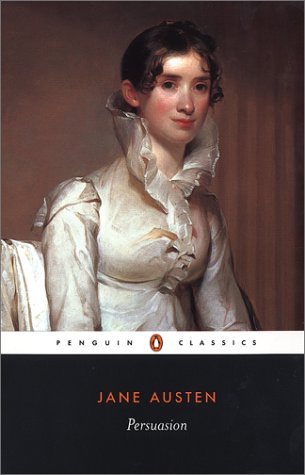
Anyhow! I’m trudging ahead on my own with a re-read of Persuasion. This is the Austen book I remember least, and it’s also one of the shorter reads, so I basically chose it for those two reasons. I also haven’t read the book since 2013. I think I also read Mansfield Park that year, and Sense and Sensibility the year before, but I’ve read Northanger Abbey and Pride and Prejudice more recently. So, I’m inviting anyone who’d like to read-along with me to do so, and perhaps next year I’ll return to either Mansfield Park (which I know a lot of you are reading this year!) or Sense and Sensibility. I’ve got my own reading schedule below. I plan to post a reading update here on August 15th and then again on August 31st, to wrap-up.
“I hate to hear you talk about all women as if they were fine ladies instead of rational creatures. None of us want to be in calm waters all our lives.”
Schedule
- August 1-August 7: Volume 1, Chapter 1 through Volume 1, Chapter 7
- August 8-August 14: Volume 1, Chapter 8 through Volume 1, Chapter 12
- August 15: Mid-Point Post
- August 15-August 21: Volume 2, Chapter 1 through Volume 2, Chapter 6
- August 22-August 28: Volume 2, Chapter 7 through Volume 2, Chapter 10
- August 29-30: Volume 2, Chapter 11 and Volume 2, Chapter 12
- August 31: Wrap-Up Post
Feel free to join in, or if you’re participating in Austen in August but reading something else, definitely share your thoughts (and links to your own blog posts!) in the comments here, or on the August 15th and August 31st posts.
Middlemarch and Miscellany
The Novel Journal Giveaway
Congratulations to the four winners of my Novel Journal Giveaway. Denise will receive the Arthur Conan Doyle; Teresa will receive the Edgar Allan Poe; Virgine will receive the Oscar Wilde; and Jorie will receive the Henry David Thoreau! All winners have been contacted & have 72-hours to respond before I pick someone else. I’ll mail the journals out in the next couple of weeks (three of the four are international, so I can’t say how long they’ll take to reach you!) Stay tuned for future giveaways coming soon.
Books Read Since Last Update

Middlemarch by George Eliot: I saw someone on Goodreads refer to George Eliot as “Austen (Pride and Prejudice) on steroids,” and I think that’s both hilarious and apt. Middlemarch is concerned with a lot of the same issues as Pride and Prejudice; family and neighbors, courtship, romance, property and inheritance, and even politics (social politics as well as governmental). I tried to read this one many years ago and couldn’t get into it. I’ll admit that I feared this time would be the same. I really struggled for at least half of the book, which is quite the struggle considering this one is 800-pages long! The style felt too dense and the language too lofty. It just wasn’t suiting my mood. Something happened maybe two-thirds of the way in, though, where I found myself trying to make more time to read, and not just to be finished! (That was part of it, though, let’s be honest. It’s a long book.) Eliot is hilarious, though, and there’s really no one can turn a phrase the way she does. Despite some oddities, like really important life events happening entirely off the page only to be referred to nonchalantly within another scene (this happened quite a few times, and I found it so bizarre in a book of this length, where one would expect every detail to get its due treatment), and a whole host of characters it was difficult to care about, the read was worth it, in the end, and almost entirely because of how it ends. There’s something about Eliot and Thomas Hardy, that way. I don’t think if I had read this five years ago, or anytime before that, I would’ve appreciated the climax and resolution quite so much as I did now. There’s a philosophy here, which is at the core of the novel’s central character, Dorothea, to which I have become quite vested in recent years. It was, then, a delight to see it wrapped up in such a way that resonated with me intimately. Luckily, it also tied together the many diverse but interrelated plots. (This is definitely a country neighborhood; all business is everyone’s business & all stories are connected!) I gave this one a 5 on Goodreads because I couldn’t give it a 4.5. It’s worth the rounding up, though, despite the slog.
Writing Down the Bones: Freeing the Writer Within by Natalie Goldberg: I loved this essentially Buddhist take on writing not just as a craft, but as a personal life practice. Goldberg tied writing (for writer’s) into every other aspect of daily life and the human outlook in general. There are also some great tips in here that I’ve started to use and will hopefully benefit from (one of which is shared in the Gregory Orr book below, which is to keep a personal notebook on craft). I gave this one a 5 out of 5 even though it didn’t have as much craft advice or writing prompt-type references as I’d hoped because the spirit of it was so enjoyable.
A Primer for Poets and Readers of Poetry by Gregory Orr: This is an excellent book on what Orr himself labels “craft and quest.” There are ample interesting writing prompts with examples of how they went and/or received in Orr’s own classrooms, but there are also numerous explorations of poetry from Orr’s unique perspective. He focuses entirely on lyric poetry, but the way he defines this and the range (time/type) he uses to explore the genre provides for really ample opportunity to work with a variety of tools and styles. I flagged almost every prompt he includes and have already practiced with one of them, though I hope to work on a number of others in coming weeks. Orr makes an excellent case for why a writer should keep his own small book or file of favorite poems and revisit it every year, cutting and adding, but always remaining highly particular. This is an adventure I will embark on soon. Solid 5 out of 5 for invention and instruction.
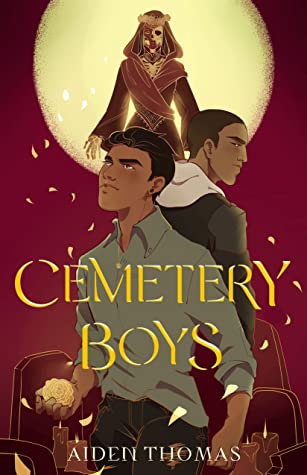
Cemetery Boys by Aiden Thomas: This trans, queer, Latinx young adult novel was just great. It’s definitely a fun one to read around Halloweentime, I think, since the entire plot unfolds over the few days leading up to, and including, Dia de los Muertos (Day of the Dead). The story is infused with mystery, suspense, action, superb teenage drama elevated by fantasy (magic), and of course, a delightfully wicked little queer romance. The plot points are a tad predictable and some of the episodic conflict was repetitive, but it was still a beautiful, wild ride. I think, like Middlemarch, I gave this one a 5 but that’s really a 4.5+.
100 Poems by Seamus Heaney: The poems in this collection were such a joy to read. There’s something very inviting about Heaney’s style, even when the poems cover topics that are entirely external to my lived experience. They are gentle and warm, funny and thoughtful. I don’t know that I walked away from this one with any new favorite individual poems, but as a collection of his “best” works covering the entire span of his career, it’s a very good one. It’s just a very good collection, period. Instructive and simply enjoyable.
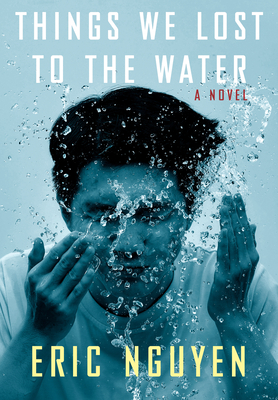
Things We Lost to the Water by Eric Nguyen: This one is being hailed as a Best New Voices and Best Debut novel. It’s not hard to understand why. This is the story of a family (and community) of Vietnamese refugees who find themselves in New Orleans at the end of the American War. Told from three perspectives–a mother and two sons–this realistic historical fiction climaxes into a kind of magical realism as Hurricane Katrina strikes and the world becomes unfathomable. It even made former President Obama’s list of recommended reads for the summer. How about that!? I gave it a solid 4 out of 5.
Writing Updates
My latest poems are two of the best I think I’ve ever written. Maybe the best. It’s hard to judge one’s own work, though, and I’ve felt pretty darn sure about certain poems and flash pieces in the past, which are then completely uninteresting to anyone else. So, who knows? I’m happy to note that I do have a poem coming out this November at Broad River Review, and I’m continuing to revise and submit. I recently got a pretty tough rejection from a magazine I’ve been submitting to regularly for years, unsuccessfully. I felt pretty confident about this last submission, so I think it might just be time for me to move on from this publication. Perhaps we’re just not a good fit? Also, my latest DIYMFA column article is live: “Is There a Genre Best Suited to LGBTQ+ Stories? (And why is it Historical Fiction?)”
Austen in August
Unfortunately, this year’s reboot of Austen in August seems unlikely. I’ve only gotten one response to my call for guest posts and giveaways, and I personally am not inclined to write an entire month’s worth of content by myself (also, where’s the fun in that!?) So, I think at this point I’m still going to plan my re-read of Persuasion and invite anyone who wants to read along with me to do so. And of course, everyone is encouraged to continue to pursue their own Austen reading as well! I’ll plan three posts for August 1st, 15th, and 30th, for anyone who does want to engage with all things Austen-related next month. They’ll just be comment conversations.
Giveaway: Four Novel Journals

Hi Everyone!
I have a special giveaway for blog subscribers running from July 5th through July 12th.
As many of you know, I’m not just a reader but also a writer. Naturally, I’m obsessed with good journals and pens, but sometimes that means I get a little bit carried away. It’s alright, though, because YOU get to benefit from my madness and impulsivity!
Anyone who subscribes to this blog and enters the Rafflecopter giveaway is eligible to receive one of four Novel Journals (pictured above) from the Canterbury Classics series. The styles are: Arthur Conan Doyle; Edgar Allan Poe; Oscar Wilde; and Henry David Thoreau.
These journals aren’t just beautifully designed (I love the color schemes!) but the lines on each page are actually the complete text of the author’s work in tiny font. Each journal also has an elastic closing strap, a matching ribbon bookmark, colorized page edges, beautifully illustrated front and back interiors, and a pocket to hold notes or stickers, etc. They’re really quite delightful!
Here’s some more information on the series.
The Rules
-Enter the Rafflecopter giveaway using the email or WordPress account you use to subscribe to this blog.
-Follow my Twitter and Facebook accounts (linked on the Rafflecopter) for bonus entries.
-Tweet about the giveaway up to once per day (linked on the Rafflecopter) for bonus entries.
-One winner per journal; open internationally. I am not responsible for items lost in the mail and won’t re-send or replace any missing items.
-Winners will be contacted via email and will have 48-hours to reply with their shipping information. If there’s no response within 48-hours, I’ll select a new winner.
The Return of Austen In August! (#AustenInAugustRBR) Call for Guest Posts and Giveaways

Ta-Da! Austen In August is officially BACK at its home site, Roof Beam Reader!
Welcome to the sign-up post for AUSTEN IN AUGUST, an annual reading event celebrating one of literature’s greatest writers! This event was inspired by a Twitter conversation that took place nine years ago between three founders of The Classics Club. That means next year will be our tenth anniversary!
Call for Guest Posts & Giveaways: I am currently looking for people who would like to host/sponsor a giveaway or provide a guest post. If you’re interested in doing either (or both) of these, please fill out this form. One of the reasons this event is so great every year is because of the awesome content provided by our participants and partners – I know this year will be no different! Please submit your participation request by July 15th so that I have plenty of time for scheduling. I’ll be responding as your requests come in and will need all posts/giveaway information before July 31st.

So, why is Jane Austen so interesting? Pemberely explains: “Jane Austen is very resistant to being classified as part of a literary “school”, or being placed in any customarily-defined literary period — partly because none of the obvious available terms, “18th-century, “Romantic”, or “Victorian”, would appropriately describe her. Almost all of the major figures who were literarily active in the period 1800-1837, and who are currently deemed worthy of remembering (i.e. are “canonized”), fall into one of a few categories — either they launched their literary careers before 1800 (Burney, Edgeworth); or they were part of the Romantic movement (or were more or less strongly influenced by romanticism, or wrote in self-conscious reaction to romanticism); or they did most of their writing and publishing after 1837 (e.g. Dickens). Jane Austen is the conspicuous exception who does not fit into any of these categories.”
The Goal: To read as many of Jane Austen’s works (finished or unfinished) as you want or are able to, during the month of August. Biographies, audiobooks, spin-offs, and re-reads also count. I will post throughout the month on different subjects, as well as with my own thoughts on the Austen content I read. We will be offering giveaways, guest posts, and other shenanigans, all of which are meant to inspire a great, interactive event. If you are going to participate, you can read any of Jane Austen’s novels, a biography about her, or any contemporary re-imaginings (such as Austenland or The Jane Austen Book Club, for example). All posts will help you qualify for prizes, which I’ll explain in a later post!

If you want to sign-up to join us as a reader during the Austen in August, simply leave a comment stating such! Maybe include some of the books you hope to read. I will be hosting a read-along of Persuasion for anyone who would like to join me. I also plan to read Jane Austen: The Secret Radical by Helena Kelly. I’ve long argued that Austen was more politically aware than people allow; Kelly’s book has received some harsh criticism for suggesting as much. I’m looking forward to reading her arguments to see where we agree or disagree about Austen. I know, for example, we probably agree about the importance of Mansfield Park.
Sign-ups are open throughout the month of July. If you sign-up after July 31st, you can still participate, but may not be eligible for some of the early giveaway prizes. To Share/Discuss on Twitter and Facebook, Use Hashatag #AustenInAugustRBR. Please also post the button somewhere on your blog (maybe in an announcement post or on your blog’s side-bar) so that we can spread the word, gather excitement, and encourage participation. The more of us reading Austen together, the better!
 Roof Beam Reader