Roof Beam Reader
Adam Burgess
Classics Club Spin 26

The Classics Club Spin is back for the 26th time. Despite my near-constant failure with this challenge (I think I’ve “won” once or twice?), I’m going to try again. I’ve been on a reading hot streak and have been gravitating back towards literary works, lately, so maybe now is the time. Or maybe not.
I’ve linked to the Spin page here, but simply put, I list here 20 books from my Classics Club list (see the full list below) that I’m willing to read depending on where the “Spin” randomizer falls. The magic number will be revealed this Sunday, April 18th. I’ll then know which book I’m supposed to read by May 31st. Okay? Okay!
My Spin List
- Kim by Rudyard Kipling
- North and South by Elizabeth Gaskell
- The Winter of Our Discontent by John Steinbeck
- Tropic of Capricorn by Henry Miller
- Dead Souls by Nikolay Gogol
- Pierre; or the Ambiguities by Herman Melville
- The Blind Assassin by Margaret Atwood
- Letters from the Earth by Mark Twain
- Doveglion: Collected Poems (c. 1942-1958) by José García Villa
- The Valley of Fear by Arthur Conan Doyle
- At Swim, Two Boys by Jamie O’Neill
- The Souls of Black Folk by W.E.B. Du Bois
- The Hanging on Union Square (1935) by H.T. Tsiang
- Rubyfruit Jungle by Rita Mae Brown
- Desert Solitaire by Edward Abbey
- Love in the Time of Cholera by Gabriel Garcia Marquez
- Doctor Zhivago by Boris Pasternak
- The Berlin Stories by Christopher Isherwood
- Paradise Lost by John Milton
- Sons and Lovers by D.H. Lawrence
I am hoping for one particular number/book to “spin” my way this time, but we shall see. Wish me luck!
My Complete Classics Club List
Pre-1700 (4)
- Metamorphoses by Ovid
- Oroonoko by Aphra Behn
- Paradise Lost by John Milton
- The Blazing World by Margaret Cavendish
1700s (7)
- The History of Emily Montague by Frances Brooke
- Tom Jones by Henry Fielding
- The Castle of Otranto by Horace Walpole (Completed 9/11/15)
- The 120 Days of Sodom by Marquis de Sade
- The Mysteries of Udolpho by Ann Radcliffe
- A Vindication of the Rights of Woman by Mary Wollstonecraft (re-read)
- Camilla by Fanny Burney
1800s (10)
- Pierre; or The Ambiguities by Herman Melville
- The Adventures of a Schoolboy by Edward Sellon (Completed 10/05/15)
- Middlemarch by George Eliot (In Progress/Stalled)
- Little Women by Louisa May Alcott (Completed 02/02/2017)
- Corinne by Madame de Stael
- North and South by Elizabeth Gaskell
- Dead Souls by Nikolay Gogol
- Villette by Charlotte Bronte
- The Count of Monte Cristo by Alexandre Dumas
- The Secret Garden by Frances Hodgson Burnett (Completed 05/05/2018)
1900s (27)
- Sons and Lovers by D.H. Lawrence
- The Valley of Fear by Arthur Conan Doyle
- Herland by Charlotte Perkins Gilman (Completed 03/24/16)
- The Bitterweed Path by Thomas Hal Phillips (Completed 01/11/16)
- The Bluest Eye by Toni Morrison (Completed 06/26/2020)
- Kim by Rudyard Kipling
- I Know Why the Caged Bird Sings by Maya Angelou (Completed 02/19/16)
- Letters from the Earth by Mark Twain
- The House of Mirth by Edith Wharton (Completed 05/10/17)
- The Souls of Black Folk by W.E.B. Du Bois
- The Hanging on Union Square (1935) by H.T. Tsiang
- Rubyfruit Jungle by Rita Mae Brown
- A Wizard of Earthsea by Ursula K. Le Guin (Completed 01/07/16)
- Brave New World by Aldous Huxley (Completed 07/15/17)
- Desert Solitaire by Edward Abbey
- The Heart is a Lonely Hunter by Carson McCullers (Completed 01/06/16)
- Slouching Towards Bethlehem by Joan Didion (Completed 09/05/15)
- Doctor Zhivago by Boris Pasternak
- The Good Earth by Pearl S. Buck (Completed 01/18/20)
- Doveglion: Collected Poems (c. 1942-1958) by José García Villa
- Love in the Time of Cholera by Gabriel Garcia Marquez
- Offshore by Penelope Fitzgerald (Completed 04/23/16)
- Little House on the Prairie by Laura Ingalls Wilder (Completed 11/22/2020)
- The Joy Luck Club by Amy Tan (Completed 3/30/18)
- The Berlin Stories by Christopher Isherwood
- Tropic of Capricorn by Henry Miller
- The Winter of Our Discontent by John Steinbeck
2000s (2)
- The Blind Assassin by Margaret Atwood
- At Swim, Two Boys by Jamie O’Neill
Progress: 17 of 50 Completed (34% done)
March Reviewed and April’s Holy Vedas
March Reading Review
Before I get into reading stuff, some updates on the writing life. First, have I shared here that I’m the new Columnist for LGBTQ+ Literature & Craft at DIY MFA? I can’t recall; but my first article went live in early-February and my next one goes up in late-April. I’ll add that one to my publications page as soon as it’s ready. Additionally, I’ve made some progress with submissions of my first novel (YA LGBTQ) and continue writing, revising, and submitting poetry. I’ve got a second novel (adult/literary fiction) in progress. Very early stages.
Now, to the reading! In March, the longest of the year so far (and one which should’ve yielded some free time, considering I’m currently on Spring Break), I’ve managed to read just a bit less than I did in January and February. Oh well! This month was filled with extreme joy from positive news and extreme despondency from some terrible news. So it goes.
Despite life’s raging waters, I did read 9 books this month and they were, for the most part, excellent. (Technically I’m at 8.5, since I’m currently more than half way through reading The Secret History by Donna Tartt, but I also read half of Buddhist Scriptures in February, and half this month, so let’s call that an even draw?) Here’s the scoop!

Buddhist Scriptures, edited by Donald S. Lopez: Of all my themed texts this year, I think I was most excited for this one because I sort of identify as a secular (and western) Buddhist. I have to admit, though, that most of this went way over my head, and that I was shocked (oh my naivete!) by the amount of, well, religion in Buddhism. So many of these stories are loaded with mythology, supernatural accounts, etc. It’s clear to me, now, why religious Buddhist practitioners are often so exasperated by western secular Buddhists like me. We’ve taken some of the core philosophy and discarded all of the religion, which is maybe 90% of the culture? Anyhow, it was a challenge to get through this one. Buddhism is such an ancient and complex religion, with numerous sects, each of which has its own history. It felt a lot like reading the origins of the Abrahamic religions (Christianity, Judaism, and Islam) and their separations from “Point X,” except with less prior knowledge. That said, I enjoyed the many perspectives, the very helpful introductions to each section, and the text’s introduction itself, as well as the lists for further reading. I don’t think Buddhism can truly be read from any single “scripture” the way some other major religions can be, which makes this particular edition simply a starting point.
The Dream of a Common Language by Adrienne Rich: I’ve read one or two (or three) Adrienne Rich poems in my day but never an entire collection. I’m glad to have rectified that at last! My goodness, this book of poems dated 1974-1977 is fantastic. A powerful examination of what it is to be woman, queer, and both at the same time, at a particular flashpoint in American history. I enjoyed, especially, the common themes that held these poems together. Rich leans toward numerated verse poems in this collection, which aren’t typically my favorite (I get a little anxious over long poems), but honestly this is a fantastic work. Some of my favorites are “Hunger,” “Cartographies of Silence,” and “A Woman Dead in her Forties.”
Mother Night by Kurt Vonnegut: Ah, my return to Vonnegut, at long last. I’m nearly done reading his complete works, and then I’ll start over again in chronological order, probably, although I do still have his book of collected letters to read. This is definitely one of Vonnegut’s best and most personal (though they’re all good and they’re all personal.) It’s one of the most interesting explorations on the nature of good and evil, and the nature of people’s engagement with that very question as it pertains to individuals, be it ones they know or ones they don’t. It also reads as incredibly relevant right now in this age of cancel culture and instant judgement. This one also begins with my favorite Vonnegut line: “We are what we pretend to be, so we must be careful about what we pretend to be.”
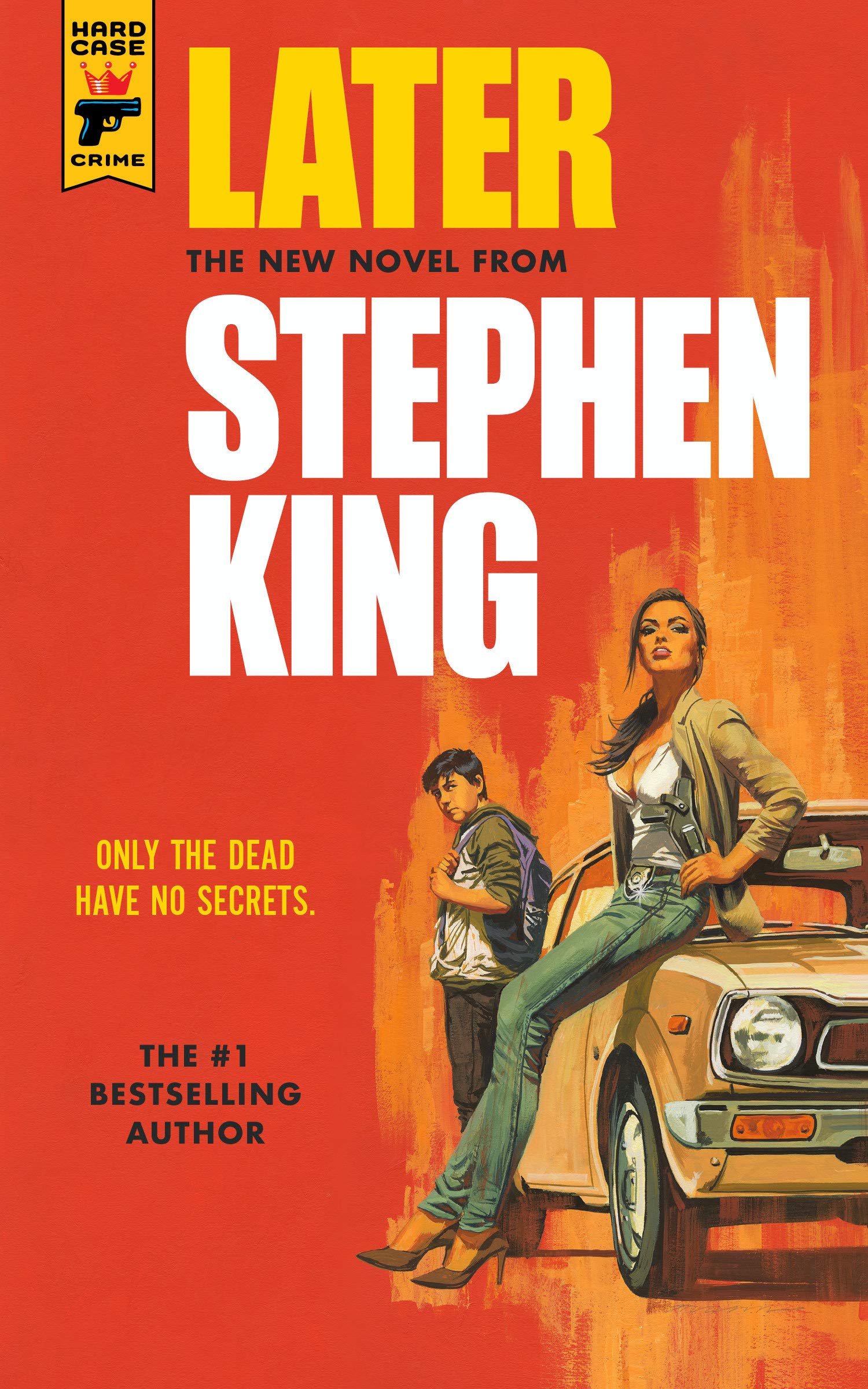
Later by Stephen King: The latest from Stephen King, a writer I read often, is definitely not my favorite. This one is published by Hard Case Crimes, the same group that published King’s Joyland, which I loved. I think I was a little irritated with the narrator who continued to promise the reader that “this is a horror story,” when it reads absolutely unlike horror until the final pages. To that point, it’s a decently interesting coming-of-age story about a young boy/teen/man who has special abilities which are eventually exploited by someone he should have been able to trust. It just felt a bit easy, to me. I will say, however, that the “horror” promised is somewhat surprising and more in the vein of human horror than the kind of supernatural type we might be used to from Stephen King. Maybe that’s not surprising, though, since the hart of any King novel is always, “my, what do we do to one another?”
The Dharma of Poetry by John Brehm: This was delightful! Brehm offers an interesting perspective on the purpose of poetry, alongside excellent and illuminating explications of some brilliant poems. I found the book intellectually stimulating and emotionally refreshing.
Lunch Poems by Frank O’Hara: Conversations about Frank O’Hara have been all over the place, recently. I think his birthday was just a few days ago (March 27), so maybe that’s why? I don’t know. I enjoyed this little collection, but only a couple of poems really caught my attention. These are “Ave Maria” and “Cornkind.” Otherwise, some surprising and powerful lines here and there, definitely, and an irreverent attitude plus engaging way of looking at absolute ordinary living. Overall, though, I wouldn’t place this particular collection among the very favorites I’ve read in the last couple years.
Go Tell it on the Mountain by James Baldwin: I don’t know that James Baldwin can do any wrong in my eyes. This is his first novel, and its hopeful tone makes that clearer than anything else. It is brilliant in its construction and its subtlety. Baldwin has a terrible ability to say exactly what he wants to say without overstating it, which is especially fruitful, I think, when considering that much of what he’s writing about is race and (homo)sexuality. The world now is absolute crap at dealing with these concepts, so imagine writing about them in the 1950s! Baldwin says of this one that it is “the book I had to write if I was ever going to write anything.” I get what he means. It’s autobiographical and universal, too. I’m not sure it has much of a competitor in his oeuvre outside of Giovanni’s Room.
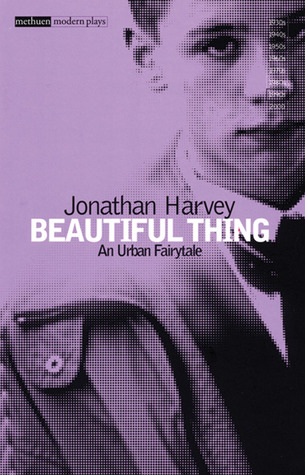
Beautiful Thing by Jonathan Harvey: Published in England in 1994. Where has this play been all life!? I’m a little embarrassed to have just read it for the first time. A hopeful account of young gay love when most accounts were muted, if not downright horror-filled, during the height of the AIDS epidemic. Funny, honest, tender, beautiful. I’m delighted to see there’s a film adaptation available to stream. I’m strongly considering adding this one to a future class’ required reading.
This Book Will Make You Kinder by Henry James Garrett: This one would 5 stars for the illustrations alone. I was set to give it a 3 but the last section was great and, for me, what I’d have liked most of the book to be. A good 2/3 of it, though, was a bit too jargon-heavy, cerebral, and detached. Very self-referential and not enough tacit guidance or modeling for its titular promise. Until the end chapter, that is. The author himself admits that it’s his singular philosophy, and a meta investigation of it, so fair’s fair, I guess. But most people either won’t get beyond the philosophy or beyond the “bias/politics.” (And that’s coming from someone who agrees with the writer’s politics almost completely.) Did this book make me kinder? No. And yes.
April’s World Religion Theme: The Holy Vedas
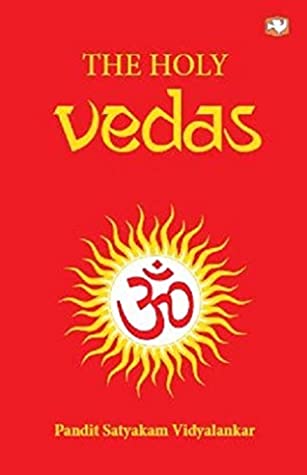
This month’s theme is The Holy Vedas. I’m reading the Penguin illustrated edition by Pandit Satyakam Vidyalankar. The book is 448 pages long, including introductory materials, so that comes out to about 15 pages per day. I think that should be more than doable considering the reading per page is usually not extensive (broken as it is into verses of large text size.) The book is also broken into 6 major sections, so I’ll try to aim for one or two of those a week.
I’m excited to engage with this one, as I’ve got absolutely no background in or prior knowledge about Hinduism, unlike the Tao Te Ching & Buddhism (January and February/March). Once again, though, I’m not reading the text from a religious or spiritual context, but simply as a curious reader who wants to know more about the major religions of the world. If you’d like to join me on that adventure, I’d be happy to have you!
All work published at Roof Beam Reader is copyrighted by the author, Adam W. Burgess. Do not copy, screenshot, or reuse work from Roof Beam Reader in any form without the express permission of the author.
Black History Month Plus Two
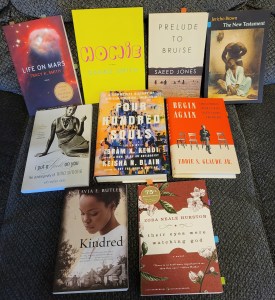
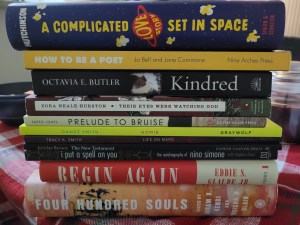
February turned out to be another superb reading month. Despite being just 28 days long, I managed to read 11 books, broken down as follows: one history; one biography; one autobiography; one on poetry; two adult novels; one young adult novel; and four poetry collections. So, let’s break these into their genres and tackle them very briefly, but with true intent to express what we mean.
Each book will receive a line or two of description or commentary, in hopes that brevity will offet a large set of texts. We’ll take the texts one at a time from within their genre group, say a line or two, and end with The Goodreads Review. Here we go!
We begin with our non-fiction set:
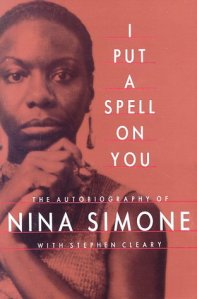
Nina Simone: I Put a Spell on You. One can learn some about a life when, after it has lived, the life decides to put the details down; or perhaps they were compiling and recording all along. I Put a Spell On You is a transitional bildungsroman told by a young Black girl, Eunice, who would become Nina. Her book covers it all, dark spots and light ones too. She doesn’t deny that she was hard to work with, but claims she told audiences and event mangers what to expect. Nina never wanted to be a singer; she wanted to be the best Black classical pianist whoever was. I know she never received that title formally, but I do wonder if she achieved it. I’d wager on it, in fact. Ms. Simone lived a harsh life, suffered a great deal, and much of that was out of control. She was also a musical genius, awakened to political activism, and spoke the voice of the Civil Rights revolution multiple times, including with “Mississippi G-ddamn!” and “Young, Gifted, and Black.” She was a superstar who came to expect the flame and the burn. 4 out of 5.
Begin Again by Eddy Glaude Jr. Eddie Glaude takes his readers on a remarkable journey back in time, to the boy Baldwin was and the man he would become. It became clear to me immediately that Glaude knew Baldwin, I mean really knew and respected Jimmy. James Baldwin is one of my personal writing heroes, so I wade very cautiously into the waters of new biography, but there was no reason to fear this time. Glaude knows what he’s doing; excellent source material and historical records, in Glaude’s hand and through his analysis, guide the reader along competently and instructively. This rates now among those rare books that I’m truly thankful for existing in the world. 5 out of 5.
400 Hundred Souls edited by Ibbram X Kendi and Keisha N. Blain is described as a community history of African America, 1619-2019. To me, it reads like a survey study course of a four-century era, which meant there was never enough, not nearly enough material and context in each of the 80 chapters within their 10 parts; however, taking a few chapters together, or one total section, does help the reader to get a more complicated view of the multiple things happening at this time, in the (pre-)United States. As a starting point for rewriting history (in a good way – reclaiming what needs to be shared), this book is an achievement. I’ve already bookmarked sections that I know I’ll use to revisit with my students at various times. 4 out of 5.
Onto the Fiction Set
Their Eyes Were Watching God by Zora Neale Huston. I believe I first read this one in college, which would’ve been about 14 or 15 years ago. It is really not at all what I remembered; I had vague imagining of Tea Cake and of the other men, and I knew the town/people have something to do with the story, but I really couldn’t come up with many specifics. That said, it was a real treat to revisit it after such a distance (and two advanced degrees), and to be witnessing the genius work that Hurston does with language–and the racial politics surrounding it–as well as her genius for place and people, this being part of what made her such a brilliant anthropologist. I’ll admit that it took me a few chapters to sink into the language of her colloquial dialogue; I often reached graciously if a bit jealously for the moments of stricter prose. Richard Wright would later get Hurston very wrong; he claimed that Hurston’s use of the “low speech” or “slang” of her people was bound to reinforce prejudices and stereotypes, that it was harmful. I would have to say, Wright wasn’t yet seeing all the powerful things Hurston was doing with language, but it would be discovered again, many years later, by none other than Alice Walker. 4 out of 5. 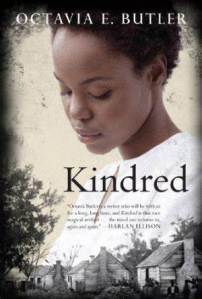
Kindred by Octavia E. Butler. This book is a masterpiece. An absolute wonder. I hope the adage is true, that we turn to books when we are supposed to, because I’ve had this one sitting on my shelves for years and years, waiting patiently. I can’t say how many times I’ve almost picked it up. Having just recently read Butler’s Parable of the Sower, I knew I need to get to her again soon. I’m now just a little mad that someone kept me from Butler, or Butler from me, all my life until now! What a master story teller, strong and beautiful prose, rich and complex characters, deep, tragic, and meaningful plots. One of the most remarkably telling testaments to her craft is how epically, perfectly, and completely unexpectedly the bookends of the first scene and final scene work to hold this whole story and its time together, but also our whole American story, across time and place. I may be assigning this in one of my literature classes next semester. 5 out 5.
A Complicated Love Story Set in Space. Shaun David Hutchinson writes some of the most intereting and creative young adult novels on the market today. He often incorporates science-fiction elements into traditional but queer bildungsroman narratives. It should be no surprise that a book titled the way this one is, is right in Hutchinson’s wheel house. I found the story to be a lot of fun, but it also tackled some heavy and unexpected elements. It was, I think, smartly meta in at least two prominent ways, ways which would have seemed false had the meta narrative not been intentional. There has been a lot of pushback about the main character, who is definitely not likeable, but 1) I’ve never been that kind of reader (who cares if he’s not likeable – are only likeable people allowed stories?) and 2) this narrator in particular is specifically not supposed to be likeable. We learn why. It’s a mystery (that can seem tedious, I guess) until we learn why. So, I’m baffled by those who claim to have read the whole book and still say the can’t like it because the one guy is a jerk for most of it. Well, yeah! We know why he was a jerk. And we know he got better. How much perfection do we expect from our stories these days, my goodness? Anyway, I reqd through this 450-page tome in two days. It was fun! 4 out 5.
At Last, The Poetry Set
How to be a Poet by Jo Bell and Jane Commane: A very helpful, reflective-type guide for how to “be” a poet, not how to write poetry. This is a very different kind of thing. Rather than poem prompts, workshopping, etc., the “writing side” of being a poet, Bell and Commane focus on things like process, patience, and the practice of being a poet-person rather than just poet-writer. How to bring one’s self into the poetic lifestyle, as it is, and learn how to interact well and effectively with both the world around you (to gather matter for poems) and with others on this poetry journey. To create community. Helpful sections on publishing Dos and Don’ts, too, as well as the “blank white page” terrors, etc. 4 out 5.
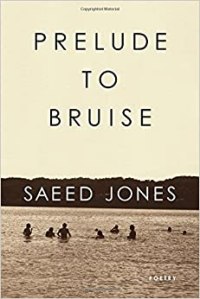
Prelude to Bruise by Saeed Jones: This is a young poet’s dream collection, I think. It had a slow start, but as I kept moving through the poems, I started to see and feel more of what Jones is doing. Even the deeply uncomfortable became comfortable, because I knew Jones had this in control and that he would take me only exactly where he wanted me to go, and that he would end it where it needs to end. Two of my favorite poems in this collection are “Meridian” and “Beheaded Kingdom.” I’m not typically a fan of serial poems (poems with numbered chapters), but I really, truly enjoyed how Jones does them. 5 out 5.
Homie by Danez Smith: I’ve read Danez Smith in the past, and I’ve picked him up again because I enjoyed him before. He’s a powerful, witty, sexy, strong, sensitive, mad poet with so much to say, and such interesting ways of looking at the world. I was drawn right into this one even before the first poem. After the title page, which is fake, there’s an author’s note about the real title, and this page is followed by the real title page. I won’t disclose it here, because it’s not for me, but I thought the entire concept rather brilliant and also believable. As a commercial hook, I would’ve found it silly and annoying. But from Smith, whom I believe truly crafted it this way, it’s a statement to sit with before beginning. The rest of the collection returns to it, after all. One poem in particular gutted me, and that one is, “Waiting For You to Die So I Can Be Myself.” I’ll leave it at that. 5 out 5.
Life on Mars by Tracy K Smith: This collection is an elegy to Smith’s father, told through series’ of science-fiction poems. It’s a brilliant conceit, unlike any I have ever read before. Smith has some serial poems in her collection, too, that I really fell for, despite my typical aversion. One of these is, ‘Don’t You Wonder, Sometimes?” In, “The Universe: Original Motion Picture Soundtrack,” she writes of “tin cans we filled with fire” and the “dark we’ve only imagined.” Later, in “Universe As Primal Scream,” she pleads, “let the heaven we inherit approach;” she silences all the “racket” of the world and hears that something quiet “has begun to insist / upon being born.” Smith’s father was an engineer on the Hubble Space Telescope. Her concept, here, is a tremendous accomplishment, and a beautiful homage. 4 of 5.
The New Testament by Jericho Brown: Along with Ocean Vuong, Jericho Brown is definitely one of my favorite contemporary writers. I happened to receive two autographed copies of this one, so I put one away for safekeeping and read this one very gently. I might pass it on to someone, someday, if they’re truly deserving. Brown’s poetry is passionate, dangerous, and unflinching. He writes on sex and race and masculinity, and all of the nonsense that surrounds each of these. His focus often seems to be on how to ignore the garbage that our own self-doubting society foists upon us in order to simply live well and good and with fire. He’s one of the clearist poets I read regularly these days, yet he never ceases to surprise. 5 out 5.
What I Read in January
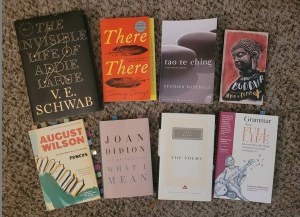
Somehow, I managed to read (or finish reading) nine books in the month of January (2021). I wasn’t expecting such a high number, but I think the fact that I was on vacation for ten days at the start of the month helped. I won’t go into much detail with my reactions/responses to these, though I have included my Goodreads “rating” after each title. For posterity’s sake, though, I should at least leave a word or two.
- The Fascinators by Andrew Eliopolous: A fun and unique concept. Eliopolous merges the traditional young adult novel with magical realism; I would (maybe most would) call it fantasy, but because the book begins with the premise that magic is a “given” in this story world, which looks very much like our everyday world in the United States, it just read more like realism to me. At the heart of it is a coming of age story intimately concerned with friendship, unrequited love, and same-sex attraction, dating, etc. (3 out of 5)
- There, There by Tommy Orange: A wonderful narrative that weaves together, chapter by chapter, a variety of stories about Native Americans in the contemporary American west, specifically the Oakland area of California. The primary narrator is on a mission to create an audio-visual project, for which he earns a cultural grant, documenting the lives and stories, the oral histories, of Native American people, in order to see if there is any common identity. Each chapter then follows one of the interviewees’ stories, and all of them eventually come together into a shared ending–one that is shocking and preventable, and damningly expected. (4 out of 5)
- Grammar for a Full Life by Lawrence Weinstein: This book was absolutely delightful, in my opinion. Weinstein, whose credentials in academic writing are unmatched, presents a kind of philosophy of language and how we use it. His argument is that being conscious of how we choose to write can make all the difference in how well, and joyfully, we live. It reflects a kind of stoic philosophy, or Buddhist one, that suggests everything in life depends on how we respond to actions, events, and stimulus both inside and outside of our control. Weinstein is less concerned with the rules of grammar and more so with what it means to follow or break those rules consciously. This is not a book to go to if one is looking for a lot of grammar instruction. (4 out of 5)
- The Poems by John Keats: Although this one is titled The Poems, it is actually the complete creative works of John Keats, including his plays, etc. Surprisingly, I enjoyed Keats far less this time than I have in the past. I still appreciate many of his most famous works; I still adore, for example, The Eve of St. Agnes, and was introduced to many pleasant poems I’d never read. It’s an accomplishment to be able to say I’ve read all of Keats, but now I wonder who my new/current favorite Romantic is, since it had always been Keats. I don’t think that’s true anymore. Blake… I’m coming for you! (4 out of 5)
- Fences by August Wilson: August Wilson is a Pulitzer-winning playwright, and performances of his plays have received Tony Awards, too. His Century Cycle is one of the most well-known and beloved series of dramas in American letters. This one, Fences, is set in Pittsburgh in the 1950s. The main character–Troy Maxson–is a man straddling two different time periods, one where there was no opportunity for him as a Black man in America, and one where his own son sees more and better opportunities. I read this one after learning that Ma Rainey’s Black Bottom, which recently received a new film adaptation starring the exquisite and brilliant Chadwick Boseman & Viola Davis, is also a Wilson play. I was looking for something to alternate with a text I teach regularly, A Raisin in the Sun, and it certainly didn’t disappoint. (4 out of 5)
- Tao Te Ching by Lao Tzu: I wrote a little about this one in my 2021 themed reading post and in my January Theme posts, but essentially the Tao Te Ching is an ancient philosophy that influenced many future philosophies and religions in the Asian world. It consists of about 80 short verses intended to guide its reader (or listener) on a “right path” for living well and freely. To me, a lot of the philosophy is similar to what we find in Buddhism and Stoicism, in that the keys to the good life are found in how we choose to react to the world around us, or not. This is one I’ll return to often. (5 out of 5)
- The Invisible Life of Addie LaRue by V.E. Schwab: I’m hesitant to admit that I didn’t enjoy this one quite as much as all my reading friends seem to have done. Every review I’ve seen from my reading connections has been absolutely raving and positive. I can definitely understand why people love it, but there were a few too many things that irked me throughout to allow me to fully immerse and enjoy the story, I think. Repeatedly forced themes, for example. That said, I did absolutely enjoy it. It’s a well-written romp of historical fiction and fantasy, following the narrator’s life over the course of 300 years. Addie makes a deal with the devil, literally, and then ends up in a centuries’ long battle of wits with him, one which continues even… well, I’ll leave it at that. (4 out of 5)
- Let Me Tell You What I Mean by Joan Didion: It will be no surprise to anyone who has read my blog for a long time to learn that, for me, the knockout read of January was Joan Didion’s latest collection of previously uncollected essays. I’ll admit, I’m pretty sure I had read one or two of these before, though I haven’t yet researched when or where I would have done so. It made me curious, though, since the book is described as “works previously uncollected.” Joan Didion is one of my personal writing heroes, and this collection is a fair example of why she’s earned that place. Her wit and observational skills, her precise prose, and the way she creates a mood and atmosphere that transcends the gap between herself and the reader, between even decades of time, is superior indeed. I will study Didion for as long as I live and wish to write well. (5 out of 5)
- Conversations with Buddha by Joan Duncan Oliver: This tiny little book, with an introduction from Annie Lennox!, is a great introduction to Buddhism. It explains the core principles in conversation rather than through lists and definitions, the way most books of the type must do naturally. I’ve read maybe a dozen books on Buddhism in the last few years, as I try to learn and grow, and this one is definitely a unique approach to the material, though I’m not sure it was always as successful or articulate as I needed it to be. (4 out of 5)
This was a pretty wide-ranging month in terms of genre, too. I realize now that I read everything from spiritual text and adult contemporary magical realism and Native American fiction, to LGBTQ YA fantasy, to writing philosophy, to poetry, to classic Black drama, to essays and journalism! What did I miss? Science-fiction? What are you reading these days?
February: Buddhist Scriptures
January: Tao Te Ching
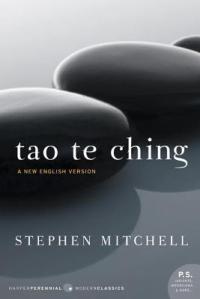
In January, my selection for this year’s themed reading project (world religions) was the Tao Te Ching: A New English Version edited by Stephen Mitchell and published by HarperPerennial. I read a few verses each day, which turned out to be a great path. Each verse is a page or less, with 81 total verses in the collection. Reading about three per day not only kept me on track, but gave me a very manageable “bite” of things to think about each morning (or evening).
Ultimately, I found the Tao to be calming and reassuring. It provides and reinforces some very simple, straightforward ideas for living a good life, many of which I found were similar to the teachings of Buddhism (no surprise there considering its an ancestor) and Stoicism (a bit more surprising).
Simply put, the Tao was there before anything else existed and will remain after everything else is gone. It lives in everything, and if one is in harmony with the Tao, she is in harmony with everyone and everything. To do this, one must put aside ambition, possession, and mastery in order to lead not by force, but by example; to be wealthy not in profit or consumption, but in spirit.
Interestingly, while much of the Tao Te Ching was about the self, its final verses are about nations and governments. The Tao demonstrates how governments who are one with the Tao are good for the people, and what this might look like. It was a particularly profound way to end my first engagement with this philosophy, considering all that’s been going on in the United States.
Here’s one particular favorite, Verse 56:
Those who know don’t talk.
Those who talk don’t know.
Close your mouth,
block off your senses,
blunt your sharpness,
untie your knots,
soften your glare,
settle your dust.
This is the primal identity.
Be like the Tao.
It can’t be approached or withdrawn from,
benefited or harmed,
honored or brought into disgrace.
It gives itself up continually.
That is why it endures.
Finally, much like Buddhism has “the middle way,” Taoism repeatedly speaks of “balance” in all things. I truly enjoyed reading these verses and will keep my copy of the Tao Te Ching on my desk for easy and regular reference, for a long time to come.
February & March: Buddhist Scriptures
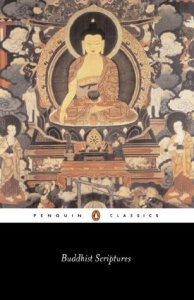
If you recall from my original post, I’m planning a kind of intercalary approach to my themed reading this year. For each short text, like the Tao Te Ching, which I read in one month, I add a longer text. The next one is Buddhist Scriptures published by Penguin Classics.
Here’s my reading path in case anyone would like to join:
• February 1-7: The Buddhist Universe chapters 1-7 (pages 3-59)
• February 8-14: The Buddhist Universe, Chapters 8-12 & The Buddha, Chapters 13-15 (pages 60-128)
• February 15-21: The Buddha, Chapters 16-22 (pages 129-199)
• February 22-28: The Buddha, Chapters 23-24 and Monastic Life, Chapters 25-28 (pages 200-268)
• March 1-7: Monastic Life, Chapters 29-35 (pages 269-334)
• March 8-14: Monastic Life, Chapters 36 and Meditation & Other Rituals, Chapters 37-43 (pages 335-393)
• March 15-21: Meditation & Other Rituals, Chapters 44-48 and Enlightenment, Chapters 49-50 (pages 394-449)
• March 22-28: Enlightenment, Chapters 51-56 (pages 450-512)
• March 29-31: Enlightenment, Chapters 57-60 (pages 513-548)
 Roof Beam Reader