Roof Beam Reader
Adam Burgess
Sweet Surprises and Judgmental Me
This is a little story about gratitude and trying to be a better person.
On Thursday night, my spouse and I went out to dinner. I was in the mood for pizza, so we went to a place called BJ’s, which is a kind of mash-up between family style and sports bar.
Being a Thursday night in September, there was a football game on, and I tend to get invested in these things. I was rooting for the Browns to win their first game and we got there in the final quarter. It was a close game. Fortunately, there wasn’t anyone seated too near us, until about 15-minutes later, when a large group came in together and were seated at two tables right behind us.
They weren’t particularly loud or anything, but a few of them kept getting up to go to the bathroom or wherever. I get annoyed by little things, and this was doing it. I also noticed it was the same few members of that group who kept getting up and wandering off. I figured drugs or sex in the bathroom, because I’m a non-judgmental optimist who always thinks the best of people.
Then, just as the game ended, two of the group, a guy and girl, stood up and starting singing Ed Sheeran’s “Perfect.” They actually sounded great, yet my first reaction was, “are you kidding? People are trying to enjoy their own dinners!” As they were near to finishing, a young woman in a red dress got up from her side of the table, carrying some kind of poem in her hand. She knelt in front of another young woman, sitting closer to our table, read the poem, pulled out a ring, and proposed. It was a “yes.”
It was all pre-planned. Their families and friends were there to share in that moment and celebrate it. The tables around our section clapped for them. It was like being in a movie; I’d never seen it happen in person before. And it got me thinking.
When I’m self-involved, I tend to get irritated by things that really are no big deal. But when I’m invited into others’ special moments like that, I feel real gratitude for being part of it. I was thrilled to have been a witness to that loving moment, and especially to see them surrounded by such support and positivity.
I wish we could do more of that for each other, but of course we have to get over ourselves first. I needed the reminder, and I’m thankful for it.
Post-Script: We sent dessert to their tables, which was fun. I’d never done that before either. I hope it added just a tiny bit more joy to their special night.
Folio Friday: Brideshead Revisited
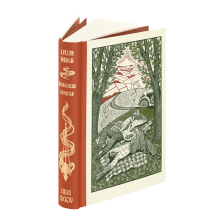 This week, I’m excited to share with you all another new selection from the September catalog of The Folio Society. As many of you know, I’m a devoted fan of The Folio Society editions of classic literature, and the three I received so generously from the publisher have done nothing but encourage my adoration. This week, I want to highlight their new edition for one of my favorite books, BRIDESHEAD REVISITED by Evelyn Waugh.
I’m drawn in by the incredible cover art and the interior illustrations that The Folio Society are known for, and one thing I truly appreciate about their editions is the thought and design they put into their sturdy slipcovers. This particular design is one of the more stunning from any Folio Society I’ve seen, which is saying something!
I also think it is quite the match for the overall atmosphere of the novel, and it reminds me very much of the endearing Sebastian Flyte, one of my favorite literary characters. I fell in love with him the first time I read BRIDESHEAD, and this design, plus the interior artwork, lives up to the romance and magic of my first impressions.
 Brideshead Revisited by Evelyn Waugh
- Introduced by A. N. Wilson
- Illustrated by Harry Brockway
Mr Waugh is very definitely an artist, with something like a genius for precision and clarity not surpassed by any novelist writing in English in his time.
Chosen as one of Time magazine’s 100 greatest novels of all time, this is Waugh’s most popular book, combining aching sympathy for the passing of privilege with the best of his razor-sharp wit.
 Charles Ryder’s cousin warned him against taking rooms on the ground floor of his Oxford College, so when the young Lord Sebastian Flyte is sick through his window, it seems he should have heeded the advice. However, no one is immune to Sebastian’s inimitable charm and soon a relationship develops that will change Charles’s life forever.
The novel pinpoints a very precise moment in British social history and Waugh perfectly recreates the ambiance of the period; the aristocracy cling to their privilege and Ryder becomes increasingly vocal about his anti-religious sentiment. Despite the distractions of the beautifully crafted prose, the reader remains painfully aware of the imminent war, while Ryder and his contemporaries enjoy the bounties of privilege, blissfully ignorant of impending events.
 This new edition from The Folio Society is illustrated with wood-engravings by award-winning artist Harry Brockway. His stylized scenes perfectly evoke Brideshead and its characters’ devil-may-care lives. Brockway also designed the striking binding art – a languid portrait for the front and subtle motifs of swirling cigarette smoke on the back.
In the newly commissioned introduction to this edition, award-winning novelist A. N. Wilson writes of the ache for an aesthetically purer past and how Brideshead represent the idea of a balanced, crafted and ‘above all, enjoyable’ novel.
About the Publisher: For 70 years, The Folio Society has been publishing beautiful illustrated editions of the world’s greatest books. It believes that the literary content of a book should be matched by its physical form. With specially researched images or newly commissioned illustrations, many of its editions are further enhanced with introductions written by leading figures in their fields: novelists, journalists, academics, scientists and artists. Exceptional in content and craftsmanship, and maintaining the very highest standards of fine book production, Folio Society editions last for generations.
Book copy and all images are courtesy of The Folio Society. Feel free to review the September Collection, it is brilliant! In case you missed them, take a look at my Folio Friday features for THE THOMAS HARDY COLLECTION and for Ursula K. Le Guin’s THE LEFT HAND OF DARKNESS.
Dorian Gray, In Theory (Part 5)
 Last month, I introduced a five-part project exploring Oscar Wilde’s masterpiece, The Picture of Dorian Gray, as viewed through various critical lenses. I began in Part 1 with Formalism. This week, I take a very brief look at the novel from a Feminist perspective and conclude with some brief, final thoughts. I have to say, looking back at a favorite novel through a variety of lenses has been a challenging but rewarding task. I actually had quite a lot of fun with it and thought about the novel in new and different ways.
Feminism
A theory which need be applied to The Picture of Dorian Gray, but which seems surprisingly lacking, is the Feminist approach. Perhaps the small amount of feminist criticism written about this novel, or at least the difficulty in finding it, is due to the fact that feminist and queer theories are both relatively “new” schools (in terms of the overall history of theory and criticism), coming about at roughly the same time and, naturally, queer theory took firm hold of Dorian Gray. Be that as it may, it seems to me that much should be said about the lack of female presence in Dorian Gray, and also about the disturbing picture of women presented in the minor character roles which do exist for them.
In her essay, “Chloe Liked Olivia,” Virginia Woolf states that, “all the great women of fiction were . . . not only seen by the other sex, but seen only in relation to the other sex. And how small a part of a woman’s life is that” (Leitch 1024). This is absolutely true for Sybil Vane. Not only is she seen simply and briefly through men’s eyes (Oscar Wilde, as the writer, but also Dorian Gray and Lord Henry, as observers) but she also must play a boy on stage. Further, her importance in the story is only to the extent that she causes Dorian’s first slip into wickedness.
Other female characters in the novel include: Lady Agatha, Mrs. Vane, Lady Victoria Wotten, and Lady Brandon, all of whom only exist within the story to further the male roles. As a feminist, I wonder how Virginia Woolf must have read The Picture of Dorian Gray; I believe it is doing a great disservice to feminist theory to leave such a marker text out of the discussion. Though Queer theorists may have seized Dorian Gray –and for good reason– there is still room for discussion on many points of feminist theory, especially taking into consideration the role that Oscar Wilde’s own wife must have played on the portrayal of Sybil Vane. And, further, what does a gay man, married to a woman, have to offer the feminist community?
Concluding Thoughts
The possibilities for examining a text like The Picture of Dorian Gray are endless, but one must stop somewhere, at least for a little while. Any school of criticism can be applied to such an extraordinary text, and thus bring about new questions and new modes of examination. Placing many theories side-by-side, or interlacing them, perhaps, is an even greater way of coming up with new ideas, noticing nuances that were once overlooked.
The point of this series is to consider a single novel from a variety of critical perspectives, and to explore how one might go about that process. It demonstrates how The Picture of Dorian Gray has “changed” over time (or how reception of it has changed), simply by being read again and again. I hope that, after thinking of how different generations have read this one novel, we might remember to think more broadly, even more exotically, about other texts we read in the future. It is important to keep in mind that, just as two people reading one text at the same time will not walk away with the same feeling, the same understanding of it, so too will different generations, different cultures, different religions, different classes, and different genders have even further interpretations of that text. The experiment, indeed, arose from my own re-readings of a number of books, many of which I responded to quite differently with each new reading.
This series, I hope, is just a beginning, a tip to the iceberg of understanding. I hope, personally, to continue to ask questions about my reading(s), to re-examine old ideas, and to revisit texts from a new perspective; and, by doing these, I hope to encourage my own growth as a reader (and writer).
Please visit early segments for my thoughts on Dorian Gray and Formalism; Dorian Gray and Reader-Response; Dorian Gray and Post-Structuralism; and Dorian Gray and Marxism. If you have any ideas about another novel (or short story) that I should try this kind of experiment on, let me know!
Works Cited and Consulted
- Leitch, Vincent B ed. The Norton Anthology of Theory and Criticism. New York: W.W. Norton & Company, 2001.
- Wilde, Oscar. The Picture of Dorian Gray. New York: Oxford University Press, 2006.
Sunday Salon (1:6)
RBR Sunday Salon
Volume 1, Issue 6

This week’s Sunday Salon is jam-packed with interesting reads from a variety of topics, including science, literature, writing, and my very own contributions here at Roof Beam Reader. It was a very busy week for me personally and professionally, but somehow I managed to read a lot of fascinating articles that I’d like to share with you all. For my own contributions, please scroll through to the bottom.
I look forward to hearing about what you’ve read/written this week, or what you think about the links I’ve shared. Please feel free to comment below. Happy September!
Blog Posts I Loved
- Fanda Classiclit: 6 Degree of Separation: From The Origin to…. “I have just finished a wonderful book, of which I still need time to digest: Irving Stone’s The Origin—a historical account on Charles Darwin. As always with great books, it’d take me much time and efforts to review. On the other hand, my head is full of it and I was eager to write something. I have just finished a wonderful book, of which I still need time to digest: Irving Stone’s The Origin—a historical account on Charles Darwin. As always with great books, it’d take me much time and efforts to review. On the other hand, my head is full of it and I was eager to write something.”
- Bookish Byron: Elizabeth Gaskell’s Mary Barton. “Considering this was Gaskell’s debut novel, I think it’s very telling of her ability as a writer. She often, more times than not, goes against the grain. She lived in Manchester, at the heart of the industrial revolution, and saw the negative impacts it had on the lives of the working class.”
- Nut Free Nerd: A Classic Couple: The Catcher in the Rye and The Perks of Being a Wallflower. “This classic/contemporary duo always reminds me of the start of the school year, which makes this the perfect time to write about them here. I’m sure this pairing has been done many times before, but I still think there are some interesting parallels worth discussing.”
Literary Miscellany
- Tor: Problematic Classics: Four Questions to Ask When Beloved Books Haven’t Aged Well. “Most of us who love speculative fiction run into this problem at some point. There are classics of the genre that are uncomfortable for various reasons. Some of them are straight-out racist, or unrepentantly misogynistic, or homophobic, or all of the above. How and why and when we come to these realizations can change depending on who we are.”
- Literary Hub: What Does Immersing Yourself in a Book Really Do? “The act of taking on the perspective and feelings of others is one of the most profound, insufficiently heralded contributions of the deep-reading processes. Proust’s description of “that fertile miracle of communication effected in solitude” depicts an intimate emotional dimension within the reading experience: the capacity to communicate and to feel with another without moving an inch out of our private worlds.”
- Scary Mommy: 20 LGBTQ Books for Kids from Preschooler to High School. “[Neither you nor your kid needs to be queer to enjoy these books. In fact, it if you are not queer, you should read them. Understand and see us. Then teach kindness and acceptance. LGBTQ books should be part of all kids’ reading materials and educational narrative.”
History & Politics
- The Atlantic: How Well-Intentioned White Families Can Perpetuate Racism. “In my book, I’m trying to highlight this tension between the broad, overarching social structures that organize all of our lives and the individual choices that people make from within these structures.”
- The Intercept: A Grassroots Uprising in Amish Country Begins to Find Meaning in Politics. “Sitting in church that weekend, she felt betrayed. The values being professed by the congregation were a lie. Looking around at her longtime friends and fellow parishioners, she wondered, how did you vote for him? After a lifetime of ministry, including missionary work in Japan, she left her church.”
Culture & Society
- Literary Hub: Grammar Purity is One Big Ponzi Scheme. “There’s no separating this debate from issues of class, race, geography, and socioeconomic status. The minute someone says x is standard and y is not, they’re making a judgment call about whose English reigns supreme. Just as the winners write the history books, the most powerful group of English language users write the grammar books.”
- Oxford English Dictionary: A Brief History of Singular “They.” “Since forms may exist in speech long before they’re written down, it’s likely that singular they was common even before the late fourteenth century. That makes an old form even older.”
- The Atlantic: Why Some Parents Turn Boys’ Names Into Girls’ Names. “She says that some parents “celebrate the idea of naming a baby girl James,” for instance, as an attempt to upset gender expectations by showing that girls can take on traits that are traditionally perceived as masculine. What’s noticeably absent, though, is a boomlet operating in the other direction.”
Science, Tech., & Nature
- Scientific American: What Lucid Dreams Look Like. “Last month, for the first time in over a year, I had lucid dreams for two nights in a row. A lucid dream, or realizing that you’re dreaming while still inside of the dream, is not an unusual experience: most people will have at least one lucid dream in their lives.”
- The Atlantic: Why We Forget Most of the Books We Read. “Surely some people can read a book or watch a movie once and retain the plot perfectly. But for many, the experience of consuming culture is like filling up a bathtub, soaking in it, and then watching the water run down the drain.”
Teaching & Writing
- Literary Hub: Why Teaching (Writing) Matters: A Full Confession. “We live in an increasingly literate world that is more and more puzzled by complexity or meaning. I tell my students that today’s readers and writers are like members of a medieval guild, sustaining one another through a Dark Age.”
- Literary Hub: The Debut Novelist’s Guide to Battling Imposter Syndrome. “Alongside the excitement of publication, I didn’t expect that the feelings of vulnerability and panic that had been an integral part of my writing life would intensify. Somehow I’d hoped they would lessen, or vanish altogether. Instead I feel perishable and exposed.”
Posts from Roof Beam Reader
- Dorian Gray, In Theory (Part 4 of 5)
- Folio Fridays: The Thomas Hardy Collection
- September Checkpoint, #TBR2018RBR
Currently Reading
- Alice’s Adventures in Wonderland by Lewis Carroll
- So Big by Edna Ferber (for #CCSPIN)
Thank you for stopping by and taking part in another SUNDAY SALON. There was much to choose from this week, and I hope I have presented you with a decent selection. Some of these I found interesting and engaging, others troubling and bothersome. I would love to hear your thoughts on any of these or the other things you’ve read this week!
All work found on roofbeamreader.com is copyright of the original author and cannot be borrowed, quoted, or reused in any fashion without the express, written permission of the author.
September Checkpoint! #TBR2018RBR
 Hello, TBR Pile Challengers!
Somehow, while the summer days flew by and the new school year began, and while the cool iced drinks began to give way to the return of all things Pumpkin Spice, another month passed for our challenge, too, which means we now only have 3 months left! How did this happen?
Last month, I challenged all of us to get 200 reviews written and linked-up with the Mister Linky widget below. Guess what? We did it! Currently, we have 212 reviews posted and linked. Congratulations, everyone! CAN WE GO FOR 250 BY OCTOBER 15TH!?
Question of the Month: What is your ideal reading environment/atmosphere? Where & when do you typically read, and how do you get yourself “settled” into it?
My Progress: 6 of 12 Completed / 5 of 12 Reviewed
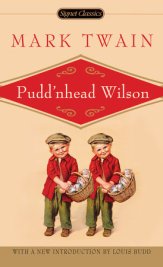 I’ve read 6 of my books and am currently reading number 7. I’ve reviewed 5 so far (just need to get my thoughts down on Pudd’nhead Wilson!) Now, you might be thinking, “that sounds awfully familiar to what he posted last month.” Well, yeah, it certainly does!
Things really slowed down with the start of the semester. When I teach literature courses, I tend to re-read the books I’m teaching along with my students, which takes up some of my own personal reading time. (Most of it, to be honest.) It was great to re-read Pride and Prejudice last week, for example, but it meant I only read about 20 pages of my current challenge book!
My completed reads:
- The Hound of the Baskervilles (Completed 1/3/18)
- Aristotle’s Poetics (Completed 1/10/18)
- Ready Player One by Ernest Cline (2011) (Completed 01/25/18)
- The Courage to Teach by Parker J. Palmer (Completed 03/10/18)
- The White Album by Joan Didion (Completed 08/04/18)
- Pudd’nhead Wilson by Mark Twain (Completed – Review to Come)
- Good without God by Greg M. Epstein (Currently Reading)
How are you doing?
Below, you’re going to find the infamous Mr. Linky widget. If you read and review any challenge books this month, please link-up on the widget below. This Mr. Linky will be re-posted every month so that we can compile a large list of all that we’re reading and reviewing together this year. Each review that is linked-up on this widget throughout the year may also earn you entries into future related giveaways, so don’t forget to keep this updated! At the end of the challenge, all entries will go into one big raffle for the $50 book prize!
MINI-CHALLENGE #4
It is time for our last mini-challenge of the year! The winner for this one will be announced on October 15th and he/she will receive a book of choice ($20USD or less) from The Book Depository. Then, we wrap-up in December and all entries through December 15th go into the raffle for the BIG final prize.
This month, I would like to challenge you all to visit one another’s blogs and recommend a book based on something the other participant has read! In other words, check out the Mister Linky list of reviews to see what people have read/reviewed, see what comes to mind when you read some of the titles, and then visit a couple/few of those posts to comment with your other reading suggestions. Please come back here to leave the links to your comments. Make sense? Have fun! (and good luck!)
 Roof Beam Reader