Roof Beam Reader
Adam Burgess
Folio Friday: The Thomas Hardy Collection
 This week, I’m excited to share with you all another new selection from the September catalog of The Folio Society. As many of you know, I’m a devoted fan of The Folio Society editions of classic literature, and the three I received so generously from the publisher have done nothing but encourage my adoration. This week, I want to highlight their new THOMAS HARDY COLLECTION.
I’m drawn in by the incredible cover art and the interior illustrations that The Folio Society are known for, and one thing I truly appreciate about their editions is the thought and design they put into their sturdy slipcovers. The fact that TFS thinks not just the artwork for the book, but also its display case, is a major collecting consideration. I was fortunate enough to get a copy of JUDE THE OBSCURE, but I cannot wait to get my hands on the entire collection, considering how much I adored The Mayor of Casterbridge and Far From the Madding Crowd. Here are the details:
The Thomas Hardy Collection:
Far From the Madding Crowd, The Mayor of Casterbridge, Tess of the d’Urbervilles, Jude the Obscure
Illustrated with wood engravings by Peter Reddick
‘Hardy saw the passion in the lives of ordinary country people: shepherds, milkmaids, village musicians, and expressed it with great power and empathy’ – Telegraph
 The text for the Folio Society’s Thomas Hardy collection of four of his greatest Wessex novels is drawn from that of the authoritative Wessex Edition of 1912, with a few minor corrections subsequently requested by the author. Each includes Hardy’s original preface and a map of Wessex, the county that he created and where he set these novels, is featured on the end papers.
Each book contains over 30 wood engravings by Peter Reddick, who has recreated Hardy’s rural vision in his work. Reddick’s corn-dolly motifs appear on the cloth binding and the slipcase, which is made from Fragrance of Grass paper, created using an ancient Chinese paper-making method that results in a unique appearance and texture.
Hardy’s Wessex novels are among the finest examples of naturalism, a kind of realism influenced by scientific observation. His extensive research– keeping newspaper clippings and ‘facts’ notebooks – is what makes the idyllic Wessex county with its evocative descriptions of landscapes, wildlife and local tradespeople so believable.
 Hardy offers no prescription for carefree rural living in these books. In Tess of the d’Urbervilles, the stunning settings offset the misery that Tess endures simply to get by. While in Jude the Obscure, despite his best efforts Jude cannot rise above his humble beginnings. Those who do manage to rise above their station still suffer from the sins of the past in The Mayor of Casterbridge, and in Far from the Madding Crowd Bathsheba’s multiple suitors only aggravate the challenge of domestic harmony.
About the Publisher: For 70 years, The Folio Society has been publishing beautiful illustrated editions of the world’s greatest books. It believes that the literary content of a book should be matched by its physical form. With specially researched images or newly commissioned illustrations, many of its editions are further enhanced with introductions written by leading figures in their fields: novelists, journalists, academics, scientists and artists. Exceptional in content and craftsmanship, and maintaining the very highest standards of fine book production,Folio Society editions last for generations.
Book copy and all images are courtesy of The Folio Society. Feel free to review the September Collection, it is brilliant! Please come back next Friday, when I feature the new Folio edition of Evelyn Waugh’s BRIDESHEAD REVISITED.
Dorian Gray, In Theory (Part 4)
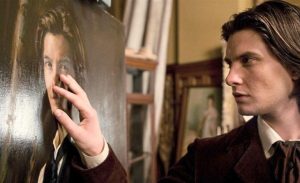
Last month, I introduced a five-part project exploring Oscar Wilde’s masterpiece, The Picture of Dorian Gray, as viewed through various critical lenses. I began in Part 1 with Formalism. This week, I take a very brief look at the novel from a Marxist perspective. This is the shortest of the series by far because, quite frankly, I have not spent much time with any formal study of Marxism, save reading a few Terry Eagleton books.
Marxism
Another interesting approach of theory, and one that has been taken by critics during their examination of The Picture of Dorian Gray is the study of a text as a historical product, or as a cultural producer. Raymond Williams argues that literature is “a specific historical product, carrying class values” (Leitch 1565). He goes on to claim that, “literary forms and genres are determined by the social roles they play” (1566). So, what does this mean for Dorian Gray?
As Baker puts it, “Wilde’s chief concern was always with art, the artist, the critic, or the effect of art and criticism on society at large” (350). Thus, it stands to reason that Oscar Wilde set out, in Dorian Gray to have the text act as a cultural producer. He is not simply mirroring his own personality, but offering a suggestion, a warning, to society; beware the wrath of vanity, of imitation, and of idolatry. Baker solidifies this idea, that Dorian Gray is alerting the people, en masse, by stating, “Wilde believed that the progress of society was dependent upon the progress of the individual” (351).
Another case for a Marxist reading of Dorian Gray is an idea posited in “the Dialectics of Dandyism.” Glick presents further discussion on the idea of real versus appearance (as in Dorian and his picture) when she writes, “Marx makes it clear that while the distinction between what appears to be and what really is functions as a smoke screen for capital, the split between appearance and essence is not imaginary” (133). She goes on to explain that appearances are necessary to conceal inner relations, and that these “secrets” are present in The Picture of Dorian Gray as made example by the passage, “I have grown to love secrecy. It seems to be the one thing that can make modern life mysterious or marvelous to us. The commonest thing is delightful if one only hides it” (Wilde 7). Thus, Dorian Gray acts as a cultural product and producer, in that it was written to produce a sense of acknowledgment in the reader, and that, since its publication, cultures (especially, as Glick explains, the Queer community) have been affected by it.
The exploration of art and consumerism as both rivals and necessary conspirators is a fascinating one to me; I know there is a great deal of literature on the subject, though I have spent perhaps far too little time engaging with it. My consideration of Dorian Gray as a novel that both rejects and utilizes consumerism has encouraged me to consider other topics similarly. It is especially interesting to me that an aesthete, like Wilde, would so cheekily critique the very concept he personally faults. Wilde wrote for an audience, after all, so he cannot be excepted from his own criticism (as someone like Salinger, say, could be, because Salinger ultimately did reject the spectacle of it all and continued to produce art without making it consumable.)
Please visit early segments for my thoughts on Dorian Gray and Formalism; Dorian Gray and Reader-Response; and Dorian Gray and Post-Structuralism. I will return next week with the final installment, Part 5: Dorian Gray and Feminism.
Works Cited and Consulted
- Baker, Houston A. “A Tragedy of the Artist: The Picture of Dorian Gray.” Nineteenth-Century Fiction 24.3 (1969): 349-55.
- Glick, Elisa. “The Dialectics of Dandyism.” Cultural Critique 48 (2001): 129-63.
- Leitch, Vincent B ed. The Norton Anthology of Theory and Criticism. New York: W.W. Norton & Company, 2001.
- Wilde, Oscar. The Picture of Dorian Gray. New York: Oxford University Press, 2006.
Sunday Salon (1:5)
RBR Sunday Salon
Volume 1, Issue 5

This second week of September might mean Pumpkin Spice lattes and early autumn feelings for many North Americans, but here at Roof Beam Reader it means 108-degree temperatures and another Sunday Salon!
This week, in addition to recapping my own posts and sharing what I’m currently reading, I’m sharing my favorite reads from my favorite bloggers, as well as a number of fascinating articles from across the web, including some on science, history, and politics.
I look forward to hearing about what you’ve read/written this week, or what you think about the links I’ve shared. Please feel free to comment below. Happy September!
Blog Posts I Loved
- Wild Moo Books: Wrap Up: Big Book Summer Challenge. “Back in June I enthusiastically jumped into my friend Sue’s Big Book Summer Challenge. The challenge was to read books over 400 pages long between Memorial Day and Labor Day.”
- Interesting Literature: The Pit and the Pendulum and the Short Story: “Of these lesser-known Poe tales, the one that stood out to me was ‘The Domain of Arnheim’, in which Poe seems to lay out his artistic credo in the form of a work of fiction. It’s a love letter to the imagination and a late-Romantic expression of the primacy of the human imagination, describing an imaginary voyage through a poet’s mind.”
- An Historian About Town: Creating Your Library. “While this is a lovely dream to have, it isn’t as easy as it might seem on the surface, and there is a lot to consider. For a lot of people, it is a way to establish their intellectual self in their home.”
Literary Miscellany
- Literary Hub: 10 Great Reads from the Feminist Lesbian Sci-Fi Boom of the 1970s: “It was the mid-70s, and I was in my mid-twenties—immersing myself in feminism and coming out—when (from my point-of-view) women, often lesbians, simply took over science fiction. Women had always been there, but the sheer volume of mind-twisting feminist plots and not-creepy lesbian characters on bookstore shelves was heady stuff.”
- BBC: The Woman behind Africa’s ‘Harry Potter’ [Video]: “Inspired by her Nigerian heritage, Children of Blood and Bone is full of adventure, with giant lions, epic fight scenes and Yoruba incantations, and is being turned into a movie.”
History & Politics
- NPR: Obama Campaigns, The Op-Ed. [Audio] “Former President Obama was back campaigning for Democrats, while President Trump is still focused on an anonymous op-ed.”
- NBC: Women Watched Trump Toss the Political Playbook. Now They’re Setting it on Fire. “But equally notable is how many of the hundreds of mostly Democratic women running are political outsiders, tossing the old playbook aside that said female candidates have to be twice as qualified, twice as polished, and twice as careful as their male counterparts to run.”
Culture & Society
- Forbes: Women Earn More Collegee Degrees and Men Still Earn More Money. “Despite the tremendous educational gains that women have achieved, men still earn higher wages, virtually across the board. Since the Equal Pay Act was signed in 1963 – when women earned an average of 59 cents for every dollar paid to a man – the gender pay gap has narrowed by less than half a cent per year, to about 80 cents on the dollar today.”
- Slate: Apple Follows Twitter’s Lead, Permanently Bans Alex Jones’ Infowars From App Store. “The right-wing provocateur Alex Jones has one fewer digital platform to peddle his crazy conspiracy theories after Apple decided to remove Infowars from its App Store late Friday. The company took down a total of five apps that were affiliated with Infowars.”
Science, Tech., & Nature
- NewScientist: A Giant Pool Noodle to Clean Up Ocean Plastic Launches Today: “On Saturday, engineers plan to tow a gigantic floating boom out of San Francisco Bay, past Alcatraz prison, and to the open ocean. It is destined to begin cleaning up the mountains of plastic rubbish circulating in the Pacific. But is this the right way to do it?”
- The Wall Street Journal: Your DNA, Your Diet: How Nutrition is Being Personalized. “Cynthia Fife-Townsel, a Chicago librarian, had been researching nutrition and DNA profiling to help her understand her body and improve her health. So when she saw an advertisement offering an at-home DNA and blood-test kit from a company called Habit for just $200, she decided to give it a try.”
Teaching & Writing
- Brevity: Still Waiting for That Contract: On Being a “Real” Writer. “I gave up on leading a life on stage, the life of an artist, the life I had always wanted. I committed to a policy of practicality and went to business school. Through all that time, I was writing.”
- Kristen Lamb: Back to School: Why Great Papers, Essays, and Blogs Need Outlines. “Once I mastered how to outline an academic paper, it was like I was unstoppable. Yes, I know. This sounds like the Passion of the Nerd. In reality though, it’s more like the Redemption of the Procrastinator. But, becoming a master outliner helped me write papers faster and get better grades every time.”
Posts from Roof Beam Reader
Currently Reading
- Pride and Prejudice by Jane Austen
- So Big by Edna Ferber (for #CCSPIN)
Thank you for stopping by and taking part in another SUNDAY SALON. There was much to choose from this week, and I hope I have presented you with a decent selection. Some of these I found interesting and engaging, others troubling and bothersome. I would love to hear your thoughts on any of these or the other things you’ve read this week!
All work found on roofbeamreader.com is copyright of the original author and cannot be borrowed, quoted, or reused in any fashion without the express, written permission of the author.
Folio Friday: The Left Hand of Darkness
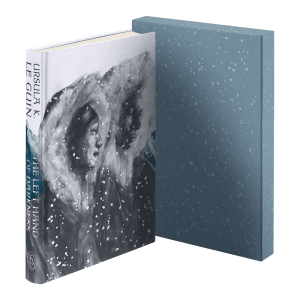 Over the course of the next few Fridays, I’m excited to share with you all three new selections from the September catalog of The Folio Society. As many of you know, I’m a devoted fan of The Folio Society editions of classic literature, and the three I received so generously from the publisher have done nothing but encourage my adoration. This week, I want to highlight their edition of Ursula K. Le Guin’s THE LEFT HAND OF DARKNESS.
I’m drawn in by the incredible cover art and the interior illustrations that The Folio Society are known for, and one of the things I truly appreciate about their editions are the sturdy slipcovers that are also well-designed. The fact that TFS puts thought into not just the artwork for the book, but also its display case, is excellent. This particular edition was also a collaboration between Le Guin herself and the publisher, which makes it all the more unique and special. As a Le Guin fan, I’m proud to own this one.
According to The Folio Society:
Described by Margaret Atwood as ‘one of the literary greats’ and by Stephen King as ‘a literary icon’, Ursula K. Le Guin stands as a colossus in the field of speculative fiction. The Left Hand of Darkness won multiple awards, including the Hugo for best novel, making Le Guin the first woman to win it; appropriate indeed, given that her extraordinary novel of betrayal, loyalty, love and survival was to change the conversation about gender for ever. In her introduction, novelist Becky Chambers – herself nominated for both the Clarke Award and the Hugo – calls the book ‘a titan’, one that gave rise to new perspectives on what fiction could be.
 About the Book:
Genly Ai is an Envoy, a diplomat sent to make first contact with inhabited planets. Winter, a world locked in a perpetual ice age, is a particularly daunting challenge: its people are androgynous, only taking on male or female sexual characteristics during ‘kemmer’, a monthly period of change and arousal. Struggling to understand the intricacies of a society where anyone could be both mother and father to multiple children, Genly is soon caught in the dangerous machinations of politicians and kings who care little for his life, or the potential life beyond their planet. He is left with little choice but to flee across a vast ice sheet, a journey dangerous enough for a native of Winter, let alone a human ill adapted to extreme cold. Yet with survival and desperation comes trust, and Genly gains a new understanding of Winter and its people.
 About the Illustrated Edition:
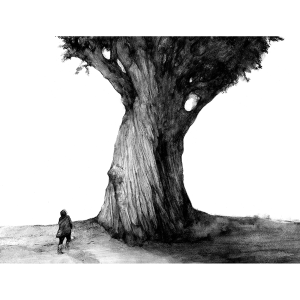
Like the layers of snow, ice and rock that make up Winter, The Left Hand of Darkness is a novel of many layers. Le Guin’s lifelong interest in anthropology and cultural diversity is the bedrock of every page, with chapters devoted to Winter’s mythology, oral history and folk stories. Winter itself, where the habitable stretch of land is always in danger of being suffocated by ice, feels utterly real – Le Guin crafts a world of lethal beauty and completely believable complexity. David Lupton, who provided the illustrations for the Folio edition of A Wizard of Earthsea, returns with a series of sensitive and intimate black and white artworks. Le Guin herself was closely involved in directing the look and feel of this edition, with the binding, slipcase and endpapers specially designed to invoke the icy atmosphere of Winter.
Book copy and all images are courtesy of The Folio Society. Feel free to review the September Collection, it is brilliant! Please come back next Friday, when I feature the new Folio edition of Thomas Hardy’s JUDE THE OBSCURE.
Dorian Gray, In Theory (Part 3)
Two weeks ago, I introduced a five-part project exploring Oscar Wilde’s masterpiece, The Picture of Dorian Gray, as viewed through various critical lenses. I began in Part 1 with Formalism and then considered the opposite perspective, Reader-Response theory. This week, I return to a more textual consideration as opposed to an audience-focused one.
The post-structuralists are most likely to be fascinated by the idea I put forth in part one of this series; that, perhaps, Oscar Wilde was both presenting himself to the public and, at the same time, chastising himself for doing so; it is the idea Jacques Derrida presents in his essay “Plato’s Pharmacy” and what he might call “remedy and drug” (Leitch 1837). Derrida writes, “a text is not a text unless it hides from the first comer, from the first glance, the law of its composition and the rules of its game. A text remains, moreover, forever imperceptible” (1830). The discussions, then, of whether Oscar Wilde was being autobiographical or not; of whether Dorian Gray were a real person or not; of whether Sybil Vane represents Wilde’s wife or not, would be of great interested to the deconstructionists because they are all unanswerable and ever-changing, they are all “play.”
If it is the case that Wilde knows what he is doing by “[calling] into account the overly self-conscious artist who projects his own personality too severely on the public” only to then “put too much of [himself] into it, would be of great interest and amusement to Derrida and the deconstructionalists [sic] (Baker 350, 352). Similarly interested would be Baudrillard, for two reasons: the presence of a portrait in the story, one which becomes the reality, leaving the person a “simulacrum” and the projection of Wilde onto his own work, confusing reality and fiction. Baudrillard argues that copies and reproductions become more desirable than the original, that they “provide all the signs of the real and short-circuit all its vicissitudes” (Leitch 1733). This is certainly true of the painting of Dorian Gray; “the hideous corruption of his soul” is demonstrated by the changing face of the copy in the portrait, rather than on Dorian’s own visage (Wilde 104). As for Wilde’s projection of self onto the pages of his novel, Baudrillard would find this another means of copying real life and making it more interesting, more accessible, and more desirable than the life itself. Why bother living a life, with all its bothersome detours and “vicissitudes” when one can sit back and read a life, one carefully directed and presented?
Another post-structuralist who must be noted, and whose theory need be applied to Dorian Gray is Michel Foucault. In The History of Sexuality, he writes of “a policing of sex: that is, not the rigor of a taboo, but the necessity of regulating sex through useful and public discourses” (Leitch 1652). That the sexuality of Dorian Gray and indeed Oscar Wilde was policed, is indisputable. Wilde was sentenced to solitary confinement for his “acts of sodomy.” Foucault would offer that this had to happen. In order for homosexuality to be talked about, it was necessary for it to be publicly punished and, consequently, shoved into the spotlight: “Wilde was arrested in April 1895 and from that moment a sheer panic prevailed over all questions of sex, and especially of course questions of the Intermediate Sex” (Schmidgall 229). Oscar Wilde’s sacrifice, though not intentional, allowed for debates to be fueled and discussions to be brought about. Then, incrementally, the act of talking about homosexuality allowed for the inclusion of it in new texts.
Please visit Part 1 and Part 2 for my thoughts on Dorian Gray and Formalism or Dorian Gray and Reader-Response. I will return next week with Part 4: Dorian Gray and Marxism.
Works Cited and Consulted
- Baker, Houston A. “A Tragedy of the Artist: The Picture of Dorian Gray.” Nineteenth-Century Fiction 24.3 (1969): 349-55.
- Leitch, Vincent B ed. The Norton Anthology of Theory and Criticism. New York: W.W. Norton & Company, 2001.
- Schmidgall, Gary. The Stranger Wild: Interpreting Oscar. Dutton: Penguin, 1994.
- Wilde, Oscar. The Picture of Dorian Gray. New York: Oxford University Press, 2006.
 Roof Beam Reader