Roof Beam Reader
Adam Burgess
July Checkpoint! #TBR2018RBR
 Hello, TBR Pile Challengers!
We are now 7-months into the best reading challenge of all-time! (Yes, I might be biased.) I am thrilled to see that we’ve got 160+ reviews already posted! I know a lot of you have made some amazing progress on your lists and others are, like me, struggling a bit. Wherever you are at this point, good on you! The first goal is to have fun and to read some good books, right? The bonus is being able to finally knock some of those long-lingering books from your shelves. Even one or two is a win!
We didn’t quite hit last month’s goal, so how about a re-do? It is summer after all. Do I dare challenge you all to get us to TWO HUNDRED linked-up reviews by the next checkpoint? Let’s try!
Question of the Month: If you could recommend one book that you have read from your TBR Pile list this year, which one would it be and why?
My Progress: 4 of 12 Completed / 4 of 12 Reviewed
 I’ve read and reviewed 4 of my 12 required books. Yeah, you read that right. I’m way behind. I’ve made zero progress since last month. I’m going to commit right now to reading and reviewing AT LEAST TWO more from my list by next checkpoint, though, because that will put me to the half-way mark, which is something. The semester also starts up again in late-August, at which point all bets are off and I’ll be lucky to read one book a month.
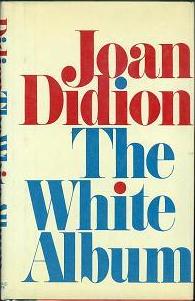
Over the next month, I should have time for reading and writing. I especially hope to get to these books on my “Summer Reading List,” some of which are on my TBR challenge list and some of which are on my Classics Club list. As for my TBR Pile challenge, the next two books I have coming up are: Joan Didion’s The White Album and Mark Twain’s Pudd’nhead Wilson. Wish me luck!
My completed reads:
- The Hound of the Baskervilles (Completed 1/3/18)
- Aristotle’s Poetics (Completed 1/10/18)
- Ready Player One by Ernest Cline (2011) (Completed 01/25/18)
- The Courage to Teach by Parker J. Palmer (Completed 03/10/18)
How are you doing?
Below, you’re going to find the infamous Mr. Linky widget. If you read and review any challenge books this month, please link-up on the widget below. This Mr. Linky will be re-posted every month so that we can compile a large list of all that we’re reading and reviewing together this year. Each review that is linked-up on this widget throughout the year may also earn you entries into future related giveaways, so don’t forget to keep this updated! At the end of the challenge, all entires will go into one big raffle for the $50 book prize!
MINI-CHALLENGE #3
As promised last month, this month’s checkpoint comes with another mini-challenge! There is just one requirement: read a book from your list, write a review for it, and link-it up! When you’ve done this, go ahead and leave a comment right here on this post to let everyone know you’ve made some progress and are eligible for the mini-challenge prize! Speaking of which, one randomly selected “winner” will receive a book of their choice, up to $20USD, from The Book Depository. Good luck and happy reading!
LINK UP YOUR REVIEWS

A Novel Journal
 Every so often, I stumble across something that gets me so excited I simply must share it with the world. Or at least you all, who comprise my little world! One example of this is probably The Folio Society editions that I share every so often here on the blog.
But something new caught my eye recently while I was wandering around my local Barnes & Noble book store, as I do a few times every week. It’s a series of writing journals called “A Novel Journal,” released by Canterbury Classics.
Here’s how the publisher describes them: “Whether fueling the next great literary masterpiece, or simply adding a sense of tribute to daily journaling, these literary keepsakes bring an element of fun and culture to any writing project. Fashioned with colorful endpapers, color edges, and matching elastic bands to keep covers closed and pages intact, Novel Journals are ideal for gifting and collecting.”
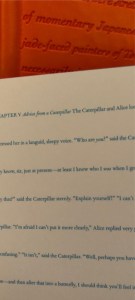 So, here’s the thing. If you are a writer and a reader who, like me, often feels torn between his “loyalty” to one or the other (AM I WRITER? AM I A READER!?), these journals are literally the best of both worlds. Why? Well, not only are they beautiful, and not only do they have an excellent “finger feel,” and not only do they represent the greatest books of all time, with a well-selected quote from said books right there on the cover, but the lines of the journal are actually made up of the entire text of its representative novel, in tiny print!
Obviously, I couldn’t resist. I was going to get one or two, but ended up leaving the store with five of them. I definitely added a whole bunch more to my wish list, and I plan to pick up at least two more very soon. (It was also fortunate for my wallet that Barnes & Noble had these on clearance!)
The other fabulous element to these journals is the artwork/design on the inside covers, as well as the front-page that explains the selected book and leaves a place for the journal owner to put their name and information. Here’s a look at the insides of the ones I purchased, and in case the image is too small to read, the text inside the font page says, for example, “This journal belongs to ____ and is shared with Edgar Allan Poe.” How delightful is that!?
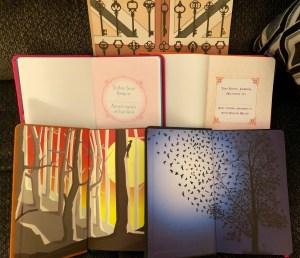
Ultimately, as I said, I ended up with five (pictured below). But I hope to go back for PETER PAN and WALT WHITMAN this weekend because they were beautiful and I’ve been thinking about them all week!
Thoreau’s WALDEN and Carroll’s ALICE’S ADVENTURES IN WONDERLAND

Wilde’s PICTURE OF DORIAN GRAY and Doyle’s ADVENTURES OF SHERLOCK HOLMES

EDGAR ALLAN POE’S COLLECTED STORIES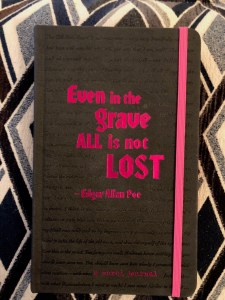
The Outsider by Stephen King
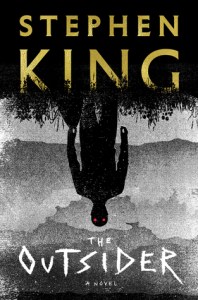 The Outsider by Stephen King was one of my most anticipated releases of 2018, and one of only two books that I actually pre-ordered this year. I’ve always been a King fan, but something about the description and his development over the last couple of decades heightened my intrigue even further.
I’ve been reading quite a bit of him lately and trying to trace his themes across novels and genres. There are some common threads, and really three distinct avenues that I’ve been able to tack down, thus far: first, his interest in the psychological terror of the unknown/supernatural; second, his interest in morality and the battle of good versus evil; and finally, his interest in the ethics of humanity and the truth(s) of human nature. That said, it seems like The Outsider is in many ways a masterwork that brings together King’s three primary themes and genres, at last. While reading it, I sensed a very delicate and compelling balance between the supernatural horrors of Itand The Shining, with the moral questions embedded in pieces like The Stand and The Shawshank Redemption, and the ethical concerns of his realistic, true crime fiction like “The Body” and Joyland. It is all here, working together almost seamlessly to deliver what is certainly one of King’s best works to date.
The story itself centers around a man named Terry Maitland, a popular man in his small town; he works as an English teacher and coaches the Little League baseball team, currently on a winning streak. He is well-liked, trusted, and respected in the community, almost without question. And then the unthinkable happens. A young boy, one of Maitland’s baseball players, is found dead—indeed, far worse than dead—in a park, and all evidence points to Maitland as the perpetrator. Not only does the town turn on him, and with seemingly every good reason to do so, but slowly, more sinister forces begin to enter the picture as well. At first, the evil unleashed in this town seems to be the result of human nature; there is a mob mentality that develops when a crime so evil, so unspeakable is apparently perpetrated by one of the town’s most unimpeachable residents. The residents find a kind of joy, a catharsis, in bringing as much pain to bear as they possibly can against Maitland and his wife. But not all is as it seems.
After more preventable tragedies, and a lot of early assumptions, there is another murder. The modus operandi is exactly the same as the first crime, but how could this be? Maitland had an alibi for the first murder, a nearly rock-solid one. And he was already under arrest when the next happened. What could be going on in this little town? King spins an elaborate web that spans the country and, like a bizarre supernatural crime novel, the reader is introduced to new characters, new locations, and histories that play more and more significant roles in the unfolding drama and that sometimes lead in one direction, and then another, often falsely. The end might surprise some readers, while others might come to it with met expectations. I, for one, was right about something the entire time, but also completely fooled exactly twice. That made for a fun ride!
Personally, while I was disappointed in a major decision Stephen King makes in the end, and dissatisfied overall with the denouement, I still think this is one of King’s best works because it does bring together all of his best practices and the very reasons why we keep returning to King’s works. King’s characterization is also more on point and balanced in this work than in any others I can think of at the moment. He always has much to say about the human psyche and the ways in which we tend to disappoint one another when we need each other most. Even when the thrills and terrors of supernatural horrors are layered on the surface, creeping us out and giving us the thrills of the genre, it is always the very humandecisions beneath that horror which results in the actual intrigue and terror at the heart of his narratives.
In this case, the situation is somewhat reversed. The crimes committed seem disturbingly possible, and they are described in gruesome, horrifying detail. In fact, it is hard to imagine anything more terrifying than the realistic and all-too-human nature at the surface of the crimes. For that reason, I absolutely loved the first two-thirds of the book and think, had King kept going with the direction the book seems to be taking through that part of the book, it would have ended up being my new favorite. That said, what is clear is that The Outsider is undeniably Stephen King, and in fact, it is Stephen King at his very best.
Are you a Stephen King fan who has read this latest novel? If so, what did you think?
My thoughts on other Stephen King works can be found here.
The Outsiders, The Godfather, and A Little History
In this fourth “potpour-reads” post, I put together some thoughts on three classics, including two works of fiction and one of non-fiction. The first fiction classic is classified by Penguin as a “modern classic” and is sometimes categorized further into “young adult,” although I don’t think that is necessary. The second fiction classic is notoriously known for being simultaneously the author’s least successful stylistically but also the most successful commercially. Finally, the non-fiction classic is an adult adaptation of a history book that was originally written for children, then updated many years later. Each of these books was read in June, 2018, and the covers shown are for the editions that I read.
The Outsiders by S.E. Hinton
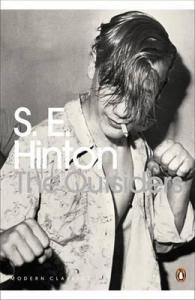 This is a book that I have had on my “TBR” shelf for probably 20+ years. I honestly have no idea what took me so long to read it, especially considering how many people love it. Perhaps that was part of my apprehension, actually, because who wants to be “that guy” who hates a book everyone else finds so amazing? Fortunately, that turned out not to be the case. The story takes place in Tulsa, Oklahoma, 1965. At the heart of the story is its narrator, Ponyboy Curtis (yes, that’s his real name) whose parents have died and left him and his elder brother Sodapop in the care of their eldest brother, Darry. The three teenagers are members of the lower-working class and belong to a type of gang called “Greasers.” Their rivals are the wealthy gang from the better part of town, called the “Socs” (short for “Socials”). One of the more gripping elements of the novel is the intimate look at family and friendship, and especially the way that young men take care of each other when they have no parents or guardians willing or able to do the job. The boys often refer to each other with terms of endearment usually restricted to romantic partners, which provides insight into how close they are and how much they would be willing to risk for one another. They are “boys,” though, and masculine stereotypes abound: duty, honor, manhood, etc. These “values” get the young men into plenty of trouble, from gang fights to murder, to a questionable suicide. What makes the almost clichéd nature of it all (a girl named “Cherry”?) worth it is the complexity of character that so many of the Greasers have, especially the sensitivity of the poet and the artist, Ponyboy and Johnny. By the end, almost without realizing it, I had begun to root for these kids, just as many of the townspeople do. This is a book that has certainly “stayed gold” after all these years. (I’m killing myself after learning that Hinton wrote the book when she was in high school and published it when she was 18 – my god!)
The Godfather by Mario Puzo
 This is another book I have been meaning to read for years, ever since I discovered that it was a book and not just a movie. The Godfather trilogy is my favorite film series of all-time; so, much like The Outsiders, I suppose I was subconsciously reluctant to read it because I wondered if it would withstand my close scrutiny. I mean, I basically grew up on this movie! Unlike The Outsiders, though, Mario Puzo’s book was just “okay,” for me. It is one of those rare instances where the film really outdoes the original material, and I think a lot of that is thanks to the genius of Francis Ford Coppola and the many incredible actors hired for the film(s). The novel itself is interesting and I did enjoy it, and probably would have even if I weren’t already so familiar with the story. Some of the positives, in fact, include the detailed sub-plots that did not make it into any of the movies, such as the storyline for Johnny Fontaine. At first, I wondered why he was getting so much page time since his character was so insignificant in the film, but the book does more than make it work. I also enjoyed reading this as an American immigrant story. Even though Vito Corleone’s back story does not get nearly as much attention as is provided in The Godfather II, there are enough recognizable bits of it. I was reminded, while reading, that this is one of the few books in college I was assigned to read but never did. The point was to read it as an immigrant novel, and I think having done so (in an academic setting) would have been interesting. Instead, I focused on other things while relying on my knowledge of the film to get me through discussions. Whoops! I did find that the book was fairly well written, though not the kind of evocative prose or description I was expecting. Puzo himself expressed that he wrote this book for money and in desperation, so I’m confident that he would agree with me that this isn’t a stellar work. Still, it’s a good one and it lent itself perfectly for the franchise it would birth.
A Little History of the World by E.H. Gombrich
 This book is, well, how can I put it other than to say, it is darling. Who knew a history book could be precious? As it turns out, Gombrich originally wrote the book in German and for children, and it was a wild success, until World War II happened and the Nazis banned it. Many years later, he rewrote and expanded the book for adults and translated it himself into English for a bigger market audience. One can tell by much of the phrasing that it was originally written for children, but I did not find this a distraction. The history is accurate and thorough enough (though very concise) for an adult reader to appreciate it, and yet there is a strong sense of wonder and awe in the prose and style. Gombrich invites the reader to engage with multiple historical events as they happen concurrently, which has always been my favorite way to approach the study of history (otherwise I can never remember what was happening at the same time as whatever else). In this way, it is one of the favorite pieces of popular history I have ever read. That said, it is clear that Gombrich studied art (his doctorate was earned in art history), because he spends a lot of time focusing on the artistic elements of each event and looking at what was happening in history through an artistic lens. Many of his analogies have to do with art or music. This style might not work for everyone, but it was fine for me. I also appreciated two important features: first, Gombrich writes about the many religions with equal respect and detail. This is really uncommon in many popular histories, and even academic ones, so call it a pleasant surprise! He also treats religion as the historical feature it is, within the context of each culture, yes, but also in relation (drawing the lines between Christ and Mohammed, for example.) I found this beyond helpful, and so fascinating! The second important feature is that he corrected information in previous editions. Where he had made an error, he explicitly pointed it out and amended that information for the new edition. In both ways, he demonstrated a trustworthy ethos–always important, but even more so these days. This is a book that will remain on my shelf permanently.
On Civility

On Civility
“Must the citizen ever for a moment, or in the least degree, resign his conscience to the legislator? Why has every man a conscience then? I think that we should be men first, and subjects afterward. It is not desirable to cultivate a respect for the law, so much as for the right. The only obligation which I have a right to assume is to do at any time what I think right.”
― Henry David Thoreau (“On Civil Disobedience”)
Recently, a restaurant owner politely asked Press Secretary Sarah Huckabee Sanders to leave the restaurant because her support of this administration’s homophobic and racist policies made some of her staff feel genuinely uncomfortable. Imagine, after all, hearing your own President call your people “rapists” or seeing his justice department argue in court that you don’t deserve the right to be treated equally in the marketplace, and then having to wait on and clean up after the woman who reports that information to the world.
The backlash from media pundits and republican leaders was swift, and even the President of the United States thought this civil request, following his own Supreme Court majority’s decision to deem it Constitutional for a bakery to refuse service to gay patrons on religious grounds—so despicable as to tweet lies about the restaurant’s supposed dirty/unsanitary conditions in retaliation. In response, Congresswoman Maxine Waters made it clear that any member of an administration that makes telling lies commonplace and that holds equal justice in contempt, should be prepared to face public consequences, such as protests.
Conservative politicians and main stream media, and even many prominent democrats, responded by sharply criticizing Representative Waters’ position and by calling, in some cases genuinely but in most cases opportunistically and hypocritically, for a “return to civility.” Such civility was demonstrated by President Trump and conservative actor James Woods, for example, who responded to Maxine Waters by calling her “low IQ” and threatening that she had better “watch out” (Trump) and by telling their followers to go out and “buy guns” because the war is coming (Woods). Oh, to find such practitioners of civility in our body politic, guiding the way for all of us.
The reality is, this group has no real desire for civility except from and only from the other side. What I mean is, these are the perpetual “victims” who tell themselves, and each other, that they are constantly under attack and therefore it is their right, their responsibility to fight by any means necessary; and yet, when anyone rebuffs them even in the slightest, most harmless sense, they cry foul. These are the bullies. These are the manipulators. These are the people, from Fox News and the Trumps, from the Huckabees to the father of it all, Newt Gingrich, who must have everything their way at all costs, who refuse to acknowledge the valid opinions—even the humanity—of anyone unlike them, and who created and perpetuated our culture of fear and divisiveness and now wish to sit comfortably in their power while claiming continued victimhood. They are, after all, in control of the Presidency, the Supreme Court, the Senate, the House of Representatives, and more than half of U.S. Governorships and State Legislatures, and yet they think they are being oppressed.
We have seen this kind of behavior in society and politics throughout history. We know that authoritarian governments rise by preying on peoples’ fears and doubts, by othering easy targets, like the Jews, the blacks, the Mexicans, or the gays. They lie about their opponents, usually projecting onto the other political party exactly the kinds of things they are guilty of doing, such as being “uncivil.” Take the anti-choice crowd, for example. They stand outside of clinics terrorizing women and men who are consulting medical professionals, a situation which should be wholly private and safe. They get people like Bill O’Reilly, a man with a massive audience, to denounce abortion-performing doctors by name, calling them “baby-murdering Nazis,” night after night on television, until someone shows up at that doctor’s home—Dr. George Tiller–and murders him. Other right-wing conspiracy theorists on Fox News, Breitbart, and InfoWars, such as Sean Hannity, Steve Bannon, and Alex Jones, spout ridiculous stories like the one about a child sex ring in the basement of a Washington D.C. pizza parlor, and claim that a former First Lady, Secretary of State, and presidential candidate is a part of it. They say it over and over and over again until someone shows up at that pizza parlor with a gun, demanding to be taken to the “baby sex basement,” only to discover the building does not even have a basement. Not only does republican leadership refuse to denounce these things, but instead, people like Steve Bannon become a part of the President’s staff, working in the Oval Office. And people like Sean Hannity speak to the President on the phone every night. Is this civility?
After republican leaders stand by, and base republicans vote for, a man who openly mocked a disabled reporter; when republican leaders and base republicans stand by a President who calls NFL players exercising their first amendment rights to peacefully protest, “sons of bitches”; when republican leaders stand by, and base republicans vote for, a man who calls Mexicans “rapists and murderers”; when republican leaders stand by, and base republicans vote for, a man who brags about sexually assaulting women and using his power to keep them quiet; when republican leaders and base republicans stand by a President who refers to cross-burning, Nazi- and confederate-flag waving, crowd-attacking white supremacists as “very fine people”; when republican leaders and base republicans continue to support a man who insists all Haitians have AIDS, all “black countries” are “shitholes” and all Muslims are terrorists who should be banned from our country; after republican leaders stood by, and base republicans railed about, “birthirism,” called Michelle Obama a “monkey in heels,” performed public hangings-in-effigy of President Obama; and when republican leaders and base republicans say they “don’t care” about immigrant kids in cages, that we should “stop trying to get [them] to cry about” children who have been torn away from their parents by our government, and that the immigrants are “lucky we didn’t assassinate them,” now. . . now they call for civility. Why? Because the President’s mouthpiece, the one who presents all of this to the world, was asked politely to leave a restaurant. That was civil.
I have to admit, I have always been reluctant to be uncivil. I try to be a kind person, above all else, which makes the idea of civil unrest and confrontation extremely difficult for me. But I realize now, even though I did not vote for this administration and even though I tried to explain to everyone in my circle of influence why I felt this administration would be a disaster for us all, I may have, indeed, been “too civil” about it. I may have been quiet when I should have spoken. I may have wanted to keep the peace with friends and family, rather than stoke a potentially permanent and irrevocable animus. In retrospect, I think I was wrong. That time is over.
- I was civil after they called him “Kenyan Muslim.”
- I was civil after they hung him in effigy.
- I was civil after they called her an “ape in heels.”
- I was civil after they murdered a doctor for doing his job.
- I was civil after they mocked the disabled.
- I was civil after they cheered a “pussy-grabber.”
- I was civil after they called peaceful protesters “sons of bitches.”
- I was civil after they allowed a foreign government to influence our elections.
- I was civil after they called white supremacists “fine people.”
- I was civil when they chanted, “lock her up.”
- I was civil when they inserted religion into the state and elevated just one above all.
- I was civil when they mocked a dying Senator by calling him, “irrelevant.”
- I was civil when they cozied up to dictators.
- I was civil when they called our neighbors rapists, murderers, back-stabbers.
- I was civil when they walked away from human rights.
- I was civil when they lied about the disaster in Puerto Rico and continued to refuse aid.
- I was civil and they gutted healthcare.
- I was civil and they made corporations “people.”
- I was civil and they came for social security and Medicare.
- I was civil and they attacked our free press as “enemy of the people.”
- I was civil and they threatened to end due process and violate international law.
- I was civil and the First Lady wore an Italian pro-fascist slogan (“I really don’t care”) on her jacket.
- I was civil and they stole children from their parents, then lost track of them.
Here’s the thing about “being civil,” my friends. There are two types of people who, in environments like these, respond to basically civil protests with calls for civility and decorum: The first is made up of the type of people outlined above, those who call for civility but who have no intention of ever practicing it. They use it as a tool against the very people who do crave a fair and peaceful society for all. The second group is composed of the type who generally agree that something is wrong, but who do not want to “rock the boat” too hard. These folks, like David Axelrod, Nancy Pelosi, and Chuck Schumer (all of whom criticized Waters, a black woman, for her call to action), tend to be white, wealthy, and politically privileged. So, while they believe they are on the right side of the fight, there is only so much skin they are willing to put in the game. To do more would be to threaten their own basically comfortable place in the world. I think, also, they have not realized or accepted just how much our body politic has changed and just how irrelevant they make themselves with these attitudes about the resistance, which has been incredibly civil (they lied, we marched. They murdered, we marched. They called us godless, immoral, criminals, anti-American, and we marched).
In many ways, with people like Pelosi and Schumer, I am reminded of the scene in The Godfather when Michael Corleone replaces Tom Hagen as consigliere. Michael loved his brother Tom. He respected Hagen, and he knew the man to be brilliant. But Hagen could no longer be effective in the new environment. We need a war-time consigliere. We need to go to the mattresses. Here’s what I believe, now: I can remind kind. I can remain good. But I can no longer continue to be civil in their fashion. As Frederick Douglass wrote, “Those who profess to favor freedom and yet depreciate agitation are people who want crops without ploughing the ground; they want rain without thunder and lightning; they want the ocean without the roar of its many waters.”
I began with a short quote from Thoreau’s “On Civil Disobedience,” and I would like to end with one, too. But let us also remember that over the course of history, justice has been won not only by statesmen in board rooms and at tea parties, but by the hard work and persistence of the people. People in the streets. People disrupting injustice. People sabotaging authoritarian plans. People marching, yes, but also people raging, storming, shouting, and standing up, at all costs, until their friends, their neighbors, their co-workers, and the rest of the world could not ignore the cry anymore. Until they, too, recognized the danger and revolted against it. These were people who were told, “if only you could be a bit more civil,” and realized this was a lie.
Bullies will cry foul at the first encroachment into their dominance. If given a concession, they will take more and more and more, until they are stopped. They will not listen to reason because they do not respect reason. They will not be swayed by justice because they believe in only the justice they create and that favors them above others. They will cry for civility because they know the people they are dealing with want civility, desire justice, believe in a moral imperative. But remember: the bully, the dictator, the authoritarian, they do not believe in these things and they will not accept them willingly.
“Let your life be a counter-friction to stop the machine. What I have to do is to see, at any rate, that I do not lend myself to the wrong which I condemn.” ― Henry David Thoreau
 Roof Beam Reader