Roof Beam Reader
Adam Burgess
End of An Era: Call for Moderators!

 Hello, Clubbers!
After six incredible years, your Classics Club moderators (Adam, Allie, Melissa, and Sarah) are ready to move on to other projects and are in need of a new, passionate, motivated crew of moderators to take over The Classics Club for the next generation.
Are you one of these select few?
What you need to know: The Classics Club is a large community. We have the blog here, of course, but also a Goodreads page, a Facebook page, and a Twitter account. We also have a busy e-mail (Gmail) account to keep up with. Ideally, or so far as we discovered, what works best is to have a group of folks who can work on different elements of the blog: each person responsible for a specific monthly feature post, for example; a person who updates the book list; a person who reviews membership requests and updates…
View original post 362 more words
Lincoln, Socrates, and A Funeral
In this third “potpour-reads” post, I share some quick thoughts on three recent reads, all of which were completed in June. Somehow, none of these books are ones from any of my challenge lists. Go figure. I read Lincoln in the Bardo because it is getting a lot of attention and because it sounded interesting. I read Socrates Café because I have been pivoting toward philosophy and history pretty heavily in the last couple of months (since January, really, when I began my focused study of Stoicism); and I read I Felt a Funeral, In My Brain largely based on the recommendation of the incomparable Andrew Smith, who has not steered me wrong, yet.
Lincoln in the Bardo by George Saunders
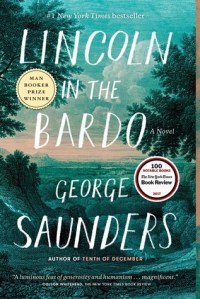 George Saunders’s Lincoln in the Bardo is unlike anything I have ever read. It is a contemporary postmodernism married with black humor and historical fiction. As a first novel, it seems a stunning achievement, though this is the first Saunders work I have read at all, so I do not know how it compares to his short stories. (I’ve had Tenth of December sitting on my shelf for years, having purchased it only a few weeks after it was published; it is safe to say I plan to get to it sooner rather than later, now.) Essentially, Saunders combines historical accounts of Lincoln’s life and presidency with fictional ones that he creates, and then interweaves in almost testimonial fashion between the narrative portion, which is told by a trio of bizarre ghosts who meet one of Lincoln’s sons and, through him, the President himself. I’ve read a number of reviews that found the humor in this book to be off-putting and even inappropriate. I can understand their point, as some of the bawdy comedy does seem to come out of left-field. And yet, I can’t help thinking about what I’ve learned about Lincoln’s sense of humor over the years. It seems to me that he would actually appreciate the irreverent take on his life and legacy, particularly as it highlights the elements of human nature that Saunders explores, here, including fear, sexuality, death, mental health, and loneliness. It is safe to say that I did not know what to expect of Lincoln in the Bardo, even after reading the description and other reviews. Then, when reading the book, it somehow managed to be even more different than I thought it would be. In this way, I think, it deserves all the praise it has received as a contemporary masterpiece and a novel approach to, well, the novel. I was also thrilled that Saunders explored a lot of contemporary issues that are actually historical, yet would have been “taboo” for discussion in Lincoln’s time
Socrates Café by Christopher Phillips
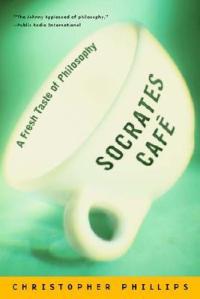 I have been reading much more non-fiction, lately, including history and philosophy. I stumbled upon Christopher Phillips’s Socrates Café while perusing the philosophy section of Barnes & Noble for contemporary overviews (I’ve been in a kind of “self-help” exploratory approach to the history of philosophy, I guess.) Despite reading the blurb, this is another book that caught me slightly off-guard and was not what I had expected. It is in many ways a reference guide to creating your own Socrates Café, something I had never considered and yet left the book feeling, “well, why the hell not?” I loved Phillips passion, though I did sometimes feel like the examples he gave from his own cafes around the country seemed a little far-fetched. Maybe they did happen, I don’t know, but he himself says that most of this was reconstructed after the fact, so I can’t help thinking he added a bit more flair and impressive insight than might have occurred originally. (So many of his café participants seemed to know so much about philosophy, for example, and could quote a range of philosophers from memory.) In this way, I found the book might be setting false expectations for people who are using it as a guide to beginning their own Socrates Cafe. That said, as a generally interested reader, one who is on his own journey to learn more about ancient philosophies andto think more thoughtfully about the current world, this book does an excellent job of putting the two together. In the end, it did make me want to get out there and engage with other thoughtful people, to ask big and small questions without expecting concrete answers, and to wonder gleefully about all manner of things. I think, then, Phillips does what he set out to do: make philosophy exciting again.
I Felt a Funeral, In My Brain by Will Walton
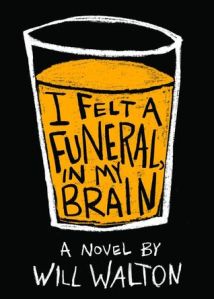 Like Lincoln in the Bardo, Will Walton’s young adult novel about grief and loss, I Felt A Funeral, In My Brain, is a creative approach to narrative (and verse) fiction. It was also not what I expected from the blurb and from reading other reviews, and yet somehow ended up being much more satisfying, much more curious, than I imagined it would be. I’ve been let down by “hype” on too many occasions, as I think we all have, but in this case, I Felt a Funeral, In My Brain lives up to the hype without necessarily living up to expectations. I’m not sure how to clarify that except to say, even though the book did not meet my expectations, I ended up appreciating it and what it does in ways that I hadn’t anticipated. This is mostly due to its construction and to the fact that, somehow, Walton manages to create that sense of grief in his text, the confusion, the sense of drowning, the psychological wandering we do when we have lost someone important to us. There are a lot of books about grief and loss, some of them are beautiful in the way they treat the subject or in the language they use to explore it. Walton’s is beautiful because, inexplicably, it simply reads like the experience of grief. I think back to a time when I most felt a terrible loss and can easily connect those feelings to the way this narrative is told and the way it unfolds, in choppy segments, in distant characterization, and in the interplay of concrete prose and transcendent verse. My only personal critique was that I felt, sometimes, like some of the segments read as if they were creative prompts inserted for the sake of it, and not as if they developed along the course of this particular story. That said, I Felt A Funeral, In My Brain, is a special book that explores a difficult topic in a unique way. It is unlike anything else on the market this year.
June Checkpoint! #TBR2018RBR
 Hello, TBR Pile Challengers!
WE ARE HALF-WAY INTO THE CHALLENGE! Can you believe it? I am suddenly feeling all, “oh crap!” about this. HA! Anyway, we have 100+ participants this year, with 145+ reviews already posted! That’s some pretty good reading and writing, y’all.
I hope you’re having a good time making progress through your own TBR piles. Do I dare challenge you all to get us to TWO HUNDRED linked-up reviews by the next checkpoint? Can we do this!?
Question of the Month
Have you discovered any new-to-you authors that you absolutely love, now? If so, who is the author and what’s the next book of theirs that you hope to read?
 My Progress: 4 of 12 Completed / 4 of 12 Reviewed
So far, I’ve read and reviewed 4 of my 12 required books. I’ve made very little reading progress from my list since May, although I did at least get one more review written. I was caught up in reading a bunch of interesting things, like Stephen King’s latest, The Outsider and some history and philosophy, which I’ve been barreling into quite a bit lately.
Over the next 7 weeks or so, I should have plenty of extra time for reading and writing. I especially hope to get to these books on my “Summer Reading List,” some of which are on my TBR challenge list and some of which are on my Classics Club list. As for my TBR Pile challenge, the next two books I have coming up are: Joan Didion’s The White Album and Mark Twain’s Pudd’nhead Wilson. I should get to both of these this summer, which will get me to 6 of 12. Nowhere near as far as I’d hoped, but oh well!
- The Hound of the Baskervilles (Completed 1/3/18)
- Aristotle’s Poetics (Completed 1/10/18)
- Ready Player One by Ernest Cline (2011) (Completed 01/25/18)
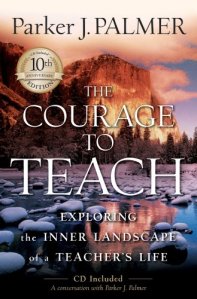
- The Courage to Teach by Parker J. Palmer (Completed 03/10/18)
How are you doing?

Below, you’re going to find the infamous Mr. Linky widget. If you read and review any challenge books this month, please link-up on the widget below. This Mr. Linky will be re-posted every month so that we can compile a large list of all that we’re reading and reviewing together this year. Each review that is linked-up on this widget throughout the year may also earn you entries into future related giveaways, so don’t forget to keep this updated!
MINI-CHALLENGE #2 WINNER
The winner of last month’s mini-challenge was Joel from I Would Rather Be Reading, who chose a copy of Italo Calvino’s THE BARON IN THE TREES as his prize. Congratulations, Joel! To everyone else, keep up the great reading & look for our next mini-challenge in July!
LINK UP YOUR REVIEWS

Net Neutrality Is Dead and So Are We
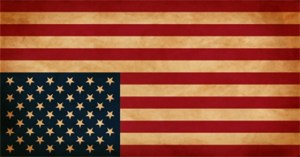 Net Neutrality is officially dead in the United States, as of today. This is a terrible thing. Now, ISPs can charge additional fees for different websites or platforms, and slow down or speed up downloads/streaming in order to charge for higher plans or actively harm competitor services. This is an attack on knowledge and information, and another way to harm the poor, especially. This country is under distress in so many ways.
Example: I did not want to purchase a cable television package through our local ISP, AT&T (one of only two options in my region — another major problem, considering the argument on the other side was that the “competitive marketplace” would actually make prices better; we saw how well that worked for health insurance!); so, we got Hulu Live television. Until now, our ISP was required to give us the speed they promised and access to anything/everything on the internet. Now, because Hulu is a competitor service owned by Fox, Time Warner, and Disney, AT&T can say: Hey. If you don’t buy OUR cable television, we are going to charge you an extra $10 (or whatever) per month to access Hulu, or we’re going to slow down streaming speeds on it.
So, what do I do? Try to watch television with old dial-up speeds? Pay more for this one service on top of what I already pay for internet? They could then go ahead and do the same with anything else – another $10/month for Netflix. Another $10/month for Amazon Prime videos. On and on. And don’t get me started with phone services — want Twitter? Add $3/month. Want Snapchat? Add $5/month! And on and on and on….
This is the world we’re allowing? Year after year after year, since the 1980s, we’ve been standing by and letting these major corporations (which, with “Citizens United,” the Supreme Court has mystifyingly classified as “people”??) rob us blind and take advantage of us. I mean, seriously, what the hell are we doing? Americans have been so duped into thinking that everything must be a competition and that there is only “so much” to go around, that we’re starving ourselves and each other. We no longer believe in a living wage, let alone a thriving one (which should be our right!), and instead gleefully watch as all our money is sucked up by the same few families and companies. The American narrative that “anything is possible,” while originally an inspiration to immigrants and the poor, has been masterfully usurped and poisoned by the powerful few. Our body politic is diseased.
We’ve been duped. We’ve been psychologically and emotionally manipulated. We’ve bought into a powerful but ridiculous “self-made,” “independent,” “bootstrap” mythology that these plutocrats have spoon-fed us for decades. This is a lie. It always has been. For decades, we have been told that demanding a better life for ourselves and out neighbors is “selfish” and “entitled.” Instead, these elites have convinced us that, if we really want it, we should work harder for it. So, we do. As each year passes, we work longer hours. We take on a second and a third job. We de-unionize because we believe the companies that tell us unionizing caused the problem. We keep medicine privatized because we believe them when they say universal healthcare is too expensive. We educate ourselves, taking on crippling debt in the process, because we believed them when they said a higher education would lead to that elusive, better paying job with “benefits” like a week’s paid time off and, if we’re really lucky, health insurance and maybe a couple of weeks off for maternity leave. We’re told, oxymoronically, that our societal problems are the result of a “destabilized family structure,” all the while we’ve been convinced that we have to spend more and more time at work, which leaves less and less time for family. Wages go down. “Right-to-Work” turns us into a labor class fighting against itself for the least opportunity, not the best one. Housing prices skyrocket.
We were told it would all trickle-down, eventually. But “eventually” never came. We’ve convinced ourselves to believe all these lies, to work “hard” and guard our “benefits” selfishly because there might just be enough for me. Because it feels right–feels American–to work ourselves to death. We listened to their lies. We keep listening. And we’re killing ourselves because of it. Literally. “Someday” will never come.
The corruption running rampant through our government, and our willingness to allow it, could very well be the end of the United States as we, and the world, has known it. How will history look back on all of us? On these days?
“Government is instituted for the common good; for the protection, safety, prosperity, and happiness of the people; and not for profit, honor, or private interest of any one man, family, or class of men.” — John Adams
Author Alex Epstein Shares Ten Stories That Got Away
 Hello Readers and Writers!
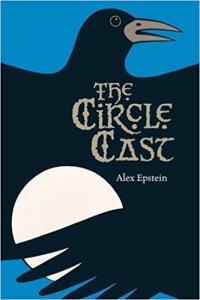
I would like to take a moment to welcome author Alex Epstein, author of THE CIRCLE CAST, to Roof Beam Reader! Alex is here today to share with us -readers and writers alike- some of those great ideas that just didn’t go where they should have or could have. We all know it happens, and we all get discouraged when a seemingly great idea fizzles out, but we don’t always keep in mind that even experienced, published authors experience similar set-backs too.
About the Author:
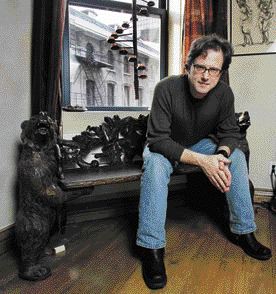
“A native New Yorker, Alex Epstein studied Computer Science and English at Yale University. After a year in Paris, he studied filmmaking at the University of California, Los Angeles in the School of Theatre, Film and Television, finishing with an MFA.
Throughout the 1990s, Epstein worked in the motion picture industry as a development executive. His first book, Crafty Screenwriting, came out of his experiences developing movies.
Epstein moved to Montreal in 2000 and began his career as a professional screenwriter. He co-created the comedy series Naked Josh, which ran for three seasons, and co-wrote the hit buddy cop comedy Bon Cop / Bad Cop.
Epstein lives in Montreal’s Old Port with his wife, Lisa Hunter (author of The Intrepid Art Collector) and his two children.” – from Goodreads.com
Ten That Got Away
One of the tragedies of writing for a living is all the ideas you love that you can’t get someone interested in. Or you get someone interested, but the project only goes so far. I work in film and television, and there’s a huge amount of carnage. Last year, my wife Lisa and I pitched a dozen movies and TV shows. We placed about three of them, leaving nine orphans.
Some things I can’t sell because they’re not good enough – yet. I haven’t cracked them. But some of them are projects I love that I can’t get made because of where I am in my career (I’m successful, but in Montreal, not LA), or there just isn’t an audience for them.
1. I’ve always loved Homer’s Odyssey. I’ve read it in multiple translations. To my mind, it’s a science fiction story. Except in the Bronze Age, you didn’t have to go to the Moon to tell a story about some strange place. You just went across the Mediterranean. Who knows what lived there?
I wrote a feature film script called The Wine Dark Sea, and then Odysseus. I wrote it for two scenes I’ve always loved. One, when Odysseus gets home to his island, Ithaca, where he’s king, after 20 years, he doesn’t just go announce himself. He’s too canny for that; and he’s right, he’d probably be murdered by the suitors. So when he meets a shepherd boy on the beach, he doesn’t say he’s Odysseus. He makes up a cockamamie story about being an Egyptian who was kidnapped by pirates. Of course the shepherd boy turns out to be Athena, his patron goddess, who loves that he won’t even tell the truth at home. “If I were a mortal,” she tells him, “I’d want to be you.”
The other scene is when he shows up at his house, disguised as a beggar. He tells Penelope he’s seen Odysseus alive. She tells him she’s going to choose a suitor to marry. Isn’t that odd? After twenty years of staying faithful to her husband, who for all she knows is dead? But of course she knows exactly who she’s talking to, in spite of the disguise. She warns him about the suitors. And she tells him she’s going to choose whoever can string Odysseus’s bow. Of course she knows that he’s going to be the only one who can do it – and he’ll need that bow to wipe out the homicidal suitors.
I’d love to see that in a movie. Preferably mine.
2. I wrote a movie script called Furies. It’s Moby Dick in space. The problem with Moby Dick is that the most interesting character is the villain, Captain Ahab. So I made a hero, a man who knows from personal experience that Ahab’s vengeance will wind up killing everyone – because he has destroyed his own life through vengeance. The whales are “sylphs,” these giant creatures made of plasma and carbon, that live out among the stars, and men hunt them as they once hunted whales.
Space opera isn’t big right now…
3 and 4. Virginia Station and Yukon. I want to write a TV show set in the Yukon Gold Rush. The hero is a whorehouse madam who’s become mayor of a Gold Rush town, because she’s the only person that no one dares get in a dispute with. She’s not a gunslinger. She uses her wits to keep the peace.
There is no selling a TV show set in the Yukon in the 1800s, alas.
I reworked this as a TV show set in a space station in more or less the universe of Furies. People liked it, but “we already have a space station show.” Them’s the breaks.
5. Kinslayers. Ever wondered why the Vikings didn’t colonize North America? I read Westviking by Farley Mowat. Apparently every time they met the local Indians, they murdered them, and then the Indians came back and chased them off. I want to tell a story about a Viking guy who falls in love with a Beothuk Indian gal. But the Vikings have a dark secret. They’ve been cursed. One of them killed his own brother. Kinslaying is the worst crime among the Vikings. Because there is no way for a family to avenge itself against its own members, it violates the code of revenge. The usual response is for other Vikings to slaughter the entire clan. (Nice guys, huh?) So they’ve fled west. But the curse begins to take hold, and one by one the Vikings begin to go mad, and murder each other. Maybe they go berserk. Maybe they actually transform into beasts, I’m not sure. At any rate the girl figures it out. She tries to get the Viking to become an Indian, so he can avoid the curse. But he can’t abandon his people or his identity. So she leads her tribe to wipe out her lover and his whole settlement.
Dark. Mysterious. Set in a really obscure time. Yeah, that’ll sell.
6. Gone to Soldiers. It’s a drama about two Cajun kids who grow up near an Army base in Louisiana in the ’60’s. Billy Wes’s father goes off to Vietnam and comes back in a box with a flag on it; so Billy Wes becomes someone for whom honor means too much. Jackie’s dad comes back with a self-inflicted wound; so she becomes someone for whom honor is a shuck. But they become soul mates, because they’ve both been wounded by a war they never went to, and they get engaged. She dumps him when he gets into West Point. But he finds her again when he goes AWOL from a Ranger training mission gone horribly awry, and she convinces him to make a run for the Canadian border. Will they make it? Or will their baggage catch up with them first?
7, 8. The Spell Woven and The Circle Broken. The sequels to The Circle Cast. The Spell Woven is Morgan’s doomed love affair with Arthur, and his failed marriage to Guinevere. The Circle Broken is about Morgan’s twisted love affair with Merlin, and the final battle between Morgan and Arthur’s son Mordred and his father.
Honestly, I haven’t even tried to sell these. If The Circle Cast sells like hotcakes, I’ll be able to take the time to write them. But they’re not exactly YA novels; Morgan is a woman in The Spell Woven and she’s a mother in The Circle Broken. As a professional writer, I can only afford to write what I can sell. Maybe one day…
9. Neanderthal. Neanderthals exist. They live in our cities, hiding in plain sight. They can’t breed with us. They have to keep their secret. So they have killers, “snuffers,” who suppress anyone who might discover it. Otherwise, they’re sure that human beings will kill them. But one snuffer starts to feel that killing humans is wrong, and turns against the tribe… but at what price?
10. Of course, there’s always hope. I’m currently developing a TV show called Fallen, about a vice cop who’s really a fallen angel. It came out of a TV show I developed for years with a network, about a fallen angel who wasn’t a cop. That came out of a comic I tried to write, which came out of a play which got a reading at the LA Playhouse, which came out a feature film script called City of Ravens that I never got quite right. It may wind up as a feature film script again, if the cop show doesn’t work out…
Thanks for sharing your time and thoughts, Alex!
Readers, you can find my thoughts on THE CIRCLE CAST right here.
 Roof Beam Reader
