Roof Beam Reader
Adam Burgess
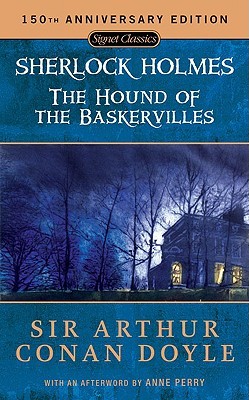
The Hound of the Baskervilles by Arthur Conan Doyle
 Plot/Story:
“The darkness was rising, but much was still hidden by the shadows.” From the Moors of Devonshire to 221B Baker Street comes Dr. James Mortimer. His aged and aristocratic friend, Sir Charles Baskerville of Baskerville Hall, has died under mysterious circumstances. It seems a vicious hell-hound has returned to the grounds, reigniting an old family curse that appears to be extinguishing the Baskerville heirs one-by-one, until only one—Sir Henry—remains. Mortimer and Sir Henry explain the family history, and a threat against Sir Henry, to Sherlock Holmes and Dr. Watson, begging for help and for answers. After spotting a bearded man following Sir Henry and Dr. Mortimer around London, the famous detective and his equally famous partner soon realize the threat is real. Holmes, too busy with a number of cases to leave for Devon, and worried that he has been spotted by the criminal anyway, elects to stay in London, asking Dr. Watson to play the role of primary observer, detective, and bodyguard to Sir Henry. But can Watson alone keep Sir Henry safe from a supernatural evil, especially when a new love enters the picture and threatens to further endanger the heir’s life?
Characterization:
Being one of the few novels in the Sherlock Holmes series, there is more opportunity to introduce multiple characters and for those characters to develop somewhat over the course of the 160-ish pages. That being said, I did not find the same depth or detail as in A Study in Scarlet. I was blown off course slightly in the early part of the book by the circumstances of one character in the Baskerville family lineage, but as it turns out that was a clever red herring, which caused me to mistake the real villain (although I was close and it became obvious not much later). Some have claimed that The Hound of the Baskervilles is a bit lazy for Doyle, that there is not as much heart or interest in it, possibly because Doyle had hoped to be finished with the series but felt pressured to continue it (pressured by a rabid fan base and by his publishers). I cannot agree with that opinion, although I do believe that The Hound of the Baskervilles is definitely different from Doyle’s previous installments. This feels a different kind of mystery, a different kind of detective story, and with a different kind of hero and villain.
Dr. Watson, for example, gets the most amount of page time. As the usual narrator for these stories, it is not unusual to get his perspective most of the time, but in this case, he is actually the first-hand protagonist, too. Sherlock is present only in the beginning and, of course, in the end, to take the credit as usual. Nevertheless, Holmes is much more genuinely complementary of his partner and even the Inspector than ever before. Could he be growing up? And the villain, who/which shall remain nameless, is both what he/it appears, and not. The secondary characters, from the crotchety old telescope man who sues everybody in town for the fun of it, to the two female characters, and the Baskerville housekeepers, are interesting and add something to the universe being created in this little moorland scene.
Prose/Style:
Something I will never get used to is how quickly I sink into a Sherlock Holmes story, and how rapidly I move through it. This one came in at 160 pages in my edition, a Bantam Classics with tiny font. And yet, I read the entire thing in less than 3 days. The reason for this is not just that the stories are always gripping, clever, and humorous, but that the writing is special, too. I think Doyle was a kind of anthropologist-philosopher who always had unique and enlightening things to say about the human race. An example that struck me came late in the book, when the speaker remarks, “[it] may have been love or may have been fear, or very possibly both, since they are by no means incompatible emotions.” What a special little insight there, unexpected and yet so wholly relevant both to the plot and to human nature more generally. As a master of pace and suspense, clever logic and word play, and good old-fashioned human psychology and emotional insight, Doyle has few peers, particularly in this genre. It makes reading the Sherlock Holmes tales both fun and meaningful.
Additional Elements: Setting, Symbols/Motifs, Resolution, etc.
SERIES SPOILERS AHEAD! If you have not read The Memoirs of Sherlock Holmesand/or “The Final Problem,” you might want to skip this next part. Understood? Well, then, if you are ready, let’s carry on:
This is the first Sherlock Holmes installment following “The Final Problem” (The Memoirs of Sherlock Holmes) wherein the detective apparently gives his life to end Moriarty’s evil machinations. As it turns out, Holmes did not die, but readers will not be treated to an explanation in this first “return.” There were certainly enough reasons why one might conclude, after reading “The Final Problem,” that Holmes might still be alive. One thing I would have liked to see, here, would have been a reckoning of that particular series plot hole, even though it might not have anything in particular to do with this specific installment. That aside, the novel is filled with insights into science and mythology, superstition and the nature of evil. What I think I found most appealing about this particular installment is that it balances a history of bad luck with the opportunities that arise for a true villain to capitalize on myth and on peoples’ fears. A small castle in a small town on the moors of Devonshire seems a perfect setting for the story that unfolds in The Hound of the Baskervilles. There is the reality of daylight, where one can walk safely through the moors if one follows the visible pathways, juxtaposed against the true danger of the night, where even a lifelong resident might get lost in the fog and disappear forever. The metaphor is a treat. Final Verdict: 3.25 out of 4.0
This is the first book completed for my 2018 TBR Pile Challenge.
My Word for 2018
Road in Etten, 1881. The Metropolitan Museum of Art, New York, Robert Lehman Collection, 1975 (1975.1.774)
I noticed a trend this year, one that apparently has been around for some time but which I have either missed or ignored, wherein people choose one word to make their “word of the year.” The idea is to start the new year with a single focus, a word that can inspire a philosophical perspective, an emotional change, some kind of personal growth or achievement, etc. I decided, considering I’m continuing my stoic journey this year, and with much more focus and intention than I have given it in the past, this “word of the year” might be a beneficial opportunity.
My word for 2018 is: SEE. To see. To notice. To be attentive.
In 2018, I’m continuing a path that I began a few years ago, around my second year of doctoral studies, toward outward living; toward charity, kindness, and compassion, and away from non-essential distractions. This has been a very slow process for me, not helped at all by the tumultuous last couple of years. I have been wholly consumed by politics and global affairs, much of which I have very little control over but which has “demanded” my attention, my energy, my words, my time. I haven’t been able to see clearly enough how deeply all of this has influenced my mental, physical, and emotional health, and how little it has helped my relationships with other people (in some cases, it has actively hurt them).
So, in pursuing a much more intentional stoic course of study and commitment this year, I want to embrace this word, see, in a variety of ways, and allow it to help me achieve a stoic way of living, which is to say, a life free from unnecessary distractions and a perspective that allows my attention to be drawn only to those things over which I have control.
This year, I want to see my surroundings. I moved with my husband to a new state, a new region of the United States, four months ago. We have found time to explore some new-to-us things, and to take an adventure or two, but I want to do much more of this in the coming year. I want to put away my “smart” phone, to step away from social media, and engage with my new city, with a new community, and all the new goals and opportunities they might bring. There is, for example, a group in the area that meets weekly to discuss science and philosophy and art, and all sorts of interesting things. I located it before we even moved here, and yet every week goes by without my even attempting to drive over and sit in on a meeting. These are the sorts of opportunities I see as valuable, and so I want to begin engaging with them.
I want to see my husband more clearly, and help him see me more clearly as well. Again, stepping away from these digital devices and spending quality time together will go a long way in helping us do this. I want to manage this, too, in a budget-conscious way and find ways for us to be together without the stress and strain of financial burdens. Part of stoicism is breaking free from financial debts, as well as embracing what is good for me.
To that last point, I want to see ways of politely but effectively saying “No” to what I do not want to do, and see ways of saying “Yes” to those things that I do. I am often mistaking these two things and, instead of embracing the things I am genuinely interested in, the things that will help me live a better and richer life, and become a better person, I say “Yes” to the things I think I should do, whether because I’m worried about what people will think of me if I say no, or of disappointing someone, or of looking bad at work. I hope to see more clearly the paths that will lead to “Yes” and to accept those that are truly right for me. This also means saying “No” when I already have enough to do.
“How many have laid waste to your life when you weren’t aware of what you were losing, how much was wasted in pointless grief, foolish joy, greedy desire, and social amusements — how little of your own was left to you. You will realize you are dying before your time!” — Seneca, “On the Brevity of Life,” 3.3b
I want to see the people in my life for who they are, not for the ideals I hold them to, and then respond accordingly. This means seeing my family, friends, and colleagues more clearly and completely, and either deciding to accept them without judgment or to move on from relationships that are not positive ones. This is a path I began to take years ago as well, and most of the negative influences have, I think, been removed; but I also want to be an authentic friend, brother, son, cousin, uncle to those I am keeping in my life, which means seeing who these people are, truly, and how they affect me, and allowing myself to be seen by them.
Finally, I want to see my priorities clearly and objectively. I want to learn how to acknowledge the difficulties in front of me so that I can better plan how to accomplish what I want to accomplish and achieve what I want to achieve. To this end, I have cut my reading goal for this year nearly in half, so that I can instead spend more time writing. I will be working on major projects, such as ongoing preparations (a years’ long project) for academic tenure; writing, preparing, and submitting work for publication; and attending academic conferences for professional development, personal fulfilment, and networking. I need to see how important these activities are to me and begin a true pursuit of them, rather than limiting myself to a perpetual state of “eventually.”
We are just a few days into the new year, but already I have noticed a distinct change in my perspectives. I hope seeing my plans and goals, strengths and weaknesses, successes and struggles, more clearly will help me to grow as a person, a writer, a teacher, a spouse, a friend. This might sometimes mean accepting that I am not who I thought I was to someone else, that I cannot always be what and whom everyone wants me to be, and that I will sometimes be a disappointment. Again, over others’ perceptions, I have little control, and so I need to let that go in order to focus on the things that I actually can do, and the things that will make my daily life richer and more meaningful, and perhaps even more peaceful.
Most importantly, as I work my way slowly through stoic readings, I plan to incorporate daily reflective writing; and as I work my way slowly through a literary reading of the bible, I plan to incorporate weekly and monthly reflective writing as well. In addition, I am keeping a personal journal and will be writing on the blog, as well as working on my fiction and non-fiction. My final hope in all of these writing exercises is that I will begin to see myself more clearly. I ask my students to see their progress through reflective journaling about their own work over the course of a semester; it is time that I see my own forward—and backward—motion in the same way.
What a Year for a New Year
 So, here we are on the cusp of another new year. I don’t quite know how to feel about this new year’s eve. I didn’t know what to expect of 2017, and I feel somehow even less sure about 2018.
Of course, every year brings its ups and downs. I know there will probably be some good things in 2018, just as there were in this last year. In 2017, I finished my PhD, achieved my second publication, and accepted a faculty position in a new state. I know there will probably be some bad things ahead, too, just as 2017 had its share of difficulties. This past year has been a real struggle, psychologically, emotionally, and financially. And I know that the good and the bad, though they come every year, are not always fairly balanced.
But stoic teachings remind me constantly that, while I can’t always control what happens to me, I do have control over how I respond. So, I’ll try to respond to the good and the bad in the same way, with patience, acceptance, and maybe even a bit of levity. And while I enter the new year without any expectations, I do have one wish: that you will find health and happiness in the days ahead. That you will find genuine friendship, be treated to happy surprises, and experience many more ups than downs. I wish that, on the inevitable bad days, you will find strength and support, and the empathy of others.
They say nature abhors a vacuum. After a year such as this, I think it’s important to remember that hate, as a force of nature, will try its damnedest to seep into every crack and crevice, at every opportunity. In 2018, let’s insulate ourselves with love and let it be our impenetrable armor; let it fill us to the brim so that there are no cracks, no crevices–no vacuums–for hate to enter; let us live our days with decisions made of love, in everything from our driving habits, to our patience in the grocery check-out line, to the way we treat our co-workers, friends, and family; let’s love so hard and so long that we become exhausted with it, and then take a nap and carry on.
This year, if we could all accomplish one thing, let it be that we love until our spirits feel truly warm, and safe, and bright, and until hate has been left out in the cold for good. Let’s make 2018 a year of love.
Happy New Year. I’ll see you on the other side.
(P.S. To most of the world who are ahead of us in time zones, I know you’ll get to the new year first – but no spoilers!)
2018 Bible As Lit Daily Reading Plan: January

Here is my daily reading schedule for January. As mentioned in the original post, this month the reading plan is Genesis 1 through Exodus 40.
Reading a little bit every day makes the process much easier for me, so I thought I would share my plan every month in the hope that it might help some of you all, too.
As always, feel free to read ahead, fall behind, or jump around.
I’ll be back again at the end of each week with my thoughts on that week’s reading. On January 31st, I’ll post a wrap-up for January, with my thoughts on this part of the Bible plus the reading plan for February.
The Reading Plan for January:
- Jan 1: Genesis 1-3
- Jan 2: Gen 4-7
- Jan 3: Gen 8-11
- Jan 4: Gen 12-15
- Jan 5: Gen 16-18
- Jan 6: Gen 19-21
- Jan 7: Gen 22-24
- Jan 8: Gen 25-26
- Jan 9: Gen 27-29
- Jan 10: Gen 30-31
- Jan 11: Gen 32-34
- Jan 12: Gen 35-37
- Jan 13: Gen 38-40
- Jan 14: Gen 41-42
- Jan 15: Gen 43-45
- Jan 16: Gen 46-47
- Jan 17: Gen 48-50
- Jan 18: Exodus 1-3
- Jan 19: Ex 4-6
- Jan 20: Ex 7-9
- Jan 21: Ex 10-12
- Jan 22: Ex 13-15
- Jan 23: Ex 16-18
- Jan 24: Ex 19-21
- Jan 25: Ex 22-24
- Jan 26: Ex 25-27
- Jan 27: Ex 28-29
- Jan 28: Ex 30-32
- Jan 29: Ex 33-35
- Jan 30: Ex 36-38
- Jan 31: Ex 39-40
I look forward to sharing my thoughts on the stories and literary elements of the Bible, as I see them, and I am especially eager to hear what you all find in your own explorations. As a reminder, this is a secular reading of the bible as literature, so any/all respectful thoughts and opinions are welcome. In my opinion, the more perspectives we have, the better!
To share on Twitter/Facebook/Insta, etc, please use: #2018BibleRBR
2017 End of Year Book Survey
Welcome to my Big Book Survey for 2017!
Number Of Books You Read: 80 (goal of 75)
Number of Re-Reads: 12
Genre You Read Most: Literary Fiction/Classics + LGBT Fiction
Best Book You Read In 2017?
 The Hate U Give by Angie Thomas
The Gentleman’s Guide to Vice and Virtue Mackenzi Lee
La Belle Sauvage (The Book of Dust #1) by Philip Pullman
Book You Were Excited About & Thought You Were Going To Love More But Didn’t?
 American Gods by Niel Gaiman
The House of Mirth by Edith Wharton
American Studies by Mark Merlis
Origin by Dan Brown
Most surprising (in a good way or bad way) book you read?
 Wuthering Heights by Emily Bronte (re-read) / I was not as enamored this time.
Deadeye Dick by Kurt Vonnegut / Far deeper and more complex than I expected.
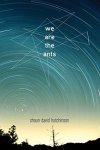
We Are the Ants by Shaun David Hutchinson / Fun, painful, insanely creative.
Book You “Pushed” The Most People To Read (And They Did)?
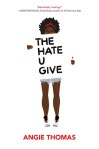 The Hate U Give by Angie Thomas
The Gentleman’s Guide to Vice and Virtue by Mackenzi Lee
The Handmaid’s Tale by Margaret Atwood (Re-read)
Best series you started? Best Sequel of 2017? Best Series Ender of 2017?
 Best series started: The Book of Dust by Philip Pullman
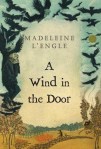
Best sequel: A Wind in the Door (Time Quintet #2) by Madeleine L’Engle
Best series ender: The Amber Spyglass (His Dark Materials #3) by Philip Pullman
Favorite new author you discovered?
 Shaun David Hutchinson
Lorraine Hansberry
James Hanley
Best book from a genre you don’t typically read/was out of your comfort zone?
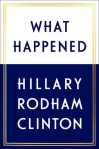 What Happened by Hillary Rodham Clinton (Politics)
Quiet: The Power of Introverts by Susan Cain (Psychology/Self-Help)
Murder on the Orient Express by Agatha Christie (Mystery)
Most action-packed/thrilling/unputdownable book of the year?
 The Gentleman’s Guide to Vice and Virtue by Mackenzi Lee
Brave New World by Aldous Huxley
The Secret of Spellshadow Manor by Bella Forrest
Book You Read In 2017 That You Are Most Likely To Re-Read Next Year?
 Harry Potter and the Sorcerer’s Stone by J.K. Rowling
The Gentleman’s Guide to Vice and Virtue by Mackenzi Lee
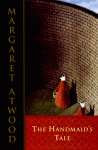
The Handmaid’s Tale by Marget Atwood
Favorite cover of a book you read in 2017?
Most memorable character of 2017?
 Henry Montague from The Gentleman’s Guide to Vice and Virtue by Mackenzi Lee
Charles Wallace Murry from A Wrinkle in Time by Madeleine L’Engle (re-read)
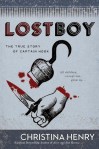
Jamie (and Peter) from Lost Boy: A True Story of Captain Hook by Christina Henry
Most beautifully written book read in 2017?
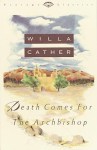 Death Comes for the Archbishop by Willa Cather
Wuthering Heights by Emily Bronte (re-read)
The Brothers Karamazov by Fyodor Dostoevsky
Most Thought-Provoking/ Life-Changing Book of 2017?
 What Happened by Hillary Rodham Clinton
And Every Morning the Way Home Gets Longer and Longer by Fredrik Backman
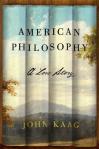
American Philosophy: A Love Story by John Kaag
Book you can’t believe you waited UNTIL 2017 to finally read?
 Matilda by Roald Dahl
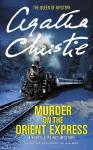
Murder on the Orient Express by Agatha Christie
Brave New World by Aldous Huxley
Favorite Passage/Quote From A Book You Read In 2017?
“Life, with its rules, its obligations, and its freedoms, is like a sonnet: You’re given the form, but you have to write the sonnet yourself.” -Madeleine L’Engle (A Wrinkle in Time)
Shortest & Longest Book You Read In 2017?
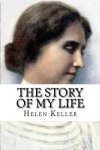 The Story of My Life by Helen Keller (78 pages)
The Brothers Karamazov by Fyodor Dostoyevsky (796 pages)
Everyone’s An Author, with Readings (1,050 pages — education text)
Book That Shocked You The Most
 The Boy with the Red Hair by Chancery Stone
Boy by James Hanley
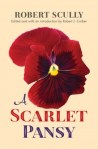
A Scarlet Pansy by Robert Scully
OTP OF THE YEAR (you will go down with this ship!)
 Monty and Percy from The Gentleman’s Guide to Vice and Virtue
Meg and Calvin from A Wrinkle in Time (re-read)
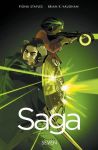
Upsher and Doff from Saga by Brian K. Vaughan
Favorite Non-Romantic Relationship Of The Year
 Matilda and Ms. Honey in Matilda by Roald Dahl
The Lisbon Sisters in The Virgin Suicides by Jeffrey Eugenides
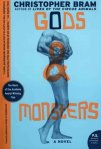
James Whale and Clayton Boone in Gods & Monsters by Christopher Bram (re-read)
Favorite Book You Read in 2017 From An Author You’ve Read Previously
 Bluebeard by Kurt Vonnegut
The Inexplicable Logic of My Life by Benjamin Alire Saenz
History is All You Left Me by Adam Silvera
Best Book You Read In 2017 That You Read Based SOLELY On A Recommendation From Somebody Else/Peer Pressure:
Newest fictional crush from a book you read in 2017?
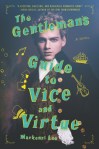
 Monty from The Gentleman’s Guide to Vice and Virtue
Percy from The Gentleman’s Guide to Vice and Virtue
Alyosha Karamazov and Nikolai Krasotkin from The Brothers Karamazov
Best 2017 debut you read?
Lost Boy by Christina Henry
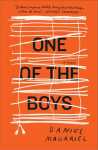
One of the Boys by Daniel Magariel
The Hate U Give by Angie Thomas
Best Worldbuilding/Most Vivid Setting You Read This Year?
 La Belle Sauvage by Philip Pullman
Death Comes for the Archbishop by Willa Cather
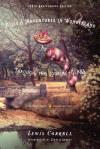
Alice’s Adventures in Wonderland by Lewis Carroll (re-read)
Book That Put A Smile On Your Face/Was The Most FUN To Read?
 Welcome to Dead House by R.L. Stine
The Dark Prophecy by Rick Riordan
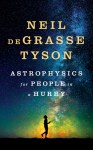
Astrophysics for People in a Hurry by Neil deGrasse Tyson
Book That Made You Cry Or Nearly Cry in 2017?
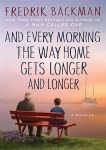 And Every Morning the Way Home Gets Longer and Longer by Fredrik Backman
At the Edge of the Universe by Shaun David Hutchison
Blue Nights by Joan Didion
Hidden Gem Of The Year?
 Poe: A Life Cut Short by Peter Ackroyd
Letters to a Young Writer by Colum McCann
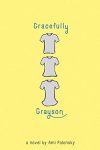
Gracefully Grayson by Ami Polonsky
Book That Crushed Your Soul?
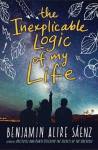 The Hate U Give by Angie Thomas
What Happened by Hillary Rodham Clinton
The Inexplicable Logic of My Life by Benjamin Alire Saenz
Most Unique Book You Read In 2017?
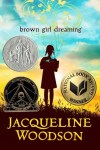
Book That Made You The Most Mad (doesn’t necessarily mean you didn’t like it)?
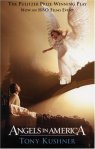 Angels in America by Tony Kushner (re-read)
Poe: A Life Cut Short by Peter Ackroyd
What Happened by Hillary Rodham Clinton
New favorite book blog you discovered in 2017?
Oops – none…. Haven’t had much time to explore! Any recommendations?
Favorite review that you wrote in 2017?
Best discussion/non-review post you had on your blog?
What Do We Mean by ‘Literary’?
Best event that you participated in (author signings, festivals, virtual events, memes, etc.)?
Best moment of bookish/blogging life in 2017?
Return of the Official TBR Pile Challenge
Most Popular Post This Year On Your Blog (whether it be by comments or views)?
Announcing: The Official 2018 TBR Pile Challenge
Post You Wished Got A Little More Love?
Recommended Reading: Bending Boundaries
Best bookish discovery (book related sites, book stores, etc.)?
It’s not exactly a new discovery, but I’m obsessed with Litographs!
Did you complete any reading challenges or goals that you had set for yourself at the beginning of this year?
I re-introduced the TBR Pile Challenge for 2018. I hosted a year-long monthly classic reading event called the “Classic Book-a-Month” club (which, sadly, will not be returning in 2018). I hosted Austen in August again this year, and it was another big success. Lots of good things!
One Book You Didn’t Get To In 2017 But Will Be Your Number 1 Priority in 2018?
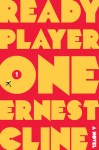
Book You Are Most Anticipating For 2018 (non-debut)?
2018 Debut You Are Most Anticipating?
Anything Andrew Smith puts out!
Series Ending/A Sequel You Are Most Anticipating in 2018?
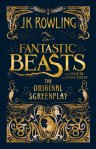
I am hoping that J.K. Rowling releases the screenplay for The Crimes of Grindelwald, as she did for Fantastic Beasts and Where to Find Them.
One Thing You Hope To Accomplish Or Do In Your Reading/Blogging Life In 2018?
I want to read all 14 books on my TBR Pile Challenge list. I want to read at least a few books from my Classics Club challenge list. And I would like to post new content more regularly, not necessarily just book reviews.
A 2018 Release You’ve Already Read & Recommend To Everyone:
Hmmm…. Don’t think I’ve gotten any 2018 releases!
 Roof Beam Reader