Roof Beam Reader
Adam Burgess
TBR Pile Cleanse #2

It’s week 2 of my “TBR Pile Cleanse” project, introduced here. This week, I’m taking a look at another 10 books on my 2,200-titled TBR Pile, in order to determine which books will STAY and which ones will GO. The titles have been sorted according to the books I added first to my TBR list, so these have been lingering the longest.
Book #1: Life is Elsewhere by Milan Kundera
- Date added?: Oct. 27, 2009
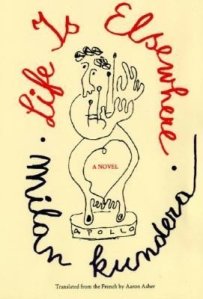
- Why is it on my TBR?: I have no recollection of adding this book to my TBR. I had no idea what it was about until I looked it up, just now. I must have read it after finishing Kundera’s The Unbearable Lightness of Being, which I did enjoy a great deal. This title still sounds interesting, but not like something I’ll be interested enough to pick up any time soon.
- Do I own it?: No
- Project lists: None.
- Verdict?: GO
Book #2: Steppenwolf by Hermann Hesse
- Date added?: Oct. 27, 2009
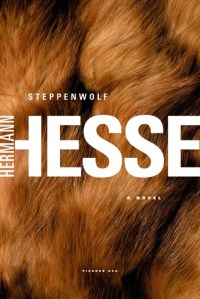
- Why is it on my TBR?: I’ve been fascinated by Hermann Hesse for a long time. I read Narcissus and Goldmund 10-15 years ago and was absolutely transfixed by it. In graduate school, I attempted to work with Hesse from a critical theory perspective (for a literary theory and criticism course), but the professor was unfamiliar with him and was thus not very encouraging about my project, so I ended up pursuing something else. A stupid decision, in retrospect (professors don’t know everything!) Anyhow, what’s more interesting is I’ve never been as captivated by anything else I’ve read by Hesse. I keep trying, and keep thinking… “well, okay.” Still, I think I do want to read this one at some point. I’m not ready to give-up just yet.
- Do I own it?: No
- Project lists: None
- Verdict?: KEEP
Book #3: A Dead Man in Deptford by Anthony Burgess
- Date added?: Oct. 27, 2009
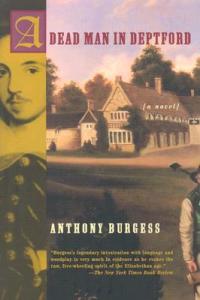
- Why is it on my TBR?: I absolutely love Anthony Burgess. I’ve enjoyed everything I’ve read by him, including A Clockwork Orange, The Wanting Seed, and Nothing Like the Sun. The latter is a fictional account of the life and death of Shakespeare; similarly, Dead Man in Deptford tells the story of Christopher Marlowe. I don’t know why I haven’t read this one, yet, honestly. I’m intrigued by Marlowe and that whole period, and especially the circumstances of Marlowe’s death. And I love the way Burgess thinks and writes. So, what am I waiting for?
- Do I own it?: No
- Project lists: None
- Verdict?: KEEP
Book #4: The Buffalo Tree by Adam Rapp
- Date added?: Oct. 27, 2009
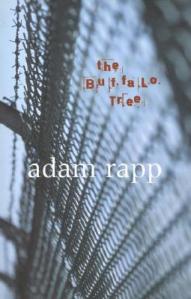
- Why is it on my TBR?: I must have added this one after reading 33 Snowfish or Little Chicago. Adam Rapp writes some super interesting and bizarre stuff, which is right up my alley. His are also quick reads, psychological disturbing a lot of the time. All of this, in my opinion, works in my favor, because it’s the kind of stuff I like. This one also won a School Library Journal award… I don’t know when I’ll get to it, but I know that I will get to it. So why remove it?
- Do I own it?: No
- Project lists: None
- Verdict?: KEEP
Book #5: Snuff by Chuck Palahniuk
- Date added?: Oct. 27, 2009
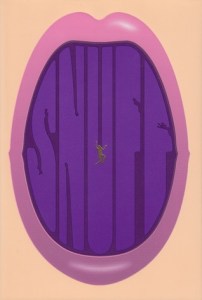
- Why is it on my TBR?: I think I’ve added everything by Palahniuk to my TBR list. I’ve read quite a bit of his work and I tend to enjoy it (he’s weird, transgressive, postmodern — that’s what I like). Still, this one isn’t really speaking to me right now. I remember adding it and thinking, “I’m not sure this is one I’ll actually ever get around to.” So, nearly 10 years later, I think it’s safe to remove this one, at least for now. I’m in no danger of forgetting about Palahniuk, so if at some point I decide I want to read another of his books, I’ll go look ’em up and decide then.
- Do I own it?: No
- Project lists: None
- Verdict?: GO
Book #6: The Silver Chalice by Thomas B. Costain
- Date added?: Oct. 21, 2009
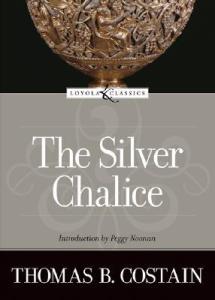
- Why is it on my TBR?: Here’s another one that I have no recollection of adding to my list. I’m guessing it was a “quick click” — a book that came up as a recommendation when I searched for and/or reviewed something else. It’s historical fiction about the history of the Holy Grail, which sounds like something I’d be interested in (I do love a good Arthurian tale). Still, right now, it’s not speaking to me, even though it is very highly rated on Goodreads. If I go through another Arthurian fantasy phase sometime in the future, I’m sure I’ll stumble across this one again. For now, it’s not appealing enough to remain on the “TBR.”
- Do I own it?: No
- Project Lists: None
- Verdict?: GO
Book #7: First Love and Other Stories by Ivan Turgenev
- Date added?: Oct. 27, 2009
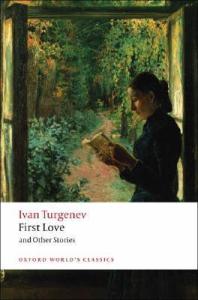
- Why is it on my TBR?: Turgenev is an important Russian author, an important presence in the “classic literary canon,” for whatever that’s worth. I’m sure I added this one when someone else was reading it and/or when it popped-up in the “based on what you’ve read” suggestions. I’ve actually never read anything by him, which is probably a shame. But, when I do, I know it won’t be this collection (it will likely be Fathers and Sons). If I read Turgenev and decide that I want more, then I’ll come back and add more.
- Do I own it?: No
- Project Lists: None
- Verdict?: GO
Book #8: Dead Souls by Nikolai Gogol
- Date added?: Oct. 27, 2009
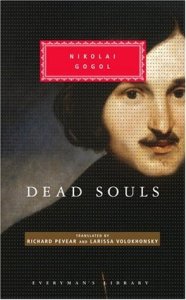
- Why is it on my TBR?: Gogol is another classic writer whom I haven’t read, yet. I’m not surprised that I have this one and Turgenev added on the same day; I might have finished reading some other Russian author, Tolstoy or Dostoevsky, perhaps, that day and then started clicking away, as one does. Unlike the Turgenev text above, though, this one by Gogol is a text that I think about quite a bit and that I do want to read sooner than later. I’ve read that this is like a Dickensian-Russian novel, a “comic masterpiece,” which would be an interesting new perspective (I’ve read mainly Russian tragedies).
- Do I own it?: No
- Project lists: None
- Verdict?: KEEP
Book #9: Green Hills of Africa by Ernest Hemingway
- Date added?: Oct. 27, 2009
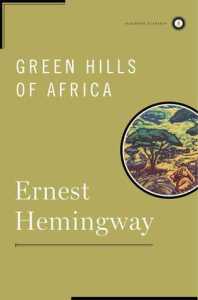
- Why is it on my TBR?: Surprisingly, I’ve not yet read everything Hemingway’s ever written. Do I plan to? Why, yes, I do. I do, indeed! Certain valid critiques aside, I love Hemingway. I love reading Hemingway. Even when I don’t particularly like a certain story (The Sun Also Rises, for example), I still find something of value in the writing, and I haven’t yet regretted reading any of his works that I’ve managed to get to so far. Green Hills is also non-fiction/travelogue based on Hemingway and his wife’s safari near Mount Kilimanjaro; I’ve read less of his non-fiction, so this would be an important addition.
- Do I own it?: Yes
- Project lists: None
- Verdict?: KEEP
Book #10: Angel Time (Songs of the Seraphim #1) by Anne Rice
- Date added?: Oct. 27, 2009
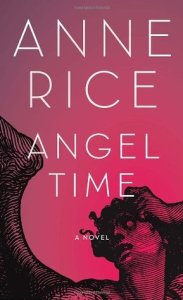
- Why is it on my TBR?: I think this is the most difficult decision of the week for me. I’m not the biggest fan of Anne Rice. I tried reading Interview with a Vampire many years ago but couldn’t get into it. Then, I read Out of Egypt (Christ the Lord #1) and loved it. The plot of this one both repels and compels me. I’m just not sure what to do! I think this is one that I would like to give a try, simply because of the part of its premise that pertains to 13th-Century England and the bizarre and evil things that happen there. If I don’t like it, fine, I won’t continue the series. But if I remove this one, I might not remember it… in which case, I might have missed something fun?
- Do I own it?: No
- Project lists: None
- Verdict?: KEEP
Books removed this week: 4 out of 10 (40%)
TBR Pile Count at Start of Project: 2,170
TBR Pile Count Currently: 2,191 (something’s gone wrong!)
Recommended Reading: Bending Boundaries
 What is the heart and soul of literature? What is the purpose of a reading-driven life? I believe people who read a lot, and with variety, are uniquely placed to learn more about the world, its history and its people, and to become more compassionate, tolerant, and patient because of their reading experiences.
These are the real reasons why I love to read the classics. Yes, they’re an escape; they can be beautifully written, exciting, scary, and emotionally charged. But, mostly, they teach me, and show me, more about the world and its people and places than anything else ever could.

The books below are some of my favorites, and they’ve all helped me to experience the world in ways that I couldn’t possibly in my own life. They’ve transported me to a different world, taught me about different cultures, and helped me step into the shoes of people who are different from me. From the poverty and union movements of French miners to the experience of Jewish people during the Holocaust; from the lives of women, gay and straight, to the experience of black men and women, Latino immigrants, German philosophers, religious leaders and spiritual seekers, and the mentally and physically disabled. The books below can teach us so much about the world, past, present, and future.
Even dystopian fiction like A Handmaid’s Tale helps us to explore gender roles and the dangerous, complex, and unfair power structures established to keep women subservient. I am not going to write specific thoughts on these, and there are so many more I could have included, but I do highly recommend the list of books below. I’ve reviewed some of these here at Roof Beam Reader. Unfortunately, I read a number of them before I began blogging, so I don’t have reviews to share.
- Germinal by Emile Zola
- I Know Why the Caged Bird Sings by Maya Angelou
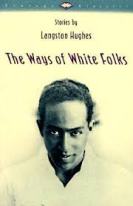
- The Ways of White Folks by Langston Hughes
- Kaffir Boy by Mark Mathabane
- Angels in America by Tony Kushner
- Night by Elie Wiesel
- The Diary of Anne Frank
- The Hate U Give by Angie Thomas
- Freakboy by Kristin Elizabeth Clark
- Rain God by Arturo Islas
- Memory Mambo by Achy Obejas
- Wonder by RJ Palacio
- The Handmaid’s Tale by Margaret Atwood
- A Rasin in the Sun by Lorraine Hansberry
- “The Yellow Wallpaper” by Charlotte Perkins Gilman
- Siddhartha by Herman Hesse
- The Bell Jar by Sylvia Plath
- Beloved by Toni Morrison
- A Man Called Ove by Fredrik Backman
- Between the World and Me by Ta-Nehisi Coates
Which books have allowed you to truly step into another’s shoes? To experience a completely different lifestyle? Please share your own recommendations!
X-Men, Astrophysics, and Hate
X-Men Siege (Mutant Empire #1) by Christopher Golden
 A few weeks ago, I was at Half-Price Books selling a big chunk of my library when, lo and behold, I stumbled across all three books in this Mutant Empire series. I’m absolutely upset with the 1990s version of Marvel Comics’s X-Men and, years ago, I had read another novelization (a cross-over with Star Trek: The Next Generation called Planet X by Michael Jan Friedman), which I really enjoyed; so I knew I had to grab these, especially since they only cost a few bucks. X-Men: Siege brought me back to those ’90s comic books I so loved, and to some of the film adaptations. There’s much that is familiar to anyone who grew up reading the Uncanny X-men series, but plenty that is unique, too. Magneto has begun his plan to create an all-mutant Utopia, beginning with a remote location off planet earth but with the intention of, eventually, taking over the entire planet. Meanwhile, trouble is brewing for Cyclops’s dad, a kind of intergalactic space pirate, and the Shi’ar Empire. Professor Xavier decides to split the X-Men into two teams, one to take on each of these terrible challenges. For those who don’t already know the characters, especially the liminal ones, it might be a bit of a confusing or uninteresting read; but if you already know and love these stories and characters, then you’ll probably enjoy Siege quite a bit. I’m looking forward to reading the next two books in the series, but I do wish the author had found a better proofreader/editor (the number of typos is a bit jarring).
Astrophysics for People in a Hurry by Neil DeGrasse Tyson
 I’ve been wanting to read more science books for such a long time, but while I was buried by reading for my PhD, I just couldn’t find the time. So, I was pleased when, right about the time I graduated with my degree and found some time for actual “free reading,” Neil DeGrasse Tyson goes ahead and publishes a new book! And, as the title suggests, for someone like me who is often, “in a hurry.” What are the odds!? While I can’t pretend to have understood everything in this book, I do think I got the gist of most of it, and that is, I think, the point: to help folks like me who are curious about science and who want to be a bit more scientifically literate, get there. Tyson has an engaging voice and style, and he can explain complex topics very directly and through the use of helpful analogies. Tyson also has a larger purpose, here, which is to explain why science is so important and how dangerous it is for a society to move away from it, the way we here, unfortunately, have been doing for some time. He explains just how much science means to him and how he believes a scientifically literate culture can feel more, not less, connected to one another. Each chapter deals with a different aspect of astrophysics, concisely addressed, and they’re all fascinating. My favorite part, though, has to be the very brief final chapter titled, “Reflections on the Cosmic Perspective.” It’s simply beautiful.
The Hate U Give by Angie Thomas
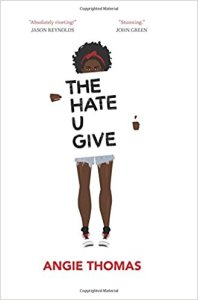 This book: wow. I’ve been trying to figure out how to describe this book and my reaction to it. For help, I started to search through the blog-o-sphere (or at least the parts of it that I watch) to see what others are saying, or even just to have links to send you all to for reference and good thoughts, but to my surprise, the majority of what I’ve found = thoughts such as, “I need to figure out how to review this!” Hey, at least I’m not alone! Essentially, The Hate U Give is an incredibly timely and relevant perspective from an honest and creative new voice that is much-needed in our culture right now. Starr is a 16-year-old black girl living in a dangerous city. Her father had been in prison but is now a successful business owner. Her mother is a nurse with great potential. Her uncle is a police officer who lives in a beautiful, gated community. She and her brothers go to private school in another district because her parents are able to afford it. In other words, she lives in two worlds. She witnesses the best and worst possible of all American cultural and societal realities. The worst? She has seen her two best friends killed in front of her eyes. The best? She has a strong and loving family, a boyfriend who loves her, and some* real friends who accept her for who she is and not for the color of her skin. Thomas is giving us such a powerful and important story, here, but more importantly, she offers multiple perspectives, a number of options, and a the sense of hopeful possibility, without proscribing a single ideology or facetious answer to our nation’s complicated racial problems. I can’t wait to see what she does next (I hear a film adaptation might be in the works).
June’s Classic: The Confidence-Man #CBAM2017

As May comes to an end and we complete this month’s Classic Book-a-Month (A Raisin in the Sun by Lorraine Hansberry), it’s time to look toward June and our next read! This month, we’ll be reading The Confidence-Man: His Masquerade by Herman Melville.
Don’t forget: We have a Goodreads group! And we’re using #CBAM2017 to chat on Twitter, Facebook, and Instagram.
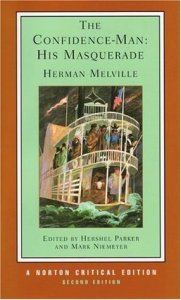 About the Book*:
“The Confidence-Man: His Masquerade is the ninth book and final novel by American writer Herman Melville, first published in New York in 1857. The book was published on April 1, the exact day of the novel’s setting. The Confidence-Man portrays a Canterbury Tales–style group of steamboat passengers whose interlocking stories are told as they travel down the Mississippi River toward New Orleans. Scholar Robert Milder notes: “Long mistaken for a flawed novel, the book is now admired as a masterpiece of irony and control, though it continues to resist interpretive consensus.” After the novel’s publication, Melville turned from professional writing and became a professional lecturer, mainly addressing his worldwide travels, and later for nineteen years a federal government employee.
The novel’s title refers to its central character, an ambiguous figure who sneaks aboard a Mississippi steamboat on April Fool’s Day. This stranger attempts to test the confidence of the passengers, whose varied reactions constitute the bulk of the text. Each person including the reader is forced to confront that in which he places his trust. The Confidence-Man uses the Mississippi River as a metaphor for those broader aspects of American and human identity that unify the otherwise disparate characters. Melville also employs the river’s fluidity as a reflection and backdrop of the shifting identities of his “confidence man”.
The novel is written as cultural satire, allegory, and metaphysical treatise, dealing with themes of sincerity, identity, morality, religiosity, economic materialism, irony, and cynicism. Many critics have placed The Confidence-Man alongside Melville’s Moby-Dick and “Bartleby, the Scrivener” as a precursor to 20th-century literary preoccupations with nihilism, existentialism, and absurdism. The work includes presumed satires of 19th century literary figures: Mark Winsome is based on Ralph Waldo Emerson while his “practical disciple” Egbert is Henry David Thoreau; Charlie Noble is based on Nathaniel Hawthorne; Edgar Allan Poe inspired a beggar in the story.”
Schedule:
- June 1st: Begin reading.
- June 15th: Mid-point Check-In
- June 30th: Final Thoughts
Feel free to read at your own pace, post at your own pace (or not at all), and drop by to comment/chat about the book at any point. The schedule above is just the one I plan to use in order to keep myself organized and to provide some standard points and places for anyone who is reading along to get together and chat.
Note on July: I’ve intentionally selected Melville’s The Confidence-Man for June and Milton’s Paradise Lost for July because the former reminds me of an American response to the latter. I think it will be interesting/informative to read these two texts in sequence, and I chose to begin with the American version because I believe it is more accessible (so, applying it to Paradise Lost rather than the reverse might be better for discussion). Anyhow, I’m posting this note so that those of you interested in the comparison might plan to read both June and July’s texts with us. Otherwise, if you only want to read Melville and to hell (haha, get it?) with Milton, then so be it!
*Further description and analysis can be found at the Wikipedia page.
TBR Pile Cleanse
I can’t resist a good play on Alice’s Adventures in Wonderland, considering it’s one of my all-time favorite books. (And I finally get to teach it this summer in a film and lit class!) I originally saw this little game over at Jillian’s place, but she got it from Lia.
As I’ve got a solid 2,170 books on my Goodreads “To-Read” shelf, I figured, why not take a look at TEN to see if they deserve to be there anymore. I decided to go with Jillian’s approach, which takes a step beyond the “KEEP OR GO” to address some other little factors. The rationale for that? Simply to be more thoughtful about my choices. I’ve also added the date when I first placed the book on my “to-read” shelf.
I think I might make this an ongoing project, posting a new 5 or 10 books each week. I’ll call it my “TBR Pile Cleanse” and, like weekend housekeeping, I’ll tend to my over-cluttered TBR list each Saturday.

Sorted according to the books I added first to my TBR list, so these have been lingering the longest.
 Book #1: One Hundred Years of Solitude by Gabriel García Márquez

- Date added?: Oct. 21, 2009
- Why is it on my TBR?: By all accounts, everyone reads this book (they have read it, they plan to read it, whatever). García Márquez is a beautiful writer, and an important one, but I’ve only read a couple of his short stories plus the novella Memoirs of My Melancholy Whores. So, as this is his masterpiece, I need to read it. I also hope to read more of his.
- Do I own it?: No
- Verdict?: Keep
- Priority Level (1-10, with 10 meaning DO IT ALREADY)?: 9
- Project lists: None, but perhaps I could come up with some kind of South American or Latin (Spanish-to-English translation) kind of project or challenge? Or maybe I no longer need challenges to keep me occupied and, instead, I can simply read a book when I feel like reading it.
 Book #2: The Count of Monte Cristo by Alexandre Dumas

- Date added?: Oct. 21, 2009
- Why is it on my TBR?: This is probably pretty self-explanatory. It’s Dumas. It’s a classic. I’ve actually never read anything by Dumas, which is pretty embarrassing. But you look at the size of his books and think, “sure, some day, bud.” I’ve honestly heard nothing but good things about it, though, despite its length. Same goes for The Three Musketeers. So, maybe I’ll read this one some summer when I don’t have to teach. Or over a winter break when I don’t want/need to cram a bunch of books into a few weeks’ time.
- Do I own it?: No
- Verdict?: Keep
- Priority Level?: 7
- Project lists: The Classics Club
 Book #3: The Joy Luck Club by Amy Tan

- Date added?: Oct. 21, 2009
- Why is it on my TBR?: I’ve read parts of this. Chapters of it are often included in anthologies, so that must be where I first encountered it (sometime in college). She and Louise Erdrich always seem to get portions of their work anthologized but then few people seem to read the complete works. This seems to me an important book, and I remember enjoying the bit that I read.
- Do I own it?: No
- Verdict?: Keep
- Priority Level?: 5
- Project lists: The Classics Club
 Book #4: The Kite Runner by Khaled Hosseini

- Date added?: Oct. 21, 2009
- Why is it on my TBR?: I think my sister recommended this one to me. Of course, it was wildly popular for a time. I worked in a bookstore from 2006-2008, and I remember this being an oft-requested title. I haven’t read many Middle Eastern writers, possibly no Afghanis, so in my pursuit to be truly well-read, I think this one must remain.
- Do I own it?: No
- Verdict?: Keep
- Priority Level?: 6
- Project lists: None
 Book #5: Into the Wild by Jon Krakauer

- Date added?: Oct. 21, 2009
- Why is it on my TBR?: I go through phases when “the wild” seems absolutely fascinating to me. Sometimes, I feel quite the hermit and wish to escape from civilization and society. I imagine myself living in a little cabin in the woods, or on the plains, in some kind of Thoreau-meets-Cather scenario. I’ll never actually do it, but I can have my literary escapism version of it every now and again. I suppose I added this one when I was in that kind of mood, and I know I’ll be in that kind of mood again someday.
- Do I own it?: No
- Verdict?: Keep
- Priority Level?: 3
- Project lists: None
 Book #6: In Cold Blood by Truman Capote

- Date added?: Oct. 21, 2009
- Why is it on my TBR?: This one is another classic that everyone is “supposed” to read. To be honest, I’ve never been very tempted. I suppose I like Capote’s work… he does some interesting things (Other Voices, Other Rooms was pretty fascinating). His relationship with Harper Lee, who was a part of this project, also interests me. This is perhaps one of the earliest and most groundbreaking examples of American literary journalism, though, so even though I’m not too compelled to read it, I still think I should at some point. Maybe in retirement, or if I ever teach a creative nonfiction class.
- Do I own it?: No
- Verdict?: Keep
- Priority Level?: 4
- Project lists: None
 Book #7: Fast Food Nation by Eric Schlosser

- Date added?: Oct. 21, 2009
- Why is it on my TBR?: Like my hermit/adventurous side, I also have a healthy lifestyle/sociologist side, which comes and goes. At some point in time, I was obviously interested in what fast food culture is doing to us (Americans), to our bodies, budgets, healthcare, economic health, etc. I suppose 10 years ago I felt like I needed this book to learn about all of that, but I don’t feel that way anymore. After years of reading essays on the topic, and often teaching it as an ethical research issue, I have a fairly good grasp on this mess.
- Do I own it?: No
- Verdict?: Release!
- Priority Level?: 10 – the book has been removed!
- Project lists: None
 Book #8: The Time Traveler’s Wife by Audrey Niffenegger

- Date added?: Oct. 21, 2009
- Why is it on my TBR?: I think this is another one, like The Kite Runner that had a rage of popularity sometime about a decade (or so) ago, and which people always asked for when I was working at the bookstore. I know that, at some point, I had a general idea of what this book was about. I’ve heard good things, surprising things, but I really have no desire to spend any time on thi one. I might be wrong, but with a TBR above 2,000, something’s gotta give, right?
- Do I own it?: No
- Verdict?: Release!
- Priority Level?: 8 – it’s gone but could return.
- Project lists: None
 Book #9: The Princess Bride by William Goldman

- Date added?: Oct. 21, 2009
- Why is it on my TBR?: I feel pretty bad that I haven’t read this one, yet, because it is a classic beloved by many. I feel worse about it than most, though, because I actually received a copy of this from a good friend when I went away for graduate school. Someone (my sister?) asked a bunch of my friends to give me a copy of their favorite book, with a “going away” note in it. I must have received 6 or 7 really interesting books, none of which I had ever read (including The Things They Carried and the Bartimaeus sequence). I think this is the only one from that special set of books that I’ve left to read.
- Do I own it?: Yes
- Verdict?: Keep
- Priority Level?: 9
- Project lists: None
 Book #10: Brave New World by Aldous Huxley

- Date added?: Oct. 21, 2009
- Why is it on my TBR?: Another no-brainer? I cannot believe I haven’t read this book, but I know that I absolutely must! Now would be a pretty good time to do so, too, given the state of affairs in this country right now. I remember starting it when I was in high school (for an independent reading class) and giving up on it after a couple of pages. I think I would be much more receptive to it these days, and I tend to really enjoy books like this.
- Do I own it?: No
- Verdict?: Keep
- Priority Level?: 9
- Project lists: The Classics Club
*As an aside. I actually once owned every single one of these books; however, in the last year, I’ve sold/donated about 1,200 books. I no longer have a personal library (just a few half-filled bookcases) which is both sad and wonderful. Whenever we settle down for a while, I’ll begin rebuilding. This project might actually help me consider the texts that I really do want to own again.
 Roof Beam Reader