Roof Beam Reader
Adam Burgess
Thoughts on 3 Classics
This year, I am hosting a “Classic Book-A-Month Club,” hosted on Goodreads. So far, we have read: Little Women by Louisa May Alcott; the Oedipus Cycle (Oedipus the King, Oedipus at Colonus, and Antigone) by Sophocles; The House of Mirth by Edith Wharton; Tender is the Night by F. Scott Fitzgerald; and A Raisin in the Sun by Lorraine Hansberry. Next month’s selection is The Confidence-Man: His Masquerade by Herman Melville.
The House of Mirth by Edith Wharton
 This is the third Wharton novel I’ve read, following The Age of Innocence and Ethan Frome (read twice). Compared to these others, House of Mirth was a struggle. I didn’t feel invested in the story until about 3/4 of the way into it. I didn’t find the protagonist, Lily Bart, to be a compelling or sympathetic character, as I’m sure readers are meant to. I can certainly see what Wharton is trying to say about the “somber economics of marriage” and “the powerlessness of the unwed woman” at the turn of the twentieth century, but for the most part, I just wasn’t made to care. Normally, this is the kind of story I would empathize with, so I’m not sure what exactly left me feeling so ambivalent and detached. Certainly, personal circumstances may have gotten in the way (this is why I’m still a proponent of reader-response theory; you cannot convince me that one’s personal relationship with a book at a particular moment in time does not matter). I did begin to respond near the end of the novel, when Lily’s circumstances were most dire not necessarily because of her own poor decisions, but because of the pettiness and prejudices of her supposed friends and family. I’ll admit that, had Lily’s circumstances been entirely predicated upon others’ terrible personalities, I probably would have found the story a bit too pathetic and fatalistic (at least currently). The realism, then, is both appealing and off-putting. I found myself thinking Lily Bart had any number of opportunities to turn her situation around, but didn’t. Then, I realized I was becoming psychologically and emotionally attached to her despair because of the personal/professional situation in which I’ve found myself this past year; this perhaps intruded on my experience and prevented me from being able to sink into the story itself, to appreciate it for what it is. I’ll have to give this one a re-read, someday, when I can read it more carefully and from a more receptive/less sensitive position. I’m glad to have finished another title from my Classics Club list, though.
Tender is the Night by F. Scott Fitzgerald
 This was a re-read for me, and one that was a long time coming. I started reading it when I was about half-way into The House of Mirth and ultimately got to the end of each ’round about the same time. This was not a good thing. I had a very personal relationship with this book for a very long time. As a result, it colored my impression of it for years. Reading it again has been a blessing and a curse. On the positive side, I no longer feel as desperately attached to the doomed relationship Fitzgerald presents in Dick and Nicole Diver (fictionalized versions of Francis and Zelda). In a way, I suppose this means that enough time has passed, and I’ve changed enough, to let go of certain difficult memories and experiences. On the negative side, I did not find the story as interesting or beautifully written as I once imagined. I used to argue vehemently that this book is far superior to The Great Gatsby. Now, I’m not so sure. I think they’re close, but Gatsby may indeed be the masterpiece. I was reminded, however, that Fitzgerald deals with homosexuality in this novel; I had completely forgotten this. He includes homosexual innuendo in Gatsby, too, and he’s one of the very few major literary figures of the time to do this (in more than one work, I now realize). Of course, the portrayal here is not a glowing one, which makes one wonder at the more naturally incorporated moment in Gatsby. Was one of these pre-Hemingway and the other post? This would be interesting to explore. In any event, as a piece of expatriate American literature and a study of marriage, mental illness, incest, psychology, and the like, it’s still a damn fine book. It’s just, somehow, not at all what I remembered. The situation of reading this alongside House of Mirth, at this particular time of my life, also created some problems. The combined assault on my emotional connection to this story plus my closeness to Lily Bart’s circumstances left me feeling exhausted and despondent. Simply bad timing.
A Raisin in the Sun by Lorraine Hansberry
 Honestly, what took me so long to read this? I haven’t “reviewed” a book in many, many months. I think it’s safe to say that Hansberry’s play is the reason I’m back at it. It’s always such a thrill to read a book that is so alive, so important, so visceral, that it rekindles my faith in the art of literature itself. I’ve never considered myself much of a drama aficionado. I’ve read a number of plays, seen some, and almost always find something to praise; yet, I also somehow think that reading drama is not quite an honest endeavor, because drama is meant for the stage. Still, I loved the characters in this book, their diversity and range of experiences, even while most of them were members of the same single-household family (there’s an opportunity for me to teach Intro to Drama next spring, an opportunity I was not really considering, but I think I’ve changed my mind completely). I loved the main plot and the minor sub-plots, the neighbors interventions and the “I’m not a racist, but…” moments. I loved that the play is set in Chicago, a liberal beacon of the north, and yet reveals the hypocritical racism on which neighborhoods were founded and that we have yet to overcome. I needed this play after my experiences with House of Mirth and Tender is the Night. While the story is still one of desperation, it has a much more hopeful ending. Of course, if I think too hard about it, I have to admit that the reality that probably found the Younger family was probably not a pleasant one. But Hansberry leaves this open, to be determined, which at least offers the possibility that these good people might make it, after all. And, in that way, so too might we all. I can’t think of a message more necessary right now than this.
Reading Poe, Part 1: Rue Morgue, Marie Rogêt, and Black Cat
I’m currently reading my way through the complete Edgar Allan Poe (stories and poetry), and thought I would share my reactions to a few pieces at a time. I’m going in the order presented in my anthology, which is not chronological but thematic. The first stories come from Tales of Mystery and Horror.
“The Murders in the Rue Morgue” (Apr 1841)
 I first read “The Murders in the Rue Morgue” when I was in the 7th grade. We watched the movie afterward, and the whole experience is what turned me onto Poe originally (it’s been a 20+ year obsession ever since). I’ve turned away from Poe’s detective stories in recent years, much preferring his thrillers and his poetry (and criticism). I also much prefer Doyle’s Sherlock Holmes stories as detective fiction, so when I return to Poe, I’m less excited than I was originally. Upon this re-read, I recalled what I first appreciated about it, though. Dupin is a funny little detective. He takes himself so seriously, in contrast with Sherlock Holmes (usually – he is quite serious in some of the stories, as is Watson, but in many of them he’s mostly playing) and in contrast with some of Agatha Christie’s famous detectives, too. This is no surprise, though, since Poe, too, was a serious fellow. This one is also considered the first modern detective story, and I’m always pleased to be reminded of how innovative and forward-thinking Poe really was, across all genres. He has many, many fans, and he’s often taught in school, but I think few really appreciate his genius and give him the credit he truly deserves, partly because his personal life was so, well, awkward and disappointing, and a bit creepy. In any case, “Murders in the Rue Morgue” finds Dupin on the search to solve a most serious and difficult case. Two women have been brutally murdered. Witnesses heard the suspect but couldn’t understand him (a foreigner? gasp!) and no one seems to have seen him. The tale is told through a narrator close to Dupin, the first Watson, as it were, who always hyperbolically describes Dupin’s most extraordinary skill for ratiocination. Doesn’t this remind you of what Doyle would do with the Watson/Holmes dynamic: “‘Dupin,’ said I, gravely, ‘this is beyond my comprehension. I do not hesitate to say that I am amazed, and can scarcely credit my senses. How was it possible you should know I was thinking of — — ?’ Here I paused, to ascertain beyond a doubt whether he really knew of whom I thought.” The story includes elements of the bizarre and mysterious, as well as moments of heightened pathos bordering on terror. It’s one of Poe’s best for this combination of methods. Rating: 4 out of 5.
“The Mystery of Marie Rogêt” (Feb 1843)
 This is another of Poe’s Dupin stories, and one which I have read multiple times. I first read it about a decade ago, then again after seeing the John Cusack film, The Raven, which incorporates a number of “copy cat” murders based on Poe stories. Some people have called this a “sequel” to “Murders in the Rue Morgue,” which is why I think it is indexed second in my anthology even though the stories were published two years apart. This story is actually based on a real life murder, predating Capote’s “genre-creating” In Cold Blood by a century. It was also likely the first time a real life crime had been fictionalized in the detective genre, considering Poe invented the genre. So, once again, he inaugurates a soon-to-be imitated practice. Certainly, Poe adds more sensationalist fiction to his tale than Capote, who tried to make his emphasize the “non-fiction” in “creative non-fiction.” I always enjoy this story more than I think I will. Something about the measured violence, the pace and tempo, and that same balance of mystery and malice, all works together to drive this exciting plot forward. This one also hints at Poe’s intellect and deductive reasoning skills, a masterful critical capacity which also let him write such brilliant literary criticism. As he writes in a letter in 1842, less than a year before publishing the story: “Under the pretense of showing how Dupin … unravelled the mystery of Marie’s assassination, I, in fact, enter into a very rigorous analysis of the real tragedy in New York.” In other words, he evaluated the original crime and acted the part of detective in order to write about it accurately (and then with his own added flair for the dramatic). Rating: 2.75 out of 5.
“The Black Cat” (Aug 1843)
 “I had walled the monster up within the tomb!” This story, like “The Tell-Tale Heart” is an exploration of guilt. The main character commits a disturbing crime, certain that he’s been so clever as to avoid any possible detection, but is then stalked by feelings of regret over having done the deed. Ultimately, the character likely would have gotten away with the crime, but he brings about his own downfall because he feels so badly about what he is done. Like many Poe stories, this one begins in the present and finds the narrator (criminal) retelling the actions and events from his own rather unreliable point of view. This adds intrigue and uncertainty, but also heightened sense of emotion and terror as it brings the reader psychologically closer to the criminal/madman. The pace and timing of this particularly story is very strong, and the fact that the narrator actually commits two crimes (both in fits of rage), increases the complexity and tension of the overall plot. The atmosphere created by the narrator’s madness and subsequent guilt, as well as the rising and falling action when the narrator assumes he will get away (remembering that the reader sits most closely to this perspective), is extraordinary. The denouement, which surprises the narrator and the police officer who is about ready to end the investigator and clear the man of any wrong-doing, is particularly ironic because it was brought about by the narrator’s own hubris. This was my first time reading “The Black Cat” and I’m surprised that it’s not discussed more often. It might be too similar to “The Tell-Tale Heart,” which does the same work a bit more compellingly. Still, I loved this one. Rating: 4.25 out of 5.
My Personal Canon
The following is a list of books that and/or writers who have affected me deeply and for some time. I was “challenged” by Jillian to write one of my own after she shared hers. I thought it was a grand idea. I’ll update this in a year or so, if it needs updating. For now, these are the selections I likely would have made anytime in the last 5 or so years, had someone asked. So, it’s a fair bet this list will still be mostly in tact after another 365 days.
I haven’t provided explanations for my choices, but I might come back at some point and do that, or perhaps even turn this into a “page” on this blog, rather than simply a post. That said, this is more than a list of “favorites.” I could do that, too, but the call for a personal canon seems to be more profound than simply 5-star reads. These are books and writers who speak to my soul, who have never left me, and whom I turn to in times of despair and times of joy alike.
My Personal Canon

Kurt Vonnegut
A Man without a Country, If This Isn’t Nice, What Is? Cat’s Cradle, God Bless You, Dr. Kevorkian, The Sirens of Titan, Player Piano, Look at the Birdie, Armageddon in Retrospect, Hocus Pocus, We Are What We Pretend to Be, and almost everything else (there are maybe two titles from his entire oeuvre that I might leave out).
Virginia Woolf
Orlando, A Room of One’s Own, A Writer’s Diary, To the Lighthouse, The Waves.
Edgar Allan Poe
Too much to list. I’ll just say the complete works, including short stories, poetry, criticism, and his single novel, The Narrative of Arthur Gordon Pym.
Joan Didion
The Year of Magical Thinking, Slouching Towards Bethlehem, Play It as It Lays.
J.D. Salinger
The Catcher in the Rye, Franny and Zooey, Nine Stories, Raise High the Roof Beams, Carpenters, Seymour: An Introduction, “The Last and Best of the Peter Pans.”
Willa Cather
A Lost Lady, O Pioneers!, On Writing.
Plato and Aristotle
- Aristotle: The Art of Rhetoric, Poetics, Metaphysics, Nicomachean Ethics.
- Plato: Euthyphro, Apology, Crito, Phaedo, The Symposium, Phaedrus, The Republic.
The Stoics
- Seneca: On Tranquility of Mind, On the Shortness of Life, On Anger.
- Marcus Aurlieus: Meditations.
- Epictetus: The Discourses, The Enchiridion.
John Steinbeck
The Grapes of Wrath, East of Eden, The Pearl, Of Mice and Men, Tortilla Flat, Cannery Row, A Life in Letters, To a God Unknown, Sweet Thursday, The Red Pony, America and Americans, and absolutely everything else, if I’m being honest.
Mark Twain
The Adventures of Huckleberry Finn, The Mysterious Stranger, The Innocents Abroad, The Diaries of Adam and Eve, Personal Recollections of Joan of Arc, Captain Stormfield’s Visit to Heaven, and pretty much everything else, including journalism and short stories.
Stand Alone Texts
- The Perks of Being a Wallflower by Stephen Chbosky
- The Harry Potter series by J.K. Rowling
- The Garden of Eden by Ernest Hemingway
- Alice’s Adventures in Wonderland by Lewis Carroll
- Under the Poppy by Kathe Koja
- Wuthering Heights by Emily Brontë
Classic Book Tag
I believe this originated at Dear diary…, but don’t quote me on that. Anyhow, I needed something fun to occupy my mind as I struggle to stay above the Charybdis of despair that advances closer with each passing day (“I’ll think on it tomorrow”). So, why not think about the pleasantness that is my love for classic literature?
 An over-hyped classic you never really liked: The Martian Chronicles by Ray Bradbury. I’ve really enjoyed some of Ray Bradbury’s stuff, but this is one of his most famous and, perhaps given the time in which it was published that makes sense. I really couldn’t get into it, though. I had a similar reaction to H.G. Wells’s War of the Worlds. Perhaps those original, pulp-esque sorts of science-fiction novels just aren’t for me. I might have too difficult a time suspending my present-day awareness of science to be so enthralled by texts which so predate our current understanding. That being said, I love Kurt Vonnegut & a lot of his stuff is science-fiction. Maybe it’s really about the style of writing. In fact, now that I think on it, that’s probably much more likely.
Favorite time period to read about: That’s a tough question. I really enjoy reading about the French Revolution, for some reason. There was a year not too long ago when I was absolutely obsessed with it and bought dozens of books (mostly histories, but some fiction) about it. I also enjoy reading about the Great Depression/Dust Bowl era of the United States. I suppose I’m inspired by stories about the power of humanity and our ability to come together in the worst of times, stare down adversity, and win. Right now, that sort of sentiment is both appealing and depressing, given the state of our politics. I wonder if we will be able to dig out of this hole we’ve gotten into. It seems the most precarious time in our nation’s short history, and that’s saying quite a bit given what we’ve been through (and put others through).
 Favorite fairytale: I can’t say I’m necessarily a reader of fairytales. I guess I like a good fairytale movie, but do I actually ever read them? I can’t recall doing so, except for a collection of the Brothers Grimm. I do like adaptations, though, such as Robert Coover’s postmodernist take on Sleeping Beauty. In this case, Coover retells the classic story in a number of ways, including one in which it is a prince who becomes trapped in a briar patch. I think Briar Rose is a really fascinating piece of literary work and also a stimulating study of human desire. I don’t know (personally) anyone else who has read it, so I suppose this is a moment to encourage you all to do so.
Classic you’re most embarrassed not to have read: I don’t think I’m embarrassed not to have read anything. I know that my “to read” list is substantial, by which I mean, insanely large and ever-growing. I am annoyed, however, to have begun a few classics that I haven’t finished. These include Anne Radcliffe’s The Mysteries of Udolpho, George Eliot’s Middlemarch, Samuel Richardson’s Clarissa, and Edith Wharton’s House of Mirth (which I’m working on). At least three of these (Radcliffe, Eliot & Wharton) are on my Classics Club list, so I must finish. I can’t think of any others that I began but did not finish, so I suppose that’s some kind of accomplishment. But, I’m a “finish what you start” kind of person, so these “failures” will continue to irk me until I’ve completed them.
 Top 5 classics you want to read: This is always an impossible question, so please take this with a grain of salt and know that, on any given day, this list could be entirely different. At the moment, though, here are five that I really hope to read sometime soon. None of these are re-reads, but I should note that there are plenty of classics I want to re-read at some point, either because I read them a long time ago and can’t be sure that I remember them and/or would respond to them the same way, now, or because I adore them and want to read them again and again and again. That should be another list. Maybe I’ll make that list. Hm. Anyway! Here are five that are on my mind right now:
- One Hundred Years of Solitude by Gabriel Garcia Marquez
- The Count of Monte Cristo by Alexandre Dumas
- Death Comes for the Archbishop by Willa Cather
- So Big by Edna Ferber
- The Story of Avis by Elizabeth Stuart Phelps
Favorite modern book/series based on a classic: If I’m being honest, I think I have to go with any of the Rick Riordan children’s (middle grade) books based on classical mythologies (Greek, Roman, Egyptian, and Norse). If I had to rank them, I’d probably say: 1) Percy Jackson and the Olympians; 2) The Heroes of Olympus; 3) The Trials of Apollo; 4) The Kane Chronicles 5) Magnus Chase and the Gods of Asgard. I also really enjoyed some other modern re-tellings, such as Wide Sargasso Sea (“prequel” to Jane Eyre), Jack Maggs (retelling of Great Expectations from the perspective of the criminal, Magwitch), and Speakers of the Dead (which isn’t really a modern retelling; it’s a new mystery series which casts a young Walt Whitman as its protagonist. So much fun!).
 Favorite movie/television adaptation of a classic: Don’t crucify me for this, but I think I have to go with some of the more free adaptations, such as The Lion King, Pride and Prejudice and Zombies, 10 Things I Hate About You, Get Over It, and Edward II directed by Derek Jarman. Huh. I just realized all of these are based on plays (mostly Shakespeare, plus one Marlowe) with a Jane Austen spin-off thrown in. I must like other classic-to-film adaptations, but I can’t think of any right now. (Was Ethan Frome good? I remember watching it, but I don’t remember whether or not I liked it. Of course, there’s Diary of Anne Frank, Call of the Wild, and some of the Great Gatsby films.) See. Best not to think too long about this. I’d be here forever.
Worst classic-to-movie adaptation: I hated Keira Knightley’s Anna Karenina adaptation. That’s all I have to say about it.
 Favorite editions you would like to collect more of: I absolutely love the Penguin Deluxe Classics editions with the beveled edges. I also like the Penguin Clothbound editions, but if I started collecting those it would be just to have them, not to read them. The Puffin editions are cute, but I don’t have any of them and I’m not sure I’d go out of my way to collect them. I do love Folio edition and editions from The Easton Press. These are the more high-priced, leather-bound, “look at my fancy and expensive library” sorts of editions that you would want to insure and keep in a climate controlled case. So, naturally, I don’t have very many (my parents did get me the complete Sherlock Holmes from The Easton Press, though, which was unbelievably generous of them.) As for favorite editions that I like to collect and actually read, I go with the Penguin Classics and the Norton Critical editions, all the way.
 An under-hyped classic: There are three books that I always think of whenever someone mentions this category or something like it. The first is Herman Melville’s The Confidence-Man: His Masquerade and the second is Edgar Allan Poe’s The Narrative of Arthur Gordan Pym of Nantucket. Melville’s Confidence-Man was his last completed novel and the last to be published during his lifetime (the rest of his publications were poetry and Billy Budd, which was unfinished, was published posthumously). This book is essentially an American response to Milton’s Paradise Lost. I plan to read both Paradise Lost and The Confidence-Man sometime this summer, as I’ve never read them together (but it’s something I think will be highly illuminating). One gets a sense of Melville’s loneliness and despair in this last novel. It was released 6 years after his masterpiece, Moby-Dick, which was not well-received and which left him both financially spent and critically dismissed. We know better now, of course, but the brilliance and pathos of The Confidence-Man, read in context, is not to be missed.
I also think Poe’s sole narrative, Arthur Gordon Pym, is well worth reading, even if it isn’t the most well-written piece. It further demonstrates Poe’s talent and range, though, and reminds us that Poe was not just a short story writer and poet, but also a brilliant literary critic who knew a great deal about literature and the novel, too. It very much feels like Poe and, if one remembers that what he was doing was being done first by  him, it encourages a deep appreciation for the poor man.
The third novel I usually recommend is Ernest Hemingway’s The Garden of Eden. I think this is my favorite Hemingway work, despite the fact that it was never finished. Hemingway worked on it for many, many years, always refusing to finish it or to publish it, likely because it revealed too much of himself. Anyone who has read a lot of Hemingway will be surprised by this one, I think, because it is intensely emotional, sexually explorative, and psychologically complex; in short, everything Hemingway always tried to suppress, or at least hide, in his other works. Garden of Eden left me breathless, so it’s hard not to recommend it, and yet I also kind of like keeping this one to myself.
March’s Classic: The House of Mirth #CBAM2017

Hello, March! I hope you enjoyed last month’s classic read, The Oedipus Cycle of Sophocles. It’s a new month, which means it is time for a new classic. This month, we’re reading The House of Mirth!
Don’t forget: We have a Goodreads group! And we’re using #CBAM2017 to chat on Twitter, Facebook, and Instagram.
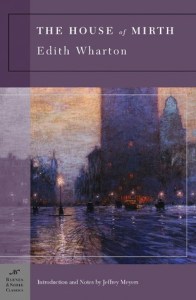 About the Book: Edith Wharton’s dark view of society, the somber economics of marriage, and the powerlessness of the unwedded woman in the 1870s emerge dramatically in the tragic novel The House of Mirth. Faced with an array of wealthy suitors, New York socialite Lily Bart falls in love with lawyer Lawrence Selden, whose lack of money spoils their chances for happiness together. Dubious business deals and accusations of liaisons with a married man diminish Lily’s social status, and as she makes one bad choice after another, she learns how venal and brutally unforgiving the upper crust of New York can be. One of America’s finest novels of manners, The House of Mirth is a beautifully written and ultimately tragic account of the human capacity for cruelty.
Schedule:
- March 1st: Begin reading.
- March 15th: Check-in here or in our Goodreads group.
- March 31st: Wrap-Up/Final thoughts here or in our Goodreads group.
Feel free to read at your own pace, post at your own pace (or not at all), and drop by to comment/chat about the book at any point. The schedule above is just the one I plan to use in order to keep myself organized and to provide some standard points and places for anyone who is reading along to get together and chat.
 Roof Beam Reader