Roof Beam Reader
Adam Burgess
Spooky Reviews: Doctor Sleep, Hill House, and Macbeth
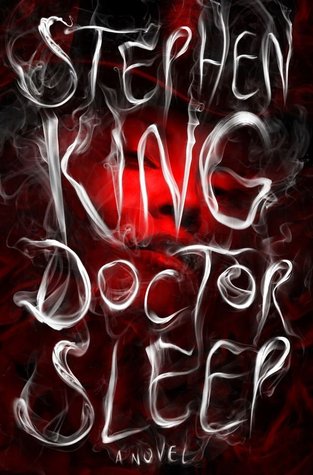 Doctor Sleep by Stephen King
Final Verdict: 3.75/4.0
YTD: 58
Doctor Sleep is the long-awaited sequel to one of Stephen King’s most popular novels, The Shining. In it, readers are given the opportunity to witness Danny Torrance as a seriously screwed up but equally well-intentioned alcoholic adult. While some of the suspense of its prequel has not been carried over into this revisit, still King proves why he is a master of his craft and fans of the original will probably not be disappointed by this follow-up.
The story begins with Danny as a child, just a few short years after the events which took place at the infamous and nefarious Overlook Hotel. Danny and his mom are living alone, relatively happy and healthy. Danny’s connection with the Overlook and the otherworldly in general has, for the most part, dissipated. At least, that’s the way it seemed. Soon enough, we learn that the dead still visit young Danny – and he must reach out to his old mentor, Dick Hallorann, to learn how to lock away the demons for good. Ultimately, Danny grows up allowing his mother to believe that his “shining” has dulled – he, like the girl he will one day meet- would rather deal with his abilities on his own, leaving his mom free of the worry and pain which would surely haunt her life, had she known how upsetting his own was.
As an adult, Danny becomes an alcoholic like his father. He hides this, too, from his mother (who must surely have known on some level). He travels the country, a homeless drifter, drinking, screwing, and working jobs just long enough to make a few bucks. Eventually, he sleeps with a woman who, along with her son, will haunt Danny’s memories for years to come. After this lowest-of-low experience, one which the reader should learn of on their own, as it is an anchor to Danny’s life trajectory, Danny eventually ends up in a small New England town where he meets the girl who change forever. His relationship with her is one of mentor and mentee, and it aids in Danny’s road to sobriety. There are others out there like him and Dick, after all, and this girl is more powerful than any he has ever met.
Just like those who shine for good, however, are those who exist from evil. Vampire-like beings, once human, they feed off of the power of the shining. This power is, of course, most concentrated in children. These parasites, an ancient, powerful, and enormously wealthy and well-connected community, travel the country in their R.V.’s, unassuming middle-aged and elderly folk whom nobody would bat an eye at, but who lure and kidnap children, torture them for their “steam” (what they call the excretions of their shining) and then kill them.
Eventually, psychically, their leader, Rose the Hat, crosses paths with Danny’s young apprentice, Abra. At this moment, the scene is set for a battle that will come – that must– come; a showdown between good and evil, between shining and vampire. Abra, Danny, and a few companions must face, head on, this enormous evil force and defeat it once and for all, or die trying.
Ultimately, Doctor Sleep is an intricate, well-developed, and moving sequel to a King masterpiece. While it is not quite as horrifying as his earlier works, King’s talents as a story-teller remain unquestioned. The emotional depth and strength of characterization he brings to this one, too, are admirable, particularly as King’s earlier works tended not to be much concerned with character development (they were much more about creating a mood of suspense or terror than about telling any one person’s story). I was skeptical about the book at first, and remained so for the first couple dozen pages but, in the end, I find myself thinking about the book quite a bit – even weeks after finishing. The mark of a good story, no?
Notable Quotes:
“After the things that she had seen and been through, she knew that shadows could be dangerous. They could have teeth” (7).
“The mind was a blackboard. Booze was the eraser” (83).
“In her head every superstition and old wives’ tale still lived . . . she knew superstition was shit; she also spat between her fingers if a crow or black cat crossed her path” (88).
“Perhaps kids really did come into the world trailing clouds of glory, as Wordsworth had so confidently proclaimed, but they also shit in their pants until they learned better” (123).
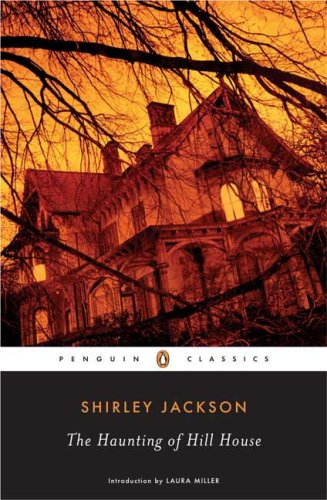 The Haunting of Hill House by Shirley Jackson
Final Verdict: 4.0 out of 4.0
YTD: 56
This has been one of the most surprising reads of the year for me, so far. I’m not sure why I didn’t realize that this Shirley Jackson is the same Shirley Jackson who wrote “The Lottery,” but it didn’t take too long to figure it out. The Haunting of Hill House is simply overflowing with the most luxurious, sumptuous, sensual language imaginable. It’s freaking beautiful – and it’s a horror story! Well, sort of. I would consider it to be more of a psychological thriller, akin to, say The Sixth Sense, but it is typically considered one of the best “horror” books of all-time, so there we go.
Anyway, what did I love about this book? Well, the plot. The characters. The language, especially. The book’s opening paragraphs are some of the best I have ever read, from anyone. It’s the kind of story introduction any writer would dream of crafting – perfection. The rest of the book is much of the same. Romantic language that flows into the most bizarre, eerie plot situations. Eleanor Vance’s troubled mind, Theodora’s narcissism and lesbian inclinations. Mr. and Mrs. Dudley and their dunderheadedness. Doctor Montague’s obsession with the other-worldly, an obsession which leads to tragedy.
On the surface, the book is a supernatural tale about four people who visit a haunted house, each for his or her own reasons. Dr. Montague and his assistant, Theodora, are researching psychic phenomenon (specifically something called “haunting”). The doctor is an occult scholar who has invited Eleanor there due to her documented experience with poltergeists. The fourth is Luke, who is the future heir to Hill House. Initially, the house seems a bit haunted, but in an “isn’t that odd?” sort of way – doors closing by themselves, strange noises in the night, etc. Soon, though, the house begins to flex its muscles, almost as if awakening from a deep slumber. It begins to recognize the people living inside of it, and the house sets its sights on one visitor in particular.
Beneath the veil of “thriller” are the many deeper elements of the story. Jackson is positing feminist ideals, presenting lesbianism in an off-hand, natural sort of way (quite unheard of in 1959), and engaging her readers in questions of science, religion, and human relationships. It is a complex, multifaceted novel, of which the supernatural is only the method, rather than the theme.
Immediately upon finishing this book, I went out and bought another Jackson novel (Hangsaman) and also watched two film versions of The Haunting of Hill House. The first version (1963) departed slightly from the book, but it was much more true to the story than the remake (1999) and much the better film, overall. The remake was, in fact, quite terrible. In any event, the book is one of my favorites of the year – Jackson is a brilliant writer, one whom I regret not having really investigated sooner. I could see myself spending a great deal of time studying her life and works sometime in the future.
Notable Quotes:
“Some houses are born bad” (70).
“It was said that the older sister was crossed in love, although that is said of almost any lady who prefers, for whatever reason, to live alone” (77).
“No live organism can continue for long to exist sanely under conditions of absolute reality; even larks and katydids are supposed, by some, to dream. Hill House, not sane, stood by itself against its hills, holding darkness within; it had stood so for eighty years and might stand for eighty more. Within, walls continued upright, bricks met neatly, floors were firm, and doors were sensibly shut; silence lay steadily against the wood and stone of Hill House, and whatever walked there, walked alone” (3).
“Am I walking toward something I should be running away from?”
“I am like a small creature swallowed whole by a monster, she thought, and the monster feels my tiny little movements inside.”
“Fear is the relinquishment of logic, the willing relinquishing of reasonable patterns. We yield to it or we fight it, but we cannot meet it halfway.”
Guest Post: Joel Derfner, Lawfully Wedded Husband
Dear Readers,
Today, I am pleased to welcome Joel Derfner, author of Lawfully Wedded Husband and Swish, to the blog!
After weeks of trying to figure out what to write my guest post about, I take Roof Beam Reader’s recent post about Arthur Conan Doyle as a sign, because I’ve been spending a lot of time talking about Conan Doyle lately with my therapist.
 When Conan Doyle started writing fiction in the early 1880s while waiting for patients to start appearing at the medical practice he’d recently opened (he waited, alas, in vain), detective stories were the furthest thing from his mind; he was writing a novel about three Buddhist priests who show up to take revenge on a general who had fought in the First Afghan War. But then he came up with Sherlock Holmes, and people liked him and wanted more, so Conan Doyle gave them more, and then they wanted more, and then more, and finally Conan Doyle couldn’t take it. “I weary of his name,” he wrote in one letter to his mother; in another, “I think of slaying Holmes . . . . He takes my mind from better things,” that was to say, his historical novels. His mother wrote back, “You won’t! You can’t! You mustn’t!” but he ignored her and sent The Strand a story in which he tossed Holmes off the Reichenbach Falls, at which point twenty thousand people immediately cancelled their subscriptions.
Alas for Conan Doyle, once he got back to writing his historical fiction, which was what he was really interested in, people got back to not caring about his work, and eventually in order to keep from starving to death he had to resurrect Holmes. Circulation for The Strand immediately went up by over thirty thousand, and Conan Doyle made enough money that he could make vast, extravagant attempts to prove the validity of Spiritualism before he died of angina.
 The reason I’ve been talking about this in therapy is that I’ve written three books. The first, Gay Haiku, was a cute little pink bathroom book. The second, Swish, was a memoir; on the surface it’s an exploration of gay stereotypes and the truths that can lie underneath them, but ultimately it’s a book about what it is to feel like an outsider. The third, Lawfully Wedded Husband: How My Gay Marriage Will Save the American Family, published last month, is half memoir and half musings on history, politics, and culture. I don’t really count Gay Haiku, since it took about five seconds to write, but the other two books I think of as aiming at something important about the human condition, as fulfilling what D.H. Lawrence says is the function of art:
The essential function of art is moral. Not aesthetic, not decorative, not pastime and recreation. But moral. The essential function of art is moral. But a passionate, implicit morality, not didactic. A morality which changes the blood, rather than the mind. The mind follows later, in the wake.
Swish and Lawfully Wedded Husband are both attempts—whether they’re successful or not isn’t for me to say—to change the blood of their readers.
The problem is that now I’ve run out of life to memoirize, so I’m writing a murder mystery.
“My last book was about civil rights and pain and compassion,” I say to my therapist. “This book is about a dead body.”
“You know,” he says, “Arthur Conan Doyle wrote—”
“Yes, I know, I know,” I say. “So you keep telling me. But this is different.”
“Really? Have you ever even picked up one of the novels Conan Doyle thought was important?”
“You’re missing the point.”
“The point,” he says, “is that worrying about whether the work you’re doing is important or not is silly, because ultimately it’s not your judgment to make. Furthermore, it’s counterproductive, because it keeps you from engaging wholeheartedly in the work itself.”
“Can’t we just go back to talking about my mother?”
Of course my therapist is right, though I occasionally accuse him of trying to turn me into a Buddhist, and not the fun kind who would take revenge on somebody for his actions in the First Afghan War. And, to give myself some credit, I’ve started acting like he’s right too, and working on the mystery novel becomes a lot easier when I’m not hating myself for not writing something that fulfills the essential function of art. And who knows? Maybe Sherlock Holmes himself fulfills that function, showing his readers that reason and truth can triumph in a world that sets all its powers against them.
I don’t really have a clean way to wrap up this post, so I guess I’ll just say that I’m fine seeing all my other work fall by the wayside, as long as something I write changes somebody’s blood.
Praise for JOEL DERFNER:
“Moving seamlessly from the personal to the historical to the political, Joel Derfner meditates with wit, insight and even-handedness on the realities of marriage — his and everyone’s. His story is not only deftly placed in the context of the broader fight for marriage equality, but is also a powerful tool in that fight. Mainly because it’s so funny.”
—David Javerbaum, 12-time Emmy winner (for The Daily Show with Jon Stewart) and co-author of The Last Testament of God: A Memoir
“In a culture where we disguise vulnerability with physical perfection and material success, Derfner skewers heartache with Wildean wit . . . [Derfner is] the next Noël Coward.”
—Out.com on Swish
More about LAWFULLY WEDDED HUSBAND:
 When Joel Derfner’s boyfriend proposed to him, there was nowhere in America the two could legally marry. That changed quickly, however, and before long the two were on what they expected to be a rollicking journey to married bliss. What they didn’t realize was that, along the way, they would confront not just the dilemmas every couple faces on the way to the altar—what kind of ceremony would they have? what would they wear? did they have to invite Great Aunt Sophie?—but also questions about what a relationship can and can’t do, the definition of marriage, and, ultimately, what makes a family.
Add to the mix a reality show whose director forces them to keep signing and notarizing applications for a wedding license until the cameraman gets a shot she likes; a family marriage history that includes adulterers, arms smugglers, and poisoners; and discussions of civil rights, Sophocles, racism, grammar, and homemade Ouija boards—coupled with Derfner’s gift for getting in his own way—and what results is a story not just of gay marriage and the American family but of what it means to be human.
More about JOEL DERFNER:
 Joel is from South Carolina, where his great-grandmother had an affair with George Gershwin. After leaving the south, he got a B.A. in linguistics from Harvard. A year after he graduated, his thesis on the Abkhaz language was shown to be completely wrong, as the word he had been translating as “who” turned out to be not a noun but a verb. Realizing that linguistics was not his métier, he moved to New York to get an M.F.A. in musical theater writing from the Tisch School of the Arts.
Musicals for which he has written the scores have been produced in London, New York, and various cities in between (going counterclockwise). In an attempt to become the gayest person ever, he joined Cheer New York, New York’s gay and lesbian cheerleading squad, but eventually he had to leave because he was too depressed. In desperation, he started knitting and teaching aerobics, though not at the same time. He hopes to come to a bad end.
Where to Buy Lawfully Wedded Husband: Amazon.com, IndieBound, Barnes & Noble, Anderson’s, Powell’s, Book People, Book Passage, McNally Robinson.
Thoughts: The Memoirs of Sherlock Holmes by Arthur Conan Doyle
 The Memoirs of Sherlock Holmes by Sir Arthur Conan Doyle
Final Verdict: 3.75 out of 4.0
YTD: 55
The Memoirs of Sherlock Holmes is the third in the Sherlock Holmes series, following two novels (A Study in Scarlet and The Sign of Four) and a collection of short stories (The Adventures of Sherlock Holmes). It contains eleven stories, in total, which, much like the previous titles in this series, tackle a range of social, political, and ethnic topics, all the while entertaining the reader with witty narrative and engaging, sometimes surprising mysteries and detective work.
My edition is, unfortunately, true to the revised original American edition of the collection, which edited out a story called “The Adventure of the Cardboard Box.” The story is now printed in American editions of the collection titled “His Last Bow,” which I do have, so I’ll get to it eventually. Of course, I’m a purist, though, so it irks me very much to have to read stories out of the order of original publication or author intention.
That being said, the collection is a good one. I particularly enjoyed “The Yellow Face,” which was a story of ahead of its time, in my opinion. This one tells of a young American woman who meets a young British man, they marry and move to England together. Soon enough, the woman’s secret history is uncovered, and the revelations are (for the time) shocking. As a modern reader, however, there is a certain delight and admiration for the risk Doyle took, here, and for the stance that the narrative takes on issues of equality and human decency. It was a pleasant surprise.
Others in the collection which I rather enjoyed include “The Gloria Scott” and “The Musgrave Ritual,” both of which had interesting elements of darker, Poe-esque mystery; also, “The Reigate Puzzle” and “The Naval Treaty,” both of which had elements of heightened daring, danger, and suspense. Finally, of course, there is “The Final Problem,” which is not only a wonderful short story, but, knowing the history of the series, a moving read. It adds a very deep, personal element to the character of Sherlock Holmes, a human side which his character sometimes (intentionally) lacks. Even knowing that the series continues, it was a difficult read and a sad ending!
All this taken into consideration, I still prefer, over all, the first collection in the Holmes series. I was bothered by the very close similarity of “The Stock-broker’s Clerk” to an earlier Sherlock Holmes story (“The Red-headed League”). The two stories seemed like the reworking of a very similar plot. Of course, Doyle wrote from a standardized formula of sorts, but even still, it felt to me much too similar, in this case. Perhaps to Doyle, too, considering where he tried to go with “The Final Problem.”
The Memoirs of Sherlock Holmes collection is an interesting piece to the overall Holmes collection. As in the previous works, this one is narrated by Watson, but many of the stories find Watson specifically trying to point out just how unremarkable Sherlock Holmes is – how lucky he sometimes gets, how even he can be stumped, at times. The purpose of this is probably two-fold; first, to set up readers’ expectations for the last story in the collection and second, to round out and make more realistic the Sherlock Holmes character in general. Perhaps there had been some instance that Doyle make Sherlock Holmes seem less of a superhero – how interesting can a character with no flaws be, after all?
Ultimately, I continue to be pleased with these stories and every time I revisit the next book in the collection, I find myself wondering what took me so long to get back to it. These are always some of the most fun, entertaining, and engaging reading experiences, and it rarely takes me more than a few days to get through the entire book. Doyle’s writing, in Memoirs, remains fresh and accessible, and he continues to push certain boundaries, which adds depth and intrigue to books which might otherwise be simply light, “pleasure” reading.
One final note: I may or may not have known this (though I certainly didn’t remember), but the title from another favorite book of mine, by Mark Haddon, actually seems to have come from one of these stories! In “The Silver Blaze,” Colonel Ross asks Sherlock Holmes, “Is there any point to which you would wish to draw my attention?” and Holmes replies: “To the curious incident of the dog in the night-time.” Wow!
Suggested Reading for:
Age Level: 13+
Interest: Mystery, Detective Stories, 19th Century Britain, Social Justice, Crime, British Fiction, Short Stories, 1,001 Books.
Notable Quotes:
“Of all ghosts, the ghosts of our old loves are the worst.” (“The Gloria Scott”)
“Any truth is better than indefinite doubt.” (“The Yellow Face”)
“It has long been an axiom of mine that the little things are infinitely the most important.” (“A Case of Identity”)
“It is stupidity rather than courage to refuse to recognize danger when it is close upon you.” (“The Final Problem”)
“I never can resist a touch of the dramatic.” (“The Naval Treaty”)
“It’s every man’s business to see justice done.” (“The Crooked Man”)
TBR Pile Checkpoint #10 – October Progress!
Congrats to last month’s winner, Sarah of The Everyday Reader!
Hi, There, TBR Pile Challengers! And Welcome to Another Checkpoint!
It is October 15th, which means we are now officially in the final quarter our 2013 TBR Pile Challenge! I continue to be impressed and excited by the participation in this challenge – it’s enough to make me want to bring it back again in 2014!
Where I’m At: I have read 11 of my required 12 books – almost done! This might be the first year in the last couple where I manage to complete all 12 books on my list AND possibly the alternates, too. I keep getting distracted by some fabulous new releases (such as the Salinger biography that I just read/reviewed, as well as the new Rick Riordan and Stephen King books), so I don’t know if I’ll get to all 14 books on my list, but I will definitely read the main goal of 12!
My Progress:
Book #1: O Pioneers! by Willa Cather
Book #2: The Alchemyst by Michael Scott
Book #3: Orlando by Virginia Woolf
Book #4: The Gunslinger by Stephen King
Book #5: The End of the Affair by Graham Greene
Book #6: Sodom on the Thames: Sex, Love, and Scandal in Wilde Times by Morris Kaplan
Book #7: A Streetcar Named Desire by Tennessee Williams
Book #8: Shine by Lauren Myracle
Book #9: Gods and Monsters by Christopher Bram
Book #10: Persuasion by Jane Austen
Book #11: The Memoirs of Sherlock Holmes by Sir Arthur Conan Doyle (review to come)
Below, you’re going to find the infamous Mr. Linky widget. IF you have completed any reviews for books on your challenge list, please feel free to link them up here so that we can easily find your posts, encourage one another, see what progress is being made on all these piles, etc. Also, feel free to link-up to your own checkpoint post, should you decide to write one (not required – but feel free!).
Giveaway: This month’s challenge once again comes with a giveaway! You can win any book of your choice, up to $20 USD, as long as it is available at The Book Depository (and as long as TBD ships to your location).
To be eligible, you need to do these things:
1. Use the Mister Linky widget below to link-up an eligible review post for this month OR a link to a check-in post for this month. Each eligible review = one entry.
2. Leave a comment sharing with us which book from your 2013 TBR Pile list has been your favorite, so far (or your least favorite, most surprising, etc.). Plus anything else you want to share. =-)
3. Make sure I can reach you by email – so if your email isn’t posted in an obvious place on your blog, then leave it in the comment, here (in a non-spamable format!).
Good luck!
Link-up Your Reviews for September 21st – October 20th:
Mini-Reviews: Salinger, Forster, and Eagleton
Hi, folks! I have been pressed for time, lately (lately? Please. This is nothing new, and we all know it) and I am way behind on reviews. I “definitely” have four book reviews outstanding and “technically” have another three as well (texts I assigned to my composition students, which I have naturally read and should review at some point…). Anyway, the only way for me to get to them, at this point, is with some mini-reviews or less-than-organized thoughts. I recently read The Memoirs of Sherlock Holmes, too, for which I do hope to provide a full review (because it is on multiple of my challenge lists for 2013).
The following three are all works of non-fiction (one biography and two literary theory type texts) so I feel it is somewhat appropriate to present them together. Here we go!
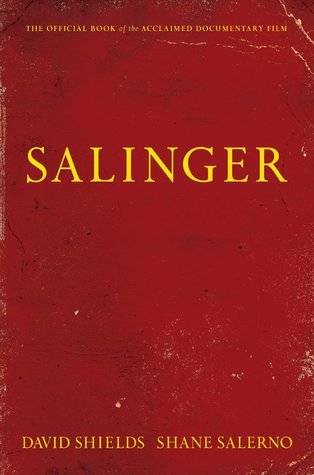 1. Salinger by David Shields and Shane Salerno — 4.0 out of 4.0
This is perhaps one of the best biographies that I have ever read. No, in fact, it is probably the best biography I have ever read, as the other works which come close, in my mind, are actually autobiographies (Mark Twain’s, for instance). The authors spent eight years researching Salinger’s life and works in order to get at the truth behind this brilliant but troubled writer, and their exhaustive studies have resulted in a masterful portrait and new understanding of the man who was Holden Caulfield.
The book is divided into four parts, and these four parts directly correspond to the four steps of Advaida Vedanta Hinduism. These four steps included “Apprenticeship” (Brahmacharya); “Householder Duties” (Garhasthya); “Withdrawal from Society” (Vanaprasthya); and “Renunciation of the World” (Sanyasa). Separating the biography into these sections, which clearly, then, correspond to chronological portions of Salinger’s life (personal and writing lives), helps the reader to make sense out of the mystery that was J.D. Salinger. Why did he retreat from society? But, more than this, Shields and Salerno dig deeper and expose the sometimes hypocrisy of Salinger’s self-exile – including the ways he would stay in touch with the world, though on the fringes, and the moments when he would reappear for just long enough, and in only the “necessary” ways, in order to refuel the flame of public interest.
What is truly wonderful, too, about this biography is that it is not titled too far toward fanatic praise (such as the Paul Alexander biography) nor toward outright personal animosity (such as the works of Salinger’s daughter, Margaret, as well as the Ian Hamilton biography). Ultimately, the two biographers, here, present a notably balanced picture of the man and writer. Much of Salinger’s history and personal relationships are either related for the first time in this work or presented with corroborating evidence such as has been missing in previous works, due to the fact that no one would speak about Salinger while he was alive.
Some have experienced mixed feelings about whether or not to read this biography, as it seems to be an invasion of the privacy Salinger held so dear. I would argue, however, and I think the two authors of this work would agree, that Salinger did not intend or expect his life and work to go unexamined forever – just while he was alive. Part of his religious teachings included the commitment to one’s art, without the fame or fortune which might come with it. Evidence suggests that he did continue writing, and likely very much, over a long period of time, but he chose not to publish that writing for variety of reasons, most of which had to do with his religious beliefs (though there are other elements to this decision, as Shields and Salerno mention). Ultimately, it seems Salinger left instructions for many works to be published following a certain posthumous waiting period. Since this is the case, one can, I believe, feel comfortable reading this intimate, sometimes expose, knowing that Salinger was likely perfectly aware that, following his death, his secret world would come out.
The structure of the work might work more for some than for others, as it is set up similar to a screenplay (which is perhaps appropriate, considering the documentary and the book were planned together and developed together, as a kind of single entity). It worked well for me in certain parts, but at other times I found myself wishing for a traditional narrative form. Ultimately, though, I find myself with very little to criticize. As a fan of Salinger (so much so that this very blog’s name is inspired by his work), I can and do highly recommend it.
 2. Aspects of the Novel by E.M. Forster — 3.75 out of 4.0
E.M. Forster’s Aspects of the Novel heralded the now enormous scholarship on theory and criticism of the novel and the writing process. In this work, which, like Virginia Woolf’s incredible A Room of One’s Own is actually a series of lectures, Forster lays out his now infamous set of seven elements of the novel: Story, Plot, Fantasy, Prophecy, Pattern, and Rhythm. This is also the work responsible for bringing to readers and writers the idea of “flat” versus “round” characters — yes, those terms, unlike many, are actually traceable to a source!
In his lectures, Forster discusses in length, and from many perspectives, the differences between readers and critics, including their different purposes, the approaches they do (and should?) take, and also their abilities. He says, for instance:
“The reader must sit down alone and struggle with the writer, and this the pseudo-scholar will not do. He would rather relate a book to the history of its time, to events i the life of its author, to the events it describes, above all to some tendency” (13-14).
This passage, I think, captures the essence of what Forster is trying to do, which is to separate the critic and the artist – to acknowledge the importance of a more artistic approach to reading, rather than a technical or historical one – to validate, in fact, the personal relationship a reader has with individual texts.
He does much more than this, of course. He is teaching writers how to write, without having them write a word. He gives numerous examples, from Dickens to Proust, from Woolf to DeFoe, to explain how and why certain writers do certain things. He examines beauty and fantasy – he explains, like none other have been able to, how Virginia Woolf is indeed a “fantasist” who writes with “deliberate bewilderment” (19). Why was the world of beauty closed to Dickens? Why is it so hard to define the term “story” and, upon defining it, what is its importance? Why do we tell stories and how are we more truthful, more connected, in fiction than in real life?
Some of Forster’s greatest insights, I think, come in the section on “People.” He says that “a character in a book is real when the novelist knows everything about it. He may not choose to tell us all he knows – many of the facts, even of the kind we call obvious, may be hidden” (63). From here, he explains why this is and how it both strengthens a work and benefits the reader’s experience with it. “A novel is a work of art,” after all, “with its own laws, which are not those of daily life.” Whether we are reading a work of fantasy or realism, naturalism or postmodernism, what we should be looking for is the rules of the particular world at hand, and how are those rules governed, followed, or broken? For me, this approach has opened a number of doors – has made it much easier for me to accept the unacceptable (except, of course, in stories which are just downright bad).
In addition to specific evaluations like the one above, Forster also discusses elements such as allegory, mysticism, and symbolism, among others, with direct references to works and writers who employ them well. He even compares to writers or works who might both be mystics, for instance, and talks about how they do what they do – how it is different, perhaps, but equally effective. For a student of literature, the approach is, I think, wonderful and helpful.
Some of the references are outdated, and some of the language, too, but though these lectures happened decades ago, one can understand why they were the foundation for schools of thought which have cropped up and built upon them ever since. For any serious reader, Aspects of the Novel is a must.
 3. How to Read Literature by Terry Eagleton — 3.5 out of 4.0
I just love Terry Eagleton. He certainly will not appeal to everyone (in many of his works he is overtly political, which some readers will find put-offish, even if they agree with his politics, but especially if they don’t. I do happen to agree with most of his politics, and I think the guy is hilarious. And also a damn good writer – engaging, entertaining, and yet seriously knowledgeable.
This particular work, his most recent, is like a user-friendly introduction to literature and to many of his other works. He, like Forster, separates his text into themes: Openings, Character, Narrative, Interpretation, and Value. Within each section, he elaborates on how to effectively read and understand certain aspects of these themes by giving great examples of writers doing it well.
Of particular interest, to me, were his explorations of Charles Dickens’ Great Expectations (found in the section on Interpretation) and also his exploration of Thomas Hardy’s Jude the Obscure (found in the section on Character). In both cases, his examination of the texts and how they work added much to what I had already taken away from them in my original readings (or to what I understood about the writer’s particular talents). In fact, it made me want to re-read both right away – which, sadly, I haven’t found the time to do!
Eagleton also gives some helpful, if not overly academic distinctions between “a book” and “a text,” for instance. Those who have traveled far in their literary education may find this book somewhat superficial; however, for those who are newly interested in literary studies or who are avid readers but do not necessarily know how to “talk the talk” – how to dissect a work of fiction, this could be a wonderful place to start. And, honestly, even for those with decades of experience, many of Eagleton’s examples are witty and transferable (I am using some in my own classes in the future, for instance) and his dissections of classic novels are always, always worth the ride.
 Roof Beam Reader