Roof Beam Reader
Adam Burgess
Readalongs: Macbeth and Doctor Sleep
Hello, folks! I have decided to take part in two read-alongs during the month of October.
 Number One
The first is a read-along of Macbeth, which I guess I’m technically “hosting,” but it will be very informal. The idea came about via a Twitter conversation (as is usually the case) with @Leeswammes and @bibliosue. Anyone who would like to join in, please feel free! Macbeth is a five act play, so we plan to read basically one (or 1+) act each week.
I will have a more formal reading plan posted on October 1st, which is when I plan to begin reading. Macbeth is great fun, so if you haven’t read it, I highly recommend it. It’s also PERFECT Halloween reading. You can find additional thoughts and a sign-up widget in Bibliosue’s announcement post, Here.
Number Two
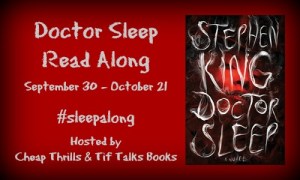
The second read-along is hosted by Tif at Tif Talks Books. This is for Doctor Sleep, which is the new Stephen King novel, a sequel to his incredibly popular (and awesome) The Shining. Details about this read-along can be found Right Here. We’ll be keeping up with our reading on Twitter, with the hashtag #Sleepalong.
Censoring Mark Twain: A Literary Embarrassment
Revisiting an old favorite, in honor of Banned Books Week.
2014 Themed Reading
So, I’ve decided that, in an effort to gain a deeper understanding of and appreciation for certain topics that I have always been interested in or curious about, I am going to arrange my reading in 2014 into themes/categories. I am selecting 12 themes and will spend one month on each. In that month, I will focus on selected readings for that topic – some months may have just 2 or 3 books, depending on the complexity of the topic and the length/density of the works, whereas other months may have 4 or 5 books planned.
Of course, I will still be doing other reading as well – reading for my own classes, reading whatever interesting books happen to pop-up throughout the year, reading whatever is on my shelf that calls to me, etc. If I read, say, 3 books per theme throughout the year, that’s still just 36 books in the year, and I tend to read about 70. So, plenty of room to still do other things!
This is just my effort to dig deeper into the things I’ve really always been curious about but feel that I don’t know as much about, or at the level I would like to know about it. Once I have the calendar completed, I will create a page here on the blog specifically devoted to it. For now, here is what is starting to take shape:
January: Walt Whitman
Reading: The Complete Poems by Walt Whitman
Supplemental: Walt Whitman’s America: A Cultural Biography by David S. Reynolds
February: John Steinbeck
Readings: To a God Unknown by John Steinbeck
Readings: Steinbeck: A Life in Letters by John Steinbeck
March: Literary Theory
Reading: Beginning Theory by Peter Barry
Reading: The Mirror and the Lamp: Romantic Theory and the Critical Tradition by M.H. Abrams
Reading: Mythologies by Roland Barthes
Reading: An Introduction to Literature, Criticism, and Theory by Andrew Bennett and Nicholas Royle
April: History
Reading: Founding Brothers by Joseph Ellis
Reading: The Crisis of the European Mind by Paul Hazard
Reading: Cleopatra by Stacy Schiff
Reading: The Defining Moment by Jonathan Alter
May: Science
Reading: A Briefer History of Time by Stephen Hawking
Reading: Cosmos by Carl Sagan
Reading: A Short History of Nearly Everything by Bill Bryson
June: On Reading and Writing
Reading: How to Read a Book by Mortimer Jerome Adler
Reading: On Writing by Stephen King
Reading: Willa Cather on Writing: Critical Studies on Writing as an Art by Willa Cather
July: The French Revolution
Reading: The French Revolution: A Very Short Introduction by William Doyle
Reading: The French Revolution: A History by Thomas Carlyle
Reading: A Place of Greater Safety by Hillary Mantel
Reading: Ninety-Three by Victor Hugo
August: Philosophy
Reading: Poetics by Aristotle
Reading: The Republic by Plato
Reading: Thus Spoke Zarathustra by Friedrich Nietzsche
Reading: Philosophy: A Very Short Introduction by Edward Craig
September: International Literature
Reading: China?
Reading: South America?
Reading: Middle Eastern?
Reading: African?
October: LGBT Studies (Literature/History)
Reading: The Absolutist by John Boyne
Reading: Annabel by Kathleen Winter
Reading: The Essential Gay Mystics by Andrew Harvey
Reading: Eminent Outlaws: The Gay Writers Who Changed America by Christopher Bram
November: Romanticism (American & European)
American: Walden by Henry David Thoreau
American: Pierre; or, The Ambiguities by Herman Melville
European: Blake’s Poetry and Designs by William Blake
European: A Sicilian Romance by Ann Radcliffe
Supplemental: Romanticism: A Very Short Introduction by Michael Ferber
December: Religion
Reading: Fear and Trembling by Soren Kierkegaard
Reading: Confessions by Saint Augustine of Hippo
Reading: The God Delusion by Richard Dawkins
Reading: Buddhism: A Very Short Introduction by Damien Keown
Reading: Science and Religion: A Very Short Introduction by Thomas Dixon
If you would like to join me in pursuing these themes (any or all of them) throughout the year, please feel free! You do not need to read the exact same works as I do – in fact, it could be fun to interact with folks who are reading different texts within the same theme.
Also, if you have thoughts about or suggestions for any of these categories, let me know! This is a work in progress up until the start of the new year. 🙂
TBR Pile Checkpoint #9 – September Progress!
Congrats to last month’s winner, Karen from Karen’s Books & Chocolate!
Hi, There, TBR Pile Challengers! And Welcome to Another Checkpoint!
It is September 15th, which means we are now officially in the final quarter our 2013 TBR Pile Challenge! So far, the overall progress and participation in this year’s challenge has been outstanding! I have been impressed by you guys – some of you are even finished, already!
Where I’m At: I have read 10 of my required 12 books – so I’m feeling good! This might be the first year in the last few where I manage to complete all 12 books on my list (although I have some hefty books left to read, so I’m not going to get ahead of myself, here). I keep getting distracted by some fabulous new releases (such as the Salinger biography that I’m currently reading), so I don’t know if I’ll get to all 14 books on my list, but I will definitely read the main goal of 12!
.
My Progress:
Book #1: O Pioneers! by Willa Cather
Book #2: The Alchemyst by Michael Scott
Book #3: Orlando by Virginia Woolf
Book #4: The Gunslinger by Stephen King
Book #5: The End of the Affair by Graham Greene
Book #6: Sodom on the Thames: Sex, Love, and Scandal in Wilde Times by Morris Kaplan
Book #7: A Streetcar Named Desire by Tennessee Williams
Book #8: Shine by Lauren Myracle
Book #9: Gods and Monsters by Christopher Bram
Book #10: Persuasion by Jane Austen
Below, you’re going to find the infamous Mr. Linky widget. IF you have completed any reviews for books on your challenge list, please feel free to link them up here so that we can easily find your posts, encourage one another, see what progress is being made on all these piles, etc. Also, feel free to link-up to your own checkpoint post, should you decide to write one (not required – but feel free!)
GIVEAWAY: This giveaway is closed. Congrats to Sarah of The Every Day Reader, who chose to receive a copy of For Darkness Shows the Stars by Diana Peterfreund!
Link-up Your Reviews for August 21st – September 20th:
Review: Tampa by Alyssa Nutting
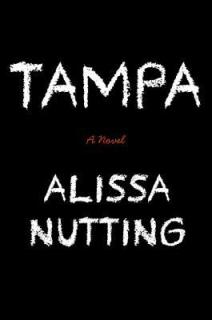 Tampa by Alissa Nutting
Final Verdict: 3.0 out of 4.0
YTD: 48
Tampa is the much-talked about, widely reviled, and heavily debated inaugural novel from writer Alissa Nutting. It is based on the real-life events of a Florida teacher who had sex with her underage students. In it, we are introduced to one of contemporary fiction’s most unbelievably cold and calculating sociopaths, Celeste Price. While most of literature’s psychologically imbalanced men and women tend to be masochists and/or murderers, Celeste is instead an obsessive-compulsive sexual deviant and addict. She just cannot get enough of the fourteen year old boys. Yes, you read that right. She, a 26-year-old high school teacher, preys on adolescent boys.
Indeed, Tampa is likely to be one of the latest and greatest in a long line of books that are sure to face (or face again) censorship and library ban requests. Why all the drama? Well, let’s begin at the beginning: Nutting’s principal character (the young, first-time teacher, fresh out of her education program) opens her story with a masturbation scene, which leads into her recounting an anecdote about her first sexual experience with a boy, when she (and he) were just fourteen. Thus the scene is set for her lifelong fascination with youthful teenage lovers. Everything is told, by the way, in graphic, explicit, highly imaginative detail.
Shockingly, this reality is probably not the most unappetizing element of the book. After all, there are places in the world where 14 (or younger) is the age of consent. There are some nations and religions which marry-off their girls before they have even reached puberty. So, while the age issue might be nauseating to most of us in certain political and social circumstances, it is not the worst of the story. What is truly disturbing is Celeste Price’s narcissistic self-involvement, her willingness to do absolutely anything, to anyone, in order to get her way. Maybe that means whoring herself out to a student’s father. Maybe it results in psychologically damaging a young man, probably permanently, by making him believe that he is responsible for his own parent’s death. Anything goes, as long as Celeste gets her sex.
At first, I was put-off by the very cold, clinical narrative approach. The prose is distant, almost willfully antagonistic. It is such as makes the reader not at all sympathetic to the Celeste’s “plights.” But, of course, that is entirely the point. Celeste is a cold woman who sees things in a very bizarre, unnatural way. Life, for her, bends toward one direction – sexual gratification. Her next fix is almost always on her mind, so all other matters fall off, like rain on a thrice-waxed automobile. Are all sexual predators as entirely consumed as Celeste? Probably not; however, creating a grotesque so as to make a particular point is one of the oldest narrative techniques, and it still works (as long as we do not fall into the trap of taking everything so literally).
Overall, I was satisfied with the book. Perhaps satisfied is not quite the appropriate work, given the subject matter. I think Nutting pushes the envelope – she is bold and daring in an environment and climate which, currently, is ever ready to pounce and condemn. Unfortunately, her characters are quite lacking in breadth and development, which does mean the story falls somewhat flat emotionally, but I am not convinced that that is not somewhat intentional (I do feel for Celeste’s primary victim, sometimes, but that is about the extent of it – even her husband leaves much to be desired in terms of empathetic ability).
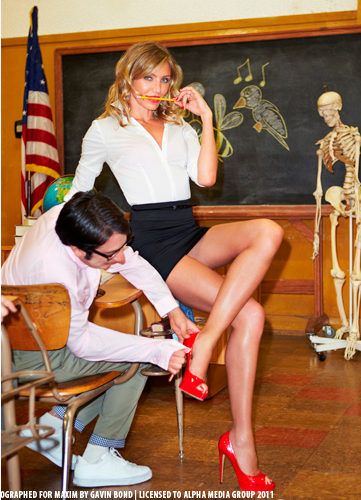 It is easy to understand how some have mistaken this novel for pornography. After all, nearly every page (and certainly every chapter) is littered with sexual innuendo, sexually explicit inner-monologue, or actual depictions of (sometimes insanely wild) sex acts. But, pornography? No. The purpose of pornography is to sexually arouse a person and stimulate them to orgasm. That is not the purpose of this book. Yes, it is graphic and, yes, it is detailed – it is, as much as I hate the word, highly taboo. But its purpose is much greater than “to be daringly titillating.” In fact, that is not the point at all. The narcissistic, sociopathic machinations of this school teacher may seem unbelievable, but that is exactly the point – there are people in the world like this (or near enough), and we, Nutting seems to say, remain happily and almost intentionally blind to this fact, particularly when it comes to viewing young women as potential sexual predators. How do we imagine pedophiles, after all? Creepy middle-aged white men? But, what if that ridiculously attractive young woman happens to have a sexual preoccupation for young boys? Or young girls?
My problem with the way it begs this question (and it is a good question), is that it does seem to fetishize, in a way, pedophilia or sexual predation from this vantage point. That is to say – a traditionally written book about a sexual predator would likely make the villain wholly repulsive – and that villain would usually be a middle-aged white man. Here, when the tables are turned and it is a female sex villain, she is almost unimaginably attractive, so much so that it is not just the young boys, but also their fathers (and maybe even some female colleague teachers) who want to devour her. It’s a dangerous tightrope Nutting walks, and it leaves open for discussion some additional, important questions. How do we view problematic sex situations, and how do we envision the “bad guys?”
The book isn’t supposed to strike terror into the hearts and minds of every young teenage boy (most would probably enjoy this book, actually) or their parents, but it is supposed to open the dialogue, and it does so by creatively re-imagining events that actually happened. It is a groundbreaking piece of work, but that doesn’t mean everyone will be able to stomach it.
Suggested Reading for:
Age Level: Adults+
Interest: Pedophilia, Sexual Predators, Abuse, Sociopathic Behavior, Narcissism, Psychology of Sexuality, Sex Addiction, Creative Nonfiction, Crime, Gender Roles (Stereotypes).
 Roof Beam Reader