Roof Beam Reader
Adam Burgess
TBR Pile Checkpoint #6 – June Progress!
Hello, TBR Pile Challengers!
It is June 15th and, ready or not, we are now officially HALF-WAY through 2013 and half-way through our 2013 TBR Pile Challenge! I have been very impressed by all the progress being made through these challenge lists – the monthly updates have been so much fun. I hope you all agree!
Where I’m At: I have read 9 of my required 12 books. I have made absolutely ZERO progress since last month’s check-in, but that’s largely due to the semester finishing up, teaching summer classes, starting the Beats of Summer event, and also reading Don Quixote for my Classics Club challenge. I know I will get at least one more book (Persuasion by Jane Austen) read for this challenge during the summer, thanks to Austen in August, but I hope to also read one more before the new semester starts in September.
Progress:
Book #1: O Pioneers! by Willa Cather
Book #2: The Alchemyst by Michael Scott
Book #3: Orlando by Virginia Woolf
Book #4: The Gunslinger by Stephen King
Book #5: The End of the Affair by Graham Greene
Book #6: Sodom on the Thames: Sex, Love, and Scandal in Wilde Times by Morris Kaplan
Book #7: A Streetcar Named Desire by Tennessee Williams
Book #8: Shine by Lauren Myracle
Book #9: Gods and Monsters by Christopher Bram
My favorites so far have been Orlando, A Streetcar Named Desire, and O Pioneers! What have been YOUR favorites, so far? Any surprises or major failures?
Below, you’re going to find the infamous Mr. Linky widget. IF you have completed any reviews for books on your challenge list, please feel free to link them up here so that we can easily find your posts, encourage one another, see what progress is being made on all these piles, etc. Also, feel free to link-up to your own checkpoint post, should you decide to write one (not required – but feel free!)
Giveaway!: Since we are officially at the half-way mark, this month’s checkpoint comes with TWO GIVEAWAYS! Be sure to link-up your reviews (or a checkpoint post) by the deadline. Every link you post (provided it is new to this month – no posts/reviews used previously!) will earn you one entry into a random drawing. The prize is a book of your choice, up to $15 USD, from The Book Depository!
Link-up Your Reviews for May 21st – June 20th:
Friday’s Featured Beat: Jack Kerouac!

Name: Jack Kerouac
Born: March 12, 1922 (Lowell, MA)
Died: October 21, 1969 (St. Petersburg, FL)
Seminal Work: On the Road
Relationship to The Beat Generation:
Jack Kerouac, with Allen Ginsberg and William S. Burroughs, founded The Beat Generation in 1940s New York City. He was inspired by Jazz music and by the mantra of “first thought, best thought.” His writing reflects a quest for honesty and a mythical approach to ordinary life.
Importance to Literary History:
As one of the founding members of the Beat Generation and arguably its most influential character, Jack Kerouac has a very real place in American literary history. On the Road has appeared on almost every published list of “greatest American novels,” since the 1960s and has become one of the most enduring American novels of the 20th Century.

Jack Kerouac and Automatic Writing:
Kerouac wrote his seminal work in one frantic, frenzied burst that took him three weeks. He had been taking notes for years, in preparation for what would become the novel, but when he actually sat down to write a book – he did it all at once. He termed this particular style, “spontaneous prose” and compared it to his greatest influence, jazz music. Kerouac believed that prose had the ability to capture truths, particularly “the truth of a moment,” but to be faithful to this, the writer could not revise or edit; these corrections, in Kerouac’s opinion, would be like lying – presenting an untrue prose, lacking truth of the moment. This was certainly a new concept, one which publishers were leery of, and it was partly because of this style (and partly because of the book’s content) that it took 6 years for anyone to publish On the Road.
“Jack went to bed obscure and woke up famous.” -Joyce Johnson |
Biographical Information & Fun Facts:
- Kerouac’s birth name was Jean-Louis Lebris de Kerouac.
- He began his writing career in the 1940s but his first success, On the Road, was not published until 1957.
- Kerouac was a High School football star, at the position of running back. He always dreamed of becoming a writer but thought sports would be his best chance at getting himself and his parents out of hardship.
- He received a football scholarship to Columbia University and moved from Massachusetts to New York in 1939, at the age of 17.
- In New York, Kerouac would discover one of his first loves and greatest influences: Jazz music.
- After breaking his leg and being benched by his football coaches, Kerouac quit the team, quit school, and started working odd jobs while writing more seriously.
- He joined the U.S. Marines in 1943 but was honorably discharged after 10 days, for ‘strong schizoid trends.’
- Kerouac returned to NYC and met Allen Ginsberg, Neal Cassady, and William Burroughs. The Beat Generation of writers began to form.
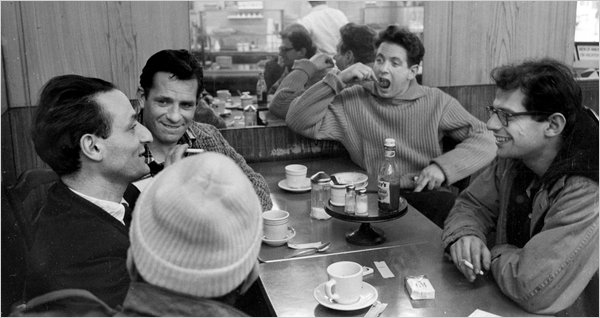
- Kerouac and Cassady took several road trips across the country, from NYC to Chicago, Denver, Los Angeles, and Mexico. These trips would inspire Kerouac to write On the Road.
- In the late-1940s, Kerouac wrote his first novel, Town and City. It was published in 1950 (with help from Ginsberg).
- Kerouac wrote On the Road in 1951. It took him just three weeks, and he wrote it on a single scroll of paper that was 120 feet long, though he had been taking notes for years.
- Upon publication, On the Road became an instant classic, with The New York Times claiming that the book would do for The Beat Generation what Hemingway’s The Sun Also Rises did for The Lost Generation.
- Following On the Road, Kerouac published many books in rapid succession, including: The Dharma Bums and The Subterraneans in 1958, and Dr. Sax, Mexico City Blues, and Maggie Cassidy in 1959.
- In the 1960s, Kerouac wrote and published other novels, such as Big Sur (1962), wrote poetry, including experiments with Japanese haiku and long-form free verse, and also released multiple albums of spoken-word poetry.
- Kerouac did not handle fame well. He spent most of his years post-On the Road in drunkenness and drug addiction.
- He was married three times (1944, 1950, and 1966) and divorced twice.
- Kerouac died of an abdominal hemorrhage at the age of 47, just 12 years after publication of On the Road.
Notable Quotes:
“My fault, my failure, is not in the passions I have, but in my lack of control of them.”
“The only people for me are the mad ones, the ones who are mad to live, mad to talk, mad to be saved, desirous of everything at the same time, the ones who never yawn or say a commonplace thing, but burn, burn like fabulous yellow roman candles” (On the Road).
“One day I will find the right words, and they will be simple” (The Dharma Bums).
“Happiness consists in realizing its all a great strange dream.”
“I realized these were all the snapshots which our children would look at someday with wonder, thinking their parents had lived smooth, well-ordered lives and got up in the morning to walk proudly on the sidewalks of life, never dreaming the raggedy madness and riot of our actual lives, our actual night, the hell of it, the senseless emptiness” (On the Road).
“Live, travel, adventure, bless, and don’t be sorry.”
“Nothing behind me, everything ahead of me, as is ever so on the road” (On the Road).
Friday’s Featured Beat: William S. Burroughs!
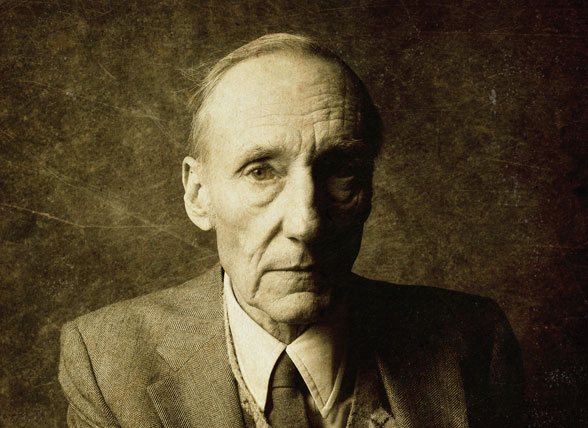
Name: William S. Burroughs
Born: February 5, 1914 (St. Louis, Missouri)
Died: August 2, 1997 (Lawrence, Kansas)
Seminal Work: Naked Lunch (1959)
Relationship to The Beat Generation:
William S. Burroughs is often called the founder of The Beat Generation and the godfather of punk (music). Although he was older, at the time, than most of the Beat writers, he was involved in their movement and was an inspiration to and role model, of sorts, for them. Burroughs was a drug addict for much of his adult life and his addiction inspired him to write books such as Naked Lunch, Junky (1953), and his Nova Trilogy [The Soft Machine (1961), The Ticket that Exploded (1962), and Nova Express (1964)]. He was known for always carrying a gun, even in bed, and for using a walking cane which had a sword inside of it.
Importance to Literary History:
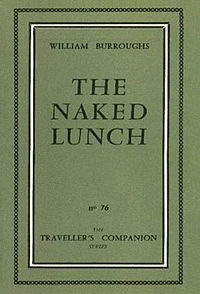 The Nova Trilogy, mentioned above, as well as some of his other works, were crafted using Burroughs’s now-signature “Cut-up” technique. This is a type of narrative form which Burroughs created and which has since enjoyed a movement of its own. This aleatory technique comes about when the writer writes a text (or texts), then “cuts-up” the original and rearranges it, creating a new text with the same content. The technique was inspired by Brion Gysin, a painter-friend whom Burroughs visited in Paris in 1959. Gysin used the cut-up technique on his paintings and Burroughs noticed that it was quite similar to what he had done (juxtaposition technique) in Naked Lunch, but even more radical. His employment of the cut-up technique in literary form, coupled with his belief that was groundbreaking and innovative, and it has inspired the style of many postmodern writers.
William S. Burroughs on his cut-up technique:
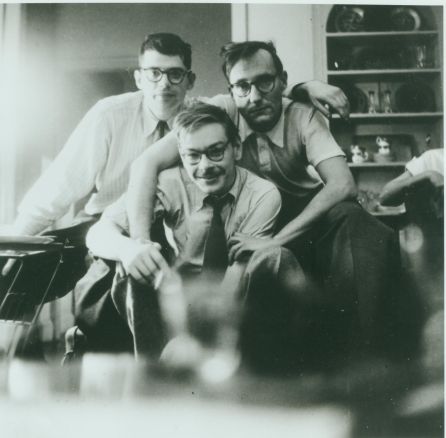
“A page of text-my own or some one else’s-is folded down the middle and placed on another page- The composite text is then read across half one text and half the other-The fold in method extends to writing the flash back used in films, enabling the writer to move backwards and forwards on his time track-For example I take page one and fold it into page one hundred-I insert the resulting composite as page ten-When the reader reads page ten he is flashing forwards in time to page one hundred and back in time to page one-The déjà vu phenomena can so be produced to order-(This method is of course used in music where we are continually moved backwards and forward on the time track by repetition and rearrangement of musical themes-In using the fold in method I edit delete and rearrange as in any other method of composition-I have frequently had the experience of writing some pages of straight narrative text which were then folded in with other pages and found that the fold ins were clearer and more comprehensible than the original texts-Perfectly clear narrative prose can be produced using the fold in method-Best results are usually obtained by placing pages dealing with similar subjects in juxtaposition.”
Biographical Information & Fun Facts:
- William Burroughs wrote his first story in 1922, at the age of eight. This was also the year in which he fired his first gun.
- He graduated from Harvard with a degree in English literature. He was known for being that “quiet guy” on campus who could always be found playing with his gun (a .32 revolver).
- In 1937, he married a European woman named Ilse von Klapper in order to help her escape Nazi occupation and emigrate to the U.S. They divorced a few years later.
- He cut off one of his fingers (the left pinky) when he was 25. On purpose. He brought the pinky to a mental hospital in order to be admitted, where he claimed he cut off his finger as part of an “initiation ceremony into the Crow Indian tribe.” (See his short story, “The Finger”).
- In 1943, Burroughs moved from Chicago to New York City, where he met and became friends with Allen Ginsberg and Jack Kerouac.
- Burroughs and Kerouac collaborated on a novel, And the Hippos Were Boiled in Their Tanks, which was inspired by the true story of their witnessing the murder of their friend Dave Kammerer, by another of their friends, Lucien Carr. Carr killed Kammerer because he (Kammerer) had made sexual advances toward him. And the Hippos was written in 1945, but not published until 2008.
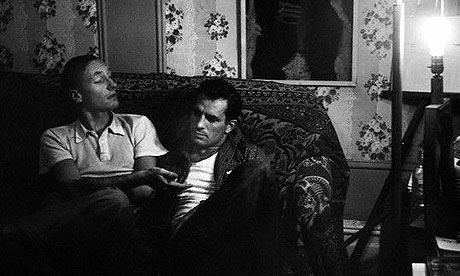
- Burroughs and his new (common-law) wife, Joan Vollmer, moved to Texas and grew marijuana. They moved to Mexico in 1949, where Burroughs went to graduate school and studied Anthropology.
- Burroughs killed Joan in 1951 when playing a game of “William Tell.” He was trying to shoot a glass off her head, but shot her instead. He served two weeks in jail, until his brother arrived and paid thousands of dollars to get him out. He reported to the jail every Monday for a year, until returning to the U.S. He was convicted of manslaughter, but only received a two-year suspended sentence.
- Burroughs later wrote that he did not believe he would have become a writer if not for Joan’s death.
- Burroughs later moved to Colombia, then Tangiers, and then, in 1956, to Morocco, where Kerouac, Ginsberg, and Peter Orlovsky (Ginsberg’s lover) helped him to organize Naked Lunch.
- Naked Lunch was rejected for publication in the United States, so Ginsberg and Burroughs took it to Paris, where it was published in 1959. The editor of the Chicago Review, who had tried to publish portions of it in the U.S., was fired.
- In 1966, obscenity charges were brought against Naked Lunch. The courts rejected these chargers – this was the last major censorship hearing over literature in America, the ruling of which paved the way for much greater freedom of expression in literature and the arts.
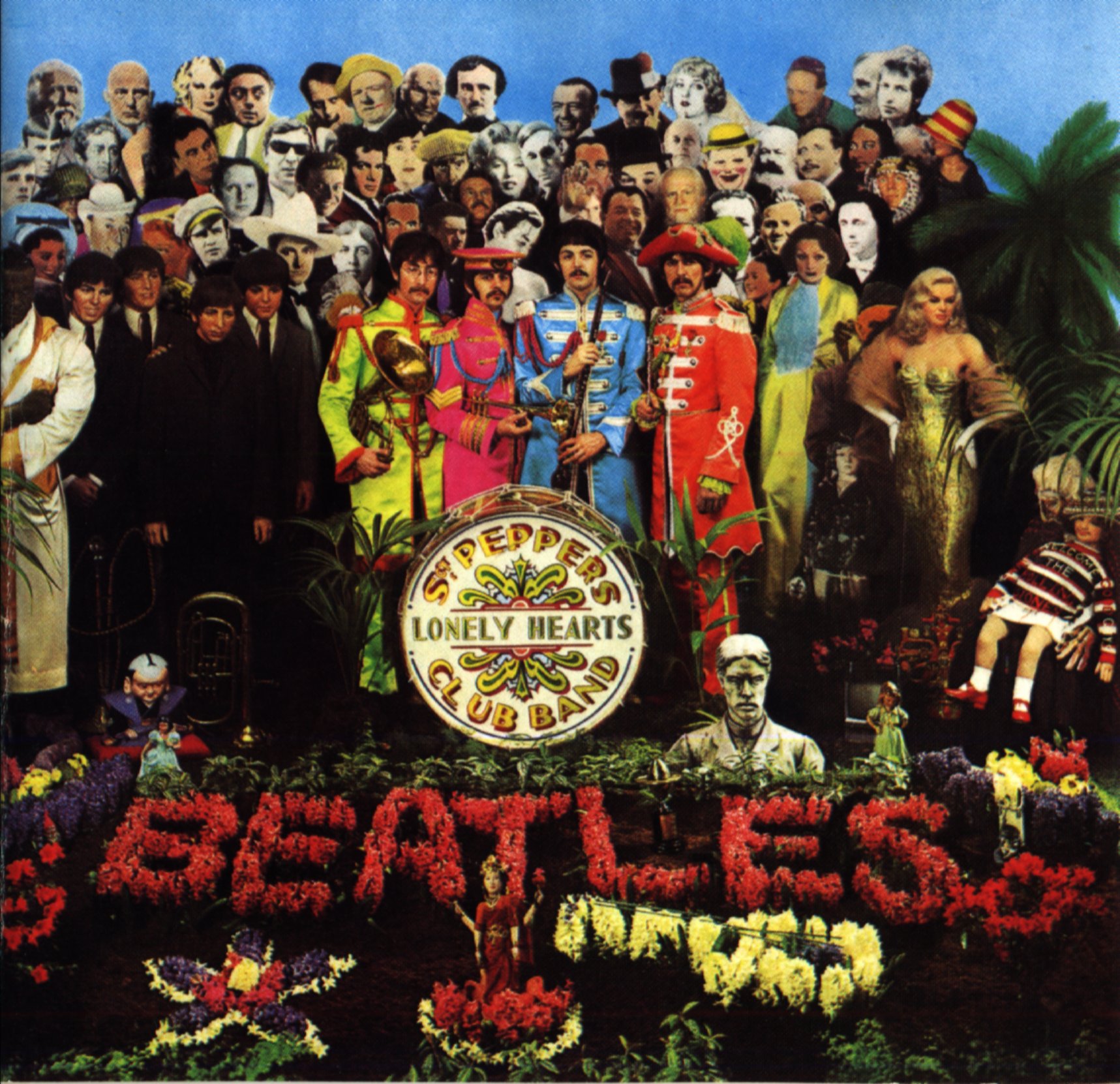
- Burroughs is on the cover of The Beatles’ album, Sgt. Pepper’s Lonely Hearts Club Band. He is next to Marilyn Monroe, near the top center, just below and to the right of Edgar Allan Poe.
- In 1993, Burroughs was featured in a TV. Commercial for GAP clothing. In 1994, he was in an ad for Nike.
- Kurt Cobain and William Burroughs collaborated on a speaking album (The “Priest” They Called Him). Cobain visited Burroughs just six months before committing suicide.
- Burroughs died of a heart attack in 1997.
Notable Quotes:
“Love? What is it? Most natural painkiller what there is. Love.” (These are the last lines from the last entry in William S. Burroughs’s personal journal).
“Your mind will answer most questions if you learn to relax and wait for the answer.”
“After one look at this planet any visitor from outer space would say, ‘I want to see the manager.’”
“Artists to my mind are the real architects of change, and not the political legislators who implement change after the fact.”
“Language is a virus from outer space.”
“In my writing, I am acting as a map-maker, an explorer of psychic areas, a cosmonaut of inner space, and I see no point in exploring areas that have already been thoroughly surveyed.”
“I am getting so far out one day I won’t come back at all.”
Women of the Beat Generation in 3 Easy Steps
Hello, Beatsters! Our first guest post comes from Jackie M. of Jackie Mania!
Please giver her a warm welcome!
Women of the Beat Generation in Three Easy Steps
☆
One of the things I most often hear when I bring up my love of the women of the Beat Generation is, “Wow! I didn’t know there were any female writers of the Beat Generation!” So, first, I want to give you an (incomplete) list of the women who were writing at this time:
Diane di Prima
Joyce Johson
Hettie Jones
Anne Waldman
ruth weiss
Elise Cowan
Hettie Jones
Lenore Kandel
Denise Levertov
Mary Fabilli
Joanne Kyger
Anne Waldman
What I most admire about these women is that they took a great personal risk in becoming a writer. These were not people who lived within a financially secure household (no matter how simple) like the Brontës, Dickinson, or Austen, or with an inheritance like Virginia Woolf (which I am not faulting — I would love to have today’s equivalent of 500 pounds a year so that I could create an infinitesimal fraction of what Woolf has given us). These women refused the white picket fence, labor-saving devices, and 2.5 children of the 1950s to write without a safety net; they were supposed to be wives and mothers, period. It was an enormous risk, as at this time, many women who didn’t “behave” were sent to mental institutions. (I wish I were kidding: see Elise Cowen). They were the brave foremothers of the women who set out to change the world in the 1960s and beyond, and we owe them a great deal.
Next, beg, borrow, or steal Woman of the Beat Generation by Brenda Knight, and inhale it. It’s a wonderful book filled with history, biographical information, photographs, and excerpts of work from most of the women listed above.
Knight writes:
“In many ways, women of the Beat were cut from the same cloth as the men: fearless, angry, high risk, too smart, restless, highly irregular. They took chances, make mistakes, made poetry, made love, made history. Women of the Beat weren’t afraid to get dirty. They were compassionate, careless, charismatic, marching to a different drummer, out of step. Muses who birthed a poetry so raw and new and full of power that it changed the world. Writers whose words weave spells, whose stories bind, whose vision blinds. Artists for whom curing the disease of art kills.”
Finally, pick the writer that most intrigues you, and read everything she has written that you can get your hands on. This is what I did with Diane di Prima. You can read her biography on wikipedia, but I want to tell you about what she means to me, and I want most of all to let her work speak.
☆


☆
I think I was introduced to Diane Di Prima through the Feminist movement, and not the Beat movement. I remember being wowed by the writing from someone who shared a very similar Italian American background as me. The power struggles, the warmth that was sometimes suffocation, the ideas of what a woman was and was not. My grandfather even had blue eyes.
“April Fool Birthday Poem for Grandpa”
Today is your
birthday and I have tried writing these things before,
but now in the gathering madness, I want to
thank you for telling me what to expect
for pulling no punches, back there in that scrubbed Bronx parlor
thank you
for honestly weeping in time to innumerable heartbreaking
italian operas for
pulling my hair when I
pulled the leaves off the trees so I’d
know how it feels, we are
involved in it now, revolution, up to our
knees and the tide is rising, I embrace
strangers on the street, filled with their love and
mine, the love you told us had to come or we
die, told them all in that Bronx park, me listening in
spring Bronx dusk, breathing stars, so glorious
to me your white hair, your height your fierce
blue eyes, rare among italians, I stood
a ways off looking up at you, my grandpa
people listened to, I stand
a ways off listening as I pour out soup
young men with light in their faces at my table, talking love, talking revolution
which is love, spelled backwards, how
you would love us all, would thunder your anarchist wisdom
at us, would thunder Dante and Giordano Bruno, orderly men
bent to your ends, well I want you to know
we do it for you, and your ilk, for Carlo Tresca,
for Sacco and Vanzetti, without knowing
it, or thinking about it, as we do it for Aubrey Beardsley
Oscar Wilde (all street lights shall be purple), do it
for Trotsky and Shelley and big/dumb
Kropotkin
Eisenstein’s Strike people, Jean Cocteau’s ennui, we do it for
the stars over the Bronx
that they may look on earth
and not be ashamed.
☆
I remember being deeply affected when reading about how di Prima felt when she first read Ginsberg’s HOWL:
“The poem put a certain heaviness in me, too. It followed that if there was one Allen there must be more, other people besides my few buddies writing what they spoke, what they heard, living however obscurely and shamefully, what they knew, hiding out there and there as we were — and now, suddenly, about to speak out. For I sensed that Allen was only, could only be, a vanguard of a much larger thing. All the people who like me, had hidden and skulked, writing down what they knew for a small handful of friends — and even those friends claiming it “couldn’t be published” — waiting with only a slight bitterness of the thing to end, for man’s era to draw to a close in a blaze of radiation — all these would now step forward and say their piece. Not many would hear them, but they would, finally, hear each other. I was about to meet my brothers and sisters.”
I bet you didn’t know it went down like that. di Prima was writing what she spoke and heard at the same time, not because of, Ginsberg and Kerouac. It was in the air.
☆
She has written over 40 books. Her poems are about magic, and food, and love, and beaches, and mountains, and politics, and Keats, and wolfish women, and THE ONLY WAR THAT MATTERS IS THE WAR AGAINST THE IMAGINATION (I couldn’t agree more). We are lucky enough to still have her with us (although, sheesh, we are so hard on our prophets. A visionary writer like Diane di Prima can work so hard yet not earn enough money to take care of her health. Remember what I said about these writers not having a safety net? War against the imagination indeed.).
☆
Here is my sketch, my briefest of outlines, my fragments, my very much filled with love introduction to the Women of the Beat Generation. I hope it inspires you to add one of these groundbreaking women writers to the Kerouac, Burroughs, and/or Ginsberg you’re reading for the Beats of Summer event.
☆

☆
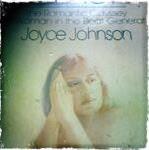
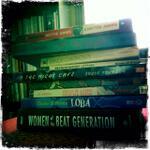
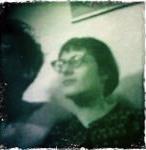
-images: hipstagram photos I took of my collection of books by female Beat writers.-group 1, l to r: Joyce Johnson, from the cover of Minor Characters, a pile of Beat Books, Elise Cowen, from that famous photograph with Allen Ginsberg, via Women of the Beat Generation.
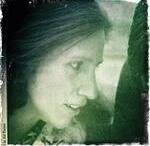
-group 2, l or r, Diane di Prima from the back of Revolutionary Letters, Diane di Prima from the front of Memoirs of a Beatnik, Diane di Prima, snapped from inside Women of the Beat Generation.
-group 3, l to r, piles and piles and piles of books!
-excerpts and poems, in order of appearance:
-Women of the Beat Generation by Brenda Knight, p. 3-4
-April Fool Birthday Poem for Grandpa by Diane di Prima, from Revolutionary Letters, p. 5-6
-Memoirs of a Beatnik by Diane di Prima, p. 176
Armchair BEA: Young Readers and Final Thoughts

Armchair BEA is coming to a close this year, and I would be remiss if I did not comment on yesterday’s topic and also provide some final thoughts. Yesterday, we kicked off a reading event here at Roof Beam Reader: The Beats of Summer. So, I chose to delay the BEA topic post in order to avoid overwhelming readers with multiple posts in the same day.
Yesterday, there were two topics at Armchair BEA: “Keeping it Real, Fresh, and Fun” and “Genre: From Picture Books to Young Adult.”
Keeping it Real, Fresh, and Fun:
Today, we’re interested in knowing how you address that question, especially if you’ve been doing this for a while. If you have been around for years, how do you keep your material fresh? How do you continue to keep blogging fun? How do you not only grow an audience, but how do you keep them coming back for more?
New projects, redesigns, collaboratives–what do you do to keep blogging fresh for you?
As I mentioned in one of the early posts this week, I have been blogging for a long time – about 10 years. But, I have been blogging specifically about books for about 4 years. I keep my material fresh by joining new events each year and offering up new events of my own. Last year, we had The Literary Others. The year before, I offered up Magical March. This year, it’s about The Beats of Summer (and likely another yet-to-be-announced event this fall).
I also keep it real by reviewing each book fairly and without bias. I developed my own reviewing criteria (which took a couple of years) for this purpose. This, I think, helps my readers trust what I have to say about books and know that I care about what I do and that I never engage in anything that would influence my opinion of a book (such as taking payment, trade-offs, etc.).
 I keep it fun by hosting regular, popular events, such as Austen in August and The Classics Club, and by participating in group giveaways, such as The Literary Blog Hop. I have also been hosting a yearly TBR Pile Challenge for the past four years, which comes with monthly check-ins, random giveaways, and a big giveaway at the end of each year. Usually, a few times per year, I also have contests and giveaways that are just for my blog readers – it’s a way of, yes, having some fun, but also of saying “thank you” to those who subscribe and who stick with me through the long haul.
My readership has grown slowly over the years, and I am hopeful that this mix of honest reviews, great events, and fun giveaways has encouraged people not only to subscribe, but also to stick around!
Day 5 Genre Topic: From Picture Books to Young Adult
This is going to be short and sweet, because I just don’t know very much about picture books or children’s books. I do have a few favorites in each category, though, so let me just list a few books that I love:
Picture Books
Where the Wild Things Are by Maurice Sendak
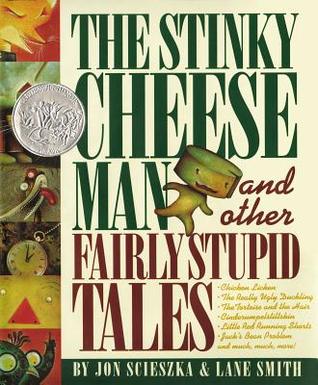
The Stinky Cheese Man and Other Fairly Stupid Tales by John Scieszka
Alexander and the Terrible, Horrible, No Good, Very Bad Day by Judith Viorst
Beginning Reader

Henry Huggins by Beverly Cleary
Frog and Toad are Friends by Arnold Lobel
The Cricket in Times Square by George Selden
Middle Grade

The Giver by Lois Lowry
Hatchet by Gary Paulsen
The Percy Jackson Series by Rick Riordan
Young Adult:
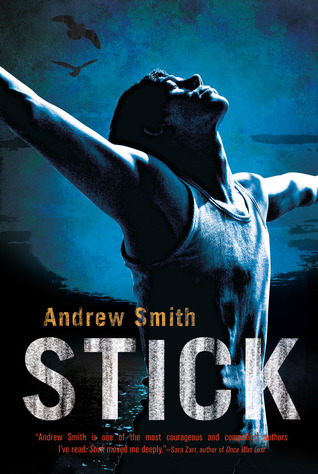
Stick by Andrew Smith
I Am the Cheese by Robert Cormier
The Perks of Being a Wallflower by Stephen Chbosky
Final Thoughts / What Was Missed?:
Today, we were asked to think of which genres might have been missed. Well, there are so many genres, I think it would be impossible to catch them all in a week-long event, unless there were multiple prompts each day. As a Literary Fiction and Classics blogger, I was thrilled to see those two topics as genre prompts this year. I think one idea for future years might be to have an “Eclectic Reader” or “You Call It!” kind of day – where each blogger talks about their own favorite genre, favorite books in multiple genres, etc. I think this would give everyone the opportunity to share what they love and also allow for one day where those of us hopping around to various blogs might truly discover something new to us.
I want to thank the organizers of Armchair BEA for, once again, doing a fantastic job this year. I have had a great time bouncing around to other blogs, some new and some that I have been connected with for a while, reading others’ thoughts on daily topics and book blogger-related issues. I can’t wait for next year!
 Roof Beam Reader