Roof Beam Reader
Adam Burgess
Classics Club Readathon #1

As many of you know, I’m one of the moderators of The Classics Club. Today marks our very 1st Readathon! Clubbers around the world will be spending 24-hours reading books from their lists of Classics (Here’s my list, if you’re curious!).
The reading schedule is 7am Central time on Saturday, January 5th – 7am Central time on Sunday, January 6th. I’m hoping to read two books during this 24-hour period, but if I don’t finish – that’s okay. And if I read more than 2, well, that’s awesome!
Instead of posting separate updates throughout the day, I’m going to come back to this post and update as I go along – that way folks’ email boxes (and Twitter feeds, etc.) won’t be constantly spammed. But, I do plan to update every hour or two, just to let ya’ll know where I’m at – how many pages I’ve read, how much coffee I’ve had to drink, etc.
You can see who else has signed-up to participate by Clicking Here.
You can follow along with the main discussion post by Clicking Here.
Twitter #Hashtag for Conversation: #CCReadathon
My Plans:
 Book #1: O Pioneers! by Willa Cather
Starting Time: 9:45am CT
Completion Time: 4:18pm CT
O Pioneers! Updates:
#1 – 9:45am :: The readathon has begun! I’ve got oatmeal, coffee, and book #1 (O Pioneers!). Let’s do this!
#2 – 11:08am :: I’m on page 64 of 230. Got a late start (wanted to begin at 8, but it was about 10 when I started reading).
Notable Quote: “A pioneer should have imagination, should be able to enjoy the idea of things more than the things themselves” (37).
And since the title of this book was inspired by my favorite poem, “O Pioneers” by Walt Whitman, I thought I would share my favorite reading of that poem with you all. Enjoy!
#3 – 2:03pm :: I’m on page 200 of 230. Loving the book – it just took quite a turn toward the Thomas Hardy (anyone familiar with his endings will understand what I mean). Going to take a break for lunch and to watch some t.v. – rest my eyes a bit. Then, I’ll be back to finish Cather and start Book #2 (still thinking it will be Hesse, but not 100% sold).
Notable Quote: “Isn’t it queer: there are only two or three human stories, and they go on repeating themselves as fiercely as if they had never happened before; like the larks in this country, that have been singing the same five notes over for thousands of years” (89).
#4 – 4:18pm :: Finished! What a lovely book. I’ll be writing my review tomorrow. Meanwhile, onto book #2!
Notable Quote: “Above Marie and Emil, two white butterflies from Frank’s alfalfa field were fluttering in and out among the interlacing shadows; diving and soaring, now close together, now far apart; and in the long grass by the fence the last wild roses of the year opened their pink hearts to die” (201).

Book #2: Siddhartha by Herman Hesse
Starting Time: 4:30pm CT
Completion Time:
Siddhartha Updates:
#1 – 6:22pm :: Half-way done – page 60 of 128. Interesting book, definitely. Not totally on board with the philosophy, yet, but I can see why some would be called to it. Seems clear that I’ll be able to finish both planned books, so I’m taking a break to visit other participants, leave some comments, and then make some dinner.
#2 – 9:04pm :: Finished! Very interesting book – thought-provoking, for sure. Ultimately, I love the philosophy, though certain parts of the journey were troubling. Review to come in the next few days or so.
So, that does it for me! Approximately 12-hours. I’m calling it a night early, as I don’t want to start a 3rd readathon book because I know I won’t finish it before bed/time expires, and that will just make me mad. Still, I’m calling this readathon a success because I hoped to read two books & I did that – I even read the 2 books I had originally planned on, which is crazy!
I will probably read a bit more tonight (from The Alchemyst by Michael Scott, which does not count towards my Classics Club Challenge, of course). And I might watch a movie or something. But, I’ll also be keeping up with all your updates on Twitter and at The Classics Club & on your blogs. So keep on pushing through! 10 HOURS LEFT!
Spring 2013 Reading List (Ph.D.)
Last semester was my first in my Ph.D. in English program. I was very excited about the reading list – and I wasn’t disappointed (just overwhelmed!). For my two classes last Fall, I had to read a total of 24 required texts (and dozens of supplementary essays, texts, etc.)
This semester holds a much more manageable (I hope) 11 texts. I’m stoked about the two classes I’m signed-up for in Spring – they’re both relevant to my degree but also to my pursuit of a graduate certificate in LGBT Studies.
The first class is History of Gender & Sexuality. The second is Gender & Sexuality in Film and Literature. Here’s what’s on the docket for both:
History of Gender & Sexuality
1. Colonialism and Homosexuality by Robert Aldrich
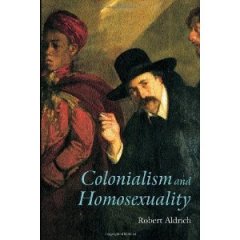
“Colonialism and Homosexuality is a thorough investigation of the connections of homosexuality and imperialism from the late 1800s – the era of ‘new imperialism’ – until the era of decolonization. Robert Aldrich reconstructs the context of a number of liaisons, including those of famous men such as Cecil Rhodes, E.M. Forster or André Gide, and the historical situations which produced both the Europeans and their non-Western lovers.
Colonial lands, which in the late nineteenth and early twentieth century included most of Africa, South and Southeast Asia and the islands of the Pacific and Indian Oceans and the Caribbean, provided a haven for many Europeans whose sexual inclinations did not fit neatly into the constraints of European society.
Each of the case-studies is a micro-history of a particular colonial situation, a sexual encounter, and its wider implications for cultural and political life. Students both of colonial history, and of gender and queer studies, will find this an informative read.”

2. How Sex Changed: A History of Transsexuality in the United States by Joanne Meyerowitz
“How Sex Changed is a fascinating social, cultural, and medical history of transsexuality in the United States. Joanne Meyerowitz tells a powerful human story about people who had a deep and unshakable desire to transform their bodily sex. In the last century when many challenged the social categories and hierarchies of race, class, and gender, transsexuals questioned biological sex itself, the category that seemed most fundamental and fixed of all.
From early twentieth-century sex experiments in Europe, to the saga of Christine Jorgensen, whose sex-change surgery made headlines in 1952, to today’s growing transgender movement, Meyerowitz gives us the first serious history of transsexuality. She focuses on the stories of transsexual men and women themselves, as well as a large supporting cast of doctors, scientists, journalists, lawyers, judges, feminists, and gay liberationists, as they debated the big questions of medical ethics, nature versus nurture, self and society, and the scope of human rights.
In this story of transsexuality, Meyerowitz shows how new definitions of sex circulated in popular culture, science, medicine, and the law, and she elucidates the tidal shifts in our social, moral, and medical beliefs over the twentieth century, away from sex as an evident biological certainty and toward an understanding of sex as something malleable and complex. How Sex Changed is an intimate history that illuminates the very changes that shape our understanding of sex, gender, and sexuality today.”
3. Sex for Sale: Prostitution, Pornography, and the Sex Industry by Ronald Weitzer
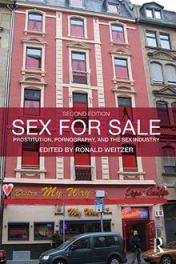
“This groundbreaking collection of essays on the sex industry contains original studies on sex work, its risks and benefits, and its political implications. Sex for Sale covers areas not commonly researched, including gay and lesbian pornography, telephone sex workers, customers of prostitutes, male and female escorts who work independently, street prostitution, sex tourism, legal prostitution, and strip clubs that cater to women.
Sex for Sale also tracks various trends during the past decade, including the mainstreaming and growing acceptance of some types of sexual commerce and the growing criminalization of other types, such as sex trafficking. Sex for Sale offers a window into the lived experiences of sex workers as well as an analysis of the larger gender arrangements and political structures that shape the experiences of workers and their clients.
This book contributes greatly to a growing research literature that documents the rich variation, nuances, and complexities in the exchange of sexual services, performances, and products. This book will change the way we understand sex work.”
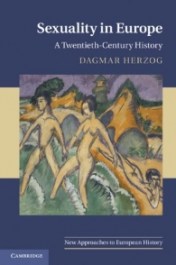
4. Sexuality in Europe: A 20th Century History by Dagmar Herzog
“This original book brings a fascinating and accessible new account of the tumultuous history of sexuality in Europe from the waning of Victorianism to the collapse of Communism and the rise of European Islam. Although the twentieth century is often called “the century of sex” and seen as an era of increasing liberalization, Dagmar Herzog instead emphasizes the complexities and contradictions in sexual desires and behaviours, the ambivalences surrounding sexual freedom, and the difficulties encountered in securing sexual rights. Incorporating the most recent scholarship on a broad range of conceptual problems and national contexts, the book investigates the shifting fortunes of marriage and prostitution, contraception and abortion, queer and straight existence. It analyzes sexual violence in war and peace, the promotion of sexual satisfaction in fascist and democratic societies, the role of eugenics and disability, the politicization and commercialization of sex, and processes of secularization and religious renewal.”
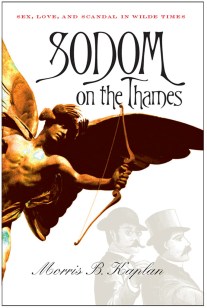
5. Sodom on the Thames: Sex, Love, and Scandal in Wilde Times by Morris B. Kaplan
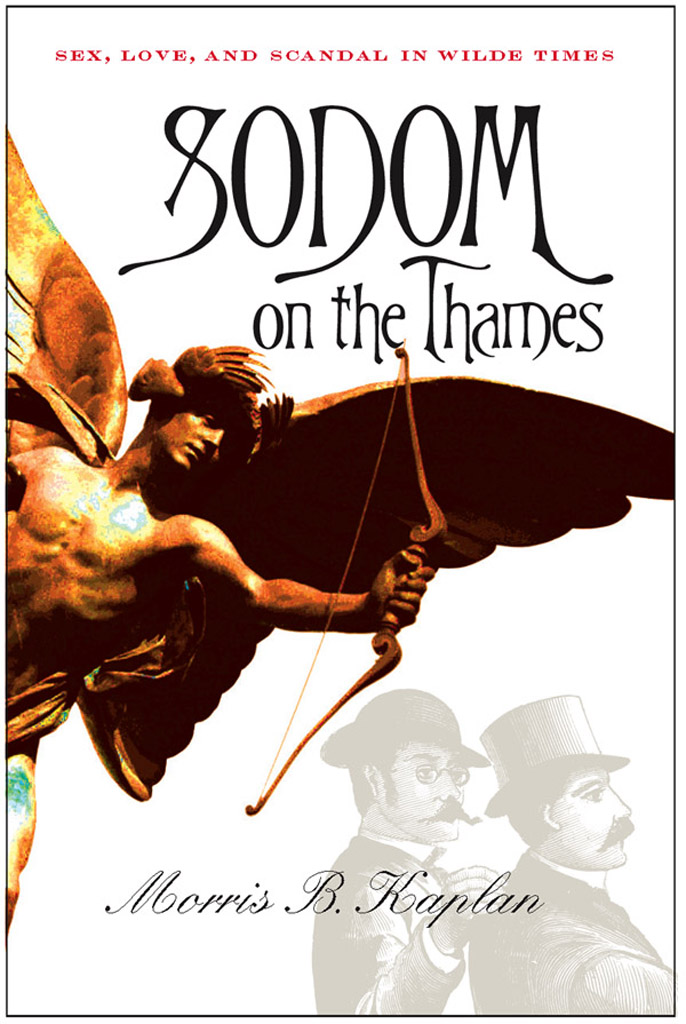
“Sodom on the Thames looks closely at three episodes involving sex between men in late-nineteenth-century England. Morris Kaplan draws on extensive research into court records, contemporary newspaper accounts, personal correspondence and diaries, even a pornographic novel. He focuses on two notorious scandals and one quieter incident.
In 1871, transvestites “Stella” (Ernest Boulton) and “Fanny” (Frederick Park), who had paraded around London’s West End followed by enthusiastic admirers, were tried for conspiracy to commit sodomy. In 1889-1890, the “Cleveland Street affair” revealed that telegraph delivery boys had been moonlighting as prostitutes for prominent gentlemen, one of whom fled abroad. In 1871, Eton schoolmaster William Johnson resigned in disgrace, generating shockwaves among the young men in his circle whose romantic attachments lasted throughout their lives. Kaplan shows how profoundly these scandals influenced the trials of Oscar Wilde in 1895 and contributed to growing anxiety about male friendships.
Sodom on the Thames reconstructs these incidents in rich detail and gives a voice to the diverse people involved. It deepens our understanding of late Victorian attitudes toward urban culture, masculinity, and male homoeroticism. Kaplan also explores the implications of such historical narratives for the contemporary politics of sexuality.”
Gender and Sexuality in Film & Literature

1. The End of the Affair by Graham Greene
“This is a record of hate far more than of love,” writes Maurice Bendrix in the opening passages of The End of the Affair, and it is a strange hate indeed that compels him to set down the retrospective account of his adulterous affair with Sarah Miles—a hate bred of a passion that ultimately lost out to God.
Now, a year after Sarah’s death, Bendrix seeks to exorcise the persistence of passion by retracing its course from obsessive love to love-hate. At the start he believes he hates Sarah and her husband, Henry. By the end of the book, Bendrix’s hatred has shifted to the God he feels has broken his life but whose existence he has at last come to recognize.
Originally published in 1951, The End of the Affair was acclaimed by William Faulkner as “for me one of the best, most true and moving novels of my time, in anybody’s language.”

2. Feminist Film Studies: Writing the Woman into Cinema by Janet McCabe
“An introduction to feminist film theory as a discourse from the early seventies to the present. McCabe traces the broad ranging theories produced by feminist film scholarship, from formalist readings and psychoanalytical approaches to debates initiated by cultural studies, race and queer theory.”

3. Frankenstein, Original 1818 Text by Mary Shelley
“Mary Shelley’s deceptively simple story of Victor Frankenstein and the creature he brings to life, first published in 1818, is now more widely read and more widely discussed by scholars than any other work of the Romantic period. From the creature’s creation to his wild lament over the dead body of his creator in the Arctic wastes, the story retains its narrative hold on the reader even as it spins off ideas in rich profusion. Macdonald and Scherf’s edition of Frankenstein has been widely acclaimed as an outstanding edition of the novel for the general reader and the student as much as for the scholar. The editors use as their copy-text the original 1818 version, and detail in an appendix all of Shelley’s later revisions. They also include a range of contemporary documents that shed light on the historical context from which this unique masterpiece emerged. Macdonald and Scherf have now revised and updated their introduction, notes and bibliography, and have added new documents (including a review of Frankenstein by Percy Shelley).”

4. Gods and Monsters (Father of Frankenstein) by Christopher Bram
“Previously titled Father of Frankenstein, this acclaimed novel was the basis for the 1998 film starring Sir Ian McKellen, Lynn Redgrave, and Brendan Fraser. It journeys back to 1957 Los Angeles, where James Whale, the once-famous director of such classics as Frankenstein and Bride of Frankenstein, is living in retirement, haunted by his past. Rescuing him from his too-vivid imagination is his gardener, a handsome ex-marine. The friendship between these two very different men is sometimes tentative, sometimes touching, often dangerous—and always captivating.”

5. Issues in Feminist Film Criticism by Patricia Erens
“”This anthology makes it abundantly clear that feminist film criticism is flourishing and has developed dramatically since its inception in the early 1970s.” —Journal of Aesthetics and Art Criticism
Erens brings together a wide variety of writings and methodologies by U.S. and British feminist film scholars. The twenty-seven essays represent some of the most influential work on Hollywood film, women’s cinema, and documentary filmmaking to appear during the past decade and beyond.
Contributors include Lucie Arbuthnot, Linda Artel, Pam Cook, Teresa de Lauretis, Mary Ann Doane, Elizabeth Ellsworth, Lucy Fischer, Jane Gaines, Mary C. Gentile, Bette Gordon, Florence Jacobowitz, Claire Johnston, E. Ann Kaplan, Annette Kuhn, Julia Lesage, Judith Mayne, Sonya Michel, Tania Modleski, Laura Mulvey, B. Ruby Rich, Gail Seneca, Kaja Silverman, Lori Spring, Jackie Stacey, Maureen Turim, Diane Waldman, Susan Wengraf, Linda Williams, and Robin Wood.”
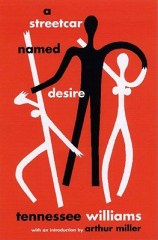
6. A Streetcar Named Desire by Tennessee Williams
“It is a very short list of 20th-century American plays that continue to have the same power and impact as when they first appeared—57 years after its Broadway premiere, Tennessee Williams’ A Streetcar Named Desire is one of those plays. The story famously recounts how the faded and promiscuous Blanche DuBois is pushed over the edge by her sexy and brutal brother-in-law, Stanley Kowalski. Streetcar launched the careers of Marlon Brando, Jessica Tandy, Kim Hunter and Karl Malden, and solidified the position of Tennessee Williams as one of the most important young playwrights of his generation, as well as that of Elia Kazan as the greatest American stage director of the ’40s and ’50s.
Who better than America’s elder statesman of the theater, Williams’ contemporary Arthur Miller, to write as a witness to the lightning that struck American culture in the form of A Streetcar Named Desire? Miller’s rich perspective on Williams’ singular style of poetic dialogue, sensitive characters, and dramatic violence makes this a unique and valuable new edition of A Streetcar Named Desire. This definitive new edition will also include Williams’ essay “The World I Live In,” and a brief chronology of the author’s life.”
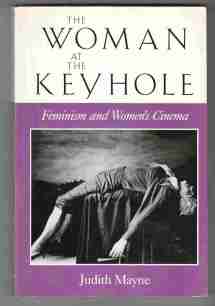
7. The Woman at the Keyhole: Feminism and Women’s Cinema by Judith Mayne
“[The Woman at the Keyhole is one] of the most significant contributions to feminist film theory sin ce the 1970s.” —SubStance
“… this intelligent, eminently readable volume puts women’s filmmaking on the main stage…. serves at once as introduction and original contribution to the debates structuring the field. Erudite but never obscure, effectively argued but not polemical, The Woman at the Keyhole should prove to be a valuable text for courses on women and cinema.” —The Independent
When we imagine a “woman” and a “keyhole,” it is usually a woman on the other side of the keyhole, as the proverbial object of the look, that comes to mind. In this work the author is not necessarily reversing the conventional image, but rather asking what happens when women are situated on both sides of the keyhole. In all of the films discussed, the threshold between subject and object, between inside and outside, between virtually all opposing pairs, is a central figure for the reinvention of cinematic narrative.”
So, those are the texts I’ll be working with this Spring. Suffice it to say, I am incredibly excited about these two classes and the reading lists for each! I’m also thrilled that some of these books have been on my “To read” pile/list for a while, so I am able to count them towards my 2013 TBR Pile Challenge, too!
If anyone sees something interesting here and wants to read along, let me know! When I have my syllabi, I can let people know when I’ll be reading which texts (I also post my reading updates on Goodreads, so feel free to follow along there).
I’ll try to post thoughts and reviews on these as I go along – since it will help me gather thoughts for essays and research papers. Aside from Frankenstein, which I have read before, all of these will be new reads for me.
2012: Year in Review


The Numbers:
Roof Beam Reader was viewed about 68,000 times in 2012. If it were a concert at the Barclays Center, it would take about 4 sold-out performances for that many people to see it.
In 2012, there were 142 new posts, growing the total archive of this blog to 521 posts. There were 222 pictures uploaded. That’s about 4 pictures per week.
The busiest day of the year was August 1st with 694 views. The most popular post that day was Summer Giveaway Hop! (Aug 1-7).
Milestones in 2012:
Roof Beam Reader exceeded 4,500 subscribers.
Roof Beam Reader celebrated its third anniversary.
Roof Beam Reader exceeded 100,000 original page views.
Attractions in 2012:
Most Viewed Posts
- 1 Review: Oliver Twist by Charles Dickens 3 COMMENTS February 2011
- 2 Announcing: The 2013 TBR Pile Challenge! 135 COMMENTS November 2012
- 3 Review: The Adventures of Sherlock Holmes by Arthur Conan Doyle
- 4 Review: The Perks of Being a Wallflower by Stephen Chbosky 26 COMMENTS April 2012
- 5 The 2012 TBR Pile Challenge Sign-Ups! 296 COMMENTS November 2011
Biggest Events:
Most Comments Received:
2012 TBR Pile Challenge – Final Stretch!
As we head into the final few days of 2012, I wanted to post briefly about the challenge and peoples’ progress, including my own. Unfortunately, it looks like I’m only going to get through 11 of the 12 books I need in order to “Win.” That’s still a win for me, though, as it’s 11 books that had been sitting on my shelves for ages that I’ve finally read! I enjoyed most of them, too.
Here are the 10 that I’ve finished (I’m working on #11, Islands in the Stream by Ernest Hemingway, right now):
1. Notre-Dame de Paris by Victor Hugo (Completed 5/18/2012)
2. Islands in the Stream by Ernest Hemingway (Currently Reading)
3. City of Ashes by Cassandra Clare (Completed 3/1/2012)
4. The Adventures of Sherlock Holmes by Sir Arthur Conan Doyle (Completed 2/5/2012)
7. Nova Express by William S. Burroughs (Completed 1/21/2012)
8. The Handmaid’s Tale by Margaret Atwood (Completed 1/25/2012)
9. Cannery Row by John Steinbeck (Completed 12/22/2012)
10. Gone with the Wind by Margaret Mitchell (Completed 1/12/2012)
11. The Woman in White by Wilkie Collins (Completed 2/24/2012)
12. Player Piano by Kurt Vonnegut (Completed 2/12/2012)
Alt 2. The Golden Compass by Philip Pullman (Completed 7/26/2012)
We do have some folks who have commented on the master post indicating that they are finished – outstanding! Once the year ends and the 2013 challenge begins, I will be going back to check final lists & reviews, and all those who did finish and who met the challenge specifications will be entered to win the $50 Gift Card (Amazon or The Book Depository).
Current Completers:
Jenny from Jenny & Kelly Read Books
Kelly from Jenny & Kelly Read Books
Melissa of Avid Reader’s Musings
So, we had 123 people sign-up for the 2012 challenge and, so far, 12 have reported as being finished. Oh, boy! That’s certainly good odds for the prize!
If you’re out there and you’ve finished your challenge, be sure to go back to the master post and leave a comment letting us know (or feel free to leave a comment on this post, too).
If you didn’t finish – what kind of progress did you make? 1 of 12? 6 of 12? Even reading one book is a step in the right direction, so if you gave it a shot – good for you! Come back and join us in 2013 for another go!
I actually very much enjoyed almost all of these books, so it’s a shame that I had left them sitting on my shelves for so long. But that’s what this challenge is for! Many of these (Gone With the Wind, The Woman in White, Cannery Row, and The Handmaid’s Tale) actually ended up being some of my favorite reads of the year – and maybe even of all time!
Which books from your list did you love? Which ones did you hate? Looking forward to any in 2013?
Review: Cannery Row by John Steinbeck
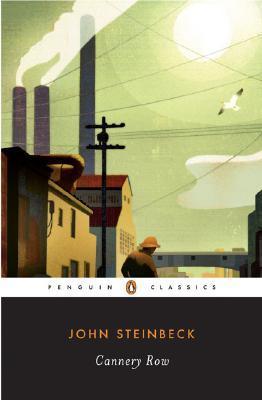

Cannery Row by John Steinbeck
Final Verdict: 4.0 out of 4.0
YTD: 54
Plot/Story:
4 – Plot/Story is interesting/believable and impactful (socially, academically, etc.)
Cannery Row is a unique stand-out amongst Steinbeck’s works, for many reasons. One of these is that, unlike with East of Eden, Grapes of Wrath, or Of Mice and Men, for example, there is not much of a plot. Instead, what Steinbeck does is open up to his readers a place – typically American (and Californian)- where its people and its mood can be felt, captured, and understood. This place is Cannery Row, a small cannery district in Monterey, California. The people are a mix of shop-owners, layabouts, migrant workers, “girls for hire,” and others who are either genuinely worn down or who have chosen to live humbly in this out-of-the-way town, rather than move on up to the more prosperous areas. The story itself centers on a man named Mack and his group of pals, all of whom are without work but who get by on their resourcefulness and their ability to find work when it becomes absolutely necessary. The gang decides to do something nice for the town doctor, who does so much for the town without ever asking for anything in return. Their first attempt at ‘thanking’ him goes terribly wrong, but they vow to make up for it and, in the end, they succeed. Their gift to the doctor brings everyone together but, what the reader will realize, is that amongst the friendship and revelry is a deep sadness and loneliness which both the town and its inhabitants, but particularly the doctor, suffer from.
Characterization:
4 – Characters extraordinarily well developed.
Cannery Row is similar to The Grapes of Wrath in that the main story is frequently interrupted by short vignettes. In Grapes of Wrath, these intercalary chapters served to widen the lens from the Joad family and onto the plight of the Great Depression and migrant workers in general. Here, in Cannery Row, the interruptions often introduce the reader to minor characters – residents of or visitors to the town who emphasize certain extremities of real life, most of which are cruel in nature (dead bodies, violence, suicide, etc.). Many readers are critical of Steinbeck’s method of interrupting the primary story in this way, but the purpose is to shape a world, to give feeling and context to a group of people, without having to focalize on one person or one family in particular. This allows the story to be about a general community rather than individuals, which allows the conversation to be about a class or type of people, a region, rather than a character – the place, in fact, becomes the person. This is what regionalists (like Faulkner) do best. In addition to this, the specific characters who are introduced and witnessed, such as Mack, Doc, and Lee Chong, the shop owner, are all distinct, realistic, and purposeful. Their interactions with one another are interesting and believable, but their internal thought processes are perhaps the most fascinating of all.
Prose/Style:
4 – Extraordinary Prose/Style, enhancing the Story.
I am a fan of Steinbeck’s prose. In this book, he opens many of the chapters with incredible descriptions – short passages that are almost poetic in their beauty. He has a talent for not just seeing but also feeling people and places, then somehow reimagining these sensations into written language. While Steinbeck employs an intercalary method, as mentioned above, his narrative asides and detours are brief and his description of those things taking place outside of the primary story are shortened. While we might leave the main story from time-to-time, it does not feel, as it sometimes does with Grapes of Wrath, as if we have been completely separated from it. Steinbeck also manages to capture mood and tone with his narrative voice and through his use of dialogue. We learn much about the character Frankie, for instance, without necessarily being granted access to Frankie’s point of view. Instead, we learn about him through others’ treatment of him, through Steinbeck’s description of him, and by the way his and the Doctor’s relationship is presented in the narrative – subtle descriptions and meaningful allusions. Frankie, one single character, comes to mean much more on the narrative level. He represents a type of person but, due to the straightforward and bare, sometimes raw, way Steinbeck approaches his descriptions, he can represent a group of people without becoming a grotesque. Ultimately, the prose and style are generally sparse with brief interludes of poetic, almost romantic language. The style suits the tone of the novel as well as the nature of its characters and “plot” or, more accurately, situation.
Additional Elements: Setting, Symbols/Motifs, Resolution, etc.
4 – Additional elements improve and advance the story.
Cannery Row, unlike many of Steinbeck’s other works, is not quite as politically charged or socially sentimental. It is still about people and place, exactly what one would expect from such a brilliant regionalist writer, but its purpose is much more ambiguous. The emotion and pathos is still there, but the reader is allowed simply to bear witness to a community, perhaps even becoming a part of it, without necessarily being guided toward feeling one way or another about anyone in the town (even the Doctor, lauded by his townspeople, has his faults). Certain themes from Steinbeck’s other works, such as mental health, community-families, survival, depression (economic and psychological), and labor are present again in this book, but in a much more subtle way. For those who enjoy Steinbeck but who might be put off by his “peachiness” or heavy-handedness of politics/morality, Cannery Row might be exactly what you are looking for. There is also a good amount of humor, counterbalancing a relatively sombre tone.
Suggested Reading for:
Age Level: High School+
Interest: Great Depression, Community, Loneliness, Mental Health, American West, Friendship, Society
Notable Quotes:
“Cannery Row in Monterey in California is a poem, a stink, a grating noise, a quality of light, a tone, a habit, a nostalgia, a dream.” (5)
“Man’s right to kill himself is inviolable, but sometimes a friend can make it unnecessary.” (13)
“Casting about in Hazel’s mind was like wandering alone in a deserted museum.” (34)
“It is the hour of the pearl – the interval between day and night when time stops and examines itself.” (82)
“The things we admire in men, kindness and generosity, openness, honesty, understanding and feeling are the concomitants of failure in our system. And those traits we detest, sharpness, greed, acquisitiveness, meanness, egotism and self-interest are the traits of success. And while men admire the quality of the first they love the produce of the second.” (135)
 Roof Beam Reader
5-Star Books/Reviews of 2012:
The Autobiography of Mark Twain by Mark Twain
Cannery Row by John Steinbeck
Dinner at the Homesick Restaurant by Anne Tyler
Germinal by Emile Zola
Gone with the Wind by Margaret Mitchell
The Great Gatsby by F. Scott Fitzgerald
One Flew over the Cuckoo’s Nest by Ken Kesey
The Perks of Being a Wallflower by Stephen Chbosky
Pride and Prejudice by Jane Austen
White Noise by Don DeLillo
The Woman in White by Wilkie Collins
Thank you all for another fantastic year.
I’m looking forward to more bookish adventures with you in 2013!