Roof Beam Reader
Adam Burgess
Thoughts: On What Grounds by Cleo Coyle
 On What Grounds by Cleo Coyle
Final Verdict: 3.5 out of 4.0
Plot/Story:
3 – Plot/Story is interesting and believable
On What Grounds is the first novel in the popular Coffeehouse Mystery series by Cleo Coyle. In it, we meet Clare Cosi, former manager of one of the most historic coffeehouses in New York City, “The Village Blend.” Cosi had moved away from New York City with her husband and young daughter, in order to find a quieter, calmer life in the New Jersey suburbs. But after divorcing her husband and seeing her daughter off to college, Cosi is convinced by the owner of The Village Blend to come back and take over management of the store, with added benefits – such as building up equity toward becoming the eventual owner. All seems to be going well for Cosi at this middle point of her life, but everything changes when she gets to New York City and, upon reentering The Village Blend for the first time, finds her assistant manager at the bottom of the Blend’s basement stairs, unconscious and surrounded by suspicious evidence of foul play.
Characterization:
3 – Characters very well-developed.
This first book in the series introduces us to an interesting and eclectic set of characters, some of whom are likely to return in future books. Clare Cosi, being the main character, is the most developed of the cast. She is relatively well-rounded and developed, with interesting flashbacks and histories (and romantic inclinations) provided, particularly for a mystery novel (which I find tend to be lacking in character development). In addition, her mother-in-law and owner of The Village Blend, “Madame,” is great fun, though not a prominent figure. Cosi’s ex-husband, Matt, has memorable traits, and we also learn about the victim – Annabelle – through interviews with her teachers, dance colleagues, roommate, etc., all of whom add some depth and complexity to the story by virtue of their being there (none are wonderfully developed, but they do add the necessary “ah, who had the better motive, indeed?” moments). Finally, the detective assigned to Annabelle’s case, Lt. Quinn, brings with him some flirtatiousness, rivaling Matt, somewhat, for Cosi’s attention – their love triangle is entertaining. What I appreciate most is that Cosi makes even the minor characters have character, but I am left hoping that future books continue to develop the main characters who manage to stick around for any length of time.
Prose/Style:
4 – Extraordinary Prose/Style, enhancing the Story.
What I most enjoyed about On What Grounds was probably Coyle’s language and style. It is perfectly fitting for a Contemporary Adult mystery novel, but it is also tightly crafted, fluid, well-constructed, and simply interesting overall. Coyle infuses various elements, too, which are not typical of the genre (discussed below), and she manages to incorporate these elements, which are really of equal importance to the plot, seamlessly into the narrative. This mystery is a page-turner not just because of its classic “whodunit?” pacing, but because the balance of all of the competing themes and elements is spot-on.
Additional Elements: Setting, Symbols/Motifs, Resolution, etc.
4 – Additional elements improve and advance the story.
It seems clear to me that Cleo Coyle has some background in literature, even if simply as a voracious reader. There are certain styles she uses, references she makes, and quotes that are dropped which fit in too neatly with the given situations to have been cribbed or looked-up simply for effect. Although I am not typically a reader of mysteries/murder mysteries, any which go to lengths to reach beyond their “genre boundary” (yes, that’s partially me exposing my bias, but it’s also true that genre writers often write within their conventions because they quite thoroughly understand their audience’s expectations) and add unique perspective, especially literary, to their works get a nod of recognition and gratitude from me. It is not just this added element, though, but also the inclusion of such passionate exploration and explanation of coffee, coffeehouses, related products and processes, recipes, etc. which make this book so much fun to read, especially for a coffee addict like me. If you love a good mystery with a diversity of characters, a relatively well-designed plot, and some added features, and if you happen to be a coffee-lover, well, this book (and series) is probably for you.
Suggested Reading For:
Age Level: HS+
Interest: Mystery, Coffee, Fiction, Contemporary.
Notable Quotes:
“Though coffee may seem a small thing, it is a ritual that reflects the daily standards we set for ourselves throughout our lives” (31).
“Darkness can’t hide. Not forever. Not even in the vastness of space” (174).
Classics Club Readathon #ccreadathon
 Today, I’m participating in the Classic Club’s second annual Classics Readathon. I plan to return to this post throughout the next 24-hours and make updates (as I feel like it), and also to update it at the end of the 24-hours, which would be 8am Sunday morning, for me. I’ll give a note on my progress, take a look at how many total pages I read, where I stand in each my books, etc. Very exciting!
Here’s our kick-off prompt and my responses:
- Name and Blog: I’m Adam of Roof Beam Reader!
- Snacks and Beverages of Choice: Uh, see above. Mostly chocolate.
- Where are you reading from today? Chicago, Illinois, USA!
- What are your goals for the Readathon?: I hope to make a good dent in the three chunkster books I’m reading this month. I doubt I’ll finish any of them, but I want to get at least 100 pages of each knocked out. If I do that, maybe I’ll try to plow through one short book, just to knock something off my list early in the year.

- What book(s) are you planning on reading?: Ulysses by James Joyce; Walt Whitman’s America by David S. Reynolds; and The Complete Poems by Walt Whitman. Each of these is 600-900 pages, so, yeah, I won’t finish them, but I think I can definitely make some good progress.
- Are you excited?: Uhm, yeah! I’m going to post a readathon journal entry on my blog sometime today with my starting point for each book, and then some updates throughout the day, as well as a final page count/ending point for each book – that way I can accurately track just how much reading I did, how far I got with each book, etc. I’m just going to update that one post throughout the day, though, so that my readers don’t get spammed all day long with multiple posts. Good luck to you all!
Update 1: 8:30pm local time (Central US).
Although I have taken quite a few breaks, today, to exercise, shower, eat, and run out for some errands (we are expecting 10+ inches of snow and temperatures nearly 20 degrees below zero in the next few days), I think I’m making some good strides.
I’ve read 150 pages of Ulysses, putting me 50 pages beyond my goal mark for that book, and leaving me with just 3 episodes left to complete the entire book! Thrilled about that. Also, I read 100 pages of Leaves of Grass, hitting my goal with that one, too. So, I just need to try to read 100 pages of Walt Whitman’s America and I will have successfully achieved what I set out to do with this readathon. Hope I don’t fall asleep or give up! My eyes are pretty tired (and my brain is rather mushy after 150 pages of Ulysses, let’s be honest).
Update 2: Midnight
I only managed to get through one chapter of Walt Whitman’s America. Distracted by too many other things! But I did a lot of reading today, especially with Ulysses, so I’m good with that. Here’s my favorite excerpt from today’s reading:
From this hour I ordain myself loos’d of limits and imaginary lines,
Going where I list, my own master total and absolute,
Listening to others, considering well what they say,
Pausing, searching, receiving, contemplating,
Gently,but with undeniable will, divesting myself of the holds that would hold me.
I inhale great draughts of space,
The east and the west are mine, and the north and the south are mine.
I am larger, better than I thought,
I did not know I held so much goodness.
All seems beautiful to me,
I can repeat over to men and women You have done such good to me I would do the same to you,
I will recruit for myself and you as I go,
I will scatter myself among men and women as I go,
I will toss a new gladness and roughness among them,
Whoever denies me it shall not trouble me,
Whoever accepts me he or she shall be blessed and shall bless me.


Book 1: Walt Whitman’s America by David S. Reynolds
Starting Page: 81 of 704
Ending Page: 111
Total Pages Read: 30
Book 2: The Complete Poems by Walt Whitman
Starting Page: 125 of 912
Ending Page: 245 of 912
Total Pages Read: 120
Book 3: Ulysses by James Joyce
Starting Page: 350 of 657
Ending Page: 501 of 657
Total Pages Read: 151
So, even though I didn’t read 100 pages from each of my books, I still read 301 total pages – which, I think, is a success! Yay!
Thoughts: The House of Hades by Rick Riordan
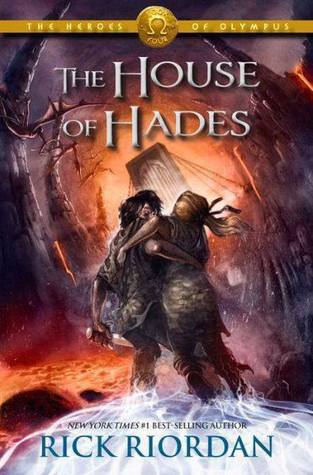 House of Hades by Rick Riordan
Final Verdict: 3.7 out of 4.0
Plot/Story:
3 – Plot/Story is interesting and believable
The House of Hades is Book 4 in the Heroes of Olympus series by Rick Riordan. This series follows the five-book Percy Jackson & the Olympians series, but it incorporates the Roman mythology alongside the Greek. In this adventure, Percy, hero of the Greeks, and his team must join forces with Jason, hero of the Romans, and his own team in order to stop Gaea and Tartarus from rising and destroying the world. The awakening of these ancient gods is causing an identity crisis, of sorts, among the “new” gods (like Zeus). It is essentially blurring the lines between Greek and Roman mytho-worlds, so that at any given moment a god might switch personalities. Needless to say, these split-personalities leave the gods relatively helpless, so the demi-gods, their half-human/half-god offspring, must take charge. In this fourth installment, Gaea and Tartarus have opened the Doors of Death, which means hundreds upon hundreds of monsters are slipping out of the underworld. Percy and Annabel are in the underworld, while Jason and the rest of the gang are fighting their way to the Doors of Death, as the team must work together to close the Doors from both sides, or else certain doom awaits the planet and all life as we know it.
Characterization:
3.75 – Characters very well-developed.
One of the criticisms I have for the Riordan series’ (including Percy Jackson, The Kane Chronicles, and this one) is that the character depth is always a bit lacking – although the books typically cover about a year (though sometimes quite a bit less, as has been the case with this particular series), still there is little growth & development for any of the major or minor characters. This is a “Middle Grade” series, so perhaps character depth isn’t too be expected, but in any series that spans a certain amount of time – a few years or more- I would hope to see some. Riordan has taken steps in this one, though, and as many have noted, even makes quite a bold decision (one I have been waiting for, for years!) to reveal personal information about one of the cross-over characters from the Percy Jackson series. In addition, many of the other characters, such as Jason, Leo, and Frank, all face crucial turning points in this book, moments of decision which will help to define them possibly for the rest of their lives. This attention to characterization and willingness to allow these characters to grow beyond their cookie-cutter “action/adventure hero” roles thrilled me quite a bit and truly makes me feel that this is possibly the best book of all three mythology series’ thus far.
Prose/Style:
4 – Extraordinary Prose/Style, enhancing the Story.
Rick Riordan’s books are so easy to read, partly because they are fun and entertaining, but also because he knows how to construct a fast-paced, logical, episodic storyline. In The House of Hades, Riordan’s heroes are constantly meeting new friends and foes, mythological deities, monsters, and creatures of all sorts, from the Roman and Greek worlds. All of this could be confusing and overwhelming, if not for Riordan’s adeptness at giving his readers just enough new information at manageable intervals, while advancing the story and also allowing his primary characters, those who have been with us since Book One, enough page time of their own. Many have said this book left them breathless because of its pace, and I agree that it is certainly one of the more action-packed installments of his always action-packed series’. It is hard to stop reading, hard to quit even after finishing a character section (the books are broken up by character perspective, each character getting about 4 chapters from their point of view, before moving on to another main character). Ultimately, though, despite the whirlwind ride this book can sometimes be, it manages to remain consistent – going just far enough and just fast enough, without falling apart. There are natural breaks, places where a reader can logically pause and step away, but the problem is – you won’t want to!
Additional Elements: Setting, Symbols/Motifs, Resolution, etc.
4 – Additional elements improve and advance the story.
What I always love about the Riordan books is how slyly educational they are. Readers will learn so much about ancient Greek and Roman mythology (or Egyptian, if you’re reading The Kane Chronicles), without noticing they’re learning anything at all. This is because the mythology, the original stories and the original characters, are re-imagined so brilliantly, revisited so expertly, in this modern setting. Gods using cell phones? Demigods eating fast food? Sure, that’s all current – but the events that take place, the rivalries that exist, the personalities of the heroes, the gods, they remain wonderfully true to the original epic stories of Homer, Ovid, and others. Believe it or not, I can credit Riordan’s books, this particular one as well as others, with helping me to enjoy James Joyce’s Ulysses. This is because, though I have read Homer’s Odyssey, revisiting the old tales through this contemporary lens has helped me to keep in mind the original epic and the string of events, the gods helpful to or antagonistic of Odysseus, which are paralleled in Joyce’s Irish epic. In addition, in House of Hades especially, Riordan takes some steps which have been made in young adult and contemporary literature, but which have been left relatively unexplored at the MG level. J.K. Rowling allowed certain things to happen but which were revealed only through unspoken allusion; here, Riordan allows one of his characters, Nico di Angelo, to develop fully and completely, and exposes the raw nerves that come with it – it is a breath of fresh air for the popular fantasy genre and for this reading level.
Suggested Reading For:
Age Level: MG+
Interest: Fantasy, Mythology, Young Adult, Action/Adventure.
Notable Quotes:
“Magic is neither good nor evil. It is a tool, like a knife. Is a knife evil? Only if the wielder is evil.”
“I figure the world is basically a machine. I don’t know who made it, if it was the Fates, or the gods, or the capital-G god or whatever. But it chugs along the way it’s supposed to most of the time. Sure, little pieces break off and stuff goes haywire once in a while, but mostly… things happen for a reason.”
“Love is no game! It is no flowery softness! It is hard work- It demands everything from you- especially the truth. Only then does it yield results.”
“I’m not choosing one of your paths. I’m making my own.”
“It’s natural to feel fear. All great warriors are afraid. Only the stupid and the delusional are not.”
“It is a costly thing, looking on the true face of Love.”
“The dead see what they believe they will see. So do the living. That is the secret.”
Thoughts: The Golem and the Jinni by Helene Wecker
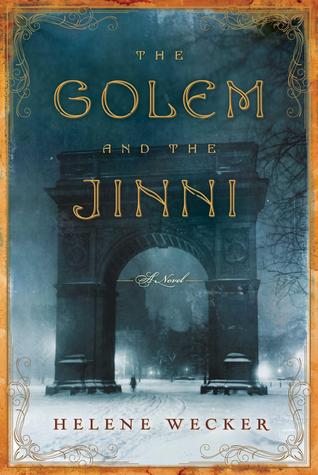 The Golem and the Jinni by Helene Wecker
Final Verdict: 4.0 out of 4.0
Plot/Story:
4 – Plot/Story is interesting/believable and impactful
Helene Wecker’s historical fantasy novel, The Golem and the Jinni, was a pleasant surprise for me. It had been much-hyped, before and after publication, and my experience with “those” kinds of books has tended to be less than wonderful. I am thrilled to say, though, that The Golem and the Jinni, not only lived up to expectations, but exceeded them (mine, especially). The story is about two mythological creates whose paths are fated to cross. The first, Ahmad, is a gorgeous, fiery Jinni who has been bound to a wicked master for generations; the second, Chava, is a uniquely gifted Golem, created to serve a specific purpose but now lost without her master who died at sea shortly after she was awaken (born). The two creatures meet in New York city, thousands of miles from their middle eastern homelands, at the turn of the century (1899). Although they are quite different – differently skilled, with wildly different temperaments – they develop a strange friendship, the strength of which their own fate, and the fate of the world, might depend on.
Characterization:
4 – Characters extraordinarily developed.
It is rare to read a fantasy story about two inhuman characters who read as so very human. Each of these creatures is awoken in a time, place, and situation which calls for them to be essentially born anew. They must learn the ways of the world, the languages and customs of the new world, in order to survive and to protect those who they have grown to care for, if somewhat begrudgingly. The Jinni, a creature of fire and air, learns to hone his skills with metalwork and artistry, all the while longing for freedom from his bondage and for his homeland, the deserts of the Middle East. The Golem, more intelligent, inquisitive, and lifelike than any other golem before her, struggles to navigate such a populated place; living in New York is difficult for someone like her, because she can sense and feel all the thoughts and emotions of those around her. Interestingly enough, while they both learn much about humanity by living amongst humans, it is the friendship that develops between them, the bond that only two non-humans can share, which teaches them the greatest human lessons of all – faith, love, and sacrifice.
Prose/Style:
4 – Extraordinary Prose/Style, enhancing the Story.
Wecker certainly has a talent not just for storytelling, but for story-crafting. The story of Ahmad and his master, which is central to The Golem and the Jinni, is one which spans centuries of time, and numerous countries; yet, Wecker manages to weave the jinni’s sparse memories so fluidly into the main story that we hardly realize how much history has unfolded before us. The lives of the characters and their stories interconnect effortlessly, right up to the conclusion, which is stunning in conception and delivery. Her prose is simultaneously deep and delicate, romantic and bare. The marriage of style and story reminds me of the great gothic Romances, of Robert Louis Stevenson and Mary Shelley – Wecker has somehow recreated one of the most sentimental, exploratory literary movements in a contemporary novel that is set in the past. She provides just enough suspense, just enough romance, just enough magic, and just enough reality to make it all work seamlessly.
Additional Elements: Setting, Symbols/Motifs, Resolution, etc.
4 – Additional elements improve and advance the story.
What the great gothic Romances, like Frankenstein and Dr. Jekyll and Mr. Hyde did was to tell the story of humanity through a supernatural lens. What can we learn about ourselves, about our desire for power, knowledge, control, by exploring the cause and effect relationship between who we are and what we create? Wecker revisits this question, she asks, again, what does it mean to be human, to be capable of creating great and terrible things, to be gods among men? Much of today’s literature, with the exception, perhaps, of those like DeLillo and Vonnegut, forgets to question this power, forgets to wonder about the cause-and-effect relationship between our scientific, technological advances and our moral centers. Wecker does this, in the original form. She reminds us to think about how far we go, to question the value of our creations, to wonder about our humanity, and to reevaluate ourselves and our impact on the world – our dasein, as Heidegger would put it. Above everything, she reminds us that the world belongs to all of us and that the best we can do with our lives is to love and to learn. The Golem and the Jinni was one of my favorite reads of 2013.
Suggested Reading For:
Age Level: Adult
Interest: Fantasy, Mythology, Historical Fiction, Witchcraft, Romance.
Notable Quotes:
“A man might desire something for a moment, while a larger part of him rejects it. You’ll need to learn to judge people by their actions, not their thoughts.”
“Sometimes men want what they don’t have because they don’t have it. Even if everyone offered to share, they would only want the share that wasn’t theirs.”
“I look at what we call faith, and all I see is superstition and subjugation. All religions . . . create false divisions, and enslave us to fantasies, when we need to focus on the here and now.”
Roof Beam Reader’s Best of 2013
Hello, Readers!
Since I surpassed my 2013 goal of 60 books read (I’m up around 64, right now, with 2 books in progress and likely at least 1 more to go) before year’s end, I thought I would take a cue from some of my favorite bloggers who are posting a “Best of 2013” list.
The list below includes a small selection of categories from which I’ve read this year, with one “favorite” spotlighted for each category. These are books I’ve read in 2013, not necessarily books that were published in 2013. I hope you enjoy!
Best Academic Text
 From Queer Theory and Feminism, to Linguistics, Rhetoric, and Film Studies, this was a year of heavily theory-based, academic reading, for me. I read some incredibly interesting texts on the history of sexuality, the French Revolution, bibliographical and textual studies, and the creative writing process. Of all of these academic texts, though, I think my vote goes to a short little book called Responding to Student Writers, written by Harvard Professor Nancy Sommers, whom I had the honor to meet and work with this summer. As an English instructor (and, more specifically, a teacher of first year college composition), I found the suggestions, tips, tools, and resources in this booklet to be helpful, as was the CD of student interviews that came with it. Nancy Sommers is a well-respected expert in the field, and for good reason. If you are a teacher who often assigns essays/research papers, analyses, etc., then Sommers’ work shouldn’t be missed.
Best Book on Writing / Literary Theory
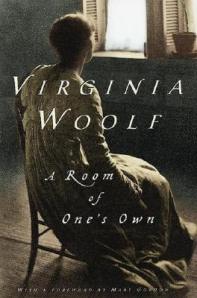 I read a number of books this year which would fall into the category of literary theory and/or “on writing.” I thought it prudent, then, to mention some of these and to pick a “favorite” amongst a group of rather good texts. These include, for instance. E.M. Forster’s groundbreaking Aspects of the Novel, Terry Eagleton’s How to Read a Novel, Jim Powell’s graphic guide Postmodernism for Beginners, Judith Mayne’s brilliant collection of essays on feminist film studies, The Woman at the Keyhole, and Anne Lamott’s wonderful Bird by Bird. Of all the books that fit this category, though, my favorite overall has to be Virginia Woolf’s lecture series, A Room of One’s Own. Anyone interested in writing, and particularly the historical connection of women and/or socioeconomic status to the process, should definitely check this one out.
Best Contemporary Fiction
 I did not read all that much contemporary fiction this year, which is not unusual (I tend to lean towards classics and/or academic texts). Still, there were enough to be considered and I believe this is a popular category for many of my readers, so I thought I should name a few standouts. First is a wonderful collection of short stories by E.J. Runyon called Claiming One. Another was the highly controversial but interesting Tampa by Alissa Nutting. My favorite, though, had to be Stephen King’s Joyland. Normally, King would probably be the stand-out in the horror/mystery/paranormal genre, and he certainly nailed it with Doctor Sleep, his sequel to The Shining, but Joyland was much more akin to some of his earlier stories, such as “The Body.” There was some suspense, some magical realism, and a bit of crime-thriller to it, but mostly it was a book about summertime, coming-of-age, and living life. I absolutely loved it.
Best Genre Fiction Book
I read much more genre fiction this year than I did general fiction (other than classics, which will be addressed below), so I am excluding a general fiction category and simply focusing on those books which might be considered fantasy, science fiction, horror, etc. Of these, I have read a number of works, including The Gunslinger and Doctor Sleep by Stephen King, both of which I highly recommend. Also, Inferno by Dan Brown, The Haunting of Hill House by Shirley Jackson, and The Golem and the Jinni by Helene Wecker. Although Shirley Jackson’s book came close to taking the title, I have to say I was pleasantly surprised by The Golem and the Jinni. I finished it recently and have not had time, yet, to write & post a review, but it was a stunning piece of work. There’s something of the old-fashioned Romantic wonder and awe of nature in this one – it is bits and pieces of Mary Shelley and Robert Louis Stevenson fused with contemporary narrative style. Loved it.
Best LGBT Book
 This is an important category for me. As most of you know, I’m currently in my second year of Ph.D. studies in English, but I’m also about to finish my graduate certificate in LGBT studies. That said, I have not limited this category to works “of literary merit.” In this category, I considered books on theory, books which would be called “classics,” and also contemporary fiction, young adult, and whatever else. This made it a bit tough, as I had to choose from a range which included Gods and Monsters by Christopher Bram (fantastic), Sexuality in Europe by Dagmar Herzog (fascinating), and Shine by Lauren Myracle (touching). Others that deserve mention include Sodom on the Thames by Morris Kaplan, and Aristotle and Dante Discover the Secrets of the Universe by Benjamin Alire Saenz. It was such a great pleasure to read so many awesome LGBT works of fiction and nonfiction this year. The ultimate prize, though, has to go to the incredible Two Boys Kissing, by David Levithan. This book touched my soul – it is a book that I felt had been missing from the conversation for far too long, and Levithan delivered it to us beautifully.
Best Nonfiction Book
 This is probably the largest category that I had to consider this year, with texts ranging from biography and autobiography to cultural studies, gender and sexuality, literary theory and criticism, and so much more. It almost had to become separate categories, almost. Some of my favorites of the year included How to Read Literature Like a Professor by Thomas Foster, Queer Theory by Annamarie Jagose, Vive la Revolution by Mark Steel, and Colonialism and Homosexuality by Robert Aldrich. One of the books that I found most helpful, interesting, and readable was Feminism: A Very Short Introduction by Margaret Walters. When all is said and done, though, my absolute favorite nonfiction read this year was Salinger by David Shields and Shane Salerno. If you settled for watching the documentary, then you are missing out on so much. This biography, unlike others on Salinger, was in-depth, unbiased, well-researched, and revelatory in many ways. Anyone interested in the life and works of J.D. Salinger should put this at the top of their list.
Best Work of Classic Literature
 This was my second largest category to consider, and this final call was so difficult! I love classic literature, so picking one book from such an incredible list of authors, periods, and subjects is almost impossible. Some of the best of the year include O Pioneers! by Willa Cather, which shouldn’t be missed, Mansfield Park by Jane Austen, which was a difficult but rewarding read, A Streetcar Named Desire by Tennessee Williams which was stunning, The Adventures of Don Quixote which was hilarious and which I enjoyed far more than I had anticipated. My favorite, though, goes to one of the first books I read this year and one which has stuck with me throughout 2013 – Orlando by Virginia Woolf. It is poetic justice for Woolf, perhaps, that she has landed on this “best of” list twice, considering I used to vehemently refuse to read her books (I had one bad experience with her many years ago, and swore never to return!). But Orlando is a stunning, daring epic. She was disappointed with it (or, more accurately, with the supposed lack of focused attention she paid to it), but it’s one of the best books I’ve ever read.
Best Young Adult Book
 Winger by Andrew Smith. Not only was this the best Young Adult book that I read in 2013, but it was one of the best books I read this year, period. The competition for this category was stiff, with books by Veronica Roth, Rick Riordan, David Levithan, Benjamin Saenz, Rick Yancey, Cassandra Clare, and Michael Scott to be considered. All of these books were enjoyable and some of them were downright incredible, but Smith’s Winger is a force to be reckoned with. If you haven’t yet read this book, I would encourage you to read my review and see if it’s for you. Odds are, it is. I also highly recommend his other works, especially Stick, and I look forward to his next publication, Grasshopper Jungle, which is due out early in 2014.
Other Favorite Things
My favorite post of the year: On Horrors and Heroes
My favorite event of the year: Austen In August
My favorite review of the year: Mansfield Park by Jane Austen
One blogger I couldn’t get enough of this year: O of Behold the Stars
So, those were my favorites of 2013. I am currently reading Ulysses by James Joyce and On What Grounds (Coffeehouse Mysteries #1) by Cleo Coyle, both of which I’m enjoying, for different reasons. I plan to read one more this year – so that’s a possible three books I could add to this list of “favorites,” but let’s just leave them here as honorable year-end mentions, shall we?
What were YOUR favorite books this year?
 Roof Beam Reader