Roof Beam Reader
Adam Burgess
Homegoing by Yaa Gyasi
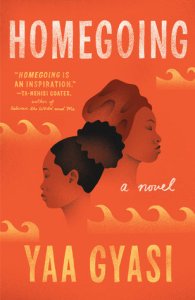 I started reading Homegoing sometime around September of 2019. I just finished it on January 20th, 2020. Four months to read a contemporary fiction novel of 300 pages. That’s a little absurd for me, to be honest, and I’m not sure what took me so long. I could blame it on work, on writing, on other responsibilities, or on the fact that for the last 6 months I’ve been reading 4 or 5 books at a time, constantly (a terrible error I’m now trying desperately to correct! I’m down to just THREE books right now!). Anyway, it took too long, but boy was it worth the time.
It’s hard to describe Yaa Gyasi’s first novel and even harder to believe that it is her first. In many ways, I could compare it to Colson Whitehead’s The Underground Railroad, except that I prefer Homegoing. I’m tempted to say, “this is a masterpiece of contemporary literary fiction that deals with the deeply complex history of race in the United States, beginning with the African slave trade and commenting right up until the present,” and leave it at that. But that wouldn’t do the storytelling much justice. It’s true that this novel covers hundreds of years, though it focuses on two lines of ancestry beginning with two half-sisters living in what is now Ghana. One line remains in Africa, having participated in the slave trade, and the other line is made up of descendants of a woman stolen from her tribe, enslaved, and brought to the United States.
Beginning with the tragic relationship between slaver and enslaved, the novel then progresses slowly and methodically forward, chapter by chapter, with each new chapter focusing on one descendant from one or the other of these lines, alternating between the African slavers and the African enslaved. Ultimately, as the generations progress, these two family lines come closer and closer together until, at last, the two contemporary living members of both lines are reunited and they, like fire and water, stand both in stark contrast to each other and in necessary complement.
I’m not sure I’ve ever used this phrase before, but it seems fair and just to say: this novel is a tour-de-force. Not only is it beautifully written and incredibly imagined, but it is also masterfully balanced. The complexity of telling a historical narrative and weaving together two story-lines that diverge and then slowly re-converge after centuries apart is difficult to overstate. It takes a delicate hand and brilliant imagination to make this work, but work it does. The painful history is treated fairly and without reservation. The many types, shapes, and forms of racism and all its variety of implications for those impacted by it since the original sin of slavery is posed in breathtaking sweep and yet, in the most human and relatable ways. From the original capture of native people, to the American Civil War; from Jim Crow to the Harlem Renaissance; from the Civil Rights movement of the 1960s to the continued reckoning of today, Yaa Gyasi’s scope is wide and encompassing.
If you’ve ever tried to wrap your head around institutional racism but get lost in theory or technicalities, Homegoing is a wonderful opportunity. It is, first, a beautiful and painful story about people; but it is also the creative articulation of the complicated web of a shameful shared legacy of racism in the United States. It has the potential to open even those eyes that have been intentionally kept closed to these persistent realities.
The Good Earth
 Pearl S. Buck’s The Good Earth has probably been on every one of my reading challenge lists for the last ten years, or darn close to every list, anyway. It’s also another case of mistaken identity on my part, as I went into this one knowing, again, almost absolutely nothing about it except that so many of my reading friends have raved about it and that it has been critically well-received for a very long time.
My own edition, for example, indicates that Buck won the Pulitzer Prize, that this one is a “classic novel” by a “Nobel Prize-winning author,” and that it is a “comment upon the meaning and tragedy of life as it is lived in any age in any quarter of the globe.” This is all riveting and laudatory, but it’s not a whole lot to go on. Perhaps I can be excused, then, for thinking this was a Chinese novel translated into English and for thinking its author was a Chinese woman, not a white American one. And perhaps I can even be excused for thinking this was a novel of eco-criticism, not one of historical fiction. Maybe? Please excuse me?
First things first, I think this is a powerful and important novel about a turbulent and not very well understood time and place in world history. It is written as a kind of episodic saga spanning the full life of one man, from his late youth (marriage) to his old age, and it details the many hardships and turns of fortune, including extreme highs and lows, alongside the every day experiences of a traditional working man of the land. And the land is everything to Wang Lung. It means more to him than his wife or family, his children or his lover(s), more to him than even his own health or well-being, seeing as how not even extreme poverty is enough to scare him from his land, at least not for long. In this way, Wang Lung is a kind of hero who stands for the importance of man’s connection to the earth. What are we, after all, if we do not have land of our own and if we do not care for it and protect it jealously? Nomads, homeless and hungry.
That’s about as far as Wang Lung’s heroism extends, though, and it sometimes becomes difficult for me to understand just why this book is so popular, other than the fact of its quality writing, its (apparent) accuracy about the period, and its exposing to western audiences a culture that had been and perhaps remains mostly unknown. Because, really, Wang Lung is not a very good man. At least not by contemporary standards. He shows very little kindness to his wife and eventually becomes downright cruel toward her. He shows very little care for his children, except in so far as he helps them to advance his own legacy. He does, however, demonstrate great resilience in the face of countless setbacks and downright bad luck and he honors his family in the traditional family, particularly his elders, even though they do not deserve it. So, in some ways, he might be an example of man, father, and son for his time. But today? There’s so little to root for.
The true hero of The Good Earth is O-Lan, the slave-turned-wife who saves Wang Lung from himself and without whom none of his success would have been possible. Despite lack of love or respect, she persists quietly in making a home for her family, in ensuring their well-being, and in deftly handling some of the most extreme challenges that the Wang family face, both in poverty and in success. She’s a character to celebrate and one that I will surely remember long after most of my memories about the book have faded.
The story itself is a fascinating and deeply personal, even insightful, look into pre-Revolutionary China. Most of the war and its effects are demonstrated by the shifts in society, politics, class, and economics, rather than by any description of the war itself (there are a few brief mentions and it becomes more prominent near the end, though Wang Lung remains stubbornly ignorant to all that is happening, partly because he cannot read and partly because he cares for nothing but his own property and has no use for the world beyond it.) As a description of mostly rural China in the 1920s, it seems to me a masterful work. I’m struck by how much was changing so rapidly and can’t help compare it to the United States in the 1920s and 1930s, which would undergo it’s own riotous transformations.
As much as I enjoyed the story, despite mostly despising the supposed protagonist (which is fine – I don’t mind a book with a character I hate, so long as the writing is good, the purpose clear, and the story solid), I do wonder how much might be different if it had been written by a native Chinese person. Buck spent much of her life, including her youth, in China, but I cannot help but wonder about a story that deals with Chinese ancestry and legacy as written by an outsider. It’s a rather uninformed concern, however, as this is the first text about 1920s China that I’ve ever read. I’m eager to research Chinese reception of the novel, both at its time of publication and to this day. Another new project ahead?
The Good Earth is the first book I’ve completed for the 2020 Back to the Classics Challenge.
200 Years of Anne Bronte
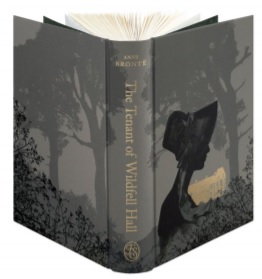
It’s another Folio Friday here at Roof Beam Reader! I’m thrilled to share that, today, The Folio Society is celebrating the 200th anniversary of the birth of Anne Bronte. How could I resist being a part of the celebration?
 Unfortunately, I’ve only read one work from Anne Bronte, youngest of the Bronte sisters, to date. Agnes Grey. I enjoyed it very much, but I’ve been told by many readers that their favorite, and Anne’s best work, is The Tenant of Wildfell Hall. For that reason, I’ve had the book on almost any “challenge” list I’ve ever created, and of course it is listed on my Classics Club challenge list. Still, for whatever reason, it sits on the back burner. I’m excited, then, to have my very own copy of this incredibly beautiful new edition of Tenant of Wildfell Hall! The Folio Society, as usual, does this great author justice.
The Tenant of Wildfell Hall
- Introduced by Tracy Chevalier
- Illustrated by Valentina Catto
“Anne’s book was far more radical than anything her more famous sisters ever wrote’.” –The Times
 About the Book: Frank, radical, and unashamedly feminist, Anne Brontë’s ground-breaking masterpiece The Tenant of Wildfell Hall sent shockwaves through Victorian England and remains strikingly modern today. This beautiful new edition of Brontë’s masterful novel is published by The Folio Society to celebrate the 200th anniversary of the author’s birth.
The story follows the mysterious and beautiful Helen Graham, who has recently moved into Wildfell Hall. Curious speculation turns into nasty rumors as the town deliberates on who she is, where she has come from, and what has happened to her husband…
About this Edition: Critically received on publication, the novel was withdrawn for years after Anne’s death, and later widely published with major editorial omissions. For this stunning anniversary edition, we returned to the first printing and have included Anne’s heartfelt preface in which she defends her work. Also included is a new introduction exclusive to this edition by novelist Tracy Chevalier, who examines the reason behind the novel’s initial negative reception: “Wildfell Hall is a different, wilder beast – perhaps too wild for its time.”
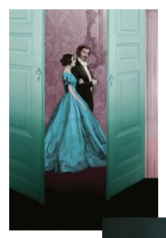
Beautifully bound, and full of captivating illustrations by Valentina Catto, this edition’s binding and artwork blends classic artistic techniques with a contemporary edge, perfectly marrying itself to Brontë’s radical voice. Published in series with her sisters’ most accomplished novels, Jane Eyre and Wuthering Heights, this new edition recognizes Anne’s literary achievements as equal to those of her sisters, and completes the trio of their most celebrated works.
 About the Publisher: For 70 years, The Folio Society has been publishing beautiful illustrated editions of the world’s greatest books. It believes that the literary content of a book should be matched by its physical form. With specially researched images or newly commissioned illustrations, many of its editions are further enhanced with introductions written by leading figures in their fields: novelists, journalists, academics, scientists and artists. Exceptional in content and craftsmanship, and maintaining the very highest standards of fine book production, Folio Society editions last for generations.
Book copy and all images are courtesy of The Folio Society. Feel free to visit their NEWS AND BLOGS page for more information. In case you missed them, take a look at my Folio Friday features for other Folio Society books.
Stephen King’s The Institute
 I think I have been lucky with Stephen King so far.
I’ve heard from other readers that some of his books are a real bore, just slogs to get through. The ones that come to mind are The Tommyknockers and Dolores Claiborne, two that I own but have yet to read because I’ve been told they’re just sort of, “why?” I felt this way, somewhat, about Salem’s Lot and Pet Sematary, too, but when I say that out loud, people tend to give me the ol’ stink eye. But still, when you stack those few disappointments up against books like It, The Stand, The Shining, The Long Walk, Doctor Sleep, Misery, Christine, Carrie…. need I go on? In other words, the odds are pretty darn good that I’m going to like a Stephen King book, and his latest novel, The Institute, just adds to the positive chances.
At the heart of this novel is a classic Stephen King battle of good versus evil, but in this case he tries to be a bit more nuanced than many of his other stories in the same theme. Where books like It, The Stand, and The Outsider set up a very distinct dichotomy between the forces of good and evil, The Institute, being in effect science-fiction rather than horror or fantasy, delves deeper into the nature of human actions and the complexities of right and wrong. There is no evil alien force such as the one that poisons Derry, nor is there an anti-Christ or legendary villain, the likes of which oppose the good forces in The Stand or Salem’s Lot. In The Institute, King pits children with special abilities against international government forces who want to manipulate their powers. On the surface, the distinction is clear. Children good, secret military agency bad. Yet, as the story unfolds, King complicates the message by delving into philosophical questions about how we weigh the rights of the one, or the few, over the needs of the many. (Beam me up, Scotty!) He uses phenomena such as telepathy, telekinesis, and precognition to explore the individual’s responsibility to the collective, or a person’s responsibility to humanity, in a way that is more convoluted and circuitous than King typically is. We root for the children; we cheer when they begin to unite; we become inspired by their bravery and selflessness in standing on their own against such a dangerous, impossible foe. And yet, in the background, King is needling. He makes the reader question, right up to the end, whether The Institute was a necessary evil, or just simply evil.
King has a tendency to get into long-winded exposition on characters and character backgrounds, sometimes taking one at a time and going on for pages and pages. Usually, it makes the story better, as in The Stand, when all of the characters eventually meet up and form two sides in a battle of good and evil. Then, it makes sense to have become so invested in them and their outcomes. They’re at war. You want to “feel” for them. Sometimes, though, that payoff is missing, and you wonder why you had to sit through so much history and detail about people who don’t seem to matter very much in the long run. Although the first part of the book, maybe even a full one-third of it, is pretty slow and tough to get into, in this case there is the payoff. The Institute is much more like The Stand or It in this regard; it’s not quite as long as either of those, so the exposition doesn’t go on as long, but it definitely makes up a very good chunk of the novel, and you have to get through it in order to get to the action. When the pace finally does pick up, though, and the story rushes toward its climax and resolution, King has made you invested in the outcome and the stakes for these characters seem higher because you, as the reader, care. You’ve been made to hate the sinners and love the saints, right down to those small town characters introduced early in the novel who don’t show up again until hundreds of pages later.
One thing that I’ve been enjoying about King’s more recent works, is that they are much more explicit in their philosophy and cultural criticisms. King has always been concerned with politics and society, but his earlier works, particularly those in the horror genre, heavily mask the very real and biting social statements he makes. Since about 2014, though, with the release of Revival, it has become clear that even in his genre fiction, King has decided to lay it all on the line. It’s almost as if someone whispered in his ear, “Let Stephen King be Stephen King.” As a great writer, he never allows the cultural criticisms to overtake the story itself, but it’s fun to see his spine making up the tone of the work, particularly as a reader who tends to agree with King’s stance on politics. In the case of The Institute, some of the philosophy gets a bit muddled, though. Because of the apparent need to create sympathy for the villains, which is nothing new in savvy “good versus evil” plots, there are moments where the reader is almost being encouraged to empathize with deeply concerning, widely derided, and wholly evil concepts and methods. There were moments where I noticed that I was being asked to find sympathy for what is essentially a kind of Nazism, and that was very hard to swallow; in the end, King rights the ship, but the fog he creates, perhaps intentionally but perhaps because he couldn’t avoid it, seemed unnecessary to me. Is the discomfort worth it? I’m still not sure.
Ultimately, with The Institute, King proves again that his power is not waning in the slightest and that he’s not just a master of horror. This is an excellent sci-fi thriller that also tackles current social and political issues (though some of that is problematic.) I think this one and his recent horror, The Outsider, are two of his best. Who says all writers do their best works early in their careers?
Back to the Classics

Back to the Classics is hosted by Karen at Karen’s Books and Chocolate. I’m so glad it is back! I had planned to avoid all reading challenges this year, as I’m trying to be more patient and intentional with my reading. To that end, I also set the bar very low for my “Goodreads Challenge,” with 12 books to be read this year. I normally read between 60 and 80 books annually, so hitting a dozen is a given, but that’s kind of the point. I don’t want to feel like I’m forced to get through book after book after book this year, or to begin a new one as soon as I end another.
I want to savor my reading this year. I want to spend time with it. I want to enter it deeply, swim around in it, write about it, and get just as far as I end up getting, but no further. In other words: no challenges! Except this one. Because this challenge shouldn’t get in the way of my deep-reading goals. There’s no real rush to read, particularly if I’m planning to read the 12 books for this challenge anyway, and the categories plus titles that I’ve selected for each are diverse enough to keep me interested and to help me meet my perpetual goal of reading broadly.
I’ve put an abridged version of the rules and categories below. What do you think of my title selections!? Are you thinking of joining?
- Complete six categories, and you’ll get one entry in the drawing;
- Complete nine categories, and you’ll get two entries in the drawing;
- Complete all twelve categories, and you’ll get three entries in the drawing.
Basic rules: All books must be at least 50 years old (published 1970 or earlier). No crossovers to multiple categories. Wrap-up post with all links to reviews required to be posted at Karen’s blog before 12/31/2020. Must sign-up with your list before 03/31/2020. All reviews must be linked to corresponding category link on Karen’s blog.
Progress: 0 of 11 Complete (Reviews Will be Linked at This Page.)
 Roof Beam Reader