Roof Beam Reader
Adam Burgess
Thoughts: Ariel (1965) by Sylvia Plath
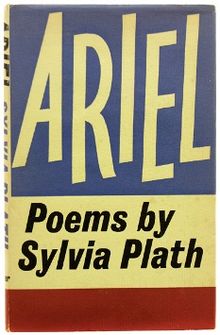 As someone who tends to avoid poetry (with a few exceptions, such as the British Romantics, Edgar Allan Poe, and Walt Whitman, all of whom I love), this new year has found me reading quite a bit of it! I’ve spent time with Robert Lowell, T.S. Eliot, and Sylvia Plath. I’ll also be spending the next 15 weeks reading poetry in Old English (think Beowulf) as well as seventeenth-century poetry (John Donne, Anne Bradstreet, Margaret Cavendish, Andrew Marvell, George Herbert, Ben Johnson, John Milton, etc.). So, I guess you could say… I’m not shying away from poetry anymore?
Anyhow, my first “review” of the year is for Sylvia Plath’s 1965 collection of poems, Ariel. This book is on my 2015 TBR Pile Challenge list, and boy am I glad to have finally read it. It is coincidental that I read it within days of reading Lowell’s Life Studies, which I knew little about. As it turns out, Plath was a great admirer of Lowell and both of them were “Confessional Poets.” This seems to be a style I respond to, because I adored both collections.
Plath herself, as many know, suffered from clinical depression. She married the infamous Ted Hughes and would eventually separate from him, after having two children. She committed suicide two weeks after publishing her now-classic novel, The Bell Jar.
Ariel was published posthumously in 1965, two years after her death. It was originally edited and compiled by Hughes, who apparently dropped twelve poems that were intended for the collection and inserted twelve others. He also altered the arrangement — fortunately, a restored version was published in 2004. I look forward to reading that edition, eventually.
Ariel is intensely personal, which is to be expected from confessional poetry. The darkly lyric poems address issues of sexuality, motherhood, marriage, depression, suicidal thoughts, family and depression. These deeply personal poems, delivered with such raw directness, were perhaps too much for publishers of the time. Despite the positive critical reception of her first book, Colossus, the poems in Ariel were roundly rejected by many publications. Even The New Yorker refused to publish more than a few lines (it’s worth noting that The New Yorker also shied away from some of J.D. Salinger’s darker pieces).
Nevertheless, this later collection includes what would become some of the best-known poems in the English language, including “Daddy,” “Lady Lazarus,” “Ariel,” and “Morning Song.” I was moved by many of the poems, deeply touched by their personal and emotional expressiveness.
In addition to the famous poems mentioned above, some of my favorites of the collection include, “Nick and the Candlestick,” “The Moon and the Yew Tree,” “The Rival,” and “Edge.” The intensity of these poems is at times difficult to bear. Take, for example, the first stanza of “The Moon and the Yew Tree:”
This is the light of the mind, cold and planetary. / The trees of the mind are black. The light is blue. / The grasses unload their griefs on my feet as if I were God, / Prickling my ankles and murmuring their humility. / Fumey, spiritous mists inhabit this place / Separated from my house by a row of headstones. / I simply cannot see where there is to get to.
This is a stunning example of awareness of self-in-the-world. Plath is applying direct symbolism to her surroundings and illustrating how the environment she’s in directly affects her mood and state of mind. She’s also expressing, in this poem, the realities of her masculine and feminine natures (the yew tree and the moon) in a way that is somehow divine but also dangerous. There’s a nod to Mother/Female and Father/Male figures, but where one would expect the Mother/Female symbols (the light, the moon) to be soft, warm, and nurturing, here it is cold, dark, distant. Similarly, the Father/Male symbol (the tree) is akin to Eden’s “Tree of Knowledge” – there is wisdom in it, but the tree is black, its fruit poisonous.
I could go on and on about this poem, and others in the collection, but suffice to say I found myself wholly absorbed with Ariel as a whole, though some poems spoke more to me than others. Plath had an uncanny ability to make her poems equally about the self and about the universal. Anyone who has experienced self-doubt, loneliness, and depression, or a terrifying love (like the love of a parent for a child they fear they might lose, fail, or corrupt) will find Plath’s poems deeply affecting.
2014 End of the Year Book Survey
 Welcome to my Big Book Survey for 2014!
Number Of Books You Read: 82 (goal of 60)
Number of Re-Reads: 2 (The Giver & The Canterbury Tales)
Genre You Read Most: LGBT/Criticism/History
Best Book You Read In 2014?
Better Angel by Forman Brown; Mrs. Dalloway by Virginia Woolf; Eminent Outlaws by Christopher Bram; The Book Thief by Markus Zusak….. so many.
Book You Were Excited About & Thought You Were Going To Love More But Didn’t?
Let Us Now Praise Famous Men by James Agee
Most surprising (in a good way or bad way) book you read in 2014?
Life Studies by Robert Lowell – Incredible collection of poetry. I’m not a poetry person, but this was stunning.
Book You “Pushed” The Most People To Read (And They Did) In 2014?
Ulysses by James Joyce (because I hosted a read-along for it).
Best series you started in 2014? Best Sequel of 2014? Best Series Ender of 2014?
The Giver Quartet by Lois Lowry, The Heroes of Olympus by Rick Riordan, and The Magicians by Lev Grossman
Favorite new author you discovered in 2014?
Andre Aciman, David Leavitt, and A.S. King
Best book from a genre you don’t typically read/was out of your comfort zone?
The Canterbury Tales by Geoffrey Chaucer (original Middle English)
Most action-packed/thrilling/unputdownable book of the year?
The Blood of Olympus by Rick Riordan
Book You Read In 2014 That You Are Most Likely To Re-Read Next Year?
Better Angel by Forman Brown
Favorite cover of a book you read in 2014?

Most memorable character of 2014?
Beloved from Beloved by Toni Morrison or Leopold Bloom from Ulysses by James Joyce.
Most beautifully written book read in 2014?
The Hours by Michael Cunningham
Most Thought-Provoking/ Life-Changing Book of 2014?
This is Water by David Foster Wallace
Book you can’t believe you waited UNTIL 2014 to finally read?
The Stand by Stephen King
Favorite Passage/Quote From A Book You Read In 2014?
“The really important kind of freedom involves attention, and awareness, and discipline, and effort, and being able truly to care about other people and to sacrifice for them, over and over, in myriad petty little unsexy ways, every day.” –David Foster Wallace (This is Water)
Shortest & Longest Book You Read In 2013?
Shortest: He Cried: Poems and Stories by Dennis Cooper (32 pages)
Longest: The Stand by Stephen King (1,153 pages)
Book That Shocked You The Most
Totempole by Sanford Friedman. It’s a gay coming-of-age story published (barely) in 1965. Incredible depth, roundedness, and honesty for such a “subversive” work in such an uptight time.
OTP OF THE YEAR (you will go down with this ship!)
Kurt and David from Better Angel. Beautiful.
Favorite Non-Romantic Relationship Of The Year
Finn and Cade in 100 Sideways Miles by Andrew Smith
Favorite Book You Read in 2014 From An Author You’ve Read Previously
Eminent Outlaws by Christopher Bram or Mrs. Dalloway by Virginia Woolf. Or The Stand by Stephen King (lots of repeat authors, clearly!)
Best Book You Read In 2014 That You Read Based SOLELY On A Recommendation From Somebody Else/Peer Pressure:
Where Things Come Back by John Corey Whaley (and it was good!)
Newest fictional crush from a book you read in 2014?
Maybe Billy Sive from The Front Runner by Patricia Nell Warren?
Best 2014 debut you read?
I don’t think I read any 2014 debuts…
Best Worldbuilding/Most Vivid Setting You Read This Year?
The Stand by Stephen King or Beloved by Toni Morrison. Also, Other Voices, Other Rooms by Truman Capote and The Dog Star by Donald Windham
Book That Put A Smile On Your Face/Was The Most FUN To Read?
If This Isn’t Nice, What Is? By Kurt Vonnegut
Book That Made You Cry Or Nearly Cry in 2014?
The Book Thief by Markus Zusak
Hidden Gem Of The Year?
Life Studies by Robert Lowell and Better Angel by Forman Brown
Book That Crushed Your Soul?
Beloved by Toni Morrison, The Book Thief by Markus Zusak, and The Normal Heart by Larry Kramer.
Most Unique Book You Read In 2014?
Let Us Now Praise Famous Men by James Agee or Ulysses by James Joyce
Book That Made You The Most Mad (doesn’t necessarily mean you didn’t like it)?
An Intelligent Person’s Guide to Philosophy by Roger Scruton – This book was no guide. It was biased, bigoted, ideological, and patronizing. Such a waste of time.
New favorite book blog you discovered in 2014?
Oops – none…. Haven’t had much time to explore! Any recommendations?
Favorite review that you wrote in 2014?
On Grasshopper Jungle by Andrew Smith
Best discussion/non-review post you had on your blog?
J.K. Rowling Can Say What She Wants
Best event that you participated in (author signings, festivals, virtual events, memes, etc.)?
Austen in August!
Best moment of bookish/blogging life in 2014?
5 Year Blog Anniversary & Ulysses Read-along
Most Popular Post This Year On Your Blog (whether it be by comments or views)?
Announcing the 2015 TBR Pile Challenge!
Post You Wished Got A Little More Love?
Review: 100 Sideways Miles by Andrew Smith
Best bookish discover (book related sites, book stores, etc.)?
The Easton Press Leather Bound Editions – can’t afford ‘em, but definitely want!
Did you complete any reading challenges or goals that you had set for yourself at the beginning of this year?
I blew my Goodreads goal of 60 books out of the water, but I failed miserably at my 2014 TBR Pile Challenge.
One Book You Didn’t Get To In 2014 But Will Be Your Number 1 Priority in 2015?
The Return of Sherlock Holmes by Arthur Conan Doyle
Book You Are Most Anticipating For 2015 (non-debut)?
Studies in Classic American Literature by D.H. Lawrence
2015 Debut You Are Most Anticipating?
The Alex Crow by Andrew Smith (March – I think!)
Series Ending/A Sequel You Are Most Anticipating in 2015?
Well, this series isn’t ending (that I know of) but I’m looking forward to reading the second book in Cleo Coyle’s Coffee House Mystery series, Through the Grinder. I’m WAY behind in this series.
One Thing You Hope To Accomplish Or Do In Your Reading/Blogging Life In 2015?
I hope to be able to find time to actually blog/review again.
A 2015 Release You’ve Already Read & Recommend To Everyone:
Hmmm…. Don’t think I’ve gotten any 2015 releases!
Ten Books “On Tap” for This Winter
 Aloha, Readers!
I very rarely participate in blog memes (or, let’s be honest, in blogging at all, lately!), but this one caught my eye when I saw it posted over on O’s blog, Behold the Stars. The winters here in the Midwestern United States are cold, long, and brutal. We tend to get buried in snow and bitter sub-zero temperatures for days on end.
So, what better way to prepare, to spark a little internal flame, than to think about the books I’m looking forward to cozying up with in the coming months?
This week’s topic, from The Broke and the Bookish, is: Top 10 Books on My Winter TBR.
- The Turn of the Screw by Henry James
- Trifles by Susan Glaspell
- Ariel by Sylvia Plath
- Studies in Classic American Literature by D.H. Lawrence
- I Could Tell You Stories by Patricia Hampl
- Like People in History by Felice Picano
- Dancer from the Dance by Andrew Holleran
- The Man Who Fell in Love with the Moon by Tom Spanbauer
- Playing the Game: The Homosexual Novel in America by Roger Austen
- The History of Sexuality by Michel Foucault
Review: 100 Sideways Miles by Andrew Smith
 Andrew Smith is a mad scientist. I imagine him, even now, sitting in his writing laboratory playing with every imaginable ingredient and coming up with another brilliant concoction of literary gold. This might sound like the delusions of a raving fanatic or a particularly creative reviewing mind, but considering Smith’s books continue to win universal praise and, more recently, critical notice and awards, perhaps it’s not so far from the truth after all.
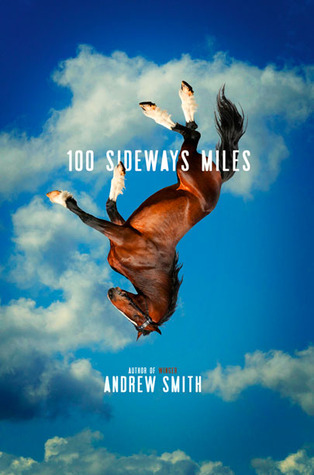
100 Sideways Miles is another example of how brilliantly Andrew Smith can craft a totally readable, totally relatable, completely unique story. The main character, Finn, has been immortalized by his own father, a writer who has created a duplicate “Finn” in his fiction. The science-fictional Finn created by his father, and our fictional Finn (how meta!) are more than a little bit similar. They even share the same scars, the “real” Finn having earned his in a twist-of-fate accident involving a horse that falls from the sky onto Finn and his mother. The accident has lasting impact on Finn’s family, and in the way Finn sees the world (he begins to measure time in distance, for example).
In addition to Finn, who’s still a virgin in his late teens (the horror!), we meet Cade, the ridiculously-obnoxious-but-in-a-totally-loveable-way, Cade. He’s a bit of a big brother to Finn. Every day, he comes up with a new sexually-charged descriptor to attach to the shape of Finn’s scars, which might seem insensitive but is actually his way of helping Finn relax and feel less self-conscious about his body.
Aside from the two high school boys, there is, of course, a girl or two. Including “the girl,” Julia. Finn and Julia become star-crossed lovers; Finn, the epileptic local boy and Julia, the mysterious bombshell from 2,000 miles away (Chicago) who shows up in their small California town, without warning or explanation. The two quickly, and awkwardly, form an intense bond, one which will be tested when Julia returns to Chicago. Fortunately, Finn, Cade, and a road trip to end all road trips will return balance to the universe.
100 Sideways Miles is filled with humor, angst, confusion, sarcasm, and the typical teenagers’ point of view. This means the guys encounter situations involving drugs, alcohol, sex, and “foul” language. There’s also a “damn the man” attitude expected in any coming-of-age story (what are we if we don’t rebel against the last generation, at least a little?). All of this is treated realistically, though, without being gratuitous – it makes sense to the story being told and the lives these boys are living. And when you meet Finn, you’ll understand if he needs to curse once in a while.
Smith without a doubt knows how to spin a yarn. He gets into the minds of young people and shares their experiences, in their vernacular and on their own terms. He’s done this with Stick and Grasshopper Jungle. He’s done this in Winger and with In the Path of Falling Objects. He does it in Ghost Medicine and The Marbury Lens. And yet, he does it, somehow, in a completely innovative way, every time.
So, yes, Smith is a mad scientist. He is the Victor Frankenstein of contemporary young adult fiction, and we readers have become his insatiable monsters. Is the world finally ready for Andrew Smith? No matter. He hasn’t just arrived, he’s become ubiquitous. Ready or not.
If you’re interested in hearing more about 100 Sideways Miles and/or Andrew Smith, check out the book tour hosted by Amy of Lady Reader’s Stuff!
Interview with Merlin Author T.A. Barron!
 As a big fan of T.A. Barron’s Merlin Saga series, I’m excited to announce the paperback release of Atlantis Rising, the first book in an exciting fantasy new series! I’m even more exciting to bring you all this interview with the author. Enjoy!
From the publisher: “With his trademark magic and adventure, T.A. Barron, international best-selling author of The Merlin Saga, has returned with a whole new mythology – the origin of the legendary isle of Atlantis. Atlantis Rising is the first book in an exciting new trilogy that explores not how Atlantis was destroyed, but how it was born.”
Q&A with T. A. Barron on Atlantis Rising
What fascinates you most about the legend of Atlantis?
No word evokes more of a feeling of tragedy than the word Atlantis. It stands for almost, what might have been. The tale of Atlantis is such a beautiful story, and for the 2000 years since Plato first wrote about it, people have wondered and dreamed about it. But one thing that has never changed is that the island of Atlantis was utterly destroyed. I started to wonder, though, about something else—how Atlantis began. How did a place that rose to such a level of near perfection get destroyed by the flaws and weaknesses of its people? Ultimately, how did that happen? This big unknown question is what got me to write Atlantis Rising. I wanted to add a new thread to the tapestry of myth about Atlantis—how it all began, the secrets of its origins.
Why do you choose to write about origins of stories?
When you write about the origins of a great legend, you experience the best of two worlds. You get to tap into a wondrous emotional and mythical journey that people have celebrated and enjoyed for a long time—which is why stories persist, why people keep telling the tales about Merlin or Atlantis. At the same time though, you get the opportunity to be fresh and original. You can explore and go behind the myth to discover how and where it all began. It just might start with the most inconsequential event—a boy stealing a pie, a girl discovering something strange in the woods, or a young man washing ashore. In those small moments you may discover the beginning of an amazing adventure!
What research was involved in preparing for Atlantis Rising?
Before starting this project, I read everything I possibly could about Atlantis. As I got deeper into the research, I realized not only is there an immense story of high ideals and tragic consequences, human aspirations and failures, but a wonderful mystery of how it all began. That powered me even more to want to set forth the beginning, the origins of that magical place. In addition, I have often thought about Atlantis since visiting Greece 20 years ago—the place where the legend began. Often, I’ve recalled the sight of that landscape, the sound of waves on those islands, and the smell of the Mediterranean air. All that will, I hope, come through for anyone who reads the Atlantis trilogy.
In the last few scenes of Atlantis Rising, we see Atlantis become an island at last, while Promi returns to the spirit world. Where does the second book start?
The second book picks up immediately after Atlantis Rising finishes. But time works differently between Earth and the spirit realm. Quite a bit more could have happened up in the spirit realm than has happened on Atlantis. You see, during that brief interval—which feels just like a few days on Earth—many perils have risen. Some of them are dangers that come from old enemies—enemies who want to control all the magic and power of the Earth. And some of the perils come from romance…and we all know how tricky that can be.
In Atlantis Rising, Promi, the protagonist, risks his life for Smackberry pie. What dessert would you risk everything for?
Fresh Colorado snow-covered in maple syrup.
Thanks, T.A. Barron, for stopping by to share your thoughts – and thanks to the publisher for orchestrating this opportunity. Whether you’re a fan of Barron or new to him, I hope you’ve enjoyed his thoughts and I invite (encourage!) you to check out his books – they’re great fun!
 Roof Beam Reader